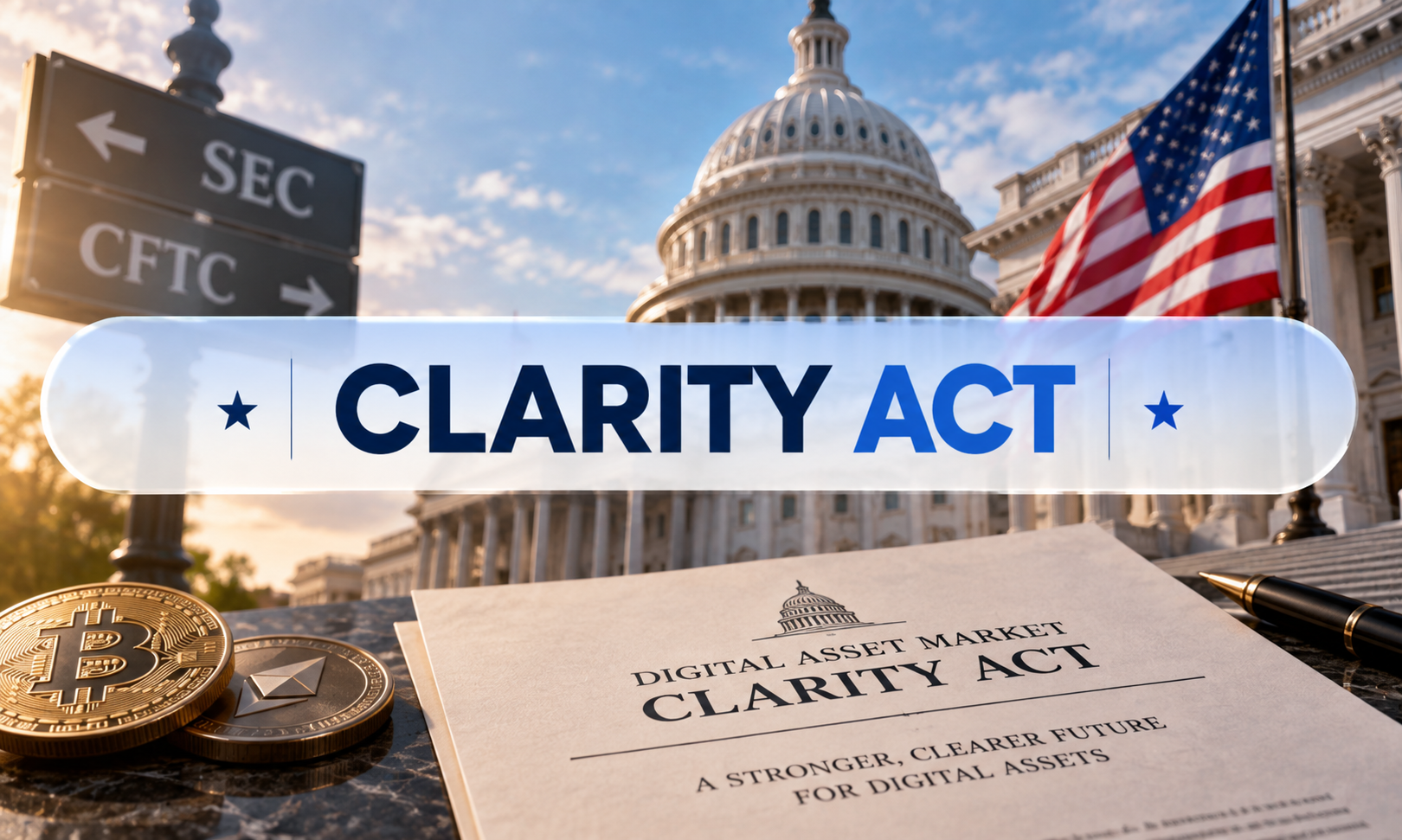
Democratic Control of Congress May Stall Crypto Clarity Act for Two Years, Analyst Warns
The Democratic Party’s ascendance to control of both chambers of the U.S. Congress could indefinitely postpone the CLARITY Act, a key piece of legislation for the cryptocurrency industry, potentially for as long as two years, according to analyst Ash Crypto.
This development complicates President Donald Trump’s ambitions for the United States to become a global cryptocurrency hub, Ash Crypto stated. In a November 5 post on X, the analyst recalled that Democrats had unanimously opposed the CLARITY Act during a Senate vote in September, preventing Republicans from securing the 60 votes necessary to advance the bill. With Democrats now holding a majority in the House of Representatives, having flipped seven seats in the midterm elections, the analyst predicts a significantly more challenging path forward for pro-crypto legislation.
“Republicans will now need Democratic support to pass major pro-crypto legislation, and with Democrats’ anti-crypto stance, it looks tough now,” the analyst wrote.
Furthermore, Ash Crypto suggested that Democrats might pursue more stringent regulations for digital assets and cryptocurrency exchanges. Reports indicate plans are underway to grant the Securities and Exchange Commission (SEC) expanded oversight powers while curtailing the authority of the Commodity Futures Trading Commission (CFTC). This regulatory uncertainty, the analyst believes, could lead to a slowdown in institutional adoption as banks and major investors adopt a more cautious approach to cryptocurrency investments due to the potential absence of clear federal guidelines.
“That doesn’t mean crypto adoption will stop, but it could push many crypto builders offshore,” the commentator concluded.
While regulatory bodies like the SEC and CFTC possess the authority to issue guidance and modify existing rules, comprehensive legislation would establish a more stable and enduring framework that transcends different administrations. With Democrats now poised to influence both legislative chambers, the prospects for the CLARITY Act may hinge on negotiations, a scenario the industry had hoped to circumvent.
It is important to note that the September vote was solely on whether the bill could proceed to a final vote, not on its ultimate passage into law. Following that setback, seven Democratic lawmakers, including Senators Kirsten Gillibrand, Cory Booker, Ruben Gallego, and Georgia’s Raphael Warnock, issued a joint statement affirming their continued commitment to the legislation, which they had reportedly been working on for the past two years.
Adding to the industry’s concerns is the return to Washington of vocal critics of cryptocurrency, such as Ohio Senator Sherrod Brown. Efforts to unseat him in 2024, which involved over $40 million in spending by crypto-aligned groups, proved unsuccessful. A subsequent, even more substantial campaign by crypto-focused Political Action Committees (PACs), which spent $64 million, also failed to achieve the desired outcome.
During his tenure as chair of the Senate Banking Committee, Brown had previously called for a ban on cryptocurrency, characterizing it as a breeding ground for Ponzi schemes, lacking adequate consumer protections, and posing a national security threat. He alleged its use by “Korean cybercriminals,” drug traffickers, and terror financiers.
Despite these potential hurdles, some industry observers remain optimistic, suggesting that cryptocurrency has become “too big” to be stifled by shifts in political leadership, regardless of potential legislative delays or the imposition of stricter regulations.
Leave a Reply