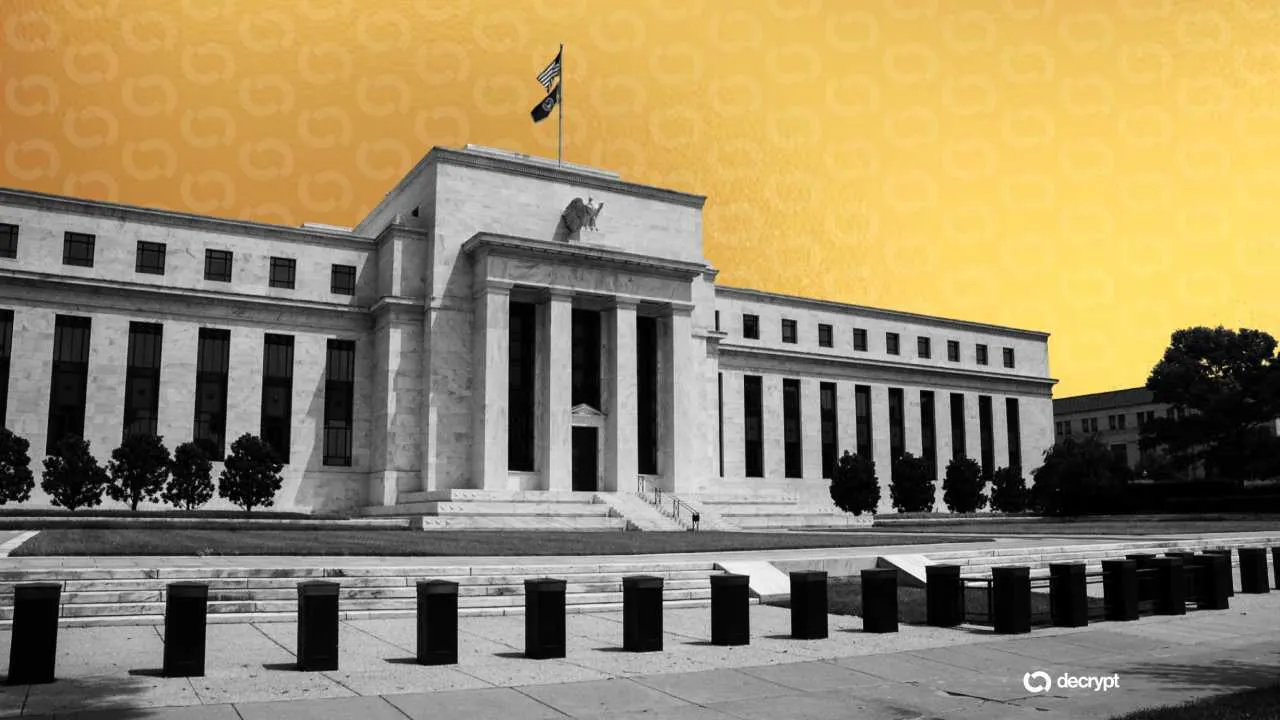
Warsh’s First Fed Meeting Comes In Hawkish
The Federal Reserve held its benchmark rate steady at 3.50% to 3.75% on Wednesday, marking the fourth consecutive hold. This decision occurred at Kevin Warsh’s inaugural meeting as chair. While the rate hold was anticipated, Warsh’s hawkish pronouncements were not.
Ahead of the meeting, the Fed released its updated “dot plot,” projecting a median year-end 2026 rate of 3.8%, an increase from the 3.4% forecast in March. This suggests the committee now anticipates at least one rate hike this year, rather than a reduction. Half of the members favor a hike as early as 2026, citing a robust labor market and inflation at a three-year high. Warsh himself abstained from submitting a dot.
This alone signaled a hawkish stance, but Warsh’s subsequent commentary solidified it. During his press conference, Warsh repeatedly emphasized the Fed’s commitment to price stability. This suggests he may not pursue the rate cuts many had expected from a nominee of President Trump. He also removed the easing bias from the official statement. Warsh made it unequivocally clear that returning inflation to the Fed’s 2% target is the paramount priority and that he intends to achieve it. The market interpreted this as a clear signal that rate hikes are imminent.
The market reaction was swift and significant. The 2-year Treasury yield surged by more than 16 basis points to 4.22%, and the Dow Jones Industrial Average fell 507 points after reaching a record high earlier in the day. Rate expectations were sharply repriced: the probability of a rate hike by the September meeting rose to approximately 70% (with a 20% chance of a double hike), a substantial increase from about 30% the previous day. The December meeting now reflects an 88% chance of at least one hike, and expectations for any rate cut in 2026 have evaporated.
For the cryptocurrency market, this development impacts the potential for a summer recovery and a “winter is over” bounce. That narrative was predicated on the resolution of geopolitical conflicts and a loosening of liquidity. A hawkish Fed, however, pushes in the opposite direction, with rising yields, a stronger dollar, and the absence of anticipated rate cuts creating tighter conditions for risk assets. Bitcoin saw a sharp decline, dropping to $64,000 in the aftermath. MicroStrategy (MSTR) fell 5%, and Stronghold Digital Mining (STRC) hit a new low at $89. However, given that stock markets have shown signs of recovery this morning and are trading in positive territory pre-market, this appears to be more of a crypto-specific issue than a broader market problem. The overhang of Michael Saylor’s holdings in MicroStrategy may be a significant driver here.
Regardless, it appears the market may be heading for a summer of volatility and potential downward pressure.
Illinois Becomes 1st State to Pass A Crypto Tax
Illinois Governor J.B. Pritzker has signed a $55.9 billion state budget that includes the Digital Asset Privilege Tax Act. This legislation introduces a 0.2% tax on cryptocurrency activity, set to take effect on January 1, 2027. This makes Illinois the first U.S. state to directly tax digital asset transactions, rather than solely taxing capital gains.
The tax is formally levied on digital asset brokers, including exchanges, custodians, and platforms that facilitate the exchange, transfer, or storage of crypto for their customers. These entities will be required to register with the state and remit 0.2% of the value of the transactions. Violations carry felony charges. Out-of-state brokers are also subject to the tax once their sales to Illinois residents exceed $100,000. The measure is projected to generate approximately $60 million in revenue.
The alarm within the industry stems from the expectation that the cost will not be absorbed by the businesses. The tax is structured like a sales tax, triggered by activity on behalf of a customer within the state. Consequently, brokers are expected to pass this cost directly onto their users. An Illinois resident who buys, sells, moves, or holds cryptocurrency through an exchange will effectively pay a 0.2% fee on every taxable transaction, not just on annual gains. This means the tax could apply simply for holding Bitcoin on an exchange like Coinbase, and then again for every subsequent buy, sell, or transfer.
Industry groups, including the Crypto Council for Innovation and Andreessen Horowitz (a16z), have decried the act as the first state tax that penalizes individuals simply for transacting in cryptocurrency. They argue that it singles out digital assets in a manner not applied to traditional financial instruments like stocks or bonds.
Furthermore, the precedent set by this legislation is a significant concern. If Illinois successfully implements this new tax without a substantial exodus of crypto companies, other states are likely to follow suit. There is also the possibility of the tax rate gradually increasing from 0.2% over time.
The timing of the Act’s passage makes it difficult to challenge. The provision was added late to the budget, Governor Pritzker has already signed it, and the legislature is no longer in session. This leaves limited immediate avenues for amendment before the 2027 implementation date. Legal challenges may be the only recourse, and based on initial reactions, these are anticipated to materialize swiftly.
This is one of the most anti-crypto laws in the U.S.
It taxes the exchange, transfer, or storage of digital assets—you buy BTC, you pay a tax; you hold your BTC on Coinbase, you pay a tax; and so on.
There is effectively no comparable state financial transaction tax on stocks,…
Leave a Reply