Author: Admin_Up

  • ‏نفت صعودی، بیت‌کوین نزولی؛ ترامپ: توافق با ایران پایان یافت

    ‏نفت صعودی، بیت‌کوین نزولی؛ ترامپ: توافق با ایران پایان یافت

    تنش در خاورمیانه با اعلام پایان تفاهم‌نامه آمریکا و ایران از سوی ترامپ به شدت تهدید می‌شود.

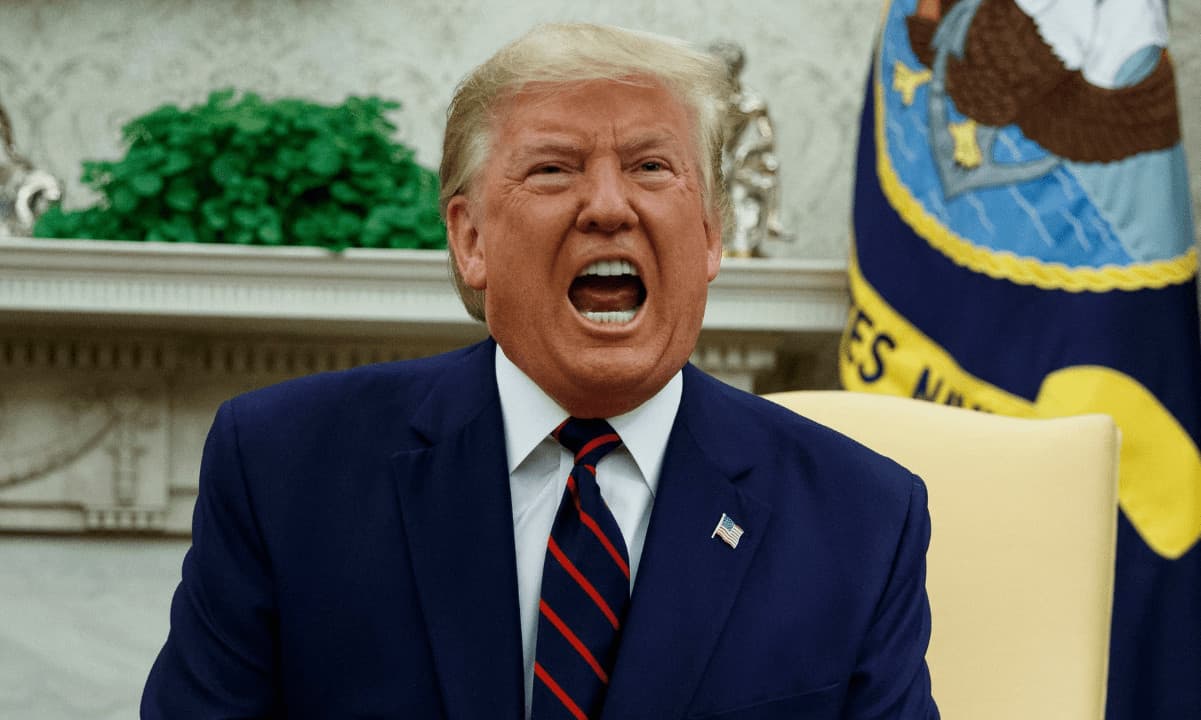
    دونالد ترامپ، رئیس‌جمهور آمریکا، اعلام کرد که تفاهم‌نامه (MoU) با ایران «پایان یافته است». این اظهارات به سرعت بازارهای مالی را تحت تاثیر قرار داد؛ قیمت نفت افزایش یافت و بیت‌کوین به زیر ۶۲ هزار دلار سقوط کرد.

    شبکه سی‌ان‌ان به نقل از ترامپ گزارش داد که وی معتقد است تفاهم‌نامه با ایران پس از شکست طرفین در دستیابی به توافق دائمی و از سرگیری حملات هوایی متقابل در منطقه، پایان یافته است.

    پیش از این، سپاه پاسداران انقلاب اسلامی اعلام کرده بود که در پاسخ به موجی از حملات آمریکا، مواضع نظامیان آمریکایی در بحرین و کویت را هدف قرار داده است. همچنین گزارش شد که پایگاه هوایی در بحرین که میزبان نیروهای آمریکایی است، مورد اصابت قرار گرفته است.

    ایالات متحده پیشتر حملات خود را آغاز کرده و تحریم‌های فروش نفت ایران را به عنوان «مجازات» حملات به کشتی‌ها در نزدیکی تنگه هرمز دوباره اعمال کرده بود.

    ترامپ در حاشیه اجلاس ناتو در آنکارا، پایتخت ترکیه، اظهار داشت که پس از شکست دورهای قبلی مذاکرات صلح، تمایلی به از سرگیری گفتگوها با تهران ندارد.

    همانطور که اشاره شد، قیمت نفت خام آمریکا (USOIL) بلافاصله پس از انتشار این خبر افزایش یافت و برای اولین بار از ۲۲ ژوئن به ۷۵ دلار رسید. این در حالی است که تنها چند روز پیش، با پیش‌بینی کاهش تنش در منطقه، قیمت نفت به زیر ۶۷.۵۰ دلار سقوط کرده بود.

    همانند آنچه معمولاً در زمان حملات جدید در خاورمیانه رخ می‌دهد، بیت‌کوین در جهت مخالف حرکت کرد. این ارز دیجیتال پیش از این از مرز ۶۴ هزار دلار عبور کرده بود، اما پس از حملات اولیه به تدریج ارزش خود را از دست داد.

    با این حال، پیام نگران‌کننده ترامپ باعث شد تا بیت‌کوین سقوط بیشتری را تجربه کند و دقایقی پیش به زیر ۶۲ هزار دلار رسید.

  • GhostSwap’s Non-Custodial Model Defies 2026 Hack Wave

    GhostSwap’s Non-Custodial Model Defies 2026 Hack Wave

    Crypto Hacks Surge in 2026, Highlighting Risks of Custodial Platforms

    Cryptocurrency hacks have become an unwelcome constant, but 2026 has seen a particularly alarming increase, especially targeting custodial platforms. This year alone, hundreds of millions of dollars have been siphoned from exchanges, bridges, and protocols that hold user funds in centralized wallets.

    While crypto news outlets frequently report on these high-profile breaches, a quieter, more resilient model is operating largely under the radar: non-custodial swaps.

    GhostSwap, a non-custodial crypto exchange, operates on a principle where user funds are never pooled together, thus eliminating a prime target for hackers. Instead, assets are routed directly from a user’s wallet to the intended destination, significantly reducing the attack surface compared to traditional custodial platforms.

    A Troubling Year for Crypto Security

    The statistics surrounding crypto hacks in 2026 are stark. In the first four months of the year, custodial platforms collectively lost over $670 million to various exploits. Some of the most significant incidents include:

    • KelpDAO: Suffered a $292 million loss on April 18, 2026, due to an infrastructure attack that exploited vulnerabilities in the LayerZero bridge. The custodial bridge and Layer 2 platform proved susceptible to a single point of failure within its cross-chain infrastructure.
    • Drift Protocol: This custodial perpetuals exchange on Solana lost $285 million on April 1, 2026. The breach resulted from a combination of smart contract vulnerabilities and compromised administrative keys, underscoring the risks associated with centralized administrative controls.
    • Grinex: A custodial CEX operating in Kyrgyzstan with ties to Russia, Grinex saw $13.7 million in USDT drained from 54 wallets on April 15, 2026. This incident demonstrated that even smaller, less visible exchanges are attractive targets.
    • Step Finance: Lost $28.9 million between January and February 2026 due to compromised executive email accounts and private keys. This breach highlighted the persistent vulnerability of human factors, such as email access and credential management.
    • Truebit Protocol: Experienced a $26.4 million exploit on January 9, 2026, attributed to “zombie code” within its smart contracts, serving as a reminder that legacy code can pose significant risks.
    • ResolvLabs: A custodial stablecoin issuer, lost $25 million in March 2026 due to a vulnerability in its AWS Key Management Service (KMS). The incident illustrated that even major infrastructure providers are not immune to configuration errors.

    The sheer scale of these losses raises serious questions about the safety of keeping assets on custodial exchanges.

    GhostSwap’s Non-Custodial Approach

    GhostSwap’s non-custodial model does not claim to be entirely immune to hacking, as no system in crypto is. However, it drastically minimizes the attack surface by removing the high-value targets that attackers typically seek.

    In a custodial exchange, users deposit assets into wallets controlled by the exchange, creating large, attractive pools of customer funds. GhostSwap, conversely, facilitates swaps where funds move directly from the user’s wallet to the destination address, bypassing any centralized storage. This means there is no “honey pot” of funds waiting to be drained.

    Traditional exchanges maintain extensive databases of user accounts, login credentials, and often identity records, creating multiple avenues for attack, including credential stuffing, password theft, and account takeovers. GhostSwap’s “no-account” approach eliminates these risks entirely, as there is no user database to breach, no login system to compromise, and no credentials to steal.

    By not requiring routine account creation or standard Know Your Customer (KYC) processes for most swaps, GhostSwap significantly reduces the amount of sensitive user information available for theft. The platform adheres to a data minimization strategy, collecting only what is essential to complete a swap. Consequently, even if GhostSwap’s systems were breached, there would be minimal valuable personal data for attackers to exfiltrate.

    Perhaps the most critical distinction is the absence of a centralized pool of customer assets. GhostSwap’s wallet-to-wallet swap model avoids maintaining a shared pool that could be emptied in a single successful compromise. In contrast, a single attack on a custodial platform can drain millions from a single wallet. GhostSwap’s model distributes risk across individual transactions, effectively eliminating the giant target.

    Built-in Safeguards: The Refund Address

    A key operational safeguard in GhostSwap’s model is the refund address. During a swap, users provide both a destination address and a refund address. This dual-address system offers a critical safety net. If a transaction encounters an issue, such as a routing problem, liquidity shortage, or other failure, the refund address provides a predefined destination for returning funds. This mechanism reduces the risk of assets becoming stranded during an incomplete swap and offers a clear recovery path. It’s a simple yet effective way to ensure automated recovery, with assets having a defined path back to the user.

    Peace of Mind in a Volatile Market

    The scenario of waking up to find an exchange drained of funds is no longer hypothetical for thousands of traders in 2026. When Drift Protocol lost $285 million on April 1, users were unable to access their assets for days. Similarly, the KelpDAO loss of $293 million weeks later left many users watching their holdings vanish with no clear recourse.

    Traders utilizing GhostSwap are shielded from this entire category of risk. Their funds move directly from their wallet through the swap route and land in their destination wallet, never being held in a GhostSwap-controlled pool where they could be swept away in a single attack.

    As custodial breaches continue to occur, GhostSwap users can avoid the panic of wondering if their funds were caught in the crossfire. In a year where over $670 million has been stolen from custodial platforms in just the first four months, GhostSwap’s non-custodial model has proven its value by remaining absent from hack-related news.

    Traders prioritizing asset security and peace of mind are increasingly turning to non-custodial swaps, not only for privacy but for the assurance that their funds are never held by the platform they are trading on. GhostSwap’s model does not eliminate all risk, but it significantly reduces the likelihood of a hack. When there is no large pool of funds, there is simply less to steal.

  • Bybit to Support Berachain v1.4.1 Upgrade

    Bybit to Support Berachain v1.4.1 Upgrade

    Bybit to Support Berachain Network Upgrade

    Cryptocurrency exchange Bybit has announced its support for the upcoming Berachain (BERA) v1.4.1 network upgrade. The upgrade is scheduled to occur on July 8, 2026, at 4:00 PM UTC.

    In preparation for the upgrade, Bybit will temporarily suspend Berachain (BERA) deposits and withdrawals starting at 3:30 PM UTC on July 8, 2026. Trading activities on the platform will remain unaffected during this period.

    Bybit has stated that there will be no separate announcements regarding the resumption of deposit and withdrawal services. Users wishing to be notified when these services are back online are advised to visit the Deposit or Withdrawal page and activate the “Set Alert” function.

    Further details regarding the network upgrade can be found in the official release notes.

  • Bybit to Support Cosmos ATOM v27.5.0 Upgrade

    Bybit to Support Cosmos ATOM v27.5.0 Upgrade

    Bybit to Support Cosmos Network Upgrade, ATOM Deposits and Withdrawals to be Temporarily Halted

    Cryptocurrency exchange Bybit has announced its support for the upcoming Cosmos (ATOM) v27.5.0 network upgrade. The upgrade is scheduled to occur on July 8, 2026, at approximately 02:40 PM UTC, or at block height 31,938,700.

    To facilitate a seamless transition, Bybit will temporarily suspend Cosmos (ATOM) deposits and withdrawals starting from July 8, 2026, at 02:00 PM UTC.

    Trading activities for ATOM will remain unaffected during this period.

    Bybit has stated that there will be no further announcements regarding the resumption of deposit and withdrawal services. Users wishing to be notified when these services are back online are advised to visit the Deposit or Withdrawal page and activate the “Set Alert” function.

    Further details concerning the network upgrade can be found in the official release notes.

  • Pi Network Announces Two Major Updates Amidst PI Token Price Plunge

    Pi Network Announces Two Major Updates Amidst PI Token Price Plunge

    Pi Network Enhances App Studio Amidst Token’s Continued Decline

    The core development team behind the Pi Network has rolled out a new suite of updates aimed at improving the user experience within the Pi App Studio. However, these enhancements appear to have done little to bolster the project’s native token, PI, which has once again plummeted to a fresh all-time low, less than ten days after its previous record low.

    Since launching the Pi App Studio last year, the team has prioritized enhancing the overall developer and user experience, notably by integrating artificial intelligence features. In a recent blog post, the team detailed two significant updates: one focusing on AI functionalities and the other on backend support.

    The backend support update is designed to enable persistent user experiences for applications developed through the Pi App Studio. This allows developers to “save and retrieve user-specific data across sessions,” facilitating “experiences that continue even after users leave and return,” according to the team.

    The second major improvement centers on expanding AI capabilities with an AI-assisted App Planning Phase. This feature aims to help developers refine their initial app ideas into more comprehensive concepts in a “more interactive and dynamic way.”

    These latest Pi App Studio updates follow previous significant announcements from the team, including the unveiling of SoloHost, Pi Sign-in, and PiVerify during Pi2Day on June 28.

    Despite the ongoing efforts to introduce new features and improvements, the project’s native token has struggled to find stable footing. PI has experienced numerous all-time lows throughout the current bear market cycle over the past year, with the most recent dip occurring just hours ago.

    After hovering around the $0.11 support level for several days, a broader market retreat has driven PI’s price sharply downward. The token has fallen by over 7% in the past 24 hours, significantly underperforming the general market’s 1-2% decline. According to CoinGecko data, PI has charted a new low of $0.1033. While its weekly loss stands at 10%, the long-term outlook is considerably more stark, with the token down 96.5% from its all-time high recorded in February 2025.

  • Anthropic Ditches Hidden Claude Code Tracker Amid Privacy Fears

    Anthropic Ditches Hidden Claude Code Tracker Amid Privacy Fears

    Anthropic has removed a hidden tracking mechanism from its AI coding assistant, Claude Code, after a security researcher discovered it was embedding undisclosed markers to identify user location, proxy usage, and potential connections to Chinese AI laboratories.

    Hidden Tracking System Uncovered

    The feature, identified in June by developer “Thereallo,” inserted signals within Claude Code’s system prompts. These signals were designed to flag users Anthropic suspected of circumventing restrictions or attempting to extract the AI model’s capabilities.

    “Anthropic probably wants to detect API resellers, unauthorized Claude Code gateways, and model ‘distillation attack’ pipelines,” Thereallo explained. “A custom ANTHROPICBASEURL pointing at a known reseller domain is a useful signal. A hostname containing deepseek or zhipu is also a useful signal.”

    While acknowledging the rationale behind Anthropic’s efforts to detect resellers, unauthorized gateways, and potential distillation attacks, Thereallo criticized the method. The developer pointed out that Claude Code concealed these tracking signals within system prompts using Unicode markers and encoded domain lists, rather than disclosing the system through official documentation or release notes.

    “This is not a malicious feature, but it is a weird choice for a developer tool that asks for trust,” Thereallo stated.

    Company Response and Broader Concerns

    Following the online revelation of the tracker, Anthropic engineer Thariq Shihipar confirmed on X that the system was introduced in March as an “experiment” to combat account abuse by unauthorized resellers and to safeguard Claude from distillation attacks.

    “The team has landed stronger mitigations since then and we’ve actually been meaning to take this down for a while,” Shihipar wrote last week. “We merged the [pull request] and this should be fully rolled back in tomorrow’s release.”

    The incident occurs as Anthropic has intensified its warnings regarding AI model distillation, a process where the outputs of one AI system are used to train another. While common in AI research, distillation raises national security concerns in a geopolitical context. Earlier this month, Alibaba banned employees from using Claude Code, citing security concerns and labeling the tool as “high-risk” software.

    In February, Anthropic accused Chinese AI developers DeepSeek, Moonshot AI, and MiniMax of employing fraudulent accounts to extract millions of Claude responses for training competing models. These accusations faced pushback from critics who questioned the distinction between these methods and practices prevalent across the AI industry.

    In April, Elon Musk testified that xAI had “partly” utilized OpenAI models during the training of Grok, characterizing distillation as a widespread industry practice. In June, Anthropic CEO Dario Amodei urged Congress to enhance protections against foreign AI extraction, alleging that Alibaba-linked operators had generated 28.8 million Claude exchanges using nearly 25,000 fraudulent accounts.

  • SEC’s Crypto Safe Harbor Expected This Month

    SEC’s Crypto Safe Harbor Expected This Month

    SEC Signals Crypto Rulemaking Imminent

    The U.S. Securities and Exchange Commission (SEC) announced Tuesday its intention to unveil long-awaited cryptocurrency rulemaking as early as this month, moving closer to establishing a regulatory framework for certain crypto-related activities in the United States.

    An updated SEC agenda for 2026 indicates a potential July release for the proposed rules, which would then be subject to a public comment period. These regulations are expected to govern the offering and sale of crypto assets, and will also incorporate “certain exemptions and safe harbors” for various forms of on-chain financial activity.

    This agenda update represents the most concrete sign to date that the SEC is preparing to formally introduce its “Regulation Crypto” proposal. SEC Chair Paul Atkins had previously hinted at the plan for months, initially suggesting a rollout in January.

    The proposed exemptions would offer crypto companies assurance that activities in specific areas, such as tokenized securities and decentralized finance (DeFi), would not result in enforcement actions from the SEC.

    “To deliver on President Trump’s goal to ensure that the United States is the crypto capital of the world, we are embracing innovation to bring more products onshore, creating clear rules of the road for capital raising with crypto assets, and providing clarity as to how market participants can custody and facilitate trading of tokenized securities onchain,” Atkins stated Tuesday.

    In March, the SEC chair indicated that a crypto safe harbor could apply to startups valued up to $5 million seeking to experiment with crypto assets within their first four years. It could also extend to entrepreneurs raising up to $75 million through investment contracts involving certain crypto assets, and to specific crypto assets once their creators have ceased all essential managerial efforts.

    Atkins had previously stressed that the uncertain status of Congress’s Clarity Act—a comprehensive bill aimed at legalizing most crypto activity in the U.S.—had influenced the SEC’s timeline for its own crypto regulations.

    Following over a year of legislative uncertainty, the Clarity Act faces a critical juncture in the Senate over the next few weeks. Industry stakeholders widely believe that if the bill does not pass by August, it is unlikely to become law this year, given the approaching November midterm elections.

  • Tether Invests $20M in Mercado Bitcoin for Latin American Expansion

    Tether Invests $20M in Mercado Bitcoin for Latin American Expansion

    Tether Invests $20 Million in Brazilian Crypto Exchange Mercado Bitcoin to Bolster Latin American Expansion

    Tether, a prominent issuer of stablecoins, announced Tuesday it will invest $20 million in a strategic financing round for Mercado Bitcoin, a Brazilian cryptocurrency exchange. The move signals a joint effort by both companies to expand blockchain-based financial services throughout Latin America.

    Founded in 2013, Mercado Bitcoin has evolved from a digital asset exchange into a comprehensive financial platform. Its offerings now include trading, tokenized investment products, credit and lending services, stablecoin-powered payments, banking infrastructure, and cross-border solutions. The company reports serving 4.5 million users, having issued over 2 billion Brazilian reais (approximately $387 million) in tokenized assets, and holding more than 10 licenses in Brazil and Europe, including a payment institution license from Brazil’s central bank.

    Strategic Partnership for On-Chain Finance

    Paolo Ardoino, CEO of Tether, stated in a release, “Tether’s mission is to build open, accessible, and efficient financial infrastructure for the world. Mercado Bitcoin has built exactly that, a regulated, full-stack on-chain financial platform serving millions of users across one of the world’s most dynamic financial markets.” He further commented on the exchange’s capabilities, noting, “Its depth of regulatory licensing, tokenization infrastructure, and integrated financial services is unmatched in Latin America. We look forward to supporting Mercado Bitcoin’s next phase of growth as a strategic partner and investor.”

    Funding Fuels Expansion and Innovation

    The newly acquired capital is earmarked for several key initiatives, including the expansion of payment infrastructure, scaling tokenized investment products for both retail and institutional investors, enhancing lending capabilities, advancing on-chain capital markets, and pursuing international growth.

    Roberto Dagnoni, Chairman and CEO of Mercado Bitcoin, emphasized the ongoing shift in finance, stating, “The discussion is no longer whether finance will move on-chain. That transition is already underway. The focus now is on building the infrastructure that will support tokenization, stablecoins, payments, and capital markets at scale, reshaping how money moves, investments are accessed, and capital is deployed.” He added, “Mercado Bitcoin has spent more than a decade building the regulated foundation for this future, and this investment strengthens our ability to accelerate the next generation of on-chain financial services in Brazil and across global markets.”

  • BONK Treasury Vote: Hack or Governance Dispute?

    BONK Treasury Vote: Hack or Governance Dispute?

    Anonymous Wallet Drains $21 Million from BonkDAO Treasury in Governance Vote

    An anonymous cryptocurrency wallet has successfully drained $21.2 million from the BonkDAO treasury by strategically acquiring BONK tokens and leveraging them to pass a governance proposal. The incident, which saw the attacker profit $16.8 million, has ignited a debate within the crypto community, dividing opinions between those who label it a theft and those who argue the Decentralized Autonomous Organization (DAO) functioned as intended.

    The Mechanics of the “Theft”

    Blockchain analytics firm Lookonchain reported that the operation began on June 30 when the attacker submitted a proposal to BonkDAO requesting the transfer of 4.426 trillion BONK tokens, valued at approximately $21.2 million, to a wallet under their control. For the proposal to pass, it required the support of at least 1% of the total BONK supply, which, according to CoinGecko data, stands at just under 88 trillion tokens.

    Beginning around July 4, the attacker proceeded to purchase 882.285 billion BONK tokens on the Bybit and Binance exchanges. This amount was precisely enough to meet the 1% quorum requirement (879.95 billion tokens) needed to vote on their previously submitted proposal. Subsequently, the attacker cast a “yes” vote with their entire holdings of 882.285 billion BONK, thereby passing the proposal and enabling the transfer of the 4.426 trillion tokens to their controlled wallet.

    Chainalysis, another firm tracking on-chain activity, corroborated Lookonchain’s findings. The firm stated that the attacker acquired their tokens between July 4 and 5, sourcing some from major exchanges and borrowing others through decentralized finance (DeFi) platforms.

    Aftermath and BonkDAO’s Response

    Approximately nine hours after securing the $21 million in tokens, the attacker transferred $188,000 to OKX, a figure Peckshield places at $148,000. The remaining funds were then deposited into a newly created DAO, dubbed “BONK 2.0,” which the attacker established to govern the stolen assets. Chainalysis indicated that this new DAO is controlled by the malicious voter, the exploiter wallet, and a third wallet with reported financial ties to the voter wallet.

    BonkDAO acknowledged the treasury loss in a statement released on X. The DAO confirmed it had identified the exchange wallets used to acquire the voting tokens prior to the proposal’s success. It also stated that law enforcement had been notified and that the DAO was coordinating with exchanges, bridges, and the Solana Foundation to “manage the situation.”

    Following the news of the incident, the BONK token experienced a decline in value. At the time of writing, CoinGecko data showed BONK trading around $0.00000438, representing a 7.4% drop in 24 hours, though it remained up nearly 5% for the week.

    This event contributes to a broader trend of DeFi platforms losing close to $1 billion to malicious actors this year, as reported by CryptoRank.

    Divergent Views on the Incident

    However, not all observers agree that a crime has occurred. Ogle, an advisor at World Liberty Financial, questioned the involvement of law enforcement, characterizing the event as a standard DAO function. “Someone legitimately bought a lot of tokens, proposed a DAO vote, the vote passed with almost no opposition, and the proposal was executed,” Ogle wrote on X. They further suggested that reports of the voting website being inaccessible during the voting period, if true, would raise separate concerns but did not necessarily render the on-chain vote illegal.

    Conversely, others, such as Ripple CTO Emeritus David Schwartz, argued that using governance control over a shared treasury for personal gain could constitute fraud, citing a fiduciary duty owed by governance participants to other stakeholders. Schwartz also noted that BonkDAO’s lack of a formal legal structure could expose participants to partnership-style liabilities in certain jurisdictions.

  • Grok AI Forecasts Massive XRP Surge by 2026

    Grok AI Forecasts Massive XRP Surge by 2026

    XRP Price Prediction: Grok AI Forecasts Significant Gains by 2026

    Grok AI, the artificial intelligence model associated with Elon Musk, has released a price prediction for XRP that highlights an extensive array of potential partnerships, suggesting a substantial surge for the cryptocurrency by the end of 2026. The model forecasts XRP reaching between $5 and $8, representing a potential four to sevenfold return on investment from its current trading price.

    The Bull Case: Institutional Adoption and Regulatory Clarity

    The optimistic outlook is underpinned by a narrative of significant global financial institutions quietly building on the XRP Ledger while the asset’s price remains subdued. XRP is currently trading around $1.15. The core of this bullish thesis hinges on the resolution of the Securities and Exchange Commission (SEC) lawsuit, anticipated in August 2025. A favorable outcome would formally classify XRP as a non-security on exchanges, removing a major legal impediment that has historically deterred substantial institutional investment.

    The report notes that live US spot XRP Exchange-Traded Funds (ETFs) have already attracted over $1.5 billion in cumulative inflows, actively absorbing a significant portion of the available XRP supply.

    Furthermore, the circulation of the RLUSD stablecoin has surpassed $1.5 to $1.7 billion, demonstrating strong dominance within the XRP Ledger (XRPL). The list of partnerships cited is described as genuinely impressive. SBI Japan is implementing RLUSD, JPMorgan is utilizing the XRPL for tokenized settlements, Mastercard has named Ripple a partner in its AI payments network, Flutterwave is expanding its reach across Africa, and Bitso is managing operations in Latin America.

    The XRPL itself is undergoing continuous maturation, with real-world assets, automated market makers, and lending protocols all becoming operational. Collectively, these developments position XRP as transitioning from a regulatory overhang to a proven institutional utility, serving as a fast and low-cost bridge asset for cross-border payments.

    The pending CLARITY Act, if passed, would permanently codify XRP’s commodity status, potentially unlocking even broader institutional capital on top of existing initiatives. In a favorable macroeconomic environment characterized by accelerating ETF inflows, rising RLUSD and on-demand liquidity volumes, and supply tailwinds from ETF accumulation, the model identifies the $5 to $8 range as a confident bull surge target.

    The Bear Case: Delayed Adoption and Macro Volatility

    The bearish scenario presented by Grok AI is described as relatively contained. Should the passage of the CLARITY Act be delayed until 2027 or if enterprise adoption progresses slower than anticipated amidst macroeconomic volatility, XRP could consolidate between $2 and $3 without achieving a significant breakout. Even in this scenario, it would still represent a meaningful return from current levels, underscoring the model’s view of a favorable risk-reward profile at the $1.15 price point.

    Technical Analysis: Chart Patterns and Momentum

    On the daily chart, XRP is trading at $1.15532, following a considerable decline from highs exceeding $3.65 reached in early August of the previous year. This extended downtrend was briefly interrupted by a bounce toward $2.40 in November before sellers regained control.

    The most recent downward movement saw XRP dip below $1.00 multiple times in June. However, buyers eventually intervened with sufficient conviction to push the price back above this level and maintain it. This recovery from the $1.00 floor is considered the most significant chart development in months, given the number of times this level was tested and its psychological importance for an asset that struggled to sustain above $1.00 during the pre-ETF era.

    Immediate resistance is identified near $1.20, a level the price approached on the current day’s candle high of $1.16 but has not yet decisively cleared. A more significant ceiling is observed near $1.60, where multiple rejections occurred earlier this year. Support is now established at $1.00, the floor that was recently defended after several tests. The broader chart structure continues to show a series of lower highs dating back to August, indicating that a confirmed reversal has not yet materialized despite the encouraging bounce.

    Momentum on the daily candles appears more constructive than at any point in recent months, with larger green candles appearing more frequently and the $1.00 level holding firm on multiple tests rather than breaking. If XRP can close convincingly above $1.20 and sustain that level in the coming sessions, the institutional accumulation narrative described by Grok AI may begin to manifest in price action, complementing the fundamental developments.

    The Search for Asymmetric Returns in Early-Stage Infrastructure

    The article also touches upon the broader market dynamics, noting that Bitcoin, Ethereum, and XRP have been pressing against similar resistance levels for weeks. The catalyst for the next significant move is often perceived as being just one data print away, with institutional inflows perpetually projected for the following quarter. Traders awaiting a breakout are described as waiting on decisions made by others.

    Early-stage infrastructure projects, however, operate under different rules. Copilot AI predicts that capital that would be negligible at the scale of Bitcoin can significantly impact smaller, undiscovered projects. The potential for asymmetric returns is found in the discrepancy between a project’s intrinsic value and its current market valuation, a gap that exists when a project has yet to gain widespread recognition.

    LiquidChain: Addressing Cross-Chain Fragmentation

    The piece further discusses the issue of cross-chain fragmentation, which has been extracting value from DeFi participants since the advent of bridges. Bitcoin, Ethereum, and Solana were engineered as independent systems with no shared architecture or intent to interoperate. Transactions crossing these boundaries incur costs in fees, slippage, and execution failures. Bridges, intended as a solution, have instead become a mechanism for these problems to accrue fees.

    LiquidChain is presented as a solution that aims to eliminate these fees entirely by operating three networks within a single execution layer, allowing a single deployment to reach all of them without any cross-chain tax. Grok AI has flagged LiquidChain as a project worth watching. Its presale is priced at $0.01454, with over $860,000 raised. The article acknowledges that its execution is unproven and adoption is unknown, contrasting it with established assets that offer predictable trajectories toward visible ceilings. LiquidChain is positioned as an entry point that could disappear once the market discovers its value.