Author: Admin_Up

  • Gillibrand Proposes Ban on Politicians Launching Meme Coins

    Gillibrand Proposes Ban on Politicians Launching Meme Coins

    Gillibrand Renews Call for Ban on Politicians’ Crypto Ventures After Trump Earnings Report

    Following revelations this week that President Donald Trump generated over $1.2 billion from his cryptocurrency activities last year, New York Senator Kirsten Gillibrand has reiterated her call for a prohibition on the issuance and promotion of digital assets by politicians and their spouses.

    The proposed ban would encompass meme coins, a sector from which both Trump and First Lady Melania Trump reportedly profited significantly over the past year. The president alone is said to have earned more than $635 million from a single Solana-based meme coin.

    “This is a commonsense requirement that should get broad bipartisan support—public officials and their spouses should not be issuing meme coins,” Gillibrand stated in a press release.

    She added, “We cannot let self-dealing destroy an opportunity to strengthen consumer protections, crack down on illicit finance, and expand economic opportunity for the millions of Americans our financial system has left behind.”

    Gillibrand, recognized as one of the more pro-cryptocurrency Democratic senators, has been at the forefront of advocating for ethical conduct among congressional staff. Earlier this year, she spearheaded a bipartisan initiative to prevent members of Congress from trading on prediction markets, amid increasing concerns about potential insider trading. These concerns have been amplified by allegations that individuals close to the White House may be unfairly benefiting from non-public information.

    She has also been a vocal proponent of banning stock trading for public officials while they are in office.

    “The time to act is now—and that must include ethics reforms that prohibit members of Congress, the president, and their spouses from cashing in on their office,” she asserted.

    Ethical considerations have also been a significant hurdle in advancing key cryptocurrency legislation, such as the Clarity Act market structure bill. In May, the senator indicated that the bill would not proceed without an ethics provision specifically addressing President Trump’s activities.

    However, even as the bill advanced through a crucial Senate vote, an agreement on ethical guardrails for public officials had not yet been finalized. Despite this, researchers at Galaxy estimate the bill’s chances of passing this year have diminished to approximately 50-50, attributing the uncertainty to time constraints rather than issues with the bill’s content.

  • Binance Unveils Major User-Facing Update

    Binance Unveils Major User-Facing Update

    Binance Expands to Philippines Amid EU Regulatory Scrutiny

    The world’s largest cryptocurrency exchange, Binance, is facing significant challenges with European Union financial regulators, a situation that has sparked concern among its user base. Despite these European hurdles, Binance has simultaneously bolstered its global footprint with its official entry into the Philippines.

    The expansion was announced by Binance’s co-founder and chief customer service officer, Yi He, via her personal X account. She shared a document indicating that the Securities and Exchange Commission (SEC) in the Philippines has granted final approval to Blockshoals Technologies Inc. to pilot its financial products and services within the regulator’s sandbox environment.

    Under this crypto-asset intermediary model, Blockshoals’ Stratbox will provide Filipino users with access to a suite of offerings facilitated by its global crypto-asset service provider (CASP) partner, Binance.

    Binance founder Changpeng Zhao, widely known as CZ, also acknowledged the development, retweeting Yi He’s post and commenting, “Real liquidity for Philippines.”

    The move into the Philippines has been met with mixed reactions from users. Some view the expansion as a positive step for cryptocurrency adoption in the region. However, others are skeptical, suggesting the announcement is an attempt to divert attention from Binance’s ongoing regulatory issues in the European Union.

    The exchange recently withdrew its Markets in Crypto-Assets (MiCA) license application from the Hellenic Capital Market Commission (HCMC) in Greece. This decision leaves Binance without the necessary authorization to operate within the EU after July 1. Binance has stated that user assets remain secure and reiterated that Europe is a crucial market for its operations, expressing hope to secure the required permit in the near future. In the interim, some clients have reported receiving withdrawal instructions from the company, while others appear unaffected.

    Adding to its European regulatory pressures, a group of 1,700 UK investors has initiated a collective lawsuit against Binance and CZ in London’s High Court. The claimants allege that the exchange offered unregulated products, resulting in substantial financial losses, and failed to provide adequate client protection.

  • Samsung, Others Dispute Participation, Challenging Open USD Membership Claims

    Samsung, Others Dispute Participation, Challenging Open USD Membership Claims

    Major Firms Dispute Role in Open USD Consortium

    Several prominent South Korean companies have stated they have not formally joined the newly announced Open USD (OUSD) consortium, despite being listed among its participating organizations.

    Open Standard, the independent entity behind the stablecoin, had previously announced the formation of a consortium of over 140 businesses to launch OUSD, a dollar-pegged stablecoin, later this year. The initial announcement included a roster of globally recognized companies across various sectors, such as Visa, Mastercard, BlackRock, Google, Ripple, and Standard Chartered. Among the South Korean entities named were Samsung Electronics, Dunamu, Shinhan Financial Group, KakaoBank, K Bank, Hyundai Card, KB Kookmin Card, BC Card, Hana Card, Samsung Card, Woori Card, NH Nonghyup Card, and Hanwha.

    However, several of these companies have since contested the nature of their involvement.

    According to a report by Chosun Biz, a representative for Samsung Electronics informed the publication that the company had not engaged in any official discussions with the OUSD issuer and was unaware of any potential role it might play within the consortium. Similarly, Shinhan Financial Group, Dunamu, and K Bank indicated that Open Standard had merely inquired about their interest in participating in OUSD, and they had responded by stating they would review the proposal. Their names were reportedly added to the consortium list without any formal commitment.

    One company representative further stated that their firm only learned of its inclusion as an alliance member through domestic media reports. This representative added that the company had merely expressed a willingness to consider participation under favorable circumstances and was surprised to find itself listed as a member.

    These assertions were later corroborated by Gabor Gurbacs, founder of digital asset firm Pointsville. Gurbacs reported speaking with several companies listed in the OUSD consortium, all of whom informed him that they had never signed or agreed to participate. He suggested that either the media had significantly misrepresented the situation or the published participant list was misleading.

    The claims have also ignited a debate on social media platform X. One user characterized the practice of listing companies before deals are finalized as a “classic legitimacy-borrowing” tactic, while another commented that the situation poses a significant credibility risk.

  • Zcash Ironwood Upgrade Aims to Restore Confidence Post-ZEC Crash

    Zcash Ironwood Upgrade Aims to Restore Confidence Post-ZEC Crash

    Zcash Upgrade Nears Testnet Activation Amid Counterfeiting Vulnerability Concerns

    Zcash developers are advancing the network’s upcoming Ironwood upgrade, with a testnet launch anticipated soon. This critical update aims to bolster the privacy-focused cryptocurrency’s integrity by enabling users to verify its circulating supply, a feature urgently needed following the recent disclosure of a significant counterfeiting vulnerability.

    The Ironwood upgrade, first announced in June, proposes a new shielded pool and accounting system designed to allow for public verification of Zcash’s circulating supply while maintaining transaction privacy. This initiative is intended to address the uncertainty created by a critical vulnerability discovered in the Orchard shielded pool last month. The flaw, uncovered by security researcher Taylor Hornby, could have allowed for the undetected creation of unlimited counterfeit ZEC.

    The revelation of the vulnerability sent shockwaves through the market, causing Zcash’s price to plummet by more than half in just two days, falling from over $600 to a low of around $300. While ZEC has since recovered approximately half of those losses, trading recently at $457 according to CoinGecko data, the incident underscored the need for enhanced supply integrity mechanisms.

    Zcash co-founder Zooko Wilcox stated that Shielded Labs’ primary focus is security, particularly with a new project dubbed “Zero,” aimed at supporting enterprise users such as mining pools, exchanges, and wallets. “Our current focus within the Zero project is to help them prepare to safely make the transition to Ironwood,” Wilcox wrote.

    Although developers patched the Orchard vulnerability on June 1, Zcash’s inherent privacy features meant there was no cryptographic method to confirm if the flaw had been exploited. This lack of certainty prompted the proposal of the Ironwood upgrade to eliminate such ambiguities.

    Developers have reported substantial progress toward Ironwood’s activation. Sean Bowe, a Zcash developer, emphasized on X (formerly Twitter) on Thursday that “Ironwood’s prompt and safe activation on Zcash mainnet is extremely important to our users, in addition to the formal verification work we’re doing in parallel to provide reassurance that there aren’t any supply integrity concerns.” He added that “sufficient hash rate is signaling technical readiness for the mainnet upgrade.”

    Bowe acknowledged that some wallets might not be ready for the upgrade in time but stressed that this “does not justify delaying Ironwood, given there will be adequate alternatives and sufficient time on testnet for anyone who needs it.”

    Ecosystem Migration and Deployment Challenges

    Jason McGee of Shielded Labs outlined a dual focus for development: the Ironwood network upgrade (also referred to as NU6.3) and the migration of the Zcash ecosystem from its legacy Zcashd software to the new Z3 stack. The Z3 stack comprises the Zebra full node, the Zaino indexing service, and the Zallet wallet.

    McGee indicated that development is proceeding on schedule, with testnet activation of the new consensus rules “expected shortly.” The current objective is to complete both the Ironwood upgrade and the Z3 migration by late July. He credited the teams at Project Tachyon, Valar Group, ZODL, the Zcash Foundation, and Shielded Labs for their significant progress in recent weeks.

    Formal verification of the new circuit is also ongoing, with the aim of completing a proof of soundness before Ironwood’s activation.

    However, McGee highlighted that a larger challenge lies in preparing infrastructure providers for the transition to the Z3 software stack. Key components like Zallet and Zaino are still under development, leaving exchanges, mining pools, and wallet providers with a limited window to deploy and test the new systems before Ironwood goes live.

    “The consistent feedback we’ve received is that completing both the Ironwood upgrade and the migration to Z3 on the current timeline will be challenging,” McGee stated, noting that a recent questionnaire revealed a mixed response, with some partners indicating readiness and others requesting additional time.

    To mitigate deployment risks, several options are under consideration, including delaying Ironwood, conducting independent third-party security audits prior to deployment, or temporarily supporting Ironwood through Zcashd while partners finalize their migration.

    “Ultimately, we all share the same goal to activate Ironwood as quickly as possible while making sure our partners can safely migrate away from Zcashd,” McGee concluded. “We think the focus over the coming weeks should be on making that transition as smooth and secure as possible.”

  • Farage Faces Scrutiny Over Alleged Crypto Lobbying

    Farage Faces Scrutiny Over Alleged Crypto Lobbying

    Reform UK leader Nigel Farage is reportedly facing an investigation by Parliament’s standards watchdog over allegations that he lobbied the Bank of England on cryptocurrency policy in a manner that could benefit his largest donor. The donor, a significant investor in stablecoin issuer Tether, has provided substantial financial backing to Farage.

    Standards Watchdog Investigation

    Phil Brickell, a Labour MP and chair of the parliamentary group on anti-corruption and responsible tax, has formally requested that the Parliamentary Commissioner for Standards, Daniel Greenberg, scrutinize Farage’s interactions with the central bank. Parliamentary regulations prohibit MPs from contacting officials or ministers on behalf of individuals who have paid them for a period of 12 months following such a payment.

    Brickell stated to The Guardian that prior to meeting with the Governor of the Bank of England, Farage “openly championed Tether, criticised proposed restrictions on stablecoins and vowed to challenge the Bank’s approach.” He added that Farage has since “claimed credit for persuading the Bank to soften its position.”

    Allegations of Undue Influence

    The complaint centers on a private meeting last September where Farage reportedly urged Governor Andrew Bailey to abandon plans for a central bank digital currency, often referred to as “Britcoin.” Farage has previously declared he would go to prison to prevent its implementation. He later claimed responsibility for influencing the Bank to moderate its stance. Last week, the Bank dropped a proposed £20,000 cap on individual stablecoin holdings, a measure Farage had publicly opposed.

    A second Labour MP, Joe Powell, has written to Governor Bailey seeking details of the meeting. Powell argued that “Decisions relating to the UK’s financial system, including those involving bank digital currencies, must be made in the public interest and on the basis of rigorous, independent assessment, not shaped behind closed doors to benefit individual financiers.”

    Brickell emphasized that the case extends beyond the cryptocurrency sector, focusing on whether an MP who has “received millions from one individual” should advocate for policies that could increase the value of that donor’s investments.

    Donor and Financial Links

    The donor in question is Christopher Harborne, a British billionaire based in Thailand. Harborne holds a 12% stake in USDT issuer Tether and is ranked sixth on The Sunday Times Rich List.

    The Reform UK leader accepted an undeclared £5 million ($6.7 million) gift from Harborne before standing in the July 2024 general election. At the time of the gift, Farage had not announced his intention to run for Parliament, and the donation was not disclosed to parliamentary authorities.

    According to The Guardian, Farage also received two £25,000 political donations from Harborne in January 2025 and February 2026, designated for trips to the U.S. and the Chagos Islands. Furthermore, Reform UK received an additional £15 million from the billionaire between August of last year and February. Daniel Greenberg is conducting a separate investigation into whether Farage should have declared the £5 million personal gift.

    Responses and Denials

    Both Farage and Harborne have asserted that the billionaire sought no reciprocal benefits. However, Farage’s explanations for the £5 million gift have varied, shifting from a contribution to his security, to a reward for his Brexit campaigning, and most recently, to funds he can spend as he wishes. He has described the gift as “unconditional” and “a purely private matter.” Reform UK has dismissed the broader allegations as “utter rubbish,” while Labour has accused Farage of evading scrutiny.

    The Bank of England stated that the September meeting was part of its regular engagement with political figures and acknowledged that Farage and Bailey held differing views on the digital pound. The Bank has not released any minutes from the meeting.

    Farage has previously positioned himself as a “champion” of the cryptocurrency space, advocating for the UK to establish a Bitcoin strategic reserve and pushing for reduced capital gains taxes on digital assets.

  • US Citizen Accused of Spying for Iran in Israel

    US Citizen Accused of Spying for Iran in Israel

    American Student Indicted on Espionage Charges in Israel

    An American citizen studying at an ultra-Orthodox seminary in Jerusalem has been indicted on espionage charges, marking what authorities describe as the first prosecution of a U.S. national amid an intensifying crackdown on Israelis allegedly recruited to spy for Iran.

    Eli Lavon, 21, was formally charged Friday with two counts of contact with a foreign agent and 14 counts of communicating information that could benefit an enemy, according to an indictment filed by the State Attorney’s Office.

    Prosecutors allege the case began in November 2025, when Lavon, during a visit to relatives in the United States, responded to a job posting on the Telegram messaging app. A month later, as he was returning to Israel, an individual claiming to represent Iranian intelligence made contact and began assigning him surveillance tasks, the indictment states.

    These alleged tasks included filming an abandoned building in a religious Jerusalem neighborhood and recording footage inside a grocery store. In one instance, prosecutors claim, Lavon was instructed to conceal a cigarette pack containing a note reading “The job is complete” in a trash can at a Jerusalem shopping mall.

    He was reportedly paid in cryptocurrency for the material he provided, communicating through two Telegram accounts and three mobile phones, according to the charges.

    After severing contact with the first handler, prosecutors say Lavon began communicating with a second Iran-linked operative. This involved hiding a flash drive wrapped in currency at a restaurant and sending a photograph of his passport. The second handler allegedly pressed Lavon for the names of his fellow seminary students, which he declined to provide, the indictment details. Prosecutors estimate his combined payments from both handlers totaled approximately $1,379.

    “This indictment illustrates how foreign intelligence agencies attempt to exploit the digital sphere to identify, recruit, and operate individuals from within Israel,” said Ronit Shentzer Yaakobi of the Jerusalem District Attorney’s Office. “It also highlights the critical importance of remaining vigilant and immediately severing contact when approached in this manner.”

    Lavon’s attorney, Raz Bar Tzvi, told CNN that being contacted online by a foreign actor does not automatically make someone a spy. He argued that the facts presented in the indictment do not support the charges and declined to state how his client would plead.

    Since 2023, Israel has indicted approximately 60 individuals on Iran-related espionage charges. Officials claim that several sites allegedly surveilled by such recruits were subsequently targeted in Iranian missile attacks.

  • Tokenized Stocks Boost Altcoins in Crypto Downturn

    Tokenized Stocks Boost Altcoins in Crypto Downturn

    Tokenized Stocks Emerge as Altcoin Lifeline Amid Crypto Market Reset

    Tokenized stocks are capturing attention as one of the few sectors still attracting capital, with financial services provider BIT arguing in a July 3 report on X that the segment is emerging as a rare bright spot while traditional altcoin narratives continue to falter.

    This perspective reflects a broader shift in crypto markets, where investors are increasingly focusing on projects linked to real-world assets rather than speculative tokens facing significant selling pressure.

    According to the analyst behind the BIT report, the crypto market is undergoing a structural transformation after years of relying on meme coins, DeFi tokens, and novel narratives to draw in capital.

    Over the past two years, more than $111 billion worth of tokens have been unlocked and entered the market, averaging approximately $700 million weekly. The report suggests this persistent supply overhang has dampened retail participation and exerted downward pressure on prices.

    This pressure has been exacerbated by the changing nature of crypto rallies. In 2024, the average uptrend for a coin lasted about 61 days, a stark contrast to just 19 days in 2025. Furthermore, institutional investors, through ETF flows and corporate reserves, have largely directed their capital towards established assets like Bitcoin (BTC), leaving the market’s long tail of speculative tokens underserved.

    Since the launch of spot Bitcoin ETFs, BTC has delivered nearly 260% returns for the average crypto hedge fund. BIT contends that the established altcoin playbook is no longer yielding the same results. For context, the Altcoin Season Index currently stands at around 54 out of 100, falling well short of the 75 threshold typically considered a signal for a genuine altseason.

    Against this backdrop, exchanges are actively seeking new avenues for growth. BIT’s independent analyst believes tokenized stocks are creating a new area of demand. The analyst highlighted Solana as the leading blockchain for tokenized equities, accounting for 95% of the global trading volume in this category.

    The report suggests that projects such as Jupiter and Jito are potential beneficiaries, as they operate across different segments of the tokenized equity infrastructure. Other notable players include Ondo, Hyperliquid, Backpack, and Pyth. Ondo, in particular, has surpassed $1 billion in total value locked (TVL) in less than eight months. Meanwhile, Hyperliquid’s perpetual stock products now represent over 35% of trading activity on its platform.

    Recent industry announcements indicate that crypto exchanges are heavily investing in tokenized equities. For instance, Coinbase announced in June its intention to launch tokenized trading for non-US customers, with assets backed 1:1 by the underlying security and offering full shareholder rights, including dividends. Binance has also introduced bStocks on the BNB Chain. Other platforms, such as Kraken and Bybit, already list numerous xStocks for spot trading.

    Earlier this year, Jupiter and Ondo Finance announced plans to introduce over 200 tokenized US stocks and ETFs to Solana through Ondo Global Markets. These developments lend support to BIT’s assertion that tokenized equities are emerging as one of the few sectors within crypto still actively developing new products, while much of the altcoin market grapples with weak demand and sustained selling pressure.

  • Claude AI Predicts Massive XRP Surge by End of 2026

    Claude AI Predicts Massive XRP Surge by End of 2026

    Anthropic’s Claude AI Model Predicts Starkly Different XRP Futures Based on Key Legislation

    A new artificial intelligence model from Anthropic, Fable 5, has forecast two dramatically divergent price paths for XRP in the latter half of the year, hinging on a single legislative event that could be resolved within days. The AI predicts XRP could reach $5.00 by year’s end if the CLARITY Act is passed, but would fall to $0.85 if it is not.

    Legislative Catalyst Drives Bull Case

    The bullish outlook for XRP is more precisely tied to legislative timing than any other prediction in this analysis. XRP is currently trading at $1.10, and the Fable 5 model identifies the CLARITY Act as the sole pivotal factor for its entire second-half forecast. This bill successfully passed the Senate Banking Committee on May 14 and is now awaiting a vote on the Senate floor. The White House is reportedly pushing for its signing by July 4.

    Key figures in the financial regulatory landscape, including SEC Chair Atkins, CFTC Chair Selig, and Treasury Secretary Bessent, have publicly expressed their support for the CLARITY Act. Its passage would formally classify XRP as a digital commodity. This classification would legally open the door for pension funds, sovereign wealth funds, and endowments, which are currently prohibited from holding XRP, to invest regardless of their interest. This institutional access is identified as the primary driver for a potential re-rating of XRP’s valuation.

    Institutional Inflows and Partnerships Bolster Outlook

    The potential for institutional adoption is further underscored by existing market trends. Spot XRP Exchange-Traded Funds (ETFs) have already seen cumulative inflows of $1.48 billion since November 2025 and have experienced only two negative weeks since mid-March, indicating consistent net buying by institutions even during market downturns.

    This week also saw significant developments in partnerships. Mastercard named Ripple as a settlement partner for its new AI payments network, Rakuten launched its XRPL integration, and Standard Chartered has set a base target of $2.80 for XRP, factoring in the CLARITY Act’s passage in the later cycle. A swift signing of the bill in July alone could propel XRP towards the $5.00 mark, as ETF inflows are projected to accelerate into the $4 to $8 billion range, a scenario modeled by analysts for such an outcome.

    Bear Case Hinges on Legislative Failure and Market Pressure

    Conversely, the bear case presented by the Fable 5 model is stark and unsoftened. Polymarket currently prices the likelihood of the CLARITY Act passing this year at just 42%, suggesting that the market perceives failure as more probable than success.

    Adding to this bearish sentiment, 1 billion XRP are scheduled to unlock from escrow each month, creating consistent selling pressure. If this legislative delay is indefinite and Bitcoin fails to reclaim the $80,000 level, the model anticipates selling pressure will continue to overwhelm demand from ETFs. Under such circumstances, Fable 5 projects XRP to grind back to the $0.85 zone. This level represents the 2024 pre-breakout base, the price point XRP held before the rally driven by the ETF era.

    Technical Analysis Shows Indecision Amidst Downtrend

    The daily chart illustrates XRP trading at $1.0990, following a year-long decline from highs above $3.65 reached in early August. This downward trend has been largely unidirectional, punctuated only by brief bounces that consistently set lower highs.

    Currently, XRP is hovering around the $1.00 psychological floor, oscillating between $1.03 and $1.10 over the past several days with no clear directional momentum. This tight range trading at a significant round number, following an extended downtrend, typically resolves in a sharp move once a catalyst emerges. The Fable 5 model has explicitly identified this catalyst.

    Immediate resistance is observed near $1.20, a level XRP has failed to close above in recent weeks. A more substantial resistance barrier lies around $1.60, where multiple rallies earlier this year faltered. Support is holding at $1.00, the psychological floor that has been tested repeatedly this past week. The $0.85 zone, representing the bear case scenario, sits clearly below this level on the chart as the next significant structural support if the $1.00 floor gives way.

    The broader technical pattern continues to show a series of lower highs dating back to August. The most recent price action features small candle bodies and indecisive wicks, reflecting genuine market uncertainty rather than directional conviction. Given that the timing of the CLARITY Act vote and the price prediction are intrinsically linked, the outcome of the bill in the coming weeks will likely determine which of these two scenarios plays out by December.

    Broader Market Dynamics and Emerging Opportunities

    Bitcoin, Ethereum, and XRP have been consolidating against similar resistance levels for weeks, with the catalyst for the next significant move seemingly always one data print away.

    In contrast, early-stage infrastructure projects operate under different dynamics, according to Copilot AI. Capital that would be negligible at the scale of Bitcoin can significantly impact smaller, undiscovered projects, leading to substantial multiples. The potential for asymmetric returns lies in the gap between a project’s intrinsic value and its current market perception, a gap that exists until the project gains wider recognition.

    The persistent fragmentation across different blockchain networks has been extracting value from decentralized finance (DeFi) participants since the advent of cross-chain bridges. Bitcoin, Ethereum, and Solana were designed as independent systems with no inherent interoperability. Every transaction that crosses these boundaries incurs costs in fees, slippage, and execution failures. Bridges, intended as a solution, have instead become a mechanism for extracting these fees.

    LiquidChain aims to eliminate these fees entirely by operating three networks within a single execution layer, allowing a single deployment to reach all of them without any cross-chain tax on interactions. Claude AI identifies LiquidChain as a project worth watching. Its presale is currently priced at $0.01454, having raised over $890,000.
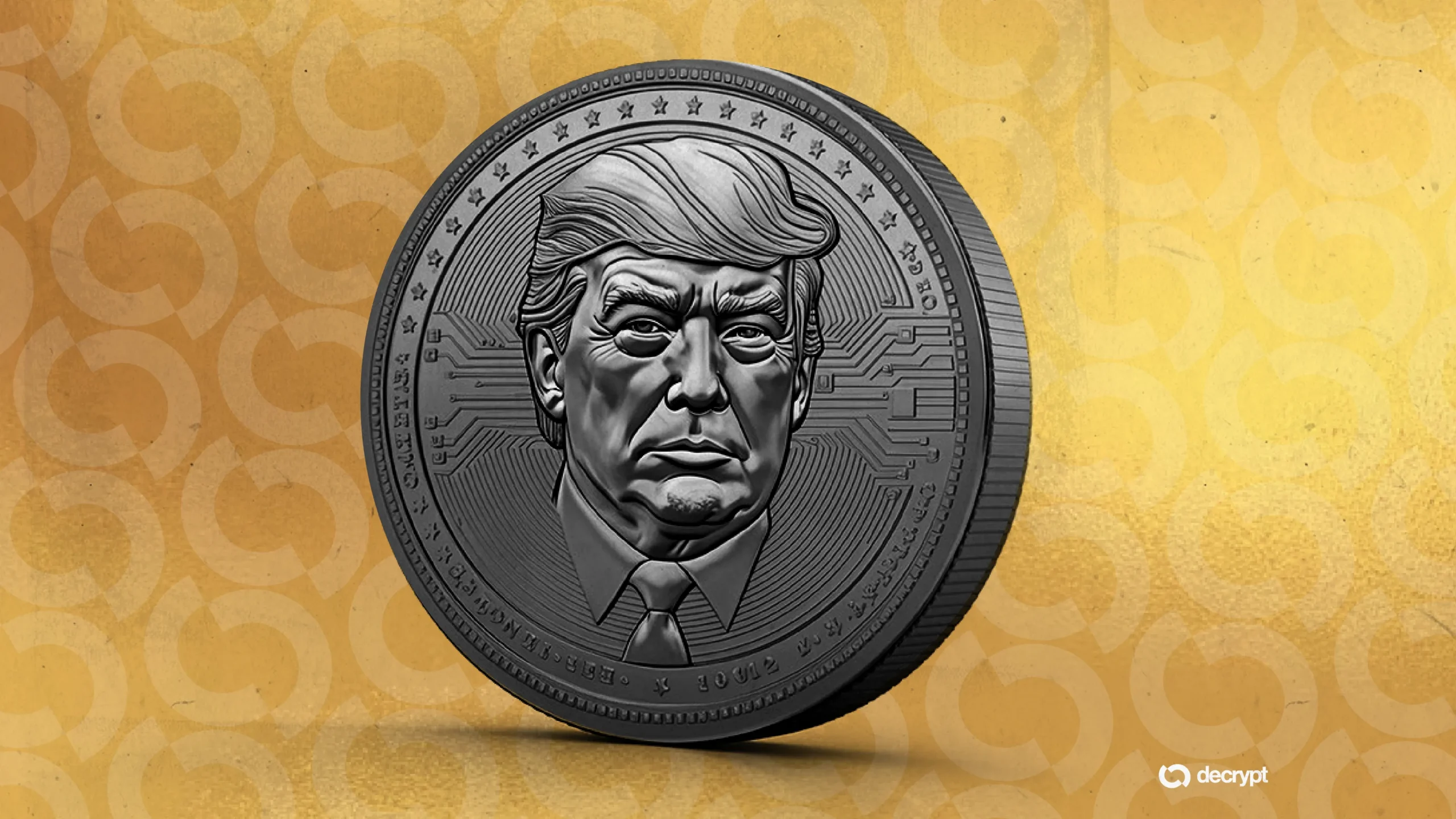

  • Trump Defends $1.2B Crypto Gains: ‘No Illegality, No Wrongdoing’

    Trump Defends $1.2B Crypto Gains: ‘No Illegality, No Wrongdoing’

    Trump Defends Billions in Crypto Earnings, Citing No Illegality

    President Donald Trump has defended his family’s substantial cryptocurrency earnings, asserting that there is “nothing illegal” and “nothing wrong” with businesses generating billions of dollars while he occupies the White House. The comments come just days after new federal financial disclosures revealed the extent of his digital asset holdings and crypto-related income, reigniting debate over the compatibility of a sitting president’s private business interests with public office.

    Financial Disclosures Detail Massive Windfall

    During a July 2 interview with CNBC’s Joe Kernen at the White House, Trump addressed the significant financial gains highlighted in his annual disclosure. The 927-page document, released by the U.S. Office of Government Ethics, indicated that the president’s income exceeded $2.2 billion in 2025, with a substantial portion derived from cryptocurrency. This included $594 million from World Liberty Financial (WLFI), a decentralized finance (DeFi) venture he co-founded with his sons, and $636 million from the sale of Trump-branded meme coins. Reports also suggest he holds over $50 million in Bitcoin in a cold wallet.

    When questioned about his awareness of his family’s crypto activities, the president initially responded, “No,” before quickly amending, “I could know about it. I didn’t, I mean, there’s nothing illegal, there’s nothing wrong with it. I could know.”

    Trust Structures and Family Involvement

    Trump emphasized that his assets are managed through trusts overseen by his sons, Eric and Donald Jr., as well as by external investment firms with whom he has no direct contact. “I don’t even know who they are,” he stated, adding that he does not discuss investment decisions with his sons. This suggests that nearly any business transaction involving his children could potentially be viewed as a conflict of interest, given the broad scope of presidential policy.

    “I tell my kids: stay away from as much as you can stay away from. But they also have a life,” Trump told Kernen.

    Crypto as a Strategic Industry

    The U.S. president reiterated his stance that cryptocurrency represents a strategic industry that the United States cannot afford to cede to global rivals. “The way I look at crypto is if we’re not going to do it, China’s going to get it,” he said. “It’s a big deal, and anything we do, I want to be number one in, and we’re number one in crypto.”

    The White House had previously dismissed allegations of conflict of interest following the disclosure, asserting that Trump and his family have not engaged in conduct that conflicts with the public interest.

    Criticisms of Trump’s Crypto Earnings

    Despite the White House’s dismissal, prominent Bitcoin critic Peter Schiff remains unconvinced. In a podcast aired on June 3, the economist argued that Trump’s earnings are intrinsically linked to his presidency rather than representing ordinary investment returns. Schiff posited that buyers of Trump-branded tokens were essentially purchasing access and political influence, rather than making conventional investments. Data from CoinGecko indicates that the Official Trump (TRUMP) and Melania Meme (MELANIA) tokens are trading significantly below their peak values, down 97% and 99% respectively, a point Schiff used to support his argument about influence-buying.

    “It’s really a way to bribe the president,” Schiff alleged. “You don’t have to give him money directly; just buy his token, because who else would buy the token? It’s a lousy investment.”

  • ADA Shorts Squeezed $857K as Whales Reach Record Highs; Is the Bottom In?

    ADA Shorts Squeezed $857K as Whales Reach Record Highs; Is the Bottom In?

    Cardano’s ADA Price Sees Short Squeeze as Technical Signal Reappears

    Cardano’s native token, ADA, is experiencing a notable price surge, trading around $0.1650, marking a 6.50% increase in the last 24 hours and a 14.1% gain over the past week. This upward movement coincides with the reappearance of a technical indicator not seen since June’s market downturn, leading to significant losses for short-positioned traders.

    Technical Indicators Signal Shift

    The Parabolic SAR, a technical indicator used to identify potential trend reversals, has flipped below the current spot price for the first time in weeks, settling at $0.1385. This shift is further corroborated by derivatives market data. In the past 24 hours, short liquidations reached $857.14K, starkly contrasting with $158.49K for long liquidations. This represents a reversal of the trend that heavily impacted ADA bulls in June. Derivatives trading volume has also seen an uptick, climbing 8.08% to $544.55M, while open interest rose 1.62% to $374.88M, suggesting new market positions are being established rather than solely short covering.

    Whale Accumulation and Supply Squeeze

    On-chain data reveals that large wallet holders, often referred to as “whales,” have accumulated over 80 million ADA in the last three days amidst market volatility and bearish sentiment. These whale wallets now collectively hold 26.2 billion ADA, an all-time high, representing a significant portion of the circulating supply despite recent market uncertainty. Concurrently, the supply of ADA held on exchanges has hit a new all-time low, indicating a potential supply squeeze building beneath the surface.

    Navigating Resistance Levels

    Cardano is currently facing headwinds from negative news and a substantial resistance zone at its current trading levels. The immediate ceiling is the 20-day Exponential Moving Average (EMA) at $0.17. A sustained close above this level is crucial for further upward momentum. Beyond that, the 50-day EMA is positioned at $0.1858, the 100-day EMA at $0.2204, and the 200-day EMA at $0.2941. The fact that all major moving averages are overhead and declining suggests that a smooth ascent is unlikely, presenting a challenging trading environment.

    Support and Potential Scenarios

    The horizontal support zone between $0.14 and $0.15, which held firm through multiple tests in June, now serves as a structural floor. The Parabolic SAR flip offers the first technical confirmation of buyers gaining traction. However, a rejection at the 20-day EMA could trigger another downward price movement, mirroring previous failed bounce attempts this cycle.

    A daily close above $0.17 could pave the way for a rally towards the 50-day EMA at $0.1858, potentially intensifying short squeeze conditions given the current derivatives imbalance. Alternatively, if ADA consolidates between $0.15 and $0.1586, the recent minting of $5.4 million in USDCX on Cardano, pushing total reserves past $35 million, could gradually build support for the decentralized finance (DeFi) narrative. A rejection at the 20-day EMA and a subsequent close below $0.145 would invalidate the SAR signal and likely lead to the liquidation of long positions accumulated during the current bounce.

    Medium-Term Outlook and Key Decisions

    Medium-term quantitative models project ADA to trade around $0.1505 by the end of 2026. This suggests that the current price bounce may be a cyclical relief rally within a larger period of consolidation, rather than a fundamental reversal of the trend. The next 48 hours are considered decisive for ADA’s price trajectory.

    Investor Sentiment and Alternative Opportunities

    While ADA’s current bounce is significant, the substantial overhead resistance and declining EMAs present an asymmetric risk-reward profile for those looking to chase the rally. Traders seeking early-stage exposure to different market momentum are reportedly exploring the presale market, where entry prices are not dictated by charts laden with resistance.

    Meme coin presales have been attracting capital even as established cryptocurrencies consolidate. Maxi Doge ($MAXI), an ERC-20 token built on Ethereum, is noted as being part of this trend. The project emphasizes a “1000x leverage trading mentality” and incorporates features such as holder-only trading competitions and a treasury fund for liquidity and partnerships. The presale has reportedly raised $4,821,311.89 at a price of $0.0002827, with dynamic staking APY available. It is important to note that presale tokens carry inherent risks, including illiquidity and no guarantee of listing price.