Category: Uncategorized

  • Crypto Surge Wipes Out $250M in Short Positions

    Crypto Surge Wipes Out $250M in Short Positions

    Bitcoin and Ethereum Surge, Liquidating Over $250 Million in Shorts

    The cryptocurrency market experienced a significant shift on Friday, with major digital assets staging a powerful rally. Shortly after the release of US Consumer Price Index (CPI) data, which initially triggered a downturn across markets, Bitcoin (BTC) surged dramatically, nearing the $80,000 mark.

    Ethereum (ETH) was a standout performer, posting an impressive 8% gain on the day and over 5% in the preceding hour. The second-largest cryptocurrency briefly surpassed $2,660, a level not seen since late January, before experiencing a minor pullback.

    The cryptocurrency landscape can transform with remarkable speed, often within the span of an hour. Less than two hours prior to the rally, market sentiment was decidedly bearish, with analysts closely watching the US CPI figures as a potential indicator for future Federal Reserve interest rate decisions.

    Both Bitcoin and the broader crypto market had been under pressure. Upon the release of the CPI data, which largely met expectations, Bitcoin saw a dip from above $77,000 to a weekly low of $76,000.

    However, the situation rapidly reversed. Bitcoin quickly recovered to its previous trading level before climbing to $78,000 and then approaching $79,000, pulling the rest of the market along with it. Ethereum, as noted, was among the primary beneficiaries of this upward momentum.

    These swift and substantial market movements resulted in a sharp increase in liquidations for leveraged short positions. Data from CoinGlass indicates that over the past hour alone, more than $250 million in short positions were liquidated, with Ethereum accounting for over half of that total.

  • Bitcoin Price: Can BTC Defend $76,000 Support?

    Bitcoin Price: Can BTC Defend $76,000 Support?

    Bitcoin Price Prediction: Can BTC Hold Key Support at $76,000 Amidst Market Uncertainty?

    Bitcoin (BTC) is currently trading at $76,800, marking a 1.1% decline on the day. This modest dip belies a week of significant market turbulence, driven by a confluence of macroeconomic factors. Investors are digesting a challenging week that saw bond market stress, a robust jobs report that tempered expectations for Federal Reserve rate cuts, and a burgeoning presale quietly accumulating substantial funds while attention remained fixed on Bitcoin’s price chart.

    The current price action follows a volatile start to September. Bitcoin experienced significant swings, oscillating between $76,000 and nearly $80,000, a stark contrast to August’s impressive approximately 25% rally.

    Last week, a stronger-than-anticipated US August jobs report briefly pushed BTC below the $80,000 mark as traders recalibrated their outlook on the Federal Reserve’s monetary policy. Analysts are largely characterizing this movement as a “healthy shakeout” rather than a definitive trend reversal.

    Compounding the market’s unease are rising oil prices, influenced by Houthi actions, and a global bond selloff. This combination has led to a clear increase in cross-asset volatility. Risk assets, including cryptocurrencies, are exhibiting defensive trading patterns as market participants await Friday’s inflation data for crucial directional cues.

    Technical Outlook and Key Levels

    Bitcoin is currently positioned at its 50-week Exponential Moving Average (EMA). A weekly close below this critical level could signal a potential descent towards the $72,000-$74,000 range.

    The immediate battle for BTC is unfolding around the $77,500–$77,700 pivot zone. Recent technical analysis highlights this area as a key determinant for the market’s direction in the coming sessions. Trading volume has diminished alongside price consolidation, a common characteristic of markets awaiting a catalyst rather than committing to a firm direction.

    Immediate support is identified at $76,000–$76,350, with a more substantial floor near $75,000. Deeper structural demand extends down to the $71,781–$75,674 range. On the upside, resistance clusters are observed at $78,800–$79,000, a zone often referred to as the transition area. Analysts are closely watching the $78,340 level, which serves as a pivotal bullish threshold that needs to be reclaimed. Despite the short-term choppiness, broader chart analysis from early September maintains a generally bullish, albeit range-bound, outlook.

    Potential Scenarios

    • Bull Case: A decisive move and acceptance above $78,340 could pave the way for Bitcoin to target the $80,000–$82,000 range.
    • Base Case: The market is likely to experience continued consolidation between $76,000 and $79,000 as investors digest the upcoming inflation data.
    • Bear Case: A break below the $75,000 support level would invalidate the near-term bullish structure and could lead to a price decline towards the $71,000–$73,000 demand band.

    Friday’s inflation report is expected to be the primary driver in determining which of these scenarios will unfold. However, longer-term perspectives remain constructive, largely supported by anticipated institutional inflows, irrespective of the short-term market noise.

    Beyond Bitcoin: Exploring Layer 2 Solutions

    While holding Bitcoin through this period of volatility validates the long-term investment thesis, the current market dynamics are prompting traders to seek more immediate and substantial upside potential. A move from $77,000 to $82,000, while profitable, may not be life-changing for an asset with Bitcoin’s trillion-dollar-plus market capitalization. Consequently, traders are increasingly looking at infrastructure built directly on top of Bitcoin, specifically Layer 2 solutions.

    One such project, Bitcoin Hyper ($HYPER), is positioning itself as the first Bitcoin Layer 2 solution with native SVM integration. Its ambition is to deliver smart contract speeds comparable to or faster than Solana, while leveraging Bitcoin’s base security for settlement.

    The presale for Bitcoin Hyper is currently priced at $0.013686 and has already raised over $33.1 million. Early participants can benefit from staking with a high Annual Percentage Yield (APY). Key features highlighted by the project include a decentralized canonical bridge for Bitcoin transfers and low-latency execution designed to address Bitcoin’s historical limitations in programmability.


  • ESMA Highlights Inside Trading Risks and Regulatory Complexity in Prediction Markets

    ESMA Highlights Inside Trading Risks and Regulatory Complexity in Prediction Markets

    The European Securities and Markets Authority (ESMA) has identified prediction markets as a sector prone to inside trading and facing significant regulatory complexity. In its risk monitor, ESMA dedicated a chapter to these platforms, highlighting concerns that could lead to their classification as financial instruments or gambling, and noting that platform responses to issues are largely reactive.

    ESMA pointed to three specific episodes of alleged inside trading or manipulation. Notably, new wallets reportedly made $1.2 million in the hours preceding a February strike on Iran. By May, analysis by Bubblemaps traced nine linked accounts to $2.4 million in Iran-related bets that were successful 98% of the time. In another instance, a U.S. Army master sergeant was charged over $400,000 in profits from Polymarket, related to bets on the capture of Venezuelan president Nicolás Maduro. Furthermore, suspected tampering with weather sensors used to settle Polymarket contracts prompted Météo-France to file a police complaint in April.

    Regulatory Classification Ambiguity

    The regulator emphasized the ambiguity surrounding the classification of event contracts. ESMA stated these contracts can qualify as financial instruments under MiFID II, fall under MiCA, or be considered gambling under national law. When classified as financial instruments, they are treated as derivatives. National rules, mirroring ESMA’s intervention on binary options, prohibit their sale to retail investors. Uncertainty remains regarding why platforms like Kalshi and Polymarket restrict users in some EU countries but not all, despite both banning VPNs. Malta, however, is reportedly drafting a framework for prediction markets.

    Market Volume Growth and User Dynamics

    Volumes in these markets have surged considerably. ESMA’s data collection periods for Kalshi ended in November 2025 with quarterly volumes of $8.8 billion, and for Polymarket in January 2026 with quarterly volumes of $12 billion. By June, The Block reported their combined monthly volume at $44.8 billion, with Kalshi alone accounting for $31.5 billion. ESMA reported that sports constitute 73% of Kalshi’s volume, while Polymarket divides its volume across politics, sports, and crypto.

    Further analysis cited by ESMA indicates a concentration of gains among a small number of users. A Wall Street Journal finding suggested that 67% of Polymarket gains went to just 0.1% of accounts. A Bloomberg analysis indicated that most users lose money on these platforms. The practical effectiveness of VPN bans by these platforms remains uncertain.

    Divergent US Regulatory Stance

    In contrast to the EU’s cautious approach, Washington has taken a different course. The Commodity Futures Trading Commission (CFTC) has defended its jurisdiction and proposed barring war and assassination contracts. Both the CFTC and the Securities and Exchange Commission (SEC) are reportedly taking action against individuals involved in the crypto space.

    Key uncertainties persist regarding the practical effectiveness of VPN bans and the reasons behind the selective application of user restrictions across EU member states. The exact nature and outcome of the CFTC and SEC’s actions concerning crypto persons also remain unclear.

    Why This Matters

    The materials describe a narrow update: ESMA has identified prediction markets as being prone to inside trading and has highlighted regulatory challenges, including potential classification as financial instruments or gambling. The practical effectiveness of VPN bans by Kalshi and Polymarket.

    Broader Context

    Source materials place the factual news in this context: ESMA’s risk monitor gives the prediction market sector its own chapter.

  • Cardano Price Tests Support Amidst Ambiguous Market Signals

    Cardano Price Tests Support Amidst Ambiguous Market Signals

    Cardano (ADA) is currently trading at approximately $0.205, testing a critical support level that has held firm since the beginning of September. The cryptocurrency has seen a 4% daily decline and an over 8% weekly drawdown, signaling recent price pressure.

    Derivatives market data paints a cautious picture. According to CoinGlass, ADA’s long-to-short ratio is 0.91, indicating a slight lean towards short positions. Furthermore, the funding rate turned negative on Friday to -0.0007%, a signal that traders are paying to maintain short positions, which can suggest bearish sentiment. CryptoQuant’s summary flags this combination as reading as cautious rather than confident.

    Technical indicators point to a consolidation phase for ADA. The asset is trading above its 50-day Exponential Moving Average (EMA) at $0.198 and its 100-day EMA at $0.200. However, the 200-day EMA is capping potential upside at $0.241. The Relative Strength Index (RSI) hovers near 50, and the Moving Average Convergence Divergence (MACD) remains marginally negative below the zero line. This technical setup suggests that while bullish pressure exists, it has not yet committed to a sustained upward movement. Volume has also not offered significant conviction.

    Recent price action shows ADA ran from $0.1936 to $0.2320 over six days, with the $0.2151 level rejecting the price three times. The $0.2051 level is noted as the origin point of that run.

    Potential Downside Risks

    If key support levels are breached, potential downside risks emerge. A decisive close below $0.195, corresponding to the 38.2% Fibonacci retracement level, could open the door to further declines, potentially testing the $0.173 level and eventually a horizontal floor around $0.150. Traders are monitoring this scenario closely.

    Pathways to Recovery

    Conversely, reclaiming the $0.210 level as support would be a necessary step for any potential upward movement. Resistance is stacked overhead, with the 61.8% Fibonacci level at $0.231 and a resistance band between $0.236 and $0.245. A clean break above this cluster would be needed to validate a trend reversal; anything less is considered market noise.

    Shifting Focus to Emerging Infrastructure

    For established assets like Cardano, which already possess a significant market capitalization, the asymmetric upside potential may be limited compared to projects still in earlier stages of development and price discovery. This dynamic is leading some market participants to shift their attention toward emerging infrastructure plays.

    One such project is LiquidChain ($LIQUID), described as a Layer 3 infrastructure project. It aims to create a unified execution environment by fusing liquidity from Bitcoin, Ethereum, and Solana into a single layer. This “deploy-once” architecture is designed to allow developers to build applications that can reach all three ecosystems simultaneously, thereby avoiding liquidity fragmentation across different chains. Key features include Single-Step Execution and Verifiable Settlement, intended to reduce the friction associated with cross-chain bridging. As of this writing, LiquidChain’s presale has raised over $965,000, with tokens priced at $0.014954.

    Market participants are awaiting a clear catalyst to drive directional movement. The outcome of the Clarity Act vote, scheduled for September 15, is cited as a potential volatility trigger for the broader altcoin market. The current market signals for Cardano are ambiguous, suggesting potential downside risk rather than a clear upward trend. Investors may find more asymmetric upside in earlier-stage infrastructure projects.

    Why This Matters

    The materials describe a narrow update: ADA is trading at $0.205, testing a critical support level. Whether ADA will hold the $0.20 support level remains uncertain.

    Broader Context

    Source materials place the market analysis in this context: Cardano news today.

  • Ripple Enhances Enterprise Finance with AI-Driven GSmart Expansion, Prioritizing Governance

    Ripple Enhances Enterprise Finance with AI-Driven GSmart Expansion, Prioritizing Governance

    Ripple is expanding its AI-driven GSmart tools within Ripple Treasury, aiming to bolster capabilities for enterprise finance teams in forecasting, liquidity, risk, reconciliation, and reporting. This strategic move emphasizes a “treasury-native AI” approach, designed to integrate seamlessly with existing treasury policies, data, and processes while crucially maintaining human control over financial decisions.

    GSmart differentiates itself by separating financial calculations from AI interpretation. Its “deterministic engines” manage the core financial computations, while AI components are tasked with analyzing policies, identifying patterns, and suggesting actions. This architecture ensures that while AI provides valuable insights and recommendations, the ultimate execution of any action remains subject to human approval. The system incorporates Knowledge Studio for policy and control management, and Analytics Studio for AI-based reporting through its “Ask GSmart” feature.

    “Every CFO is under pressure to embrace AI, but they’re equally responsible for ensuring every financial decision is explainable, governed and compliant,” stated Renaat Ver Eecke, SVP of Ripple Treasury. “Rather than asking customers to blindly trust an AI system, GSmart works within each organization’s own treasury policies to surface recommendations transparently, while ensuring humans remain in control of every decision. This isn’t simply AI-native treasury, but rather treasury-native AI.”

    This expansion occurs as the rapid adoption of AI agents in businesses appears to be outpacing the development of corresponding governance systems. Gartner projects that the average Fortune 500 company will be running over 150,000 AI agents within the next two years. However, a significant gap exists, with only 13 percent of organizations currently believing they possess adequate governance for these AI agents.

    In parallel, discussions are emerging about the intersection of AI agents and blockchain technology. Binance founder Changpeng Zhao has suggested that AI agents could significantly drive crypto adoption. He posits that autonomous software, seeking payment systems that operate without human intervention, will find blockchain networks more amenable than traditional finance systems due to their API-driven nature. Zhao anticipates agent-based trading and payments using cryptocurrency could emerge within months.

    While Ripple’s GSmart focuses on integrating AI into existing financial frameworks with a robust governance layer, uncertainties remain regarding the exact timeline for full integration and widespread adoption of its expanded features. The specific impact on enterprise finance teams’ efficiency and the broader adoption of similar AI governance models by other companies are also points of ongoing observation.

    Why This Matters

    The materials describe a narrow update: Ripple is integrating more AI-driven tools into its GSmart platform for enterprise finance teams, focusing on areas like forecasting, liquidity, risk, reconciliation, and reporting. The exact timeline for the full integration and widespread adoption of GSmart’s expanded features.

    Broader Context

    Source materials place the factual news in this context: Ripple is expanding GSmart across Ripple Treasury as the company adds more AI-driven tools for enterprise finance teams.

  • Market Recap: Zcash, Cardano, and Ethereum Show Mixed Signals Amidst Volatility

    Market Recap: Zcash, Cardano, and Ethereum Show Mixed Signals Amidst Volatility

    On September 11, the cryptocurrency market presented a mixed picture for Zcash (ZEC), Cardano (ADA), and Ethereum (ETH), with analysts offering a spectrum of predictions and underscoring significant market uncertainties. Zcash experienced a notable rally followed by a pullback, while Cardano posted monthly gains, and Ethereum appeared to be at a critical juncture.

    Why This Matters

    The materials describe a narrow update: The article recaps recent price action and predictions for Zcash, Cardano, and Ethereum. whether the Zcash (ZEC) rally will resume after bears erased gains.

    Broader Context

    Source materials place the factual news in this context: The privacy coin ZEC has stunned the crypto world lately, after briefly rising to a ten-year high of almost $1,300.

    Zcash (ZEC) Market Analysis

    Zcash recently garnered attention by briefly touching a ten-year high of nearly $1,300, a surge of 130% over one month that temporarily pushed its market capitalization beyond $20 billion. However, this upward momentum was followed by a pullback. On September 11, ZEC became the worst-performing cryptocurrency among the top 100, recording an 8.5% loss. The resumption of its rally remains uncertain. Several indicators suggest a potential for further decline. According to Ali Martinez, the TD Sequential indicator signaled a sell on the 3-day chart, a pattern that historically coincided with a 64% price correction on May 19. Furthermore, ZEC’s Relative Strength Index (RSI) surpassed 70, entering bearish territory. An observed shift from self-custody to centralized platforms is also cited as a factor increasing immediate selling pressure.

    Cardano (ADA) Outlook

    Cardano’s native token has shown more consistent positive performance, with a 12% increase over the past month. ADA continues to trade above the $0.20 mark. Analyst forecasts for ADA vary. X user Sssebi suggested a “big chance” for a price increase to $0.30 if the asset reclaims $0.25. Earlier, Martinez noted that ADA’s Tom DeMark Sequential indicator flashed a buy signal. Other market observers, such as X user Cup, expressed strong optimism, predicting that “the biggest altseason ever is about to start” and forecasting a potential price surge to an all-time high of $8 for ADA. Conversely, Alex Marzell presented a more cautious view, identifying $0.2051 as a crucial support level, warning, “Lose it, and there’s not much underneath.”

    Ethereum (ETH) Crossroads

    Ethereum has been trading around the $2,500 level for several days. On-chain data indicates that 116,000 ETH, valued at approximately $300 million, were withdrawn from centralized platforms within a 48-hour period earlier this month, a development some interpret as bullish. However, predictions for ETH’s future price are divided. Ted suggests that a strong weekly close above $2,550 could potentially drive a rally to $3,000. Michael van de Poppe indicated that surpassing $2,520 might lead to a similar outcome. In contrast, some analysts anticipate a price decline before a new bull run commences. X user Gerla observed the formation of an inverted head-and-shoulders pattern, projecting a potential drop to $2,000, followed by a significant increase toward $4,000 in the coming months.

    The current market environment for Zcash, Cardano, and Ethereum is marked by conflicting signals and analyst predictions, highlighting the inherent uncertainty in forecasting cryptocurrency price movements. While technical indicators and on-chain data provide insights, definitive outcomes remain elusive.

  • Albuquerque Bans Bitcoin ATMs, Operators Must Remove Within 45 Days

    Albuquerque Bans Bitcoin ATMs, Operators Must Remove Within 45 Days

    Albuquerque Bans Cryptocurrency ATMs Amid Fraud Concerns

    Albuquerque has outlawed cryptocurrency ATMs within its city limits, enacting an ordinance on Wednesday that also extends to virtual currency transactions facilitated by cashiers.

    Known operators and the retailers hosting these machines will be notified by the city and given 45 days to remove them.

    Councilor Stephanie Telles of District 1, who co-sponsored the measure with Councilor Tammy Fiebelkorn of District 7, stated that 90% of crypto ATM transactions in Albuquerque are linked to fraudulent activity. “No one who legitimately exchanges or transmits virtual currency uses these kiosks, because the high fees make them a ripoff,” Telles said in a press release. She argued that they are primarily utilized by “scammers, organized crime, and human traffickers” due to the instant, anonymous, and irreversible nature of the transactions.

    “We cannot wait for federal regulators to solve this crisis while our residents are actively being targeted and harmed in our own neighborhoods,” Fiebelkorn added.

    Residents will still be permitted to own, mine, and transfer cryptocurrency through online exchanges and personal wallets, according to the council.

    The city’s ban follows a trend of statewide prohibitions. Indiana initiated such a ban in March, Tennessee followed in July, and Minnesota’s ban, proposed in the spring, took effect in August. Delaware has advanced a similar bill, New Jersey is considering one, and Texas lawmakers are weighing a ban after kiosk scams cost residents $57 million.

    Bitcoin Depot, formerly the largest operator in North America, filed for Chapter 11 bankruptcy in May and removed approximately 9,700 kiosks offline. Chief Executive Alex Holmes cited transaction limits and “in some jurisdictions, outright restrictions or bans” as contributing factors.

    While Telles’s 90% figure is substantial, it is not an isolated statistic. Washington, D.C.’s attorney general sued Athena Bitcoin last year after discovering that 93% of deposits into its seven kiosks in the city over a five-month period were the result of fraud, with the median victim age being 71. Athena stated at the time that it strongly disagreed with the findings. The FBI logged nearly 11,000 kiosk fraud complaints in 2024, totaling more than $246 million.

  • MEXC August Trading Data Reveals Sector-Specific Futures Surge and Growth in Tokenized Assets

    MEXC August Trading Data Reveals Sector-Specific Futures Surge and Growth in Tokenized Assets

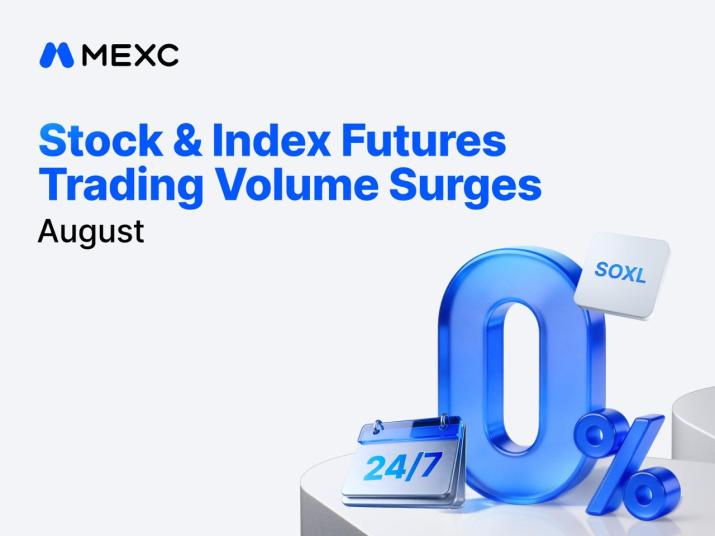
    MEXC reported a significant 130% month-on-month increase in its stock, index, and ETF Futures trading volume for August. The platform also saw a 35% rise in available contracts, exceeding 400, alongside a 30% increase in Tokenized Stocks and ETF Spot trading volume. This data indicates a broadening investor interest across various asset classes.

    The trading activity in August highlighted a discernible shift from broad-market indices towards sector-specific exposure, particularly in the memory and semiconductor industries. This trend is evident in the substantial growth of futures contracts tracking these areas. According to MEXC, SKHYNIX (SK hynix) futures experienced a roughly 401% increase in trading volume, making it the top-performing individual stock future. Micron (MU) futures also saw a significant rise of approximately 267%.

    This focus on specific sectors extended to exchange-traded funds (ETFs). SOXL Stock Futures, which tracks a semiconductor ETF offering 3x daily long exposure, ranked first in trading volume with a surge of approximately 1,192%. Its share of total Stock Futures trading volume grew from under 4% in July to 20% in August. Concurrently, SOXS Stock Futures, tracking an inverse leveraged semiconductor ETF, recorded a 436% volume growth. In contrast, trading volume for SPX500 Stock Futures, which tracks the S&P 500 Index, declined by approximately 32%, suggesting a tactical shift by traders away from broad market exposure.

    The combined trading volume for Stock Futures tracking Korean companies, including SKHYNIX, increased by approximately 348%. These Korean stocks’ share of total Stock Futures trading volume rose from 14% in July to 27% in August. Conversely, SanDisk (SNDK) share of total Stock Futures trading volume decreased from 25% in July to 11% in August.

    In the spot market, MEXC’s Tokenized Stocks and ETFs experienced broad-based growth, with overall volume increasing by 30%. These assets now represent 73% of the platform’s total TradFi Spot trading volume, up from 63% in July. Circle (CRCL) led this segment with a 69% month-on-month volume increase. Nebius (NBIS) and NVIDIA (NVDA) also recorded notable gains, with trading volumes up 188% and 54% respectively. This widespread engagement across listings suggests general user interest rather than concentration in a few assets, with MEXC reporting that 99% of listings saw higher volumes.

    Further analysis of MEXC’s August trading activity indicates that Stock Futures trading during the 10 weekend days accounted for approximately 11% of the monthly volume. This highlights a demand for continuous market access, particularly for futures contracts that can be traded outside of underlying market hours.

    MEXC also reported that its 0-fee event in August attracted over 86,000 users and saved participants more than $1 million in trading fees. The platform stated its commitment to expanding equity-linked offerings and simplifying access for global users.

    While MEXC reported these increases, some details remain unspecified. For example, the exact number of available contracts is stated as ‘over 400’, and the specific ‘multiple U.S. and Korean memory stocks’ and ‘semiconductor ETFs’ beyond those explicitly mentioned are not detailed. The precise percentage of ‘nearly all existing listings’ that saw gains in tokenized assets also remains uncertain.

    Why This Matters

    The materials describe a narrow update: MEXC’s stock, index, and ETF Futures trading volume increased by 130% month-on-month in August. The exact number of available contracts beyond ‘over 400’.

    Broader Context

    Source materials place the factual news in this context: MEXC released its August TradFi trading data.

  • CLARITY Act Revisions for DeFi and Credit Unions Face Ethics Hurdle Ahead of Vote

    CLARITY Act Revisions for DeFi and Credit Unions Face Ethics Hurdle Ahead of Vote

    Senate Republicans have released updated text for the CLARITY Act, introducing new regulations for non-decentralized decentralized finance (DeFi) protocols and clarifying crypto dealings for credit unions. These revisions are scheduled for consideration ahead of a procedural vote on September 15. However, the bill’s advancement remains uncertain as key ethics provisions, a significant point of contention for Democratic support, have not been altered.

    The revised legislation requires non-decentralized DeFi protocols—platforms that market themselves as decentralized but do not fully operate as such—to register with the Commodity Futures Trading Commission (CFTC). According to Senate Republicans, these new rules apply specifically to spot or cash digital commodity transactions, a modification intended to address prior concerns regarding blockchain-based prediction markets. Concurrently, the updated language provides credit unions with clearer authority to conduct cryptocurrency transactions.

    These revisions are the result of negotiations during the August recess. Senator Cynthia Lummis, a key sponsor, stated that the updated text includes over 100 changes suggested by Democrats. Despite these adjustments, the core ethics provisions, which Democrats have pushed for, remain unchanged. These provisions typically involve requirements for elected officials to divest their cryptocurrency holdings or place them in blind trusts.

    The CLARITY Act requires 60 senators to invoke cloture, underscoring the necessity of bipartisan backing for its advancement. The persistent disagreement over ethics provisions casts doubt on whether the bill will secure the requisite Democratic votes. Senator Lummis has contended that any failure to pass the bill would stem from Democrats’ refusal to accept a bipartisan compromise, rather than the ethics stipulations themselves. Treasury Secretary Scott Bessent has also encouraged senators to persist with negotiations and advance the legislation.

    Questions have been raised regarding the definition of ‘non-decentralized’ DeFi, with Roman Storm notably questioning the terminology on X. In contrast, Coinbase CEO Brian Armstrong has expressed support for a ‘yes’ vote on the bill. The upcoming procedural vote on September 15 will indicate whether the compromises embedded in the revised CLARITY Act are sufficient to move the legislation forward, notwithstanding the ongoing debate surrounding ethics.

    Significant uncertainty persists regarding the CLARITY Act’s path forward, specifically whether the recent compromises will be enough to garner the necessary Democratic support for the September 15 vote. The bill’s progression is fundamentally tied to achieving bipartisan consensus, with ethics remaining the primary obstacle.

    Why This Matters

    The materials describe a narrow update: Senate Republicans released an updated version of the CLARITY Act, introducing new regulations for non-decentralized DeFi protocols requiring registration with the CFTC and clarifying crypto dealings for credit unions. Whether the compromises made in the revised CLARITY Act will be enough to secure the necessary Democratic support for the September 15 vote.

    Broader Context

    Source materials place the factual news in this context: The CLARITY Act is a piece of legislation being considered in the US Senate.

  • Senate Test Vote on CLARITY Act: Procedural Step Amidst Regulatory Uncertainties

    Senate Test Vote on CLARITY Act: Procedural Step Amidst Regulatory Uncertainties

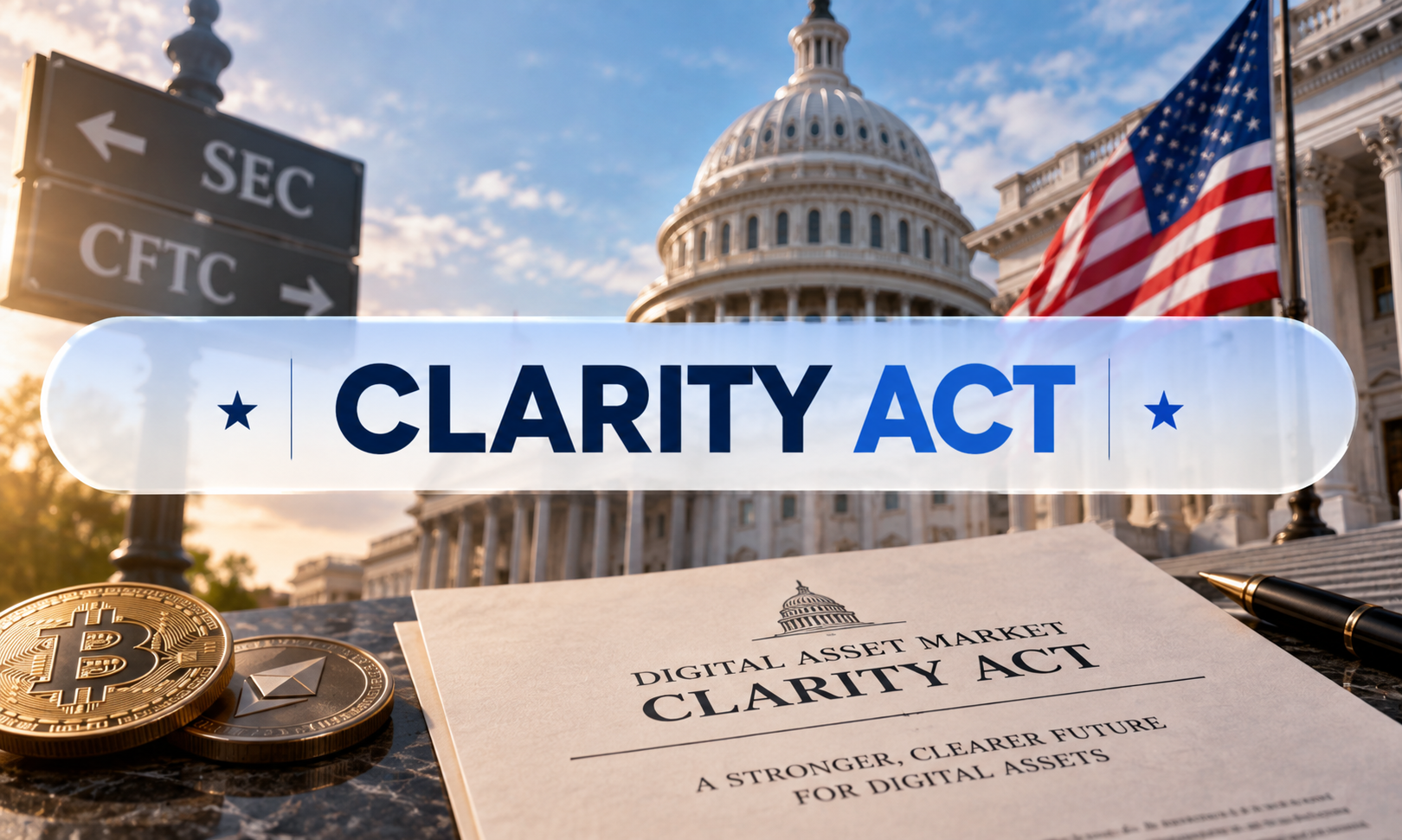
    The U.S. Senate is scheduled for a procedural test vote on September 15th regarding the Digital Asset Market CLARITY Act, a legislative proposal aimed at establishing a federal regulatory framework for the cryptocurrency market. This vote, which requires 60 senators to proceed with debate (cloture), represents a procedural step that could influence the momentum for federal digital asset regulation, according to the FactSheet.

    The CLARITY Act has navigated substantial legislative milestones, including passage in the House by a vote of 294-134 in July 2025 and advancement within the Senate Banking Committee with a 15-9 vote in May 2026. Its primary objective, as detailed in the FactSheet, is to address ambiguities surrounding regulatory authority between the Securities and Exchange Commission (SEC) and the Commodity Futures Trading Commission (CFTC). The proposed framework aims to maintain the SEC’s oversight of securities and specific fundraising transactions while concurrently broadening the CFTC’s jurisdiction over spot digital-commodity markets and related intermediaries.

    Key Provisions Under Consideration

    The legislation introduces several key provisions targeting distinct aspects of the digital asset ecosystem. Notably, it defines “ancillary assets” as network tokens whose value may be contingent on entrepreneurial or managerial efforts. These assets would be classified as commodities, necessitating specific disclosures, with obligations potentially concluding once relevant managerial efforts cease. This distinction seeks to separate the securities-law treatment of initial fundraising activities from the subsequent regulatory status of the token itself, addressing a long-standing uncertainty within the industry.

    Furthermore, the CLARITY Act addresses the evolving fields of decentralized finance (DeFi) and self-custody. Recent revisions focus on non-decentralized DeFi protocols—those that present as decentralized but where identifiable parties retain significant control. Such protocols may be subject to CFTC registration requirements for spot digital-commodity activities. The bill’s broader framework evaluates discretion, control, and censorship capabilities to determine a protocol’s decentralization status. Crucially, it also provides protections for software developers and network participants whose roles are confined to software development or transaction validation. Additionally, the act stipulates that federal agencies generally cannot prohibit individuals from utilizing self-hosted wallets.

    Federal Registration and Compliance

    The proposed legislation also outlines a defined federal registration and supervision regime for digital-commodity exchanges, brokers, and dealers. This initiative aims to replace the current fragmented system of state regulations, enforcement actions, and overlapping federal authorities with a cohesive national structure. In line with this, the latest Senate proposal mandates that cryptocurrency intermediaries comply with Bank Secrecy Act obligations. This integration includes anti-money-laundering programs, customer identification, suspicious activity reporting, and sanction compliance within the federal framework. The bill further incorporates additional disclosures and protections designed to mitigate insider abuse, fraud, and ensure proper handling of customer assets.

    Legislative Path and Future Uncertainties

    The CLARITY Act’s journey began with the House passing H.R. 3633 by a vote of 294-134 in July 2025. The Senate Banking Committee followed by advancing its version with a 15-9 vote in May 2026. Prior to the August recess, Senate Majority Leader John Thune filed for cloture, setting the September 15th test vote as the next significant procedural step. Reports indicate that Senate Republicans have introduced further revisions, asserting that the bill incorporates over 115 Democratic “wins,” such as new fraud measures and changes for DeFi platforms.

    Despite this legislative progress, considerable uncertainties persist. The outcome of the September 15th vote is not assured, and failing to secure the 60-vote threshold for cloture could substantially diminish the momentum behind this comprehensive regulatory effort. The CLARITY Act represents a critical step in defining the operational rules for the entire crypto market, extending beyond the mere classification of individual tokens. The result of this vote will offer insight into the immediate trajectory of federal digital asset regulation.

    Why This Matters

    The FactSheet indicates that the CLARITY Act, a comprehensive crypto market-structure framework, is set for a crucial Senate test vote on September 15th. A key uncertainty is whether the Senate will reach the 60 votes required for cloture on September 15th.

    Broader Context

    Source materials place the factual news in this context: The Digital Asset Market CLARITY Act is going to go through a very important Senate test on September 15th after more than a year of legislative work on the bill.