Category: Uncategorized

  • XRPL Re-releases Permission Delegation Amendment (XLS-75) After Critical Bug Fix

    XRPL Re-releases Permission Delegation Amendment (XLS-75) After Critical Bug Fix

    XRPL’s Permission Delegation amendment (XLS-75) has been re-released on the mainnet following the discovery and subsequent fix of a critical bug that previously coincided with its withdrawal. The updated V1.1 version has now successfully passed security review and quality assurance checks, clearing it for production.

    The Permission Delegation amendment, initially introduced in May 2025, is designed to allow one account to grant specific operational powers to another. However, before its intended mainnet deployment as V1.0, a high-severity vulnerability was identified by a bug bounty researcher. This flaw, reported by researcher Shotes, pertained to irrevocable delegate permissions. It enabled a delegate to delete and subsequently recreate their account while retaining granted permissions, which the original granting account could not revoke.

    As CryptoPotato reported, this critical issue prompted the withdrawal of the V1.0 implementation before it could be deployed to the mainnet. The scope of the necessary fixes extended beyond this single vulnerability.

    Further analysis during the review process also uncovered a medium-severity unsigned integer overflow in the isDelegable function. Researchers indicated, however, that this specific issue posed no significant risk without deliberate misbehavior from the delegator.

    The V1.1 release incorporates comprehensive fixes for these identified issues, alongside addressing other edge cases. This hardened version not only resolves the critical permission vulnerability but also prevents the unintentional delegation of new capabilities like Vault and Lending, corrects reserve accounting, and closes a potential multi-signing bypass route.

    A rigorous testing regimen was implemented to ensure the stability and security of V1.1. This included 179 dedicated tests for Permission Delegation, encompassing 112 functional tests, 48 adversarial security tests, and 19 cross-feature tests. The security of the implemented fixes was independently verified by the Cantina security firm. Furthermore, XRPL Ledger Operations reported that their Quality Assurance (QA) team conducted over 5,088 regression tests, confirming no regressions and verifying the resolution of all critical and high-severity bugs.

    The development timeline for XLS-75 includes its introduction in May 2025, its designation as unsupported in September 2025 pending a security fix, a renaming in October 2025, and its eventual re-support in June 2026 with the V1.1 implementation.

    This incident underscores the inherent complexities and risks associated with developing and deploying protocol-level features, highlighting the critical need for robust safeguards that extend beyond basic functionality. The successful resolution and re-release of XLS-75 serve as a testament to the effectiveness of rigorous security vetting, bug bounty programs, and comprehensive testing in maintaining the integrity of the XRPL mainnet.

    Why This Matters

    The materials describe a narrow update: The Permission Delegation amendment (XLS-75) was initially pulled from XRPL due to a high-risk flaw found by a bug bounty researcher. The exact date the bug bounty report was filed.

    Broader Context

    Source materials place the factual news in this context: XRPL Fixes Permission Delegation After Critical Bug Found.

  • Trezor Users Warned of Phishing Attempt via Compromised Third-Party Email Provider

    Trezor Users Warned of Phishing Attempt via Compromised Third-Party Email Provider

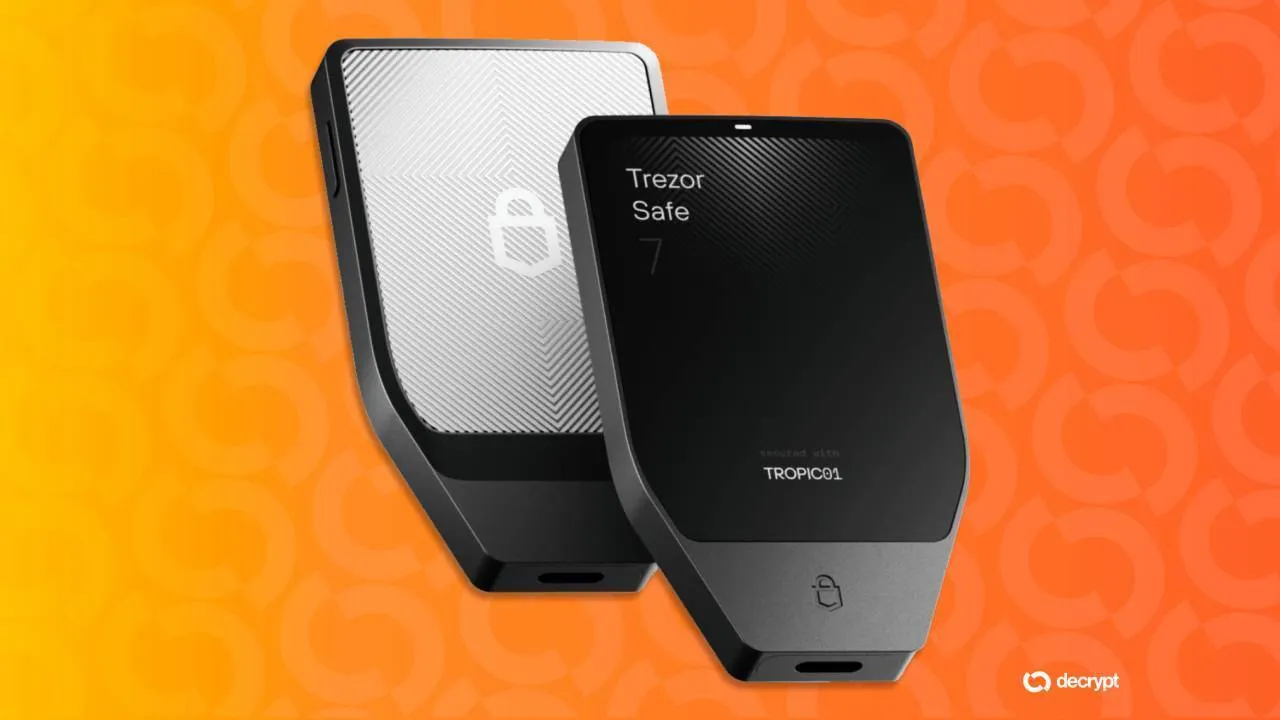
    Trezor users were alerted on Wednesday to a phishing campaign that originated from a breach of the company’s third-party email provider. The fraudulent email, disguised as a critical security alert, falsely claimed a vulnerability in STM32 microcontrollers affecting Trezor devices and urged recipients to click a malicious link.

    Trezor stated the email was not from them and issued a warning to users after 4:30 p.m. Eastern Time. However, users reported receiving the deceptive message hours earlier, appearing to come from a legitimate Trezor email address. The fake alert claimed that engineers had discovered a “critical hardware-level vulnerability” in the STM32 microcontrollers used in Trezor devices, alleging that an estimated one in four devices could be affected. This claim likely played on recent fears within the cryptocurrency community, particularly concerning the Coldcard exploit that reportedly cost users over $130 million in Bitcoin.

    “Please be aware that the email named ‘Critical Security Alert: STM32 Entropy Vulnerability’ is not coming from us, and it’s a phishing attempt. Do not click on any link,” Trezor stated in its warning. The company has since taken down the domain used in the attack and is investigating how hackers gained access to the email provider. The exact third-party email provider that was compromised remains uncertain, as does the full scope of how hackers gained access.

    Security professionals noted that such attacks often leverage compromised third-party services. Nick Neuman, co-founder and CEO of Casa, suggested that a marketing email provider was likely compromised. Similarly, Jameson Lopp, a Bitcoin security researcher, posted that threat actors may have compromised the email providers used by both Trezor and BitBox. Lopp added that malicious emails claiming issues with random number generators (RNGs) requiring security updates were being sent and did not appear to be spoofed, emphasizing that “No such security advisory has been issued!”

    This incident echoes previous security concerns within the hardware wallet ecosystem. In August, Trezor and Foundation issued warnings about phishing attempts that exploited fears surrounding hardware wallet vulnerabilities, following disclosures affecting Coldcard devices. In the same month, Trezor reported a breach at its shipping provider, ShipMonk, which exposed customer data for 80,689 individuals, including names, email addresses, phone numbers, and shipping addresses. Trezor had cautioned that this leaked information could be used for more sophisticated phishing attacks.

    The recurring nature of third-party service compromises highlights a significant and persistent threat to cryptocurrency companies and their users, underscoring the need for constant vigilance and verification of all communications.

    Why This Matters

    The materials describe a narrow update: Hackers gained access to Trezor’s third-party email provider and sent a phishing email disguised as a critical security alert. How hackers gained access to Trezor’s legitimate domain.

    Broader Context

    Source materials place the factual news in this context: Trezor warned users Wednesday that hackers breached its third-party email provider and used it to distribute a phishing email disguised as a critical security warning.

  • Jump Trading’s Hyperliquid Trading Volume Approaches $150 Billion

    Jump Trading’s Hyperliquid Trading Volume Approaches $150 Billion

    Jump Trading’s cumulative trading volume on the Hyperliquid exchange has approached $150 billion since its first deposit on December 12, 2025, according to data mapped by Hyperdash co-founder Hanson Birringer. This substantial activity positions Jump Trading as a key participant, significantly influencing Hyperliquid’s market share and revenue.

    Jump Trading operates a complex structure on Hyperliquid, utilizing one master account and 16 subaccounts, enabling specialized trading strategies across various asset classes. Currently, Jump’s trading accounts for approximately 8% of Hyperliquid’s total perpetual futures volume and 19% of its volume in “xyz markets.” In July, Jump’s market share saw a notable increase, reaching nearly 18% of the total exchange volume and 29% of the xyz markets volume.

    After an initial testing phase in December, during which it traded $153 million across BTC, SOL, and HYPE, Jump Trading funded its master account and established subaccounts. These accounts are reportedly dedicated to specific assets like crude oil, Brent, and natural gas, as well as new stock listings, while a larger book manages positions in the S&P 500, XYZ100, SK Hynix, silver, gold, and memory-related products.

    The firm’s strategy on Hyperliquid is primarily taker-driven, with maker volume constituting only 11% to 35% of its fills. According to Birringer, this approach suggests a hedging or arbitrage book paired with other trading venues to capture differences in spreads and funding rates. Jump’s current open positions include a long position of $32 million in Brent and $16 million in CL, alongside shorts in gold, silver, MU, NVDA, DRAM, SK Hynix, XYZ100, and megacap stocks. These positions total $145 million in notional value against $63.6 million in account value.

    Jump Trading’s influence is significant across various markets on Hyperliquid, accounting for 38% of DRAM volume, 36% of NATGAS, 33% of Brent, 32% of SP500, 26% of XYZ100, and 16% of CL. Its share in BTC volume is comparatively lower at 2.6%.

    Between April and August, Jump Trading also utilized Hyperliquid’s gossip priority feature, paying 966 HYPE tokens, primarily in May, before discontinuing its use. To date, Jump has paid approximately $7 million in fees to Hyperliquid. Despite these fees, the firm has generated only a few hundred thousand dollars in profit and loss (PNL), supporting the view that its Hyperliquid activity is part of a broader, multi-venue market-making operation. Jump’s approximately $65 million in USDC margin on the exchange is estimated to generate an additional $1.8 million in annual revenue for Hyperliquid through AQAV2 fee accrual.

    In parallel, the HYPE token reached an all-time high of $89.60 on September 6. This price movement coincided with new data revealing institutional holdings across three HYPE-focused exchange-traded funds: the Bitwise Hyperliquid ETF, 21Shares Hyperliquid ETF, and Grayscale Hyperliquid Staking ETF. According to Bloomberg Intelligence ETF analyst James Seyffart, second-quarter 13F filings showed 30 investment managers holding a combined total of around $75 million in these funds. Wealth High Governance Asset Management held the largest position at nearly $24 million, followed by OLP Capital Management ($10.5 million), UBS ($7.5 million), Bank of Montreal ($6.7 million), and Jane Street Group ($4.4 million), among others.

    Recent discussions have also touched upon Hyperliquid’s regulatory landscape. Last month, it was reported that Trump commented on efforts by Commodity Futures Trading Commission Chair Michael Selig to bring the perpetuals-focused trading platform into the U.S. in a “fully compliant and legal fashion,” fueling expectations regarding its potential expansion into the country.

    Why This Matters

    The core event is Jump Trading’s cumulative trading volume on the Hyperliquid exchange approaching $150 billion since December 12, 2025. The exact total trading volume on Hyperliquid remains an uncertainty.

    Broader Context

    Jump Trading’s cumulative trading volume on Hyperliquid has nearly reached $150 billion since the firm made its first deposit on December 12, 2025, according to Hyperdash co-founder Hanson Birringer, who mapped the firm’s entire activity on the exchange. This activity represents a significant portion of Hyperliquid’s overall volume and revenue.

  • Cardano (ADA) Price Rises 13% Weekly, Analysts Offer Divergent Predictions

    Cardano (ADA) Price Rises 13% Weekly, Analysts Offer Divergent Predictions

    Cardano’s native token, ADA, has seen a significant price increase of approximately 13% over the past seven days, solidifying its position among the top 20 cryptocurrencies. This recent performance has spurred a variety of price predictions from market analysts, with forecasts ranging from modest short-term gains to more ambitious long-term targets.

    As of press time, ADA is valued at around $0.22, according to CoinGecko. The token’s 13% rise in the last week places it among the top performers in the crypto market during this period. This recent price movement has coincided with discussions about its future trajectory, with several analysts sharing their outlooks.

    Analyst Outlooks and Technical Signals

    X user More Crypto Online observed that the recent bounce on ADA’s chart remains intact, suggesting that a break above $0.23 is a key objective for bullish investors. Crypto With Gopal identified an inverted head-and-shoulders formation in ADA’s price graph, noting that buyers are defending the neckline around $0.22. According to the analyst, momentum is shifting bullish as the price pushes into resistance, and a clean notable move above the neckline could potentially lead to a target of $0.26.

    Further adding to the optimistic outlook, X user Sssebi suggested there is a significant possibility of ADA reaching $0.30 if it reclaims the $0.25 price level. The popular analyst Ali Martinez previously reported that Cardano’s Tom DeMark Sequential indicator had flashed a buy signal, contributing to a positive sentiment within the community.

    However, some predictions extend to more speculative territory. X user Cup recently opined that the market is on the cusp of a major altcoin season, projecting that ADA could potentially surge to a new all-time high of $8. While such a substantial increase may seem unlikely at this stage, the cryptocurrency market is known for its volatility and unexpected movements.

    Technical Indicators and Market Context

    Technical indicators offer a more nuanced perspective. ADA’s Relative Strength Index (RSI) currently stands at approximately 73. Generally, an RSI reading above 70 is considered to indicate that an asset may have entered overbought territory, suggesting a potential for a short-term correction. Conversely, readings below 30 are often viewed as potential buying opportunities.

    Broader market trends, such as the ongoing shift of assets from centralized platforms to self-custody methods, are also noted as factors that could reduce immediate selling pressure and support a bullish outlook for ADA.

    Uncertainties and Conclusion

    Despite the various predictions and positive technical signals, significant uncertainties remain. The exact timing and magnitude of any potential short-term pullback are difficult to predict. Furthermore, the broader performance of the crypto market, often referred to as ‘altseason,’ remains a key factor influencing ADA’s trajectory. The possibility of ADA reaching a new all-time high of $8 is highly speculative, and the market’s future performance is subject to numerous variables.

    In conclusion, Cardano’s recent 13% price increase is a significant development, supported by several analyst predictions and technical observations. However, the market remains dynamic, and the RSI indicator suggests that a short-term correction is also a plausible scenario. Investors are advised to approach price predictions with caution, acknowledging the inherent uncertainties in the cryptocurrency market.

    Why This Matters

    The materials describe a narrow update: Cardano’s native token, ADA, has seen a significant price increase of approximately 13% in the last seven days, placing it among the top 20 cryptocurrencies. Whether ADA will reach a new all-time high of $8.

  • Garlinghouse Criticizes $11B Gold Move as XRP Nears $2

    Garlinghouse Criticizes $11B Gold Move as XRP Nears $2

    Garlinghouse Leverages Gold Transfer Anecdote to Champion Crypto Settlement

    Ripple CEO Brad Garlinghouse has seized upon a seemingly obscure central bank logistics story to make a forceful case for cryptocurrency-based settlement systems. The timing of his intervention appears deliberate, coinciding with a developing technical setup within the crypto market.

    Garlinghouse took to the social media platform X (formerly Twitter) to criticize the Central Bank of the Netherlands following a CNBC report detailing the six-month process required to move 86 metric tons of gold, valued at $11 billion, from U.S. and Canadian vaults to London. He drew a parallel to Germany’s protracted gold repatriation efforts that spanned four years starting in 2013, highlighting that despite a decade separating these events, the underlying settlement infrastructure has remained largely unchanged since the 1940s.

    “A good reminder on how finance still works today… the Central Bank of Netherlands just spent months moving $11B in gold from New York to London. ~70% of it never actually left the ground. It was sold in NYC and repurchased in London. This reminded me of a story from 2013 –…” Garlinghouse posted, linking to the CNBC report.

    In contrast, the overall cryptocurrency market capitalization has surged from $1.5 billion to $2.7 trillion during the same period. This growth is particularly relevant as XRP has been consolidating around the $1.32-$1.40 support level for the past week, while simultaneously testing overhead resistance. Garlinghouse’s commentary places a direct spotlight on the speed and efficiency of settlement, a narrative gaining traction as technical indicators for XRP firm up.

    XRP Price Action and Future Outlook

    At $1.42, XRP is currently trading comfortably above immediate support in the $1.32-$1.38 range, a zone that has proven resilient through multiple tests in recent trading sessions. Immediate resistance is observed in the $1.43-$1.45 band, with a more significant ceiling identified at $1.68-$1.72. Analysts suggest that a breakout above this latter level, supported by substantial trading volume, is necessary for XRP to realistically target the $1.90-$2.00 price range.

    The optimistic scenario for XRP involves a decisive breach above $1.45, transforming that resistance into support. This would fuel momentum towards the $1.68-$1.72 zone, and a firm close above this band could pave the way for prices to reach $2.00 and potentially exceed $2.10. The baseline expectation anticipates XRP trading within the $1.35 to $1.45 range as the market absorbs signals from Federal Reserve policy and awaits a significant volume catalyst.

    Conversely, a bearish outlook would see XRP failing to hold the $1.32 support, potentially leading to a decline towards the $1.25-$1.27 area, which would undermine the current breakout thesis. Institutional investment flows and regulatory clarity are identified as key factors that will influence XRP’s trajectory in the coming week.

    For XRP holders who have benefited from the recent monthly rally, a pertinent question arises: given the $2.7 trillion combined crypto market cap and XRP’s own multi-billion-dollar valuation, what is the realistic upside potential before a genuinely new catalyst is required for the next significant upward move?

    Emerging Infrastructure Plays

    While the gold transfer narrative provides a compelling argument, it is recognized as a strong narrative rather than a novel use case, and Ripple’s payment thesis has been largely factored into XRP’s valuation for some time. This context is drawing attention to earlier-stage infrastructure projects.

    Bitcoin Hyper ($HYPER) is actively working to enhance the developer experience through clearer documentation, familiar tooling, predictable APIs, and improved feedback mechanisms for builders. The project aims to simplify network comprehension, facilitate integration with existing tools, and reduce the friction associated with development.

    Bitcoin Hyper is positioning itself as the inaugural Bitcoin Layer 2 solution with full SVM integration. Its objective is to achieve execution speeds that surpass Solana, while leveraging Bitcoin’s base layer for security through its settlement process.

    The project has secured $33 million in presale funding, with its tokens currently priced at $0.0136859 and offering high annual percentage yields (APY) on staked tokens. Key features include a decentralized canonical bridge for Bitcoin transfers and low-latency smart contract execution, effectively addressing the programmability limitations that Bitcoin has faced for the past 15 years.

  • Secret Service Seizes $52.8M in Crypto Linked to Global Scam Bazaar

    Secret Service Seizes $52.8M in Crypto Linked to Global Scam Bazaar

    U.

    S. Freezes $52.8 Million in Crypto Linked to Global Scam Marketplace

    The U.S. Secret Service has frozen $52.8 million in cryptocurrency connected to Xinbi Guarantee, a Chinese-language marketplace operating on Telegram that facilitates global fraud by selling tools to scammers.

    The operation, conducted in collaboration with blockchain analytics firm Elliptic, successfully identified and froze the illicit funds. Elliptic stated in a release that it had been monitoring Xinbi and its associated wallet infrastructure for several years, and its intelligence was instrumental in enabling both the asset freeze and the sanctions imposed by the U.S. government.

    The freeze, initiated at 8 a.m. UTC on September 8, targeted 52 wallets holding USDT, Tether’s dollar-pegged stablecoin. Under a warrant unsealed by the Department of Justice, two of these wallets, containing approximately $12 million, were seized outright. The remaining funds are frozen pending further legal action.

    Xinbi operates as a guarantee marketplace, essentially an escrow system designed to foster trust among criminals. Vendors deposit cryptocurrency as collateral, assuring operators that they will receive their purchased goods, which can range from stolen personal data to money-laundering services. Buyers who feel defrauded can be reimbursed from these deposits, a mechanism that incentivizes criminals to use the platform rather than relying solely on mutual trust.

    According to Elliptic, Xinbi and its merchants have processed at least $24 billion in transactions since 2022, making it the second-largest illicit online marketplace ever tracked. It surpassed Huione Guarantee, which processed $31 billion before being shut down by Telegram in May 2025 following years of exposure by Elliptic. This action followed a Treasury finding that Huione’s parent group was a primary money laundering concern, and Xinbi subsequently absorbed much of the displaced traffic.

    A significant portion of the funds flowing through such platforms originates from “pig butchering” scams. In these schemes, perpetrators cultivate fake online relationships over extended periods before convincing victims to invest in fraudulent applications that display fabricated profits, ultimately leading to the draining of savings.

    On September 9, the Treasury’s Office of Foreign Assets Control (OFAC) designated Xinbi as a transnational criminal organization, placing it in the same category as drug cartels. Two supporting firms, Singapore-based SafeW Technology and Cambodia-based Anwen Technology, were also sanctioned for their role in facilitating Xinbi’s operations. The United Kingdom had previously sanctioned Xinbi in March.

    Xinbi has publicly condemned the asset freeze, calling it “arbitrary” and vowing to compensate its customers. The marketplace appears to be shifting its focus from USDT to USDD, a stablecoin launched by Tron founder Justin Sun, which claims to lack a central issuer capable of freezing wallets. Xinbi has reportedly already converted approximately $2.8 million of its remaining USDT into USDD via a decentralized exchange.

    However, a potential complication arises from USDD’s reserves, which are partially backed by USDT. This means that the very asset Xinbi is attempting to evade could still pose a risk to its holdings.

    Wednesday’s action was part of a broader effort by the DOJ’s Scam Center Strike Force. In a separate operation, agents were deployed to Madagascar to assist local authorities in dismantling 13 Chinese-run scam compounds. This operation resulted in the processing of evidence from nearly 400 arrestees and the seizure of over 3,200 devices. Since its inception in November 2025, the Scam Center Strike Force has seized approximately $938 million in cryptocurrency linked to scams, with Xinbi’s outstanding balance still under scrutiny.

  • Consensys Splits Operations into Two Independent Entities: MetaMask and New Consensys

    Consensys Splits Operations into Two Independent Entities: MetaMask and New Consensys

    Consensys Software Inc. is restructuring its operations into two independent companies: MetaMask, which will focus on consumer crypto wallet and financial services, and a new Consensys, dedicated to Ethereum protocols and institutional blockchain infrastructure. This strategic split was announced on Wednesday, September 9, 2026, and is anticipated to be finalized by the end of 2026.

    MetaMask will operate as a standalone entity, rebranding the company’s consumer-facing business. Its mandate is to evolve beyond a crypto wallet into a comprehensive financial management platform. According to the announcement, MetaMask is recognized as the world’s most widely used self-custodial wallet, with over 100 million downloads globally and having facilitated trillions of dollars in cumulative transaction volume. Recent developments include the launch of its Money Account feature in June, expanded support for Bitcoin and Solana, and the 2025 introduction of its mUSD stablecoin on Ethereum and Linea.

    The new Consensys entity will inherit the company’s focus on Ethereum protocols and institutional blockchain infrastructure. This division will be led by CEO Mike Kriak and President David Cunningham. Joe Lubin, a co-founder of Consensys, will assume the roles of chairman and CEO for MetaMask and serve as executive chairman for the new Consensys. The new Consensys is set to continue development on key protocols such as Linea, Besu, and Teku, aiming to provide blockchain infrastructure solutions tailored for financial institutions, including banks, asset managers, and payment providers.

    While operating independently, both MetaMask and the new Consensys will continue to contribute to the same ecosystem, albeit with more specialized focuses. This separation is designed to allow each company to pursue distinct market opportunities with enhanced agility and dedicated resources, addressing both the evolving consumer finance landscape in crypto and the increasing demand for robust institutional blockchain infrastructure.

    Why This Matters

    The materials describe a narrow update: Consensys Software Inc. MetaMask is evolving from a crypto wallet into a comprehensive financial management platform.

    Broader Context

    Source materials place the factual news in this context: Consensys is one of several investors in Dastan, Decrypt’s parent company.

  • Venice Token Surges Amid OpenAI Row

    Venice Token Surges Amid OpenAI Row

    AI Math Proof Dispute Fuels Interest in Privacy-Focused AI

    A public disagreement between a New York University mathematician and OpenAI over credit for fluid dynamics proofs has sent the price of VVV soaring, with the token jumping 34% to $24.77 on Tuesday amid a significant surge in trading volume.

    While the specifics of the dispute are complex and contested, with the mathematician stating he is not accusing OpenAI of misusing his data and OpenAI denying access, the incident has ignited a broader conversation. The core question circulating on platforms like X and Hacker News is whether a researcher’s private interactions with an AI chatbot could inadvertently inform a competitor’s work. Although no evidence has emerged to suggest this has occurred, the plausibility of the scenario has resonated with many.

    This very concern is at the heart of Venice, a project founded by ShapeShift’s Erik Voorhees. Launched in January 2025, Venice aims to provide an AI platform where user prompts are processed locally on the user’s device, rather than on company servers. The platform utilizes open-source models, requiring no content filtering or user accounts.

    The VVV token functions as an access key for the Venice platform, granting holders a proportional share of daily API inference capacity based on their staked amount. A secondary token, DIEM, is generated by locking staked VVV and provides a perpetual $1 daily API credit. The project has progressively reduced its token emissions, from 14 million annually at launch to 2.5 million as of September 1, with a further reduction to 2 million scheduled for October. Additionally, a portion of Venice’s revenue is used to buy and burn VVV on the open market. In August, Venice reported an annualized revenue run rate exceeding $100 million, an increase from $70 million the previous month.

    The significance of this story extends beyond the immediate dispute. Privacy has emerged as a dominant theme in the current market cycle. The Zcash (ZEC) token, for instance, recently broke a nine-year trading range to reach new all-time highs above $1,200, with some analysts predicting a further surge to 0.1 BTC this cycle. This renewed interest in wealth privacy is partly attributed to increasing governmental scrutiny, such as proposals for billionaire taxes.

    Consequently, the case for private AI inference is gaining considerable traction. Any suggestion that leading AI research labs might be leveraging user data for their own discoveries is likely to face significant opposition. In this landscape, crypto protocols like Venice offer a compelling alternative, bolstered by a product already generating substantial revenue. This narrative positions VVV as a strong contender on the “top altcoins to watch” list for the coming years, particularly as the market heads into the next bull cycle.

    Corporate Treasuries & ETFs

    Meme Coin Tracker

  • XRP Price: Is $100 Realistic?

    XRP Price: Is $100 Realistic?

    XRP Price Analysis: Is a $100 Target Realistic?

    The substantial gap between Ripple’s current price and a hypothetical $100 target is measured in orders of magnitude, a mathematical reality that many optimistic investors may find unpalatable. Crucially, underlying this calculation is a metric that precisely explains XRP’s current lack of significant upward movement, a factor independent of hype, sentiment, or exchange listings.

    Analyst Zach Rector has been meticulously tracking the total value of assets actually settled on the XRP Ledger. While this figure has surged 30-fold year-over-year to $3.72 billion, it remains far from the scale necessary to support triple-digit pricing. Second-quarter data revealed a decrease in active accounts, yet a roughly threefold increase in trading volume per account.

    “That right there is why we’re not at a $100 XRP or $1,000 XRP,” Rector stated, emphasizing that the path to such valuations requires the ledger’s settled value to climb from billions into the hundreds of billions to become mathematically plausible.

    Adding to the institutional narrative this week, Adam Popat, CEO of Settlement, detailed a new integration between Ripple’s custody platform and Settlement’s asset lifecycle system. This pioneering offering is specifically designed to facilitate compliant institutional entry into XRPL tokenization.

    The broader market context is significant. While XRP’s recovery structure remains intact, the ledger’s actual utility metrics serve as the primary gatekeepers for any gains beyond incremental increases.

    Currently, XRP is consolidating within a narrow range between $1.40 and $1.45, having rebounded from the low-$1.30s in late August. Trading volume has diminished relative to its prior rally, a pattern typically indicative of indecision rather than strong conviction.

    The immediate technical challenge lies at resistance levels stacked between $1.43 and $1.50. A decisive break above this zone, supported by increased volume, could open the path toward $1.60–$1.72, with $2.00–$2.10 acting as the next psychological magnet. Recent resistance analysis identifies this same band as a potential near-term catalyst.

    Support is situated at $1.35–$1.38, bolstered by the 200-day exponential moving average (EMA) and approximately 3.2 billion XRP in prior trading volume at that level. A breach below $1.31 would likely reintroduce the $1.25 zone and the 50-day EMA into play.

    A clear breakout above $1.50 on rising volume would target $2.00. Alternatively, the price could continue to grind within a range-bound market between $1.35 and $1.45 as traders await signals on Federal Reserve policy. However, a failure to hold the $1.35 support level could drag the price back toward $1.25.

    Longer-term XRP forecasts continue to cluster well below the $100 mark, underscoring the significance of the ledger’s tokenization metrics.

    Holding XRP through this consolidation phase is not an irrational strategy; the institutional groundwork described by Rector is tangible, and Ripple’s partnership with Settlement lends credibility to the long-term vision. However, with a market capitalization of $90 billion, doubling XRP’s value would necessitate tens of billions in new capital.

    This represents a considerable challenge for a token of its current size. Traders seeking asymmetric upside are increasingly shifting their focus to earlier-stage infrastructure projects, where the capital required to influence price is a fraction of that amount.

    LiquidChain is one such project. It operates as a Layer 3 infrastructure initiative, positioned as a cross-chain liquidity layer that integrates liquidity from Bitcoin, Ethereum, and Solana into a unified execution environment. Its Unified Liquidity Layer and Deploy-Once Architecture enable developers to build applications once and access all three ecosystems without redundant deployments.

    The presale token is currently priced at $0.014953, with over $960,000 raised to date. This represents an early-stage opportunity.

  • Venice Token (VVV) Reaches All-Time High Amidst Overbought Signals and Analyst Divergence

    Venice Token (VVV) Reaches All-Time High Amidst Overbought Signals and Analyst Divergence

    Venice Token (VVV) has achieved a new all-time high, but technical indicators suggest overbought conditions, and analyst opinions are divided on its future trajectory.

    In the past 24 hours, VVV experienced a significant price surge, climbing approximately 42% to hit a new all-time high of nearly $30 before settling around $25.60. This rally has boosted VVV’s market capitalization to over $1.2 billion, making it the 68th-largest cryptocurrency and surpassing Pi Network (PI) and Arbitrum (ARB). A recent announcement also detailed that $391,000 worth of VVV has been burned.

    Overbought Conditions and Potential for Pullback

    Technical analysis suggests VVV may be entering overbought territory. The token’s Relative Strength Index (RSI) has jumped above 80, a level often interpreted as a sign that an asset’s price may be due for a correction after a rapid increase. The RSI ranges from 0 to 100, with readings above 70 typically indicating overbought conditions, and a value above 80 suggesting extreme overbought territory. This metric does not suggest price direction.

    Divergent Analyst Perspectives on VVV’s Future

    Despite the overbought signals, some market observers remain optimistic. As claimed by X user Crypto With Gopal, VVV has shown a strong bullish move after pushing decisively above the $23 resistance zone, indicating buyer control. He identified approximately $29.20 as the next key level. Similarly, X user OxNeena opined that VVV “is setting up for a massive move” and forecasted a potential rise beyond $30 if the upward trend continues. X user Nebraskangooner stated that the token’s chart appears “strongly bullish until proven otherwise,” noting potential Fibonacci resistances at the $27 and $35 levels.

    Conversely, other analysts advise caution. X user Crypto Patel highlighted the token’s recent price rally but suggested that securing profits at this juncture could be a more prudent strategy. This sentiment is echoed by some who believe that holding the token after a substantial increase, which has seen a move of approximately 1,600% in the past, carries increased risk. These perspectives suggest that while further upside is possible, profit-taking may be a sensible approach for many investors.

    Market Context and Supply

    The Venice AI platform’s token has a total supply of about 80.97 million coins, with more than half of this supply currently in circulation. The recent price action saw VVV decisively break above the $23 resistance zone. Analysts are watching to see if a sustained move above this level could lead to further gains.

    In summary, Venice Token (VVV) has experienced a significant surge to an all-time high, potentially influenced by a token burn. However, the market is divided on its future. Overbought technical indicators suggest a potential pullback, while some analysts foresee continued recent price movement. Investors face a scenario requiring careful consideration of risk and reward, balancing the potential for further gains against the possibility of profit-taking.

    Why This Matters

    The materials describe a narrow update: The cryptocurrency Venice Token (VVV) experienced a significant price surge, reaching a new all-time high, before experiencing a slight pullback. Whether VVV will experience further gains or if it’s time to take profits.