Category: Uncategorized

  • Santos Banned From Kalshi Permanently

    Santos Banned From Kalshi Permanently

    George Santos Permanently Banned from Prediction Market Kalshi Over Insider Trading Allegations

    Prediction-market exchange Kalshi has issued a lifetime ban to former U.S. Representative George Santos, citing findings by its Compliance Department that there was “reasonable cause to believe” he engaged in insider trading and market manipulation. The ban, effective August 28, 2026, marks the first permanent penalty of its kind for the platform.

    Allegations of Trading on Personal Influence

    According to an official compliance document, Santos traded on markets related to his attendance at the State of the Union address on February 24. He was reportedly prohibited from participating in these markets due to his potential to influence the underlying event’s outcome. Kalshi stated that Santos executed a series of substantial trades between February 2 and February 25 in contracts whose results hinged on his personal presence.

    The exchange claims Santos profited significantly from this activity, earning $17,839.57 from the targeted markets. In addition to the permanent suspension of his access, both direct and indirect, Kalshi’s Compliance Department has levied a penalty of $71,356 against him.

    Santos Denounces Kalshi’s Actions

    In response to the ban, Santos took to the social media platform X (formerly Twitter) to criticize Kalshi, accusing the exchange of violating its own stated notices and deadlines. He asserted that a notice received on August 7 had granted his side 30 days before any further action, questioning why Kalshi had announced what he termed “frivolous nonsense” before that period had elapsed. Santos further characterized the organization’s approach as “pathetic!” and suggested that “leaking and attention seeking seem to be the M/O of this organization.”

    Broader Regulatory Landscape and Legal Challenges

    This development follows a settlement Santos reached last month with the Commodity Futures Trading Commission (CFTC), which asserts jurisdiction over prediction markets. Under that agreement, Santos consented to pay $35,000 without admitting or denying the agency’s findings. His counsel, Joseph W. Murray, stated that Santos had cooperated with the CFTC.

    Santos, who was expelled from the House of Representatives in 2023 amid federal charges, was sentenced in April 2025 to over seven years in prison after pleading guilty to wire fraud and identity theft. His sentence was commuted by then-President Trump in October of that year, leading to his release after serving less than three months.

    Kalshi has previously suspended three U.S. political candidates for betting on election outcomes in which they were directly involved, labeling such actions as “political insider trading.”

    Prediction-market platforms are currently facing increased scrutiny from regulators and lawmakers. Last month, Baltimore city officials filed a lawsuit against Kalshi and Polymarket, alleging that their sports prediction contracts constitute unlicensed sports betting and could mislead consumers regarding their legal and regulatory standing.

    Separately, Kalshi is engaged in litigation with New York Attorney General Letitia James. The exchange also faced a lawsuit from FlightAware concerning flight-related markets, though that case was withdrawn shortly after its initiation.


  • Anthropic Updates AI Models: Fable 5.1 and Mythos 5.1 Offer Performance Gains Amidst Higher Costs

    Anthropic Updates AI Models: Fable 5.1 and Mythos 5.1 Offer Performance Gains Amidst Higher Costs

    Anthropic has released Claude Fable 5.1 and Claude Mythos 5.1, its latest AI models, on Tuesday. The company claims these updates deliver significant improvements in coding and knowledge work benchmarks. However, the new models also come with a higher per-token cost compared to previous versions like Claude Opus 5, prompting a closer look at their economic viability.

    Fable 5.1 is now broadly available to all Claude users, while Mythos 5.1 is reserved for vetted cybersecurity and life-sciences professionals through Anthropic’s specialized verification programs, continuing a tiered access strategy for its advanced AI.

    Anthropic’s performance claims are backed by benchmark data. On Terminal-Bench-Science 0.1, which evaluates scientific research tasks within a command-line environment, Fable 5.1 achieved a 52.6% pass rate. This represents a substantial leap from Fable 5’s 24.7% and Opus 5’s 29.0%.

    For agentic coding tasks assessed by Terminal-Bench 4.0, Fable 5.1 successfully completed 55.8% of tasks. This figure surpasses Fable 5’s 42.0% and Opus 5’s 52.3%. Mythos 5.1, operating with less stringent safety filters, scored 60.9% on the same benchmark. Anthropic attributes the performance difference between Mythos 5.1 and Fable 5.1 to tasks that Mythos 5.1’s safeguards intercepted and rerouted to Opus 4.8.

    In the multidisciplinary reasoning test known as Humanity’s Last Exam, Fable 5.1 reached 60.9% without external tools and 65.0% with them. Both scores exceed those of Opus 5, positioning Fable 5.1 as Anthropic’s most advanced model for academic applications.

    The pricing structure for these new models marks a notable shift. Fable 5.1 is priced at $10 per input token and $50 per output token, double the cost of Claude Opus 5 ($5 input, $25 output). This increased cost, despite performance enhancements, is a critical consideration for potential adopters.

    Anthropic’s strategy appears to involve offering distinct tiers of performance and cost. While Fable 5.1 now leads Opus 5 on published benchmarks, its higher price suggests Opus 5 might remain a more cost-effective choice for certain use cases, particularly for routine tasks that do not demand the highest reasoning effort. Anthropic indicates that Fable 5.1 at lower reasoning effort levels can match or surpass previous model performance at a reduced cost, reserving top-tier effort for more complex challenges.

    Fable 5.1 is accessible through the Claude API, Amazon Bedrock, Google Cloud, and Microsoft Foundry. Its integration into subscription plans varies: Pro plans and standard Team/Enterprise seats use pay-as-you-go credits, while Max plans and premium seats include it for up to 50% of weekly usage.

    This release follows a busy period for Anthropic, including the July launch of Claude Opus 5, which had previously offered a lower price point than Fable 5 while outperforming it on many benchmarks. The introduction of Fable 5.1 reverses this dynamic, establishing it as the top-performing model across Anthropic’s published benchmarks, albeit at a higher cost.

    Why This Matters

    The materials describe a narrow update: Anthropic released Claude Fable 5. The exact nature and impact of the ‘different safety filters’ between Fable 5.1 and Mythos 5.1.

    Broader Context

    Source materials place the factual news in this context: Anthropic released Claude Fable 5.1 and Claude Mythos 5.1 on Tuesday, its first update to the Mythos-class model line since Fable 5 launched on June 9.

  • Arbitrum’s ARB Rallies 27% Driven by Robinhood Chain Fees, Technical Signals Mixed

    Arbitrum’s ARB Rallies 27% Driven by Robinhood Chain Fees, Technical Signals Mixed

    Arbitrum’s native cryptocurrency, ARB, has surged by 27% in the last 24 hours, reaching its highest price since late May and surpassing $730 million in market capitalization. This significant price increase occurred despite a slight downturn in the broader cryptocurrency market.

    The primary driver behind ARB’s rally appears to be the substantial fee generation on Robinhood Chain, a dedicated Arbitrum chain. Reports indicate that Robinhood Chain generated over $1 million in fees within the past day. According to disclosures, 10% of this protocol revenue is directed back to the Arbitrum ecosystem, providing a direct financial benefit.

    Despite the recent gains, ARB remains significantly below its all-time high. The token is currently trading around $0.11, approximately 98% lower than its peak price briefly achieved in the spring of 2023, when it exceeded $5.

    Market analysis presents a mixed outlook for ARB’s immediate future. Some analysts suggest that the current price action could signal the beginning of a larger trend move. X user Master of Crypto noted potential targets at $0.1495 and $0.1729 if ARB breaks above a symmetrical triangle pattern, stating that “a clean breakout could signal the start of a bigger trend move.” Similarly, X user OxNeena indicated that holding above the support level near $0.08 could lead to further gains, with potential targets at $0.12, $0.14, and $0.16.

    However, technical indicators suggest a need for caution. Arbitrum’s Relative Strength Index (RSI) currently stands at approximately 73. According to technical analysis, an RSI value above 70 often signals overbought conditions, which could precede a short-term correction. This suggests that a significant move towards historical peaks may be delayed, as indicated by the article claims.

    These diverging signals highlight the uncertainties surrounding ARB’s price trajectory. While the performance of Robinhood Chain provides a tangible catalyst for the recent increase, the technical indicators suggest that the market may be due for consolidation or a pullback. The article claims that whether ARB can sustain its momentum above key support levels or if overbought conditions will lead to a pullback remains to be seen.

    The current situation underscores the dynamic nature of the cryptocurrency market, where specific ecosystem developments can significantly impact token prices, even amidst broader market fluctuations. The interplay between on-chain activity, such as fee generation on Robinhood Chain, and technical market signals will be crucial in determining ARB’s next move.

    Why This Matters

    The materials describe a narrow update: Arbitrum’s ARB token saw a 27% daily price increase, reaching its highest point since late May and surpassing $730 million in market capitalization. Whether the current price pump is the start of a bigger trend move.

    Broader Context

    Source materials place the factual news in this context: Arbitrum’s team revealed that Robinhood Chain generated more than $1 million in fees in the last 24 hours.

  • XRP Investors Face $750M Paper Loss: Buy the Dip?

    XRP Investors Face $750M Paper Loss: Buy the Dip?

    XRP ETFs Face Significant Paper Losses Amidst Investor Resilience

    XRP’s price remains in a state of uncertainty, testing the patience of the market. Five major U.S. spot XRP Exchange Traded Funds (ETFs) are collectively experiencing unrealized losses of approximately $746.1 million, based on an initial investment of roughly $1.7 billion. Despite these substantial paper losses, investors have continued to purchase XRP ETFs.

    Securities and Exchange Commission (SEC) filings reveal that Bitwise, Canary Capital, Franklin Templeton, 21Shares, and Grayscale saw approximately $629.9 million in primary market share creations against $309.1 million in redemptions during the first half of the year. This resulted in a net capital inflow of $320.8 million, even as the fair value of the assets declined by 44.1% below their cost basis.

    Bloomberg ETF analyst James Seyffart described the demand as “surprisingly resilient” in a social media post on August 31, noting cumulative net inflows across the asset class totaling $1.8 billion.

    Seyffart’s post highlighted the robust demand: “XRP ETF flows have been surprisingly resilient. Money in the aggregate has mostly only gone one direction and now they have a total of $1.8 billion in cumulative net inflows. When you look at this compared ripple:native price over this time period … its particularly impressive.”

    This sustained investor interest is an unusual signal for a market typically averse to holding significant unrealized losses. Against the backdrop of a scheduled 1 billion XRP escrow unlock and a broader risk-off sentiment affecting altcoins, the paper loss data prompts a critical question for those observing from the sidelines: Does this institutional conviction signify genuine belief, or is it merely sunk-cost fallacy masquerading as a strategic approach?

    XRP Price Action and Technical Outlook

    XRP’s price has retreated from its late-August peak near $1.70, currently trading in the mid-$1.30s after a weekly decline of approximately 8%. The $1.34–$1.35 zone is identified as a crucial support level, with a breach below this range potentially leading to a decline towards $1.25–$1.27, near the 61.8% Fibonacci retracement level.

    The Supertrend indicator shows support at $1.341, and short-term momentum remains subdued. A recovery above the $1.41 pivot point could shift the technical structure back to a bullish outlook, with potential targets at $1.47 and the psychological level of $2.

    A period of choppy consolidation between $1.34 and $1.41 is also possible as the market absorbs the upcoming September 1 release of 1 billion XRP from escrow. Notably, this unlock is occurring with XRP trading near $1.43, a significantly stronger position compared to the approximately $1 price during the previous unlock.

    In a bearish scenario, a decisive break below $1.34 would invalidate the August rally structure and could drive the price towards the mid-$1.20s. Analysts suggest that monitoring the test of this support level is more critical than chasing short-term upward price movements.

    Investor Conviction and Market Dynamics

    Enduring a $746.1 million paper loss requires considerable conviction or a very high tolerance for risk. Regardless, XRP’s current market capitalization suggests that substantial 50x returns are unlikely in the near future, a characteristic often sought by early-stage capital investments.

    The article also briefly mentions Maxi Doge ($MAXI), a meme token on Ethereum, highlighting its presale success and staking rewards. This section appears to be promotional content unrelated to the primary XRP news.

  • Mass Password Reset Emails Flood Users After Suspected X Data Breach

    Mass Password Reset Emails Flood Users After Suspected X Data Breach

    Unsolicited Password Reset Emails Plague X Users Amid Security Concerns

    X users have been inundated with unsolicited password reset emails over the past several weeks, with a significant surge occurring today. The platform is also experiencing login alerts from unfamiliar locations, and some users report being temporarily locked out of accounts they haven’t accessed in weeks.

    These password reset emails are legitimate, originating from X’s own systems, but they are being sent to account owners who did not request them, sparking widespread concern.

    Echoes of Past Breaches and Emerging Threats

    The situation bears a striking resemblance to a scare faced by Instagram users in January, when unrequested reset emails coincided with the appearance of a dataset containing 17.5 million accounts on a dark-web forum. Meta at the time attributed the issue to a bug that allowed external parties to trigger the emails, while denying any breach of its own systems.

    X has not publicly acknowledged a recent breach, but the company is aware of the ongoing problem. In a recent tweet, X engineer Mridul Singhai apologized for the inconvenience, stating that the company is not aware of any new breaches and that hackers appear to be targeting X accounts to gain access to “X money.”

    “Attackers appear to believe that, now that @XMoney is widely available, they can gain unauthorized access to accounts,” Singhai wrote. “We are actively investigating the issue and, so far, have found no evidence of any breaches.”

    Datasets and Botnet Activity Fueling Attacks

    The current wave of emails may be linked to a years-old vulnerability in Twitter’s API that allowed an attacker to match email addresses and phone numbers to accounts in January 2022. A dataset derived from this exposure, covering over 200 million users, is now cataloged on Have I Been Pwned.

    Compounding the issue, a hacker known as ThinkingOne posted a 34-gigabyte file in April 2025 containing 201 million X user records—including screen names, email addresses, account creation dates, and follower counts—on the BreachForums platform. Researchers have confirmed that the emails in this dataset match active X accounts.

    Neither of these datasets requires a fresh hack to remain a threat. The circulating email addresses are being utilized in two ongoing operations. Researchers at Breakglass Intelligence discovered an unsecured command-and-control panel in April 2026 that was actively testing stolen credentials against X accounts, confirming 18 new compromises within a 12-minute window. Over its operational lifetime, the botnet had tested more than 4.8 million X accounts, with two-factor authentication blocking 85.6% of these attempts.

    Phishing Campaigns and Proton Mail Disruptions

    Separately, a phishing campaign unrelated to any data breach has been targeting X users since July. Scammers are sending emails that closely mimic X’s legitimate “new device login” alerts, complete with the correct logo and grammar. These emails prompt recipients to click a link to secure their account, leading to fake pages designed to steal passwords or authorize malicious applications.

    Some X users have also reported experiencing unsolicited reset activity on Proton email services around the same time. Proton has acknowledged the disruption and is investigating the issue.

    While neither Proton nor security researchers have confirmed a direct link, users who employ Proton Mail for their X accounts should be aware of the potential implications.

    X’s Security Measures and User Recommendations

    X’s help documentation confirms that the platform proactively resets passwords for accounts flagged as compromised or targeted by phishing, sending an email to the registered address with instructions. If such an email arrives without your request, it suggests that your credentials may have already been targeted or that you have been subjected to a phishing attempt.

    X advises users to verify sender addresses, as the company only emails from @X.com or @e.X.com and never requests passwords via email. Users are also encouraged to enable two-factor authentication using an authenticator app, employ a unique password for X, and regularly review their account’s active sessions and connected applications for any unfamiliar activity.

    A crucial security step recommended by X is to enable the “password reset protect” option within the “security and account access” settings. This adds an extra layer of verification, requiring confirmation of the associated email address before a password reset request can be processed.

    Users are also cautioned against contacting individuals offering unsolicited help, as these are often scams that prey on users mentioning specific keywords or seeking assistance with security topics.

    Proton Mail Service Disruption

    Proton’s status page reported a service disruption on September 1, attributing it to residual hardware failures from an overheating incident the previous week and reduced capacity during infrastructure upgrades. While this disruption is not connected to the X activity, it could potentially delay the delivery of any necessary reset emails to Proton Mail users.

    By the time researchers took down the April botnet’s control panel, it had confirmed 138 account compromises out of 4.8 million attempts. While this represents a small fraction, it is significant when multiplied across the billions of credential-stuffing attempts estimated to target login pages globally each month.

  • Ark Invest Acquires Stakes in Block Inc. and Circle Internet Group Amid Block’s Financial Recovery

    Ark Invest Acquires Stakes in Block Inc. and Circle Internet Group Amid Block’s Financial Recovery

    Ark Invest has acquired shares in both Block Inc. and Circle Internet Group, according to a trading notification from the investment firm. The purchases occurred on Monday, with Ark Invest allocating approximately $37.4 million to Block Inc. shares across three of its actively managed exchange-traded funds. Additionally, Ark’s fintech fund purchased about $3.36 million in shares of Circle Internet Group.

    Ark’s flagship ARK Innovation ETF acquired 191,732 shares of Block Inc., valued at approximately $15.7 million. The ARK Next Generation Internet ETF added 88,065 shares worth about $7.2 million, and the ARK Fintech Innovation ETF purchased 176,262 shares, amounting to roughly $14.5 million. In total, Ark bought 456,059 shares of Block Inc.

    Block shares closed Monday down 3.23% at $80.20. The company, co-founded by Jack Dorsey in 2009 and formerly known as Square Inc., operates the Square merchant platform, the Cash App, and develops Bitcoin mining hardware. These investments by Ark Invest follow Block’s recent second-quarter earnings report.

    Block reported a gross profit of $3.17 billion for the second quarter, a 25% increase year-over-year. The company also raised its 2026 gross-profit forecast to $12.51 billion, which would represent 21% annual growth, according to Block’s shareholder letter. Operating income for the quarter was $447 million, with adjusted operating income at $864 million.

    In operational updates, Block credited artificial intelligence with assisting in the review of nearly all its production code changes in June. This technological integration follows a significant restructuring in February, which reduced Block’s workforce by more than 40%, decreasing its employee count from over 10,000 to fewer than 6,000.

    Ark’s fintech fund also acquired 35,192 shares of Circle Internet Group, valued at approximately $3.36 million. Circle closed Monday at $95.55, marking a 9.65% increase for the day.

    On the same day as these purchases, Ark Invest also sold shares in Palantir, Shopify, Roblox, AMD, and Tempus AI. However, the investment firm did not specify whether these sales were used to finance the acquisitions of Block or Circle shares. Uncertainty remains regarding the financing of these trades.

    Ark Invest’s strategic investment decisions, particularly in companies like Block Inc. and Circle Internet Group, are often viewed as potential indicators of market trends. However, these recent purchases should be considered in the context of Block’s ongoing financial recovery and strategic adjustments, rather than as a definitive market signal.

    Why This Matters

    The materials describe a narrow update: Ark Invest, through three of its actively managed ETFs, bought approximately $37. Whether Ark’s sales of Palantir, Shopify, Roblox, AMD, and Tempus AI shares financed its Block or Circle purchases.

    Broader Context

    Source materials place the factual news in this context: Cathie Wood’s Ark Invest bought $37.4 million in Jack Dorsey-led Block Inc. shares Monday, spreading the purchase across three actively managed exchange-traded funds.

  • Alkemya Metacore’s $50 Million Capital Raise for Tokenized Nickel Equity Offering Underway

    Alkemya Metacore’s $50 Million Capital Raise for Tokenized Nickel Equity Offering Underway

    Alkemya Metacore SCSp has secured $50 million in a pre-launch capital raise for its tokenized equity nickel offering, with plans to sell additional ALKN tokens at $1.0 per token. The offer, arranged by Hanover Square Capital (UK) Ltd, is set to close on October 15, 2026, and targets institutional and professional investors on the Bitfinex Securities platform.

    Underlying Asset and Valuation

    The core of the offering is Alkemya Metacore’s substantial holding of approximately 7 million meters of 99.99% ultra-pure nickel wire, measuring 0.025 mm in diameter. This asset has been independently verified and valued at approximately $1.64 billion. The nickel wire is currently held in institutional custody in Lugano, Switzerland.

    Capital Deployment and Strategic Applications

    A portion of the capital raised will be invested as working capital into Alkemya Metacore to advance its commercialization strategy. This involves transforming the ultra-pure nickel wire into engineered mesh products designed for high-growth applications across seven key sectors: EMI shielding, aerospace and defense, marine and desalination, power and industrials, semiconductors, green hydrogen, and rare/precious metals recovery.

    Token Structure and Investor Returns

    The ALKN tokens are structured to offer investors an asset-backed investment opportunity, combined with a thematic exposure to the energy transition and electronic security technologies. Cash distributions for token holders include a 6% per annum compound interest preferred return, followed by an 80/20 profit split in favor of token holders from the commercial business.

    Platform and Regulatory Framework

    Alkemya Metacore SCSp is registered as an Issuer with the CNAD (National Commission of Digital Assets) in El Salvador. The offering is being conducted on Bitfinex Securities, a platform licensed in El Salvador and Kazakhstan, which facilitates the issuance, listing, and trading of tokenized securities. This platform aims to enhance the efficiency, transparency, and accessibility of capital formation for both issuers and investors.

    Market Significance and Commentary

    Carlo Guido Della Peruta, Manager of the General Partner of Alkemya Metacore, highlighted the capital raise as a significant milestone, demonstrating confidence in the underlying nickel asset and the offering’s structure. Jesse Knutson, Head of Operations at Bitfinex Securities, emphasized the platform’s role in connecting investment opportunities with a broader investor base. Arvinder Sood, CEO and Director at Hanover Square Capital (UK) Ltd, noted that tokenization provides access to a global investor base within a regulated framework, positioning Alkemya Metacore as an example of bringing previously inaccessible asset classes to market via blockchain technology.

    Uncertainties

    Despite the reported success of the capital raise, uncertainties remain regarding the exact amount of further funds to be raised in additional tranches, the specific timeline for transforming the nickel wire into engineered mesh products, and the future performance and market acceptance of the ALKN tokens.

    Broader Context

    Source materials place the factual news in this context: Alkemya Metacore SCSp is a special limited partnership based in Luxembourg.

  • Aster and World Liberty Financial Launch Rewards Campaign for RWA Perpetual Trading

    Aster and World Liberty Financial Launch Rewards Campaign for RWA Perpetual Trading

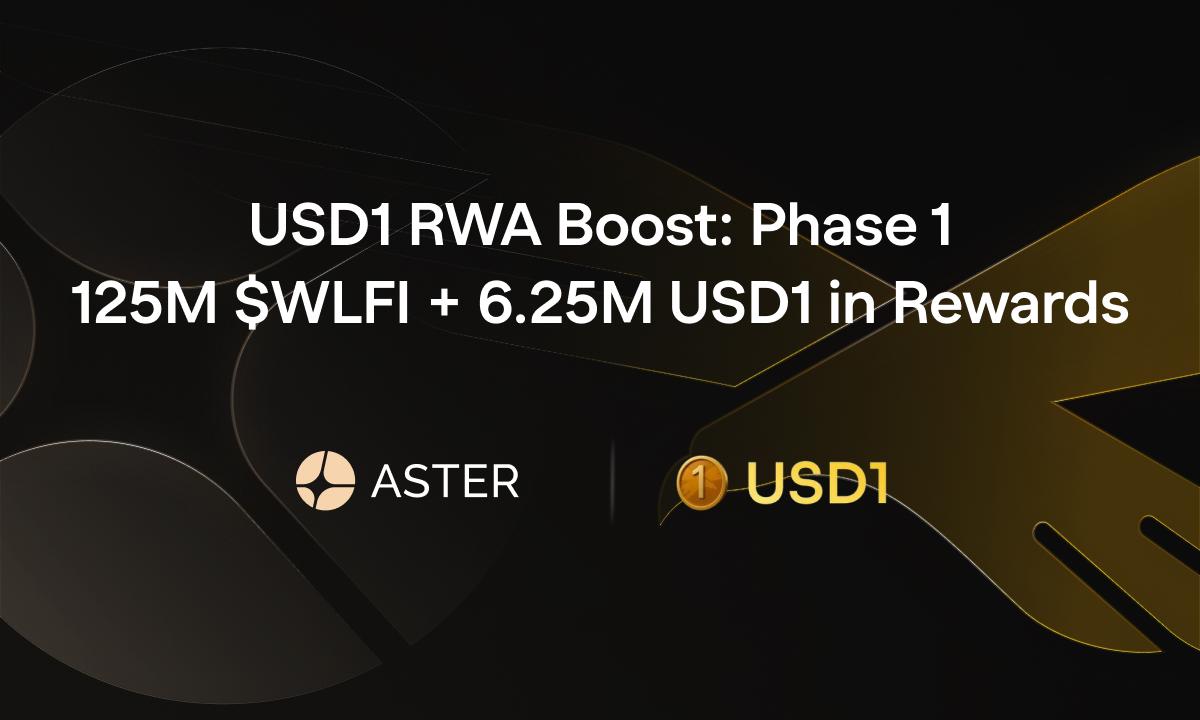
    Aster, a privacy-first onchain trading platform backed by YZi Labs, has partnered with World Liberty Financial (WLFI) to launch the USD1 RWA Boost: Phase 1 campaign. This initiative offers rewards in $WLFI and USD1 to incentivize trading on specific real-world asset (RWA) perpetual markets. The campaign, running from August 31 through December 31, 2026, aims to drive activity and establish USD1 as a key settlement asset for these onchain markets. Trading cryptocurrencies and leveraged products involves significant risk, and campaign terms are subject to change.

    Campaign Mechanics and Rewards
    The USD1 RWA Boost campaign is built upon Aster’s AOS-2 framework, an evolution of its Aster Open Standards (AOS). According to Aster, AOS-2 provides a standardized, onchain process for initiating perpetual market listings. This framework allows projects to propose new markets through a transparent and automated system. Applicants are required to stake 1 million $ASTER, which are locked for four years. If a proposal is approved, Aster’s risk team configures the market, and the perpetual can become operational as early as T+1.

    World Liberty Financial (WLFI) is a key partner in this campaign, contributing to the reward pools. The campaign offers a total of 125,000,000 $WLFI and 6,250,000 USD1 in rewards for Phase 1. Users can earn rewards through two primary mechanisms: Trading Points, earned via taker volume on eligible USD1 perpetual pairs, which contribute to their share of the USD1 reward pool, and Open Interest (OI) Points, earned by holding eligible positions, which determine their share of the $WLFI reward pool. According to Aster, traders utilizing Single Asset Mode with USD1 as collateral will receive a 2x boost on their OI Points. Rewards are calculated across weekly epochs and distributed the following week.

    The campaign specifically covers trading pairs such as SPCX/USD1, CL/USD1, XAU/USD1, SNDK/USD1, SKHYNIX/USD1, and MU/USD1.

    Aster’s Infrastructure and RWA Market Development
    Interpretations suggest that AOS-2 is transforming Aster into an infrastructure layer where third parties can launch their own perpetual markets. The initial USD1 RWA perpetual listings are seen as evidence that this model is already functioning. The campaign highlights the importance of the settlement asset, with USD1 serving as a unified instrument across various RWA markets like gold, energy, and equities. Aster aims to become a leading venue for bringing new asset markets onchain as more assets transition to the blockchain.

    Leonard, CEO at Aster, and Zach Witkoff, Co-Founder and CEO at World Liberty Financial, are associated with these entities. Aster Chain, the Layer 1 blockchain powering Aster, is designed to support decentralized finance applications. Aster also offers features like Hidden Orders to enhance user trading privacy.

    It is important to note that the exact list of eligible pairs, reward parameters, and campaign rules may be modified during its duration. This announcement is for informational purposes only and does not constitute investment or financial advice.

    Why This Matters

    The materials describe a narrow update: Aster, a privacy-first onchain trading platform, in partnership with World Liberty Financial (WLFI), has initiated a campaign offering rewards in $WLFI and USD1. The exact list of eligible pairs and campaign rules are subject to change during the campaign.

    Broader Context

    Source materials place the factual news in this context: Aster is a privacy-first onchain trading platform backed by YZi Labs.

  • Ripple and SettleMint Partner on Integrated Digital Asset Custody and Lifecycle Platform

    Ripple and SettleMint Partner on Integrated Digital Asset Custody and Lifecycle Platform

    Ripple and SettleMint have announced a strategic partnership to integrate Ripple Custody into SettleMint’s Digital Asset Lifecycle Platform (DALP). This collaboration aims to provide regulated financial institutions with a unified system for the custody, issuance, and management of tokenized assets throughout their lifecycle.

    The integrated offering has launched in Asia, with plans to expand to other markets based on institutional demand. The partnership targets banks, market infrastructure operators, and sovereign entities, consolidating functions such as compliance, settlement, and servicing with custody and issuance. This approach seeks to enable institutions to reduce reliance on separate vendors for each function.

    According to Fiona Murray, Managing Director, Asia Pacific at Ripple, financial institutions across Asia Pacific are actively engaging with digital assets and are seeking integrated solutions. “They are asking how to do more without stitching together separate solutions for custody, issuance and governance,” Murray stated.

    Market Context and Projections
    The joint announcement references a Boston Consulting Group (BCG) report from May 2026, titled “The Future of Digital Assets.” This report projects that tokenized real-world assets could reach $88 trillion by 2035, describing the shift toward digital assets as a fundamental restructuring of financial infrastructure. BCG also estimates that banks failing to adapt to this shift could see profits fall by as much as 30% over the same horizon.

    Ripple’s Custody Expansion
    Ripple’s custody services have been developed through a series of transactions and acquisitions, with the company having invested approximately $4 billion in cumulative M&A and corporate venture spending on crypto infrastructure. Recent additions to Ripple’s capabilities include partnerships with Securosys and Figment, an integration with compliance analytics firm Chainalysis, and the acquisition of wallet infrastructure provider Palisade, which enhanced its MPC-based key sharding and multi-chain support.

    SettleMint’s Platform Reach
    SettleMint, headquartered in Leuven, Belgium, with offices in the UAE, Singapore, and Japan, provides the lifecycle management component. The company states that its DALP is currently in production and pre-production deployments across North America, Europe, the Middle East, and Asia Pacific for banks, market operators, and governments.

    “Global capital markets are moving fully on-chain, and that shift only works when digital asset custody and lifecycle management operate as one system rather than two,” said Adam Popat, CEO of SettleMint.

    The partnership’s offering includes support for assets such as RLUSD, Ripple’s stablecoin, and XRP. In March, Ripple piloted RLUSD in Singapore’s central bank sandbox with supply chain finance firm Unloq. Additionally, Ripple’s XRP Ledger was utilized in a cross-border pilot with JPMorgan, Mastercard, and Ondo Finance, which reportedly settled tokenized US Treasuries in under five seconds.

    While the offering has commenced in Asia, the exact timeline for its extension to other markets remains an uncertainty. The full impact of banks failing to adapt to digital assets on their profits is also subject to estimation, as is the complete scope of SettleMint’s DALP deployments across all regions.

    Why This Matters

    This partnership addresses the growing need for integrated digital asset management solutions within the financial sector. As highlighted by Boston Consulting Group, the market for tokenized real-world assets is projected to reach $88 trillion by 2035, indicating a significant shift in financial infrastructure. Financial institutions that fail to adapt to this evolving landscape could face substantial profit reductions, underscoring the importance of solutions like the one offered by Ripple and SettleMint.

  • Analyst: Bull Market Confirmed as ETH Clears Key Monthly Resistance

    Analyst: Bull Market Confirmed as ETH Clears Key Monthly Resistance

    Ethereum’s monthly candle closed above a significant resistance level around $2,470 on August 31, prompting analyst Matthew Hyland to declare on X that the downtrend initiated in August 2025 has concluded.

    Hyland characterized the close as the first confirmation of a new bull market, drawing parallels between the current chart formation and patterns that preceded Ethereum’s rallies in 2016 and 2020. His analysis traces ETH’s trajectory from its 2025 peak in August of that year, through a consistent pattern of lower highs and lower lows that bottomed out between $1,500 and $1,600 in June and July of this year.

    “ETH confirms a Monthly Higher_High and ends its downtrend that started in August of 2025,” Hyland posted. “The Bears have been slayed. WELCOME TO THE #CRYPTO BULL MARKET!!”

    Other market observers have also focused on this price zone. Trader DonAlt noted that ETH faces “No real resistance till $4k,” while identifying support around $2,100 and cautioning that a drop below $2,000 could lead to a decline toward $1,000.

    Fellow analyst Daan Crypto Trades highlighted that ETH has spent the past 11 days trading within a narrow range, confined between its weekly 200-period moving average and a horizontal support level.

    Analyst Quantum Ascend pointed out that ETH’s monthly candle closed near its 50-month simple moving average, with the Relative Strength Index (RSI) still deeply oversold. This configuration, he noted, last appeared in the spring of 2025, just before the token experienced a 3.5x surge over five months. Based on this historical pattern, Quantum Ascend anticipates a new all-time high.

    At the time of this report, Ethereum, the second-largest cryptocurrency by market capitalization, was trading above $2,400. This represents an approximate 31% increase over the past month and a 30% rise in the last two weeks. However, it remains about 50% below its record high of over $4,900, which was set in August of the previous year.

    Ethereum’s price recovery is occurring concurrently with an uptick in network activity. Reports indicate that Ethereum is nearing one million active addresses, even as significant activity continues on Layer 2 scaling solutions.

    While this increased network engagement provides context for the price movement, active addresses alone are insufficient to definitively signal the start of a new long-term cycle for ETH. For instance, the Tron network boasts over 4 million active addresses, largely driven by payment and stablecoin transactions.

    The most critical test of Hyland’s bullish thesis, for now, is whether Ethereum can maintain its position above the $2,470 breakout level. A sustained move beyond this point would position the $4,000 region as the next significant target for traders. Conversely, a failure to hold above $2,000 would substantially undermine the current bullish structure.