Category: Uncategorized

  • YZi Labs Invests in TermMax to Bolster On-Chain Bond Market Infrastructure

    YZi Labs Invests in TermMax to Bolster On-Chain Bond Market Infrastructure

    YZi Labs has strategically invested in TermMax, a fixed-rate lending protocol focused on developing on-chain bond market infrastructure. This move aims to address a perceived gap in the financial application layer for tokenized assets, particularly concerning credit, collateral management, and risk transfer products like options, according to YZi Labs.

    TermMax, developed by Term Structure Labs, has already secured over $8 million in funding and has been operational on mainnet since April 2025. The protocol is deployed across 10 EVM-compatible chains, featuring 60 fixed-rate markets and 40 strategy vaults. It currently holds tens of millions of dollars in total value locked and serves over 1.5 million registered wallets. Key partners and Curators for TermMax include Keyrock, Hardcore Labs, Edge Capital, and Origami.

    The $TMX token completed its Token Generation Event (TGE) on August 25th. TermMax’s offerings include TermMax Alpha, which provides physical delivery options designed to avoid liquidation before expiry, settling by physical delivery of collateral. This mechanism is intended to better suit less liquid assets than traditional perpetual futures. TermPrime, another component of TermMax, completed its first live trade on Canton Network at the end of June and has established a counterparty network of nine institutions.

    YZi Labs highlighted that tokenized blue-chip equities, valued at $2.48 billion, represent the fastest-growing asset class on-chain. However, the firm noted that the financial application layer surrounding these assets remains underdeveloped, with a notable absence of options and other risk-transfer products. YZi Labs stated that its investment is strategically positioned to address this specific market gap.

    Jerry Li, Co-founder and CEO of TermMax, emphasized the need for on-chain interest rate curves, stating, “When I left banking, there were a few hundred billion dollars of assets sitting on-chain without a single directly observable interest rate curve between them. In traditional markets, that would be unheard of. That is what made me decide to build this infrastructure on-chain.” Li also articulated TermMax’s vision: “What TermMax wants to be is not another lending protocol, but the on-chain interest rate curve itself,” aiming to enable DeFi to “grow into something professional enough to genuinely serve finance.”

    YZi Labs, which manages over $10 billion in assets globally, invests in ventures across Web3, AI, and biotech, with a portfolio exceeding 300 projects. The firm has incubated over 65 companies through its EASY Residency program, and TermMax was selected for Season 3 of this initiative. TermMax previously saw Cumberland DRW lead its 2023 seed round and has integrated with Ondo Global Markets (January 2026) and Binance’s bStock, alongside its August 2026 deployment on Robinhood Chain. The protocol holds a DeFiSafety Process Quality Review score of 93%.

    The specific terms of YZi Labs’ investment in TermMax were not disclosed.

    Why This Matters

    The materials describe a narrow update: YZi Labs invested in TermMax, a protocol focused on fixed-rate lending and on-chain bond market infrastructure. Terms of the investment from YZi Labs were not disclosed.

    Broader Context

    Source materials place the factual news in this context: TermMax is a fixed-rate, fixed-term borrowing and lending marketplace built by Term Structure Labs, live on mainnet since April 2025 and deployed across 10 EVM-compatible chains, where it runs 60 fixed-rate markets and 40 strategy vaults. The protocol splits debt into three tradable tokens: FT (principal), XT (interest and option value) and GT (an ERC-721 receipt for leveraged positions). Professional Curators set target APR ranges across isolated markets and manage strategy vaults, and liquidations settle by physical delivery of collateral. Co-founder and CEO Jerry Li has 25 years in global financial markets and served as Managing Director at Deutsche Bank, running fixed income and FX for Greater China.


  • Nvidia Reportedly in Talks to Acquire Hugging Face for $12.9 Billion

    Nvidia Reportedly in Talks to Acquire Hugging Face for $12.9 Billion

    Nvidia is reportedly in discussions to acquire Hugging Face, a prominent open-source AI model hub, for approximately $12.9 billion. This potential deal could significantly reshape the landscape of artificial intelligence development and distribution.

    Nvidia, a leading provider of the hardware, particularly GPUs, that powers AI training and inference, already plays a critical role in the AI ecosystem. Hugging Face serves as a central repository for a vast number of AI models, hosting, versioning, and providing downloads for many of them. The combination of Nvidia’s hardware dominance with Hugging Face’s distribution platform could represent a significant move towards vertical integration in the AI pipeline.

    Potential Control Over AI Distribution

    According to reports, the strategic logic behind such an acquisition would be for Nvidia to control the layer that sits between AI models and their users. This would allow Nvidia to potentially steer the flow of AI development towards its own cloud services, tooling, and hardware accelerators. While open-weight licenses for AI models would not change, meaning models would remain usable off-platform, the default doorway for accessing them could shift.

    Competitive Landscape and Open-Source Advocacy

    This reported acquisition comes at a time of increasing competition in the open-source AI space. Chinese AI companies, such as Z.ai and Alibaba’s Qwen, have been releasing strong open models that are beginning to rival or even surpass the performance of leading Western models like OpenAI’s GPT and Anthropic’s Claude on certain benchmarks. This trend has put pressure on the dominance of established Western AI labs.

    Nvidia has previously advocated for open-source AI, joining Meta and Microsoft in lobbying against regulations that could restrict the release of open-weight models. The company has stated that the government should not hinder open-source AI development. However, Hugging Face has not reported the acquisition terms, and a potential acquisition of Hugging Face raises questions about the future neutrality of the platform.

    Uncertainties and Broader Trends

    While Hugging Face has not reported the acquisition terms, the reported deal highlights a broader trend in the AI industry. This trend involves open models being increasingly delivered through infrastructure controlled by a limited number of large technology firms, potentially under significant regulatory scrutiny. If the acquisition proceeds, the open-source AI ecosystem could see a shift where access to models, while still free in terms of weights, is managed through a vendor-controlled platform.

    Nvidia reported record quarterly revenue of $96.2 billion and disclosed $366 billion in future commitments, indicating its substantial scale and market position. The potential acquisition of Hugging Face for $12.9 billion would represent a significant investment, underscoring the strategic importance of controlling both the underlying compute hardware and the distribution layer for AI models.

    Key uncertainties remain regarding the exact implications for developers and the broader AI community. While the open-weight nature of models is expected to persist, the surrounding workflow and the potential for prioritization or pricing changes on the Hugging Face platform are subjects of speculation. The acquisition could formalize a structure where open models are accessed through infrastructure that flies a single company’s flag, even if the models themselves remain freely available.

    Broader Context

    Source materials place the factual news in this context: Nvidia already sells the hardware every major AI lab trains and serves models on.

  • Flock CEO Urges Privacy Compromise Amid Camera Backlash

    Flock CEO Urges Privacy Compromise Amid Camera Backlash

    Flock Safety CEO Calls for Compromise Amid Growing Backlash Over AI Cameras

    The CEO of Flock Safety has urged for “compromise” as the company faces escalating criticism over its AI-powered license plate cameras. The technology has been subjected to vandalism nationwide and has drawn bipartisan opposition in Congress.

    “What we have to prioritize as a country is compromise,” Garrett Langley stated in an interview with Fox News broadcast Saturday. He argued that Americans framing the debate as a binary choice between privacy and safety are “prioritizing the wrong thing.”

    Flock Safety has managed to unite lawmakers who typically find little common ground. Senator Bernie Sanders, an independent from Vermont, announced this month his intention to introduce legislation to halt “AI mass surveillance.” Meanwhile, House Republicans, led by Representative Tim Burchett, have proposed a bill to prohibit the federal government from purchasing Flock cameras. Senator Josh Hawley, a Republican from Missouri, has also initiated a separate Senate inquiry.

    Langley contended that an outright ban would be “like banning vehicles,” drawing a parallel to the country’s rejection of such a measure in favor of regulations like drunk driving statutes, seatbelts, and airbags. He suggested that regulators should instead focus on two key areas: data retention, where Flock recently reduced its recommended retention period to seven days, a move that surpasses the strictest state limit of 21 days, and accountability for law enforcement officers who misuse the system. “The person who wants a bad cop gone first is a good cop, and 99.9% of cops are good,” he asserted.

    A Washington Post investigation published on August 19 revealed that at least 69 law enforcement officials have been accused, charged, or convicted of misusing Flock or similar license plate readers. In at least 15 of these instances, the initial discovery of misuse came from outside the department, involving victims, activists, or journalists.

    Reporters subsequently identified three additional officers by analyzing public search logs. One officer in Indianapolis had conducted 3,759 searches over ten months on vehicles belonging to his wife and two acquaintances, averaging roughly twelve searches per day. All three departments involved stated they did not regularly audit officer searches, and two of the implicated officers have since faced disciplinary action.

    Six days prior to the Post‘s publication, Flock announced it would mandate all law enforcement customers to enable Audit Assistance, a feature designed to flag abnormal search patterns, by the end of the year. This feature had been optional since April, and Flock reported that approximately one-third of the 7,000 agencies utilizing its system had activated it.

    Langley also addressed inquiries regarding a WIRED investigation published on the same day as the Post‘s report. That investigation found that Flock had developed an AI tool capable of identifying drivers based solely on their movement patterns, without requiring a license plate or name to initiate a search.

    He did not dispute the findings, describing AI as “incredibly powerful, but also a very dangerous tool.” Langley emphasized that its deployment in public safety necessitates third-party attestation, stating, “When you call 911, it has to work. There’s no space for hallucination.”

    Flock claims its technology supported over a million criminal investigations last year and aided in locating more than 10,000 missing individuals. These figures are derived from the company’s own “Impact Census,” a survey of nearly 700 agencies that Flock acknowledges is an early methodology open to critique. The number of investigations includes those in which the technology played a role; Flock separately estimates its contribution to approximately 20% of cleared cases in jurisdictions where its cameras are deployed.

  • AI Chatbots Offer Divergent SHIB Price Outlooks Amidst Recent Gains, Highlighting Market Uncertainty

    AI Chatbots Offer Divergent SHIB Price Outlooks Amidst Recent Gains, Highlighting Market Uncertainty

    Shiba Inu (SHIB) has seen a notable price increase, gaining 20% over the past two weeks and briefly reaching a three-month high. As the cryptocurrency market evolves, AI chatbots are increasingly consulted for market analysis. In this context, three prominent AI models—ChatGPT, Gemini, and Peerplexity—have provided their outlooks on whether SHIB can eliminate a zero from its price, reaching the $0.00001 mark, within the third quarter (Q3). However, their predictions reveal significant divergence and underscore the inherent uncertainties in forecasting volatile digital assets.

    AI Perspectives on SHIB’s Q3 Potential

    According to ChatGPT, SHIB would require approximately a 90% price increase to reach the $0.00001 level. OpenAI’s platform suggested this target remains plausible for Q3, contingent on several key factors. Among these, ChatGPT noted the potential impact of whale activity, indicating that the return of significant investors could positively influence SHIB’s price. This observation is supported by a recent event where SHIB saw a double-digit daily jump after a large holder resumed purchasing after a period of inactivity.

    However, ChatGPT also indicated that token burns are unlikely to be a significant driver for price appreciation. This aligns with recent data showing a nearly 60% decline in the SHIB token burn rate over the past month. For SHIB to see substantial gains, ChatGPT suggested that breaking the key price level of $0.000006 could be crucial, potentially leading to increased trading volume and market interest. Additionally, a broader rotation of capital from major cryptocurrencies into meme coins was cited as another potential catalyst.

    Gemini, another AI chatbot, stated that erasing a zero without substantial capital inflows or a supply shock would necessitate strong and sustained momentum. Gemini predicted that advancements in Shiba Inu’s layer-2 scaling solution, Shibarium, could serve as a catalyst for SHIB’s price movement in the current quarter. Despite this potential, the current state of Shibarium indicates a significant slowdown compared to its past performance. The network is currently processing hundreds or thousands of transactions daily, a stark contrast to the millions of transactions it handled years ago.

    Peerplexity offered the most conservative outlook, deeming a rally to erase a zero mathematically possible but highly implausible given the current level of interest in SHIB. Peerplexity projected that the ceiling for SHIB’s price in Q3 lies within the $0.0000067 to $0.0000078 range. Furthermore, Peerplexity warned that failing to maintain the support line around $0.000005 could result in a significant price decline.

    Navigating Speculative Markets

    As of press time, SHIB is trading near $0.0000053, according to CoinGecko. The varying predictions from these AI models underscore the speculative nature of cryptocurrency markets. While factors like whale activity, potential meme coin rotations, and developments in Shibarium are cited as potential influences, their actual impact remains uncertain. The decline in token burn rates and the reduced transaction volume on Shibarium compared to historical levels add further complexity to the outlook. Investors are advised to approach such AI-generated predictions with caution, recognizing the significant uncertainties involved in forecasting the price of volatile assets like Shiba Inu.

    Why This Matters

    The materials describe a narrow update: Three AI chatbots (ChatGPT, Gemini, Peerplexity) were consulted for their predictions on whether Shiba Inu (SHIB) could erase a zero (reach $0. Whether SHIB will erase a zero in Q3.

    Broader Context

    Source materials place the market analysis in this context: The self-proclaimed Dogecoin killer has posted a solid 20% increase over the past two weeks, briefly hitting a three-month high.

  • Sui Basecamp 2026 in Singapore to Focus on Agentic Economy, Include TPS Record Attempt

    Sui Basecamp 2026 in Singapore to Focus on Agentic Economy, Include TPS Record Attempt

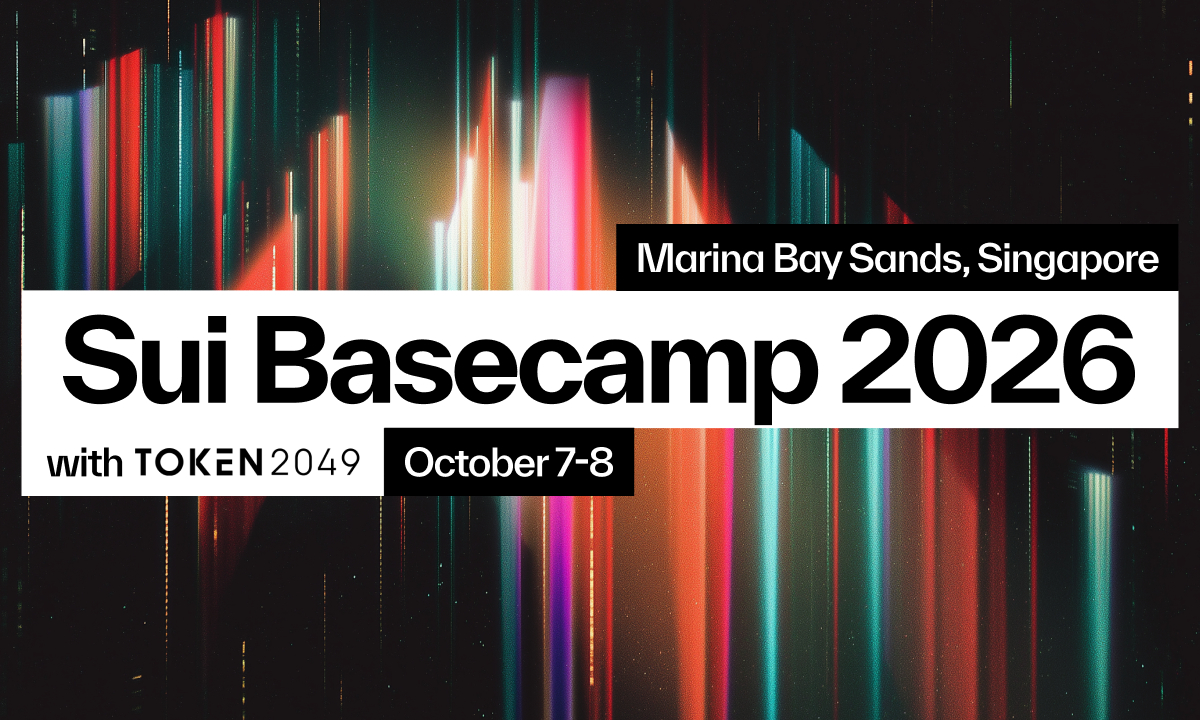
    Sui Basecamp 2026, a conference focused on the ‘agentic economy,’ is scheduled to take place in Singapore on October 7-8, 2026, alongside TOKEN2049 at Marina Bay Sands, according to an announcement.

    The event aims to convene the Sui community, including builders, developers, investors, and industry leaders, to discuss the future of financial transactions driven by artificial intelligence and automated agents. The agenda includes product reveals, technical deep dives, and hands-on demonstrations, with a focus on the technological requirements for an economy where software agents transact at machine speed.

    A key highlight of Sui Basecamp 2026 will be a live attempt to set a new transactions per second (TPS) record for the Sui network. Mysten Labs Co-Founder and Chief Cryptographer Kostas Chalkias is slated to lead this effort on the Main Stage on October 7th. The goal is to surpass Sui’s current record of 6,086,766 TPS, which was established on July 4th, 2026. CertiK will serve as the independent auditor for this record attempt.

    The focus on high throughput is directly linked to the event’s central theme. The ‘agentic economy’ is conceptualized as a future where economic activity shifts from human-initiated transactions to automated processes executed by AI agents. This paradigm shift is expected to demand significant network capacity and speed, making the TPS record attempt a demonstration of Sui’s potential to meet these demands.

    Sui Basecamp is designed to foster collaboration and development within the Sui ecosystem. The conference will feature an AI Builder Lab, offering participants hands-on experience with AI tools and sessions on building AI-powered applications and agents. Additionally, a Trading Arena will showcase live trading competitions on Hudi.

    Several companies are sponsoring Sui Basecamp 2026 at various levels, including Hudi, AlphaFi, EVE Frontier, Walrus, ONE Championship, Slush, RedotPay, Scallop, Anyflo, Merkle Science, Sentio, and Meta. The event also includes a competition for predicting the TPS achieved during the record attempt, with prizes of 10,000 SUI for first place, 5,000 SUI for second, and 1,000 SUI for third. Details regarding this competition will be announced on X by @SuiNetwork.

    Registration for Sui Basecamp 2026 is available at luma.com/SuiBasecamp2026. The event is expected to provide insights into the development of the agentic financial stack and Sui’s role in enabling high-volume, automated transactions.

    Uncertainties remain regarding the exact number of additional speakers to be added in the coming weeks.

    Why This Matters

    The materials describe a narrow update: Sui Basecamp 2026 is scheduled to take place in Singapore on October 7-8, 2026, coinciding with TOKEN2049. The exact number of additional speakers to be added in the coming weeks.

    Broader Context

    Source materials place the announcement in this context: Sui Basecamp is the Sui ecosystem’s flagship annual gathering.

  • Ripple Launches Institutional Trading Arm

    Ripple Launches Institutional Trading Arm

    Ripple Launches Institutional Trading Business to Expand Wall Street Reach

    Ripple, the company associated with the cryptocurrency XRP, has unveiled a new institutional trading business, Ripple Prime, signaling a strategic expansion beyond its digital asset origins and deeper into traditional finance.

    The initiative, announced Thursday, will enable hedge funds, asset managers, and other institutional clients to engage in Total Return Swaps (TRS) across a range of assets, including US-listed equities, indices, and digital assets.

    According to the company, the service is now operational and represents a significant move to bolster its presence in traditional financial markets. This development follows Ripple’s acquisition of prime broker Hidden Road for $1.25 billion, which was completed less than a year ago.

    Products within the Delta One category, such as TRS, are derivatives designed to mirror the performance of an underlying asset or index. A TRS allows investors to benefit from an asset’s gains and income without direct ownership, in exchange for financing costs and potential losses.

    Ripple Prime has broadened its platform’s asset offerings, now providing clients with access to equities alongside foreign exchange, fixed income, derivatives, and cryptocurrencies through a unified counterparty relationship. The company also stated that customers can cross-margin exposures across these diverse assets around the clock, potentially lowering the collateral requirements for institutions.

    Noel Kimmel, President of Ripple Prime, commented that these services are precisely what institutional market participants are seeking, and expressed pride in the company’s ability to deliver them.

    Ripple’s acquisition of Hidden Road, subsequently rebranded as Ripple Prime, was initially announced in April 2025 and finalized by year-end. This acquisition positioned Ripple as the first crypto company to own and operate a global multi-asset prime broker, handling over $3 trillion in annual clearing volume and serving more than 300 institutional clients.

    Earlier this year, Ripple Prime secured an investment-grade BBB rating from KBRA, with the agency citing its growth in clearing and intermediation within exchange-traded derivatives and fixed-income repo markets.

    In August, Ripple Prime announced an upsized $275 million private placement of senior unsecured notes, following a $200 million debt facility secured from Neuberger Specialty Finance in May. The company indicated that the new capital would fuel its ongoing expansion efforts.

  • XRP Volatility Spikes: What’s Driving Today’s Price Swings?

    XRP Volatility Spikes: What’s Driving Today’s Price Swings?

    XRP Price Swings Create Uncertainty, Traders Eye Key Levels

    XRP is currently trading above $1.40, having experienced intraday fluctuations between $1.37 and $1.45, a volatility that has left its own price predictions in question. The digital asset appears to be in a real-time struggle for direction. The central question for traders is not XRP’s immediate position, but whether this choppiness signals the exhaustion of a recent rally or the prelude to further gains.

    This price action follows an overheated surge in August, where XRP saw gains exceeding 50% in a single week. Buyers ultimately failed to sustain the $1.45–$1.55 resistance zone, triggering a wave of liquidations as leveraged positions were unwound.

    Despite the derivatives market recalibrating, network activity data suggests continued institutional interest in spot XRP ETF products and an increase in ledger transfer volumes remain supportive. The MACD indicator is flashing a buy signal at 0.069 (12,26,9), while the RSI at 72 hovers in slightly overbought territory. This comes after the RSI had previously signaled an overbought condition just days ago, prompting caution among short-term traders.

    Broader macroeconomic factors, such as expectations surrounding Federal Reserve interest rate decisions and stable Treasury yields, have maintained a generally positive risk appetite across the cryptocurrency market. This provides a favorable backdrop, but the critical question now is whether XRP’s technical structure can hold firm to capitalize on these conditions.

    Technical Outlook and Key Levels

    XRP is trading around the $1.45 mark, with its intraday range narrowing between $1.38 and $1.45. Trading volume has increased alongside the recent bounce, which appears to be driven more by short covering than by fresh accumulation. This suggests that further observation is warranted before declaring a definitive trend reversal.

    Immediate resistance is observed at the $1.41–$1.45 level, a zone that XRP has encountered repeated rejections from this week. A daily close above $1.45 would significantly improve the technical outlook, potentially paving the way for a move towards $1.55 and subsequently $2.00 if momentum continues. Support is holding near $1.36, with more substantial demand identified at $1.28 and the crucial $1.00–$1.05 zone, which has historically supported XRP during major pullbacks in 2026.

    Potential Scenarios

    In an optimistic scenario, XRP would need to reclaim the $1.45 level, with sustained ETF inflows and momentum carrying the price towards the $1.55–$1.65 range. Alternatively, the asset could continue to trade within a range between $1.36 and $1.45 as leverage continues to reset.

    Conversely, a bearish outlook would emerge if XRP breaks below the $1.28 support level, potentially retesting the $1.00 floor. This risk would be amplified if selling pressure related to escrow releases resurfaces. Traders seeking confirmation of any directional move should monitor for expanding volume during breakout attempts.

    Broader Market Considerations

    While XRP holders experiencing the current bounce have grounds for optimism, with a 50% daily gain being a notable achievement, it’s important to note that at a market capitalization exceeding $80 billion, a move from $1.45 to $2.00 represents a solid trade rather than a life-altering one.

    This mathematical reality is precisely why traders with remaining risk appetite are exploring earlier-stage projects with potentially higher upside.

    Emerging Opportunities

    One such project gaining attention is Maxi Doge ($MAXI), a meme token focused on leveraged trading culture rather than a derivative of existing popular themes. Its presale has reportedly raised $4.8 million, with the current price at $0.0002835. The platform also offers dynamic APY staking at 65% for holders.

    Key features of Maxi Doge include holder-exclusive trading competitions with leaderboard rewards and a “Maxi Fund” treasury designated for liquidity and partnerships, an infrastructure element often overlooked in many meme coin launches. Investors are advised to conduct their own research into Maxi Doge before the presale concludes.

  • Robinhood Chain Surges on Meme and RWA Boom

    Robinhood Chain Surges on Meme and RWA Boom

    Robinhood Chain Surges on Meme Coins and Real-World Assets

    Robinhood Chain is experiencing a significant upswing, propelled by a surge in meme coins and real-world assets (RWAs). The blockchain platform recorded its strongest day since mid-July, with approximately $443 million in decentralized exchange (DEX) volume, over 3 million transactions, and active wallets exceeding 115,000. This represents a threefold increase in volume from the early August low of around $140 million.

    The performance of associated tokens mirrored this trend. StonkBroker, Index, HMM, TENDIES, Juggernaut, and YOLO all closed in positive territory, while the newly launched Biscotti rapidly achieved a $10 million market capitalization within hours. Notably, all of the top eleven tokens by market capitalization on the chain are less than two months old.

    A substantial driver of this growth is the increasing adoption of RWAs. The total value of real-world assets on the chain has reached $41.9 million across 202 tokenized assets. On Monday, net on-chain RWA flows surged to approximately $85 million, marking the highest single-day figure since the chain’s launch. This contrasts with $12.8 million recorded in mid-July.

    Robinhood CEO Vlad Tenev acknowledged the innovative developments occurring on the chain. Speaking on The Iced Coffee Hour podcast, Tenev highlighted how developers are creating novel products that the company had not anticipated, integrating meme coins, core cryptocurrency functionalities, and stock tokens. He cited an example where users holding a meme coin could receive stock tokens as an airdrop, a feature characteristic of the Stonkbrokers ecosystem, with similar functionalities also appearing in AI-related projects. Tenev’s comments suggest he is closely monitoring the chain’s evolving landscape.

    Looking ahead, the trajectory for Robinhood Chain appears to be upward, despite the potential for a market correction after a period of parabolic growth. A key indicator to watch will be the next token listing on Robinhood, following the recent addition of Cashcat. Such a listing would not only signal continued token onboarding but also provide insights into Robinhood’s preferred sectors, whether they be memes, utility tokens, or infrastructure projects. As long as Tenev and his team continue to support the ecosystem, its potential for growth seems considerable.

  • Block Scholes Research Highlights Liquidity Dynamics of Tokenized RWA Futures on Bitget UEX

    Block Scholes Research Highlights Liquidity Dynamics of Tokenized RWA Futures on Bitget UEX

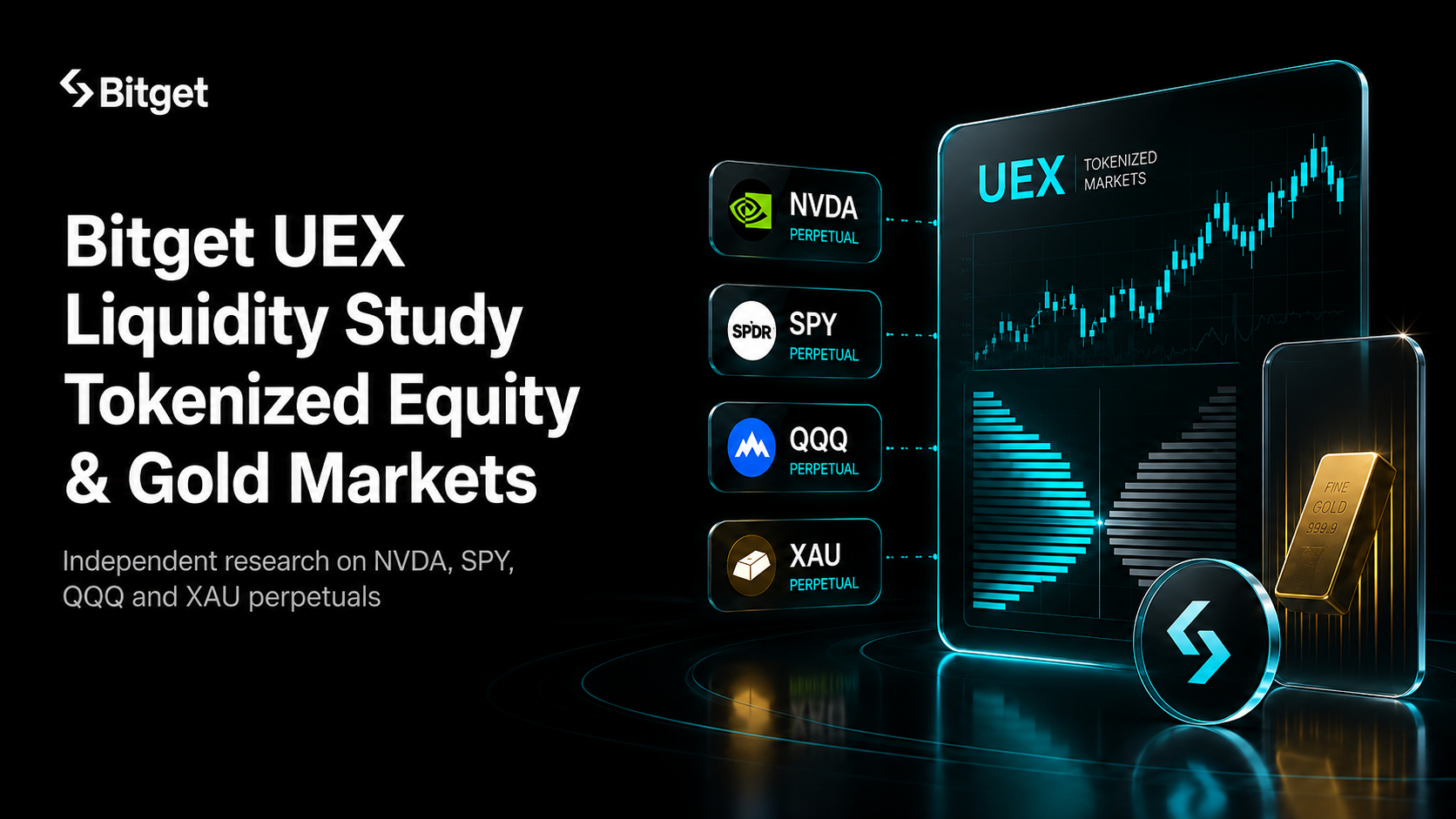
    Independent research by Block Scholes has analyzed the liquidity conditions of tokenized real-world asset (RWA) perpetual futures on Bitget UEX, offering insights into trading dynamics for these instruments. The study, which examined data up to May 2026 and events from February 2026, focused on contracts tracking gold (XAU-USDT), the SPDR S&P 500 ETF (SPY-USDT), Nvidia (NVDA-USDT), and the Invesco QQQ Nasdaq-100 ETF (QQQ-USDT).

    Key Findings on Liquidity

    According to the report, liquidity for these tokenized RWA perpetual futures generally improves within active trading sessions. Block Scholes measured order-book depth, bid-ask spreads, and slippage. By mid-May 2026, the resting liquidity on Bitget UEX’s Nvidia-tracking contract approached approximately three-quarters of the depth observed on Bitget’s BTC/USDT spot market. On May 18, 2026, top-of-book spreads were notably tight, recorded at around 0.02 basis points for gold, 0.14 basis points for both SPY and QQQ contracts, and 0.44 basis points for the NVDA contract. This indicates that less than half a basis point separated the best bid and best ask for three of the four instruments at that time.

    Intra-day analysis revealed significant improvements. For instance, SPY’s spread narrowed from 1.76 basis points at the market open on May 18, 2026, to 0.14 basis points within an hour. Similarly, slippage for a modeled $100,000 market buy order on the SPY contract decreased from 14.88 basis points at the open to 10.66 basis points an hour later. Larger orders also saw improvements, with a $500,000 order experiencing a reduction in slippage from 46.07 basis points to 24.90 basis points over the same period.

    Weekend Trading and External Event Impact

    The research also shed light on trading behavior outside traditional market hours. Block Scholes measured a substantial decrease in trading volume for these RWA perpetuals on weekends, ranging from 65% to 90% compared to weekday levels, depending on the contract. However, median bid-ask spreads remained relatively stable, staying close to weekday levels. Across the sampled week, these weekend spreads were approximately 0.02 basis points for gold, 0.8 for QQQ, 1.0 for NVDA, and 1.3 for SPY.

    Block Scholes examined the impact of external events on liquidity, noting that geopolitical developments could cause temporary disruptions. Following the announcement of U.S. strikes against Iran on February 28, 2026, spreads widened across all four contracts. For example, the NVDA contract’s spread increased from a baseline near 0.6 basis points to a peak of 3.4 basis points. However, Block Scholes found these widening effects to be brief, with NVDA’s spread returning near its pre-announcement level within minutes and QQQ’s within the hour. Order-book depth also thinned temporarily, with QQQ’s resting depth within 1% of the mid-price falling to approximately $109,000 from a typical Saturday median of about $191,000, but depth returned to its usual range within a week.

    Methodology and Context

    The research utilized data from Bitget’s API and historical order-book information spanning from September 2025 through May 2026. It is important to note that these tokenized RWA perpetuals provide synthetic price exposure to underlying assets and do not confer equity ownership, dividends, or voting rights in the referenced companies or funds. The study also considered how liquidity behaves outside the underlying assets’ regular trading hours, given the continuous trading nature of perpetual futures.

    Bitget has been publishing monthly proof-of-reserves disclosures since December 2022.

    Why This Matters

    The materials describe a narrow update: Block Scholes published research on Bitget UEX’s tokenized RWA perpetual futures (gold, SPY, Nvidia, QQQ). The exact definition of ‘resting liquidity’ used by Block Scholes beyond ‘visible resting liquidity at a point in time or over a sample period’.

    Broader Context

    Source materials place the factual news in this context: Bitget is a global cryptocurrency exchange operating as a Universal Exchange (UEX), offering crypto, tokenized stocks, gold, and other asset classes within a single account.

  • Bank of England to Get Legal Duty for Payments, Digital Money Innovation Amid Global Competition

    Bank of England to Get Legal Duty for Payments, Digital Money Innovation Amid Global Competition

    HM Treasury plans to introduce an amendment to the Financial Services and Markets Bill, establishing a statutory ‘secondary objective’ for the Bank of England focused on fostering innovation in payments and digital money. This new objective will operate under the Bank’s primary responsibility for financial stability and is expected to be presented to the House of Lords in September.

    The Bank of England will be required to report annually to parliament on its progress in fulfilling this objective. The stated aim is to support the Bank in driving innovation in payments and digital finance, thereby ensuring the UK remains a global leader in financial services.

    The move comes amid mounting global competition in the stablecoin market. Approximately 99% of stablecoins currently in circulation are dollar-denominated. In response to this landscape, the Bank of England has previously adjusted its regulatory approach. Planned caps on stablecoin ownership were dropped in favour of a £40 billion issuance limit. Furthermore, the Bank reduced the proportion of backing assets issuers must hold in zero-interest deposits, a move interpreted as an effort to enhance the commercial viability of UK-issued stablecoins against those in rival jurisdictions.

    Applications for systemic sterling stablecoin issuers are expected to open by the end of the year. This aligns with a broader international trend of regulatory framework development for digital assets. The European Union’s Markets in Crypto-Assets (MiCA) regime has applied to stablecoin issuers since June 2024, with its full framework coming into force in December 2024. The United States introduced the GENIUS Act last year.

    While the new objective is designed to encourage innovation, the Bank of England’s governor has previously flagged a potential future divergence with Washington regarding the supervision of stablecoins. Specific details concerning the Bank of England’s annual reporting mechanism and the precise nature of any future regulatory discussions with the US remain subjects of uncertainty.

    The Bank of England’s primary mandate remains financial stability. The new secondary objective is designed to operate within this existing framework, guiding its efforts in the evolving digital payments and finance sector.

    Why This Matters

    The materials describe a narrow update: HM Treasury will introduce an amendment to the Financial Services and Markets Bill to create a statutory ‘secondary objective’ for the Bank of England. The specific details of the Bank of England’s annual reporting on progress.

    Broader Context

    Source materials place the factual news in this context: The move comes amid mounting global competition on stablecoins.