Category: Uncategorized

  • Hawaii to Restrict Cash Deposits at Crypto ATMs

    Hawaii to Restrict Cash Deposits at Crypto ATMs

    Hawaii will prohibit cash deposits at cryptocurrency ATMs starting October 1st, following Governor Josh Green’s signing of Act 224 into law on July 9th. This new regulation aims to curb the use of crypto kiosks for illicit activities, driven by significant concerns over scams and financial losses.

    The law specifically makes it unlawful for operators to accept U.S. currency from customers in exchange for digital assets at these kiosks. However, it permits ATMs to facilitate the exchange of digital assets for U.S. currency or the exchange of one digital asset for another. This distinction aligns with the legislative intent to address vulnerabilities exploited in fraudulent schemes.

    Evidence cited in a committee report indicates the scale of the problem: investigations by the attorneys general of Washington, D.C., and Iowa found that over 93% of examined kiosk transactions were linked to scams. Further data from the FBI’s Internet Crime Complaint Center (IC3) highlights the impact on Hawaii residents. In 2025, the IC3 logged 92 kiosk-related complaints from Hawaii, resulting in adjusted losses of $3.85 million. The state also recorded 826 overall cryptocurrency complaints in 2025, valued at approximately $80 million.

    Hawaii’s banking commissioner, Dwight Young, told Hawaii News Now that the anonymity and traceability challenges associated with crypto ATMs make them attractive to criminals. Scammers often initiate contact through unsolicited calls, texts, or emails, falsely claiming compromised bank accounts or missed jury duty, and then persuade victims to transfer cryptocurrency to controlled wallet addresses. Staff observing kiosk usage reported that many users, particularly elders, appeared distressed.

    Approximately 57 crypto ATMs are currently operational across four of Hawaii’s islands, according to CoinATMRadar. The legislative action in Hawaii is part of a broader trend of state-level regulatory responses to cryptocurrency-related fraud. Lawmakers in Texas are considering a similar ban on crypto kiosks following scams that cost residents $57 million, and Delaware has advanced its own bill concerning these machines.

    The committee concluded that banning cash purchases at kiosks was appropriate, given that consumers have alternative methods for acquiring digital assets. This measure seeks to protect consumers by removing a key avenue for fraudulent transactions while allowing other forms of cryptocurrency exchange to continue.

    Why This Matters

    The materials describe a narrow update: Hawaii has enacted a law, Act 224, signed by Governor Josh Green on July 9th, which will make it illegal to operate a cryptocurrency ATM that accepts cash deposits from customers starting October 1st. The distinction in the law reflects what lawmakers were targeting, which was the use of kiosks in scams.

    Broader Context

    Source materials place the factual news in this context: Hawaii will make it unlawful to run a crypto kiosk that takes cash from customers starting October 1, under a measure Governor Josh Green signed on July 9 as Act 224.
  • Monero Surges 13% Weekly Amid Bullish Analyst Outlook

    Monero Surges 13% Weekly Amid Bullish Analyst Outlook

    Monero Surges 13% Weekly Amid Analyst Optimism

    In a market where double-digit gains over a seven-day period are a rarity, Monero (XMR) stands out as a notable exception, sparking optimism among observers for further price appreciation.

    The privacy-focused cryptocurrency has crossed the $400 mark, currently trading around $404 according to CoinGecko. This represents a 13% increase over the past week, pushing its market capitalization beyond $7.5 billion and elevating it to the 16th-largest cryptocurrency, surpassing Cardano’s ADA.

    While the precise driver behind Monero’s resurgence remains somewhat elusive, some analysts have identified bullish chart patterns that could signal a sustained upward trend. Several days ago, the X user known as The Moon Show suggested that XMR might be forming a significant cup-and-handle pattern. “I’m watching for a clean handle followed by a breakout above $430. If that happens, things could move very fast,” they stated.

    Another X user, Lucky, who boasts nearly two million followers, characterized the upward movement as a “special breakout from a special privacy gem.” This analyst believes XMR has entered a bullish trend and projects a potential surge to nearly $600.

    Crypto With Gopal appears to be the most bullish on Monero, opining that the cryptocurrency has established a large triangle pattern. He noted that the price is consolidating near $400 following a strong recovery, with rising support and descending resistance creating a squeeze in momentum. “Bulls are holding the range as a major breakout setup develops. A clean breakout above the upper trendline could trigger a major expansion move toward the $1,000 target,” he forecasted.

    However, two key factors could potentially lead to a short-term pullback for XMR’s rally. Firstly, the asset’s Relative Strength Index (RSI), which measures the speed and magnitude of recent price changes to indicate potential trend reversals, currently stands at approximately 77. An RSI above 70 typically signals an overbought condition, suggesting a possible correction.

    Secondly, Monero’s exchange netflow data indicates a recent trend of inflows dominating outflows. This suggests that investors may be moving their assets from self-custody to centralized exchanges, which can increase immediate selling pressure.

  • XRP Tests $1.00 Support Amidst Technical Downtrend, Uncertainty Remains

    XRP Tests $1.00 Support Amidst Technical Downtrend, Uncertainty Remains

    XRP is currently testing the critical $1.00 support level, a key juncture that could influence its short-to-medium term trajectory within a broader bearish market structure. Technical indicators and price action suggest that the prevailing downtrend remains intact, with potential for further declines if this support fails. It remains uncertain whether the $1.00 support zone will hold.

    XRP/USDT Analysis
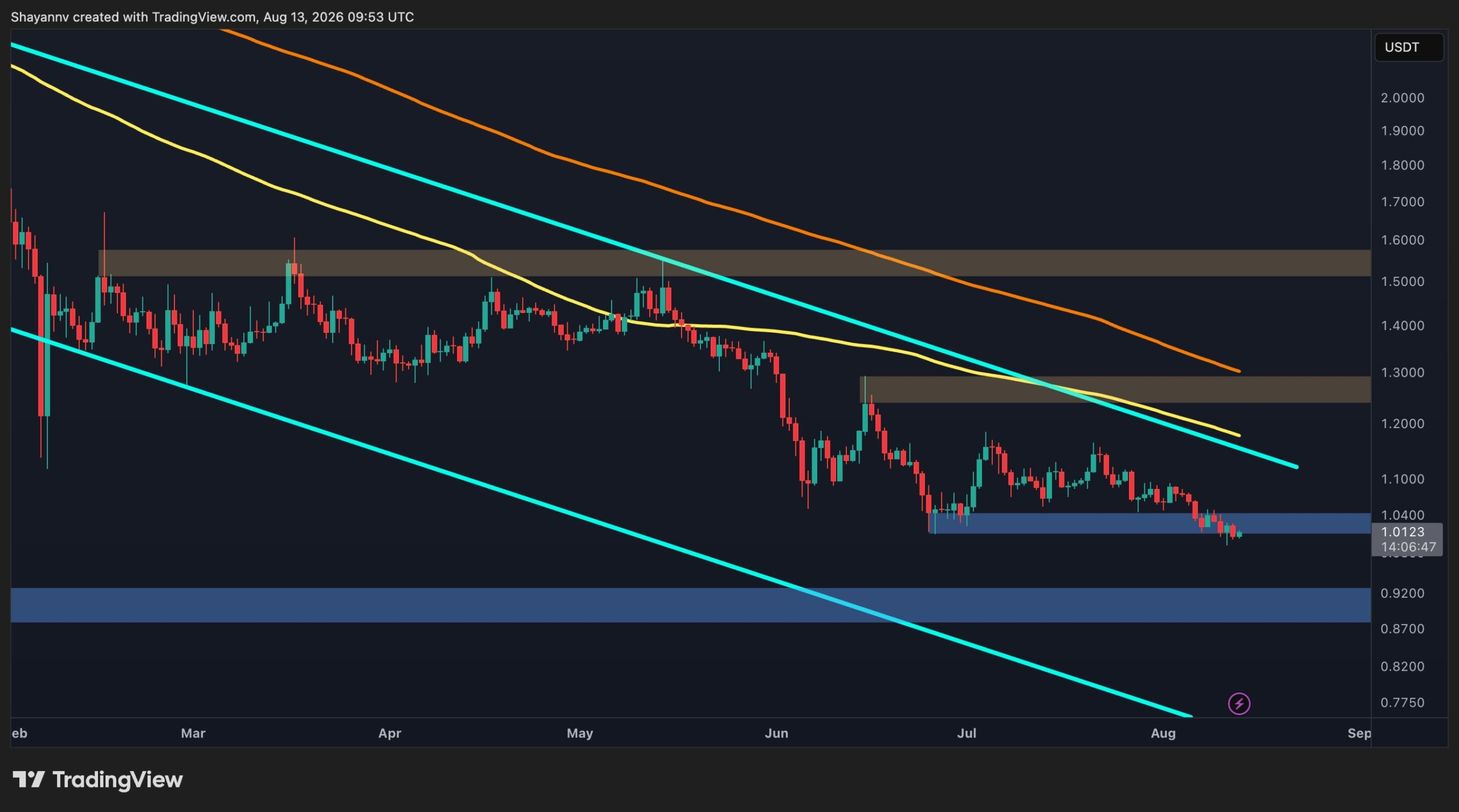
    According to the analysis, XRP has been experiencing lower highs and lower lows, trading within a descending channel on the XRP/USDT daily chart. This pattern, coupled with the price trading below both the 100-day and 200-day moving averages, reinforces the bearish outlook. The $1.00 zone has recently acted as a local floor during consolidation, making its defense crucial for any potential recovery.

    If XRP manages to hold the $1.00 support, buyers may find an opportunity to establish a base and initiate a move towards the first major resistance area, identified between $1.25 and $1.30. This zone is significant as it aligns with the declining 200-day moving average. A notable move above this level and the descending channel could improve the technical picture, potentially opening the door for a move towards the $1.50-$1.60 resistance area.

    However, the analysis indicates that as long as XRP remains below the $1.25-$1.30 resistance, the prevailing downtrend is likely to continue. A failure to sustain the $1.00 support could lead to a further price drop, with the next significant downside area appearing around $0.90. A sustained move below $0.90 would signal a more substantial structural move, potentially pushing the price towards the lower boundary of the larger descending channel.

    XRP/BTC Performance
    The performance of XRP against Bitcoin (XRP/BTC) mirrors this bearish sentiment. The XRP/BTC pair has broken below the 1,700 sats support level and is now approaching the 1,500 sats support zone. Trading within a broader descending structure, XRP/BTC faces 1,700 sats as its first key resistance. Holding the 1,500 sats area could allow for a recovery back towards 1,700 sats, but until that level is reclaimed, XRP is expected to remain relatively weak against Bitcoin.

    Outlook and Uncertainties
    Technical indicators suggest that XRP is in a critical technical area on both its USDT and BTC pairings. The 1,500 sat demand zone is a crucial level for buyers to defend on the BTC pair. A sustained defense of this area could potentially fuel a rebound against USDT, but the broader bearish structure remains in place unless XRP begins reclaiming overhead resistance levels.

    Key uncertainties remain regarding whether XRP can reclaim critical resistance levels. The performance of the XRP/BTC pair at the 1,500 sats support is also a significant factor. The current analysis indicates a bearish structure, and any potential upside is contingent on reclaiming key resistance levels.

    Why This Matters

    The materials describe a narrow update: XRP is trading near $1. Whether the $1.00 support zone will hold.

    Broader Context

    Source materials place the market analysis in this context: XRP remains firmly in a corrective structure, with the token trading near $1.00 after months of lower highs and lower lows.

  • XRP Holders Gain Access to Options and Perpetual Futures Trading on Derive via FXRP Collateral

    XRP Holders Gain Access to Options and Perpetual Futures Trading on Derive via FXRP Collateral

    XRP holders can now trade options and perpetual futures on the decentralized exchange Derive, utilizing Flare’s FXRP as collateral. This development, announced on Thursday, expands derivative trading capabilities for XRP holders within the decentralized finance (DeFi) ecosystem.

    FXRP, a token representing XRP on the Flare blockchain, is minted by users through Flare’s FAssets bridge. Once minted, FXRP can be deposited into a Derive Portfolio Margin V2 account, enabling users to trade derivatives directly from their wallets.

    Options contracts provide the right, but not the obligation, to buy or sell an asset at a predetermined price by a specific date. Perpetual futures allow speculation on an asset’s future price movements without an expiration date. According to Flare, these new trading options allow XRP holders to hedge against potential losses, earn premiums by selling options, or speculate on XRP’s price.

    “Options are often the last major market to develop around an asset, and XRP has been waiting for the infrastructure,” said Nick Forster, founder and CEO of Derive, in a statement. “FXRP gives one of crypto’s largest holder bases a credible path onchain, and adding Derive’s options markets means that capital can now be hedged, used to earn premium and traded with the same sophistication available around other major assets.”

    Derive’s XRP options will settle in USDC. If an option expires profitably for the buyer, Derive will pay out the difference in USDC while the FXRP collateral remains in the user’s account. Options sellers, however, must maintain sufficient USDC to cover settlement costs and meet margin requirements to avoid liquidation of their collateral.

    This integration broadens FXRP’s utility in decentralized finance. Earlier in the month, FXRP was approved as collateral for Sentora’s RLUSD vault on the Ethereum-based lending protocol Morpho, a service that allows XRP holders to bridge FXRP to Ethereum and borrow Ripple’s RLUSD stablecoin without selling their XRP.

    Why This Matters

    The materials describe a narrow update: Flare announced that XRP holders can now use FXRP, a token representing XRP on the Flare blockchain, as collateral to trade options and perpetual futures on the decentralized exchange Derive. XRP holders can use the products to hedge against losses, earn premiums by selling options, or speculate on the token’s price.

    Broader Context

    Source materials place the factual news in this context: Flare announced on Thursday that XRP holders can now use Flare’s FXRP as collateral to trade options and perpetual futures on decentralized exchange Derive.

  • Binance Launches bStocks for Tokenized Securities

    Binance Launches bStocks for Tokenized Securities

    Binance Launches Promotional Campaign for Tokenized Securities

    Binance is offering a special promotion on its tokenized securities, known as bStocks, allowing users to convert existing assets into bStocks at a fixed 1:1 rate with no fees. This offer is valid until August 26, 2026, at 23:59 UTC.

    How to Access and Utilize bStocks

    Users can access bStocks by selecting “Convert Now” from their deposit details. Once converted, these bStocks are available for 24/7 trading, withdrawal, or redemption for the underlying stock. The promotional campaign features a 1:1 conversion rate with zero fees. Daily per-user limits apply, and users are advised to check the Convert page for current restrictions.

    The tokenized securities offer full flexibility, enabling 24/7 trading on Binance and 1:1 redemption for the underlying stock without any fees.

    Currently supported bStocks include:

    • Tesla (TSLAon), available on ETH and BSC networks.
    • MicroStrategy (MSTRon), available on ETH and BSC networks.
    • Coinbase (COINon), available on ETH and BSC networks.
    • Circle (CRCLon), available on ETH and BSC networks.

    Important Notes on Tokenized Securities

    Deposited third-party tokenized securities can only be held or converted into bStocks and are not eligible for Spot trading. Binance reserves the right to modify or terminate the promotional campaign at any time.

    Understanding Binance bStocks Tokenized Securities

    Binance bStocks tokenized securities are classified as Certificates representing certain Financial Instruments, as per paragraph 92, Schedule 1 to the FSMR. It is crucial to understand that bStocks are not actual stocks or shares, and holding them does not grant direct ownership in the underlying listed company. Furthermore, bStocks do not imply any affiliation with the issuer of the underlying asset.

    These bStocks are offered through an Approved Prospectus in the ADGM (Abu Dhabi Global Market) and are not available in any other jurisdiction. No public offering is made outside of the ADGM. Tokenized securities are exclusively available to eligible users in permitted jurisdictions on a secondary market basis. Users are solely responsible for ensuring that accessing and trading tokenized securities is lawful within their jurisdiction. Binance disclaims any liability or obligation if access is sought from a prohibited or restricted jurisdiction. Binance may restrict, suspend, reject, cancel, or unwind access or transactions if it determines, at its sole discretion, that such actions may breach applicable law, product restrictions, eligibility criteria, sanctions requirements, or relevant offering documents.

    Tokenized securities can be held and transferred on-chain outside of the CSD (Central Securities Depository) environment. However, the transfer of tokenized securities back into the CSD environment is subject to specific conditions, and failure to meet these conditions may prevent trading, redemption, or other dealings within the CSD environment.

    The information provided in connection with tokenized securities is not intended as an offer, solicitation, promotion, recommendation, or invitation to buy or sell securities in any jurisdiction. Tokenized securities are not offered, sold, distributed, made available, or accessible in the United States or to, or for the account or benefit of, U.S. persons. These securities have not been registered under the U.S. Securities Act of 1933 or any U.S. state securities laws, and a public offering of bStocks will not be conducted in the United States or any other jurisdiction, with the exception of the ADGM. By accessing this product, users represent and warrant that they are not a U.S. person, are not located in the United States, are not acting for the account or benefit of any U.S. person, and will not access, purchase, sell, transfer, redeem, or otherwise transact in tokenized securities from within the United States.

  • Trezor Customer Data Exposed Via Shipping Partner Breach, Highlighting Third-Party Risks

    Trezor Customer Data Exposed Via Shipping Partner Breach, Highlighting Third-Party Risks

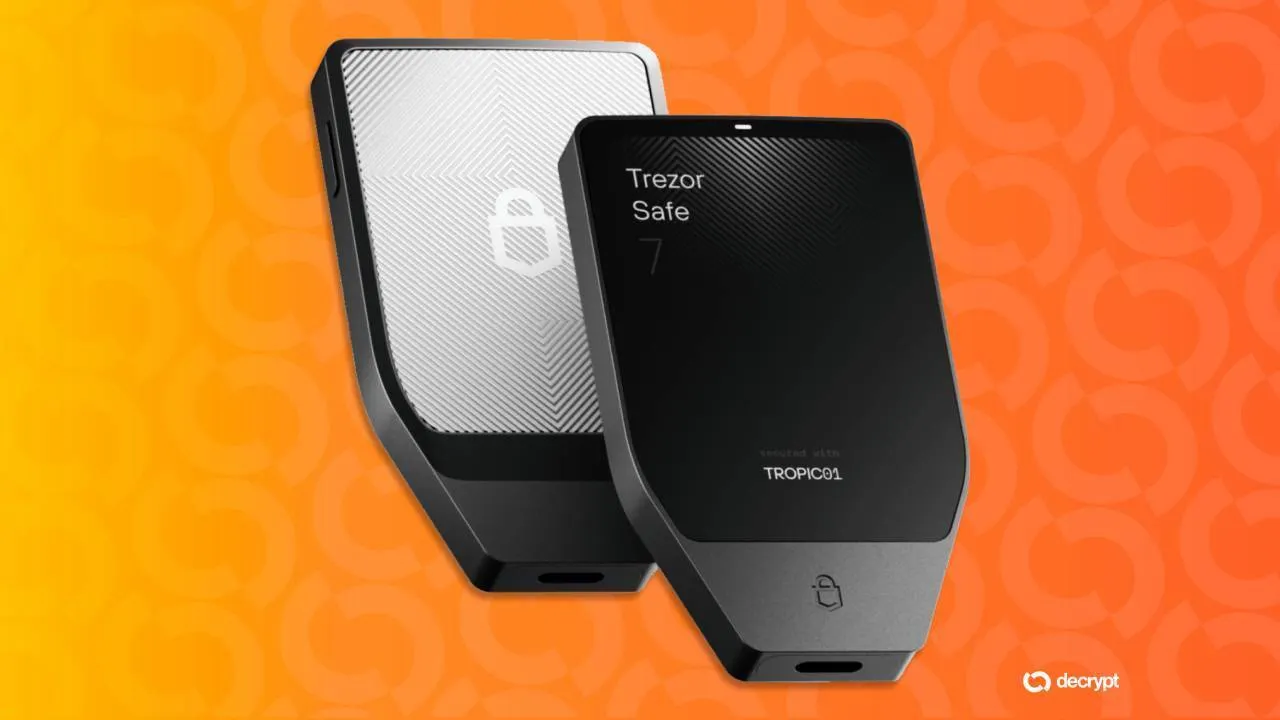
    A data breach at ShipMonk, Trezor’s shipping partner, has exposed the personal information of 13,689 Trezor customers, the company disclosed on Thursday, August 13, 2026. The incident involved unauthorized access to systems containing customer names, phone numbers, email addresses, and home addresses for some affected individuals.

    Trezor’s Core Security Remains Intact
    Trezor stated that its own systems were not compromised, and crucially, no Trezor devices, private keys, or wallet backups were accessed. The breach affected customers who placed orders between May 10 and August 8 and had them shipped to the United States, United Kingdom, Sweden, Colombia, Brazil, Italy, or Portugal. Of the total affected, 11,742 customers had their full details exposed, while an additional 1,947 customers had their names, cities, and email addresses compromised.

    Trezor attributed the limited scope of the data exposure to its policy requiring partners to delete or anonymize order data 90 days after delivery. In its 13 years of operation, Trezor has not previously experienced a breach that exposed customer phone numbers and shipping addresses. Customers who have not received a notification email from Trezor are reportedly not affected.

    Broader Threat Landscape and Industry Precedents
    This incident occurs against a backdrop of increasing security threats targeting cryptocurrency holders. Hardware wallet firms have recently warned of a surge in phishing attempts, exacerbated by significant exploits such as the Coldcard breach, which reportedly coincided with losses approaching $130 million. CertiK reported 52 physical attacks on crypto holders globally in the first half of 2026, an increase from 39 in the same period the previous year, with home invasions becoming the most common method.

    The precedent set by a similar breach at rival Ledger in January 2020, where data from its e-commerce partner Global-e coincided with widespread phishing and threats against customers, underscores the potential downstream risks associated with third-party vendor data exposures. Some reports suggest that a portion of Bitcoin moved from long-term holder wallets following the Coldcard exploit originated from Ledger and Trezor owners seeking more secure multi-signature setups, according to Casa.

    Trezor’s Mitigation Efforts
    In response to such risks, Trezor is accelerating the rollout of an Anonymous Delivery option. This service will feature locker pickup, neutral packaging, generic sender details, and automatic deletion of shipping identifiers. The option is slated for implementation in the European Union by September and in the United States by the end of 2026.

    Key uncertainties remain regarding the exact timeline of the unauthorized access to ShipMonk’s systems and the potential malicious use of the exposed customer data. Trezor advises customers to remain vigilant against phishing attempts and to never enter their wallet backup information online.

    Why This Matters

    The breach at Trezor’s shipping provider, ShipMonk, exposed personal data of Trezor customers, highlighting the persistent risks associated with third-party vendor security in the hardware wallet ecosystem. This incident underscores the evolving landscape of physical and digital threats targeting cryptocurrency holders, necessitating vigilance against phishing and physical attacks.

    Broader Context

    This factual news is placed within the context of increasing physical attacks on crypto holders and previous breaches at rival hardware wallet providers. The incident highlights the critical need for robust third-party vendor security and proactive customer protection measures, as demonstrated by Trezor’s introduction of an Anonymous Delivery option.

  • XRP Tumbles to 21-Month Low Amidst Divergent On-Chain Signals and Whale Accumulation

    XRP Tumbles to 21-Month Low Amidst Divergent On-Chain Signals and Whale Accumulation

    XRP has fallen to its lowest price in 21 months, a significant downturn that occurred in August. Despite this market weakness, on-chain data presents a complex picture, revealing increased activity among existing network users while new user growth remains stagnant. Concurrently, large XRP holders, often referred to as ‘whales,’ have continued to increase their holdings.

    Price Performance and Selling Pressure
    XRP’s price closed at its lowest level since November 2024, now standing 70% away from its all-time high. Data from Binance indicated selling pressure, with XRP’s Taker Buy/Sell Ratio dropping to 0.86 in August. A ratio below 1 suggests that more aggressive selling occurred than buying. analysts suggest this trend could continue, with some anticipating further dips below the $1.00 mark. This selling pressure does not appear to be abating, and derivatives traders are reportedly remaining defensive.

    Network Activity: A Mixed Picture
    In contrast to the price decline, XRP’s network activity showed signs of life. Daily active addresses averaged 35,700 in August, a notable increase from July’s average of 26,400. August 11 was particularly active, marking the busiest day for XRP in terms of daily active addresses since early June. However, this rise in user activity is not mirrored in new user acquisition. The number of new XRP addresses created in August was 2,260, a slight decrease from July’s 2,270. This suggests that while the existing user base is transacting more, the overall user base is not expanding, leading to the interpretation that the ‘rising user activity’ narrative is only partially accurate.

    Whale Behavior and Holder Confidence
    Despite the price struggles, large XRP holders have demonstrated continued confidence. The number of wallets holding at least one million XRP tokens has increased by 32 over the past three months. This accumulation by ‘whales’ occurred even as XRP’s market capitalization declined by nearly 30% in the same period. This divergence indicates that significant market participants, often considered ‘smart money,’ remain invested, suggesting holder confidence is solid among this group.

    Broader Ripple Ecosystem Context
    Adding another layer to Ripple’s ecosystem, its stablecoin, RLUSD, recently reached a market capitalization of $1.6 billion. This development, alongside growing interest in Ripple’s other services such as payments, custody, and tokenization, highlights that the current price struggles appear to be primarily concentrated with XRP itself, rather than the broader company or its other offerings.

    Uncertainty and Outlook
    The conflicting signals—a falling price alongside increased network engagement from existing users and accumulation by large holders—create an uncertain outlook. While the network shows signs of robust activity among its current participants, the stagnant growth in new addresses raises questions about future user base expansion. The continued accumulation by whales, however, suggests a level of underlying confidence in XRP’s long-term prospects, even as its price remains under pressure.

    Why This Matters

    The materials describe a narrow update: XRP’s price fell to a 21-month low, with selling pressure indicated by the Taker Buy/Sell Ratio. Whether XRP will experience at least one more dip below $1.00.

  • SEC’s ‘Regulation Crypto’ Vote: A Procedural Step Toward Formalizing Digital Asset Rules

    SEC’s ‘Regulation Crypto’ Vote: A Procedural Step Toward Formalizing Digital Asset Rules

    The U.S. Securities and Exchange Commission (SEC) is set to vote on August 14, 2026, on whether to publish a proposal for public comment regarding crypto asset offerings. This procedural step, dubbed ‘Regulation Crypto,’ aims to establish a more formal regulatory framework for digital assets, potentially offering a clearer path for the industry as legislative efforts remain stalled.

    The vote itself is not to finalize a rule but to initiate a formal rulemaking process that would allow for public input. If commissioners approve publication, the proposal would be released for comment, after which the SEC would consider feedback before potentially bringing a final rule back to the commission. This contrasts with the SEC’s current approach, which has substantially relied on staff statements and policy guidance for governing crypto asset offerings.

    ‘Regulation Crypto’ Proposal Details

    ‘Regulation Crypto’ is expected to create a bespoke offering regime under the Securities Act for investment contracts involving crypto assets. A significant aspect of the proposal may address circumstances under which an asset initially qualifying as part of an investment contract might no longer be considered a security once the managerial efforts involved have been exhausted. This could provide issuers with greater clarity on compliance throughout a project’s lifecycle.

    Context: Legislative Stalemate and Agency Action

    This potential move by the SEC gains significance as legislative progress on crypto regulation has stalled. The Senate did not make a decision on the CLARITY Act before its August recess, with the next meeting scheduled for September. In this environment, the SEC’s formal rulemaking process is emerging as a primary avenue for defining crypto offerings under federal securities law, offering a clearer path for U.S. crypto policy while Congress deliberates broader legislation.

    TD Cowen analyst Jaret Seiberg noted that the proposal could be the first in a series of regulatory initiatives from the SEC, following the stalled legislative efforts. The SEC’s work also includes ongoing efforts with the Commodity Futures Trading Commission (CFTC) to develop a taxonomy for crypto assets and rules for tokenized securities.

    Market Snapshot and Uncertainties

    For those tracking specific assets like XRP, the immediate significance of the August 14 meeting is procedural. Commissioners will decide whether to publish a proposed framework for comment, not to adopt a final rule that day. XRP USD was trading just above key support at $1, with its price closing at approximately $1.00 on August 12, its lowest daily close since November 2024. This price action occurred against a backdrop of regulatory uncertainty.

    Several uncertainties remain regarding the ‘Regulation Crypto’ proposal. It is unclear whether the SEC commissioners will ultimately approve the publication of the proposal for public comment. Furthermore, the final details of the proposal, including the specific exemption for qualifying crypto projects and the circumstances under which SEC securities jurisdiction may no longer apply, will be subject to the rulemaking process and public feedback. The ultimate impact on crypto projects will depend on the final rule adopted.

    SEC Chairman Paul Atkins has previously emphasized crypto rulemaking as a top priority for the agency and has also called for congressional legislation to establish guardrails around U.S. crypto markets. The SEC’s rulemaking and potential congressional action can proceed on separate tracks, with the agency’s proposal focusing on the regulatory treatment of crypto-related investment contracts.

    Broader Context

    Source materials place the factual news in this context: The SEC is scheduled to vote on August 14, 2026, on whether to publish a proposal known as Regulation Crypto for public comment.

  • SEC may Propose Rules for Tokenized Stocks and Crypto Initiatives

    SEC may Propose Rules for Tokenized Stocks and Crypto Initiatives

    The U.S. Securities and Exchange Commission (SEC) is preparing to propose new rules for tokenized stocks and crypto initiatives in the coming days, potentially offering a regulatory framework for projects seeking to raise capital through token sales without full securities registration. Per Bloomberg, the SEC plans to hold an open meeting this Friday to unveil ‘Regulation Crypto,’ a framework designed for token sales. An accompanying ‘innovation exemption’ for tokenized stocks is also anticipated.

    This exemption could allow tokenized versions of traditional stocks, such as those from Apple, Tesla, and Nvidia, to trade on blockchains. Such trading might feature 24/7 availability, fractional ownership, and near-instant settlement. These tokens typically represent economic exposure but usually lack voting rights or dividend entitlements.

    The tokenized stock market has seen notable growth, with platforms like Robinhood Chain, Solana, and Base experiencing increased activity. Robinhood Chain, for example, reported a fivefold jump in Real World Asset (RWA) volume this summer. The New York Stock Exchange (NYSE) is also reportedly developing its own onchain settlement platform, signaling broader industry interest.

    Major financial entities are also participating in tokenization. BlackRock has launched tokenized funds on Solana and Ethereum, and Circle’s Arc has listed BlackRock, Visa, and Mastercard as validators. However, a significant portion of tokenized stock trading has reportedly been directed towards non-US users.

    The SEC’s forthcoming proposals aim to provide regulatory clarity, potentially filling a void left by stalled congressional action, as legislation like the CLARITY Act is not expected until at least September. Details regarding the ‘innovation exemption’ for tokenized stocks remain uncertain, as is the finalization timeline for the SEC’s proposals. It is important to note that the SEC has not formally approved tokenized stocks, nor are they fully regulated by the agency at this time, and Congress has not yet passed specific legislation.

    Tyler Warner’s analysis and opinions suggest that these proposals, if enacted as expected, could represent a significant development for the crypto space, potentially amplifying growth targets for tokenized assets and the RWA market by providing crucial legal clarity.

    Why This Matters

    The materials describe a narrow update: The SEC is planning to propose a framework called ‘Regulation Crypto’ to allow projects to raise capital through token sales without full securities registration. Details of the ‘innovation exemption’ for tokenized stocks.

    Broader Context

    Source materials place the factual news in this context: Morning Minute is a daily newsletter written by Tyler Warner.

  • Crypto Whale Loses $26M in Private Key Breach

    Crypto Whale Loses $26M in Private Key Breach

    Whale Investor Suffers Second Major Crypto Heist, Losing Over $26 Million

    A prominent cryptocurrency investor, known by the wallet address TLBL, has been hit by a second significant digital asset theft, losing more than $26 million. This latest incident follows a phishing attack two years ago that saw the same holder lose $24 million.

    The recent exploit appears to stem from a compromised private key, raising critical questions for large-scale crypto holders about the efficacy of enhanced security measures when a wallet has already been a target.

    On August 13, blockchain analytics firm Lookonchain reported that over $26 million in assets were drained from three wallets associated with TLBL. The firm indicated that the whale “appears to have had its private key compromised.” The stolen assets included aWBTC, DAI, WBTC, ETH, aUSDC, sDAI, USDS, cbBTC, and various other tokens.

    Lookonchain’s analysis estimates the total value of assets lost across TLBL’s two major thefts to be approximately $50.3 million. The initial incident, occurring two years prior, involved the theft of 9,579 stETH, valued at $15.54 million, and 4,851 rETH, worth $8.51 million, through a phishing scheme.

    The latest loss, however, differs in its apparent method. Security firm PeckShield stated the victim lost around $25.6 million, with significant portions including approximately $6.3 million in aWBTC, $5.1 million in DAI, $4.7 million in WBTC, and $2.6 million in ETH. PeckShield reported that the attacker had already converted a portion of the stolen funds into 20 million DAI and roughly 3,000 ETH, collectively valued at about $5.64 million, distributing them across four separate addresses.

    Minor discrepancies in the reported figures between Lookonchain and PeckShield are attributed to variations in asset valuations used in their respective analyses. Nevertheless, both sources confirm a substantial draining of TLBL-linked wallets, with Lookonchain identifying a compromised private key as the likely cause.

    In a separate development this week, Lookonchain also highlighted a smaller incident involving address poisoning. In this scenario, a victim inadvertently copied a wallet address directly from their transaction history without verification, subsequently sending funds to a lookalike address controlled by an attacker, resulting in a $100,000 loss. While distinct from the method used against TLBL, this case underscores a persistent vulnerability: crypto wallets remain a significant weak point in digital asset security.

    TLBL’s second major loss occurs amidst a record-breaking period for cryptocurrency theft. A report by Blockaid, published on August 2, revealed that hackers stole $1.1 billion across 212 incidents in the first half of 2026. Privileged key misuse, the same category implicated in the TLBL incident, accounted for approximately $790 million of that total, representing about three-quarters of all funds stolen during that period.

    Monthly incident counts saw a sharp rise, increasing from 18 in January to 57 in June. Blockaid also found that hackers linked to North Korea were responsible for roughly 55% of all funds stolen in the first half of the year, amounting to about $609 million. However, current data related to TLBL’s case does not specifically connect it to this group.