Category: Uncategorized

  • MARA Reports $611M Loss Amid 27% Revenue Drop

    MARA Reports $611M Loss Amid 27% Revenue Drop

    MARA Holdings, the largest publicly traded Bitcoin miner, reported a net loss exceeding $611 million for the second quarter of 2026, accompanied by a 27% decline in revenue, according to a shareholder letter released August 6.

    The quarter highlighted a growing disparity between MARA’s expanding computing power and the diminishing value of Bitcoin held on its balance sheet. The company’s Bitcoin holdings decreased by nearly a third, even as it mined more units compared to the previous year.

    Financial Performance

    MARA’s revenue in Q2 2026 fell 27% year-over-year to $174.9 million, down from $238.5 million in the same period last year. The company posted a net loss of $611.3 million, a stark contrast to the $808.2 million net income recorded a year prior. Adjusted EBITDA also saw a significant drop, moving from a positive $1.2 billion to a loss of $360.9 million.

    The company attributed a substantial portion of this downturn to the lower price of Bitcoin. While increased production contributed positively to revenue, a 28% year-over-year decrease in Bitcoin’s average price resulted in an estimated revenue reduction of approximately $65.9 million.

    Furthermore, MARA recorded an unrealized loss of $343 million on its digital asset holdings. This was driven by a roughly 45% drop in Bitcoin’s price compared to the same period last year, shifting from a significant mark-to-market gain in 2025 to a substantial paper loss in Q2 2026.

    Operational Expansion and Costs

    Operationally, the miner continued its expansion efforts. Energized hashrate increased by 22% to 70.3 EH/s, while production rose 3% to 2,422 BTC. The total number of blocks won also climbed to 700. The cost per petahash per day saw a 4% improvement. However, the purchased energy cost per Bitcoin increased to $38,690, as power expenses and network difficulty escalated at a faster pace than the company’s hashrate growth.

    As of the end of June, MARA held 35,577 BTC, valued at approximately $2.1 billion, representing a 29% decrease from the previous year. This holdings included 9,270 BTC that were either loaned out or pledged as collateral.

    During the quarter, the company mined 2,422 BTC and sold 2,213 BTC at an average price of $73,078. Additionally, MARA generated about $4.3 million in interest income by lending 4,742 BTC. Management indicated plans to continue selling its Bitcoin holdings opportunistically to bolster liquidity and fund capital projects when market conditions are favorable.

    Market Analysis and Future Outlook

    Spot On Chain’s Hupzy commented on the results, suggesting that MARA is “liquidating its BTC treasury to fund operations.” The analysis characterized this as a supply overhang rather than an isolated event, noting the modest 3% increase in production alongside a nearly one-third drop in holdings. The firm’s combined cash and Bitcoin reserves of approximately $2.5 billion were identified as a potential ceiling on further sales.

    This follows a significant sale of 15,133 BTC for about $1.1 billion between March 4 and 25. The proceeds were largely used to repurchase approximately $1 billion in convertible notes due in 2030 and 2031, and were accompanied by a roughly 15% workforce reduction. The company also transferred 200 BTC, valued at about $12.86 million, to NYDIG recently.

    MARA is now shifting its focus towards building infrastructure beyond Bitcoin mining. The shareholder letter indicated that the company is awaiting regulatory approval for its Long Ridge acquisition and has recently secured rights to a powered land site in Matagorda County, Texas. If approved, these projects could expand its power capacity to as much as 4.8 gigawatts, as the company continues to allocate capital towards AI and high-performance computing, in addition to its core Bitcoin mining operations.

  • Trump Media Ditches Crypto, Prediction Markets

    Trump Media Ditches Crypto, Prediction Markets

    Trump Media Scraps Crypto.

    com Deal, Citing Market Shifts

    Donald Trump’s Trump Media & Technology Group has abandoned plans for a Crypto.com-backed CRO treasury company and a broader digital asset partnership with the cryptocurrency exchange.

    According to a report by Axios, Trump Media, Crypto.com, and special purpose acquisition company Yorkville Acquisition Corp. have mutually agreed to terminate the proposed Trump Media Group CRO Strategy, a previously announced services agreement, and related digital asset products. The companies cited “prevailing market conditions” and “shifting business and stakeholder priorities” as the reasons for the decision.

    The venture would have licensed the Trump Media name for a company focused on Crypto.com’s Cronos blockchain and its native token, CRO. When announced last year, the partners stated the entity would become the first and largest publicly traded CRO treasury company by accumulating the token and generating returns from those holdings. The CRO token currently trades around $0.05, experiencing a sharp decline following the news, with a market capitalization of approximately $2.4 billion.

    Interim CEO Kevin McGurn informed Axios that the company is narrowing its focus, noting that the market for digital asset treasury companies has become increasingly competitive over the past year. He added that staking has diminished in importance for Crypto.com, making it an opportune moment for the companies to part ways.

    The parent company of Truth Social is also shelving plans to directly integrate prediction markets into its platform. Instead, the companies will pursue a marketing arrangement to promote Crypto.com’s prediction market products to Truth Social users. McGurn explained that the prediction market sector has become crowded, rendering it a less attractive area for investment. Rather than operating prediction markets itself, Trump Media now perceives greater value in serving as a distribution and data partner.

    Trump Media’s collaboration with Crypto.com had expanded over the past year. In October 2025, Trump Media announced its intention to launch Truth Predict, a Crypto.com-powered prediction market integrated with Truth Social. In December, the companies revealed plans for a publicly traded CRO treasury company with Yorkville Acquisition Corp., which was anticipated to hold billions of CRO tokens. In February, Crypto.com disclosed a $35 million donation over the preceding year to the pro-Trump super PAC MAGA Inc. In the same month, the Office of the Comptroller of the Currency granted conditional approval for the exchange’s application for a national trust bank charter.

    Democrats have consistently voiced criticism of Trump’s expanding cryptocurrency ventures. Earlier this week, Senators Elizabeth Warren (D-Mass.) and Richard Blumenthal (D-Conn.) urged the Securities and Exchange Commission (SEC) to investigate President Donald Trump’s meme coin, arguing that the agency should determine if it facilitated fraud or unjust enrichment. This request represents the latest indication of growing Democratic scrutiny of Trump’s business dealings, particularly in the cryptocurrency space, ahead of the November midterm elections.

  • Flock Safety Proposed Mobile License-Plate Scanning Fleet, Company States Deal Unlaunched Amid Scrutiny

    Flock Safety Proposed Mobile License-Plate Scanning Fleet, Company States Deal Unlaunched Amid Scrutiny

    Flock Safety, a vendor known for its fixed license-plate scanning cameras, reportedly proposed a plan to utilize dashcams from ride-sharing and delivery drivers to create a nationwide mobile fleet. The company stated that this initiative, which would have leveraged hundreds of thousands of cameras already in vehicles, was never launched.

    The proposal, detailed in a presentation shared with 404 Media, aimed to expand Flock Safety’s reach beyond its existing network of fixed cameras. These cameras, typically mounted on poles, record the license plate, color, make, and model of passing vehicles, building a searchable database. The proposed Nexar dashcam integration would have allowed these cameras to be untethered, enabling them to track license plates across entire regions in real time by moving with vehicles like those from Uber and Lyft.

    This ambitious plan emerged as Flock Safety’s existing camera systems face increasing scrutiny and opposition. The company’s fixed cameras have become a point of contention in many communities, with some residents resorting to disabling or covering them in protest. Concerns over civil liberties and privacy have coincided with significant pushback.

    In July, the Los Angeles Police Department (LAPD) let its contract with Flock Safety expire, citing “serious concerns” over civil liberties and privacy. This decision followed CNN’s documentation of at least two dozen cases where officers allegedly resigned or were arrested for abusing Flock’s license-plate system.

    The ground is also shifting for automated license-plate recognition (ALPR) technology more broadly. In May, the non-profit advocacy group EPIC urged Congress to ban ALPRs outright. States are also taking action; Washington passed SB 6002, which restricts ALPR use, and California is considering a bill to limit how ALPR data is shared. Additionally, a proposed House bill would require warrants for government AI surveillance.

    Flock Safety’s technology has also faced legal challenges. A federal judge allowed a lawsuit in Norfolk, Virginia, alleging that Flock cameras violate the Fourth Amendment, to proceed. The judge cited the Supreme Court’s ruling in Carpenter v. United States, which addresses warrantless tracking.

    Despite these challenges, Flock Safety achieved an $8.4 billion valuation in April. Its stationary cameras are currently deployed in over 5,000 U.S. communities. The company’s pitch for a mobile expansion, as outlined in the presentation, was to operate at a “civilian scale,” differentiating it from similar roaming systems used by law enforcement cruisers or repossession agents.

    Flock Safety stated that the Nexar deal was never launched, indicating that the proposed mobile fleet did not become operational. However, the proposal itself highlights the company’s efforts to expand its data collection capabilities. The implementation of Flock’s cameras on federal buildings also drew significant opposition, with arguments that it could violate civil rights. A tweet from Representative Thomas Massie indicated plans to sponsor a bill withholding federal funds from municipalities and police departments using Flock cameras for surveillance.

    While Flock Safety has stated the Nexar deal was not launched, the proposal underscores the ongoing debate surrounding the expansion of surveillance technology and the balance between public safety and individual privacy rights. The company’s future growth may be shaped by the increasing regulatory and legal hurdles facing ALPR technology.

    Why This Matters

    The materials describe a narrow update: Flock Safety, a controversial law enforcement vendor, proposed a plan to utilize dashcams from Nexar, a company with hundreds of thousands of cameras already in vehicles, to scan license plates of passing cars. Whether Flock Safety ever launched the Nexar deal.

    Broader Context

    Source materials place the factual news in this context: Flock Safety wanted to turn 350,000 Uber drivers into a nationwide plate-scanning fleet.

  • BNB Chain Exploited for Malware Distribution via Fake CAPTCHAs

    BNB Chain Exploited for Malware Distribution via Fake CAPTCHAs

    Hackers Exploit BNB Chain for Malware Distribution via Compromised Websites

    New report from Microsoft Threat Intelligence reveals sophisticated attack leveraging blockchain for malicious code delivery.

    Hackers are increasingly using BNB Chain smart contracts to distribute malware, employing a technique that embeds malicious instructions within blockchain transactions and delivers them through compromised websites and deceptive CAPTCHA prompts. This finding comes from a recent report by Microsoft Threat Intelligence.

    The campaign, detailed in a post on X by Microsoft Threat Intelligence, utilizes a method known as EtherHiding. This technique involves storing malicious code within a smart contract on the BNB Chain. Malicious JavaScript, injected into compromised websites, then connects to a BNB Chain gateway to retrieve commands from a contract previously associated with ClearFake, a malware operation known for infecting legitimate websites.

    The use of blockchain technology to store these instructions makes them significantly more difficult to remove. Only the digital wallet that controls the smart contract can alter its contents, undermining the effectiveness of traditional takedown efforts.

    Visitors to compromised websites are presented with a fake CAPTCHA. This prompt instructs them to open the Windows Run dialog, paste text from their clipboard, and press Enter. Executing this action inadvertently runs a command supplied by the attacker.

    This particular method, dubbed ClickFix, relies on the victim actively executing the malware. A variation, known as TerminalFix, directs users to open Windows Terminal or PowerShell to execute the malicious commands.

    “This campaign demonstrates that ClickFix and TerminalFix are a high-volume initial access technique,” Microsoft researchers stated. “Microsoft reports campaigns targeting thousands of enterprise and consumer devices globally every day, while some malvertising chains can funnel visitors to scam pages.”

    According to Microsoft, attackers are adept at concealing their commands and abusing legitimate Windows tools. These include PowerShell, cmd, mshta, rundll32, msiexec, curl, Windows Management Instrumentation, and scheduled tasks. A successful infection can lead to the exposure of sensitive passwords, establish persistent access for attackers, facilitate lateral movement within a network, and ultimately result in ransomware attacks or broader network compromise.

    The exploitation of blockchains to support malware attacks is not a new phenomenon. In 2016, the Cerber ransomware began using Bitcoin transactions to locate its command-and-control servers. Between 2019 and 2021, the Glupteba botnet similarly leveraged the Bitcoin blockchain to find backup servers when its primary ones became unavailable.

    More recently, in September 2023, the ClearFake malware campaign began employing EtherHiding to retrieve malicious code from BNB Chain smart contracts. In April 2026, researchers identified Omnistealer utilizing TRON, Aptos, and BNB Chain to aid in the theft of credentials, cloud account information, passwords, and cryptocurrency wallet data.

    While the problem is not exclusive to BNB Chain, Microsoft’s decision to highlight this ongoing issue underscores its significance.

    This development comes as BNB Chain unveiled plans in July for a new layer-1 blockchain designed for high-frequency trading, automated payments, and AI-driven transactions. A testnet is anticipated by the end of 2026, with a mainnet launch scheduled for early 2027.

    Microsoft has advised organizations to implement measures such as restricting the use of unnecessary command-line tools, enabling PowerShell logging, and employing application controls.

    “Users should never paste commands from CAPTCHAs, browser errors, emails, ads, or unsolicited support pages into Run, Terminal, PowerShell, or Command prompt,” Microsoft cautioned.

  • Pi Network (PI) Dips 5%, Bullish Sentiment Holds

    Pi Network (PI) Dips 5%, Bullish Sentiment Holds

    Pi Network (PI) Slips Daily Amidst Persistent Bullish Sentiment

    While many prominent altcoins, including Cardano (ADA), Hyperliquid (HYPE), and Zcash (ZEC), have seen gains in the past 24 hours, Pi Network’s PI token has failed to follow suit. Despite a recent downturn, the cryptocurrency community’s sentiment towards PI remains remarkably bullish.

    The PI token has experienced one of the most significant underperformances in the cryptocurrency market over the last year. Launched in February 2025, it initially surged to $3, with its market capitalization approaching $14 billion. However, a subsequent sharp decline has seen the token trading around $0.08, close to its all-time low of approximately $0.07, marking a staggering 97% drop from its peak.

    Curiously, this steep decline has not dampened optimism within the crypto community. Data from CoinMarketCap indicates that PI holds the second-highest bullish sentiment across the entire market, trailing only Kaspa (KAS). Industry heavyweights like Bitcoin (BTC), Ethereum (ETH), and Ripple (XRP) rank lower in terms of community optimism.

    However, extreme optimism in the crypto space does not always translate to positive price action. The sector is known for its volatility, where periods of euphoria can often precede sharp corrections, with prices frequently moving against prevailing expectations.

    The Pi Network development team has been actively implementing ecosystem improvements throughout 2026. Most recently, a migration to protocol version 25 was reportedly completed, though details were not officially announced on the project’s X account or website. Numerous users, however, have confirmed its implementation.

    The next significant update, protocol v26, requires all mainnet node operators to complete the upgrade by August 11 to maintain network connectivity.

    X user Ben, who has over 500,000 followers, stated that the upgrade is already live, with protocol 27 anticipated as the “final upgrade.” Ben also commented on the importance of node compliance, suggesting that the upcoming deadline will reveal the true extent of network maintenance versus simply being switched on. “I’d love to see the update rate published on the 12th,” they added.

    While some recent ecosystem advancements have spurred brief price recoveries for PI, these rallies have been short-lived, with bears quickly reasserting control. It remains to be seen whether upcoming upgrades will ignite a more substantial upward trend or if PI will continue its pattern of underperformance in the near future.

  • XRP Faces Uncertainty as Senate Delays Clarity Act

    XRP Faces Uncertainty as Senate Delays Clarity Act

    Senate Adjourns Without Clarity Act Vote, XRP Faces Regulatory Uncertainty

    The U.S. Senate has adjourned for the summer without taking up the Clarity Act, a pivotal piece of legislation that would define the regulatory landscape for cryptocurrencies. This delay pushes a crucial market-structure vote to at least September, a development that has disproportionately impacted XRP, while most major cryptocurrencies have shrugged off the news.

    XRP Trails as Bitcoin, Dogecoin Hold Steady

    Bitcoin remained largely flat, navigating its own market challenges, and Dogecoin saw a modest 1.38% gain over the day, making it the top performer among the ten largest crypto assets by market capitalization. In contrast, XRP experienced a significant drop of 2.05%, marking it as the sole major token to close in negative territory. Over the past week, XRP has fallen 3%, positioning it as the weakest performer among major cryptocurrencies by a considerable margin.

    Regulatory Clarity Crucial for XRP’s Rally Thesis

    The legislative delay is more than a procedural hiccup for XRP; it directly affects the core thesis behind its projected rally for 2025–2026. This thesis hinges on the U.S. definitively classifying XRP’s regulatory status. The Clarity Act aims to categorize digital assets as either securities or commodities. Drafts of the bill, previously reported by Decrypt, indicated that XRP, along with Solana and Dogecoin, would be reclassified as non-securities.

    Such a reclassification would place these digital assets under the regulatory oversight of the Commodity Futures Trading Commission (CFTC), a prospect widely favored by the crypto industry over the Securities and Exchange Commission (SEC), which is perceived as having a more stringent approach.

    For Ripple, the company co-founded by the creator of XRP, this regulatory clarity is the ultimate goal of years of legal battles. The SEC has long contended that XRP is an unregistered security. While Ripple agreed to a $50 million settlement to resolve its cross-appeal with the SEC, a legislative act would provide a more definitive and far-reaching resolution. A law would settle the question for all exchanges, custodians, and regulators simultaneously, whereas a settlement leaves XRP in a state of legal ambiguity. This ongoing uncertainty appears to be reflected in XRP’s current market performance.

    XRP’s Technical Downtrend Deepens

    XRP is currently trading at $1.028, with a market capitalization of approximately $64 billion. It is down 0.71% on the day, following a bearish candle that has kept the token pinned just above the psychologically significant $1.00 support level. This marks the second-lowest daily chart reading since early 2024, surpassed only by the $0.9153 low recorded last month.

    The cryptocurrency is exhibiting a clear and persistent downtrend. XRP has been in a strong bearish trend since reaching a peak of $3 per coin in 2025. The 50-day exponential moving average (EMA) has crossed below the 200-day EMA, a technical formation known as a “death cross,” signaling a potential for further decline. XRP’s current price is trading below both these averages, indicating a lack of immediate support from moving averages.

    The Relative Strength Index (RSI), a momentum indicator, stands at 35.9. On a scale of 0 to 100, an RSI above 70 suggests an asset is overbought, while a reading below 30 indicates it is oversold. At 35.9, the momentum is bearish, with room for further downside before buyers are likely to step in.

    The Average Directional Index (ADX), which measures trend strength, is at 11.9. Readings below 20 suggest a lack of conviction in the current move, often leading to choppy price action. Furthermore, the Squeeze Momentum indicator remains inactive, indicating that volatility is expanding rather than contracting, which typically precedes significant price movements. This lack of compression suggests that any potential upward moves may be slow and lack explosive momentum.

    Potential Scenarios for XRP

    A bullish scenario for XRP would emerge if the price achieves a daily close above $1.10, which represents the lower Fibonacci zone and the first significant resistance level, followed by a move above the $1.13 point of control. Such a development would signal that the current floor is holding. Progress on the Clarity Act, even with the earliest possible advancement in September, could also stimulate renewed bullish sentiment among traders.

    Conversely, a bearish scenario would be confirmed by a break below the $1.00 mark, opening the path to $0.9153, the lowest point recorded on the chart since 2024. A daily close at this level would solidify the downtrend and negate the recovery seen since 2024. Given the current bearish trend, this outcome is considered a highly probable scenario.

    On Myriad, a prediction market operated by Decrypt’s parent company Dastan, traders currently hold an optimistic short-term outlook for XRP. They are pricing in a 77% probability that XRP will remain above $1.00 through the weekend.

    For the immediate future, $1.00 serves as a critical demarcation line. Above this level, XRP may be considered undervalued and oversold. Below it, technical indicators suggest that the downward slide could continue.

  • US Jobs Data Unexpectedly Declines, Lowering September Fed Rate Hike Odds

    US Jobs Data Unexpectedly Declines, Lowering September Fed Rate Hike Odds

    The US labor market showed unexpected weakness in July, with non-farm payrolls declining by approximately 23,000. This figure significantly reduced the probability of a Federal Reserve interest rate hike in September, leading traders to price in a 44% chance of an increase at the upcoming Federal Open Market Committee (FOMC) meeting.

    In the hour following the report, Bitcoin experienced a modest increase of 0.7%, reaching a local high of $65,300. This contrasts with previous market reactions to stronger-than-expected labor data, which had triggered hawkish repricing and substantial cryptocurrency market liquidations.

    Jobs Report Surprise and Fed Rate Outlook

    Payrolls were forecast to rise by 83,000, according to the Dow Jones consensus. The Bureau of Labor Statistics (BLS) reported the decline on Friday morning, as per CNBC. CME Group’s FedWatch tool indicated a 44% probability for a September rate hike and a 58.3% chance for an October increase following the data release. Treasury yields fell, and Dow futures climbed close to 200 points.

    Bitcoin’s Initial Market Response

    Bitcoin had been trading around $64,500 in the 30 minutes prior to the jobs report, according to data from CoinGecko. The cryptocurrency’s reaction was notably less volatile than in previous instances where labor data surprised the market. For example, stronger-than-expected labor data two months prior coincided with a hawkish repricing, driving Bitcoin down by 20% and resulting in $1.7 billion in liquidations.

    Deeper Dive into Labor Market Metrics

    Revisions to previous months’ data also indicated a weaker labor market than previously reported. The BLS revised down May payrolls by 66,000 to 63,000 and June by 37,000 to 20,000. These revisions mean that job creation over May and June was 103,000 weaker than initially stated. The average monthly job creation over the past year now stands at 34,000.

    Sector-specific data revealed significant job losses in local government education, which shed 50,000 positions, and leisure and hospitality, which lost 40,000. Retail trade saw a decrease of 19,000 positions, and financial activities lost 14,000. Conversely, health care added 22,000 positions, falling short of its monthly average of 36,000, while construction added 22,000. Private sector payrolls increased by 30,000, while government employment saw a decrease of 53,000.

    In terms of wages, average hourly earnings rose by 2 cents to $37.62. However, annual wage growth slowed to 3.2%, below the 3.5% forecast and marking the weakest growth since May 2021. The unemployment rate edged down to 4.1%, but this was accompanied by a shrinkage in the labor force by 264,000, leading to a decrease in the labor force participation rate to 61.4%.

    Historical Context and Expert Commentary

    The Federal Open Market Committee (FOMC) had previously held its benchmark interest rate steady at 3.50% to 3.75% on July 29. This decision was made by a 9-to-3 vote, with three regional presidents favoring a quarter-point increase. Inflation has remained above the Federal Reserve’s 2% target.

    Chris Zaccarelli, chief investment officer at Northlight Asset Management, commented on the report, stating, “This morning’s report is a game changer in the sense that all of the recent focus has been on inflation and this report highlights the risks that are embedded in the labor market as well.”

    Earlier in the week, digital asset funds experienced outflows totaling $454 million during a period of fading rate expectations, indicating investor caution in the broader digital asset market.

    Why This Matters

    The materials describe a narrow update: US non-farm payrolls unexpectedly declined by approximately 23,000 in July, contrary to forecasts of an 83,000 increase. The probability of an October Fed rate hike was 58.3%.

    Broader Context

    Source materials place the factual news in this context: Bitcoin Barely Budges as Weak US Jobs Data Cuts Fed Hike Odds to 44%.

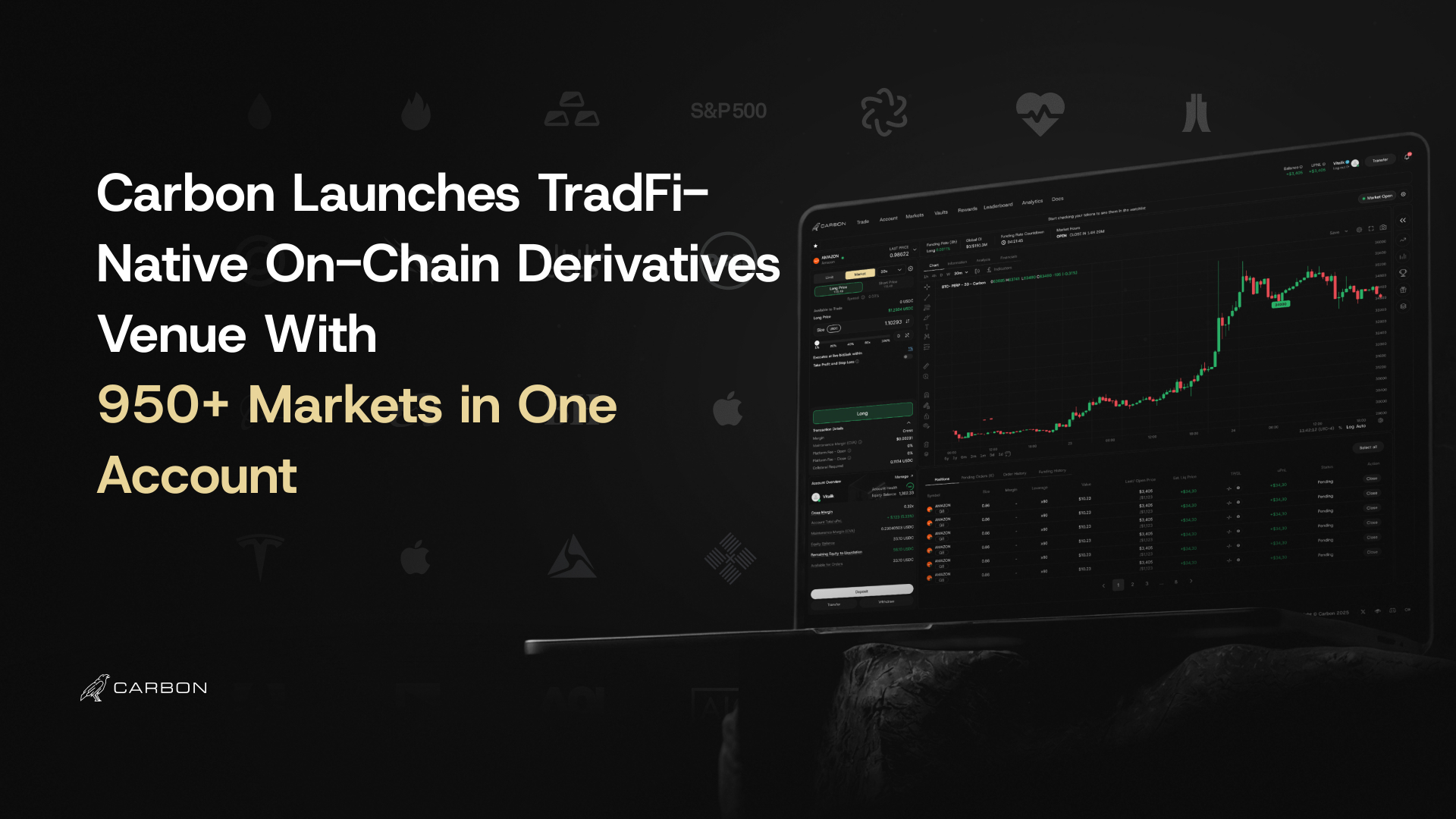
  • Carbon Unveils On-Chain Derivatives Venue for TradFi, Accessing 950+ Markets

    Carbon Unveils On-Chain Derivatives Venue for TradFi, Accessing 950+ Markets

    Carbon Unveils On-Chain Derivatives Venue Featuring Over 950 Markets, Integrating Traditional Finance

    Road Town, British Virgin Islands – August 7th, 2026 – Carbon, an on-chain prime broker for global markets, has opened public trading on more than 250 traditional finance (TradFi) markets, encompassing equities, indices, forex, and commodities. This expansion brings the total number of tradeable instruments on the platform to over 950, accessible within a single account.

    The newly introduced Carbon TradFi markets are hedged 1:1 at regulated TradFi venues, positioning Carbon as the largest on-chain derivatives venue with a TradFi foundation. This offering complements Carbon’s existing suite of over 530 crypto perpetuals and 150 real-world assets (RWAs) that trade 24/7.

    Carbon TradFi operates as an on-chain instrument developed by Carbon itself. When a trader opens a position on-chain, within their own wallet, Carbon’s solver architecture executes a 1:1 hedge at a regulated off-chain broker. This structure ensures traders maintain self-custody while benefiting from the price and depth of the underlying markets, rather than relying on bootstrapped on-chain order books.

    This innovative approach addresses the “cold-start problem” that has previously hindered the on-chain trading of real-world assets. Every Carbon TradFi market launches with full institutional depth from day one, as this depth is inherited from established markets. Consequently, there is no need for per-market incentive programs or waiting periods for liquidity to accumulate.

    Carbon now provides traders with access to both types of markets in one account. Its 150 24/7 real-world asset markets are available around the clock, catering to traders seeking continuous access. The 250+ Carbon TradFi markets, meanwhile, adhere to traditional market hours and offer carry prices derived from their underlying assets, appealing to traders who prioritize institutional depth and predictable holding costs. Approximately 30 assets are available in both formats, allowing traders to hold one against the other and capture the difference between their respective financing rates without leaving the platform.

    The global market that Carbon connects to is significant. Traditional finance clears over $1.5 trillion daily in Contracts for Difference (CFDs) across numerous markets, a liquidity pool that has historically lacked a direct on-chain pathway.

    At launch, Carbon TradFi offers coverage across a wide range of assets. The platform’s agility allows it to list trending assets within the same week they begin trading in markets such as Seoul, Tokyo, or Hong Kong. This rapid listing capability surpasses that of traditional order-book venues, which often face limitations due to the absence of off-chain infrastructure for swift market setup. An additional 150 listings are planned.

    The launch also opens the Carbon Liquidity Provider (CLP) vault to public deposits. The CLP is designed as a delta-neutral yield product, funding the hedges behind trader activity rather than taking directional positions. It generates returns from the differential between on-chain demand and off-chain liquidity. The modeled Annual Percentage Yield (APY) is illustrative, ranging from 20.3% at launch utilization to 57.1% at maturity, contingent on trading flow and capital utilization.

    “Traders have had to choose between the assets they want and the execution they need. Carbon ends that trade-off,” said Levy, Co-founder and CEO of Carbon. “Every position is hedged into the deepest liquidity in the world and settles in the trader’s own wallet, with 950+ markets in a single account. This is what global markets look like when they finally arrive on-chain properly.”

    David Garcia, Ecosystem Lead at Arbitrum Foundation, commented, “One of the biggest challenges for bringing traditional financial assets onchain has been delivering deep liquidity. Carbon is operating an architecture that connects onchain trading with established market infrastructure while preserving self-custody. We want Arbitrum to be home to teams building this next generation of financial infrastructure.”

    About Carbon
    Carbon is an on-chain prime broker for global markets, unifying crypto perpetuals and Carbon TradFi within a single venue. Through its solver architecture, Carbon connects on-chain traders to institutional liquidity via bilateral 1:1 hedging, delivering Wall Street-grade depth and stable carry with on-chain settlement and self-custody. Since its launch in 2023, Carbon has processed over $20 billion in cumulative trading volume from more than 36,000 unique traders. Carbon operates on Arbitrum. Further information is available at carbon.inc.

  • MetaMask Agent Wallet Launched, Enabling AI-Driven Crypto Transactions with User Controls

    MetaMask Agent Wallet Launched, Enabling AI-Driven Crypto Transactions with User Controls

    MetaMask has launched its Agent Wallet, a new self-custodial wallet that allows artificial intelligence agents to execute cryptocurrency transactions. This development enables AI agents to perform actions such as swaps, perpetual trades, prediction-market bets, and staking, all within user-defined parameters.

    Why This Matters

    The introduction of MetaMask’s Agent Wallet signifies a step towards AI-driven cryptocurrency trading, allowing agents to execute transactions within user-set limits. However, the broader adoption of such technology faces uncertainties, particularly regarding user trust in autonomous software for managing real money. The author suggests that building this trust and comfort may take over a year.

    Security and Control Features

    The Agent Wallet incorporates several security features aimed at protecting users. These include transaction simulation to preview outcomes, threat scanning to identify potential risks, and MEV (Maximal Extractable Value) protection. For eligible trades, the wallet offers up to $10,000 in monthly loss coverage. The system is designed to integrate with existing AI development tools and automatically handles gas fees, settling them in the token being transacted.

    Market Context and Competition

    This launch places MetaMask within a growing trend of agentic wallet development. Coinbase released its own agentic wallets in February, and MoonPay has been developing similar capabilities since the spring. According to the article, MetaMask holds a significant share of the wallet market, estimated at approximately a quarter.

    Consensys and its founder, Joe Lubin, are reportedly focusing on the potential for AI to drive future on-chain activity. However, the article highlights significant uncertainties surrounding this technology. A key question remains whether traders may be comfortable entrusting real money to autonomous software, and how quickly trust and comfort can be established in this area. The author suggests that widespread adoption and trust may still be over a year away.

    The Agent Wallet operates on Ethereum-compatible chains and Hyperliquid. It aims to provide a secure and controlled environment for AI-driven cryptocurrency trading, with features designed to mitigate risks and enhance user oversight. Despite the advancements, the newsletter states that the ultimate adoption hinges on building user confidence in autonomous trading systems.

  • Tokenized Real-World Assets Grow Amidst Broader DeFi Contraction, Report Finds

    Tokenized Real-World Assets Grow Amidst Broader DeFi Contraction, Report Finds

    Deposits of tokenized real-world assets (RWAs) on decentralized platforms more than tripled to $7.4 billion in the year ending Q2 2026, while overall DeFi deposits decreased by approximately 15% during the same period, according to a joint report by CoinShares and Token Terminal. This divergence highlights a notable trend in market activity within the decentralized finance space.

    The report, covering the period from Q2 2025 to Q2 2026, indicates that trading volumes for tokenized RWAs rose by roughly 220%, contrasting with a 70% decline in aggregate spot volumes on decentralized exchanges. RWA positions now represent over a quarter of open interest on perpetual futures venues, signaling their growing significance in on-chain derivatives markets.

    Analysis of tokenized assets shows a focus on traditional finance instruments such as Treasuries, gold, and stock market indices, rather than crypto-native assets. Tokenized Treasury and multi-strategy funds, private credit products, and delta-neutral strategies constitute the largest share of RWA deposits. Tokenized gold leads spot trading volume, while perpetuals activity concentrates in commodities, major stock indices, and technology stocks.

    Nearly 70% of RWA deposits are held on lending venues built on Ethereum. However, application revenues have fallen across both lending and trading platforms over the past year. The report characterizes this trend as an “early stage of adoption” for hybrid finance models. Hyperliquid stands out as an exception, generating substantially more application revenue than other venues and surpassing Solana and Ethereum in revenue generation.

    In February, tokenized real-world assets grew 8.7% to $24.8 billion, while DeFi’s total value locked fell 25% to $94.8 billion. The report likens the current scale of tokenization in global equity markets to stablecoins in 2019, suggesting that while growth is significant, overall market penetration remains modest.

    BlackRock has expanded its offerings with additional tokenized money market funds and tokenized share classes for European money market funds. This move by a traditional finance player underscores the increasing integration between traditional and decentralized finance.

    However, the analysis is limited to ‘distributed assets’—those transferable outside the issuing platform—excluding networks like Canton and Provenance. The report acknowledges uncertainties regarding the long-term impact of these trends on venue revenues and overall DeFi adoption, and whether the current scale of tokenization will lead to broader market acceptance.

    This trend matters because the growth of tokenized real-world assets on decentralized platforms, even as the broader DeFi market contracts, indicates a notable activity in market focus and adoption within decentralized finance, with implications for asset management and blockchain utility. The figures come from The Growth of Hybrid Finance, published by CoinShares and Token Terminal.

    Broader Context

    Source materials place the factual news in this context: The figures come from The Growth of Hybrid Finance, published Thursday by asset manager CoinShares and on-chain data provider Token Terminal.