Category: Uncategorized

  • XRP Eyes Potential Rally Above $1.50

    XRP Eyes Potential Rally Above $1.50

    XRP Faces Critical Juncture Amidst Consolidation

    XRP is approaching a pivotal moment as its price action consolidates within a significant range, sparking speculation of an imminent breakout. With bullish momentum gradually building, analysts believe a decisive move above the key resistance level of $1.50 could trigger a substantial rally, potentially leading to higher targets in the coming sessions.

    Bollinger Band Squeeze Suggests Potential for Volatility

    Crypto analyst Ali Charts suggests that XRP may be on the verge of a major breakout, as volatility continues to tighten across higher timeframes. According to the analyst, the Bollinger Bands on XRP’s 3-day chart are experiencing their tightest squeeze in over a year, a condition often preceding a sharp expansion in price movement.

    Despite the growing anticipation, Ali Charts describes the current setup as a no-trade zone, advising traders to avoid premature positions until the market confirms its next direction with a decisive breakout. The analyst is closely monitoring the $1.50 and $1.29 levels for confirmation. A clear 3-day candlestick close above $1.50 would likely initiate an upward rally toward a primary target around $1.80, indicating that buyers have regained strong control of momentum.

    On the downside, Ali warns that a close below $1.29 would weaken the current bullish structure and increase the likelihood of a deeper correction toward the key psychological support near $1. He stresses the importance of patience, noting that waiting for the Bollinger Bands to break before entering trades offers a favorable risk-to-reward opportunity.

    XRP Remains Within a Broad Corrective Triangle

    XRP is currently navigating a broad, corrective triangle structure following a failed attempt at an upside breakout. More Crypto Online highlights that the recent price action lacks the necessary impulsive characteristics, suggesting the asset remains locked within a wide, range-bound environment.

    The preferred technical scenario allows for the continued development of this larger triangle formation, which may eventually support another move higher as part of a developing C-wave. Primary resistance clusters are located at $1.55, $1.60, and $1.66, serving as potential ceilings for the move. Conversely, the structural integrity of this triangle weakens significantly should the price breach the critical support threshold of $1.28. Before reaching that level, the next support is around $1.30, followed by a deeper liquidity zone situated between $1.26 and $1.16, which serves as the ultimate range support.

    XRP continues to oscillate within this corrective range. While an upside extension remains a possibility, the market has yet to demonstrate a convincing, impulsive breakout. The onus is on the bulls to initiate a definitive trend shift above current resistance levels.
  • Coinbase Anticipates Potential Weekend Service Disruptions

    Coinbase Anticipates Potential Weekend Service Disruptions

    Coinbase Warns of Possible Weekend Disruptions

    The leading U.S.-based cryptocurrency exchange has alerted its users to potential service disruptions this weekend. The company has been in the news recently following staff reductions and the implementation of various platform adjustments and other developments.

    System Upgrade Planned

    Coinbase has scheduled a system upgrade for Saturday, May 23rd, with an estimated duration of approximately 30 minutes. The company stated that trading will not be affected during this time, although order status updates across all markets may be delayed. Coinbase has pledged to provide updates as the maintenance progresses.

    These types of upgrades are considered standard practice and typically do not raise significant concerns. In October of last year, Coinbase experienced a temporary outage for a similar reason, with no major complications reported.

    Previous Disruptions

    Earlier this month, some Coinbase users encountered difficulties completing transactions, while others experienced slower service speeds due to an overheating issue with Amazon Web Services (AWS). The exchange quickly identified the problem and worked to restore trading across its markets.

    Some users noted on social media that the outage occurred shortly after Coinbase announced a 14% reduction in its global workforce. CEO Brian Armstrong cited ongoing market volatility and the rapid advancement of Artificial Intelligence (AI) as the primary reasons for the decision.

    Recent Developments

    In addition to these developments, Coinbase recently made headlines after becoming the official treasury deployer of USDC under Hyperliquid’s Aligned Quote Asset (AQA) framework. In this role, the exchange will manage USDC liquidity directly for the protocol, supporting its on-chain financial operations. This collaboration also positions Coinbase as a key player in the expanding decentralized derivatives ecosystem.

    Hyperliquid revealed that both Coinbase and Circle have agreed to stake HYPE tokens to support the activation of AQAv2, the next upgrade to the Aligned Quote Asset (AQA) on the decentralized exchange.

    Coinbase has also delisted several trading pairs. Last week, it removed six non-USD trading pairs, including ICP/USDT and ICP/GBP. This was followed by a 10% price decline for Internet Computer, dropping to just under $3. The asset has since failed to recover, and is currently trading near $2.50.

  • Bitwise: Hyperliquid’s HYPE Token Undervalued After 20% Surge

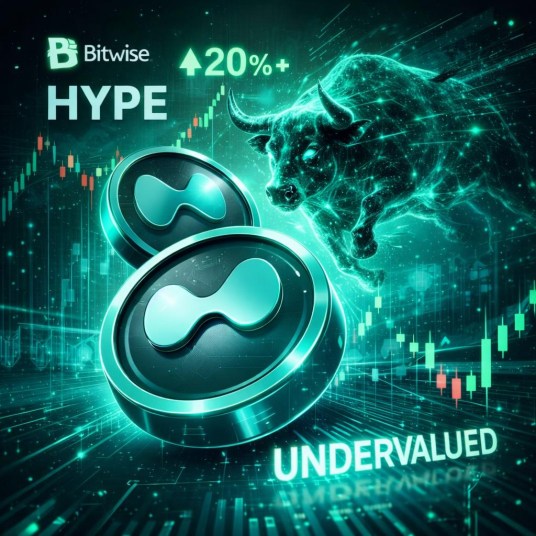
    Bitwise: Hyperliquid’s HYPE Token Undervalued After 20% Surge

    Bitwise CIO Bullish on Hyperliquid and HYPE Token

    Bitwise Chief Investment Officer Matt Hougan expressed a strongly bullish outlook on Hyperliquid and its native token, HYPE, shortly after Bitwise launched a HYPE exchange-traded fund (ETF) last week. Hougan argued that the market is undervaluing Hyperliquid’s broader business model, treating it as merely another perpetual futures venue.

    Hyperliquid as a Global Super App

    Hougan believes Hyperliquid is experiencing a “pricing error,” with investors valuing the platform primarily as a perpetual futures exchange. In contrast, he views Hyperliquid as a global financial “super app,” expanding beyond crypto into areas such as stocks, commodities, foreign exchange, and prediction markets.

    As part of his valuation, Hougan estimated the platform’s annual revenue could reach $800 million to $1 billion, suggesting significant growth potential beyond its current market categorization. A key element of Hougan’s argument is Hyperliquid’s fee model, where 99% of trading fees are allocated to HYPE token buybacks. He described this as a mechanism that supports value, unlike revenue extraction without token-linked benefits. This, he said, aligns incentives differently than investors may assume when viewing Hyperliquid as a standard trading platform.

    HYPE Approaches All-Time Highs

    Hougan emphasized that HYPE’s recent performance does not alter his view that the token remains undervalued. He noted that HYPE is up 77% this year, yet he believes the market hasn’t fully recognized Hyperliquid’s long-term trajectory. In his view, Hyperliquid’s opportunity lies not only in growing as a crypto perpetual exchange but also in evolving into a broader trading super app encompassing stocks, pre-IPO assets, commodities, prediction markets, and crypto assets.

    These bullish remarks follow increased interest in HYPE, fueled by ETF activity. Along with Bitwise’s launch of a Hyperliquid ETF tied to HYPE, 21Shares introduced its own HYPE ETF earlier in the month. Following these launches, HYPE surged, recording gains of nearly 20% in the past week. At the time of writing, HYPE was trading just above $48, only 18% below its all-time high of $59 reached last year.

  • Crypto Compliance Project Completes First Trade After Nearly 10 Years

    Crypto Compliance Project Completes First Trade After Nearly 10 Years

    Prometheum Executes First Crypto Trades Amid Shifting Regulatory Landscape

    After years of industry skepticism and navigating a changing regulatory environment, Prometheum has launched its first cryptocurrency trades, aiming to prove its critics wrong by integrating digital assets with traditional investments under a single regulatory framework.

    The company, which has raised nearly $100 million since its founding almost a decade ago, began offering access to crypto trading last week. While the service currently focuses on Ethereum, founder and co-CEO Aaron Kaplan said the firm plans to introduce additional digital assets soon.

    “We’ve just kept our heads down and kept moving forward,” Kaplan told Decrypt. “Our goal is to be able to service the broker-dealer and [Registered Investment Advisor] channels and the major asset issuers, and I think that there’s a lot of comfort.”

    Industry Indifference

    This development comes as the broader market focuses elsewhere. While investors have embraced vehicles like spot Bitcoin ETFs following their debut in 2024, Prometheum’s long-awaited milestone has largely gone unnoticed by the wider crypto sector.

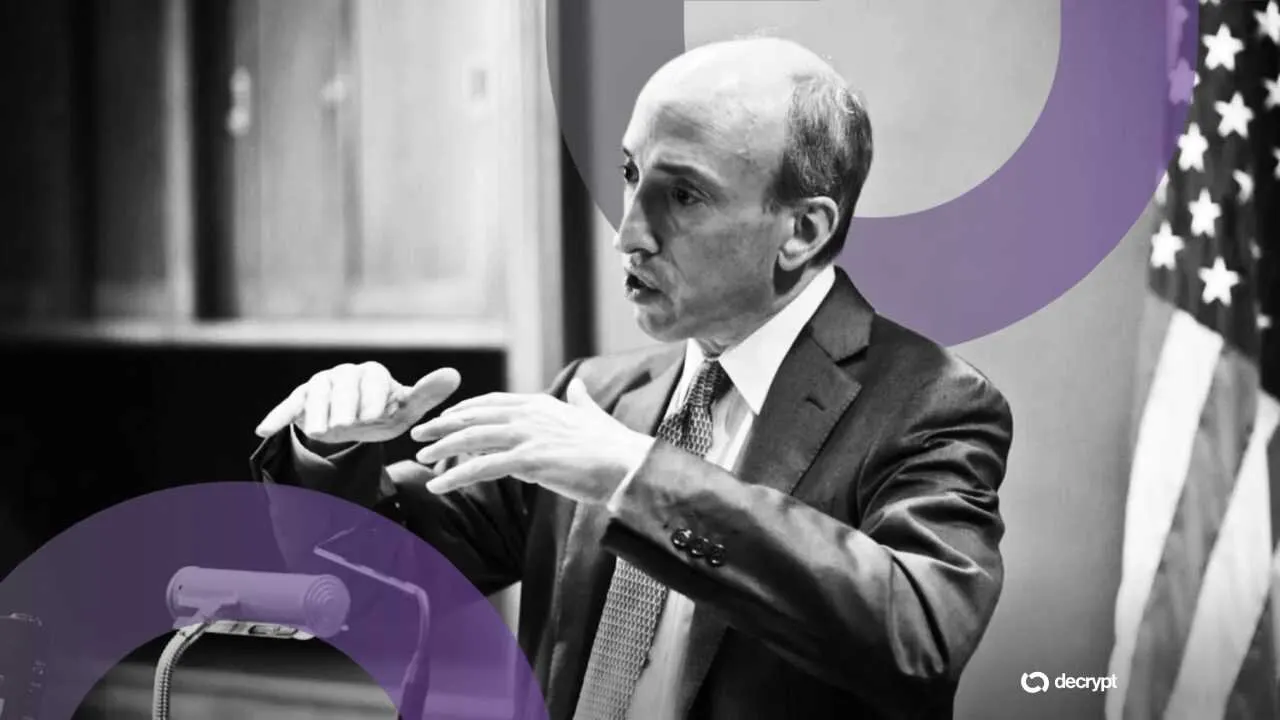
    This indifference stems from a contentious history. In 2023, Kaplan faced criticism for testifying before U.S. lawmakers that the SEC had established a clear path for compliance, effectively validating the enforcement tactics of then-SEC Chair Gary Gensler. While major players like Coinbase challenged the regulator in court, Prometheum pursued a business model that treated digital assets like Ethereum as securities.

    At the time, observers criticized Prometheum’s lack of trading volume, comparing the firm’s cautious approach to a “bicycle with no wheels” or a “vending machine with no snacks.”

    New Opportunities

    Now, however, the company is moving forward, and Kaplan believes Prometheum is well-positioned to capitalize on the tokenization of U.S. capital markets. With the launch of its corresponding clearing system, he argues that broker-dealers can now offer clients direct access to crypto alongside traditional assets, avoiding the management fees and “layer of abstraction” associated with ETFs.

    “This is good for crypto,” Kaplan said. “This is bringing in hundreds of millions of accounts that now all of a sudden could invest in crypto.”

    Regulatory Shift

    However, Prometheum’s launch occurs in a significantly altered landscape. The strict regulatory environment it was built to satisfy has changed. Following Gary Gensler’s departure from the SEC, the agency’s lawsuit against Coinbase was officially dropped and dismissed, along with most of the regulator’s other crypto-related lawsuits and investigations.

    Before executing its first transaction, Prometheum spent years building its custody infrastructure and securing regulatory approvals. In 2023, the firm became the first to receive a license from the SEC and FINRA to operate as a special purpose broker-dealer, allowing Prometheum to legally safeguard digital asset securities under federal law.

    Adding to the challenge, the exclusive regulatory advantage Prometheum spent years preparing for may no longer be necessary.

    Revised guidance released by the SEC last year indicated that the regulator’s specialized framework is optional. According to an analysis by the global law firm Winston & Strawn LLP, traditional broker-dealers can now custody digital asset securities under standard customer protection rules, without needing the license Prometheum obtained.

  • XRP Eyes Major Wall Street Expansion

    XRP Eyes Major Wall Street Expansion

    XRP Gains Ground as CME Group and Nasdaq Launch Crypto Index Futures

    XRP is making a significant move into mainstream finance as two prominent traditional finance institutions deepen their involvement in the cryptocurrency market. The CME Group and Nasdaq have announced plans to introduce a new crypto index futures product that will include XRP. This contract will provide institutional investors with regulated access to a range of digital assets through a single product, potentially opening the door to the trillion-dollar Wall Street market.

    Landmark Product to Launch June 8

    In a landmark development, the CME Group and Nasdaq are set to launch the Nasdaq CME Crypto Index Futures on June 8. This will be the first market-cap-weighted crypto index futures contract. The single cash-settled product will offer institutional investors regulated exposure to a basket of digital assets, including Bitcoin, Ethereum, Solana, XRP, Cardano, Chainlink, and Stellar.

    Expert Sees Turning Point for XRP

    Crypto analyst Pumpius commented on the development on X, describing it as a turning point for XRP and the broader crypto market. He noted that XRP is now being integrated into Wall Street as traditional finance embraces digital assets. Pumpius stated that for XRP holders, the token is transitioning from a speculative asset to a core institutional holding.

    Market analyst Ripplexity added context, noting that crypto futures volume at CME has increased by 43% this year, demonstrating the high demand for regulated crypto products. He also mentioned that the upcoming index futures contract will be settled using the Nasdaq CME Crypto Settlement Price Index, which already includes XRP.

    CME to Implement 24/7 Trading

    Crypto analyst SMQKE provided a broader perspective on the new milestone and its implications for the crypto industry. He described the CME Group as the world’s largest and most important derivatives exchange, noting that its partnership with Nasdaq could bring institutional capital into the altcoin market through a fully regulated channel.

    SMQKE also highlighted a significant operational change happening before the June index launch. Starting May 29, the CME Group will reportedly shift its crypto futures and options trading to a 24/7 schedule, aligning with the continuous nature of crypto markets. The analyst stated that this is a major shift and a clear example of how quickly the traditional finance sector is adapting to crypto technology.

    SMQKE also pointed out that XRP, Stellar, and Cardano are all ISO 20022-compliant tokens, and their inclusion in this derivatives product signals deeper integration into mainstream finance.

    Market participants are awaiting regulatory approval from the CFTC as the June 8 launch date approaches. According to SMQKE, the CME and Nasdaq partnership is likely to facilitate further institutional adoption of digital assets and decentralized technologies.

  • Minnesota’s Prediction Market Ban Promptly Sued by Trump Administration

    Minnesota’s Prediction Market Ban Promptly Sued by Trump Administration

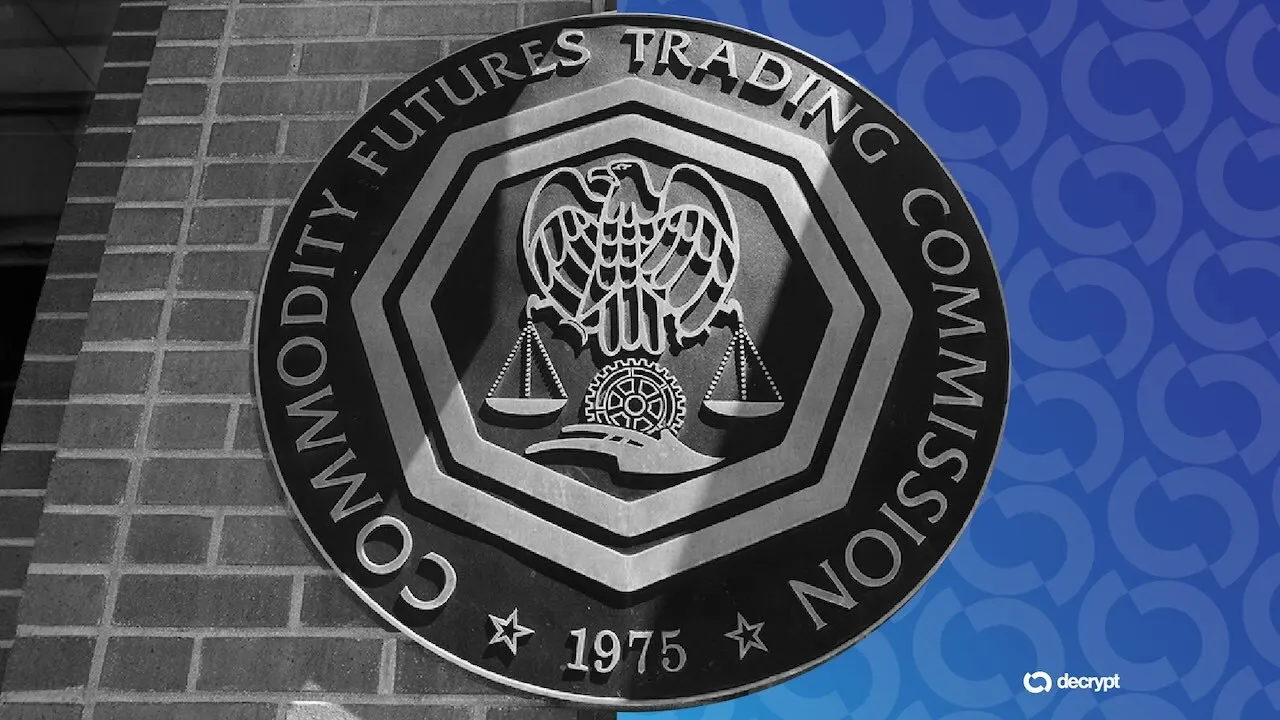
    This week, Minnesota became the first state to ban prediction markets, a move swiftly challenged by the Commodity Futures Trading Commission (CFTC) and the Department of Justice (DOJ), who filed a lawsuit alleging the ban was illegal.

    This rapid sequence of events represents the latest escalation in a jurisdictional battle between states and the Trump administration concerning the future of prediction market platforms like Kalshi and Polymarket.

    State-Level Challenges

    Numerous states, representing a range of political affiliations, have sued prediction market platforms for failing to comply with state gambling laws. These states argue that wagers on prediction markets, including those related to sports, politics, and entertainment, constitute illegal, unlicensed gambling.

    Federal Jurisdiction Asserted

    Conversely, prediction market platforms maintain they are exempt from state-level regulation, asserting that their wagers, structured as event contracts, fall under the exclusive federal jurisdiction of the CFTC. The Trump administration has strongly supported this view, countersuing several states this year over the issue.

    The ultimate resolution of this conflict is likely to rest with the U.S. Supreme Court.

    Minnesota’s Ban and Federal Response

    On Monday, Minnesota enacted a law prohibiting prediction market platforms. Governor Tim Walz signed a bill making it a felony to create, operate, manage, or advertise such platforms within the state.

    Hours later, the CFTC and the DOJ filed a lawsuit, alleging that Minnesota’s ban violated federal law and infringed upon the regulator’s jurisdiction.

    The complaint stated that if Minnesota’s law is enforced, “the exchanges that offer these longstanding contracts—as well as those who partner with them—can be prosecuted as felons.” It further argued that this action constituted “a flagrant and unprecedented incursion into the Commission’s exclusive regulatory sphere” and requested a preliminary and permanent injunction.

    In a statement, CFTC Chair Mike Selig accused Walz of prioritizing “special interests” over “American farmers and innovators” by signing the ban into law. Selig highlighted the reliance of farmers, a significant constituency in Minnesota, on event contracts to mitigate weather and crop-related risks.

    However, farmers have long utilized CFTC-regulated futures contracts without drawing the attention of state gambling regulators.

    The controversy has emerged in the last 18 months with the introduction of new prediction market platforms offering bets on a wider range of subjects, including sports, military conflicts, the existence of aliens, and celebrity social media activity. These new offerings have drawn the ire of state regulators.

  • AI Could Bolster Crypto Security, Says Vitalik Buterin.

    AI Could Bolster Crypto Security, Says Vitalik Buterin.

    Vitalik Buterin, the co-founder of Ethereum, has addressed growing concerns that artificial intelligence-driven bug hunting could overwhelm developers and create continuous exploitation opportunities within blockchain systems.

    AI as a Security Enhancement

    Buterin suggests that the application of AI in the near future could actually enhance the security of crypto systems. He posits that AI-assisted formal verification may become a key defense against security vulnerabilities in both crypto and broader internet infrastructure.

    Formal verification involves creating mathematical proofs about software that a computer can automatically validate, as opposed to manual review by humans. While this concept has existed for decades, it has not gained widespread adoption because manually generating such proofs has been a tedious process for software developers.

    Buterin argues that AI has altered this dynamic. Instead of developers writing the proofs themselves, they can utilize AI to generate both the code and the accompanying proofs. Developers would then simply verify that the final statement proven aligns with their intended outcome.

    Addressing Potential Vulnerabilities

    Buterin considered a scenario where AI models become powerful enough to automate the discovery of bugs in existing code. He then explored the implications for systems where a single flaw can lead to significant financial losses for users.

    His response was that end-to-end formal verification allows for a mathematical proof that a piece of code behaves exactly as intended. Consequently, a sufficiently advanced AI searching for flaws would be examining code that has already been proven to be free of them.

    He also highlighted specific Ethereum infrastructure projects currently implementing this approach. These include Arklib, which is working towards a fully formally verified STARK implementation, and evm-asm, which is building an EVM written in low-level RISC-V assembly and verifying its correctness against a human-readable reference implementation.

    Useful AI Models

    Regarding the specific AI models useful for this purpose, Buterin cited Claude and Deepseek 4 Pro as being sufficient for writing Lean proofs.

    He also mentioned Leanstral, a smaller open-weights model fine-tuned specifically for Lean, as capable of running locally and outperforming larger general-purpose models on formal verification benchmarks.

    Limitations and Broader Context

    Despite his optimism for formal verification, Buterin also acknowledged its practical limitations.

    These include bugs in verified compilers, libraries where only a portion of the code was proven, and specifications that, while technically proven, did not accurately reflect the developer’s intended guarantees.

    However, Buterin frames formal verification not as a replacement for all security practices, but as a powerful tool within a broader trend toward reducing bugs per line of code.

    This discussion is particularly relevant given the recent security incidents in the crypto sector. On the day Buterin’s post was published, the sector was dealing with a third major exploit in just four days, after a hacker stole over $76 million worth of crypto from the cross-chain bridge of the Echo Protocol.

    Prior to that, reports emerged regarding a hack on THORChain, resulting in losses of over $10 million.

    Another attack targeted the Verus-Ethereum Bridge, where a hacker exploited a lack of validation checks to steal $11.58 million. This type of specific, localized flaw is one that formal proof checks could potentially identify.

  • Google Launches Gemini Omni: New AI Builds Realistic Videos

    Google Launches Gemini Omni: New AI Builds Realistic Videos

    Google unveiled Gemini Omni on Tuesday, a new multimodal AI model integrating its Gemini AI models with its media-generation tools, including Veo, Nano Banana, and Genie.

    Model Capabilities

    The announcement was made during Google I/O 2026, where DeepMind CEO Demis Hassabis described Gemini Omni as a model capable of creating content from any input. “It combines Gemini’s intelligence with the best of our generative media models for a new level of world understanding, multimodality, and editing,” Hassabis stated.

    Google announced that the initial release, Gemini Omni Flash, will be launched through Flow, the company’s AI filmmaking platform, and Flow Music, which focuses on AI-assisted music creation.

    Advancing AI

    Hassabis called Omni a “step towards artificial general intelligence,” explaining that Google has spent the past year expanding Gemini into “a world model AI that can understand and simulate the world.”

    Google’s Omni rollout builds on the success of Nano Banana, the company’s earlier AI image-editing model. Nano Banana helped propel Gemini to the top of Apple’s App Store last September and became widely used for meme generation and conversational image editing. This briefly allowed Gemini to surpass ChatGPT in app downloads and Google search interest for the first time since OpenAI’s chatbot launched in 2022.

    In a comparison earlier this month, Nano Banana 2 outperformed OpenAI’s GPT Image 2 in anime illustration and spatial composition tests, while OpenAI’s model performed better with photorealism and text rendering. Google now appears to be extending many of those editing features into video through Gemini Omni.

    Demonstration and Features

    During the presentation, Google demonstrated Omni generating a claymation-style educational video explaining protein folding. The company also showcased conversational editing tools that modified a selfie video by adding new visual elements and changing the surrounding environment.

    Google says Omni can maintain consistent characters, backgrounds, and movement even after users make changes to a video, a challenge for many AI video models. The company also stated that Omni utilizes Gemini’s reasoning abilities to understand broader instructions, allowing users to describe desired scenes without manually detailing every aspect.

    The company also introduced Flow Agent, an AI assistant integrated into Google Flow that can brainstorm scenes, organize assets, recommend plot changes, and batch-edit projects. Additional updates include Flow Tools, which allows users to create custom editing workflows using natural-language prompts without coding experience.

    Hassabis said Google is starting with video generation but plans to expand access to Omni, describing it as the long-term vision behind Gemini’s multimodal design. “This was always our goal with Gemini, and why we built it to be multimodal from the very start,” he said.

  • Warren: Crypto Bank Charters for Coinbase, Ripple Illegal

    Warren: Crypto Bank Charters for Coinbase, Ripple Illegal

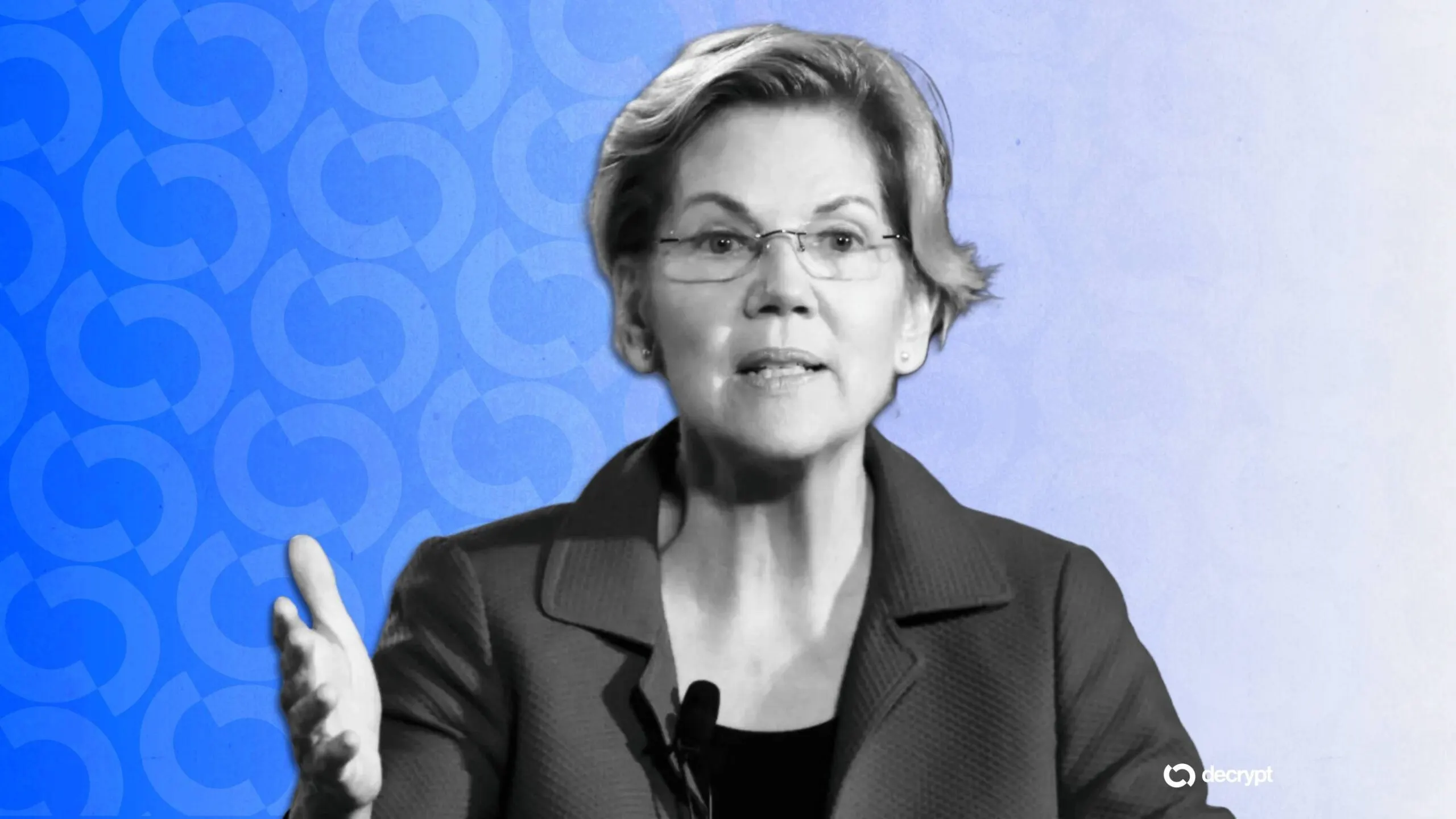
    Senator Elizabeth Warren (D-MA) is seeking answers from the Office of the Comptroller of the Currency (OCC) regarding its approval of national trust bank charters for cryptocurrency companies during the Trump administration.

    Concerns Over Crypto Charters

    In a letter sent Monday to Comptroller of the Currency Jonathan Gould, Warren asserted that these approvals contravene the National Bank Act and pose “serious risks” to the stability of the U.S. banking system.

    “These companies are effectively crypto banks that want to evade the fundamental safeguards and obligations that come with being a bank,” Warren stated.

    The OCC has granted national trust banking charter applications to nine companies and their affiliates, including Coinbase, Circle, Ripple, Paxos, BitGo, Fidelity, Crypto.com, Stripe, and Protego.

    Since President Donald Trump’s return to office last year, the OCC, a division of the Treasury Department, has approved nine national trust banking charter applications for crypto-focused firms.

    National trust companies are subject to less stringent regulation than traditional banks, but they also have limitations on the services they can offer. They typically provide fiduciary services, such as managing assets on behalf of others, but do not accept customer deposits.

    Stablecoin and Regulatory Oversight

    Following the passage of the stablecoin-focused GENIUS Act last year, numerous crypto companies have applied for national trust banking charters to facilitate the issuance, redemption, and custody of stablecoins and their backing funds, among other functions. Stablecoins are cryptocurrencies typically pegged to the value of the U.S. dollar.

    In her letter to the OCC, Warren argued that these companies “look like crypto banks, not trust companies.”

    “The business plans include language that suggests the companies intend to engage in non-fiduciary custodial activities, facilitating payments and lending activities, and conducting stablecoin activities closely related to deposit-taking,” she explained.

    Warren has requested detailed information from the OCC about the crypto banks’ approved bank charters, including whether the regulator allows national trust companies to engage in non-fiduciary activities. She also requested copies of all correspondence between OCC officials and President Trump, his family, and his associates regarding the approval of crypto-focused national trust applications.

    Previous Confrontation

    The progressive senator and the OCC’s Gould previously clashed publicly in February during a Senate hearing. Warren questioned Gould about a pending national trust bank application from World Liberty Financial, a crypto company associated with the Trump family. Gould declined to commit to delaying or denying the application, leading Warren to accuse him of being “an accomplice” to alleged corruption.

    At an event earlier this month, World Liberty co-founder Zach Witkoff stated that the company is “in the final stages” of receiving conditional approval from the OCC.

  • XRP Hodlers Divided as ETF Hopes Fade, $27 Target Remains.

    XRP Hodlers Divided as ETF Hopes Fade, $27 Target Remains.

    XRP Price Faces Conflicting Signals Amid Market Uncertainty

    The price of XRP is currently trading below its support level, creating a divergence between short-term technical indicators and long-term price predictions. This situation presents a complex outlook for the cryptocurrency, with both bearish and bullish arguments supported by available data.

    Bearish sentiment is fueled by XRP’s position below all major moving averages. Data reinforces this, with market sentiment registering 89% bearish and a Fear & Greed score of 39. Furthermore, institutional demand for Exchange Traded Funds (ETFs) has cooled, removing a key argument for near-term price increases.

    The broader market environment, led by Bitcoin, is also contributing to the uncertainty. Risk-off behavior is evident, with 30-day volatility exceeding 3%, indicating potential panic selling. Sentiment has retreated from early-year highs, leaving XRP caught between opposing forces.

    Technical Analysis and Price Levels

    At $1.38, XRP is currently at its immediate support level. Resistance begins at $1.40, with a more significant ceiling at $1.45, representing a potential 5% increase from the current price.

    The Relative Strength Index (RSI) on the daily chart is approximately 42, indicating a neutral position but trending toward oversold territory. The weekly RSI is already in oversold territory, around 38. This divergence often precedes a sharp reversal or extended consolidation period.

    Potential Scenarios

    If XRP can surpass the $1.45 resistance level with increased trading volume and daily Exponential Moving Averages (EMAs) begin to compress, momentum could shift, potentially driving the price toward $1.65–$1.80 in the coming weeks. Regulatory developments could accelerate this upward movement.

    Alternatively, the price may consolidate within the $1.35–$1.45 range for an extended period as the market awaits a new catalyst. The weekly oversold reading could limit any further price declines.

    CoinLore’s 10-day forecast projects relatively stable price action around current levels. The current market conditions suggest that patience may be the most prudent approach.

    Market Dynamics and Alternative Investments

    As a blue-chip asset, XRP’s recent performance, including a 5% weekly decline while trading below major moving averages, has prompted some traders to explore earlier-stage investment opportunities. This shift is not necessarily a reflection of a broken XRP thesis but rather a response to the compressed near-term risk/reward profile.

    This rotation has drawn attention to presales with asymmetric structures, such as Maxi Doge ($MAXI). Maxi Doge is a meme token on Ethereum, built around the “Leverage King” trading culture.

    The presale has raised over $4.7 million at a current price of $0.00028, with a 65% Annual Percentage Yield (APY) staking bonus for early participants. Features include holder-only trading competitions with leaderboard rewards and a dedicated Maxi Fund treasury.