Category: Uncategorized

  • XRP Eyes $1,000 as Dark Defender Spots Bullish Cup-and-Handle

    XRP Eyes $1,000 as Dark Defender Spots Bullish Cup-and-Handle

    Bullish Chart Pattern Suggests Massive XRP Price Surge

    Crypto analyst Dark Defender has identified a significant, multi-year Cup-and-Handle pattern forming on XRP’s monthly chart, suggesting the cryptocurrency is approaching a major breakout zone. This pattern, which has developed over several years, from approximately 2017 to 2026, has led the analyst to project substantial price targets for XRP.

    Technical Analysis Points to Key Resistance Levels

    The Cup-and-Handle formation, a bullish technical indicator, typically signals a period of consolidation followed by a significant upward price movement. Dark Defender believes this long-term structure for XRP is now complete, describing it as the “biggest Cup & Handle ever” for the digital asset.

    With the pattern’s completion, the analyst is now focusing on Fibonacci extension levels to forecast XRP’s potential trajectory. Currently trading around $1.61, XRP’s next critical technical hurdle is identified at $1.88, corresponding to the 161.8% Fibonacci extension. A sustained move above this level is seen as crucial for initiating the pattern’s breakout phase.

    Ambitious Price Targets Projected

    Should XRP successfully clear the $1.88 resistance, higher Fibonacci levels come into play, with projected targets including $18.22, $74.39, and $333.12. However, it is important to note that these are technical projections and do not guarantee XRP will reach these specific price points.

    Dark Defender’s long-term outlook is even more ambitious, with projections of XRP reaching between $750 and $1,000. The analyst further suggests that over time, XRP could potentially enter the five-digit price range. These forecasts are reportedly based on a combination of factors, including the growth of tokenized assets, velocity of circulating supply, XRP’s share of collateral, collateral ratios, Fibonacci time zones, and historical price action.

    Recent Market Activity Fuels Optimism

    XRP is currently trading around $1.62, having experienced a notable rally of approximately 10% today and 20% this week, making it the top performer among the top 10 cryptocurrencies. This surge coincides with reports of significant whale accumulation, with large investors reportedly purchasing 470 million XRP, valued at around $724 million, over a five-day period.

    Beyond individual investor activity, institutional demand for XRP also appears to be strengthening. In a span of just three days, spot XRP Exchange-Traded Funds (ETFs) recorded inflows of $53.90 million, bringing the cumulative net inflows to $1.76 billion.

  • Cardano Poised for 1,000% Surge?

    Cardano Poised for 1,000% Surge?

    Cardano’s native token, ADA, has surged in recent days, posting a 20% weekly increase to trade above $0.25. The cryptocurrency has outperformed major digital assets like Bitcoin (BTC) and Ethereum (ETH) during this period.

    Several analysts are optimistic about ADA’s trajectory, with some predicting gains exceeding 1,000%. While the broader cryptocurrency market resurgence has contributed to ADA’s performance, specific developments within the Cardano ecosystem appear to be significant catalysts.

    Integration with x402 Payment Standard

    Just days ago, the Cardano Foundation announced its integration with the x402 payment standard via an official SDK. This development allows applications and AI agents to utilize Cardano’s native token for payments, including API calls and other services.

    One X user, Akshay, commented on the integration, stating, “ADA is entering the AI-agent payment race. Cardano has joined Solana and XRP Ledger in exploring infrastructure for AI-agent payments. Imagine software that can autonomously request data, pay for services, and settle transactions. AI needs programmable money.”

    Football World Engagement

    Another potential driver for ADA’s price is its recent foray into the sports world. FC Barcelona, the reigning Spanish football champion, launched “Barca Fan Lab” in collaboration with Andamio, leveraging Cardano’s technology.

    According to the announcement, the project aims to allow fans to explore the club’s history and values, engage in community activities, and acquire verifiable digital credentials.

    Analyst Price Predictions

    Market observers have offered bullish outlooks for ADA. X user Sssebi described the recent price action as a “textbook of the breakout zone,” suggesting that $0.30 is now an achievable target. JAVON MARKS expressed a more aggressive stance, noting that ADA appears to have established a strong base, reminiscent of its 2020 performance before a significant upward move. Marks anticipates another “monstrous run,” setting a target of $2.90, which would represent a 1,049% increase from its current valuation.

    Other analysts, including Jesse Olson and More Crypto Online, have also weighed in. Olson indicated a pending buy signal on ADA’s weekly chart, highlighting that the asset had not shown bullish momentum on the seven-day timeframe in 14 months. More Crypto Online maintained that ADA is trading within a bullish price channel, identifying $0.315 as the next key level to watch.

    Potential Short-Term Headwinds

    Despite the prevailing bullish sentiment, two factors suggest ADA might experience a short-term decline before potentially continuing its upward trend. The Relative Strength Index (RSI) has climbed to 78, indicating that the asset is in overbought territory and could be due for a pullback.

    Additionally, ADA’s exchange netflow data shows that inflows have recently surpassed outflows. This suggests that investors may be moving their holdings from self-custody to centralized exchanges, potentially increasing immediate selling pressure.

  • Ethena Integrates Tokenized Stocks with Binance

    Ethena Integrates Tokenized Stocks with Binance

    Ethena Ventures into Global Equities with Binance Partnership for Synthetic Dollar Backing

    Ethena, a decentralized finance protocol, is expanding its synthetic dollar strategy into the global equities market, a move largely unexplored by its DeFi peers. The protocol, renowned for its delta-neutral basis trades in Bitcoin and Ethereum, has announced a collaboration with Binance. This partnership will leverage tokenized U.S. stocks as collateral for USDe, Ethena’s synthetic dollar.

    Strategic Expansion into Tokenized Equities

    The framework for this tokenized equity basis trade received formal approval from Ethena’s Risk Committee on August 28, 2026. Ethena founder Guy Young described this development as the most significant expansion since the launch of USDe.

    The operational mechanism closely mirrors Ethena’s existing crypto basis strategy, adapted for equity markets. Ethena will hold Binance’s bStocks, which are tokenized representations of U.S. equities, as its collateral. Concurrently, the protocol will short corresponding equity perpetual futures to eliminate any directional market exposure.

    This strategy functions similarly to holding a stock and a simultaneous, equal-sized short position. Such a setup renders the investor indifferent to the stock’s price movement, as the primary source of return becomes the funding rate paid by leveraged long positions to maintain their trades. This funding rate mechanism is the core of the yield generation for Ethena.

    Binance’s equity perpetual market has seen substantial activity, with open interest exceeding $2.9 billion. This figure is significant as open interest represents the pool from which funding payments are drawn.

    Leveraging Equity Market Scale and Dynamics

    Guy Young articulated Ethena’s rationale: the equities market’s sheer scale far surpasses that of cryptocurrency, and the funding dynamics within equity perpetuals have historically been more advantageous. He indicated that funding rates from equity perpetuals could potentially be around five times higher than those generated by comparable Bitcoin basis trades.

    According to the framework documentation, the average equity basis over the past six months stood at 3.56%.

    Diversification and Risk Mitigation for USDe Holders

    For holders of USDe, this expansion signifies a diversification of the collateral backing the synthetic dollar. Instead of relying solely on crypto-denominated basis trades, a portion of USDe’s backing can now be derived from equity market dynamics. This is particularly beneficial during sharp crypto market downturns. In such scenarios, leveraged crypto longs face liquidation, leading to a reduction in open interest and potentially negative funding rates, where the short side must pay. Equity perpetuals, which do not move in lockstep with crypto, offer a partial hedge against these risks.

    Validation for Binance’s bStocks

    For Binance, this partnership serves as a validation of its bStocks product, demonstrating its utility as functional collateral within an active decentralized finance strategy. The structured framework, approved by Ethena’s Risk Committee, incorporates stringent trading criteria, underscoring the deliberate nature of the August 28 approval.

  • BlackRock Launches Ethereum Onchain Portfolio Tokens

    BlackRock Launches Ethereum Onchain Portfolio Tokens

    BlackRock Powers New Ethereum Investment Tokens, Sparking Market Surge

    BlackRock has emerged as the driving force behind a new category of investment tokens on the Ethereum blockchain, a development that immediately captured the market’s attention. Ondo Finance unveiled three on-chain portfolio tokens on September 24, each built upon portfolio allocation strategies meticulously designed by BlackRock. These offerings provide eligible non-U.S. investors with access to institutional-grade investment methodologies through a format that operates around the clock.

    Following the announcement, the ONDO token experienced a significant surge, climbing between 18% and 30% in the hours that ensued. Concurrently, Ethereum’s active address count saw a notable increase of approximately 30% within the same timeframe.

    The newly launched tokens are named BLKHIon, BLKDIGon, and BLKGRWon. Each token is associated with a specific investment theme: income, diversified growth, and high-growth allocations, respectively. BlackRock developed these non-discretionary portfolio allocation models exclusively for Ondo. This means BlackRock established the strategic framework but is not involved in the daily operational management. Ondo Global Markets is responsible for the issuance and oversight of the tokens, while smart contracts automate rebalancing and offer complete on-chain transparency regarding the holdings of each token.

    The underlying assets comprise tokenized equities and exchange-traded funds (ETFs). Currently, these tokens are operational on Ethereum and BNB Chain, with plans for Solana support in a future rollout.

    In contrast to traditional ETFs, which trade during market hours and settle on a T+1 basis, requiring layers of brokerage infrastructure, these on-chain portfolio tokens trade 24/7, settle almost instantaneously, and are transferable without intermediaries. This transferability allows the tokens to move between wallets, serve as collateral in decentralized finance (DeFi) lending protocols, or be integrated into more complex financial products.

    The restriction to non-U.S. investors is a significant detail, though not entirely unexpected. By initially launching internationally, Ondo circumvents the regulatory uncertainties that have previously hindered other projects attempting similar cross-border financial products.

    BlackRock’s participation in this initiative carries substantial weight, extending far beyond its well-known brand. The firm manages over $10 trillion in assets globally. This move signifies more than a tentative exploration; it represents BlackRock lending its extensive portfolio construction expertise to a platform native to the cryptocurrency space.

    The 18-30% price appreciation of the ONDO token was accompanied by increased trading volumes, suggesting a robust foundation for the rally. For Ethereum, the 30% rise in active addresses underscores its role as critical infrastructure for institutional-grade tokenized assets. The inclusion of BNB Chain as a secondary deployment option is a practical choice, given its lower transaction fees.

  • Bitcoin ETF Flows Turn Positive After $5.8 Billion Outflow

    Bitcoin ETF Flows Turn Positive After $5.8 Billion Outflow

    Bitcoin’s price is currently trading around $86,500, buoyed by a significant 13.90% surge over the past week that has kept bullish forecasts intact. This rebound appears directly linked to a resurgence in institutional demand, a development few anticipated just two months ago. However, a secondary data point within the flow numbers offers a more nuanced perspective for traders analyzing the current rally.

    U.S. spot Bitcoin exchange-traded funds (ETFs) saw net inflows of $190.7 million on September 24, marking their sixth consecutive trading session of positive flows. BlackRock’s IBIT led the pack with $162.6 million, followed by Fidelity’s FBTC with $12.9 million and Morgan Stanley’s MSBT with $10.2 million. Bitwise’s BITB added $4.1 million, and Franklin Templeton’s EZBC gained $4.9 million, partially offset by a $4 million outflow from WisdomTree’s BTCW.

    This latest inflow brings the six-session total to approximately $2.84 billion. This follows inflows of $159.5 million on September 17, $433 million on September 18, $999 million on September 21, $714.7 million on September 22, and $346.9 million on September 23. This marks a stark reversal from the outflows of $450.4 million and $295.9 million recorded on September 15 and 16, respectively.

    Cumulatively, the year’s flows have shifted from a $5.8 billion deficit in mid-July to a net positive of $800 million as of today. This represents a $6.6 billion turnaround in just over two months, prompting short-term traders to reassess their positions and setting the stage for a technical analysis of the current market.

    Bitcoin Consolidates Amidst Strong ETF Activity

    Bitcoin is consolidating in the mid-$80,000 range following last week’s sharp upward movement. Price action has fluctuated between $84,000 and $86,500 depending on the trading session. Trading volume has remained elevated, with the $3.74 billion ETF turnover on September 23 alone indicating that this is not a low-liquidity market drift.

    The cryptocurrency is also trading above both its 20-day and 50-day moving averages, and the MACD indicator remains bullish. On-chain accumulation data suggests this bullish trend is being reinforced by whale buying rather than solely by ETF flows.

    Key Resistance and Support Levels

    The immediate focus for traders is the resistance zone between $85,000 and $86,000. A decisive break above this level could open up the path to $87,300–$88,000, with $90,000 serving as the next significant target if momentum persists. Some technical analysts are pointing to an inverse head-and-shoulders pattern, with a neckline near $84,045. This pattern, if confirmed, could project a target price as high as $117,247, provided Bitcoin maintains its position above $86,93.

    Conversely, a failure to hold the support level between $83,500 and $84,000 would weaken the bullish setup, potentially bringing $82,000 and subsequently $77,000 back into play.

    Investment Outlook and Emerging Opportunities

    While a 13.9% weekly gain is attractive for those already invested, the upside for new buyers entering at $86,000 is less compelling. A move to $100,000 from the current price represents only about a 16% increase, a return not as asymmetric as those that fueled early cryptocurrency wealth.

    This shift in investment calculus has led capital to explore earlier-stage infrastructure projects. Bitcoin’s inherent scaling limitations, characterized by slow and expensive transactions for anything beyond basic transfers, present an opportunity that projects like Bitcoin Hyper aim to address.

    Bitcoin Hyper ($HYPER) is positioning itself as the first Bitcoin Layer 2 solution with native SVM integration. The project aims to achieve execution speeds exceeding Solana while settling transactions back to Bitcoin’s base layer. Its presale has already raised $33.1 million, with the current token price at $0.0136867. Early participants are eligible for staking APY. The platform features a decentralized canonical bridge for BTC transfers, eliminating the need for custodial intermediaries. Interested parties can find more information on the Bitcoin Hyper presale page.

  • PayPal’s PYUSD Stablecoin Launches in 70 New Markets

    PayPal’s PYUSD Stablecoin Launches in 70 New Markets

    PayPal Expands Stablecoin to 70 Markets, Quadruples Supply

    PayPal has significantly broadened the reach of its dollar-pegged stablecoin, PYUSD, transforming a two-country pilot program into a global operation spanning 70 markets. The payments behemoth announced on March 17 that PYUSD is now accessible to eligible users in numerous new countries, a substantial expansion from its prior availability solely in the United States and the United Kingdom.

    Global Rollout Includes Diverse Regions

    The expansion encompasses a geographically varied array of markets, including Colombia, Costa Rica, Peru, Uganda, and Singapore. Individuals in these regions can now purchase, hold, send, and receive PYUSD directly within their existing PayPal accounts. The service also offers the flexibility to transfer funds to external digital wallets or convert PYUSD holdings into local currencies.

    Stablecoin Surges in Market Capitalization

    PYUSD’s circulating supply has now surpassed $4 billion, a nearly fourfold increase from approximately $1 billion in August 2025. This rapid growth has propelled it to become the seventh-largest stablecoin by market capitalization. The stablecoin is issued by Paxos, an entity operating under federal regulatory supervision.

    Addressing Remittance Costs and Offering Rewards

    Traditional cross-border money transfers often incur fees ranging from 5% to 10% and can take several business days to settle. PYUSD transactions, by contrast, leverage blockchain technology, which can dramatically reduce both the cost and the time required for settlement.

    Furthermore, PayPal is introducing an incentive that traditional remittance services cannot easily replicate: yield on PYUSD holdings. In many of the newly added markets, users can earn returns simply by keeping the stablecoin in their PayPal accounts. However, this rewards feature is not universally available, with Singapore and the United Kingdom notably excluded from the program.

  • US Prosecutors Seek $84.2M Seizure from Capstone Ltd. Amid Allegations of Facilitating Transfers for Tether and Bitfinex

    US Prosecutors Seek $84.2M Seizure from Capstone Ltd. Amid Allegations of Facilitating Transfers for Tether and Bitfinex

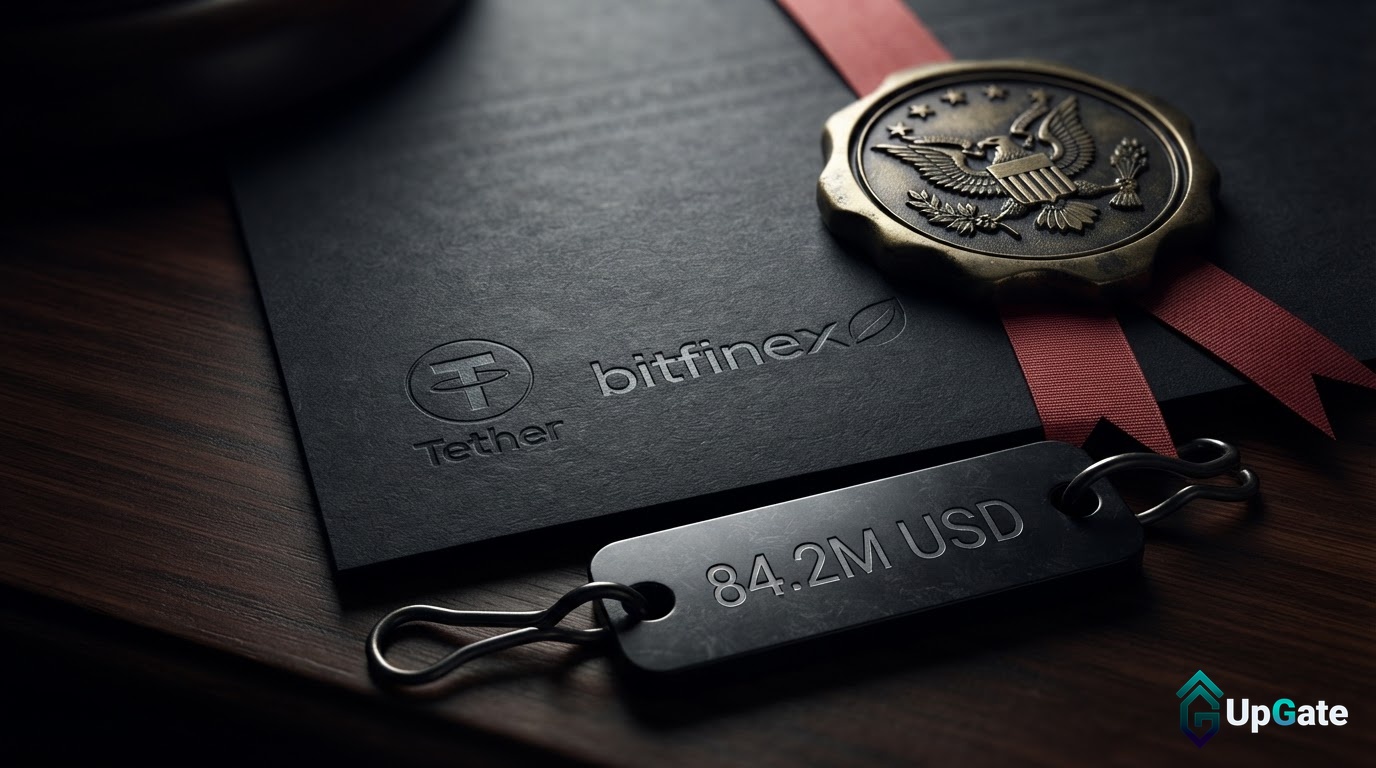
    US federal prosecutors have initiated a civil forfeiture action seeking to seize approximately $84.2 million in assets from Capstone Ltd. The complaint, filed on July 15, alleges that Capstone acted as an intermediary facilitating alleged illegal banking transfers for cryptocurrency entities Tether and Bitfinex, utilizing EQIBank as a conduit to access US banking systems.

    According to the complaint, Capstone Ltd. allegedly served as a conduit for these transfers. Prosecutors claim that EQIBank, described as a Caribbean institution, directed Capstone to move hundreds of millions of dollars on behalf of Tether and Bitfinex, enabling them to access US banking rails. A California federal district judge has reportedly denied EQIBank’s motion to return seized property.

    Seized Funds and EQIBank’s Position

    The seized funds targeted in the forfeiture complaint include accounts held at Wells Fargo and JPMorgan. Approximately $79.11 million of the seized funds is reportedly held in a Wells Fargo Securities account. EQIBank claims that the frozen assets represent approximately 80% of its total monetary holdings, which amounts to roughly $89 million of its entire portfolio.

    Tether and Bitfinex: Historical Context and Current Exposure

    Tether has stated that its exposure to EQIBank is minimal, amounting to less than 0.034% of its total assets. The company indicated that its peg to the dollar has weathered more significant crises than this $84.2 million forfeiture case, which it asserts barely touches its balance sheet.

    This action occurs in the context of past regulatory scrutiny for Tether and Bitfinex. In 2021, the New York Attorney General’s office settled with both companies over claims that Bitfinex had covered up an $850 million loss using Tether’s reserves. This settlement involved an $18.5 million fine and a ban on serving New York customers for Tether and Bitfinex, though neither company admitted wrongdoing at the time.

    Broader Implications for Crypto Financial Infrastructure

    The potential implications of this enforcement action extend to the broader crypto financial ecosystem. If an institution that served as a banking partner for major crypto companies faces action due to US enforcement, other smaller banks and payment processors in the space may take notice. However, the exact nature and extent of EQIBank’s alleged orchestration, whether Capstone Ltd. knowingly participated in illegal transfers, and the full impact of EQIBank’s potential liquidation remain uncertain.

    Broader Context

    Source materials place the factual news in this context: The New York Attorney General’s office settled with both companies in 2021 over claims that Bitfinex had covered up an $850 million loss using Tether’s reserves.

  • Ripple (XRP) Price Surges September 25

    Ripple (XRP) Price Surges September 25

    Ripple’s XRP Recovers Sharply After Volatile Session

    New York, NY – September 25, 2026 – The cryptocurrency market experienced significant fluctuations today, with Ripple’s XRP token leading the charge in a notable rebound. After a sharp decline to below $1.50 in the previous session, XRP has surged by over 6.5% in the last 24 hours, reaching $1.55 as of press time.

    Market Dynamics and XRP’s Performance

    Yesterday’s market-wide downturn hit XRP particularly hard, with the token experiencing a significant rejection at the $1.65 mark and subsequently falling below $1.50 within a 24-hour period. While today’s price action also reflects substantial movement, it has been in the opposite, positive direction. In comparison, Bitcoin (BTC) has seen a modest 1.6% increase, and Ethereum (ETH) has gained under 2.5%. XRP’s daily surge of 6.6% stands out, recovering from the critical $1.50 support level.

    Investor Confidence and ETF Inflows

    Despite the recent volatility, investor interest in XRP remains strong, as evidenced by the performance of spot Ripple Exchange Traded Funds (ETFs). After a quiet start on Monday with no reported data, these funds saw substantial inflows in the subsequent days: $20.02 million on Tuesday, $18.04 million on Wednesday, and $14.89 million on Thursday. These inflows represent a potential driving force behind XRP’s impressive recovery.

    Cumulatively, net inflows into these ETFs have reached an all-time high exceeding $1.76 billion.

    Whale Activity and Short Liquidations Bolster Price

    Further contributing to XRP’s upward momentum are other significant developments. Last week, large market participants, often referred to as “whales,” acquired over 1.5 billion XRP tokens within a 96-hour span.

    Additionally, data shared by crypto commentator Xaif Crypto on X highlighted a substantial surge in short liquidations for the XRP/USD trading pair, increasing by over 45% on the 4-hour chart. This phenomenon can trigger a short squeeze, compelling traders to close their positions by buying the token, thereby driving up demand and price. Xaif noted that this was followed by a “brutal +16.11% swing right after” for long positions.

    Optimistic Outlook for XRP

    Fellow XRP community member Bird expressed an optimistic outlook, suggesting that XRP has signaled a “green light” for further upward movement. Bird predicted that the next ascent has commenced following a “perfect leveraged long flush and backtest,” with a target of $1.80 by the end of the week.

    [Image: A tweet from Bird (@Bird_XRPL) stating “Green light The next move up for XRP has begun after a perfect leveraged. long flush and backtest. $1.80 by EOW” with a chart.]

  • Elon Musk’s AI Cluster Expansion Faces Energy and Regulatory Hurdles

    Elon Musk’s AI Cluster Expansion Faces Energy and Regulatory Hurdles

    Elon Musk has announced significant expansion plans for the Colossus 2 AI computing cluster in the Memphis, Tennessee and Southaven, Mississippi corridor, aiming to more than double its Nvidia chip count to over 1.1 million H100-equivalent accelerators by the end of 2026. This aggressive buildout, however, is encountering substantial energy infrastructure challenges and regulatory scrutiny.

    The Memphis-area cluster had already reached approximately 1 GW of AI compute capacity by mid-2026, with the full Colossus 2 buildout modeled for an IT load of around 946 MW. To power this immense demand, the facility currently relies on a combination of temporary gas turbines and Tesla Megapacks, a setup described as a patchwork solution treating battery storage as a bridge to more permanent infrastructure.

    Adding to the complexity, regulators have ordered the phase-out of 69 temporary turbines by mid-2027. This decision stems from local concerns regarding emissions, noise, and the overall sustainability of operating portable generators in an area adjacent to residential zones.

    In response to these energy demands and the impending phase-out of temporary solutions, a permanent 1.2 GW gas-fired power plant is under construction in Southaven. This facility is intended to replace the temporary generation equipment and provide a stable, long-term energy foundation for the cluster’s operations.

    The scale of the AI computing cluster has already attracted major technology players. Google signed a contract in June 2026 for approximately 110,000 GPUs, with a rate of $920 million per month agreed upon from October 2026 through June 2029. Anthropic has also secured capacity at the facility, underscoring the high demand for advanced AI processing power.

    The cluster itself integrates multiple sites, including the original Colossus 1 facility, Colossus 2, and newer additions referred to as Minihard and Macrohardrr. The announcement, made on September 25, highlights the rapid pace of AI infrastructure development and the critical need to align energy supply and regulatory compliance with technological ambition.

    Why This Matters

    The expansion of Elon Musk’s Colossus 2 AI computing cluster underscores the immense energy demands of advanced AI infrastructure. The project’s reliance on temporary power solutions and subsequent regulatory orders to phase them out highlight the critical need for sustainable energy development to keep pace with technological growth. This situation presents a challenge in balancing rapid AI advancement with environmental concerns and regulatory compliance, as evidenced by the ongoing construction of a permanent power plant to meet future needs.

    Broader Context

    Elon Musk laid out a concrete timeline for scaling up the Colossus 2 AI computing cluster in the Memphis, Tennessee and Southaven, Mississippi corridor, committing to more than doubling the facility’s Nvidia chip count before the end of 2026. The expansion would push the cluster toward more than 1.1 million H100-equivalent accelerators. This development is part of a broader trend of aggressive AI infrastructure buildouts across the industry, necessitating significant investments in energy and facing increasing regulatory oversight.

  • Bitcoin’s Three-Month Gain Streak: A Rare Event in a Changed Market

    Bitcoin’s Three-Month Gain Streak: A Rare Event in a Changed Market

    Bitcoin has achieved three consecutive months of price increases in July, August, and September, a rare occurrence in its history that was last observed in 2012. However, the current market landscape and macroeconomic conditions differ significantly from that period, suggesting that a repeat of the massive rally seen after 2012 is unlikely.

    A Historical Parallel with a Different Outcome

    In July, Bitcoin saw a 4.8% increase, followed by a substantial 25.2% rise in August and a further 10.9% gain in September. This three-month streak is notable, especially when compared to the last time such a pattern occurred. In 2012, Bitcoin experienced monthly gains of 41.0% in July, 6.4% in August, and 24.4% in September. Following that 2012 three-month rally, Bitcoin’s price surged by over 2,000% in the subsequent 165 days, reaching $230 by April 2013.

    Divergent Market Landscape

    Analysts note that the market structure today is fundamentally different from 2012. Bitcoin is now a multi-trillion dollar asset with significant institutional involvement. The recent introduction and adoption of US spot Bitcoin ETFs have attracted over $5.5 billion in inflows since August, indicating a new wave of capital entering the market. This institutional participation and the increased liquidity of the current market present a stark contrast to the nascent Bitcoin market of 2012, where prices hovered around $10 and market depth was minimal, allowing small buy orders to significantly impact prices.

    Macroeconomic Headwinds and Future Uncertainty

    Despite the positive price action, macroeconomic factors, particularly the Federal Reserve’s monetary policy, pose a potential headwind. The Federal Reserve has raised interest rates to the 3.75%-4.00% range and has signaled the possibility of further increases. This tightening environment could influence investor appetite and the sustainability of inflows into Bitcoin and related financial products.

    The sustainability of institutional capital allocation into Bitcoin ETFs is considered a more significant indicator for future price movements than simple price trends. While the historical pattern of three consecutive months of gains is noteworthy, the differing market structure and macroeconomic environment mean that extrapolating the 2012 outcome directly to the present day is not advisable. The question for the market is not whether history will repeat, but whether the logic of institutional capital allocation has fundamentally changed.

    There remains uncertainty regarding Bitcoin’s future price trajectory. While a pullback in October is not unexpected and could be seen as a correction rather than a significant downturn, the long-term outlook will likely depend on the continued flow of institutional capital and the evolving macroeconomic landscape. The Federal Reserve’s actions and the sustained interest from institutional investors through ETFs will be key factors to watch.

    Why This Matters

    The materials describe a narrow update: Bitcoin’s price has risen for three consecutive months, a pattern that has only occurred once before in its trading history, in 2012. The future price movement of Bitcoin after the three-month rally.

    Broader Context

    Source materials place the factual news in this context: 比特幣牛市進度條走到哪了?掌握這 7 個關鍵指標,避免盲目踩頂.