Category: Uncategorized

  • OpenZeppelin Security Development Suite Now Available for TRON Network Developers

    OpenZeppelin Security Development Suite Now Available for TRON Network Developers

    OpenZeppelin, a recognized leader in smart contract security and development, has integrated its comprehensive suite of tools and audited libraries with the TRON network. This integration aims to equip developers building on TRON with enhanced security features and a more streamlined development process, according to the organizations involved.

    Why This Matters

    The materials describe a narrow update: OpenZeppelin’s security-focused development framework, including audited smart contract libraries and upgrade tools, is now available for developers building on the TRON network. The integration aims to enhance the security and development experience for applications built on the TRON network by leveraging OpenZeppelin’s established security standards and tools.

    Broader Context

    Source materials place the announcement in this context: OpenZeppelin is the security standard for onchain finance and secure smart contract development.

    Enhanced Security and Development Tools for TRON

    The integration makes OpenZeppelin’s security-focused development framework, including its audited smart contract libraries and upgrade tools, accessible to the TRON developer community. According to OpenZeppelin, this initiative is designed to offer developers trusted building blocks for creating tokens, managing access control, facilitating governance, and developing evolving applications. The framework incorporates built-in security checks and AI-assisted development support.

    “Developers need primitives they can trust on the network they are deploying to,” stated an OpenZeppelin representative. “Bringing our contracts and tooling to TRON lets teams keep the assurances they know from other ecosystems, while accounting for the network-specific requirements that matter in production. The goal is a robust path from first line to production.”

    This integration is expected to lower development friction for builders on the TRON network, providing them with stronger foundations for applications designed to operate at scale. OpenZeppelin’s offering for TRON includes its Contracts Wizard, enabling developers to generate secure, audited smart contracts tailored for the TRON environment.

    TRON Network’s Growing Ecosystem

    The TRON network, founded in September 2017 with its MainNet launching in May 2018, has experienced significant growth. As of September 2026, the network hosts the largest circulating supply of USD Tether (USDT) stablecoin, exceeding $94 billion. TRONSCAN data indicates that as of the same date, the TRON blockchain has recorded over 405 million total user accounts, more than 15 billion total transactions, and over $29 billion in total value locked (TVL).

    According to TRON DAO, the community-governed organization dedicated to accelerating internet decentralization, TRON continues to support a growing range of applications across stablecoins, decentralized finance, payments, and other on-chain use cases. The integration of OpenZeppelin’s tools is seen as a step to further bolster the network’s capabilities and developer ecosystem.

    OpenZeppelin, founded in 2015, has been involved in numerous security engagements, surfacing over 10,000 vulnerabilities before they reached production. The company’s security-focused development framework is widely recognized across the blockchain industry.

    This integration is anticipated to increase developer confidence and potentially enhance application scalability on the TRON network by providing access to OpenZeppelin’s established security standards and tools, adapted for TRON’s specific network capabilities. The move supports TRON’s broader objective of “Moving Trillions, Empowering Billions.”


  • ARK Invest Tokenizes Venture Fund on Ethereum, Enabling Onchain Transactions with USDC

    ARK Invest Tokenizes Venture Fund on Ethereum, Enabling Onchain Transactions with USDC

    ARK Invest has tokenized its Venture Fund (ARKVX) on the Ethereum blockchain, allowing investors to subscribe and redeem holdings using the stablecoin USDC via Securitize’s platform. This development integrates a traditional investment vehicle with blockchain technology, facilitating onchain transactions while preserving the fund’s established structure.

    The tokenized ARKVX, representing a Class D share, processed its initial onchain subscriptions on September 24, 2026. The process leverages a subscription flow based on the ERC-7540 standard for asynchronous vault requests. All transactions are recorded on the Ethereum blockchain, with settlements occurring after the end-of-day Net Asset Value (NAV) is determined. Prior to the token launch on September 23, 2026, the NAV stood at $60.49 per share. A 2% subscription fee is applied before the NAV is calculated.

    Each tokenized interest provides a 1:1 claim on shares of the underlying ARK Venture Fund. BNY Mellon serves as the custodian for the actual fund shares, maintaining the legal and regulatory framework expected by investors in a traditional interval fund. The fund focuses on disruptive innovation, with concentrated exposure to sectors such as artificial intelligence and aerospace, holding stakes in private companies including SpaceX and OpenAI. The minimum investment for the tokenized fund is set at $500, a considerably lower threshold compared to the typical minimums for accredited investors in alternative investment vehicles.

    While the tokenization introduces onchain transparency for subscription and redemption requests, it does not alter the fund’s inherent liquidity structure. No secondary market is planned for the tokenized assets. Liquidity is managed through quarterly repurchase offers, capped at 5% of outstanding shares. If redemption demand exceeds this cap in any quarter, redemptions may be prorated. Although running redemption requests onchain makes the queue visible on the blockchain, it does not enhance liquidity. investors may encounter the same constraints as with a traditional interval fund, albeit with a more transparent digital record.

    As of June 30, 2026, the ARK Venture Fund managed approximately $1.3 billion in assets. The fund reported a 20.35% return in the second quarter of 2026, surpassing the S&P 500’s 15.20% gain during the same period. Year-to-date performance through mid-2026 reached 26.71%. The fund’s annual expenses are approximately 3.49%.

    ARK Invest’s strategic investment in Securitize in October 2025 highlights the firm’s commitment to the evolution of capital markets. Carlos Domingo, CEO of Securitize, emphasized the significance of integrating established financial products onto blockchain rails, rather than solely focusing on new crypto-native offerings. Cathie Wood, CEO of ARK Invest, views the launch as evidence of ARK’s dedication to this ongoing evolution.

    Potential uncertainties persist regarding the precise timing and impact of end-of-day NAV calculations on share allocation, as well as the possibility of proration in redemptions if demand exceeds the quarterly cap.

    Broader Context

    Source materials place the factual news in this context: ARKVX’s portfolio targets disruptive innovation, with concentrated exposure to sectors like artificial intelligence and aerospace.

  • Ripple CEO Backs Top 5 Cryptos, Dismisses Solana Rivalry

    Ripple CEO Backs Top 5 Cryptos, Dismisses Solana Rivalry

    Ripple CEO Brad Garlinghouse has outlined what he believes is the simplest cryptocurrency strategy for investors today: purchase the top five cryptocurrencies by market capitalization and hold them for five years. “You are going to do great,” he stated. Currently, this top tier includes Bitcoin, Ethereum, Tether, BNB, and XRP, placing Ripple’s native token within the recommended portfolio.

    On Solana, He’s Not Picking Sides

    When questioned about why an individual might choose XRP over Solana, Garlinghouse indicated he is not attempting to persuade anyone to favor one over the other. He disclosed that he personally holds a modest amount of Solana and expressed a generally optimistic outlook on a variety of cryptocurrencies for diverse reasons, extending beyond just XRP.

    Garlinghouse attributed a significant influx of liquidity into the Solana network to the activity surrounding meme coins, noting that much of this engagement has been built upon Solana’s infrastructure. He does not necessarily view Solana as a direct rival to XRP, suggesting that the success of each network will likely hinge on the evolution of their respective ecosystems rather than one definitively outperforming the other.

    A Basket Approach Over Picking Winners

    Garlinghouse’s remarks echo a recurring theme in his recent interviews: his disinterest in urging retail investors to concentrate solely on XRP. Instead, his guidance emphasizes diversification across the largest and most established cryptocurrencies, rather than attempting to identify a single winning asset, even as his company’s core business revolves around XRP.

    He anticipates that both Solana and XRP will perform well, with their ultimate success largely dependent on how Ripple’s trajectory compares to that of the Solana Foundation over time. Garlinghouse reiterated that he does not consider Solana a competitor and described his relationship with its proponents as amicable, while acknowledging that Ripple faces more direct competition from other projects.

  • EBA Recommends Expanding MiCA to Include Crypto Lending

    EBA Recommends Expanding MiCA to Include Crypto Lending

    The European Banking Authority (EBA) has recommended that the European Commission consider incorporating crypto lending into the Markets in Crypto-Assets (MiCA) regulation as part of the ongoing review of the EU’s digital asset framework. The recommendations, open for consultation until September 30, aim to address evolving risks and clarify regulatory boundaries.

    According to the EBA, the crypto lending sector, including services that connect users to decentralized lending protocols, can pose risks to consumers not fully addressed under the existing framework. The authority has urged the European Commission to review and potentially expand MiCA’s scope to encompass these activities.

    Beyond crypto lending, the EBA called for stronger rules concerning third-country stablecoin arrangements. While the EBA considers existing requirements for asset referenced tokens and electronic money tokens broadly appropriate, it noted that these structures can create significant risks and may necessitate changes to MiCA. The regulator also suggested a review of reserve requirements for stablecoin issuers, particularly concerning the minimum share of reserves held as bank deposits and effective risk management.

    Challenges in crypto asset classification were also highlighted by the EBA. The authority stated that unclear boundaries between MiCA and other EU financial rules can lead to unnecessary costs and delays for companies launching new products. To mitigate this, the EBA recommended clearer definitions and scope for crypto asset classification.

    Furthermore, the EBA seeks improvements to the reporting framework for token issuers and crypto service providers to enhance supervision and risk monitoring. These recommendations come as the European Commission conducts a broader review of MiCA to ensure its continued suitability as the crypto market develops.

    MiCA entered into full application in December 2024, with its stablecoin provisions taking effect in June 2024. As of September 1, 39 electronic money tokens had been issued under the framework, while no asset referenced tokens had been authorized, according to the EBA.

    The European Commission’s targeted consultation on the MiCA review remains open through September 30, and the outcomes could lead to legislative changes impacting the crypto industry within the European Union.

    Why This Matters

    The materials describe a narrow update: The EBA has urged the European Commission to review and potentially expand the scope of the MiCA regulation to encompass crypto lending, including services that connect users to decentralized lending protocols. Whether the European Commission will adopt the EBA’s recommendation to include crypto lending under MiCA.

    Broader Context

    Source materials place the factual news in this context: The European Banking Authority has urged the European Commission to consider bringing crypto lending under MiCA as part of its review of the European Union’s digital asset regulatory framework.

  • Qivalis Consortium Developing Euro Stablecoin for Trade Finance, Awaiting Regulatory Decision

    Qivalis Consortium Developing Euro Stablecoin for Trade Finance, Awaiting Regulatory Decision

    Qivalis, a consortium comprising 37 banks across 15 European countries, is developing a euro-pegged stablecoin aimed at trade finance and cross-border settlement. The project plans to launch the token on the public Ethereum blockchain in the second half of 2026, pending a regulatory decision from De Nederlandsche Bank (DNB).

    Currently in its pre-issuance regulatory phase, Qivalis has not yet minted any tokens. The successful issuance is contingent on DNB granting authorization for Qivalis to operate as an electronic money institution under the EU’s Markets in Crypto-Assets Regulation (MiCA), which involves demonstrating compliance with capital requirements, governance standards, and consumer protection obligations.

    Structured as an electronic money token under MiCA, Qivalis plans to back its stablecoin with at least 40% in bank deposits and the remainder in high-quality euro-area sovereign bonds. The consortium selected Fireblocks as its technology partner for tokenization and compliance infrastructure in April 2026.

    Established in September 2025 and formally branded in December of that year, Qivalis has seen significant growth, expanding from nine founding member banks to its current 37. Jan-Oliver Sell leads Qivalis as CEO, with Sir Howard Davies serving as the chair of the supervisory board.

    Qivalis targets the Europe-Asia trade finance corridor, a market valued at approximately $5 trillion annually. Traditional trade finance often involves paper-based processes, numerous intermediaries, and settlement times measured in days. By introducing an on-chain euro settlement layer, Qivalis aims to shorten these settlement periods and reduce the counterparty risk inherent in multi-step transactions.

    The decision to deploy on the public Ethereum blockchain marks a departure from the preference for permissioned or private blockchains seen in many bank-led digital currency initiatives. Qivalis is instead leveraging Ethereum’s composability and existing decentralized finance (DeFi) ecosystem.

    In the broader stablecoin market, dollar-denominated stablecoins dominate with over 95% of global market share, while euro-denominated stablecoins represent a smaller fraction, between 0.2% and 1%. Although competitors such as Circle (EURC) and Societe Generale’s Forge unit (EUR CoinVertible) have introduced euro-denominated stablecoins, Qivalis’s extensive multi-bank consortium backing could offer a substantial distribution network and a competitive edge.

    Despite the potential for efficiency gains in trade finance, the project faces key uncertainties, primarily the pending regulatory decision from De Nederlandsche Bank. The future market share of euro-denominated stablecoins and the long-term value of utilizing a public blockchain remain to be determined. The project is currently on hold, awaiting confirmation of regulatory approval before it can proceed with issuing its stablecoin.

    Why This Matters

    The development of Qivalis’s euro stablecoin for trade finance is a significant institutional effort, but its success is contingent on regulatory approval from De Nederlandsche Bank and market adoption in a nascent euro stablecoin space.

    Broader Context

    Qivalis’s initiative highlights the ongoing efforts to leverage blockchain technology for trade finance, with the consortium aiming to address inefficiencies in the Europe-Asia corridor.

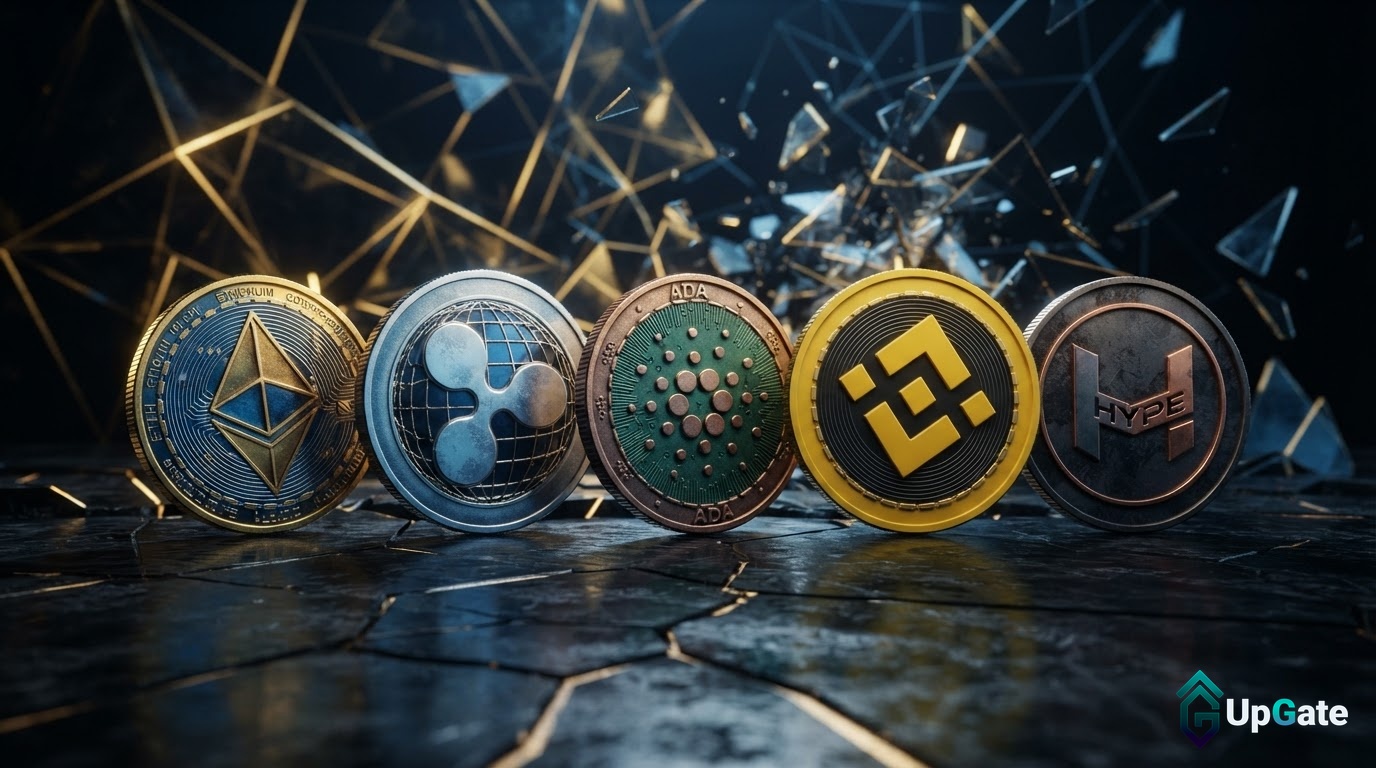
  • Cryptocurrency Market Analysis: ETH, XRP, ADA, BNB, and HYPE Show Mixed Technical Signals Amidst Uncertainty

    Cryptocurrency Market Analysis: ETH, XRP, ADA, BNB, and HYPE Show Mixed Technical Signals Amidst Uncertainty

    Recent price action across Ethereum (ETH), Ripple (XRP), Cardano (ADA), Binance Coin (BNB), and Hyperliquid (HYPE) presents a complex picture of technical indicators and potential price levels, where definitive future movements remain subject to key resistance points and market uncertainties. This analysis examines the latest movements and technicals for these cryptocurrencies, highlighting observed performance and potential future scenarios with appropriate caveats.

    Why This Matters

    The materials describe a narrow update: The article analyzes recent price performance and future price expectations for several cryptocurrencies, including Ethereum (ETH), Ripple (XRP), Cardano (ADA), Binance Coin (BNB), and Hyperliquid (HYPE). Whether Ethereum’s pullback at $2,800 is a brief pause or a more significant reversal.

    Broader Context

    Source materials place the market analysis in this context: This week, Ethereum rallied by 10% and managed to test the resistance at $2,800.

    Ethereum (ETH)

    Ethereum has observed a notable rally this week, increasing by 10% and testing resistance at the $2,800 mark. According to the analysis, Ethereum’s price action indicates a potential bottom around $1,500. However, uncertainty surrounds whether the pullback at $2,800 represents a brief pause or a more significant reversal. If the $2,800 resistance were to convert into support, the path towards $3,000 and potentially higher targets like $3,300 and $4,000 could open up, though this remains speculative. The author expects that Ethereum is on a path to recover losses incurred since 2025, but this is contingent on sustained recent price movement.

    Ripple (XRP)

    Ripple (XRP) retested the $1.6 resistance level and concluded the week with a 15% increase. Sell volume reportedly increased at $1.6, preventing further immediate gains. The article suggests that as long as sellers maintain control at this level, XRP is likely to trade within a range of $1.3 to $1.6. There remains uncertainty regarding XRP’s ability to break through the $1.6 resistance. Considering the broader market, the price may eventually aim for $2, but this is not a certainty. The author expects that XRP’s price may eventually break away and aim for $2 next.

    Cardano (ADA)

    Cardano (ADA) has shown strong performance, turning $0.23 into support and confirming $0.15 as a bottom. ADA closed the week 23% higher, indicating a significant bullish resurgence. The article suggests that this reported support allows the price to aim higher, with $0.30 and $0.33 identified as major future targets. However, the momentum needs to hold for these targets to be reached, and the price might re-test $0.23 as support before further advances. Uncertainty persists regarding whether ADA’s current momentum will be sufficient to reach the projected higher levels.

    Binance Coin (BNB)

    Binance Coin (BNB) is up 6% this week, with buyers appearing to dominate the chart. The cryptocurrency has established a higher high and is approaching the $800 level. The current resistance for BNB is identified at $900, with a key support level at $690. With recent price movement observed, a test of the $900 resistance appears likely in the coming days. The article suggests that a four-digit valuation at $1,000 could act as a magnet for the price, especially following a long consolidation period around $600. However, there is uncertainty about whether BNB will reach $1,000 before the end of the year, and the author expects a price above $1,000 to be likely before the end of 2026.

    Hyperliquid (HYPE)

    Hyperliquid (HYPE) reached a new record price of $98 and closed the week 17% higher. The cryptocurrency is currently experiencing a pullback. This level is noted as a key resistance before the $100 milestone becomes achievable. Considering the overall momentum, buyers may continue to push the price towards $100. There is uncertainty about whether sellers will re-enter the market once the $100 level is reached. The article suggests that as long as current momentum continues, the $100 milestone should be easily reached, positioning the cryptocurrency for further gains before the end of 2026.

    In conclusion, the observed price movements across Ethereum, Ripple, Cardano, Binance Coin, and Hyperliquid reveal varied technical signals. While some assets show potential for further upside based on current indicators, key resistance levels and market dynamics introduce significant uncertainties. The analysis emphasizes that future price action remains subject to these factors, rather than guaranteed outcomes.

  • NEAR Tokenized Stock Launch Prioritizes Distribution Over Scale

    NEAR Tokenized Stock Launch Prioritizes Distribution Over Scale

    NEAR Crypto and Ondo Finance Launch Tokenized Stocks on NEAR.com

    NEAR Protocol and Ondo Finance have introduced access to tokenized U.S. stocks and exchange-traded funds (ETFs) through the NEAR.com platform, initially offering 20 assets. These include major companies like Nvidia, Tesla, Apple, Microsoft, and Amazon, as well as ETFs such as SPY and QQQ.

    Eligible users can fund their accounts using stablecoins or other supported cryptocurrencies from over 30 different networks. NEAR Intents, functioning as a cross-chain distribution layer, will eventually route these tokenized securities to connected wallets, applications, and decentralized finance (DeFi) protocols.

    This launch emphasizes distribution capabilities rather than the sheer number of assets. While Ondo’s broader tokenized stocks platform lists over 100 stocks and ETFs, NEAR’s initial rollout via Near.com provides access to approximately one-fifth of that catalog.

    NEAR Intents Powers Cross-Chain Access

    NEAR.com serves as the primary user interface for this integration, with NEAR Intents operating as the underlying cross-chain routing layer, according to information released by Ondo Finance. This distinction is significant: NEAR.com is where users create accounts and execute trades, while NEAR Intents is designed to enable other wallets and DeFi protocols to surface these real-world assets to their own user bases.

    Ondo’s comprehensive platform offers more than 100 tokenized stocks and ETFs, encompassing individual equities, indexes like QQQ and SPY, and fixed-income ETFs such as TLT, TIP, and AGG. The selection of 20 assets on NEAR is a subset of this larger offering, and the full Ondo application at app.ondo.finance remains the definitive source for the complete list.

    Transaction Flow and USDon Stablecoin

    Purchases are processed using USDon, a stablecoin that Ondo states is backed 1:1 by U.S. dollars held in an Ondo Stocks brokerage account. If a user initiates a purchase with a different stablecoin, the platform automatically swaps it into USDon before executing the tokenized stock purchase. This process is reversed upon redemption, a mechanism designed by Ondo to ensure instant buy-and-sell transactions, bypassing traditional settlement windows.

    The user experience is designed to be straightforward: eligible NEAR.com users deposit stablecoins or other supported cryptocurrencies from any of the more than 30 connected networks, then directly swap into an available tokenized stock or ETF in a single transaction. This streamlines what would typically be a multi-step bridging and onboarding process into a single action within the NEAR.com interface. The current offering is limited to 20 assets, not the full Ondo catalog, and a complete list beyond the named examples was not provided. Traders seeking specific tickers outside this initial set are advised to verify availability directly.

    Distribution Layer as Key Innovation

    The more significant aspect of this launch is the routing layer, NEAR Intents, rather than the initial ticker list. NEAR Intents is a cross-chain distribution mechanism capable of delivering Ondo’s tokenized equities to wallets, applications, and DeFi protocols beyond NEAR.com. This positions the 20-asset figure as a starting point for an expanding infrastructure, not a limitation.

    Ondo currently restricts its tokenized securities to companies listed on the NYSE and NASDAQ, with the potential to expand to other international exchanges in the future. Other platforms are exploring different distribution methods; for instance, Robinhood’s tokenized stock initiative on its own chain offers a point of comparison for how competing platforms are structuring access, though the underlying mechanics differ.

    Regulatory Considerations and Geographic Restrictions

    It is important to note that these offerings are not available to U.S. persons. Ondo’s documentation explicitly states that Ondo Stocks products are offered exclusively to organizations and individuals outside the United States and other prohibited jurisdictions, subject to their own eligibility criteria. Access is also restricted in certain regions.

    These are tokenized exposures to securities listed on the NYSE and NASDAQ, distinct from shares held in a conventional brokerage account. Regulators are still determining how to classify these distinctions across various jurisdictions. The broader U.S. regulatory stance on tokenized equities remains unsettled, and this launch does not alter the landscape for U.S.-based traders.

  • DeepBook App Launches on Sui Mainnet, Introducing Ultra-Short-Term Prediction Markets

    DeepBook App Launches on Sui Mainnet, Introducing Ultra-Short-Term Prediction Markets

    The DeepBook App has launched in alpha on the Sui mainnet, introducing an integrated trading interface that combines spot markets, margin trading, and a novel prediction market feature. This new offering allows users to speculate on Bitcoin price movements with expiry windows as short as one minute, significantly compressing the typical speculation timeline in decentralized finance.

    According to the FactSheet, the platform’s core feature, ‘Predict,’ enables traders to engage with Bitcoin price movements, with initial expiry windows set at a minimum of one minute from the time a position is opened. This approach differs from traditional prediction markets, which are often event-based, by focusing on price-based speculation. The system utilizes advanced oracles for dynamic pricing and a continuous strike model, aiming to provide greater accessibility compared to rigid traditional options.

    DeepBook operates on a shared on-chain central limit order book (CLOB), a system that directly connects buyers and sellers. This CLOB has reportedly processed over $20 billion in cumulative trading volume across more than 15 applications within the Sui ecosystem. The DeepBook App provides users with a direct interface to this existing infrastructure.

    In addition to the prediction markets, the app offers spot trading with pairs such as SUI/USDC, xBTC/USDC, and DEEP/USDC, alongside margin trading capabilities. The integration of these diverse trading functions into a single interface is a notable product design aspect, as many DeFi users currently navigate multiple protocols for similar functionalities.

    The ‘Predict’ feature was initially tested on Sui’s testnet in May 2026, in collaboration with Block Scholes. The waitlist for the alpha launch reportedly surpassed 150,000 traders, indicating significant user interest.

    The underlying Sui network’s infrastructure plays a crucial role in enabling the rapid execution required for such short-term trading. Sui’s network average finality speed is approximately 390 milliseconds, allowing transactions to settle in under half a second. This speed is cited as a factor that shifts the trading bottleneck from blockchain performance to user interaction speed.

    The DEEP token is integral to the DeepBook ecosystem, serving functions related to trading fee management, user incentives, and governance.

    DeepBook’s model is characterized by its price-based, rather than event-based, prediction markets and its compressed speculation window, which the FactSheet suggests resembles high-frequency trading more than traditional prediction markets. The continuous strike model further differentiates it from conventional options, aiming for increased retail accessibility. The shared liquidity model, where the CLOB supports multiple applications, also means that the depth available to Predict traders is not isolated to the DeepBook app itself. Bitcoin is the initial asset for the Predict feature, with plans to expand to other assets anticipated.

    Why This Matters

    The materials describe a narrow update: The DeepBook App has launched in alpha on the Sui mainnet, offering an integrated trading interface for spot markets, margin trading, and prediction markets. DeepBook operates a shared on-chain central limit order book, or CLOB, which connects buyers and sellers directly, rather than routing trades through automated market makers that rely on liquidity pools.

    Broader Context

    Source materials place the factual news in this context: The DeepBook App went live in alpha on the Sui mainnet on September 24, bringing with it something the network has been building toward for years: a fully integrated trading interface that combines spot markets, margin, and ultra-short-term prediction markets under one roof.

  • U.S. Bitcoin ETFs Attract $346.98 Million in Fifth Consecutive Day of Inflows

    U.S. Bitcoin ETFs Attract $346.98 Million in Fifth Consecutive Day of Inflows

    U.S. Bitcoin Exchange-Traded Funds (ETFs) continued their positive momentum on Wednesday, attracting $346.98 million in inflows. This marks the fifth consecutive session of capital entering these funds, signaling sustained investor interest.

    Beyond Bitcoin, other cryptocurrency-related ETFs also experienced positive performance. Ether, XRP, and Solana ETFs concluded Wednesday with gains, indicating a broader trend of investment across various digital assets. In contrast, HYPE ETFs saw a decline.

    The consistent inflow streak for Bitcoin ETFs, now spanning five sessions, alongside the positive performance of other crypto ETFs, suggests a steady flow of new capital into the leading cryptocurrency exchange-traded funds. While the specific drivers behind this sustained buying are not detailed, the trend points to an increasing appetite for crypto-related investments.

    Major issuers, including Blackrock and Fidelity, are part of the landscape of Bitcoin ETFs. The ongoing influx of funds into these products serves as a key indicator of current investor sentiment and the growing accessibility of cryptocurrencies through traditional financial instruments.

    Why This Matters

    The materials describe a narrow update: U. Momentum has become difficult to ignore regarding fresh capital flowing into the largest crypto exchange-traded funds (ETFs).

    Broader Context

    Source materials place the factual news in this context: Fresh capital continued flowing into the largest crypto exchange-traded funds (ETFs) […].

  • Crypto vs. Stocks: 200-Day MA Signals Divergence

    Crypto vs. Stocks: 200-Day MA Signals Divergence

    Stocks Show Weak Internal Strength Despite S&P 500’s Proximity to Record Highs

    The S&P 500 index is currently trading near its all-time highs, yet a significant portion of its constituent companies are performing below their 200-day moving averages, according to data shared by analyst Scott Melker on X. This contrasts sharply with the cryptocurrency market, where 88 of the top 100 digital assets are trading above their respective moving averages. Melker suggests that this divergence indicates a healthier technical position for cryptocurrencies, even as many major tokens remain considerably below their previous peak valuations.

    Market Breadth Divergence: Stocks Lagging, Crypto Leading

    As of Wednesday, 257 stocks within the S&P 500 were trading below their 200-day moving averages, meaning approximately 49% of the index’s components were above this widely monitored trend indicator. Melker characterized the internal condition of the stock market as bearish, despite the index’s close proximity to record levels.

    In contrast, the cryptocurrency landscape presented a different picture. Bitcoin and Ethereum were among the 88 top-100 cryptocurrencies that had surpassed their 200-day simple moving averages. Furthermore, most of these digital assets were also holding their ground above their 50-day and 100-day averages. Melker described this combined scenario as a “clean, bullish configuration across the board.” He also highlighted the significant distance between current cryptocurrency prices and their previous all-time highs, contrasting this with equities, which he believes have already priced in substantial positive news.

    “Weak breadth in stocks near highs has historically been a yellow flag,” the market observer noted. “Strong breadth in crypto while prices remain far from peaks is the opposite setup.”

    It is important to note that these figures measure the number of assets trading above a long-term average, rather than the magnitude of price increases or the sustainability of those gains. Consequently, they offer a snapshot of market participation but do not guarantee the continuation of current market trends.

    Bitcoin’s Recent Volatility and Shifting Correlations

    Bitcoin’s recent price action provides further context for this comparison. The cryptocurrency experienced a rebound from approximately $75,000 following setbacks, including the failed CLARITY Act vote and the Federal Reserve’s interest rate hike in July 2023. It briefly surpassed $87,000 before encountering renewed selling pressure.

    At the time of reporting, CoinGecko data indicated Bitcoin trading around $84,000, representing a nearly 3% decrease over the past 24 hours but a roughly 10% increase over the last seven days. Ethereum was trading near $2,700, also down close to 3% in a day, but up by 10% over the week.

    XRP saw a 6.5% drop in 24 hours, second only to Dogecoin’s nearly 7% plunge in the same period. Zcash also experienced a significant decline, shedding over 6% of its value. These price dips contributed to a broader crypto market capitalization of approximately $2.96 trillion, nearly 3% lower than the previous day, with Bitcoin dominance standing at just over 57%.

    Meanwhile, Santiment data reveals that Bitcoin’s correlations with stocks, gold, and the U.S. dollar have weakened. This shift complicates any assumption that the cryptocurrency market will simply mirror the movements of equities.