Category: Uncategorized

  • Derive Proposes V3 Upgrade to Zero-Knowledge Exchange on Ethereum Layer 1

    Derive Proposes V3 Upgrade to Zero-Knowledge Exchange on Ethereum Layer 1

    Derive, a leading platform for onchain options and perpetual contracts, has submitted a proposal for a significant V3 upgrade. This upgrade aims to transition the platform to a zero-knowledge exchange model, with verification conducted directly on Ethereum’s Layer 1. The proposed architecture will utilize a zkVM for its matching engine and sequencer, a move intended to enhance transaction volume and the capacity for cross-margined positions.

    This V3 upgrade signifies a shift away from Derive’s current Layer 2 chain, which will be phased out. According to the proposal, existing V2 positions and balances will migrate to the new V3 system. A new token, stDRV, is planned to launch on the Ethereum mainnet as part of this transition. The protocol has also indicated that its roadmap includes the integration of Real World Assets (RWAs), though specific details and the exact timeline for the V3 upgrade’s full implementation remain uncertain.

    Technical Foundation: zkVM and L1 Verification

    The V3 architecture replaces Derive’s existing L2 chain with a high-performance matching engine and sequencer operating within a zkVM. This setup is designed to theoretically handle substantial daily transaction volumes, potentially reaching hundreds of billions of dollars, and support thousands of cross-margined positions per portfolio. The approach separates computation, performed within the zkVM, from verification, which occurs on Ethereum. This allows trades to be processed quickly, with proofs confirming their correctness, and Ethereum serving as the ultimate arbiter of truth.

    Enhanced Functionality: New Features

    In addition to the core architectural changes, Derive V3 introduces several new features. ‘Risk universes’ are designed to offer a more granular approach to risk management, allowing the protocol to compartmentalize exposure across different asset types and market conditions. The platform will also feature two-sided lending across all collateral types, providing increased flexibility for both lenders and borrowers. Native vault support is also being integrated, aiming to provide structured product builders with enhanced tools.

    Market Position and Security

    Derive currently holds a dominant position in the onchain options market, reportedly accounting for approximately 95% of premium volume. The platform has historically processed over $28 billion in notional volume and generated more than $8 million in revenue, with no reported security incidents or insolvency events. The protocol currently has around $2 billion in open interest. As part of recent developments, Derive added FXRP as collateral in August 2026, and new perpetual contracts for its native DRV token and F were listed shortly after the V3 announcement.

    Security is also being addressed with the introduction of granulated session keys. These keys allow users to grant limited, time-bound permissions for interacting with the protocol, which is intended to reduce the risks associated with persistent wallet approvals.

    The migration process from V2 to V3 is expected to encompass all positions and balances, with bridge funds transferring to Ethereum L1.

    Why This Matters

    The materials describe a narrow update: Derive has submitted a proposal (DIP) for a V3 upgrade that may replace its current Layer 2 chain with a zero-knowledge exchange model verified on Ethereum’s Layer 1. The exact timeline for the V3 upgrade’s full implementation.

    Broader Context

    Source materials place the factual news in this context: Derive is the protocol formerly known as Lyra Finance.


  • ECB Launches Pontes System for Tokenized Asset Settlement Using Central Bank Money

    ECB Launches Pontes System for Tokenized Asset Settlement Using Central Bank Money

    The European Central Bank (ECB) has officially launched the Pontes system, an infrastructure designed to enable financial institutions to settle tokenized assets using central bank money on distributed ledger technology (DLT). reported on September 21, this development marks a significant step in the Eurosystem’s strategy to integrate central bank money with the evolving landscape of tokenized finance.

    Why This Matters

    The materials describe a narrow update: The ECB has launched Pontes, an infrastructure that allows financial institutions to settle tokenized assets on distributed ledger technology (DLT) using central bank money (CBM), thereby replacing stablecoins as a settlement tool and eliminating counterparty risk on the DLT settlement layer. The full scope of services and operating hours for Pontes will be gradually expanded.

    Broader Context

    Source materials place the factual news in this context: The article mentions a previous “innovation exemption” by the SEC allowing tokenized stocks on-chain, and the Korean central bank’s 24-hour Korean Won settlement.

    Replacing Stablecoins, Eliminating Risk

    The primary objective of Pontes is to provide a stable and secure settlement layer for tokenized assets, aiming to replace the reliance on privately issued stablecoins. By utilizing central bank money (CBM) directly on DLT, the system seeks to eliminate counterparty risk inherent in using stablecoins as a settlement tool. This move addresses feedback from previous testing phases conducted by the Eurosystem in 2024, where the acquisition of risk-free settlement assets was identified as a key bottleneck for the widespread adoption of tokenized finance.

    According to the ECB, Pontes brings the stability and trust of central bank money to Europe’s tokenized finance ecosystem, offering a significant advantage for its scaling. The “end-to-end” architecture of tokenization, facilitated by systems like Pontes, has the potential to significantly shorten transaction cycles and reduce operational costs compared to traditional settlement methods involving multiple intermediaries.

    Broader Eurosystem Strategy and Global Context

    Pontes is part of a broader Eurosystem initiative to explore an integrated DLT financial services ecosystem, including the Appia project, which aims to develop the ‘service layer’ complementing Pontes’ ‘settlement layer’. Both Pontes and the Appia project are targeted for full operation and blueprint proposal, respectively, in 2028. The ECB’s approach to tokenized finance is characterized as ‘regulating while promoting’, a strategy that involves careful validation and gradual expansion of participants and services.

    The rollout pace of Pontes is described as conservative, consistent with the ECB’s methodology of small-scale validation before broader implementation. While the exact scope of services and operating hours for Pontes will be expanded gradually, its launch signifies a move from testing to practical application in Europe’s efforts to advance real-world asset (RWA) tokenization.

    Europe’s approach, with the ECB directly providing the DLT settlement layer, contrasts with the current path in the United States. The US approach currently relies on SEC innovation exemptions and institution-built private or permissioned chains, with the exploration of a central bank digital currency (CBDC) still in its observational phase. Piero Cipollone stated that the ECB’s approach aims to ensure the stability and integrity of the financial system as tokenization evolves.

    Future Outlook

    While Pontes is designed to address the immediate need for a secure settlement layer, uncertainties remain regarding the full scope of its services and operating hours. Similarly, the precise nature and timeline for the Appia project’s exploration of an integrated DLT financial services ecosystem beyond its blueprint proposal are yet to be fully defined. The ECB’s strategy emphasizes a phased approach to integrating DLT into the financial infrastructure, prioritizing stability and risk mitigation.

  • Bitcoin Rally: Analyst Predicts Further Gains Beyond $88K

    Bitcoin Rally: Analyst Predicts Further Gains Beyond $88K

    Bitcoin’s Trajectory Mirrors 2022-2023 as Analyst Eyes $88,000

    Bitcoin is exhibiting a market trajectory reminiscent of the 2022-2023 period, according to recent analysis by Doctor Profit. The cryptocurrency’s recent surge above the 50-week moving average (MA50 Weekly) has set the stage for a potential breakout towards the $82,500-$83,000 range, a move that has largely materialized in the past few hours.

    The MA50 Weekly currently stands at approximately $78,700. Bitcoin recently surpassed this level and was trading near $85,000 at the time of reporting, following a significant rally on Monday. Doctor Profit indicated that a weekly close above this moving average would bolster his optimistic outlook. This assessment is informed by Bitcoin’s prior market behavior in 2022-2023, when the digital asset encountered multiple rejections around the MA50 Weekly before ultimately breaking through.

    Historically, Bitcoin has fallen below and subsequently reclaimed the MA50 Weekly on seven occasions. Five of these instances preceded bull markets, while two proved to be false signals. These exceptions occurred once in 2011, during a period of “virtually no liquidity” for BTC, and again in 2020 amidst the COVID-19 crash.

    The current market conditions are displaying a similar pattern, according to the analyst. “The recent bear trap adds another similarity to 2022-2023!” Doctor Profit stated. “Same rejections, for 3-4 weeks followed by a shakeout, then a recovery above the moving average and breakout above the MA50 Weekly, exactly of what is happening right now! Bears interpreted weakness as confirmation of another collapse, but the market reversed. I see the same broader transition!”

    This latest development shifts the focus to the potential commencement of the next bull market phase, a topic that has been a subject of recent speculation among analysts. Doctor Profit has identified $88,000 as the next price target once remaining resistance levels are overcome.

    Historical Cycles and Future Projections

    Another market commentator, Crypto Patel, suggests that Bitcoin might be repeating a historical cycle. He highlighted a 364-day interval between Bitcoin’s 2017 peak and its 2018 bottom, followed by a comparable 364-day gap between the 2021 peak and the 2022 bottom. Crypto Patel posits that the period between the projected 2025 peak and the 2026 bottom appears to be aligning with this same timing.

    Bitcoin is currently retesting long-term trendline support after losing a significant economic zone. If this historical pattern holds true, Crypto Patel indicated that the next major expansion could target $370,000. He emphasized, however, that price action must confirm this setup.

  • Apple and Google Recruit Executives with Stablecoin and Tokenized Deposit Expertise

    Apple and Google Recruit Executives with Stablecoin and Tokenized Deposit Expertise

    Apple and Google are reportedly hiring executives with experience in stablecoins and tokenized deposits, signaling a strategic interest in digital assets and Web3 infrastructure. These moves suggest both technology giants are building internal expertise in these emerging financial technologies, according to job postings and industry analysis.

    Apple is seeking an ‘Apple Pay Financial Product Strategy Lead,’ with a reported annual salary range of $149,700 to $280,000. The job description indicates a need for familiarity with stablecoins, tokenized deposits, and cryptocurrency technology. While this role is part of Apple’s broader financial product strategy, the job postings do not imply that Apple is launching its own cryptocurrency product or that Apple Pay will support crypto payments. Apple’s existing financial services, such as Apple Card and Apple Cash, currently operate on traditional payment rails.

    Meanwhile, Google is recruiting for a ‘Web3 Industry Principal Architect’ in Hong Kong. This position focuses on supporting institutional digital asset projects in the Asia-Pacific region and requires experience in areas such as tokenization of real-world assets (RWA), stablecoin rails, digital asset custody, and cryptographic technologies like MPC and HSM. Google Cloud has previously engaged with blockchain technology, having launched initiatives like Universal Ledger and Agent Payments Protocol.

    The choice of Hong Kong for Google’s recruitment is notable, as the region is preparing for new regulations. Hong Kong’s stablecoin ordinance is set to take effect in August 2025, which will require licenses for issuers of fiat-pegged stablecoins. This regulatory environment may be a factor in Google’s strategic positioning.

    While these hiring initiatives indicate a growing focus on digital assets within both companies, analysis suggests the roles are more about extending enterprise infrastructure and developing strategic financial product capabilities rather than immediate public-facing cryptocurrency product launches. The infrastructure and compliance groundwork might be underway, but these hires do not suggest that Google is issuing its own stablecoins or that Apple is entering the cryptocurrency payment space. The exact nature and scope of Apple’s and Google’s future involvement in the digital asset space, as well as the specific timeline for any potential product integrations, remain uncertain.

    Why This Matters

    The materials describe a narrow update: Apple and Google have posted high-level job openings for roles requiring expertise in stablecoins and tokenized deposits, indicating a strategic interest in digital assets and Web3 infrastructure. Whether Apple or Google will launch specific cryptocurrency products or services.

    Broader Context

    Source materials place the factual news in this context: The article mentions previous news about Apple’s hardware VP disliking screen protectors and Coinbase launching perpetual futures for stocks.

  • Crypto Super PAC Fairshake Launches $30 Million Ad Campaign Targeting Senator Sherrod Brown

    Crypto Super PAC Fairshake Launches $30 Million Ad Campaign Targeting Senator Sherrod Brown

    Fairshake, a super PAC aligned with the cryptocurrency industry, has launched a $30 million advertising and mail campaign targeting US Senator Sherrod Brown in Ohio for the upcoming 2026 Senate race. The campaign, which began on September 22, follows a recent unanimous vote by Senate Democrats against the CLARITY Act, a bill aimed at establishing regulatory clarity for the crypto sector.

    This new expenditure marks a significant investment by Fairshake, which previously spent $41 million in the 2024 election cycle in an effort to unseat Brown. Although Brown lost that election, he is now running again. His current opponent is Republican Senator Jon Husted, who reportedly holds a fundraising advantage. Fairshake’s substantial spending is expected to further challenge Brown’s re-election bid.

    As of September 20, Fairshake and its affiliated organizations reported having $120.4 million in available funds, according to federal filings. The super PAC is backed by major cryptocurrency firms including Coinbase, Ripple, and Andreessen Horowitz. Fairshake has also signaled plans to expand its spending into additional House and Senate races beyond Ohio.

    The recent vote against the CLARITY Act has provided Fairshake with a narrative, suggesting that Brown and his Democratic colleagues chose not to support regulatory clarity for the cryptocurrency industry. Reports indicate that Brown has moderated his public views on cryptocurrency since his 2024 defeat.

    The CLARITY Act is designed to provide clearer regulatory guardrails for the cryptocurrency sector. The exact date of the Senate vote on the bill remains unconfirmed. Uncertainties also surround the precise electoral impact of Fairshake’s campaign and whether Brown’s evolving stance on crypto may influence voter perception.

    Why This Matters

    The crypto industry is actively using significant financial resources to influence political outcomes and shape regulatory policy, as demonstrated by Fairshake’s campaign against Senator Sherrod Brown.

    Broader Context

    Fairshake, a super PAC aligned with the cryptocurrency industry, has initiated a $30 million advertising and mail campaign targeting Sherrod Brown in Ohio for the 2026 Senate race. The exact date of the CLARITY Act vote remains unconfirmed.

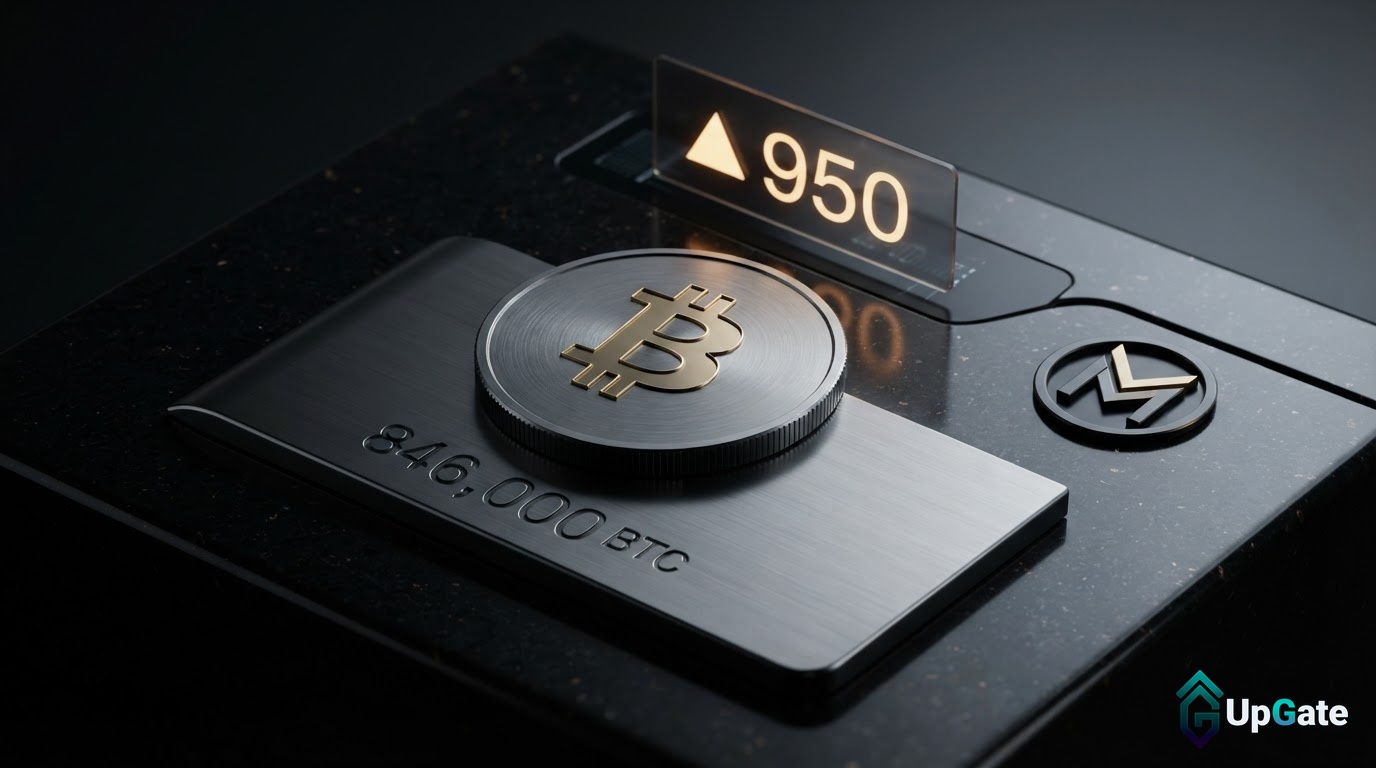
  • Strategy Adds 950 Bitcoin for $75.7 Million, Total Holdings Reach 846,000 BTC

    Strategy Adds 950 Bitcoin for $75.7 Million, Total Holdings Reach 846,000 BTC

    Strategy purchased 950 Bitcoin for approximately $75.7 million between September 14 and September 20, 2024, increasing its total holdings to 846,000 BTC.

    The acquisition was funded by existing U.S. dollar cash reserves. As of September 20, Strategy reported $1.05 billion in USD cash reserves, with broader USD reserves totaling $5.04 billion. The average price for this purchase was $79,670 per Bitcoin, inclusive of fees. This is Strategy’s first Bitcoin purchase in nearly three weeks.

    With this addition, Strategy’s total Bitcoin holdings now represent over 4% of Bitcoin’s 21 million coin supply cap. The company’s total cost basis for its 846,000 BTC is approximately $63.8 billion, with an average acquisition price of around $75,416 per coin. Bitcoin was trading near $85,000 at the time of purchase. Strategy holds unrealized gains of approximately $8.1 billion on its total holdings, which are valued between $71.9 and $72 billion.

    Michael Saylor, a figure at Strategy, alluded to the purchase on X with the post “A little more orange.” The company, which rebranded from MicroStrategy to Strategy to better reflect its Bitcoin-centric mission, has been accumulating Bitcoin since 2020.

    Strategy’s recent purchase occurred during a period when other publicly traded firms also increased their Bitcoin reserves. Collectively, these firms accumulated a net 2,254 BTC during the past week, with Strategy’s 950 BTC accounting for roughly 42% of this total. The broader stablecoin market also saw an increase, with total supply rising by $56.29 million over the same stretch.

    In parallel with its Bitcoin acquisition, Strategy repurchased approximately 1.77 million shares of its preferred stock for around $174 million. The company also allocated $57.4 million towards preferred dividends and debt interest payments during the same period.

    The fact that Strategy paid an average of $79,670 per coin, below the prevailing market price near $85,000, suggests the company may have been opportunistic about timing its entries during the week. Strategy’s continued accumulation of Bitcoin underscores its ongoing corporate treasury strategy and contributes to the broader trend of institutional adoption of digital assets.

    Why This Matters

    The materials describe a narrow update: Strategy purchased 950 Bitcoin between September 14 and September 20, 2024, for about $75. The exact date of Michael Saylor’s post on X is not specified.

    Broader Context

    Source materials place the factual news in this context: Strategy, the company formerly known as MicroStrategy, purchased 950 Bitcoin between September 14 and September 20 for approximately $75.7 million.

  • Grok AI Forecasts Bitcoin at $150,000 by Q4

    Grok AI Forecasts Bitcoin at $150,000 by Q4

    Elon Musk’s Grok AI has forecast a significant surge for Bitcoin, predicting it could reach $150,000 by the end of 2026 in a robust bull market. The AI’s bullish outlook places Bitcoin’s potential range between $135,000 and $175,000, with the possibility of a late-cycle surge pushing the cryptocurrency above $200,000.

    Bitcoin’s Current Position and Historical Performance

    At its current approximate price of $82,000, a move to $150,000 would represent an increase of about 80%. Notably, Bitcoin has already undergone a substantial correction from its previous cycle’s peak. The cryptocurrency reached a high of approximately $126,200 on October 6, 2025, before experiencing a sharp decline throughout 2026. It has since recovered to trade in the $80,000s.

    Historically, Bitcoin has demonstrated its capacity for immense gains during strong market cycles. Data from previous years shows that Bitcoin saw gains of around 154% in 2023 and 110% in 2024. A potential rise from the current ~$82,000 to $150,000, while substantial at approximately 80%, is considerably less than the percentage gains observed in earlier Bitcoin bull phases.

    Technical Analysis and Key Levels

    Bitcoin has recently broken a pattern of lower highs that had been in place since May, and has reclaimed several key moving averages. Technical analysis indicates that the $71,781 level is a significant support zone, with $82,793 acting as a major resistance. Beyond this, further technical objectives are identified around $90,000 and $97,867.

    CryptoQuant’s analysis aligns with this progression, highlighting $81,700 as a critical level, coinciding with Bitcoin’s 365-day moving average. Resistance levels above this are noted at approximately $84,600 and $88,700.

    The initial major hurdle for Bitcoin is therefore the $82,000 to $84,000 region. Having now surpassed this area, a sustained breakout would clear one of the most significant technical obstacles standing between the current price and the $100,000 mark.

    The next significant milestone is projected to be around $98,000. Beyond this point, the market approaches the all-time high of $126,200, a level where market dynamics are expected to become particularly interesting.

    Once Bitcoin decisively breaks above $126,000, it enters a phase of genuine price discovery, with minimal historical resistance above that threshold. At this stage, psychological price targets such as $130,000, $140,000, and $150,000 could attract momentum traders and institutional investment.

    Historical Cycles and Future Potential

    Bitcoin’s past cycles offer context for potential future movements, especially if liquidity returns aggressively to the market. In 2020, Bitcoin surged from a March low of around $5,000 to nearly $29,000 by year-end, followed by a rise to approximately $69,000 in 2021. The subsequent bear market in 2022 saw Bitcoin fall to around $15,700 before the commencement of the current cycle.

    The recovery has been substantial, with historical data showing:

    • 2022 low: ~$15,700
    • 2023 high: ~$44,200
    • 2024 high: ~$106,100
    • 2025 high: ~$126,200
    • 2026 low: ~$58,300

    Historical annual data underscores the dramatic potential of Bitcoin’s movements during bullish cycles. Another encouraging technical development is Bitcoin’s recent formation of a 50-day/200-day golden cross, the first such signal since May 2025. While not a definitive guarantee of a bull run, this technical indicator provides additional support for the optimistic outlook, assuming a full-blown bull market materializes. An approximately 80% move from current levels remains well within Bitcoin’s historical volatility.

    External Forecasts and Market Dynamics

    External analysis from Bernstein analysts also supports a bullish outlook, with expectations of Bitcoin reaching $150,000 by mid-2027. Their accelerated bull case projects a figure of around $200,000 within the same timeframe.

    While a nearly 5% daily increase can be significant for existing positions, investors observing from the sidelines might find it a risky strategy to chase Bitcoin into resistance levels near $84,500, especially with the Grok AI prediction still unconfirmed.

    The mathematics of upside potential at a market capitalization exceeding $1.5 trillion means that gains may occur at a slower pace compared to early-stage infrastructure projects, which are currently drawing significant attention.

    Bitcoin Hyper ($HYPER) Initiative

    Bitcoin Hyper ($HYPER) is positioning itself as the first Bitcoin Layer 2 solution with full SVM integration. It offers smart contract execution designed for speed, reportedly surpassing Solana, while leveraging Bitcoin’s base-layer security for settlements. The project’s presale has raised $33.1 million, with tokens currently priced at $0.0136864. Staking rewards are advertised at a 35% APY upon launch. The initiative aims to address Bitcoin’s limitations in transaction speed, fees, and programmability without compromising its inherent trust. A Decentralized Canonical Bridge is intended to facilitate native BTC transfers.

  • Lagarde Reportedly Blocks Binance MiCA License

    Lagarde Reportedly Blocks Binance MiCA License

    Lagarde Reportedly Intervened to Block Binance’s Greek Crypto License

    Athens, Greece – Christine Lagarde, President of the European Central Bank (ECB), reportedly urged Greek Prime Minister Kyriakos Mitsotakis not to approve Binance’s application for a Markets in Crypto-Assets Regulation (MiCA) license, according to a report by The Wall Street Journal, as cited by Cointelegraph.

    The allegations, if true, raise significant questions about the formal powers of the ECB in national licensing decisions. Neither Lagarde, the ECB, Greek authorities, nor Binance have officially confirmed the account.

    Binance submitted its Greek MiCA application in January, aiming to use Greece as its gateway into the European Union’s crypto licensing framework. By early June, Greek officials had reportedly signaled to the European Securities and Markets Authority (ESMA) that the Hellenic Capital Market Commission (HCMC) intended to approve the application, suggesting the Greek route was a near certainty.

    However, the process subsequently stalled. Mid-June reports indicated that regulators were preparing to reject the bid. Ultimately, Binance withdrew its Greek application, stating it would seek authorization in another EU jurisdiction just days before the July 1 MiCA deadline.

    For traders assessing counterparty risk with exchanges operating in offshore-adjacent jurisdictions, such regulatory volatility is a significant concern. The licensing risk for trading platforms can shift rapidly when a national regulator’s near-approval can be overturned within weeks.

    Binance has offered a limited response to the allegations concerning the ECB’s alleged role. A spokesperson declined to comment on the specifics when questioned about the reported ECB involvement, instead reiterating the company’s commitment to obtaining authorization under MiCA. This statement neither confirms nor denies the claims made by the HCMC vice chair.

    The European Central Bank declined to comment, and the HCMC did not respond to Cointelegraph’s request for information. This lack of official confirmation from all parties – the ECB, Greek regulators, and Binance – underscores the unverified nature of the claim that a central bank president allegedly exerted pressure on a government leader regarding a company’s license.

    Separate reports suggest that MiCA licensing decisions are made by national regulators, not the ECB. If this is the case, Lagarde’s reported intervention would have constituted informal political pressure rather than the exercise of formal legal authority, a characterization not supported by Binance’s own statement.

    It is crucial to distinguish between allegations and proven facts. The current reports do not confirm that Lagarde personally blocked Binance’s MiCA license or that she formally vetoed it. Furthermore, the Greek application was not legally rejected due to any communication from Lagarde to Mitsotakis. Instead, the reports suggest a Greek regulatory official reportedly requested something from Binance, after which the application failed.

    The reports also do not reveal Lagarde’s specific reasoning behind the alleged intervention. Any perceived connections between this event and Binance’s past regulatory challenges in the United States, the ECB’s concerns about dollar-denominated stablecoins, or the digital euro project remain, at best, circumstantial. These links appear to stem from media interpretations rather than confirmed statements from Lagarde or the ECB.

    Binance maintains that MiCA remains the framework it is pursuing and intends to obtain authorization in a different EU member state after abandoning the Greek application. The broader benefit of any single MiCA license is the ability to passport crypto-asset service provider authorization across all 27 member states.

    The stakes extend beyond a single exchange’s compliance timeline. Europe’s ongoing debate surrounding stablecoins and payment infrastructure, including the competition between dollar-backed settlement systems and euro-denominated alternatives, is relevant to this situation. A fully licensed Binance operating at an EU scale could represent another significant distribution channel for dollar stablecoins, a development the ECB has publicly expressed concerns about ahead of its digital euro rollout. This connection is contextually relevant but has not been confirmed as Lagarde’s motive in this specific instance.

  • XRP Eyes Ethereum’s Throne: Price Surge Targets $3,000

    XRP Eyes Ethereum’s Throne: Price Surge Targets $3,000

    XRP Price Surges Amidst Bold Market Cap Predictions

    XRP is currently trading at $1.44, marking a 4% increase over the past 24 hours. Simultaneously, speculation that XRP could eventually surpass Ethereum’s market capitalization is gaining momentum. A price target of $3,300, recently proposed in a regulatory petition, initially appears outlandish but may hold a specific underlying mechanism.

    Institutional Collateral Narrative

    This ambitious price target stems from Boyd Roberts’ “Rulemaking Petition 4-867.” The petition argues for XRP’s eligibility as collateral within institutional finance, suggesting its structural integration into sovereign liquidity systems, not merely its trading.

    The document, available on the official SEC website, is a public petition filed by Boyd Roberts, not an SEC pronouncement. A 2026 supplement to this petition is hosted online. The narrative posits Gold as stock, Oil as flow, and XRP as the bridge.

    Ripple Prime already handles over $3 trillion annually, and the SEC’s classification of XRP as a digital commodity has bolstered the institutional case. David Schwartz, Ripple’s CTO, has even suggested that XRP’s market cap could eventually exceed Bitcoin’s as adoption grows.

    Ethereum’s Stagnation and XRP’s Consolidation

    Meanwhile, Ethereum is trading above $2,600, struggling to reach its psychological $3,000 mark. It remains under pressure from its previous cycle high of $4,490, a stark reminder of its current shortfall. Both digital assets are testing investor patience in distinct ways: XRP through its collateral narrative and Ethereum through its recovery trajectory.

    On a more immediate scale, XRP’s chart reflects a more modest outlook than the $3,300 target. The price is consolidating between support at $1.40 and resistance at $1.44–$1.45, based on recent trading activity. The 7-day gain stands at approximately 3.8%, indicating a steady grind rather than a significant breakout.

    A decisive move above $1.45 on increased volume could pave the way for a rally to $1.60–$1.70. Regulatory clarity, particularly from the proposed CLARITY Act, is seen as a crucial catalyst. However, the market could also experience continued sideways trading within the $1.40–$1.45 range as institutions assess the implications of XRP’s potential collateral status.

    Conversely, a drop below the $1.40 support level would invalidate the current near-term structure and could lead to a decline towards $1.30.

    It is important to note that no verified analyst has attached a timeline to the $3,000 price prediction. These loftier targets should be treated as a thesis rather than a definitive forecast. Traders seeking confirmation should monitor the Relative Strength Index (RSI) trend against historical support zones before making significant commitments.

    The Capital Inflow Challenge

    While XRP holders are experiencing a modest 3.8% weekly gain, the underlying economics present a challenge. With a current market capitalization of approximately $90 billion, XRP requires substantial capital inflows to achieve the exponential growth seen in early-stage tokens with a fraction of its valuation.

    This dynamic is drawing traders towards presale opportunities as major assets like XRP and Ethereum navigate periods of consolidation.

    Maxi Doge Enters the Arena

    Maxi Doge ($MAXI), an Ethereum-based meme token, has emerged, featuring a large canine mascot and embodying a “1000x leverage” trading culture, blending gym-bro humor with speculative trading floor aesthetics.

    The presale has already raised $4.8 million, with the token currently priced at $0.000284. Early participants can benefit from a substantial 65% Annual Percentage Yield (APY) staking reward. Notable features include trading competitions exclusively for holders with leaderboard prizes and a dedicated Maxi Fund treasury for liquidity and partnerships. Investors are advised to conduct their own research into Maxi Doge before the presale concludes.

  • ETH Price Forecast: Can Ethereum Hit $3,000 This Month?

    ETH Price Forecast: Can Ethereum Hit $3,000 This Month?

    Ethereum’s price has surged past $2,650, marking a gain of over 3% for the day. This upward momentum follows six consecutive sessions of positive performance, lifting the cryptocurrency out of a month-long trading range and shifting its outlook to bullish. This streak of gains is particularly noteworthy, as Ethereum (ETH) has not experienced such a sustained period of up-days since before the summer slowdown. The key question now is whether a $3,000 price point is achievable before the end of September.

    Market Drivers Behind the Rally

    The current rally appears to be driven by a confluence of factors. Easing macroeconomic pressures and a broader “risk-on” sentiment across equity markets have contributed to the positive environment. Additionally, a wave of short liquidations accelerated the price movement once the $2,600 level was breached. Renewed inflows into spot Ethereum Exchange-Traded Funds (ETFs) also played a role, following three consecutive sessions of outflows, injecting fresh institutional demand into the market.

    Layer 2 Activity and Bitcoin’s Influence

    Further bolstering the upward trend, Layer 2 scaling solutions such as Base, Arbitrum, and Optimism have seen increased activity. Their Total Value Locked (TVL) has climbed, mirroring the expansion in Decentralized Finance (DeFi) and Real-World Asset (RWA) tokenization flows.

    Meanwhile, Bitcoin is trading just below the $82,000 mark, and this strength is also contributing to capital rotation into Ethereum. The ETH/BTC trading pair has shown a noticeable rebound from its recent lows, a dynamic that holds significant importance for the broader market.

    Technical Outlook and Key Levels

    Ethereum is currently trading at $2,650, up 3% on the day, with weekly gains exceeding 6%. Trading volume has increased substantially during this breakout, suggesting genuine demand rather than a superficial market drift. The immediate technical resistance lies at the Fibonacci 0.382 retracement level, situated near $2,800. This zone is characterized by a significant cluster of break-even holders and short-term profit-takers.

    Support has been established in the $2,570–$2,600 range, with a more substantial floor identified near $2,400 should momentum falter. Analysts indicate that a confirmed breakout above $2,700 would serve as a catalyst for continued upward movement, targeting $2,800 and subsequently $3,000.

    The Path to $3,000 and Beyond

    The realization of a $3,000 price point this month appears to hinge more on the consistency of ETF inflows than on any single technical trigger. This is a development worth monitoring closely.

    A move to $3,000 would solidify the bullish structure that many have been anticipating. However, at Ethereum’s current market capitalization, achieving such a milestone represents a multi-month endeavor rather than a short-term trade. Investors seeking substantial returns are increasingly looking beyond major cryptocurrencies towards earlier-stage infrastructure projects that have yet to fully price in future adoption.

    One such project gaining attention is LiquidChain ($LIQUID), a Layer 3 infrastructure initiative aiming to unify liquidity from Bitcoin, Ethereum, and Solana into a single execution environment. LiquidChain offers a distinct proposition in a market often dominated by single-chain scaling solutions.

    The project’s presale is priced at $0.014957, having already raised approximately $970,000. Its core features include a Unified Liquidity Layer, Single-Step Execution, Verifiable Settlement, and a Deploy-Once Architecture, enabling developers to build applications that can simultaneously access the Bitcoin, Ethereum, and Solana ecosystems. Investors are advised to conduct their own research into LiquidChain as its presale progresses.