Blog

  • SpaceX Tokenized Trading Volume Soars 1,060%

    SpaceX Tokenized Trading Volume Soars 1,060%

    Tokenized Pre-IPO Trading Volume Surges as SpaceX Leads Market

    Trading activity in tokenized pre-initial public offering (IPO) perpetual contracts experienced a significant surge in May 2026, following several months of subdued engagement. According to a new report from CoinGecko, monthly trading volume escalated by 1,059%, climbing from $60.51 million in April to $701.44 million in May.

    SpaceX’s pre-IPO perpetual contracts emerged as the market leader, registering $305 million in monthly trading volume, which represented 43.5% of the total. This robust activity preceded the company’s highly anticipated Nasdaq listing scheduled for June 12.

    Artificial intelligence firms OpenAI and Anthropic secured the second and third positions, respectively. Collectively, contracts linked to SpaceX, OpenAI, and Anthropic accounted for over 95% of the pre-IPO perpetual trading volume recorded in May, highlighting a pronounced concentration of activity within a select few assets.

    Prior to its Nasdaq debut, SpaceX’s pre-IPO prices exhibited considerable divergence across major exchanges. However, these price points gradually converged as more information became available.

    In the week leading up to its market debut, CoinGecko observed that SpaceX perpetual contracts were trading at approximately $170 on exchanges including Binance and WEEX. In contrast, Coinbase, Gate, and OKX priced them lower, around $155. As details surrounding the initial public offering became public, prices across the major exchanges steadily narrowed to a range between $160 and $165 by June 10.

    During the final two days before the listing, prices on leading platforms continued to rise in unison, surpassing $180. On June 12, the day of the listing, new information regarding the expected IPO price was reflected in pre-IPO markets, triggering sharp price fluctuations. Despite this volatility, pre-IPO prices ultimately closed at an average of $157, representing a 4.67% premium over SpaceX’s opening price of $150.

    Beyond SpaceX, several prominent cryptocurrency exchanges have been actively expanding their offerings of tokenized real-world assets (RWAs). Since the beginning of 2025, MEXC has listed the largest number of RWA products, adding 199 spot assets and 159 TradFi perpetual contracts for a total of 358 listings.

    Gate followed with 224 RWA products, comprising 146 perpetuals and 78 spot assets. WEEX, ranking third, listed 192 assets, including 84 spot and 108 perpetual offerings.

    Exchanges such as HTX, Binance, Crypto.com, Coinbase, and OKX demonstrated a greater emphasis on TradFi perpetual listings over spot RWAs. CoinGecko data indicates that each of these exchanges recorded only one or two spot RWA listings over the past 17 months. On average, exchanges featured 75 perpetual listings compared to 37 spot RWA listings during the same period.


  • MiCA Deadline: EU Crypto Rules May Oust 80% of Firms

    MiCA Deadline: EU Crypto Rules May Oust 80% of Firms

    MiCA Deadline Looms: New EU Crypto Rules Could Force 80% of Firms Out

    The European Union’s landmark Markets in Crypto-Assets (MiCA) regulation will see its transitional grace period officially conclude on July 1, 2026. After this date, any firm continuing to operate without a MiCA license will be in violation of the law.

    The European Securities and Markets Authority (ESMA) had previously directed all digital asset providers lacking authorization to cease their operations before the transition period’s end. This directive is a core component of the EU’s MiCA framework, which mandates that companies must obtain approval from a national regulator to continue offering services within the bloc.

    While pre-MiCA data indicated over 3,000 legitimate virtual asset providers in Europe, several exchanges have already begun adjusting their European operations. Binance, for example, has announced a suspension of certain services in the market, citing its inability to secure a MiCA license.

    In a recent interview with The Block, former Binance CEO Changpeng Zhao (CZ) claimed that the exchange’s license application in Greece was “fully compliant” and nearing approval before alleged political interference led to its withdrawal. Journalist Gareth Jenkinson reported that sources informed him European Central Bank President Christine Lagarde had urged Greek authorities not to grant the permit. Binance is reportedly pursuing similar approvals in other EU member states, including France, Ireland, and Latvia.

    Erald Ghoos, European CEO of OKX, was quoted in a CoinDesk report suggesting that as many as 80% of crypto companies may not survive the MiCA implementation and could be forced to exit the EU entirely. This sentiment was echoed by Dubai-based lawyer Irina Heaver in the same report, who noted a significant increase in inquiries from European founders considering relocation to the UAE. In the UAE, licensing through the Virtual Assets Regulatory Authority can reportedly be secured in a matter of days, a stark contrast to the months-long process in Europe.

    For consumers, ESMA has advised caution. Investors are urged to verify if their service provider is listed on the MiCA register and to confirm which legal entity is responsible for holding their assets. ESMA also recommended that users consider transferring their funds if their platform remains unauthorized after July 1, as operating with unlicensed providers may result in diminished legal protections and an increased risk of losing access to crypto assets.

    However, not all indicators point to a mass exodus. While policy analysts continue to debate the theoretical implications of the new regulatory framework, crypto platforms on the ground are observing a shift in capital allocation. Konstantins Vasilenko, co-founder and CBDO of Paybis, noted that the new rules are facilitating access for larger institutional investors who prioritize regulatory certainty before committing capital.

    Vasilenko shared directly with CryptoPotato that since obtaining their MiCA and PSD2 licenses in Latvia in May, Paybis has experienced a 70% surge in EU trading volume quarter-over-quarter, with transaction counts remaining stable.

  • Dutch Prosecutors Move to Bankrupt Crypto Firm Knaken

    Dutch Prosecutors Move to Bankrupt Crypto Firm Knaken

    Prosecutors Seek Bankruptcy for Collapsed Crypto Platform to Safeguard Customers

    Dutch prosecutors are pursuing bankruptcy proceedings against a defunct cryptocurrency platform in an effort to protect tens of thousands of customers who have been locked out of their funds.

    The Public Prosecution Service has formally requested a court in Rotterdam to declare Knaken Cryptohandel and its associated entity, Stichting Knaken Payments, bankrupt. Prosecutors described the move as being “in the public interest.” Knaken has been inaccessible since early June, leaving an estimated 30,000 users unable to access their digital assets.

    The platform facilitated the exchange of euros for cryptocurrencies such as Bitcoin and Ethereum, alongside trading and storage of digital assets. These activities require a license from the Dutch financial markets regulator, the AFM, under European Union crypto regulations. Knaken had not obtained such authorization.

    While the company claims to have ceased operations and is in the process of winding down, prosecutors have expressed “grave concern” that the process is not being managed in an orderly fashion. Knaken has reportedly stopped processing customer payouts and has advised users against filing damage claims.

    Acting on alerts from the AFM, prosecutors have invoked their civil authority to petition for the company’s bankruptcy in the public interest. Should the court grant the request, a court-appointed administrator would assume control of Knaken’s assets and determine the distribution to customers and other creditors. The prosecution service has clarified that it will not be involved in the administrator’s handling of this process.

    In parallel, the Fiscal Information and Investigation Service (FIOD) is conducting a criminal investigation into potential offenses. This probe was initiated following signals from the AFM and a formal complaint lodged by the regulator. On Monday, investigators executed searches, seized electronic devices including laptops and phones, and confiscated company assets. No arrests have been made to date. Prosecutors emphasized that the civil and criminal investigations are being handled by separate teams.

    This development occurs as Europe’s comprehensive crypto licensing framework, MiCA, is being implemented. A transitional period allowing firms to operate under existing national rules is set to expire on July 1. After this date, platforms lacking proper authorization will no longer be legally permitted to serve EU customers. Analysts anticipate this regulatory tightening will significantly reduce the number of market participants, with only approximately 200 firms having secured full licenses thus far. The Netherlands concluded its own grace period a year ago.

    Knaken had previously sought to establish a mainstream presence through sponsorships of Dutch football clubs, including Ajax, Feyenoord, and Sparta Rotterdam. However, these associations deteriorated well before the platform’s collapse. Ajax terminated its sponsorship after just two months, and Feyenoord ended its partnership last year. According to Dutch public broadcaster NOS, Knaken described itself as “financially vulnerable” in its 2024 annual accounts.

  • XRP Surges as Key Support Level Reclaimed

    XRP Surges as Key Support Level Reclaimed

    XRP Price Holds Above $1.00 Amid Cautious Market Sentiment

    XRP is currently trading between $1.04 and $1.06, maintaining a position above the critical $1.00 mark. While the digital asset has seen a nearly 2 percent increase over the past 24 hours, analysts suggest this movement is more indicative of a recovery within a volatile range rather than a sustained bullish trend.

    Market Sentiment Remains Deeply Negative

    The broader cryptocurrency market sentiment remains heavily skewed towards fear, with the Crypto Fear & Greed Index hovering near 15, signaling “extreme fear.” Approximately 74 percent of market indicators lean bearish, suggesting cautious participation, primarily driven by retail investors. This risk-off environment renders any upward price movements fragile.

    Technical Outlook for XRP

    Technically, XRP has managed to reclaim short-term support levels following a recent downturn. Intraday momentum readings have turned slightly positive, but significant resistance is observed between $1.08 and $1.10. The price action within this zone is expected to dictate the near-term direction.

    A decisive break above this resistance could pave the way for a base formation, while a rejection might signal another failed attempt at a bounce. The overall market structure for XRP remains undecided, with traders awaiting stronger confirmation of a trend.

    Key Price Levels and Potential Scenarios

    XRP is currently navigating a sensitive technical zone, with immediate support found between $1.02 and $1.04, which has absorbed recent pullbacks. Resistance is building from $1.10 to $1.11, an area where sellers previously absorbed momentum. Trading volume in this region has been substantial, nearing $1.58 billion, but lacks the conviction for a clear breakout.

    If XRP can sustain its hold above the $1.02–$1.04 support range, momentum could gradually rebuild. A breakout above $1.10 could trigger a more significant upside continuation, with potential targets ranging from $1.50 to $1.80. Some long-term outlooks for 2026 even project XRP reaching $2.80, contingent on a broader structural recovery in the market.

    Near-Term Consolidation Expected

    In the immediate future, XRP is likely to consolidate within the $1.02 to $1.11 range. The price action may remain range-bound as market sentiment slowly stabilizes. The current market structure is neutral, failing to confirm either a breakout or a breakdown.

    A daily close below $1.00 would undermine psychological support and could lead to a decline towards sub-$0.90 levels, especially as extreme fear continues to amplify volatility risks across markets. Longer-term price projections remain dependent on a return to macro-economic stability.

    Strategic Considerations for Investors

    At $1.04, XRP’s current price is viewed as a recovery rather than a repricing. Investors who purchased at higher levels, such as above $3.00, remain significantly underwater. Even a move to $2.80 would represent a substantial holding period given the prevailing market fear. This gap between current prices and meaningful upside potential highlights the appeal of early-stage infrastructure projects, which can be considered alongside established large-cap cryptocurrencies.

    Bitcoin Hyper Emerges as a Potential Alternative

    In this environment, Bitcoin Hyper ($HYPER) is positioning itself as a novel Bitcoin Layer 2 solution, integrating the Solana Virtual Machine (SVM). This combination aims to address Bitcoin’s inherent limitations, including slow transaction finality, high fees, and limited programmability.

    The project has reportedly raised nearly $33 million, with its presale currently priced at $0.01368. Staking is available for early participants. The SVM integration is a key differentiator, promising smart contract execution speeds that could surpass Solana’s own performance, while leveraging Bitcoin’s security layer through a decentralized canonical bridge.

    For traders observing XRP’s consolidation and seeking early-stage exposure with asymmetric potential, exploring Bitcoin Hyper’s presale terms before the current stage concludes may be a strategic consideration.

  • Ripple CTO Proposes Front-Running Block on XRPL DEX

    Ripple CTO Proposes Front-Running Block on XRPL DEX

    Ripple CTO Proposes Reserved Transactions to Block Front-Running on XRPL DEX

    David Schwartz, co-founder of the XRP Ledger (XRPL) and Ripple CTO Emeritus, has put forth a proposal for a two-component transaction reservation mechanism designed to combat front-running and sandwich attack risks on XRPL’s native Decentralized Exchange (DEX) and Automated Market Maker (AMM).

    The proposal emerged in response to concerns voiced by XRP-focused analytics account XRPresso.io. It introduces a system that guarantees priority execution for users willing to pay a reservation fee. This measure is intended to bolster market integrity, particularly as institutional investment in XRP products continues to grow.

    Currently, the proposal is under community discussion and has not yet been formalized as a network amendment. This distinction is significant, as protocol changes on the XRP Ledger require a supermajority of validators to approve before activation. Schwartz’s design, while influential, must navigate a defined governance process before potentially being implemented on the mainnet.

    The proposed scheme involves two new protocol components. The first is a ReservedTxns ledger object, which will store a target ledger sequence number and an array of up to 32 transaction IDs. When the specified ledger executes, any transactions listed in this object that are present in the consensus set will be processed first, ahead of all other transactions. The object will then be deleted. The second component is a TxnReserve transaction type, enabling users to claim a priority slot for one or more future transactions by submitting a reservation before the target ledger closes.

    Concerns have been raised regarding the potential for front-running and transaction sandwich attacks on XRPL payments and offer crossing. Schwartz, however, has expressed less concern about this issue, citing his proposed solution as a “fairly simple scheme that would eliminate” these risks.

    Three constraints govern the TxnReserve mechanism. The reservation fee must be at least double the standard transaction fee. The target ledger must be within 16 ledgers of the current one. Crucially, the actual transaction must set its LastLedgerSequence to match the reserved ledger.

    These rules are designed to define both the economic cost of using the system and the narrow operational timeframe. The 16-ledger limit ensures that reservations are tightly linked to near-term execution, preventing the mechanism from being exploited as a general-purpose tool for queue manipulation.

    Denial-of-Service (DoS) protection is integrated through dynamic fee scaling. As reservation slots fill beyond 16, fees increase incrementally, reaching several multiples of the base reserve near 30 slots. Schwartz also indicated that XRPL server software would hold reserved transactions and release them only as the proposals for the preceding ledger become known, thereby compressing the pre-execution visibility window.

    “This guarantees that you can execute your transaction ahead of any transaction that was formed after your transaction was disclosed,” Schwartz stated. “You would use this approach any time you want to perform a transaction that you want to ensure cannot be sandwiched or front run.”

    XRPresso’s concerns stem from a structural characteristic of the XRP Ledger: pending transactions reside in a publicly visible queue before a ledger closes, granting validators and well-connected nodes advance insight into incoming trades. Because canonical transaction ordering on XRPL is determined by a known, deterministic formula involving transaction hashes, a sophisticated actor could repeatedly submit similar transactions to increase their chances of securing a favorable slot relative to a target trade, forming the basis for a sandwich attack on the DEX or AMM.

    Schwartz acknowledged this potential exposure but contested the framing of the issue. He argued that all participants have equal access to the public queue and that validators gain no inherent ordering advantage unless multiple parties collude. “If multiple validators did conspire, or a single validator attempted it, it would be very obvious to everyone exactly who was doing this,” he said, adding that no such confirmed attempts have been made beyond proof-of-concept exercises.

    He also highlighted a practical profitability constraint: extracting significant value requires both high liquidity (to generate substantial volume) and low liquidity (to influence price at a manageable cost), a combination rarely found on XRPL. This argument, while not fully satisfying all critics, does differentiate XRPL’s current risk profile from the historically active Miner Extractable Value (MEV) environment seen on Ethereum.

    The debate surrounding front-running in decentralized finance is not confined to the XRP ecosystem. Binance co-founder Changpeng Zhao proposed a dark pool perpetuals DEX last year that utilized zero-knowledge cryptography to obscure order data until execution. This approach, however, drew criticism from decentralization advocates who argued it recreated the information asymmetries that cryptocurrency was intended to eliminate.

    XRPresso echoed a similar sentiment in response to Schwartz, contending that targeted confidentiality for pending transaction details would represent a more robust long-term solution than a reservation fee layer, and pointed to existing implementations on competing blockchain networks.

  • Securitize Lists on NYSE as SECZ After $400M Raise, BlackRock Backing

    Securitize Lists on NYSE as SECZ After $400M Raise, BlackRock Backing

    Securitize to Debut on NYSE Under Ticker SECZ Following Merger Approval

    Securitize is set to commence trading on the New York Stock Exchange on July 2, 2026, under the ticker symbol SECZ. This move follows shareholder approval of its merger with Cantor Equity Partners II, which was granted on June 29.

    The transaction is expected to raise approximately $400 million, valuing Securitize at $1.25 billion pre-money. This listing marks a significant moment, making Securitize the first pure-play tokenization infrastructure company to be publicly traded on a major U.S. exchange. The combined entity will operate as Securitize Corp., with the merger officially closing on June 30.

    For the broader U.S. regulatory landscape concerning cryptocurrency and capital markets, a regulated tokenization infrastructure firm achieving public-market scale on the NYSE represents a fundamental shift, extending beyond a mere corporate achievement.

    Founded in 2017, Securitize has established a robust regulatory framework. In the U.S., this includes roles as an SEC-registered broker-dealer, transfer agent, fund administrator, and ATS operator. Additionally, the company holds authorization under the EU’s DLT Pilot Regime in Europe. This extensive licensing is recognized as a key competitive advantage, as highlighted by Benchmark Equity Research, which recently reiterated a ‘Buy’ rating with a $16 price target.

    The company announced that the SEC has declared its Registration Statement on Form S-4 effective. The proposed business combination was submitted for approval to Cantor Equity Partners II shareholders of record as of May 11, 2026, at a special meeting convened on June 29.

    Securitize’s prominent client relationship is with BlackRock. The latter’s BUIDL tokenized money market fund, administered on Securitize’s platform, has seen its total value locked grow to over $3 billion. Other notable institutional clients include Apollo, KKR, Hamilton Lane, and VanEck.

    Securitize CEO and co-founder Carlos Domingo emphasized the broader industry implications of the listing. “Today, tokenization is moving into the mainstream, and we believe becoming a public company gives us the visibility, credibility, and capital to lead that next phase of growth,” he stated.

    A notable aspect of the financing structure is the low redemption rate among Cantor Equity Partners II Class A shareholders, with fewer than 30% choosing to redeem their shares. This allowed Securitize to retain over 71% of the SPAC trust. This redemption rate is significantly lower than recent SPAC norms, where redemptions often surpass 80% or 90%, suggesting strong conviction from institutional holders.

    Cantor Equity Partners II shareholders approved the business combination with Securitize on June 29, advancing the transaction toward its expected closure on July 1, 2026.

    The total $400 million raise includes a $225 million PIPE (Private Investment in Public Equity) that was oversubscribed. An oversubscribed PIPE for a tokenization infrastructure deal in mid-2026 signals genuine institutional demand, rather than speculative interest.

    Combined with first-quarter 2026 revenue of $19.5 million, representing a 39% year-over-year increase, Securitize’s financial profile entering the public market is not indicative of a speculative stage.

    The market for real-world assets (RWA) tokenization has experienced substantial growth. The 15 leading RWA tokenization protocols saw their total value expand by 128% over the past year, increasing from $9.55 billion to $21.84 billion as of June 29, 2026. Separate estimates place the on-chain RWA market closer to $32 billion, considering a broader range of protocols. While Securitize is not the sole infrastructure provider in this domain, it is now the one poised to trade on a major exchange with public capital to deploy.

    Securitize’s relationship with the NYSE extends beyond its listing. The company has signed a memorandum of understanding with the exchange to serve as the digital transfer agent for a new 24/7 tokenized stock and ETF trading platform. This platform will utilize on-chain settlement and stablecoin funding. Consequently, SECZ will function as both a listed equity and a critical infrastructure partner to the NYSE itself, a unique dual role that positions the firm within the core of traditional capital markets.

    This integration is mirrored in other areas of the sector, where tokenization infrastructure is already being employed for institutional instruments such as sovereign climate bonds, indicating a transition from proof-of-concept to live market application.

    The initial trading session on July 2 will establish a public market benchmark for tokenization infrastructure as an asset class. While Benchmark’s $16 price target offers an analyst anchor, day-one price discovery will reveal how generalist equity investors, not solely crypto-native capital, perceive the value of regulated tokenization rails at this revenue scale.

    Future disclosures regarding capital deployment, the tokenized-equity roadmap, and new institutional partnerships will provide further insights. Securitize estimates the total addressable market for RWA tokenization to be $19 trillion. The viability of this market projection under public-company scrutiny remains to be seen, but the underlying business is established. The valuation discussion is set to begin on July 2.

  • Tom Lee: Q2 Window Dressing Drove Ethereum Price Drop

    Tom Lee: Q2 Window Dressing Drove Ethereum Price Drop

    Ethereum’s price has dipped below $1,580, marking a roughly 6% decline over the past week. Despite this downward pressure, Bitmine Chairman Tom Lee suggests the slump is a result of quarter-end adjustments rather than a fundamental shift in Ethereum’s outlook.

    Quarter-End Positioning as a Driver

    In a recent interview, Lee characterized the recent price weakness as typical “window dressing” seen at the end of financial quarters. He explained that fund managers often divest underperforming assets before reporting periods to present a more favorable portfolio. Lee believes this practice, not a deterioration of Ethereum’s underlying fundamentals, has impacted its price in recent weeks.

    Bitmine’s decision to maintain its substantial Ethereum holdings, rather than reducing exposure, appears to support Lee’s assessment. Similarly, SharpLink Gaming reportedly acquired ETH during the downturn, indicating that some institutional investors viewed the selloff as a buying opportunity.

    Ethereum has fallen 22% in the last month, slightly underperforming Bitcoin during the same timeframe. The extent to which this weakness is attributable to quarter-end flows versus a more significant trend is expected to become clearer as third-quarter trading commences.

    Technical Outlook for Ethereum

    Ethereum is currently testing a critical resistance zone between $1,600 and $1,610, an area where recent rallies have faltered. A daily close above $1,610 could bolster a recovery, potentially pushing ETH towards $1,700. Accelerated buying pressure might then target $1,800.

    Initial support is observed near $1,560, a level that has previously attracted buyers during pullbacks. A breach of this level could see ETH retest $1,500, with $1,450 representing the next significant demand zone. A sustained drop below $1,500 would undermine the current bullish sentiment.

    The most probable near-term scenario involves continued consolidation as quarter-end positioning unwinds. ETH may trade within the $1,560 to $1,610 range before a decisive move. A breakout above resistance would favor buyers, while a loss of support could shift momentum back to sellers.

    Long-Term Ethereum Prospects

    Tom Lee maintains a long-term optimistic view on Ethereum, considering it undervalued. His projections range from $7,000 to $9,000, with higher valuations contingent on the adoption of tokenization and stablecoins. While these forecasts remain speculative, ongoing institutional accumulation lends support to the long-term thesis.

    Liquidity Fragmentation and L3 Solutions

    Ethereum’s volatile price action entering the third quarter highlights a persistent structural challenge: liquidity fragmentation across the Bitcoin, Ethereum, and Solana ecosystems. This fragmentation can lead to capital being stranded at the chain level, and cross-chain execution remains cumbersome. A Layer 3 project in its presale stage is aiming to address this very issue.

    Given the near-term technical uncertainty surrounding ETH, exploring investments in earlier-stage infrastructure projects with potential for asymmetric upside may be prudent.

    LiquidChain, a Layer 3 infrastructure project, is positioning itself as a unified cross-chain liquidity layer, aiming to consolidate liquidity from BTC, ETH, and SOL into a single execution environment. Its architecture comprises four key components: a Unified Liquidity Layer, Single-Step Execution, Verifiable Settlement, and a Deploy-Once Architecture that enables developers to build once and access all three ecosystems.

    The project’s presale is currently priced at $0.01475, with $880,000 raised to date. While this represents a significant early-stage figure, it remains below the $1 million threshold that typically attracts institutional attention at the seed level. If the cross-chain thesis gains traction as the ETH and SOL ecosystems deepen their institutional presence, an L3 aggregation layer could capture value at the infrastructure level, irrespective of individual chain market share performance.

  • Claude AI Opus Forecasts Major XRP Surge by 2026

    Claude AI Opus Forecasts Major XRP Surge by 2026

    Claude AI Opus, a sophisticated AI model, has identified a significant disconnect between XRP’s price action and institutional behavior that has largely escaped the attention of those tracking XRP price predictions. The model forecasts a bullish target of $3.00, with a more conservative recovery scenario projecting a price near $2.20.

    Bullish Outlook

    The optimistic scenario hinges on a fundamental factor that XRP’s price has yet to reflect. Spot XRP Exchange-Traded Funds (ETFs) have attracted approximately $1.4 to $1.6 billion in inflows since their launch in November 2025. Notably, May saw the strongest inflow month for these ETFs throughout the year, even as Bitcoin ETFs experienced record outflows totaling $3.5 billion during the same period.

    This divergence is significant, indicating that institutions are actively accumulating XRP through regulated investment vehicles, despite the token’s current price decline alongside the broader market.

    On-chain data further supports this accumulation trend. The amount of XRP held in custody has nearly doubled, increasing from 478 million tokens in January to over 900 million by June. This represents tangible evidence of accumulation rather than mere speculative interest.

    Adding to the positive fundamental backdrop are the SEC settlement in August 2025, which concluded five years of litigation, the bipartisan Senate passage of the CLARITY Act, and the continued expansion of Ripple’s RLUSD stablecoin and tokenization infrastructure. These developments paint a picture of a fundamentally stronger asset than its current price chart suggests.

    Should macroeconomic risk appetite shift, the AI model anticipates a rapid unlocking of these accumulated institutional positions. A recovery to the previous cycle high of approximately $2.20 is considered realistic. A more ambitious target of $3.00 is possible if the CLARITY Act is enacted and broader cryptocurrency market sentiment turns significantly bullish by year-end.

    Bearish Case

    The bearish outlook is stark, acknowledging the current reality. None of the positive developments have yet translated into price appreciation. XRP is down roughly 46% from its January high, trading below all major moving averages. This performance aligns with that of high-beta assets in a market characterized by a Fear and Greed Index of just 18, indicating a general decline alongside the broader market, irrespective of underlying fundamentals.

    A breach below the psychological support level of $1.00, followed by a fall through the structural support at $0.96, could pave the way for a decline to $0.85. Such a move would effectively erase most of the gains made during the ETF era, particularly if risk-off conditions persist into the third quarter.

    Technical Analysis

    The daily chart shows XRP trading at $1.04718, following a prolonged and challenging decline from highs above $3.65 reached in July of the previous year. This downward trend has been largely uninterrupted, with a particularly sharp drop occurring in October when the price collapsed from the $2.70 zone to below $1.60 within weeks.

    Since February, XRP has generally trended lower in a series of incremental steps, currently testing the critical psychological floor of $1.00, which was identified as a key level in this prediction.

    A test at such a significant round number after an extended downtrend typically signifies a crucial decision point, rather than just another temporary pause.

    Immediate resistance is observed near $1.40, a level that XRP has failed to reclaim during recent upward attempts. A more substantial ceiling is located around $2.20, aligning with the prior cycle high and the realistic recovery target.

    Support is currently holding in the $1.00 to $1.03 zone, with the $0.96 structural level serving as the next significant test should this floor falter.

    The broader chart pattern reveals a consistent series of lower highs and lower lows extending back nearly a full year, supporting the bearish narrative of a high-beta asset declining with a weak overall market.

    Momentum indicators on the daily candles appear weak and continue to trend downwards, with little evidence yet of the basing action typically preceding a genuine reversal.

    Given XRP’s current position directly atop the critical floor identified in this analysis, the next move through $1.00 is likely to determine whether the divergence between institutional buying and price finally begins to narrow.

  • FCA Unveils Landmark Crypto Rules, Aiming for UK Global Hub Status

    FCA Unveils Landmark Crypto Rules, Aiming for UK Global Hub Status

    FCA Finalizes Landmark Crypto Rules, Ushering in New Era of Regulation

    The Financial Conduct Authority (FCA) has unveiled its “landmark” rules for firms involved in the buying, trading, and holding of cryptoassets in the UK, completing a regulatory roadmap that has been years in development. The new framework mandates that trading platforms, intermediaries, custodians, stablecoin issuers, and staking providers must obtain authorization from the regulator to operate within the UK.

    This marks a pivotal moment for cryptoasset regulation in the United Kingdom. Firms facilitating consumer engagement with cryptoassets will be required to adhere to clear standards under these new rules, with an effective date set for October 2027.

    New Requirements for Crypto Firms

    Under the finalized rules, firms will face stringent financial-resilience requirements, including capital adequacy and stress testing. They will also need to comply with new market-integrity rules designed to combat insider trading and market manipulation.

    Stablecoins, which are designed to maintain a stable value, will have their own specific standards aimed at building trust in their usage. Trading platforms will assume a gatekeeper role, tasked with vetting tokens and publishing disclosure documents to an FCA-managed central repository before most assets can be listed.

    Crypto firms will also be brought under the FCA’s Consumer Duty, and retail customers will gain access to the Financial Ombudsman Service for the first time. The regulations extend to decentralized finance (DeFi) where an “identifiable controlling entity” exists, with further guidance anticipated.

    Streamlined Approach and Industry Reaction

    Following extensive consultation, the FCA has simplified certain aspects of the regime to enhance its practicality. This includes introducing lighter capital requirements for stablecoin issuers and tailoring trading rules to the operational realities of crypto markets. Notably, a key stablecoin capital coefficient has been reduced from 2% to 1%.

    David Geale, the FCA’s executive director of payments and digital finance, stated that the framework allows firms to “choose between regulatory certainty and room to innovate.” He added that providers will be “held to similar standards to other financial providers, though we can’t regulate away risk.”

    The new rules stem from February legislation that brought cryptoassets under the FCA’s purview, representing one of the most significant expansions of its oversight in recent years. Until the regime officially takes effect, the watchdog’s authority is limited to policing financial promotions and anti-money-laundering controls. Pre-application meetings are scheduled to commence in July, with firms able to apply for authorization between September 30, 2026, and February 28, 2027. The mandatory regime will go live on October 25, 2027.

    Industry groups have largely welcomed the increased clarity. Su Carpenter of CryptoUK commented that the finalized guidance will enable the UK to “move forward with more certainty” as a “competitive jurisdiction.” UK Finance praised the “balanced approach that encourages innovation and protects consumers.” The FCA is also collaborating with the Bank of England, which will oversee large, “systemic” stablecoins, on a joint regulatory regime.

    Hannah Meakin, a partner at law firm Norton Rose Fulbright, described the rules as “a significant step in bringing crypto into a more established regulatory framework in the UK.” She noted that the regulator aims to address “key risks that may have held back wider adoption,” by applying established financial services standards to areas such as consumer protection, governance, and market integrity.

    This regulatory package concludes a period of intense policymaking in the UK’s crypto sector. The FCA outlined its regulatory path through a consultation in April, and last week, the Bank of England relaxed its stablecoin rules, replacing individual holding caps with an overall issuance limit of £40 billion.

    For crypto firms, Meakin advised, “the focus will now be on preparing for authorisation and ensuring they have the necessary systems, controls and organisational arrangements in place well ahead of implementation.”

  • Ripple (XRP) Price Watchlist This Week

    Ripple (XRP) Price Watchlist This Week

    XRP Faces Steep Decline: Key Support Levels Tested Amidst Bearish Trend

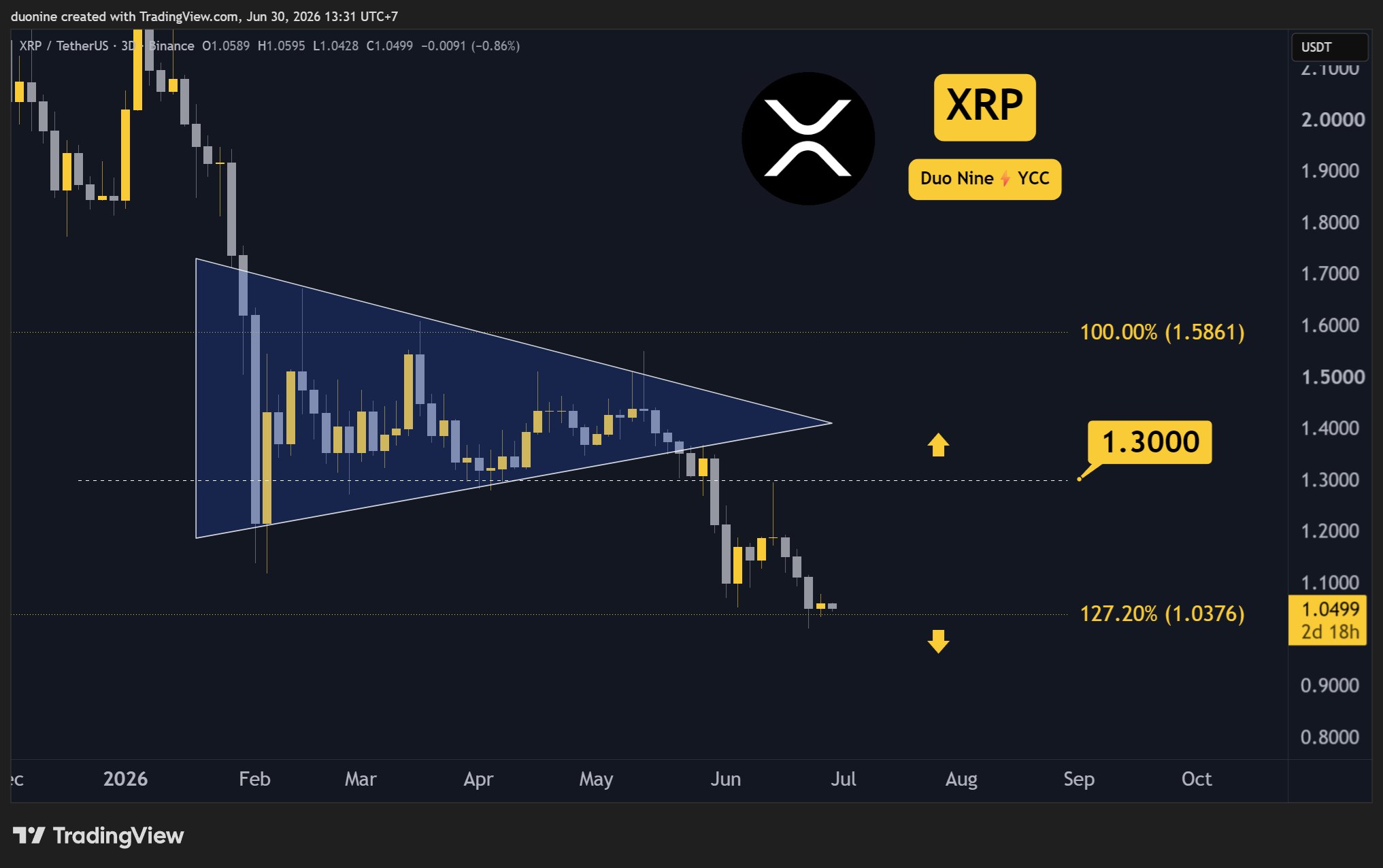
    XRP has experienced a significant downturn, shedding 6% over the past week and testing the crucial $1 support level for the third time in two weeks. This repeated failure by buyers to push the price away from this key threshold signals a potentially bearish outlook.

    Support and Resistance

    Key support levels for XRP are identified at $1, with the next significant floor at approximately 80 cents. Resistance levels to watch are $1.3, $1.6, and $2.

    Bearish Trend Intensifies

    The cryptocurrency is currently entrenched in a bearish trend, characterized by consistently lower highs and lower lows. Analysts suggest that if selling pressure continues to mount, the $1 support could break, potentially flipping into resistance. In such a scenario, buyers might be forced to retreat to the 80-cent mark for the next major support. The current price action indicates a strong possibility of further declines in the coming weeks, with $1 likely to become a resistance zone.

    Momentum Indicators Signal Caution

    Momentum indicators further reinforce the bearish sentiment. The 3-day Relative Strength Index (RSI) is hovering near the 30-point mark, a common indicator of a bearish trend. As long as the RSI remains below 50, bears are expected to maintain control of the market.

    MACD Suggests Deeper Downturn

    Adding to the concerns, the weekly Moving Average Convergence Divergence (MACD) is showing signs of a bearish cross. If confirmed, this would be the first such occurrence in 2026 and could signal a prolonged period of recovery challenges for XRP.

    Outlook for the Remainder of the Year

    The outlook for XRP in the latter half of the year appears negative, with the potential for further price drops. Investors are advised to await confirmation of a market bottom before considering new entries into XRP.