Blog

  • XRP Price Holds Steady Amidst Rally Signals and Large Inflows

    XRP Price Holds Steady Amidst Rally Signals and Large Inflows

    Santiment has identified a significant surge in XRP’s Exchange Flow Balance, with 22.80 million tokens — the largest daily net inflow of 2026 — landing on centralized exchanges as the price dipped to $1.27. This wave of deposits, likely indicative of panic selling, was quickly followed by a net withdrawal of 25.24 million XRP, reversing the flow into negative territory.

    Bullish Implications of Exchange Flows

    The significance of this shift lies in the typical interpretation of exchange flows. When outflows exceed inflows, it generally signals that holders are moving their coins off exchanges for safekeeping, a behavior often associated with institutional-grade positioning.

    A tweet from Santiment highlighted the sequence: “22.80M XRP hit exchanges on May 28… then 25.24M XRP walked right back off exchanges on May 29-30 someone used that dip to load up heavy.”

    XRP’s Current Market Position

    XRP appears to be trading within a defined range. After reaching a weekly high near $1.36, the asset has retreated to the $1.26 area, marking a 6% pullback this week. While this decline is notable, XRP has outperformed Bitcoin, which saw a dip exceeding 10%. This resilience suggests a degree of strength among major altcoins like XRP.

    Key support levels are identified within the $1.13 to $1.21 band. Analysts on TradingView widely regard this zone as a demand floor that has previously absorbed selling pressure. Conversely, local resistance is concentrated between $1.40 and $1.50, an area where XRP has repeatedly struggled to sustain a breakout.

    The exchange flow data, indicating 25.24 million XRP being withdrawn from exchanges, suggests a reduction in selling pressure at current price levels.

    The prospect of an XRP ETF continues to be a positive factor, potentially representing the most significant variable for the asset’s future. If this narrative gains traction, the existing support levels are likely to hold.

    The XRP Investment Landscape

    The current setup for XRP presents a notable tension. Even a bullish scenario, projecting a move to its all-time high, would represent a 2.3x increase from current prices, a substantial gain. However, for traders who may have missed earlier opportunities with XRP at $0.01 or Bitcoin at $200, the question arises whether early-stage infrastructure projects offer a different risk-reward profile.

    LiquidChain ($LIQUID) is one such project, a Layer 3 infrastructure initiative currently in its presale phase. It aims to establish itself as a cross-chain liquidity layer, consolidating liquidity from Bitcoin, Ethereum, and Solana into a unified execution environment.

    The project’s core proposition is to enable “deploy once, access all three ecosystems,” addressing the fragmentation that has hindered capital efficiency across different blockchains. Its features include a Unified Liquidity Layer, Single-Step Execution, Verifiable Settlement, and a Deploy-Once Architecture.

    The presale price for LiquidChain is set at $0.01465, with $820,000 raised to date. At this entry point, the potential upside to any significant exchange listing offers an asymmetry that is rarely found in the consolidations of large-cap assets. Investors are encouraged to research LiquidChain before the presale concludes.

  • Binance Opens Trading for 7,000+ US Stocks, ETFs, Unveils Tokenization Plan

    Binance Opens Trading for 7,000+ US Stocks, ETFs, Unveils Tokenization Plan

    Binance is intensifying its efforts to bridge the gap between digital assets and traditional financial markets, announcing plans to allow users to trade over 7,000 U.S. stocks and exchange-traded funds (ETFs). The cryptocurrency exchange also unveiled a strategy to enable customers to convert their stock holdings into tokenized, crypto-style digital assets, positioning the move as part of a broader ambition to become a “multi-asset financial super app.”

    Targeting ‘Friction-Free’ Stock Trading

    Binance co-CEO Richard Teng explained that the initiative is primarily aimed at international customers. He noted that while U.S. stocks represent a significant portion of the global equity market, many overseas investors face high costs and complexities when attempting to access them.

    To address this, Binance will offer zero-commission stock trading for non-U.S. users. The platform will also facilitate fractional share purchases starting at $5, aiming to reduce both financial barriers and the operational hurdles for participation.

    Operational Framework

    Operationally, Binance’s new stock trading service will be supported by broker-dealer Nest Trading. Custody and settlement functions, including dividend payments and corporate actions, will be managed by Alpaca, a New York-based firm.

    Customers will have the option to fund their stock purchases using stablecoins such as Circle’s USDC or Tether’s USDT, alongside other digital currencies including Binance’s native BNB token.

    Introducing ‘bStocks’

    Beyond the trading program, Binance introduced a more innovative concept called “bStocks.” The company intends for bStocks to allow users to tokenize equities they acquire.

    According to Teng, this process involves creating a synthetic digital token representation of specific stocks by converting them into tokens on Binance’s BNB blockchain. This tokenization functionality is anticipated to be rolled out in the coming weeks.

    While other major platforms have explored similar models, Binance asserts that its approach could differentiate itself by empowering customers to initiate the tokenization process independently, rather than being limited to pre-defined conversion pathways offered by the platform.

    Market Reactions and BNB Performance

    The exchange’s announcement has already drawn attention. Analyst Zero Kyle suggested on X (formerly Twitter) that the development could pose a challenge to decentralized exchange Hyperliquid (HYPE). Kyle posited that while Binance’s offering might not replicate the continuous trading availability of venues like Hyperliquid, it is likely to intensify competition and potentially lead to a direct contest for market share. The analyst clarified that while this might not be detrimental to the HYPE token itself, it could negatively impact Hyperliquid as an exchange due to increased competitive pressure.

    Meanwhile, Binance’s native token, BNB, was trading at $692 at the time of reporting. This movement aligns with a broader retracement observed in the cryptocurrency market on Monday, which saw a 2.3% decline.

  • Toncoin Reclaims ‘Gram’ Name, Targets Telegram’s 900M Users

    Toncoin Reclaims ‘Gram’ Name, Targets Telegram’s 900M Users

    TON Foundation Rebrands Toncoin to Gram, Aiming to Onboard Telegram’s 900 Million Users

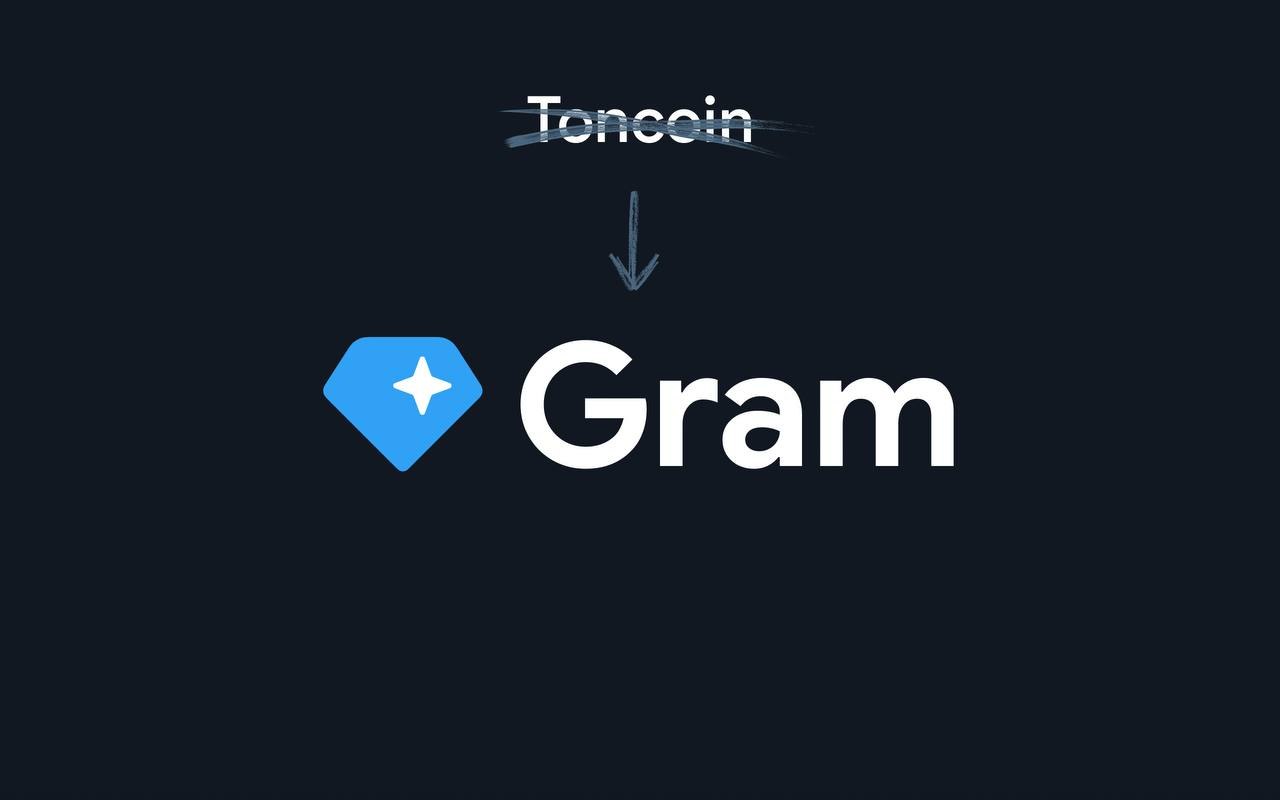
    The TON Foundation is rebranding its native token, Toncoin, to Gram. This move revives the name associated with Telegram’s original 2018 blockchain project and signals a strategic effort to convert the messaging platform’s 900 million monthly active users into on-chain participants.

    The change is primarily cosmetic, involving no token swap, technical migration, or new asset issuance. However, the strategic rationale behind it is significant.

    The rebrand aligns with Telegram founder Pavel Durov’s publicly stated “Make TON Great Again” roadmap, where this name change is designated as step four of seven, with the remaining steps yet to be revealed.

    A key factor driving this decision is the regulatory history surrounding the original Gram token. Gram was at the center of a landmark Securities and Exchange Commission (SEC) enforcement action that compelled Telegram to return $1.2 billion to investors in 2020. By reviving the Gram name, the TON ecosystem is making a calculated bet that its current structure is sufficiently distanced from that legal episode to reclaim the brand without inheriting its past liabilities.

    The intended mechanism for user acquisition through this name change is straightforward: to reduce the cognitive dissonance between Telegram’s established brand identity and its native cryptocurrency. For a new Telegram user, “Toncoin” held no inherent meaning. In contrast, “Gram,” a short, familiar name tied to Telegram’s initial vision, is intended to resonate more directly.

    The historical significance of the name “Gram” is substantial. In 2018, Telegram raised approximately $1.7 billion through private token sales linked to Gram, positioning it as the intended currency for the Telegram Open Network. The SEC intervened in 2019, alleging that the offering constituted an unregistered securities sale. Telegram settled the case in 2020, agreeing to return roughly $1.2 billion to investors and pay an $18.5 million civil penalty, after which it withdrew from the project.

    The network persisted through open-source development and community management, eventually relaunching as The Open Network under the TON Foundation, with Toncoin serving as its community-governed asset. Now, with Telegram signaling its intention to become the primary ecosystem administrator and largest validator—a governance shift explicitly outlined in the “Make TON Great Again” roadmap—the ecosystem is reasserting its original identity while structurally distinguishing itself from the entity that faced SEC enforcement.

    The rebrand will be implemented across wallets, infrastructure providers, and ecosystem applications over approximately three weeks. User balances, staking positions, and network operations will remain unaffected throughout this transition.

    Telegram’s vast monthly active user base represents one of the largest untapped distribution channels for cryptocurrency. The potential for user conversion is not speculative but conditional on adoption rates. If the TON ecosystem successfully converts even 1% of Telegram’s active user base into regular Gram wallet users, that would amount to 9 million participants, a figure comparable to the active user counts of several top-ten blockchain networks.

    A persistent challenge has been brand coherence. Telegram users have encountered TON Space wallets, mini-apps, and bot-based payment tools referencing a token called Toncoin with the ticker TON. This label lacked an intuitive connection to the Telegram product they use daily. “Gram” aims to bridge this gap. The analogy to WeChat Pay’s embedded finance model is pertinent: WeChat did not require users to understand digital payment architecture; instead, it made transactions feel native to the messaging interface. “Gram” positions The Open Network to achieve a similar depth of integration within Telegram’s super-app environment, encompassing payments, gaming, stablecoins, and mini-app monetization.

    Market participants reacted swiftly to the announcement. Toncoin saw a surge of 19% in early trading following the news, reaching approximately $2.21 before settling back towards $2.00.

  • Senate Passes Clarity Act, Blocking CBDC, Favoring Stablecoins

    Senate Passes Clarity Act, Blocking CBDC, Favoring Stablecoins

    Digital Asset Clarity Act Takes Center Stage as Senate Returns

    The U.S. Senate has reconvened with the Digital Asset Clarity Act at the forefront of its legislative agenda. A key provision of the bill, poised to significantly reshape the financial landscape, is its explicit prohibition on the Federal Reserve issuing a retail Central Bank Digital Currency (CBDC).

    If enacted, this prohibition would effectively eliminate the only credible government-backed competitor to private stablecoin issuers. This would grant stablecoins like Circle’s USDC and Tether’s USDT a structural advantage that no amount of regulatory guidance could replicate.

    Senate Democrats recently blocked a House-approved bill that would have prevented the Federal Reserve from issuing a retail CBDC. This move is concerning, given the potential for significant privacy and personal autonomy invasions that a retail CBDC could entail. The motivations behind this decision remain unclear.

    The GENIUS Act, signed into law in July 2025, established the foundational licensing framework for stablecoins. The Clarity Act, in turn, is designed to determine the dominant players in the underlying payment infrastructure. These two legislative efforts are not independent but sequential, with the Senate’s current session serving as a critical juncture for the latter.

    The mechanism for this is straightforward: the Clarity Act would forbid the Federal Reserve from unilaterally issuing a retail CBDC without explicit authorization from Congress. This necessitates legislative action, rather than merely regulatory rulemaking, before any digital dollar could be made available to consumers. This is not a minor procedural detail but a substantial legislative barrier that private stablecoin issuers, unable to erect such protections themselves, would greatly benefit from.

    The bill previously passed the House of Representatives in July 2025 and cleared two Senate committees—the Agriculture Committee in January and the Banking Committee in May by a 15-9 vote—before the Memorial Day recess. Senators are now tasked with consolidating both versions into a single package, with some anticipating a floor vote as early as August.

    The CLARITY Act is nearing a critical stage. Following its approval by the Senate Banking Committee with a 15-9 vote, the bill is now headed to the Senate floor. Lawmakers face a tight deadline before the July 4 recess to advance the legislation. Any delay could significantly impact the cryptocurrency market.

    The upcoming 2026 midterm election cycle will intensify in the first quarter of next year, shortening the practical window for complex financial legislation. Previous reporting has indicated that a delay in the Clarity Act could postpone comprehensive cryptocurrency regulation until 2030.

    White House crypto advisor Patrick Witt had previously set an Independence Day target for the bill. While that deadline has passed, the consolidation process commencing this week represents the next significant milestone.

    The bill requires 60 votes for passage in the Senate, meaning Republicans will need to secure at least seven Democratic or independent votes. Consequently, ongoing negotiations regarding ethics provisions are not a secondary issue but a decisive factor in the legislation’s progression.

    A statutory prohibition on CBDCs would fundamentally alter the competitive landscape in ways that market share data alone cannot fully illustrate. USDT and USDC currently dominate global stablecoin trading volume and on-chain liquidity. The existential threat to these stablecoins, not from regulation but from potential government-issued alternatives, would diminish significantly if the Clarity Act is passed, as the Federal Reserve would be legally barred from competing.

    The differing approaches of Circle and Tether warrant closer examination. Circle has pursued compliance with Europe’s MiCA regulations and operates within a licensed framework, positioning USDC as a stablecoin acceptable to regulated entities. The market structure implications of the Clarity Act reinforce this position: a U.S. legislative framework that explicitly licenses private issuers while blocking the Fed would create a compliance pathway that Circle is already equipped to navigate.

    Currently, stablecoins offer yields of approximately 3-3.5%. Banks, meanwhile, hold over $2 trillion in non-interest-bearing deposits, representing a substantial incentive for them to resist easier avenues for consumers to earn yield on stablecoins.

    Tether, while operating at a massive scale and dominating liquidity in offshore and emerging markets, faces greater regulatory scrutiny in jurisdictions demanding audited reserves and formal licensing.

    The Senate Banking Committee’s version of the Clarity Act also includes language permitting yield or rewards on stablecoins used for payments or on-chain activities. This provision has drawn objections from JPMorgan CEO Jamie Dimon, who argues that it allows crypto companies to offer interest on stablecoin balances, directly competing with bank deposits. His opposition stems from competitive concerns rather than ideology, and this tension is expected to surface during floor debates.

    Stablecoin regulation under the GENIUS Act framework is already progressing, with public comment periods closing this week for the U.S. Treasury Department, FDIC, FinCEN, and the Office of Foreign Assets Control. The timeline for these rulemakings will influence how the Clarity Act’s provisions translate into operational requirements for issuers, as the two frameworks are interconnected.

  • XRP Price Dips as Bears Reassert Dominance

    XRP Price Dips as Bears Reassert Dominance

    XRP Price Slides Below Key Support Levels, Bears in Control

    The price of XRP has extended its losses, trading below the $1.320 mark. The cryptocurrency is currently consolidating its decline, facing immediate hurdles at $1.2880 and $1.30. XRP’s downward trajectory continued as it fell below the $1.280 zone, and is now trading beneath both this level and its 100-hourly Simple Moving Average. A bearish trend line has formed on the hourly chart for the XRP/USD pair, with resistance noted at $1.3150, according to data from Kraken. Should XRP remain below $1.30, further downward movement is anticipated.

    XRP Price Dips Below $1.280

    XRP failed to sustain its position above $1.320, mirroring declines seen in Bitcoin and Ethereum. The cryptocurrency’s price dropped below $1.3050 and $1.30, entering a short-term bearish territory. Losses deepened further, with the price falling below $1.2880. A low of $1.2752 was established, and XRP is now consolidating its losses significantly below the 23.6% Fibonacci retracement level of the move from the $1.3642 swing high to the $1.2752 low.

    Currently trading below $1.2880 and the 100-hourly Simple Moving Average, any attempt at a recovery would likely encounter resistance near the $1.2920 level. The first significant resistance is positioned around $1.2960. The primary resistance zone could be $1.3150, or the 50% Fibonacci retracement level of the decline from the $1.3638 swing high to the $1.2677 low, which sits at $1.320. A decisive close above $1.320 could propel the price towards $1.3275, with the next hurdle at $1.340. A bearish trend line also forms with resistance at $1.340 on the hourly chart. A clear break above this $1.340 resistance might see XRP advance towards the $1.3550 resistance, with further gains potentially pushing it towards $1.3750.

    More Losses on the Horizon?

    If XRP is unable to overcome the $1.3150 resistance zone, a fresh decline could be initiated. Initial support on the downside is observed near the $1.2750 level. The next major support is located around $1.2550. A downside break and a close below $1.2550 could lead to a continued decline towards $1.2320. The subsequent major support is situated near the $1.220 zone, below which the price could extend its losses towards $1.20.

    Technical Indicators

    Hourly MACD: The MACD for XRP/USD is currently gaining momentum in the bearish zone.
    Hourly RSI (Relative Strength Index): The RSI for XRP/USD is trading below the 50 level.

    Major Support Levels: $1.2750 and $1.2550.
    Major Resistance Levels: $1.3000 and $1.3150.

  • XRP Exchange Inflows Surge, Preceding Major Outflows

    XRP Exchange Inflows Surge, Preceding Major Outflows

    XRP Sees Largest Inflows of 2026, Followed by Significant Outflows

    On-chain data reveals that cryptocurrency exchanges recently experienced the largest wave of XRP deposits seen in 2026, only for this trend to be completely reversed by a subsequent surge in withdrawals.

    Exchange Activity Shifts Dramatically

    Analytics firm Santiment highlighted in a recent X post that XRP has witnessed substantial exchange activity in both directions. The key metric in question is the “Exchange Flow Balance,” which tracks the net movement of a cryptocurrency into or out of wallets associated with centralized exchanges.

    When this indicator registers a positive value, it signifies that more tokens are being deposited onto exchanges than are being withdrawn. This can often be interpreted as a bearish signal for the cryptocurrency, as investors frequently move assets to exchanges for the purpose of selling.

    Conversely, a negative balance indicates that outflows are exceeding inflows, with a net amount of the asset leaving exchange-associated addresses. This trend is typically viewed as bullish, suggesting that holders are accumulating the cryptocurrency.

    Deposit Surge Coincides with Price Dip

    The chart shared by Santiment illustrates the recent fluctuations in the XRP Exchange Flow Balance. A significant positive spike was observed on Thursday, indicating a substantial influx of XRP onto exchanges. This occurred as the cryptocurrency’s price dipped to a local low of approximately $1.27.

    In total, this spike represented a net inflow of 22.80 million XRP tokens to exchanges, marking the largest daily net inflow of 2026. Analysts suggest that investors may have deposited these tokens to engage in panic selling during the price decline.

    However, contrary to potential fears, the cryptocurrency’s price subsequently rebounded. Santiment noted that the massive flow of coins onto exchanges happened precisely at XRP’s local bottom, potentially leading many retail traders who sold at that point to regret their decision.

    Outflows Reverse Deposit Trend

    Following the price rebound, the data shows that other investors, or possibly some of the same traders, began withdrawing XRP from exchanges. This resulted in a negative spike, with 25.24 million tokens being withdrawn. This outflow more than offset the earlier massive inflows, effectively reversing the trend in exchange supply.

    XRP Price Action

    XRP briefly surpassed the $1.36 mark during its recovery surge. However, the cryptocurrency has since retraced and is currently trading around the $1.30 level.

  • Stellar (XLM) Poised for Historic Breakout, Analysts Predict $11 Price

    Stellar (XLM) Poised for Historic Breakout, Analysts Predict $11 Price

    DTCC Taps Stellar Blockchain for Tokenization Push, Igniting XLM Rally

    New York, NY – The Depository Trust and Clearing Corporation (DTCC), a cornerstone of traditional finance infrastructure, has announced plans to integrate its tokenization platform with the Stellar blockchain. This strategic move, part of a broader multi-chain initiative, aims to facilitate tokenized representations of assets currently held within the established financial system.

    Market observers are highlighting the significance of the timing, with the announcement coinciding with a notable surge in the price of Stellar’s native cryptocurrency, XLM. The rally has propelled XLM to its strongest monthly advance in months, forming a key price point on a long-term chart tracked by analyst MikybullCrypto.

    Chart Analysis Points to Potential Breakout

    MikybullCrypto’s analysis, presented on a chart mapping repeating price patterns since 2017, identifies the current price action at “point E.” This point represents a successful retest of a long-standing ascending support trendline that has historically guided XLM’s price movements across multiple market cycles. Previous peaks, marked as points B and D, occurred near a horizontal resistance zone, while major lows at points A and C were established along this rising support.

    The analyst suggests that the current technical setup mirrors conditions that have preceded significant rallies in the past. He forecasts a bullish target range for XLM between $5 and $11, anticipating a “mega breakout in history” and a substantial altcoin season. A breakout above the established resistance zone is identified as the next critical technical milestone, which, according to the chart, would pave the way for considerably higher price levels.

    Growing Interest and Institutional Adoption

    The pattern MikybullCrypto references has demonstrated consistency across various market conditions over approximately nine years, with each test of the ascending support line historically followed by a recovery, albeit with varying degrees of magnitude.

    Recent weeks have seen a build-up of bullish sentiment around XLM. Reports indicate that separate analysts are citing the DTCC integration, alongside the technical chart patterns, as factors bolstering the case for a significant upward price movement.

    Furthermore, global search interest for XLM has reached a three-month high, suggesting a resurgence in retail investor attention. This growing public interest coincides with increased institutional engagement in blockchain technology, creating a potentially potent combination for the cryptocurrency.

  • Mt. Gox Moves $731M Bitcoin: Cause for Concern?

    Mt. Gox Moves $731M Bitcoin: Cause for Concern?

    Mt. Gox-Linked Wallet Moves $731 Million in Bitcoin, Sparking Sale Speculation

    A wallet associated with the defunct Mt. Gox exchange has transferred 10,306 Bitcoin, valued at approximately $731 million at the time of this report, to a new address. The move has ignited discussions within the cryptocurrency community regarding a potential sale of the digital assets.

    Data compiled by Arkham Intelligence indicates that the recipient address is not linked to any known centralized or decentralized cryptocurrency exchange. This suggests that the transfer may not signal an immediate sell-off pressure on the market. Instead, the transaction could be part of internal wallet management or preparations for future distributions to creditors.

    The broader context surrounding Mt. Gox claims has become increasingly significant for institutional investors. Strive Asset Management, as previously reported, recently unveiled its intention to establish a Bitcoin treasury of 75,000 BTC. This ambitious plan involves acquiring approved but undistributed Mt. Gox claims, which are estimated to be worth around $8 billion.

    This development suggests that some creditors might be offloading their claims prior to any official distribution. Simultaneously, entities like Strive Asset Management could be acquiring these claims, potentially absorbing supply without directly impacting the spot market for Bitcoin.

    Mt. Gox, once the world’s largest Bitcoin exchange, was responsible for approximately 70% of all Bitcoin transactions before its dramatic collapse in 2014. While the recent transfer of funds is notable, the absence of any deposits to exchanges means it does not definitively indicate an imminent selling event.

  • Polymarket Accused of $500K Scam Over MicroStrategy Bitcoin Sale

    Polymarket Accused of $500K Scam Over MicroStrategy Bitcoin Sale

    Trader Alleges Polymarket Mishandled $500,000 Bet on MicroStrategy Bitcoin Sale

    A user of the prediction market platform Polymarket has accused the company of unfairly resolving a market tied to MicroStrategy’s first Bitcoin sale in years, leading to a significant financial loss for the trader.

    The user claims to have lost approximately $500,000 after betting that MicroStrategy (now rebranded as Strategy) would sell Bitcoin before a May 31 deadline. This sale was later officially confirmed by the company in a Securities and Exchange Commission (SEC) filing on June 1.

    The dispute centers on a Polymarket event that posed the question: “Will MicroStrategy sell any of its Bitcoin by May 31?” The market’s rules stipulated that it would resolve to “Yes” if the company sold any BTC by 11:59 PM ET on May 31. The designated sources for resolution included on-chain data, official disclosures, and credible news reports.

    On June 1, Strategy filed an 8-K form with the SEC. As previously reported, the company disclosed that it had sold 32 BTC, valued at roughly $2.5 million, between May 26 and May 31 – a period clearly within Polymarket’s resolution timeframe.

    However, the SEC filing occurred one day after the May 31 market deadline, creating the core of the controversy. The central question is whether the market should have been judged based on the date of the sale itself or the date of its public confirmation.

    According to the aggrieved trader, he began purchasing “Yes” shares after observing that Strategy had deposited approximately $30 million worth of BTC into Coinbase Prime a week prior. This move fueled speculation that the company was preparing to sell. The trader stated that he had reviewed on-chain data, examined past wallet activity, and concluded that Strategy had likely sold Bitcoin before the deadline.

    After the company confirmed the sale on June 1 through its SEC filing, the trader increased his position. He argued that the market was still open and that the rules only required the sale to occur within the specified timeframe, not the confirmation.

    The trader alleges that Polymarket subsequently added a clarification, stating that confirmation achieved outside the market’s timeframe would not qualify. He contends that this clarification was introduced after the fact.

    A tweet from user @willo2_Poly on June 2, 2026, included a screenshot of Polymarket’s updated resolution criteria: “No information from MSTR, on-chain data, or consensus of credible reporting confirmed that MicroStrategy sold Bitcoin within the market’s timeframe. Confirmation achieved outside of the market’s time frame does not qualify.”

    The trader asserts that this constituted a new rule and argues that the market should have either resolved to “Yes” or been closed on May 31 if post-deadline confirmation was not permissible.

    At the time of this report, the market has been resolved to “No.”

    Other traders on Polymarket have raised concerns that the platform’s dispute resolution mechanism, which involves UMA token holders voting on resolutions after a bond is posted, can be susceptible to manipulation. They argue that “UMA whales” can influence outcomes during debate periods, and that Polymarket has not adequately addressed this issue.

  • Bitcoin Sold by Strategy for First Time Since 2022 Tax Loss

    Bitcoin Sold by Strategy for First Time Since 2022 Tax Loss

    Strategy Sells Bitcoin for First Time Since Late 2022, Signaling Shift in Asset Use

    MicroStrategy, the enterprise software company that has amassed a significant Bitcoin treasury, has sold a small portion of its holdings for the first time since late 2022. The transaction, which occurred between May 26 and May 31, involved the sale of 32 Bitcoin for approximately $2.5 million, at an average price of $77,135 per coin.

    This marks a notable shift for the company, as it signals a willingness to utilize its Bitcoin reserves to service the preferred equity structure it has established. The proceeds from the sale are earmarked for funding distributions on preferred stock, according to a filing with the U.S. Securities and Exchange Commission.

    A Departure from Tax Maneuvers

    The recent sale is distinct from MicroStrategy’s previous disclosed Bitcoin transaction in December 2022. At that time, the company sold 704 Bitcoin for tax-loss harvesting purposes before repurchasing a larger amount just two days later. That earlier sale was widely interpreted as a tax-related maneuver rather than a strategic reduction in its Bitcoin exposure. The current sale, however, appears directly linked to its preferred stock obligations.

    Bitcoin Holdings Remain Substantial

    Despite this sale, MicroStrategy’s Bitcoin holdings remain substantial. As of May 31, the company held 843,706 Bitcoin, acquired at an aggregate purchase price of $63.87 billion, equating to an average purchase price of $75,699 per Bitcoin. The 32 Bitcoin sold represent a minimal reduction in its overall holdings but break a long-standing pattern where the company’s Bitcoin disclosures primarily focused on accumulation.

    Capital Markets Activity Continues

    During the same period as the Bitcoin sale, MicroStrategy also continued its capital markets activities. Between May 26 and May 31, the company sold 801,994 shares of its common stock (MSTR) through its at-the-market program, generating $128.3 million in net proceeds. As of May 31, MicroStrategy reported significant remaining issuance capacity for its stock and various series of preferred stock.

    Executive Signals Openness to BTC Sales

    The Bitcoin sale follows recent comments from Executive Chairman Michael Saylor and CEO Phong Le, who have indicated that MicroStrategy could sell Bitcoin under specific circumstances. Saylor, however, has consistently emphasized that the company anticipates acquiring more Bitcoin than it sells, keeping the market attentive to whether any individual sale is offset by larger purchases.

    The question of whether the company bought more Bitcoin than it sold during this latest reporting period remains open. On May 31, Saylor posted “Working ₿etter” on X, a phrase often preceding formal company announcements about Bitcoin purchases. However, no corresponding buy announcement had been made public as of press time.

    Dollar Reserve and Dividend Declarations

    MicroStrategy also disclosed that its U.S. dollar reserve stood at $900 million as of May 31. This reserve, established in December 2025, is a designated liquidity pool intended to support preferred stock dividends and debt interest payments. This reserve is central to the company’s newer capital structure, which integrates preferred equity, common stock issuance, and Bitcoin holdings into a balance-sheet model reliant on sustained liquidity.

    The company’s board declared cash dividends payable on June 30 to shareholders of record as of June 15. These include payments for various preferred stock series, such as $2.50 per share for STRF, $0.958333333 per share for STRC, €2.50 per share for STRE, $2.00 per share for STRK, and $2.50 per share for STRD. The regular dividend rate on its Series A Perpetual Stretch Preferred Stock (STRC) will remain at 11.50% per annum for monthly periods beginning on or after June 1.

    At press time, Bitcoin was trading at $71,637.