Tag: Macro Economy

  • Trump Threatens Iran Strike, Bitcoin Dips

    Trump Threatens Iran Strike, Bitcoin Dips

    Bitcoin Faces Pressure as Trump Reportedly Prepares Iran Strikes

    Bitcoin’s value has already seen a significant drop from its recent peak, but further turbulence may be on the horizon. Reports emerged hours ago indicating that U.S. President Donald Trump is preparing a new wave of actions against Iran over the weekend.

    The U.S. stock market also experienced a downturn on Friday, with the Nasdaq 100 showing particular weakness. Analysts at The Kobeissi Letter suggest the index is nearing a technical correction.

    Initial reports, citing IRIB state media correspondent Morteza Ghoroghi, claimed that the President had requested permission from Iran to strike its Pickaxe Mountain nuclear site without retaliation, a request reportedly denied by Iranian authorities. Ghoroghi further stated that Trump’s remarks suggested an imminent conflict within 24 hours and that Iran’s military forces were on high alert.

    Shortly after, new reports surfaced that President Trump had traveled to Mar-a-Lago, his first visit since May 1. This location was also where previous actions against Iran were initiated on February 28. In response to these developments, oil prices saw an immediate increase. Brent crude oil surged from below $106 to a monthly high of $110.

    BREAKING: Brent crude oil surges to nearly $110, its highest level since September 15, as Iran places its armed forces on the highest alert for 72 hours and mobile bomb shelters being rapidly deployed in Tel Aviv.
    US oil is now at $100. https://t.co/WKJ45cFVtF
    — The Strait Report (@StraitReport) October 17, 2026

    Broader Market Weakness Impacts Crypto

    Additional macroeconomic pressures on Bitcoin could stem from the general state of the stock market. Earlier this week, significant declines in the KOSPI and Nikkei indices coincided with a correction in the cryptocurrency market. U.S. equities are currently under pressure, with the S&P 500 down 2% last week.

    The Nasdaq 100 recorded its largest weekly decline since April 2025, falling 3% on Friday alone. The technology sector has seen over $3 trillion in market capitalization erased in the past 10 days, a figure exceeding the entire cryptocurrency market. The Kobeissi Letter noted that the Nasdaq 100 is now just 2.5% away from entering a technical correction.

    There it is folks.
    The Nasdaq 100 is now down -3% on the day and on track for its biggest weekly decline since April 2025.
    US tech stocks have erased over -$3 trillion in market cap in just 10 days.
    This puts the Nasdaq 100 just ~2.5% away from entering a technical correction.
    As outlined below, we are in a “Bear-Bull Market.”
    — The Kobeissi Letter (@KobeissiLetter) October 16, 2026

    These market corrections are not isolated incidents. The Indonesian stock market recently experienced its worst single-day drop in 28 years, plummeting by over 11%.

    Bitcoin’s Vulnerability Amid Geopolitical Tensions

    The primary cryptocurrency briefly dipped below the key $80,000 support level earlier this week for the first time in a month but managed to recover above it. However, the escalating pressures described above could trigger another significant downturn, particularly if the U.S. proceeds with strikes against Iran over the weekend.

    Bitcoin has historically shown a delayed reaction to major weekend developments, often responding on Sunday evenings and Monday mornings as traditional financial markets reopen. Currently, the asset is trading around $81,500, down 1.5% for the week and over 6% from its recent high.


  • Gold and Bitcoin: Complementary Assets in a De-Monetization Strategy

    Gold and Bitcoin: Complementary Assets in a De-Monetization Strategy

    Asset management executive Steve Neamtz of Yorkville America proposes that gold and Bitcoin are not competing investments but rather represent different stages of the same “de-monetization” investment logic. According to Neamtz, gold benefits from established infrastructure, while Bitcoin, through the advent of spot ETFs, is addressing critical custody gaps. Both assets are viewed as complementary in an era characterized by high debt and eroding currency purchasing power.

    This perspective emerges against a backdrop of significant macroeconomic shifts. US Federal debt has surpassed $39 trillion, with annual interest payments alone reaching approximately $1 trillion. Concurrently, the purchasing power of the US Dollar has diminished by roughly 40% over the past two decades. These conditions are intensifying the appeal of assets with limited, non-expandable supply.

    Neamtz points out that the core appeal of both gold and Bitcoin stems from their inherent scarcity, a trait that central banks and treasuries cannot replicate through monetary policy. In an environment of escalating debt, this scarcity becomes a critical factor for investors seeking to preserve value. He suggests that investors are increasingly making a “de-monetization bet” rather than simply seeking a buffer against market downturns.

    Gold, with its approximately 5,000-year track record, possesses a deeply entrenched infrastructure, particularly within central bank reserves. This established pipeline gives it a leading position. Bitcoin, with a history of about 17 years, is in an earlier stage of development and market penetration. The approval of Bitcoin spot ETFs in 2024 has been a significant step in addressing custody issues, making the asset more accessible to institutional investors. However, Neamtz believes that Bitcoin still requires central bank-level recognition and qualification as a reserve asset, a process that necessitates extensive coordination of regulatory frameworks, accounting standards, and international clearing systems, potentially taking five to ten years.

    Global central banks have demonstrated a growing interest in gold, purchasing a record 289 metric tons in the second quarter of 2026 and 244 metric tons in the first quarter of the same year. This trend, alongside institutional investment in Bitcoin ETFs, signals a broader movement towards de-monetization strategies.

    Neamtz believes that the real question for investors in 2027 will not be which asset will outperform, but rather how much of each should be held in a portfolio. The decision on allocation should be based on individual risk tolerance and time horizon. Gold may be suitable for those seeking stability, while Bitcoin might appeal to investors willing to bear higher volatility for potentially greater growth. The coexistence of both assets is seen not as a compromise, but as an acknowledgment that the same macroeconomic phenomenon—the devaluation of fiat currency—can be addressed with different tools at different stages of development.

    Key uncertainties remain regarding the timeline for Bitcoin’s full integration into reserve systems and the optimal portfolio allocation percentages for individual investors. The future trajectory of US Federal debt and its impact on currency purchasing power also present ongoing considerations.

    Why This Matters

    The materials describe a narrow update: Steve Neamtz of Yorkville America posits that gold and bitcoin are not mutually exclusive investments but represent different phases of a “de-monetization” investment strategy. The exact timeline for Bitcoin to achieve central bank-level recognition and reserve qualification.

    Broader Context

    Source materials place the market analysis in this context: The article references previous articles: “《比特幣本位》導讀:從歷史、經濟、政治經濟和心理學分析比特幣的完整系統” and “黃金叩關3000美元創歷史新高!比特幣「避險敘事失靈」苦苦掙扎”.

  • SoftBank Eyes $18 Billion Allied Universal Deal

    SoftBank Eyes $18 Billion Allied Universal Deal

    SoftBank in Early Talks to Acquire Allied Universal for Up to $18 Billion

    SoftBank Group Corp. is reportedly engaged in preliminary discussions to acquire Allied Universal, the largest security services provider in the United States. The potential transaction could see Allied Universal’s equity valued at as much as $18 billion.

    The news was met with investor apprehension, as SoftBank’s American Depositary Receipts (ADRs), trading under the ticker SFTBY, experienced a decline of approximately 9.5% to 10% following the report on October 16, 2026.

    Sources indicate that the negotiations are in their nascent stages, with no definitive decisions made regarding the price or structure of a potential deal. Representatives for both SoftBank and Allied Universal declined to comment on the ongoing discussions.

    Deal Valuation and Debt

    The reported $18 billion equity valuation represents only a portion of the overall financial picture. Allied Universal also carries approximately $12 billion in publicly traded debt. When combined with the equity value, the total enterprise value of such a deal could approach $30 billion.

    Investor Backing and Business Scope

    Allied Universal is currently supported by significant investors, including the private equity firm Warburg Pincus and the Canadian pension fund manager La Caisse de dépôt et placement du Québec. Any acquisition would likely require their approval, although the sources did not disclose their positions on a potential sale.

    The company’s operations encompass security staffing for corporate clients and events, and it is increasingly involved in providing support services for data centers.

    Strategic Rationale for SoftBank

    The reported motivation behind SoftBank’s interest is a desire to integrate artificial intelligence and robotics into physical infrastructure and daily operations. Allied Universal’s extensive workforce and broad network of sites present an ideal environment for testing and deploying such technologies.

    Acquiring Allied Universal would provide SoftBank with a direct customer base and a practical testing ground for its technological advancements. Rather than selling robots to security firms, SoftBank would become the security firm itself. The deployment of humanoid robots in these settings is considered a longer-term objective.

    SoftBank has made substantial investments in AI, which relies heavily on data centers. These facilities require robust physical security, a sector where Allied Universal already operates.

    Broader Investment Strategy

    This potential acquisition aligns with SoftBank’s recent pattern of significant AI-focused commitments, including a $30 billion investment in OpenAI. The company also previously acquired ABB’s robotics business for $5.4 billion, bolstering its industrial robotics capabilities.

    Shareholder Concerns

    The sharp decline in SoftBank’s ADRs suggests that shareholders are concerned about the scale and complexity of a potential Allied Universal deal. An enterprise value nearing $30 billion, coupled with the $30 billion commitment to OpenAI, raises questions about the concentration of capital in long-term, high-risk ventures.

    Furthermore, assuming approximately $12 billion in existing Allied Universal debt would increase leverage for a company already under scrutiny for its balance sheet.

    Business Model Considerations

    The security services industry is characterized by low margins and labor intensity, requiring a distinct operational skill set compared to venture capital investing or AI research funding.

    Moving forward, key developments to monitor will include whether these discussions progress beyond the initial stage, the final price and structure of any agreement, and SoftBank’s proposed financing strategy.

  • Bitcoin Holds Near $82K Amidst Fed Hike Uncertainty

    Bitcoin Holds Near $82K Amidst Fed Hike Uncertainty

    Bitcoin held its ground above $80,000 on October 16, trading within a narrow range of approximately $81,800 to $82,060. This stability followed a dip to around $79,700 the previous day, with the subsequent recovery attributed to comments from Fed Chair Kevin Warsh. Traders interpreted Warsh’s remarks as an indication that the central bank is not poised for an immediate interest rate increase.

    Inflationary Pressures and Fed Uncertainty

    The initial pressure on Bitcoin stemmed from inflation data. The US consumer price index for September registered a year-on-year increase of 3.7%, surpassing the consensus forecast of 3.6%. While a tenth of a percentage point might seem minor, it was sufficient to fuel expectations among rate traders that the Federal Reserve might opt for another rate hike at its upcoming meeting on October 27–28.

    However, Fed Chair Kevin Warsh’s subsequent statements shifted market sentiment. He indicated that the Fed was not prepared to offer forward guidance on the future direction of monetary policy. This ambiguity was perceived by traders as less hawkish than anticipated. Consequently, the probability of a rate increase at the upcoming meeting, as tracked by the CME FedWatch Tool, fell from approximately 28% to around 15%.

    South Korean Market Turmoil and Bitcoin’s Resilience

    While US rate expectations were in flux, South Korea’s stock market experienced a significant downturn. The KOSPI index plunged as much as 7.5%, primarily driven by declines in memory chip manufacturers. Investors expressed concerns about the sustainability of current artificial intelligence spending and the intensifying competition from China. Shares of major players like Samsung Electronics and SK Hynix saw drops ranging from 9% to 11%.

    Despite the volatility in global markets, including the sharp sell-off in Korean tech stocks which later saw some recovery, Bitcoin’s ability to maintain its position above the $80,000 mark was notable.

    Fed Policy and Market Implications

    Kevin Warsh assumed the role of Fed Chair in May 2026, a tenure that has already witnessed a significant policy shift. In September, the Fed implemented its first interest rate hike since 2023, raising the target range to 3.75% to 4%. This move marked a reversal from the accommodative stance markets had become accustomed to, placing the fight against inflation at the forefront of Fed policy.

    With September’s CPI figures exceeding expectations, the central question became whether a second rate hike would follow swiftly. Warsh’s reluctance to provide definitive guidance leaves this uncertainty unresolved heading into the late October meeting.

    The immediate implication is that Bitcoin’s short-term trajectory remains closely tied to the Federal Reserve’s upcoming decision. The substantial drop in the odds of a rate hike, from roughly 28% to 15%, coincided with Bitcoin’s rebound from approximately $79,700 to the $82,000 level.

    Bitcoin demonstrated its capacity to absorb multiple shocks in rapid succession: an unexpected inflation reading, a significant intraday decline in a major Asian stock index, and prevailing uncertainty surrounding Fed policy. Despite these challenges, the cryptocurrency concluded the period trading above $80,000. The Federal Reserve’s meeting on October 27–28 is anticipated, and the probabilities indicated by the CME FedWatch Tool are likely to remain a key barometer of market sentiment regarding the potential risks associated with the gathering.

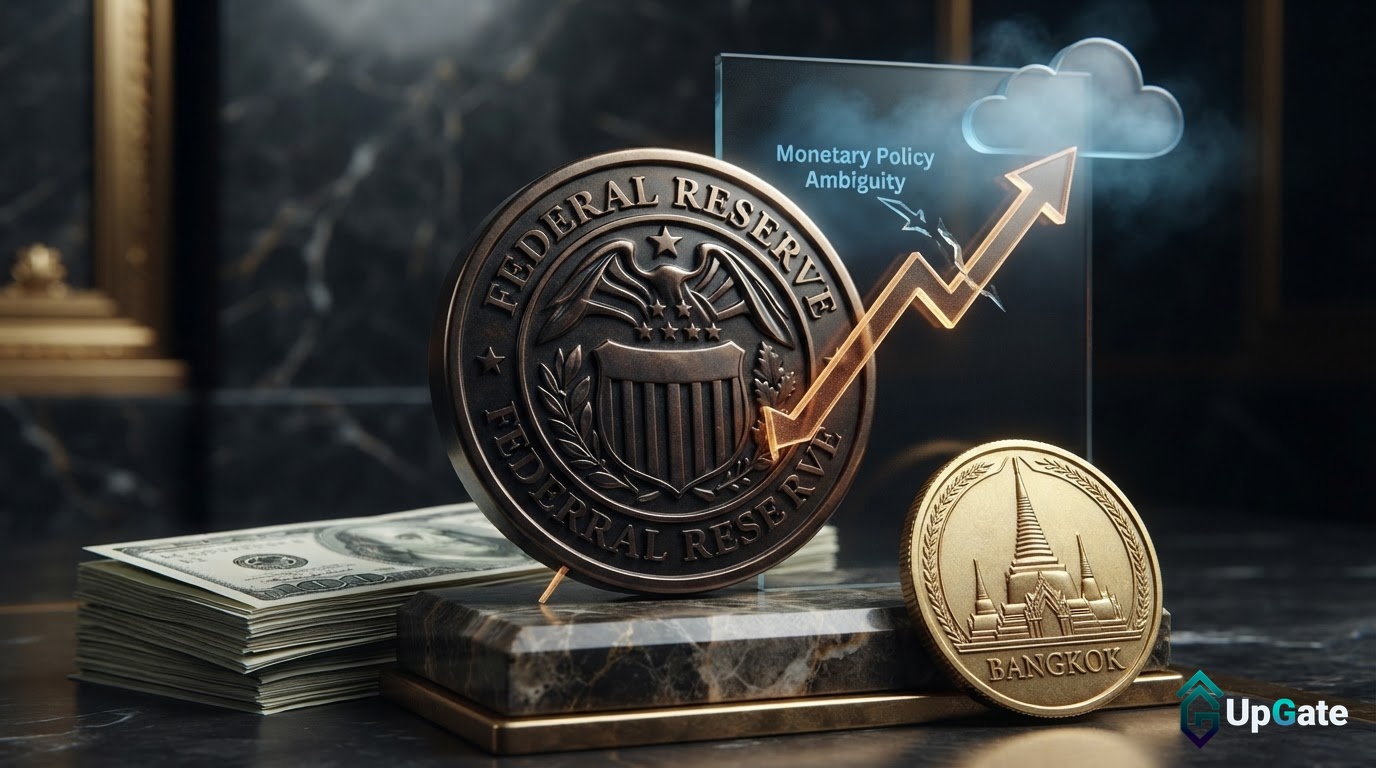
  • Fed Chair Warsh’s Bangkok Speech: Inflation Focus, Monetary Policy Ambiguity, and Economic Outlook

    Fed Chair Warsh’s Bangkok Speech: Inflation Focus, Monetary Policy Ambiguity, and Economic Outlook

    Federal Reserve Chairman Kevin Warsh delivered a speech in Bangkok on Friday morning, addressing key economic issues including inflation, monetary policy, and the global economic outlook. His remarks, made at the IMF-World Bank Annual Meetings, provided insights into the central bank’s approach without signaling a definitive next move on interest rates.

    Speaking alongside IMF Managing Director Kristalina Georgieva, Warsh reiterated the Federal Reserve’s commitment to “deliver price stability.” He noted that the central bank had removed “a close of accommodation” with a 25-basis-point rate hike in September. However, Warsh declined to provide clear indications about future policy decisions, stating that he does not “prejudge meetings” and would not announce future actions in advance.

    Market Reactions and Inflation Context

    This speech followed recent economic data that heightened market sensitivity. The September Consumer Price Index (CPI) accelerated to 3.7%, exceeding expectations and reviving concerns about persistent inflation. Following Warsh’s remarks, the implied probability of an upcoming rate increase within two weeks decreased from approximately 27% to 15%, according to reports. Markets interpreted the absence of strong warnings as a form of relief, leading to a softening of the US dollar and gains in stock futures and Asian equities.

    Broader Economic Landscape and AI’s Role

    Warsh also discussed the broader global economic landscape, expressing surprise at its resilience in the face of geopolitical and monetary policy challenges. He highlighted what he described as a significant US investment boom. Furthermore, Warsh commented on the potential impact of Artificial Intelligence (AI), characterizing it as potentially one of the most consequential economic changes of his lifetime. According to Warsh, he expects AI to become a positive supply shock over the medium term by enhancing productivity.

    Enduring Uncertainties and Bitcoin Implications

    Despite the market’s initial reaction of relief, the underlying challenge of persistent inflation remains. Warsh’s confidence in US economic growth suggests that policymakers may have room to maintain elevated interest rates if price pressures continue to be stubborn. The speech did not signal an end to monetary tightening, leaving uncertainty about the future path of interest rates.

    The implications for Bitcoin were noted as mixed. The reduction in immediate fears of a rate hike was seen as a positive factor, potentially mitigating some macro risks that had previously pushed the cryptocurrency below $80,000 after hot inflation reports. However, the broader economic uncertainties and the potential for sustained higher rates continue to influence the market.

    Key takeaways from Warsh’s address include the Federal Reserve’s ongoing focus on price stability, the lack of clear forward guidance on interest rates, and the complex global economic environment. The potential long-term impact of AI on productivity was also a significant point, with Warsh expecting it to contribute positively to the supply side of the economy over time. The speech underscored that while markets may find temporary relief, the persistent nature of inflation and the Federal Reserve’s commitment to addressing it may continue to shape monetary policy considerations.

    Broader Context

    Source materials place the market analysis in this context: Federal Reserve Chairman Kevin Warsh delivered one of the week’s most closely watched central-bank appearances on Friday morning, following the hotter-than-expected CPI and PPI reports from earlier this month that revived fears of another US rate increase.

  • TSMC CEO: No Chip Slowdown as Foundry Posts Record Profit

    TSMC CEO: No Chip Slowdown as Foundry Posts Record Profit

    Taiwan Semiconductor Manufacturing Co. (TSMC) continues to grapple with a persistent challenge: demand for its chips consistently outstrips its production capacity. On October 15, 2026, the company announced its sixth consecutive quarter of record net profit.

    Robust Demand Fuels Record Profits

    CEO C.C. Wei characterized demand as “extremely robust” and indicated no signs of a slowdown in the artificial intelligence (AI) trend. TSMC’s net profit for the third quarter reached NT$763.1 billion, equivalent to approximately $23.6 billion. This represents a substantial 68.7% increase compared to the same period in the previous year.

    The financial results surpassed analyst expectations by a significant margin, extending a remarkable streak of 11 consecutive quarters of year-over-year profit growth. Revenue for the quarter climbed to NT$1.494 trillion, or about $46.7 billion, marking a 50.9% year-over-year increase and a 17.6% gain from the preceding quarter. Advanced process technologies were a key driver, accounting for 79% of total wafer revenue during the period.

    Upgraded Outlook and Aggressive Guidance

    In light of these strong results, TSMC’s management has revised its full-year 2026 revenue growth outlook upward to approximately 44% in U.S. dollar terms, an increase from the previous forecast of “slightly above 40%.”

    The company’s guidance for the fourth quarter is even more ambitious. TSMC anticipates revenue to fall between $52.3 billion and $54.3 billion, suggesting a year-over-year growth rate of roughly 55% to 61%. Capital expenditure guidance for 2026 remains unchanged, set between $60 billion and $64 billion.

    Expanding U.S. Footprint

    TSMC is also intensifying its investment in U.S. manufacturing capabilities. The company’s total commitment to its U.S. facilities now stands at $265 billion, which includes an additional $100 billion earmarked for its operations in Arizona.

    As a leading contract chip manufacturer, TSMC does not design its own chips but produces them for a wide array of companies, positioning it as the foundry behind a significant portion of the world’s most advanced processors.

    Investor Confidence and Market Position

    This dominant position has not gone unnoticed by investors. TSMC’s market capitalization is approaching $2 trillion, roughly double that of its competitor, Samsung Electronics. The company’s stock has seen a notable surge, climbing nearly 60% in 2026 alone.

    Navigating Economic Uncertainties

    Despite the strong performance, TSMC has flagged ongoing macroeconomic uncertainties that are influencing its planning for 2027. The company specifically highlighted consumer-sensitive segments, noting that business areas tied to smartphones and other everyday electronics could face increased vulnerability should household spending decline.

    Key indicators to monitor moving forward include whether fourth-quarter revenue falls within the projected $52.3 billion to $54.3 billion range, the shape of capital expenditure plans for 2027, and the resilience of consumer-facing demand in parallel with the robust AI sector.

  • Bitcoin Holds Support Ahead of US CPI; Traders Watch Key Factors

    Bitcoin Holds Support Ahead of US CPI; Traders Watch Key Factors

    Bitcoin traders are bracing for inflation-driven volatility as the cryptocurrency’s price action has held firm above a critical weekly support level of $82,500.

    Bitcoin (BTC) is entering the third week of October by defending the $82,500 support mark, with key U.S. inflation data on the horizon.

    Key Economic Indicators in Focus

    This week, traders are closely watching U.S. inflation figures ahead of the Federal Open Market Committee’s (FOMC) interest-rate policy meeting on October 28. The September Consumer Price Index (CPI) and Producer Price Index (PPI) are scheduled for release on Wednesday and Thursday, respectively.

    In August, the CPI registered a year-on-year increase of 3.4%, largely in line with expectations. However, markets are now anticipating an uptick to 3.7% this month, influenced by ongoing military conflicts in the Middle East and subsequent surges in fuel prices. The PPI is projected to show a 0.3% month-on-month increase, compared to 0.2% in August.

    Historically, cryptocurrencies, stocks, and gold tend to perform well when inflation readings are lower than expected. Such outcomes reduce the likelihood of the Federal Reserve tightening its monetary policy, thereby encouraging capital inflows. Tim Waterer, chief market analyst at KCM Trade, highlighted the potential impact of a surprise downside surprise in CPI and PPI readings on gold prices and U.S. bond yields.

    “In the short term, a cooler-than-expected U.S. inflation reading would be the clearest near-term catalyst, as it would reduce the odds of further Fed tightening and ease pressure on real yields,” Waterer told Reuters.

    Current market sentiment, as indicated by CME FedWatch, suggests an 18.8% probability of a rate hike at the October 28 meeting, which would move the federal funds rate from its current 3.75-4.00% range. The subsequent meeting in December shows a higher probability, with markets assigning a 70.6% chance of a 25-basis-point hike to 4.00-4.25%.

    Geopolitical Developments and Market Reactions

    Federal Reserve Chair Kevin Warsh is scheduled to participate in a discussion with Kristalina Georgieva, Managing Director of the International Monetary Fund (IMF), at an event in Bangkok, Thailand, on Friday.

    U.S. bond yields have retreated from 24-year highs reached last week. On Monday, the 10-year Treasury yield stood at 5.24%, and the 30-year yield was at 5.60%.

    Stock futures showed positive movement at the start of the week, with the S&P 500 index up 0.25% and approximately 30 points shy of its all-time highs.

    An announcement by U.S. President Donald Trump regarding a deal to purchase 300,000 tons of diesel from Russia appeared to have a limited impact on oil prices, as the proposal faces growing bipartisan opposition. Trump also declared an “energy ceasefire” between Russia and Ukraine.

    “Effective immediately, there is an ENERGY CEASEFIRE in the War between Russia and Ukraine. Both parties have agreed,” Trump posted on Truth Social on Sunday. Ukrainian President Volodymyr Zelenskyy stated he was unaware of such an energy ceasefire.

    West Texas Intermediate (WTI) crude traded around $91.50 per barrel on Monday, a 2% increase from its daily low of $89.60. Data from motorist group AAA indicated the average price of diesel at $6.26 per gallon, down from the all-time high of $6.52 recorded on September 22.

    Tamas Varga, an analyst at PVM, commented to Reuters that Russia’s reduced export capacity made the impact of the diesel deal “questionable.” He added, “However, Moscow has partially lifted its ban on diesel exports, allowing 500,000 tonnes (around 3.7 million barrels) to be released onto the international market, equivalent to roughly one day of U.S. consumption and around 13% of global demand.”

    Bitcoin’s Technical Outlook

    At approximately $83,700 on Bitstamp, Sunday’s weekly candle close marked a 3.2% decline for BTC/USD over the past week.

    Despite the weekly dip, the pair successfully maintained a crucial support level at $82,500 on weekly charts, thereby preventing a return to its prior long-term trading range between $60,000 and $80,000. As previously reported, $82,500 remains a critical line in the sand for Bitcoin bulls.

    Last week, trader and analyst Rekt Capital noted that a weekly close above $82,500 would signify a “successful” retest of support. This could encourage investors to continue accumulating BTC at current levels, potentially paving the way for further upward movement, similar to Bitcoin’s recovery from its 2022 bear market.

    In light of Bitcoin’s multiple retests of support following its initial breakout in July, trader and analyst Aksel Kibar has drawn parallels between the cryptocurrency and stock markets. Since May, the S&P 500 has undergone several retests of key levels, first at 7,300 points and subsequently at 7,600 points.

    Kibar suggested in an X post on Sunday that Bitcoin might be experiencing a “hard retest” of support, implying that BTC/USD could trend higher if these retests continue to prove successful.

  • Bitcoin ETFs See Steepest Drop Since June as October Turns Sour

    Bitcoin ETFs See Steepest Drop Since June as October Turns Sour

    Bitcoin ETFs Suffer Worst Outflow Since June Amid Macro Headwinds

    Bitcoin exchange-traded funds (ETFs) experienced a significant outflow of $484.9 million on Wednesday, marking the largest single-day departure since June 25, according to data from Decrypt’s ETF tracker. BlackRock’s iShares Bitcoin Trust (IBIT) saw the steepest decline, with $207.7 million exiting the fund, followed by Fidelity’s FBTC, which recorded an outflow of $105.1 million.

    This single trading session effectively reversed approximately 81% of the inflows accumulated over the preceding nine days, meaning nearly two weeks of consistent investor interest was wiped out in a single day. Despite this substantial outflow, the ETFs collectively still hold $57.8 billion in cumulative net inflows, indicating that while it was a challenging day for the funds, it does not represent a systemic crisis.

    Analysts suggest the significant outflow is less a reflection of issues within the cryptocurrency market itself and more a consequence of broader macroeconomic factors. On Wednesday, the 30-year Treasury yield surged to approximately 5.7%, its highest level since 2002. Concurrently, Brent crude oil prices hovered around $100 per barrel, and stock markets retreated from record highs. Escalating tensions and attacks around the Strait of Hormuz, with at least one incident reported daily since October 2, have contributed to sustained high oil prices.

    This macroeconomic environment presents a challenge for Bitcoin investors. Elevated oil prices can fuel inflation, which in turn may prompt the Federal Reserve to maintain a hawkish stance on monetary policy. A hawkish Fed typically leads to higher bond yields. For an asset like Bitcoin, which does not generate interest, this creates a less attractive proposition compared to, for instance, a 10-year Treasury bond yielding over 5% and without the volatility associated with crypto. This calculation is a key consideration for institutional and large-scale investors, whose decisions significantly influence market movements.

    The Federal Reserve raised interest rates in September, the first such increase since 2023. Minutes from their most recent meeting, released on Wednesday, indicated that a majority of officials anticipate another rate hike before the end of the year. However, traders appear skeptical of this prospect, with current market indicators suggesting an October hike is unlikely. CME’s FedWatch tool places the probability of an October rate increase at 19.4%, while Myriad’s prediction markets estimate it at 17%.

    Beyond the ETF market, Bitcoin’s price also experienced a downturn. On Thursday, the cryptocurrency fell to a low of $81,749.83, approximately 6% below its peak of $86,978 reached earlier in the week. The derivatives market bore the brunt of this decline, with roughly $429 million in positions liquidated over a 24-hour period. According to CoinGlass, 87.5% of these liquidated positions were long bets.

    Historically, Bitcoin has seen gains in October for six consecutive years until last year, when it experienced a 3.69% decline. This year, the ETFs began October with $321.6 million in inflows over the first four sessions. However, they have since shifted to a net outflow of $163.3 million, with Halloween still 23 days away, leaving ample time for further market fluctuations.

    The Federal Reserve is scheduled to convene next on October 27-28, followed by another meeting on December 8-9. The minutes released Wednesday did not specify a date for the next potential interest rate increase.

  • Bitcoin Poised for $100,000 Surge: Expert Cites ‘Explosive Catalyst’

    Bitcoin Poised for $100,000 Surge: Expert Cites ‘Explosive Catalyst’

    Bitcoin Poised for $100,000 Surge as Treasury Yields Spark New Bull Case

    New York, NY – While typically a harbinger of trouble for risk assets, rising Treasury yields may be setting the stage for Bitcoin’s next significant upward move, according to Fundstrat’s Sean Farrell. He anticipates the cryptocurrency could reclaim the $100,000 mark before the end of the year.

    The Bullish Outlook

    Farrell, who heads digital asset strategy at Fundstrat, believes Bitcoin has already established a “durable” cycle low, signaling the commencement of a new upward trend.

    “I actually do think we could get above that $100,000 level before 2026 wraps up,” Farrell stated. He conceded that his earlier target of $115,000 for this year now appears less attainable.

    On Monday, Bitcoin was trading near $86,000. A climb to $100,000 would represent a roughly 16% increase from that level.

    How High Yields Could Fuel Bitcoin

    The 10-year Treasury yield is currently at its highest point since 2007, with markets factoring in four interest rate hikes over the next twelve months. This scenario would typically present headwinds for cryptocurrencies. However, Farrell views this dynamic as a “bull case in and of itself,” explaining his reasoning:

    The Mechanism for Bitcoin’s Gain

    Farrell characterized the Treasury’s actions as a form of market intervention akin to economic stimulus. He explained that banks absorb newly issued Treasury bills, which in turn inject money into the private market. “This leads to monetary debasement, and monetary debasement leads to Bitcoin outperformance,” he asserted.

    He noted that policymakers have adhered to a similar strategy for the past five to six years: allowing inflation to rise while keeping borrowing costs suppressed. Farrell argued that a further reduction in long-term bond issuance could serve as an “explosive catalyst” for Bitcoin and the broader cryptocurrency market.

    Tokenization Adds to Demand

    Farrell also connected the Securities and Exchange Commission’s (SEC) innovation exemption to this trend. He pointed out that the exemption mandates that each tokenized stock be backed by a stablecoin or a money market fund. If trillions of dollars in equities transition onto the blockchain, this would inevitably drive increased demand for the short-term bills that the government needs to sell.

    He highlighted Ethereum as the strongest performer in the third quarter, while Solana continues to be traded as a higher-risk play on the same underlying theme.

    Farrell’s Advice to Investors

    Farrell does not foresee a “straight shot up” for Bitcoin. He acknowledged the possibility of a 10% pullback but advised that leveraged investors should remain unconcerned. He anticipates that buyers will quickly emerge to support the price on any dips.

    “It is time to think about getting more aggressive over a medium to longer-term time horizon,” he concluded.

  • Hong Kong bankers forgo summer break amid AI-fueled fundraising boom

    Hong Kong bankers forgo summer break amid AI-fueled fundraising boom

    Hong Kong’s equity capital markets achieved a record $47.5 billion in fundraising during the third quarter, driven primarily by the artificial intelligence sector, according to a Bloomberg report dated October 3, 2026. Dealmakers involved in these share sales reportedly sacrificed their summer breaks to accommodate the surge in activity.

    Record Quarter for Equity Fundraising

    The $47.5 billion figure encompasses all forms of equity fundraising, including initial public offerings (IPOs), share placements, and block trades. A share placement involves a company directly selling new shares to a select group of investors, while a block trade refers to the sale of a substantial block of existing stock in a single transaction.

    This robust third quarter pushed Hong Kong’s year-to-date equity fundraising total for 2026 above $92 billion. The city is now within striking distance of its all-time annual record of $112.5 billion, set in 2021.

    AI Dominates Market Activity

    Goldman Sachs has projected that equity issuance in 2026 could potentially surpass the regional record established in 2021, with demand for AI-related companies serving as the primary catalyst.

    A particularly noteworthy transaction from the summer was Zhipu AI’s successful $4 billion share placement in July. This deal was part of a broader wave of $5.8 billion in AI financing that occurred within that same week. Significantly, Bloomberg’s report highlighted that this surge in funding largely bypassed traditional Wall Street banks.

    Zhipu AI was not the sole AI-focused entity to tap the market this year. Earlier in 2026, MiniMax Group raised approximately $619 million through its IPO.

    Investor Appetite and Shifting Fee Pools

    For investors, the record-breaking quarter signals a strong appetite for AI-linked equities across Asia. The ability of a single placement to raise $4 billion indicates that institutional buyers are prepared to commit substantial capital to the sector.

    The $5.8 billion week of AI financing, which occurred without the involvement of traditional Wall Street banks, could represent a significant shift. If this trend persists rather than remaining an isolated event, fee pools that have historically benefited large U.S. financial firms may increasingly be directed elsewhere.

    With the year-to-date total exceeding $92 billion, and the 2021 record standing at $112.5 billion, Goldman Sachs’ optimistic outlook for 2026 hinges on continued strong activity in the fourth quarter.