Tag: Regulation & Policy

  • Robinhood Shares Surge 9% on SEC Tokenized Stock Approval

    Robinhood Shares Surge 9% on SEC Tokenized Stock Approval

    Robinhood Shares Jump on SEC’s Tokenized Stock Exemption

    Robinhood shares experienced a significant surge on September 18, climbing approximately 9.6% to close near $120 after opening the trading day at $113. The market reaction was triggered by the Securities and Exchange Commission’s (SEC) announcement of a five-year conditional “Innovation Exemption.” This exemption permits eligible platforms to trade tokenized versions of U.S. stocks on blockchain venues without requiring full traditional exchange registration.

    A Regulatory Sandbox for Tokenized Equities

    The Innovation Exemption, effective immediately, establishes a regulatory sandbox for tokenized equities. Platforms that meet the qualifying criteria will be able to list blockchain-based representations of U.S. stocks, bypassing the extensive registration process mandated for traditional exchanges.

    Built-in Safeguards and Investor Benefits

    However, the exemption includes several safeguards. Platforms must notify the companies whose stocks are being tokenized and are obligated to respect any objections raised by these issuers. Additionally, volume limits will be imposed during the exemption period, designed to prevent any single platform from rapidly evolving into a de facto shadow exchange.

    For retail investors, the potential benefits are substantial. Traditional U.S. equity markets operate for approximately six and a half hours on weekdays. Tokenized stock versions, in contrast, could be traded around the clock. Furthermore, fractional ownership becomes more accessible when a stock is represented as a divisible token rather than a whole share held in a brokerage account.

    The exemption also promises improvements in settlement speed. The current T+1 settlement cycle, a recent transition for the industry, could be further compressed on blockchain networks, where transactions can finalize within minutes or even seconds.

    Robinhood’s Existing Blockchain Infrastructure

    Robinhood has already made strides in the blockchain space. Earlier in 2026, the company launched its own Ethereum Layer-2 network, known as Robinhood Chain, which has since processed over $9.7 billion in decentralized exchange volume.

    Strong Financial Performance

    The company’s financial performance has been robust. In the second quarter of 2026, Robinhood reported revenue of $1.31 billion, marking a 32% increase year-over-year. Net income reached $573 million, a 48% rise compared to the same period in the previous year. By the end of August, total platform assets had grown to $384 billion.

    Broader Market Impact

    The positive market sentiment extended beyond Robinhood. Coinbase shares also saw a notable increase, climbing approximately 10% to 11% on the same day. This suggests the market views the SEC’s exemption as a positive development for the entire category of crypto-adjacent financial platforms.

    Analysts appear optimistic about Robinhood’s future, with current consensus price targets ranging between $130 and $160. This indicates an anticipated upside of 8% to 33% from the stock’s $120 closing price.

    Conditional and Time-Limited Nature

    Despite the positive outlook, it is important to note that the exemption is conditional and has a limited duration of five years. While this provides a significant runway, the imposed volume caps and the issuer objection rights could potentially constrain near-term growth. If a major corporation objects to its stock being tokenized, Robinhood must comply. Furthermore, the SEC retains the authority to tighten or revoke the exemption should any issues arise.


  • Traditional Banks Accelerate Crypto-Asset Service Provider Registrations Under EU’s MiCA; Germany Leads

    Traditional Banks Accelerate Crypto-Asset Service Provider Registrations Under EU’s MiCA; Germany Leads

    Traditional banks are increasingly registering as crypto-asset service providers (CASPs) under the European Union’s Markets in Crypto-Assets (MiCA) framework, with German institutions spearheading this significant trend. In recent months, the proportion of traditional banks on the MiCA register has climbed from approximately 17% to nearly 23%, signaling a notable shift in engagement with digital assets by established financial players.

    The number of registered banks has nearly doubled, rising from around 40 to close to 80. This growth rate for banks outpaces that of non-bank CASPs. Overall, the total number of registered CASPs on the European Securities and Markets Authority (ESMA) ledger increased from 243 in late June 2026 to 349 by mid-September 2026. While non-bank providers still constitute the majority of CASPs at 77%, the pace of bank registration indicates an acceleration in their participation.

    Germany is identified as the primary driver of this trend. Both established commercial banks and a significant number of regional cooperative banks, known as Volksbanken and Raiffeisenbanken, are actively registering with ESMA. This surge in activity from German financial institutions contrasts with a more hesitant approach observed in other European markets.

    Deutsche Bank, Germany’s largest lender, has announced plans to offer digital asset custody services targeting institutional and corporate clients. The bank aims to secure MiCA regulatory approval by October 2026, positioning itself as a prominent traditional finance entity entering the European crypto custody market.

    A key factor facilitating this increased participation for banks is Article 60 of the MiCA regulation. This provision allows banks to leverage their existing regulatory standing through a notification route, enabling them to fast-track their entry into crypto services. This pathway is generally less time-consuming than the full licensing process faced by crypto-native firms starting from scratch, contributing to the observed growth in bank registrations.

    This trend indicates a maturing crypto-asset market within the EU, with established financial institutions actively navigating the regulatory landscape. The increasing presence of traditional banks on the MiCA register, particularly driven by German entities, highlights a strategic engagement with digital assets facilitated by regulatory pathways.

    Why This Matters

    The materials describe a narrow update: The proportion of traditional banks registered as crypto-asset service providers (CASPs) under the EU’s MiCA regulation has increased from approximately 17% to nearly 23% in a few months. The growth rate of banks on the MiCA register outstrips that of their non-bank counterparts.

    Broader Context

    Source materials place the factual news in this context: MiCA register.

  • ECB Chief Lagarde Blocks Binance EU Expansion? Binance Declines Comment

    ECB Chief Lagarde Blocks Binance EU Expansion? Binance Declines Comment

    ECB President Reportedly Intervened to Block Binance’s Greek License

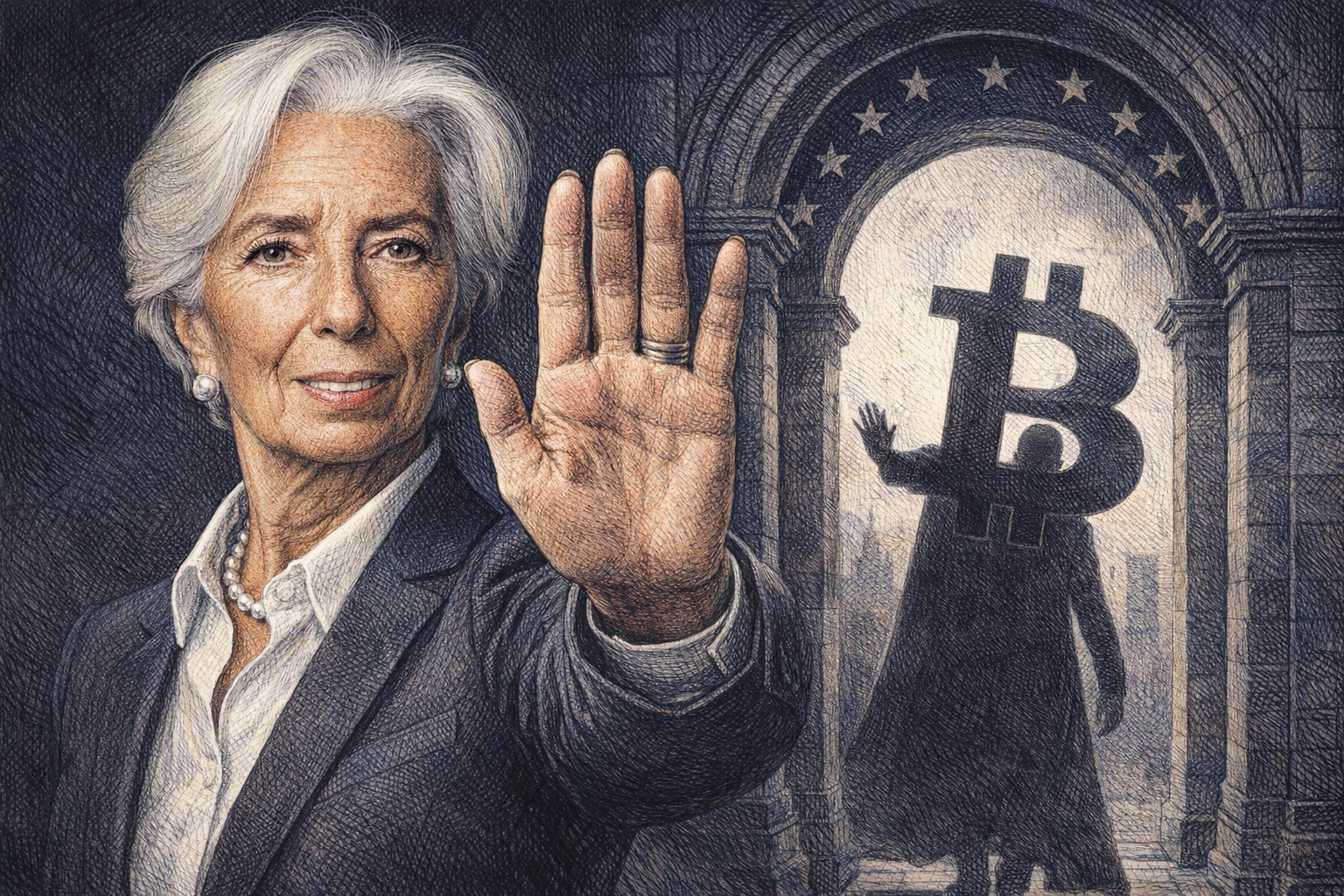
    The Wall Street Journal has reported a significant development that has sent ripples through Europe’s cryptocurrency sector: European Central Bank (ECB) President Christine Lagarde is alleged to have personally intervened in Binance’s application for a Markets in Crypto-Assets (MiCA) license in Greece, urging Greek Prime Minister Kyriakos Mitsotakis to reject it. Binance, when contacted, stated, “We do not comment on speculation.” However, if the ECB’s involvement in an exchange licensing process is confirmed, it signifies that cryptocurrency compliance has escalated to the level of sovereign central banks.

    Lagarde’s Alleged Pressure on Greek Authorities

    The Wall Street Journal reported on Friday that a deputy chairman of the Hellenic Capital Market Commission (HCMC) informed Binance executives that Lagarde had exerted pressure through the Greek government to prevent the license from being granted to the world’s largest cryptocurrency exchange. Dramatically, Greek authorities had informed the European Securities and Markets Authority (ESMA) in early June that they were “prepared to approve” the application, indicating the process was nearing completion before being halted.

    Binance submitted its MiCA license application in Greece in January of this year. MiCA is the European Union’s unified regulatory framework for crypto-assets. Once it took effect on July 1, entities with a license could operate across all 27 EU member states, effectively serving as a golden ticket for exchanges seeking to enter the European market.

    Rumors and Withdrawal

    By mid-June, rumors began circulating that the HCMC might reject the application. Subsequently, crypto intelligence platform The Big Whale was the first to break the story about Lagarde’s alleged involvement, though it lacked corroboration from authoritative media at the time.

    Days before the MiCA deadline on July 1, Binance formally withdrew its Greek application, stating it would seek to reapply in another EU jurisdiction. While the prevailing assumption at the time was that this was a result of the HCMC’s unilateral review, the WSJ’s report this week has shed clearer light on “who was applying pressure from behind the scenes.”

    Strategic Implications for Digital Euro

    If Lagarde did indeed intervene, the underlying logic is not difficult to surmise. The ECB is vigorously pursuing the development of a digital euro. The presence of a colossal exchange, controlled externally and operating legally within Europe with a MiCA license, would pose a competitive threat to the issuance of the digital euro and the stablecoin ecosystem.

    The ECB has repeatedly issued public warnings about the threat posed by U.S. stablecoins to European financial sovereignty. For Lagarde, allowing an exchange deeply intertwined with dollar-pegged stablecoins (USDT/USDC) unfettered access to Europe directly conflicts with the strategic direction of the digital euro.

    This also explains why the Greek HCMC, despite being “prepared to approve,” ultimately backed down. Faced with direct intervention from the European Central Bank, it is exceedingly difficult for a regulatory body of a single member state to resist.

    Binance’s Response and Future Path

    Binance’s official response was notably brief: “We will not comment on speculation. In Europe, Binance remains committed to operating on a long-term, compliant basis under the EU’s Markets in Crypto-Assets Regulation.”

    This statement carries three layers of meaning. Firstly, it neither confirms nor denies Lagarde’s alleged involvement, avoiding a direct confrontation with the ECB. Secondly, the emphasis on “remains committed” signals to the EU market that Binance has no intention of withdrawing. Thirdly, it deliberately shifts the focus back to the regulatory framework itself, rather than engaging in political maneuvering.

    In practice, Binance now has two potential paths: reapplying in another EU country (though Lagarde’s pressure might extend across borders), or indirectly gaining market access by acquiring a European platform that already holds a license. Whichever path is chosen, the ECB has clearly integrated “crypto compliance” into its strategic chessboard.

  • Coinbase Seeks Approval for First US Single Stock Perpetual Futures

    Coinbase Seeks Approval for First US Single Stock Perpetual Futures

    Coinbase Seeks to Launch Novel Single-Stock Perpetual Futures in U.

    S.

    Coinbase has submitted registration notices to the Securities and Exchange Commission (SEC) for a product that would be entirely new to the U.S. market: single-stock perpetual futures. The filings, made on September 1 through its Coinbase Derivatives and Coinbase Financial Markets entities, signal the cryptocurrency exchange’s most ambitious effort to date to integrate traditional stock trading with the continuous operation characteristic of crypto markets.

    The company announced the filings on X (formerly Twitter) on September 3, stating that it will now pursue approval from the Commodity Futures Trading Commission (CFTC) before trading can commence. The news was met with enthusiasm by investors, with Coinbase’s stock (COIN) surging approximately 10% following the announcement.

    Perpetual futures, a financial instrument originating in crypto markets, allow traders to establish leveraged long or short positions on an asset without direct ownership. Unlike conventional futures contracts, they do not have expiration dates, eliminating the need to “roll” positions from one contract month to the next. Essentially, they offer a mechanism to speculate on a stock’s price movements 24/7, utilizing borrowed funds, without ever holding the underlying shares.

    This is not an untested concept for Coinbase. The exchange introduced perpetual futures for its international clientele on March 20, featuring prominent companies such as Apple, Microsoft, and Nvidia, alongside select exchange-traded funds (ETFs). These offshore contracts are settled in USDC, a stablecoin pegged to the U.S. dollar, and provide leverage of up to 10 times on individual stocks.

    Details regarding the specific stocks that will be available for trading in the U.S., the proposed leverage limits, and the anticipated launch date have not yet been disclosed by Coinbase. While the SEC filings represent a crucial initial step, approval from the CFTC is the definitive hurdle. Security futures in the United States operate under the joint jurisdiction of both the SEC and CFTC, a regulatory framework that has historically contributed to a slower and more complex innovation process in this sector.

    Coinbase has also been actively developing its broader derivatives business within the United States. The exchange currently offers U.S.-regulated perpetual-style equity index futures, making the introduction of single-stock perpetuals a logical progression of its existing product offerings rather than a venture into entirely uncharted territory.

  • UK Lords Committee Proposes Gambling Ad Restrictions, Halting Sector Growth

    UK Lords Committee Proposes Gambling Ad Restrictions, Halting Sector Growth

    A cross-party House of Lords committee in the UK has put forward recommendations for the government to ban most gambling advertisements and to abandon its objectives for expanding the gambling sector. The committee advised that any advertising ban should be implemented as soon as it is “practicable”.

    According to the House of Lords committee, the government should also cease pursuing goals aimed at growing the gambling industry. These recommendations signal a potential shift in the UK’s regulatory approach to gambling.

    The Betting and Gaming Council has reacted to the report, stating that it is “deeply misguided.”

    Significant uncertainties remain regarding the precise timeline for implementing any potential ban on gambling advertising and the UK government’s ultimate response to the committee’s proposals. The committee’s report underscores an ongoing debate surrounding the regulation of the gambling sector in the UK.

    Why This Matters

    The materials describe a narrow update: A cross-party House of Lords committee has advised the UK government to implement a ban on nearly all gambling advertisements at the earliest feasible opportunity. The exact timeline for implementing the ban on gambling advertising.

    Broader Context

    Source materials place the factual news in this context: The article is about recommendations made by a UK House of Lords committee regarding gambling advertising and sector growth.

  • SEC’s 5-Year ‘Innovation Exemption’ for Tokenized Stock Trading: A Controlled Experiment

    SEC’s 5-Year ‘Innovation Exemption’ for Tokenized Stock Trading: A Controlled Experiment

    The U.S. Securities and Exchange Commission (SEC) has introduced a five-year ‘innovation exemption,’ permitting select platforms to trade tokenized U.S. stocks on public blockchains under strict conditions. This move represents a controlled experiment in integrating digital assets with traditional market infrastructure, allowing eligible platforms, termed Tokenized Securities Venues (TSV), to operate without immediate registration as a national securities exchange.

    The exemption, effective Thursday, allows TSVs to utilize smart contracts and liquidity pools for trading eligible tokenized U.S. stocks. However, this operates within defined limitations. For highly liquid stocks, a TSV can tokenize up to 75 different stocks, with a trading volume cap of 0.25% of the average daily trading volume for the underlying stock. For second-tier stocks, these limits increase to 250 stocks and 2.5% of daily trading volume, respectively. These measures are intended to keep the sandbox small, allowing for observation and measurement of its effects.

    Crucially, tokenized stocks must retain all rights associated with the underlying security, including voting rights and dividend entitlements. Synthetic products, which merely track stock prices without conferring ownership rights, are explicitly excluded from this exemption. Furthermore, if the trading of the underlying stock is halted on the primary market, the tokenized version must also halt trading. Issuers of tokenized stocks must also be notified 30 days in advance of any listing, and they retain the right to object, a mechanism described as a key safeguard.

    This exemption follows a period of regulatory exploration. In September, the SEC proposed allowing blockchains to serve as official records for securities ownership. SEC Chair Paul Atkins had previously indicated that the agency would act within its existing authority, a sentiment echoed after the CLARITY Act failed to pass a vote. The SEC’s approach appears to be testing blockchain’s potential as operational machinery for the U.S. stock market, rather than simply allowing existing securities to be wrapped in a digital format.

    The SEC is also providing conditional exemptions for market makers to register as dealers, facilitating their participation in liquidity pools. This is seen as crucial for the functioning of automated market makers (AMMs) in this new environment. The framework is designed to accelerate the development of ‘native tokenized securities’ and establish multiple on-chain liquidity venues in a controlled and regulated manner.

    Despite the potential for innovation, significant uncertainties remain. The long-term impact of this exemption on the broader U.S. stock market is yet to be determined. It is uncertain whether tokenized stocks will suggest their trading efficiency and settlement speed advantages within the five-year period, and the extent to which this may influence global asset allocation remains to be seen. Whether similar paths will be adopted by Taiwanese ETFs and local stocks is also a point of ongoing observation.

    The exemption is seen as a significant, albeit limited, step by a major regulator, potentially paving the way for broader adoption and transformation of financial market infrastructure. However, the SEC’s cautious approach, emphasizing limitations and safeguards, underscores the ongoing effort to balance innovation with investor protection.

    Why This Matters

    The SEC’s ‘innovation exemption’ allows qualified platforms to trade tokenized U.S. stocks on public blockchains for five years without registration, subject to limitations. This represents a controlled test of blockchain’s potential as part of the U.S. stock market’s infrastructure, moving beyond simple digital wrappers for existing securities. The outcome of this five-year experiment could influence global asset allocation and the future of traditional asset tokenization.

    Broader Context

    The SEC’s exemption was introduced after the CLARITY Act failed to pass a vote, indicating a regulatory path forward within existing authority. This follows a September proposal to allow blockchains to serve as official records for securities ownership, suggesting a broader SEC exploration into blockchain integration in financial markets.

  • ECB Chief Blocks Binance EU Entry, Digital Euro Battle Goes Public

    ECB Chief Blocks Binance EU Entry, Digital Euro Battle Goes Public

    ECB President Lagarde Personally Urged Greek PM to Reject Binance’s EU License Bid

    European Central Bank President Christine Lagarde personally intervened to block Binance’s attempt to secure an EU-wide cryptocurrency license, according to a report by The Wall Street Journal. Lagarde reportedly urged Greek Prime Minister Kyriakos Mitsotakis to reject Binance’s application.

    Binance voluntarily withdrew its application in mid-June and subsequently began halting its crypto trading services in France, Poland, Italy, and Spain starting in July.

    Lagarde’s direct involvement reportedly came during a meeting in May, where she conveyed to Mitsotakis that Binance was “not welcome” in Europe. This stance reportedly superseded the Greek Finance Minister’s initial preference, effectively halting Binance’s planned European expansion at the last minute.

    Binance had submitted its application for a Crypto-Asset Service Provider (CASP) license under the Markets in Crypto-Assets (MiCA) framework in January 2023 through a holding company established in Greece. The application was filed with the Hellenic Capital Market Commission (HCMC).

    Under MiCA’s passporting mechanism, a license approved by a single member state allows operations across the entire EU. In early June, the HCMC had informed the European Securities and Markets Authority (ESMA) of its intention to approve the application. At the time, Binance was preparing for its formal entry into the European market, with CEO Richard Teng even planning a visit to Athens.

    However, the situation reversed before the HCMC could make its final decision. According to sources cited by The Wall Street Journal, an HCMC official informed Binance that Lagarde opposed the application. Binance subsequently withdrew its application in mid-June. After missing the July 1 deadline for MiCA transitional licenses, the company ceased marketing to EU users.

    The ripple effect was swift. Starting July 1, Binance suspended its spot, leveraged, and futures trading services in France, impacting approximately 2 million French users. The service suspensions later extended to Poland, Italy, and Spain. Binance had previously stated that the HCMC had completed its review and determined the application met MiCA requirements.

    The report outlines two primary reasons for Lagarde’s opposition.

    Firstly, Binance’s past regulatory issues in the United States served as a significant compliance red flag. Binance and its founder, Changpeng Zhao, pleaded guilty in 2023 to violating U.S. anti-money laundering and sanctions laws, agreeing to a $4.3 billion settlement. This history led Lagarde to view Binance as a high-risk entity.

    Secondly, and more profoundly, Lagarde reportedly feared that securing an EU license would accelerate the adoption of dollar-denominated stablecoins in Europe, thereby undermining the European Central Bank’s ongoing digital euro initiative.

    Data from CryptoQuant indicates that as of February 2024, Binance held approximately $47.5 billion in stablecoins, representing 65% of centralized exchange stablecoin reserves, a substantial increase from $35.9 billion a year prior.

    With services now halted in France, Poland, Italy, and Spain, and the previously promising route through Greece blocked, Binance is compelled to seek alternative entry points in other member states or patiently await a potential cooling of ECB concerns regarding the digital euro.

    This case also highlights a deeper contradiction within European regulation. The original intent of MiCA was to enable national regulators to issue licenses based on unified standards, preventing political interference in market access. However, this instance demonstrates a precedent where a central bank president bypassed formal channels to exert private pressure and influence outcomes.

    As the market share of dollar stablecoins continues to expand, the ECB has evidently prioritized “preserving euro monetary sovereignty” over “open market competition.” The contest between the digital euro and dollar stablecoins appears to be just beginning.

  • North Korea Fuels Onchain Malware Surge; CoinEx Halts Operations

    North Korea Fuels Onchain Malware Surge; CoinEx Halts Operations

    North Korea and Iran are the primary sources of on-chain malware, while Malaysia has been identified as one of the most crypto-curious Islamic nations.

    Hackers linked to North Korea and Iran were responsible for the majority of a 420% surge in malware on public blockchains this year, according to a report by Chainalysis. State-affiliated hackers accounted for approximately two-thirds of new activity where attackers stored malware instructions or infrastructure details on public blockchains.

    Chainalysis also identified UNC5342, a group associated with North Korea, for previously unattributed activity across the Tron, Aptos, and BNB Smart Chain networks. The firm stated that utilizing public blockchains enhances the longevity of malware campaigns, as the stored information remains accessible even after domains, servers, or code repositories are taken down. In 2025, North Korean hackers employed a similar technique known as EtherHiding to embed cryptocurrency-stealing code within smart contracts.

    North Korea (DPRK) is now reportedly using remote workers from third countries, including Iran and Lebanon, to navigate job interviews. These positions are subsequently taken over by North Korean operatives with the objective of infiltrating U.S. companies and acquiring funds to finance their weapons programs, according to NBC.

    KOREA

    South Korean police have forwarded 18 Polymarket users to prosecutors as part of an illegal gambling investigation. The inquiry, which analyzed publicly available blockchain data, identified a total of 26 users. These individuals collectively wagered approximately 17.6 billion won (equivalent to $12.7 million) on Polymarket, a platform that does not collect users’ real names or verify their identities. Authorities contend that Polymarket transactions constitute illegal gambling under South Korea’s Criminal Act, as users stake assets on outcomes that cannot be predicted with certainty.

    HONG KONG

    Following last week’s controversy surrounding a proposal to allocate up to 20% of its fully diluted shares to executives, Metaplanet has significantly reduced its Series 10 stock pool. The company will decrease the number of potential shares underlying the rights from 319.464 million to 188.19 million and will reset the conversion ratio to its pre-September 2025 international share offering level. This adjustment is expected to extinguish over $220 million in warrant value and increase the company’s Bitcoin per fully diluted share by approximately 8.8%, according to Metaplanet.

    The South China Morning Post reports that cryptocurrency industry insiders are urging Hong Kong policymakers to capitalize on the opportunity presented by the failure of the CLARITY vote in the United States. Allen Ding, director of Bitfire Research, stated that the delay has provided Hong Kong with a “critical strategic window.” Shawn Yan, founder of Cregis Technology, advised the city to concentrate on “building infrastructure that can operate across regulatory boundaries, rather than waiting for any single jurisdiction to define the market for everyone.”

    The Hong Kong-founded exchange announced that declining trading volumes and liquidity during the bear market, coupled with rising regulatory and compliance costs, led to its decision to cease operations. Withdrawals will remain accessible until December 22.

    INDIA

    India’s securities regulator and central bank have initiated a pilot program for tokenized corporate bonds, with three companies issuing a combined 10.25 billion rupees (approximately $107 million) through the new market infrastructure. The Securities and Exchange Board of India (SEBI) stated that Demat 2.0 enables corporate bonds to be issued and held as digital tokens on a distributed ledger managed by the country’s statutory depositories. This system is integrated with the Reserve Bank of India’s (RBI) wholesale central bank digital currency (CBDC) via its Unified Market Interface.

    India’s Parliamentary Standing Committee on Finance has concluded its hearings on cryptocurrency policy. The government is expected to provide its response next week before the committee prepares and submits its report. India’s Enforcement Directorate aims to finalize economic crime investigations within 18 months and is enhancing its capabilities to track crimes involving cryptocurrencies.

    VIETNAM

    Bitcoin Suisse plans to relocate up to half of its Swiss workforce to Bratislava and Vietnam. Founded in Zug in 2013, the company offers cryptocurrency trading, custody, staking, and lending services. It will establish a new center in Vietnam to manage many of its back-office and administrative functions. Vietnamese regulators are developing a supervisory framework for crypto asset service providers and investor transactions, drawing on recommendations from the Financial Action Task Force (FATF). Binance, the world’s largest exchange, has signed an agreement to assist in the development of the Vietnam International Finance Center in Ho Chi Minh City.

    SINGAPORE

    Singapore Exchange has become the first major Asian TradFi exchange to receive approval from the Commodities Futures Trading Commission (CFTC) to offer Bitcoin and Ethereum perpetual futures to U.S. institutions. A recent court decision has set a precedent for valuing crypto assets in claims, departing from traditional breach-date damage assessment principles, according to the law firm Reed Smith. The firm noted, “The court is unlikely to allow claimants to delay mitigation for years and then seek damages at a higher present-day market price.”

    Six Malaysian men have been sentenced in Singapore to lengthy prison terms, ranging up to 12 years and 11 months, along with 24 strokes of the cane, for an armed robbery in 2024 involving cryptocurrency, cash, and luxury items.

    THAILAND

    Thailand’s Securities and Exchange Commission (SEC) has proposed new stablecoin regulations that would limit users to transferring no more than 5 million baht per day, equivalent to approximately $151,000.

    MALAYSIA

    According to Fitch Ratings, Malaysia is among the most crypto-curious Muslim-majority nations, with its local Securities Commission having declared Bitcoin, Ethereum, Ripple, and Stellar as Sharia-compliant.

  • CFTC Exempts Crypto, Prediction Market Software Firms from Broker Rules

    CFTC Exempts Crypto, Prediction Market Software Firms from Broker Rules

    CFTC Exempts Crypto and Prediction Market Software Developers from Broker Classification

    The U.S. Commodity Futures Trading Commission (CFTC) has issued a no-action letter, exempting eligible crypto and prediction market software providers from broker registration requirements under specific conditions. This regulatory relief allows qualifying providers to offer non-custodial connectivity to regulated platforms without needing to register as brokers, provided they maintain zero trade discretion and zero volume-based commissions.

    A “no-action” position is an official statement from a regulator indicating that it will not pursue enforcement actions against an individual or entity for a particular activity.

    The exemption applies to developers who partner with regulated platforms and meet the outlined conditions. This move follows a precedent set by the CFTC in March when it granted a similar no-action position to Phantom Technologies. The Phantom Wallet provider has since continued its partnership with Kalshi prediction markets as a non-custodial passive interface provider, without the necessity of registering as an introducing broker.

    Brandon Millman, CEO of Phantom, lauded the development on X, emphasizing how the company’s initial no-action letter paved the way for secure, compliant, and non-custodial consumer access to financial markets. He stated, “In March, Phantom became the first passive software provider to receive no-action relief from the CFTC. We’re grateful to the CFTC for working with us to chart a new path for non-custodial software providers to connect people with regulated markets, all while the provider never…”

    Prediction market participants such as Crypto.com and ProphetX have adopted comparable models, expanding their reach while operating within existing legal frameworks.

    This announcement comes amidst ongoing efforts by regulatory bodies to provide clarity to the cryptocurrency ecosystem, even after the recent rejection of the Clarity Act in the Senate. Despite the legislative setback, agencies are continuing to issue guidance to reduce regulatory ambiguity and encourage broader adoption.

    Earlier today, the U.S. Securities and Exchange Commission (SEC) introduced the “Innovation Exemption” rule, which permits the on-chain trading of certain tokenized stocks. Concurrently, the UK’s Financial Conduct Authority (FCA) recently clarified which cryptocurrency activities necessitate authorization.

  • Crypto.com Navigates Regulatory Path for US Single-Stock Futures

    Crypto.com Navigates Regulatory Path for US Single-Stock Futures

    The U.S. Securities and Exchange Commission (SEC) has acknowledged a Form 1-N filing from North American Derivatives Exchange (Nadex), a step that signals Crypto.com’s progression toward offering single-stock futures in the United States, according to The Wall Street Journal. This development indicates the cryptocurrency exchange is navigating the regulatory landscape for a new product category, though the exact timeline for any potential launch remains uncertain.

    Crypto.com CEO Kris Marszalek stated the company is “authorized” to bring single-stock futures to the market through its CFTC-regulated platform, OG.com. Marszalek also said the team is actively working with both the SEC and the Commodity Futures Trading Commission (CFTC) for this offering in the U.S. OG.com, a standalone prediction market platform, was launched in February.

    Single-stock futures are financial contracts that allow traders to speculate on the future price of an individual stock without owning the underlying shares directly. The SEC document confirming the filing is dated September 16 and was made under Section 6(g) of the Securities Exchange Act of 1934.

    Competitive Landscape in Derivatives

    Crypto.com is not alone in seeking to introduce such products. Kalshi is also reportedly seeking regulatory approval for single-stock perpetual futures in the U.S., with plans to offer around 60 perpetual contracts tied to major stocks and ETFs. Similarly, Coinbase filed notice registrations with the SEC earlier this month to offer single-stock perpetual futures domestically, stating it is working with regulatory watchdogs.

    These pursuits by crypto-related firms reflect a broader trend of exploring entry into traditional financial derivatives markets in the U.S. This push by newer platforms into areas often dominated by established financial institutions represents a notable shift.

    Strategic Partnerships and Investments

    In related business news, Robinhood announced an expansion of its partnership with Crypto.com and OG.com. Starting September 8, Robinhood began routing some football event contracts to OG.com. Furthermore, Robinhood Markets intends to take equity stakes in Crypto.com and OG.com once OG.com becomes an independent trading platform. The companies said these stakes are expected to be priced in line with Citadel Securities’ recent investment in Crypto.com Group, which valued the group at $20 billion.

    Despite these steps, significant uncertainties remain regarding the exact timeline for Crypto.com’s single-stock futures launch in the U.S. The specific stocks and ETFs that Kalshi plans to offer contracts for, as well as the precise details of Robinhood’s equity stakes, are also yet to be fully clarified.

    Why This Matters

    The development signifies a potential expansion of crypto platforms into traditional financial derivatives, raising questions about regulatory oversight and market competition. Crypto.com is navigating a complex regulatory path to offer single-stock futures in the US, a move that, alongside similar efforts by competitors, signals a growing intersection of crypto and traditional finance, albeit with significant regulatory uncertainties.

    Broader Context

    Source materials place the factual news in this context: Single-stock futures are contracts linked to the future price of individual stocks. They allow traders to take positions on stocks through futures contracts rather than buying the underlying shares directly.