Tag: Technology & Innovation

  • Google’s Quantum Error Correction Advances: A Long-Term Perspective on Bitcoin Security

    Google’s Quantum Error Correction Advances: A Long-Term Perspective on Bitcoin Security

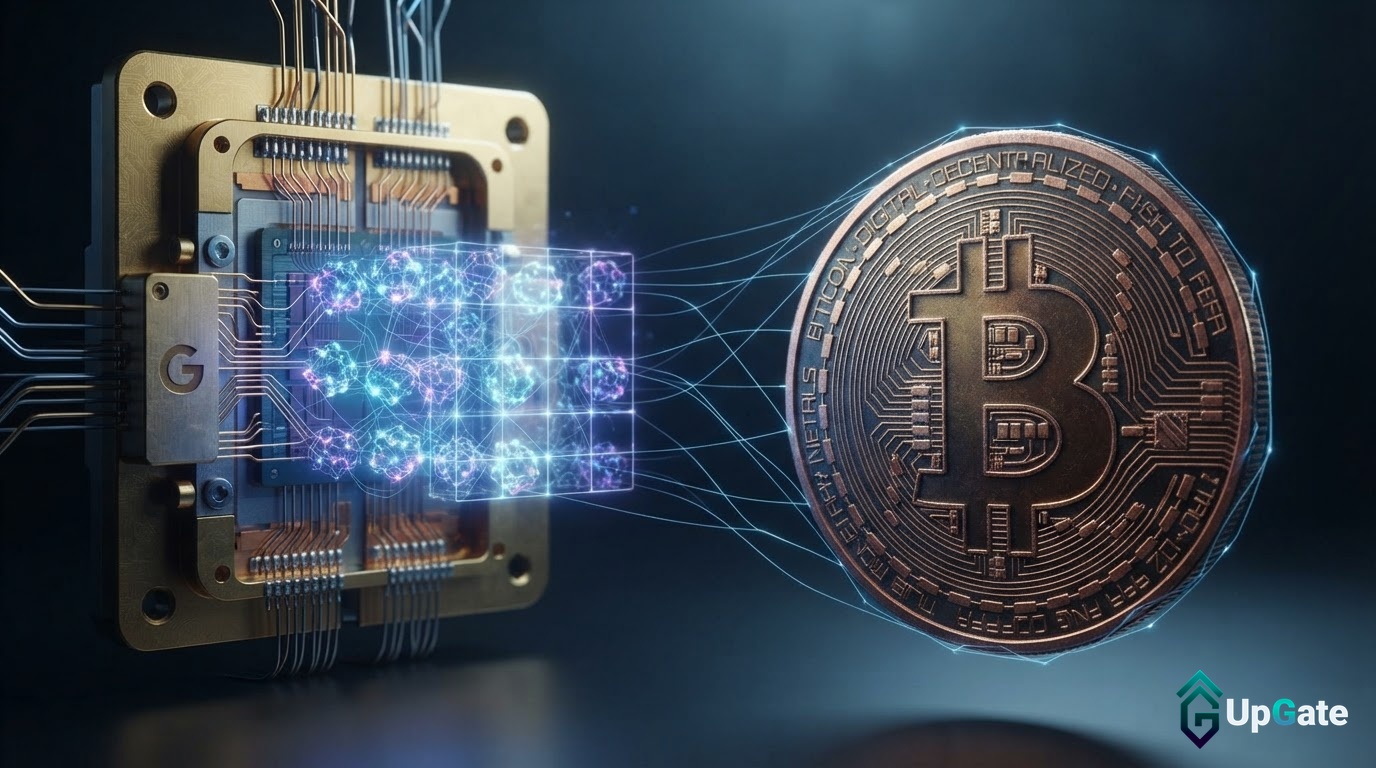
    Recent reports indicate Google has made significant progress in quantum computing error correction, reportedly reducing error rates by a factor of 40 and achieving 99.9% accuracy. While this advancement is a notable step in quantum computing research, it does not pose an immediate impact on Bitcoin’s cryptography. The practical application of such technology to break current encryption standards remains distant due to substantial scale and capability requirements. Uncertainty remains regarding the scale at which Google’s quantum error correction method can be demonstrated.

    Google’s reported technique, utilizing its Willow chip and a method called ‘magic state cultivation,’ addresses a critical component for building fault-tolerant quantum systems. Magic states are essential for quantum computation but typically consume a large portion of a quantum computer’s capacity. Improving their reliability and production could ease a major bottleneck in developing more powerful quantum machines.

    Why This Matters

    The materials describe a narrow update: Google has reportedly developed a quantum computing technique that reduces error rates by a factor of 40 and achieves 99.9% accuracy. The scale at which Google’s quantum error correction method can be demonstrated remains a key uncertainty.

    Broader Context

    Source materials place the factual news in this context: Google’s latest quantum computing technique reportedly cuts relevant error rates by a factor of 40 and reaches 99.9% accuracy, advancing a field whose eventual capabilities could impact Bitcoin cryptography.

    The Bitcoin Cryptography Challenge: Scale and Requirements

    The leap from laboratory milestones to systems capable of impacting cryptography like that used by Bitcoin is substantial. A Google white paper, published in March, estimated that breaking Bitcoin’s security would require between 1,200 and 1,450 logical qubits. Logical qubits are error-corrected units necessary for reliable computation, distinct from the physical qubits found in current processors. For comparison, Google’s Willow chip has 105 qubits, while IBM has reported 70 logical qubits, and QuEra has executed algorithms using up to 96 logical qubits. IBM’s roadmap targets 200 logical qubits by 2029 and 2,000 by 2033, indicating that the necessary scale is still years away.

    Bridging the Gap: Current Limitations and Future Uncertainty

    Furthermore, the potential impact on Bitcoin’s cryptography is conditional. It depends on future quantum machines becoming capable of deriving private keys from exposed public keys, a scenario that requires not only immense computational power but also the revelation of public keys. Experts, such as Jameson Lopp, co-founder and chief security officer of Casa, suggest that a machine powerful enough to decode a Bitcoin public key could be at least another decade away. The practical exposure would also depend on whether a public key is revealed. The exact timeline for the development of quantum computers capable of breaking Bitcoin’s cryptography remains uncertain.

    Long-Term Preparation: The Imperative for Post-Quantum Security

    Despite the distant nature of the potential impact, Google’s progress in error correction reinforces the importance of long-term preparation for a post-quantum future. The primary report estimates that approximately 6.26 million BTC are currently held in quantum-vulnerable addresses. While the immediate network impact remains unchanged, the advancement makes the longer-term possibility harder to dismiss as purely theoretical. This underscores the need for Bitcoin’s ecosystem to consider migration paths to quantum-resistant cryptographic arrangements well before a credible attack-capable machine emerges.

    Market probabilities reflect the long-term, uncertain nature of this potential impact. As reported in the source article, Polymarket assigned a 1% chance to the relevant possibility by the end of the current year and an 11% chance by the end of 2027. This indicates that while the possibility is acknowledged, it is not considered an immediate event.

    In conclusion, Google’s reported advancements in quantum error correction represent a significant development in the field of quantum computing. However, they do not establish an immediate security event or a sell signal for Bitcoin. Instead, this progress adds weight to the long-dated tail risk, highlighting that while error correction is advancing, the transition from laboratory milestones to reliable Bitcoin-breaking systems requires scale, fault tolerance, and sustained computation that current machines have not yet demonstrated. The durable implication is that Bitcoin’s post-quantum migration challenge needs to be considered and planned for well in advance of any credible quantum impact.

  • Bitcoin Poised for 50% Surge on Quantum Plan Agreement, Says Capriole CEO

    Bitcoin Poised for 50% Surge on Quantum Plan Agreement, Says Capriole CEO

    Bitcoin Price Surge Possible with Quantum Computing Defense Plan, Says Capriole CEO

    Bitcoin’s price could surge by as much as 50% in a single day if developers can agree on a clear roadmap to safeguard the blockchain against the threat of quantum computers, according to Charles Edwards, CEO of Capriole Investments.

    Edwards also cautioned that any delays in addressing this looming technological challenge could negatively impact the cryptocurrency’s valuation. He described the quantum threat as a tangible concern within a typical two-to-three-year investment timeframe.

    Speaking to BMTV, Edwards highlighted that Bitcoin developers have yet to reach a consensus on how to proceed, despite early-stage proposals aimed at preparing the network.

    “If they kind of align and say, okay, this is the roadmap that we’re going to do, or this is the signature schemes that we’re going to probably implement in the next sort of 12 months or 18 months or what have you,” Edwards stated, “I think that results in a significant repricing of Bitcoin up.”

    He estimated that a concrete plan from Bitcoin Core developers could trigger a 30% to 50% price movement in just one day as investors re-evaluate the risk. Consequently, the next six to 12 months could prove favorable for Bitcoin if development progresses. Conversely, a failure to make headway would leave the network increasingly vulnerable as technology advances, prompting Edwards to reassess Bitcoin’s intrinsic value.

    Coinbase has also outlined its requirements for post-quantum security, emphasizing that any new signature design must consider transaction fees and the cost of validating transactions across the network. In a blog post on October 13, the exchange discussed potential technical approaches, including the use of hybrid signatures during a transitional period.

    At the time of reporting, Bitcoin was trading around $81,000, marking a nearly 3% decrease over the past 24 hours, with its daily trading range between $80,400 and $84,000. Over the last week, BTC has lost over 2%, though it remains more than 4% higher than a month ago and approximately 36% below its all-time high.

    Edwards also pointed to interest rates as a short-term headwind for liquidity, though he expressed doubt that they would remain elevated for an extended period. He attributed the inflation driving these rates primarily to oil prices, which are influenced by the US-Iran conflict.

    Mining data offers another reason for cautious optimism. Bitcoin’s hash rate, a key indicator of the computing power dedicated to securing the network, has begun to recover over the past four to six weeks following a prolonged downturn. Edwards views this recovery as evidence that the market cycle may have reached its bottom. However, he noted that miners are increasingly shifting capacity towards artificial intelligence applications, making future hash rate trends more complex to interpret.

    He further warned that AI could potentially accelerate the development of quantum computing capabilities, even as he considers current fears of AI independently breaking Bitcoin’s encryption to be premature.

  • Coinbase’s Historical Cold Storage Key Generation: A Deep Dive into Security Measures

    Coinbase’s Historical Cold Storage Key Generation: A Deep Dive into Security Measures

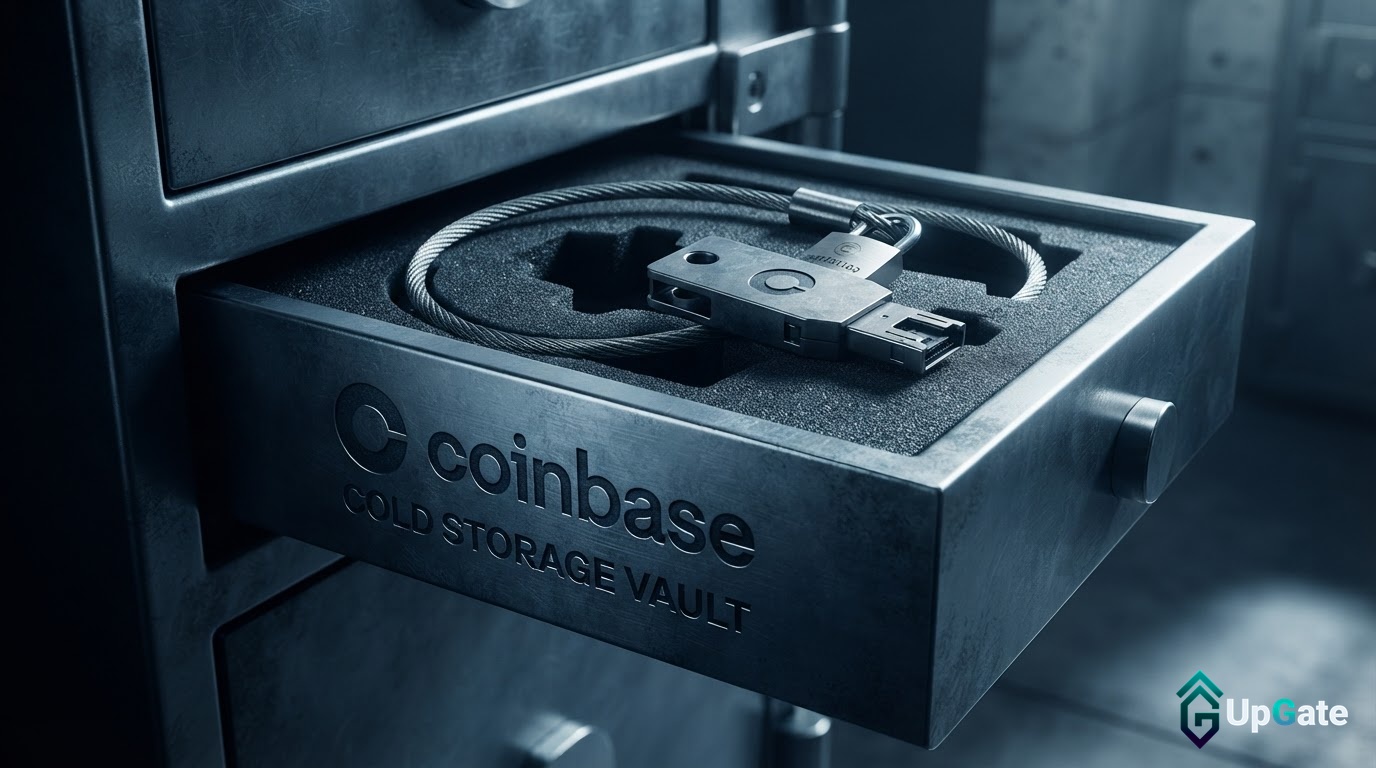
    Coinbase historically implemented exceptionally rigorous security protocols for generating its cold storage keys, a critical process designed to safeguard customer assets against sophisticated threats. These measures included the use of Faraday-caged tents at secret San Francisco locations and air-gapped laptops, all aimed at preventing potential electromagnetic side-channel attacks and insider compromises during the nascent stages of key creation.

    Elaborate Physical and Digital Safeguards

    The cornerstone of Coinbase’s security was the generation of keys within Faraday cages. These specialized enclosures block electromagnetic signals, thereby thwarting potential attackers who might attempt to capture faint emissions from electronic devices to reconstruct sensitive data. To further complicate surveillance, these tents were frequently relocated to unpredictable sites across San Francisco.

    For the actual key generation and printing, Coinbase employed two factory-sealed laptops—one running Linux and the other a MacBook. Crucially, both machines were air-gapped, meaning they were never connected to any network. To mitigate the risk of pre-ceremony tampering, the specific laptops to be used were selected via a coin toss, ensuring that no single machine could be targeted for compromise beforehand.

    Procedural Security and Evolution

    Upon completion of the key generation, all hardware, including the laptops and printers, underwent physical destruction. This step was particularly important for printers, which can retain data from print jobs, thus closing a potential vulnerability that might otherwise be overlooked.

    The generated keys were then secured using Shamir’s secret sharing, a cryptographic technique that divides a key into multiple parts. This method necessitates the cooperation of several individuals to reconstruct the complete key, significantly reducing the risk of a single insider gaining access to customer funds.

    Over time, Coinbase refined these procedures. Later iterations of the key generation process included an independent auditor to verify the integrity of the ceremony, adding an extra layer of assurance and transparency.

    Historical Context and Key Takeaways

    These sophisticated measures were not Coinbase’s initial approach. Early on, the company relied on simpler methods, such as USB drives and paper backups stored in bank safe-deposit boxes. Despite these less complex systems, Coinbase reported that approximately 87% of customer funds were held offline by late 2012, underscoring an early commitment to asset security.

    The fundamental lesson from Coinbase’s historical practices is that the security of cold storage is intrinsically linked to the moment its keys are born. If keys are compromised during their creation, any subsequent storage safeguards become moot. This highlights the importance for cryptocurrency users to inquire not only about where their assets are stored but also about the methods their custodians employ for generating and protecting the critical keys that control those assets.

    Why This Matters

    The materials describe a narrow update: Coinbase generated cold storage keys within Faraday-caged tents at secret, moving locations in San Francisco. Cold storage is only as strong as the moment the keys are born.

    Broader Context

    Source materials place the factual news in this context: Coinbase once generated the keys to its cold storage inside Faraday-caged tents, set up at secret locations around San Francisco.

  • Optimism Price Forecast: Will OP Fuel Ethereum’s Superchain Surge?

    Optimism Price Forecast: Will OP Fuel Ethereum’s Superchain Surge?

    Optimism’s OP Stack is enabling projects to construct bespoke blockchains leveraging shared technology and standards, a strategy that could significantly broaden the network’s influence beyond its native Layer 2.

    Superchain Ambitions and Ecosystem Growth

    The growth of Optimism’s “Superchain” concept, which envisions a network of interconnected blockchains built on common infrastructure rather than a singular Layer 2 solution, is central to its future prospects. This approach allows applications to operate with greater speed and lower costs compared to the Ethereum mainnet, while still settling transactions on Ethereum. The ecosystem is poised to accommodate a diverse range of applications, from decentralized finance (DeFi) and consumer-facing platforms to gaming and custom-built chains, according to recent analyses.

    The OP Stack: A Foundation for Custom Chains

    The OP Stack represents a more ambitious play than simply scaling Optimism’s own network. This technology empowers projects to launch their own independent blockchains, all while benefiting from shared infrastructure and standardized protocols. A successful expansion of this model could see Optimism gain from a flourishing, multi-chain ecosystem rather than being confined to the performance of a single network.

    Ethereum’s robust liquidity and active developer community present a significant opportunity for scaling solutions. However, a single blockchain architecture struggles to efficiently support the vast array of applications required at scale. Optimism’s Superchain vision aims to foster interconnected growth across multiple chains through unified technological foundations.

    Bullish Case and Potential Token Value

    The optimistic outlook for Optimism hinges on the potential for widespread adoption of the OP Stack. If a substantial number of prominent applications and corporations opt to build their Layer 2 networks using this framework, the OP Stack could emerge as a dominant standard for Ethereum scaling. This scenario could drive demand for the OP token, which has recently shown upward momentum and may target $0.25 or even $0.36 if demand continues to rise. Such a development would position Optimism at the forefront of a broader infrastructure trend.

    Risks and Challenges Ahead

    Despite the compelling technical narrative, adoption is not guaranteed, and the proliferation of new chains does not automatically translate into increased value for OP token holders. The competitive landscape for Ethereum scaling is fierce, with numerous projects vying for applications, developers, and liquidity. Optimism must offer more than just a sophisticated technical proposition to differentiate itself.

    A persistent challenge for the Superchain model is the question of how its expansion directly benefits the OP token. The success of the network and the performance of its native token are not always directly correlated.

    Measuring Progress Beyond Hype

    Ultimately, the trajectory of Optimism’s price prediction will likely depend less on speculative enthusiasm and more on tangible advancements. Key metrics to watch include Superchain activity, the rate of OP Stack adoption, the launch of new chains, stablecoin liquidity, decentralized exchange volume, developer growth, and the actual utility of the OP token. While the underlying infrastructure thesis is strong, the token must demonstrate its ability to capture value from the ecosystem it is designed to support.

  • Solana Schedules Next Major Upgrade

    Solana Schedules Next Major Upgrade

    Solana Sets October 21 for Alpenglow Upgrade, Promising Near-Instant Transaction Finality

    Solana has scheduled October 21 for the rollout of Alpenglow, a comprehensive system upgrade designed to replace the current consensus mechanism used by its validators. The transition is slated to coincide with the start of epoch 1064, which the Solana Foundation anticipates will commence around 3:00 PM UTC on that Wednesday.

    Alpenglow will supersede TowerBFT, the existing consensus system, with the ambitious goal of achieving transaction finality in approximately 150 milliseconds. Transaction finality signifies the point at which a transaction becomes irreversible. Under the current TowerBFT system, this process takes around 12.8 seconds.

    While payments on Solana are currently confirmed with considerable speed, this confirmation does not guarantee irreversibility. Until TowerBFT completes its 13-second cycle, there remains a theoretical possibility that a block could be discarded. This lingering uncertainty compels entities handling significant financial transactions to await the full confirmation window. With finality reduced to about 150 milliseconds, the irreversible confirmation will arrive almost as swiftly as the initial optimistic one, a crucial improvement for applications like checkout systems accepting SOL, decentralized finance (DeFi) platforms, and trading desks settling positions.

    TowerBFT operates by having validators submit their votes as on-chain transactions. A block is only considered final once votes from 32 slots have accumulated. Votor, the voting protocol integrated with Alpenglow, shifts vote processing off-chain. This allows validators to communicate directly, bundle votes into certificates, and achieve block finality after a single round of voting, or at most two.

    If 80% or more of the staked assets back a block in the initial round, it is finalized immediately. Should support fall between 60% and 80%, a second round with a 60% threshold determines whether the block is finalized or skipped. The Solana Foundation states that this design can tolerate up to 20% malicious stake and an additional 20% of offline stake.

    Alpenglow Mainnet Activation

    Alpenglow is set to go live on the mainnet-beta on Wednesday, October 21, at approximately 2:50 PM UTC. This upgrade represents 18 months of development for a migration that will occur within a single slot, drastically reducing finality from seconds to around 150 milliseconds.

    Ordinary users will not need to take any action, and wallets and applications are expected to function as they do currently. The Solana Virtual Machine, transaction formats, programs, and fees will remain unchanged. For developers, the distinction between “confirmed” and “finalized” commitment levels will effectively disappear.

    Each vote account will require an additional 0.8 SOL, beyond its rent-exempt balance, to cover the new Validator Admission Ticket. This is a per-epoch fee of the same amount that will be burned. It replaces the approximately 1 SOL per epoch that validators previously spent on vote transaction fees under TowerBFT. Validators unable to cover this fee will be excluded from voting and block production for the subsequent epoch.

    The feature gate for Alpenglow will activate at the beginning of epoch 1064. However, TowerBFT will continue to manage consensus for an additional 5,000 slots, approximately 18 minutes, before Alpenglow assumes full control at slot 459,653,000. This staggered approach is designed to ensure stability and mitigate any potential issues during the transition.

    Validators approved Alpenglow in September 2025, with the SIMD-0326 proposal passing with 98.27% of the votes cast in favor. In May, Anza Lead Economist Max Resnick indicated to Decrypt that the team was targeting a late Q3 or early Q4 mainnet activation, suggesting the current timeline is proceeding as planned.

    The October 21 deployment will introduce Votor, the first component of Alpenglow. Rotor, which will replace Turbine—Solana’s system for broadcasting block data among validators—is slated for a later release, with no specific date yet announced.

  • Jito Upgrades Solana’s Block Assembly Marketplace, Reducing Delays and Boosting Validator Rewards

    Jito Upgrades Solana’s Block Assembly Marketplace, Reducing Delays and Boosting Validator Rewards

    Jito has upgraded its Block Assembly Marketplace (BAM) on the Solana network, reportedly reducing bundle submission delays by approximately 50 milliseconds. Early results, announced October 13, 2026, indicate a 72% increase in average rewards for successful bundle submissions.

    This upgrade coincided with Solana’s reduction of target slot times to 200 milliseconds at Epoch 1053 on October 9, 2026. In response, BAM adjusted its auction intervals from 25 milliseconds to 20 milliseconds.

    Jito has also implemented performance fixes addressing kernel delays, which ranged from 90 to 330 milliseconds. These improvements have resulted in a 15.5% increase in BAM tips per block.

    BAM, launched on Solana mainnet September 25, 2025, is a modular and verifiable block-building framework utilizing Trusted Execution Environments (TEEs) for private and verifiable transaction ordering. By the end of Epoch 1050, BAM had 385 validators and approximately 164 million SOL in delegated stake, representing about 37% of Solana’s total stake. The FireBAM initiative added an estimated 7.3 million SOL from 12 validators.

    During Solana’s upcoming Alpenglow consensus upgrade, expected mid-to-late October 2026, BAM nodes will enter maintenance mode. Validators will temporarily revert to the Jito-Agave Block Engine, and BAM-powered features will be paused.

    For validators, the increased average rewards and the 15.5% lift in tips per block signify greater revenue potential through BAM-connected infrastructure. With a substantial portion of Solana’s stake running through BAM and FireBAM, the block-building framework holds considerable influence over transaction ordering on the network.

    Uncertainties remain regarding the speed of BAM node recovery post-Alpenglow, the persistence of current reward improvements under new consensus rules, and future growth in validator and stake counts.

    Why This Matters

    The Jito BAM upgrade is significant because it directly impacts validator revenue through increased rewards and tips per block. With a substantial portion of Solana’s stake delegated to BAM, this upgrade influences transaction ordering on the network. The upgrade’s success and continued impact are subject to uncertainties surrounding the upcoming Alpenglow consensus upgrade and its effect on network stability and reward structures.

    Broader Context

    A bundle is a package of transactions submitted together for inclusion in a block, typically with a tip attached for the validator who includes it. BAM is the marketplace where these bundles compete for space. The framework’s reliance on Trusted Execution Environments (TEEs) ensures private and verifiable transaction ordering, a key feature for network integrity.

  • Aptos Launches Encrypted Mempool, Blocking Sandwich Attacks

    Aptos Launches Encrypted Mempool, Blocking Sandwich Attacks

    Aptos Mainnet Launches Optional Encrypted Mempool for Enhanced Transaction Privacy

    Aptos, a prominent blockchain platform, announced on Monday the official launch of its Encrypted Mempool on the mainnet. This feature positions Aptos among a select group of mainstream public blockchains to integrate transaction privacy directly into its consensus layer. Users can opt to enable this functionality, ensuring that transaction details remain encrypted until block ordering is finalized, thereby preventing bots from exploiting pending orders for sandwich attacks or front-running.

    Currently, the mempools of most mainstream public blockchains are entirely transparent. Any node can view the specifics of upcoming transactions, including the functions called, assets and amounts involved, and the addresses of interacting contracts. MEV (Maximal Extractable Value) bots leverage this visibility to insert their own orders before or after user transactions, profiting by buying low and selling high at the expense of legitimate traders.

    Data from Bitquery investigations reveals that sandwich attacks alone generated $29.7 million in revenue for bots on Solana over an 11-month period, involving nearly 6.9 million attacks and 2.2 million wallets. Losses on Ethereum are even more substantial: according to EigenPhi, traders lost approximately $60 million to sandwich attacks in the 12 months leading up to October 2025. This figure does not account for other MEV strategies such as front-running and backrunning.

    The operational logic of Aptos’s Encrypted Mempool involves four key steps. Users, through compatible wallets or applications, encrypt their transaction details on their local devices before submission. After encryption, only the sender’s address and gas fee are visible; core information such as assets, amounts, and contract interactions are masked.

    Encrypted transactions then enter the mempool for queuing. Validators sort these transactions but cannot see their content, a process referred to as “blind sorting.” Once the sorting order is determined, all validators collectively decrypt these transactions before execution and on-chain recording. Throughout this entire process, no single node can independently decrypt pending transactions, thus preventing malicious actions by insiders.

    According to Aptos developer documentation, the minimum gas price for encrypted transactions is double the network’s baseline minimum. In test environments with 50 nodes, this feature introduced approximately 20 milliseconds of additional latency per block. This cost is exchanged for the privacy of transaction details, a premium considered acceptable for institutional large orders or high-frequency trading strategies.

    Encrypted mempools are not an entirely new concept. Gnosis Chain implemented an encrypted mempool in July 2024 via the Shutter protocol, and Ethereum’s Flashbots Protect routes transactions privately to block builders, bypassing the public mempool. Both solutions have proven effective but rely on additional infrastructure: Shutter utilizes an independent decryption committee, while Flashbots depends on trusted builders.

    Aptos’s design differs by having existing validators handle both sorting and decryption simultaneously. This eliminates the need for third-party nodes or additional trust assumptions, offering a more unified architecture. However, it also means that the security ceiling is directly determined by the scale and honesty of the validator community.

    Data indicates that MEV attacks are no longer a fringe issue. The figures of $60 million on Ethereum and $29.7 million on Solana demonstrate that this is a mature and systematic industry, rather than isolated incidents. By integrating an encrypted mempool into the public chain layer, Aptos signifies that a new wave of Layer 1 projects are designing transaction privacy as fundamental infrastructure, rather than an afterthought for dApps or third-party tools.

    Future observations will focus on two key areas. Firstly, adoption rates: will institutional investors, AI agents, and large-volume traders genuinely utilize this feature? If only a small number of users adopt it, the volume of encrypted transactions may be insufficient to validate its economic viability and security. Secondly, regulatory implications: encrypted transaction details could create a gray area for anti-money laundering (AML) and law enforcement investigations, particularly when decryption occurs after transaction ordering. The question remains whether regulators can effectively trace these transactions. These two points will determine whether encrypted mempools become a mainstream standard or remain a niche functionality.

  • Aptos Launches Encrypted Mempool to Combat Frontrunning

    Aptos Launches Encrypted Mempool to Combat Frontrunning

    Aptos Blockchain Introduces Encrypted Mempool to Combat MEV Attacks

    Layer-1 blockchain Aptos has rolled out a new optional feature designed to shield traders from maximal extractable value (MEV) exploits, such as frontrunning and sandwich attacks.

    The Encrypted Mempool, now live on Aptos’ mainnet, allows users to opt-in to encrypt pending transaction details until their order within a block is finalized. Aptos stated the feature is particularly beneficial for institutions handling large transactions, traders seeking to mitigate MEV risks, and AI agents and builders.

    “On any major blockchain today, anyone monitoring the network can see transaction details before they are executed – the function being called, the assets and amounts involved, and the contracts being interacted with,” Aptos explained. “Bots leverage this visibility to trade against you or replicate your strategies.”

    MEV attacks, including sandwich attacks, have proven costly. Cointelegraph’s analysis of EigenPhi data indicated that Ethereum traders lost approximately $60 million to sandwich attacks in the 12 months leading up to October 2025. On Solana, a Bitquery examination of an 11-month period revealed that sandwich attacks generated $29.7 million for bots, with nearly 6.9 million such attacks impacting around 2.2 million wallets.

    When a user enables the Encrypted Mempool, a compatible wallet or application encrypts the transaction’s contents on their device before submitting it to Aptos. While sensitive details like assets and amounts remain hidden, the sender’s address and gas fee are still visible.

    The encrypted transaction then enters the mempool, a holding area for pending transactions awaiting inclusion in a block. Validators determine the order of these transactions without access to their contents.

    Once the transaction order is confirmed, validators collectively decrypt the transactions, which are then executed and recorded on the blockchain. Crucially, no single validator possesses the ability to decrypt a pending transaction independently.

    By concealing transaction details until their order is set, the feature aims to prevent bots from observing pending orders and inserting their own trades ahead of or around them to profit at the expense of users.

    This enhanced security comes with additional costs and a minor delay. According to Aptos’ developer documentation, encrypted transactions incur a minimum gas price double the network’s base minimum. In tests involving 50 nodes, Aptos reported that the system added approximately 20 milliseconds per block compared to the existing consensus implementation.

    Aptos joins a growing number of networks offering protection against malicious MEV. Gnosis Chain launched its own encrypted mempool using Shutter in July 2024, and Ethereum’s Flashbots Protect routes transactions privately to block builders. Aptos differentiates itself by having its existing validators manage both transaction ordering and decryption, rather than relying on a separate decryption committee or trusted builders.

  • STRK Soars 322% in Four Weeks, Outperforming Bitcoin and Ether

    STRK Soars 322% in Four Weeks, Outperforming Bitcoin and Ether

    Starknet’s STRK Token Surges on Potential Ethereum Departure

    The STRK token, native to the Starknet network, experienced a dramatic surge of approximately 322% to 323% in the 30 days leading up to October 11-12, 2026, significantly outperforming both Bitcoin and Ether during the same period.

    A Bold Proposal Sparks Rally

    The catalyst for this remarkable price action was not a new product launch, but rather a strategic idea: Starknet is reportedly considering a move away from its current status as an Ethereum Layer 2 solution to establish itself as an independent Layer 1 blockchain.

    Currently, Starknet operates as a Layer 2 network on Ethereum. It processes transactions on its own infrastructure before settling them on the Ethereum mainnet to leverage its robust security.

    The Vision for Independence

    This proposed shift, unveiled at the Token2049 conference, would sever that connection. Starknet would transition from an Ethereum-settled system to a standalone Layer 1 chain. The ambition behind this move is substantial: to become the first fully quantum-resistant network by 2027.

    Starknet CEO Eli Ben-Sasson has articulated independence as a matter of control. He argues that operating as a standalone Layer 1 would grant Starknet the autonomy to dictate its own timelines for crucial security upgrades, particularly concerning post-quantum cryptography. As a Layer 2, the network’s upgrade schedule is inherently influenced by decisions made on the Ethereum network.

    Market Reaction and Trading Activity

    The market responded positively to this proposition. On October 9, STRK saw a single-day gain of around 40%, with intraday prices briefly exceeding $0.12.

    Trading activity mirrored the price surge. STRK’s 24-hour trading volumes frequently reached hundreds of millions of dollars during this period. Daily volumes on decentralized exchanges and perpetual futures trading also saw a notable increase.

    Financial Metrics and Context

    Recent data indicated STRK’s market capitalization hovering between $860 million and $888 million. On October 8, transaction fees on the network reached a seven-day high of $13,685, representing an approximately 190% increase from the week’s low.

    Starknet’s total value locked (TVL) in decentralized finance (DeFi) applications experienced a more modest rise of roughly 5% to 7% over a recent period slightly shorter than the price rally, currently standing at approximately $168 million. This suggests that while the token’s value quadrupled, the actual capital deployed in its applications saw only single-digit growth.

    Despite the impressive gains, it is crucial to note that STRK remains over 97% below its all-time high, which was set in February 2024.

    Key Risks and Future Outlook

    The primary risk associated with this potential transition is that the Layer 1 shift remains a proposal. It requires significant technical development, governance approval, and community consensus before any changes can be implemented. A confirmed launch timeline has not yet been established, and for the time being, Starknet continues to settle its transactions on Ethereum.

    The divergence between STRK’s price performance and its underlying usage metrics warrants attention. Starknet’s current market capitalization is several times its DeFi TVL. Traders will be closely monitoring whether TVL, transaction fees, and user activity can catch up in the coming weeks.

    Broader Implications for Ethereum’s Ecosystem

    This development also raises broader strategic questions for Ethereum’s scaling ecosystem. A prominent rollup network openly considering independence challenges the fundamental model of Layer 2 networks as extensions of Ethereum. If Starknet proceeds with this plan, it would necessitate relinquishing the security guarantees that initially made Layer 2 solutions attractive. Furthermore, it would require convincing validators, developers, and capital that a standalone chain offers a compelling alternative worth the inherent trade-offs.

  • Zcash: Securing Keys Against AI and Quantum Threats

    Zcash: Securing Keys Against AI and Quantum Threats

    Zcash Developers Unveil Quantum-Resistant Plan for Transparent Transactions

    While much of the cryptocurrency community remains in a state of cautious deliberation, a team of Zcash developers has announced a concrete plan to address future cryptographic threats. Zakura, a company developing a Zcash full node, anticipates the integration of post-quantum signature opcodes into the Zcash network as early as January. These opcodes are fundamental instructions that will enable the network to validate a new class of digital signatures.

    The stated objective, as detailed in an engineering post by Roman Akhtariev, is to achieve “full post-quantum safe transparent pools with hash based signatures.”

    Zcash offers two distinct transaction types: shielded payments, which obscure the sender, recipient, and transaction amount, and transparent payments, which are publicly verifiable, similar to those on the Bitcoin network. A transparent address comprises a hash of a public key, which remains concealed until the owner initiates a transaction and reveals the key on the blockchain.

    Zakura’s strategy employs a dual-layered defense. Wallets will be designed to adopt a new address after each transaction, thereby keeping public keys from being exposed. This will be complemented by the addition of a hash-based backup signature known as WOTS. Hash-based cryptographic schemes are designed to circumvent the elliptic-curve mathematics that experts fear could eventually be compromised by artificial intelligence or quantum computing.

    However, the practice of rotating addresses introduces a potential privacy challenge. When a wallet requests a server to check balances across multiple addresses, the server can infer that these addresses belong to the same user. Zakura claims to mitigate this issue through private information retrieval (PIR), a cryptographic technique that allows a wallet to retrieve specific data without disclosing which records it is querying. This feature is set to be rolled out this week within the Vizor wallet, where users can already test it by enabling “private queries” in the settings.

    “While others are worrying about the viability of rotating transparent addresses, we’re already solving linkability,” Zakura stated on the social media platform X.

    This statement appears to be a direct response to Ethereum Foundation researcher Justin Drake, who recently advised cryptocurrency holders to calmly transfer their funds to new addresses. The public reaction to Drake’s call to action, however, was notably less composed.

    Drake had previously warned that advancements in AI-driven mathematics could compromise the ECDSA signatures that secure Bitcoin and Ethereum even before quantum computers become a threat, potentially occurring “in the worst case in months not years.” Ethereum co-founder Vitalik Buterin has since commented on the discussion, expressing his belief that it is “plausible” that AI-driven mathematical breakthroughs could break encryption within the next two years.

    The Zakura plan currently addresses only the transparent aspects of Zcash. The company’s post did not specify the timeline or method for activating the new opcodes across the broader network.

    This development occurs as Zcash garners increasing interest from institutional investors, evidenced by a proposed U.S. ETF linked to the Winklevoss twins and Europe’s first Zcash ETP. It also follows a recent network upgrade aimed at accelerating private payment processing by a factor of three.