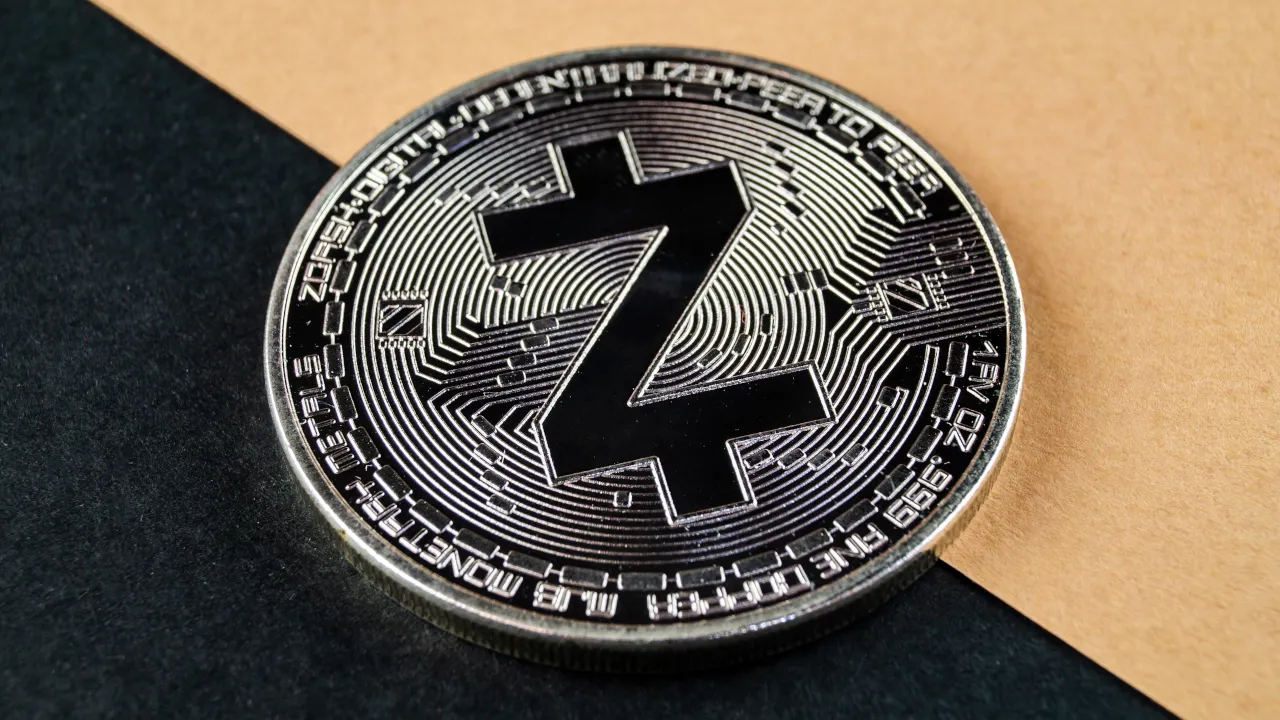
Zcash Suffers Double-Digit Plunge After Critical Vulnerability Disclosure
Zcash experienced a significant overnight drop of more than 10% after developers revealed a critical vulnerability in the protocol’s Orchard shielded pool. The flaw, which had the potential to allow undetectable counterfeiting for over four years, sent the privacy coin’s value plummeting.
According to CoinGecko data, Zcash fell from a local high of $635 on Wednesday to an intraday low of $309 on Thursday. The cryptocurrency has since seen a slight recovery, trading around $330, marking a 37.8% decrease for the day.
Vulnerability Details
The security flaw was identified on May 29 by researcher Taylor Hornby, who utilized AI-assisted auditing tools. The vulnerability was located within two lines of code in the Orchard circuit, the cryptographic component responsible for Zcash’s shielded transactions. It would have enabled a malicious actor to create counterfeit ZEC within the shielded pool without leaving any on-chain trace. If exploited before its discovery, there would have been no cryptographic means to prove that counterfeiting had occurred.
Shielded Labs, the organization spearheading Zcash development, stated in a disclosure post that the vulnerability was present from Orchard’s activation in May 2022 until an emergency fix was implemented on June 1, 2026. “Due to the privacy properties of Orchard and the nature of the bug, there is no definitive way to determine, using only cryptography, whether such exploitation occurred,” the post read.
Reignited Debate on Privacy Coin Risks
The incident has intensified discussions surrounding a perceived structural issue within privacy coins. Critics argue that, unlike Bitcoin or Ethereum where on-chain exploits are readily apparent, privacy-focused cryptocurrencies like Zcash can conceal successful attacks, making detection impossible.
“Zcash enables a unique class of bugs where if they’re exploited, no one would know,” commented crypto analyst Udi Wertheimer on social media. “This unique class still exists. The fact that they fixed this specific bug is immaterial.”
Joe Andrews, CEO of Aztec Labs, a privacy-focused product studio, noted that under-constrained elliptic curve checks, the category of flaw at the core of this vulnerability, are a common weakness in ZK circuits. He added that AI is accelerating the discovery of such bugs across the industry. Andrews suggested that a long-term solution involves formal circuit verification coupled with a secondary proof system, an approach already being considered by Ethereum. “Both systems must agree for a state transition to be valid, which drastically lowers the chances of bugs being exploited,” he explained.
Market Reaction and Potential Impact
Arthur Hayes, former CEO of BitMEX, announced that he had divested his entire Zcash holdings following the disclosure. He expressed concern that while direct inflation from the exploit is unlikely, the Orchard pool itself could face insolvency. This could lead to the dilution of shielded ZEC holders if counterfeit assets were to compete with legitimate ones for a finite pool balance.
However, not all industry figures share the same level of alarm. Craig Salm, chief legal officer at Grayscale, suggested that exploitation prior to the patch was improbable. He argued that proving such exploitation would require an individual to have a deeper understanding of the codebase than all core developers combined and to have resisted the temptation to drain the pool during a bull market. “Seems unlikely to me,” Salm tweeted.
Proposed Solutions and Future Outlook
Shielded Labs has put forth a proposal for a network upgrade that would introduce a new shielded pool featuring turnstile accounting. This mechanism would allow for independent verification of Zcash supply integrity.
Andrews believes that the proposed upgrade, which mandates that all coins be unshielded before entering the new pool, effectively limits the risk of prior exploitation to the current volume of shielded assets. “Formal verification of the new upgrade reduces risks substantially further,” he stated.
Leave a Reply