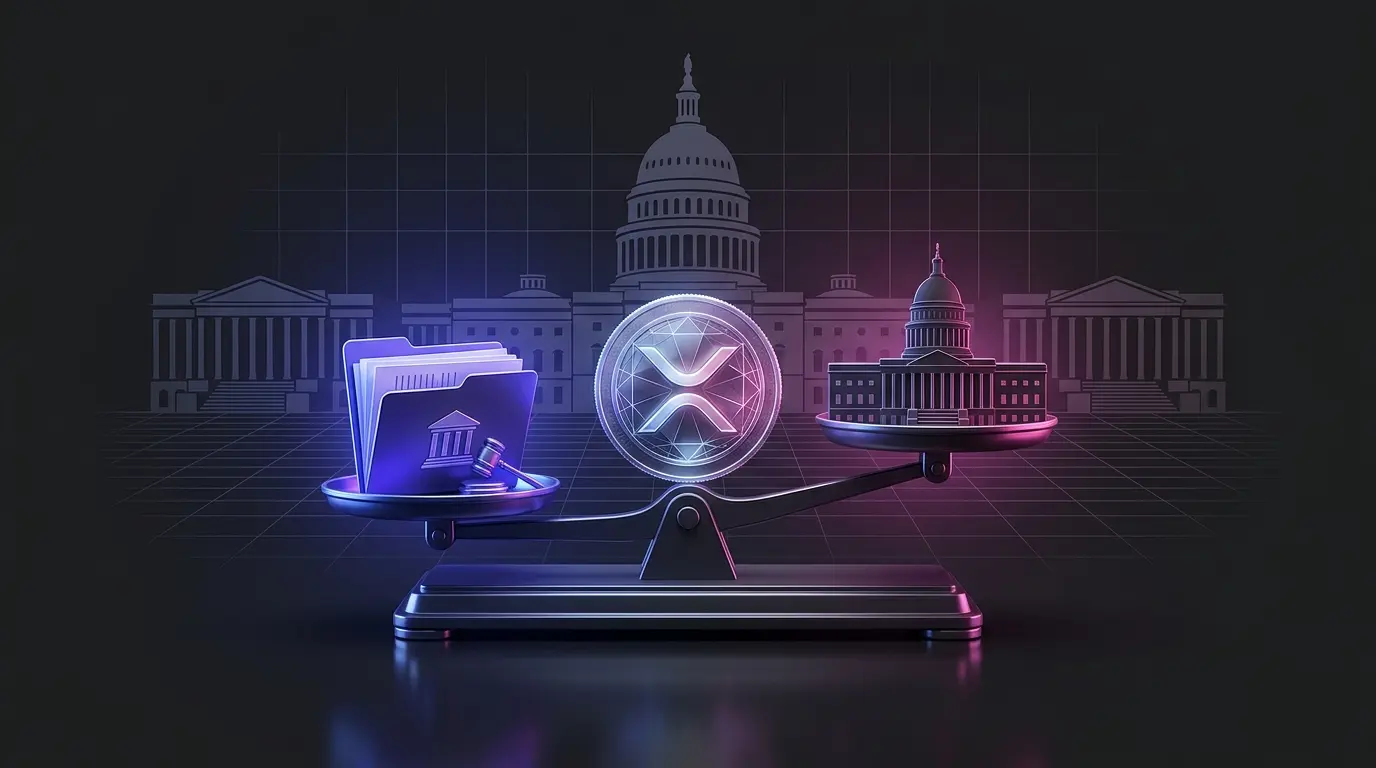
The protracted legal battle between Ripple and the U.S. Securities and Exchange Commission (SEC), which concluded after more than four years and approximately $150 million in legal costs, is now being presented as a significant cautionary tale for the future of cryptocurrency regulation in the United States. The outcome, which distinguished between institutional sales and secondary market trading of XRP, is being leveraged by Ripple’s leadership to advocate for clearer legislative frameworks.
Why This Matters
The materials describe a narrow update: Ripple and its executives spent over four years and approximately $150 million fighting a lawsuit with the SEC over unregistered securities sales of XRP. Whether the CLARITY Act framework will move through Congress this session.
Broader Context
Source materials place the factual news in this context: Ripple CEO Brad Garlinghouse is using his company’s own legal bill as evidence that Washington’s approach to digital assets has a direct, measurable cost.
The Cost of Ambiguity
According to Ripple CEO Brad Garlinghouse, the substantial financial and operational toll of the lawsuit underscores the negative impact of regulatory ambiguity. He stated that a majority of the company’s hiring during the legal stretch occurred outside the United States, suggesting that regulatory uncertainty pushes capital and jobs offshore. This sentiment aligns with the broader industry concern that a lack of clear rules hinders innovation and drives businesses to more favorable jurisdictions.
Case Outcome and Its Nuances
The SEC initially sued Ripple, Garlinghouse, and co-founder Chris Larsen in December 2020, alleging that the company had raised funds through unregistered securities sales of XRP. The case navigated numerous rulings before both parties filed a joint stipulation dismissing their appeals in August 2025. Per the SEC’s own litigation release, this resolution left a civil penalty of $125,035,150 and a registration-related injunction in place.
This outcome, however, did not categorically declare XRP exempt from securities law but rather differentiated between how it was sold to institutional investors and its trading on secondary markets. Ripple views this distinction as a template for how crypto assets should be regulated going forward, arguing for a more defined approach than the case-by-case litigation model that consumed its legal budget.
Garlinghouse has previously called the resolution a “long overdue surrender by the SEC,” contending that the agency pursued the case to intimidate the industry rather than to police fraud. He emphasized that “America needs clear crypto rules to protect users and keep innovation at home.”
Shifting Regulatory Signals
Recent developments suggest a potential shift in regulatory sentiment. Around August 19, a White House innovation meeting brought together crypto executives and regulators to discuss digital-asset policy. During this meeting, CFTC Chair Michael Selig indicated a move away from an enforcement-led regulatory approach. Selig said that innovators were now being welcomed to the White House, contrasting with a previous environment where they might have been “railroaded to the big house.” He also noted that additional regulatory roadmap details would follow at the CFTC’s inaugural Innovation Advisory Committee meeting on August 20, which included digital assets and emerging financial products on its agenda.
Selig’s comments, made with Ripple’s leadership present, are seen by some as tightening the odds that market-structure legislation will be prioritized before the next election cycle. The practical argument for such legislation, like the proposed CLARITY Act, is that it would replace the current litigation-heavy model with a defined split of jurisdiction between the SEC and the Commodity Futures Trading Commission (CFTC). This approach mirrors industry proposals for a token safe harbor, which would allow projects to raise funds and build networks without facing enforcement actions years into their operational history.
Uncertainty Ahead
However, uncertainties remain regarding the legislative path forward. Whether the CLARITY Act or similar frameworks will successfully move through Congress this session is an open question. Ripple’s post-litigation position and financial standing are likely to remain reference points in this ongoing debate, regardless of the legislative outcome.
For traders, the immediate takeaway is that the SEC’s case against Ripple is closed, with the established penalty and injunction standing as final. The broader signal, however, is political: a shift in regulatory posture from a key agency, coupled with industry advocacy, may increase the impetus for legislative action to define the future of digital asset regulation in the United States.
Leave a Reply