Tag: Positive

  • Charles Schwab and Deutsche Bank Expand Digital Asset Services

    Charles Schwab and Deutsche Bank Expand Digital Asset Services

    Charles Schwab has expanded its direct cryptocurrency trading services to its broader retail client base, allowing customers to hold and trade digital assets alongside traditional investments. Concurrently, Deutsche Bank is reportedly preparing to launch an institutional custody service for Bitcoin and Ethereum in Germany, with plans for future expansion into Asia.

    Charles Schwab’s move, managing approximately $12 trillion in client assets, signifies a notable step in retail adoption of cryptocurrencies. The Schwab Crypto platform, supported by Schwab Premier Bank as custodian and Paxos for trade execution and sub-custody, now allows eligible US retail clients to engage in crypto trading. This follows an earlier announcement that Schwab Crypto would add support for SOL, LINK, and AVAX.

    It is important to note that, according to source claims, crypto holdings may not be covered by Securities Investor Protection Corporation protections in the same manner as traditional securities held in a conventional brokerage account.

    Meanwhile, Deutsche Bank’s reported move into digital asset custody is expected to launch in Germany within the next few weeks. The initial offering will focus on custody for Bitcoin and Ethereum. According to Reuters, the German banking giant also intends to offer tokenized deposits and issue blockchain-based securities, including digital bonds.

    Gerald Podobnik, co-head at Deutsche Bank, commented on the evolving financial landscape, stating, “I believe that, as the financial system, we will need to offer tokenized or blockchain solutions to our clients as additional services alongside our traditional ones … but not necessarily to replace what we are doing today.”

    Deutsche Bank has further ambitions, planning to expand its digital asset business into major Asian financial centers next year as part of a broader strategy to capitalize on growth in the digital economy. The exact timeline for the full rollout of Schwab Crypto to all eligible US retail clients and the specific launch date for Deutsche Bank’s custody service remain subject to further updates. The scope and timeline for Deutsche Bank’s expansion into stablecoin transactions and tokenized deposits are also not yet fully detailed.

    Why This Matters

    The materials describe a narrow update: Charles Schwab has opened direct crypto trading to its broader retail client base, allowing them to hold and trade cryptocurrencies alongside traditional investments. The exact timeline for the full rollout of Schwab Crypto to all eligible US retail clients.

    Broader Context

    Source materials place the factual news in this context: Less than two months after indicating that it may add SOL, LINK, and AVAX to its Schwab Crypto platform, Charles Schwab has opened direct crypto trading to its broader retail client base.

  • Circle Eyes 40 Developing Markets for Stablecoin Expansion

    Circle Eyes 40 Developing Markets for Stablecoin Expansion

    Stablecoin Demand Surges in Emerging Markets as Circle Eyes Expansion

    Demand for stablecoins is on the rise across Southeast Asia, Latin America, Africa, and the Middle East, as businesses and individuals increasingly seek access to the internet-based economy. Circle, a prominent stablecoin issuer, is reportedly planning to enter approximately 40 developing markets, according to CEO and Chairman Jeremy Allaire.

    Speaking on Friday on the sidelines of the IMF and World Bank meetings in Bangkok, Allaire described the current moment as an “inflection point” for blockchain technology, transitioning from an early adopter phase to mainstream scaling.

    Analysts at Bernstein have expressed optimism regarding Circle’s prospects, forecasting a new growth cycle for its USD Coin (USDC) stablecoin that could significantly benefit the company over the next year. Bernstein attributes this potential growth to several factors, including renewed momentum in cryptocurrency markets, increased regulatory clarity in the United States, the development of tokenized capital markets, and the growing adoption of stablecoins for payment purposes. The analysts also noted early indications of stablecoin usage in payments facilitated by artificial intelligence agents.

    While Tether’s USDt remains the largest dollar-backed stablecoin by market capitalization, USDC has demonstrated substantial growth in transaction activity. Bernstein data indicates that USDC’s share of adjusted stablecoin transaction volume has surged from around 40% in 2025 to over 60% in 2026, surpassing USDt in this metric.

    In a move to bolster its presence in the cross-border payments sector, Circle announced on September 8 its agreement to acquire Singapore-based platform Tazapay for $400 million in an all-stock deal, expected to finalize in 2027.

  • Coinbase Loans Reach $2.3 Billion Amid Bank Tokenization Push

    Coinbase Loans Reach $2.3 Billion Amid Bank Tokenization Push

    Coinbase Sees Surge in Crypto-Backed Lending

    Coinbase has amassed $2.3 billion in outstanding crypto-backed loans as of October 17, 2026, a significant figure for a product introduced just in January 2025. The service allows eligible U.S. users, excluding those in New York, to leverage their Bitcoin holdings as collateral to borrow USDC, a stablecoin pegged to the U.S. dollar, without needing to sell their cryptocurrency.

    These loans are facilitated through Morpho, a decentralized lending protocol, utilizing its Morpho Blue infrastructure on the Base network. By mid-September 2026, variable-rate loans alone exceeded $1.4 billion, secured by approximately $3 billion in collateral.

    Coinbase expanded its lending offerings on September 22, 2026, by introducing fixed-rate loans via Morpho Midnight, providing borrowers with the option to secure their borrowing costs. Approximately one month later, the total value of crypto-backed loans reached $2.3 billion. It is important to note that the September figure exclusively accounted for variable-rate loans, making a direct comparison with the later total challenging.

    Expanding Collateral Options and Mortgage Partnerships

    The exchange has also broadened the range of cryptocurrencies accepted as collateral. Borrowers can now pledge XRP, DOGE, ADA, and LTC, with XRP and other assets being added in August 2026.

    In a significant development also in August 2026, Coinbase partnered with Better to enable crypto-collateralized conforming mortgages under the Fannie Mae framework.

    Growth in Tokenized Deposits

    The concept of tokenized deposits, which represent traditional bank deposits on a blockchain for real-time settlement, is gaining traction. JPMorgan’s JPMD tokenized deposit has been operational on the Base network for institutional clients since mid-2026. Financial institutions such as Citi and BNY Mellon are also actively involved in tokenized deposit initiatives. Furthermore, several U.K. banks are preparing to launch their networks by 2027, as part of a wider industry effort involving consortium projects both domestically and internationally.

  • Strive Buys Bitcoin, TD Cowen Raises Target Price 27% on $630M Preferred Stock Deal

    Strive Buys Bitcoin, TD Cowen Raises Target Price 27% on $630M Preferred Stock Deal

    TD Cowen Boosts Strive Price Target to $56 on Aggressive Bitcoin Buys

    TD Cowen has significantly increased its price target for Strive (NYSE: ASST) by 27% to $56, citing the company’s recent aggressive Bitcoin acquisitions that have already surpassed the brokerage’s initial fourth-quarter estimates within the past two weeks. Strive has also expanded its SATS preferred stock offering to 7 million shares, aiming to raise $630 million by October 20th, with all proceeds earmarked for further Bitcoin purchases.

    Strive’s Bitcoin Holdings Surge Amidst Market Optimism

    The recent surge in Bitcoin buying by asset management firm Strive has reignited bullish sentiment on Wall Street. Analysts Lance Vitanza and Jonnathan Navarrete at TD Cowen raised their price target for Strive from $44 to $56 on Friday. They highlighted that the Bitcoin treasury company acquired more BTC in just 14 days than the brokerage had originally projected for the entire fourth quarter.

    Strive’s Bitcoin holdings have rapidly grown from 28,000 coins at the end of September to the current 35,595 coins, valued at approximately $2.9 billion at the current market price of around $81,500 per coin. This expansion includes two substantial purchases: 3,311 BTC (approximately $280 million) reported via an SEC 8-K filing on October 13th, followed by another 2,822 BTC (approximately $235 million) acquired through a separate 8-K filing on October 14th. These transactions have propelled Strive’s Bitcoin holdings to become the fourth-largest among publicly traded U.S. companies, surpassing MARA Holdings (which holds 35,770 coins).

    Preferred Stock Offering to Fuel Further Bitcoin Accumulation

    TD Cowen analysts specifically pointed to Strive’s ongoing SATS preferred stock public offering, which has been expanded to 7 million shares priced at $90 each, targeting a total of $630 million by its completion on October 20th. This capital infusion is crucial for Strive, as it will enable the company to continue increasing its Bitcoin holdings without diluting its common shareholder equity.

    The company also plans to maintain sufficient cash reserves to cover 18 months of preferred stock dividend payments, providing a buffer against potential Bitcoin price volatility. TD Cowen views this as a strategic move that offers both offensive and defensive advantages, with the expanded offering size granting Strive greater flexibility for immediate Bitcoin acquisitions.

    Dilution Concerns and Stock Performance

    However, Strive’s rapid expansion of its Bitcoin treasury has also introduced a dilutive effect. TD Cowen analysts noted that warrants previously issued at $27 per share are being exercised in large numbers, leading to a significant increase in diluted shares and consequently reducing the BTC Yield (Bitcoin holdings per common share). Some investors have reportedly sold their shares immediately after exercising their warrants, adding pressure to the stock price.

    As of Friday’s closing, ASST shares traded at $23.96, marking a 6.6% decline. Despite this, the stock has seen a year-to-date increase of over 38%. TD Cowen believes that with all the $27 warrants now exercised, future dilution pressure is expected to subside, which is a positive signal for the BTC Yield.

    Strive’s Strategy and Future Outlook

    The “Bitcoin treasury” sector has seen a notable uptick since the latter half of 2026. Strive’s strategy of “buy Bitcoin first, then issue preferred stock for funding” has resulted in the acquisition of nearly 7,600 Bitcoins in less than a month, significantly exceeding TD Cowen’s initial Q4 forecast of only 4,750 coins. This pace is comparable to the long-term buying strategy of Strategy (formerly MicroStrategy), but Strive’s smaller scale and greater flexibility allow for more pronounced short-term adjustments.

    Key variables for the market moving forward include the successful completion of the SATS preferred stock offering and Strive’s acceleration of Bitcoin purchases once the funds are secured. If the $630 million is successfully raised, Strive could theoretically add another 7,000 to 9,000 Bitcoins in the next 3 to 6 months, further narrowing the gap with Strategy.

  • Gold and Bitcoin: Complementary Assets in a De-Monetization Strategy

    Gold and Bitcoin: Complementary Assets in a De-Monetization Strategy

    Asset management executive Steve Neamtz of Yorkville America proposes that gold and Bitcoin are not competing investments but rather represent different stages of the same “de-monetization” investment logic. According to Neamtz, gold benefits from established infrastructure, while Bitcoin, through the advent of spot ETFs, is addressing critical custody gaps. Both assets are viewed as complementary in an era characterized by high debt and eroding currency purchasing power.

    This perspective emerges against a backdrop of significant macroeconomic shifts. US Federal debt has surpassed $39 trillion, with annual interest payments alone reaching approximately $1 trillion. Concurrently, the purchasing power of the US Dollar has diminished by roughly 40% over the past two decades. These conditions are intensifying the appeal of assets with limited, non-expandable supply.

    Neamtz points out that the core appeal of both gold and Bitcoin stems from their inherent scarcity, a trait that central banks and treasuries cannot replicate through monetary policy. In an environment of escalating debt, this scarcity becomes a critical factor for investors seeking to preserve value. He suggests that investors are increasingly making a “de-monetization bet” rather than simply seeking a buffer against market downturns.

    Gold, with its approximately 5,000-year track record, possesses a deeply entrenched infrastructure, particularly within central bank reserves. This established pipeline gives it a leading position. Bitcoin, with a history of about 17 years, is in an earlier stage of development and market penetration. The approval of Bitcoin spot ETFs in 2024 has been a significant step in addressing custody issues, making the asset more accessible to institutional investors. However, Neamtz believes that Bitcoin still requires central bank-level recognition and qualification as a reserve asset, a process that necessitates extensive coordination of regulatory frameworks, accounting standards, and international clearing systems, potentially taking five to ten years.

    Global central banks have demonstrated a growing interest in gold, purchasing a record 289 metric tons in the second quarter of 2026 and 244 metric tons in the first quarter of the same year. This trend, alongside institutional investment in Bitcoin ETFs, signals a broader movement towards de-monetization strategies.

    Neamtz believes that the real question for investors in 2027 will not be which asset will outperform, but rather how much of each should be held in a portfolio. The decision on allocation should be based on individual risk tolerance and time horizon. Gold may be suitable for those seeking stability, while Bitcoin might appeal to investors willing to bear higher volatility for potentially greater growth. The coexistence of both assets is seen not as a compromise, but as an acknowledgment that the same macroeconomic phenomenon—the devaluation of fiat currency—can be addressed with different tools at different stages of development.

    Key uncertainties remain regarding the timeline for Bitcoin’s full integration into reserve systems and the optimal portfolio allocation percentages for individual investors. The future trajectory of US Federal debt and its impact on currency purchasing power also present ongoing considerations.

    Why This Matters

    The materials describe a narrow update: Steve Neamtz of Yorkville America posits that gold and bitcoin are not mutually exclusive investments but represent different phases of a “de-monetization” investment strategy. The exact timeline for Bitcoin to achieve central bank-level recognition and reserve qualification.

    Broader Context

    Source materials place the market analysis in this context: The article references previous articles: “《比特幣本位》導讀:從歷史、經濟、政治經濟和心理學分析比特幣的完整系統” and “黃金叩關3000美元創歷史新高!比特幣「避險敘事失靈」苦苦掙扎”.

  • Solana Ecosystem Shows Diversification with $193M in Application Revenue and Surging Real-World Assets

    Solana Ecosystem Shows Diversification with $193M in Application Revenue and Surging Real-World Assets

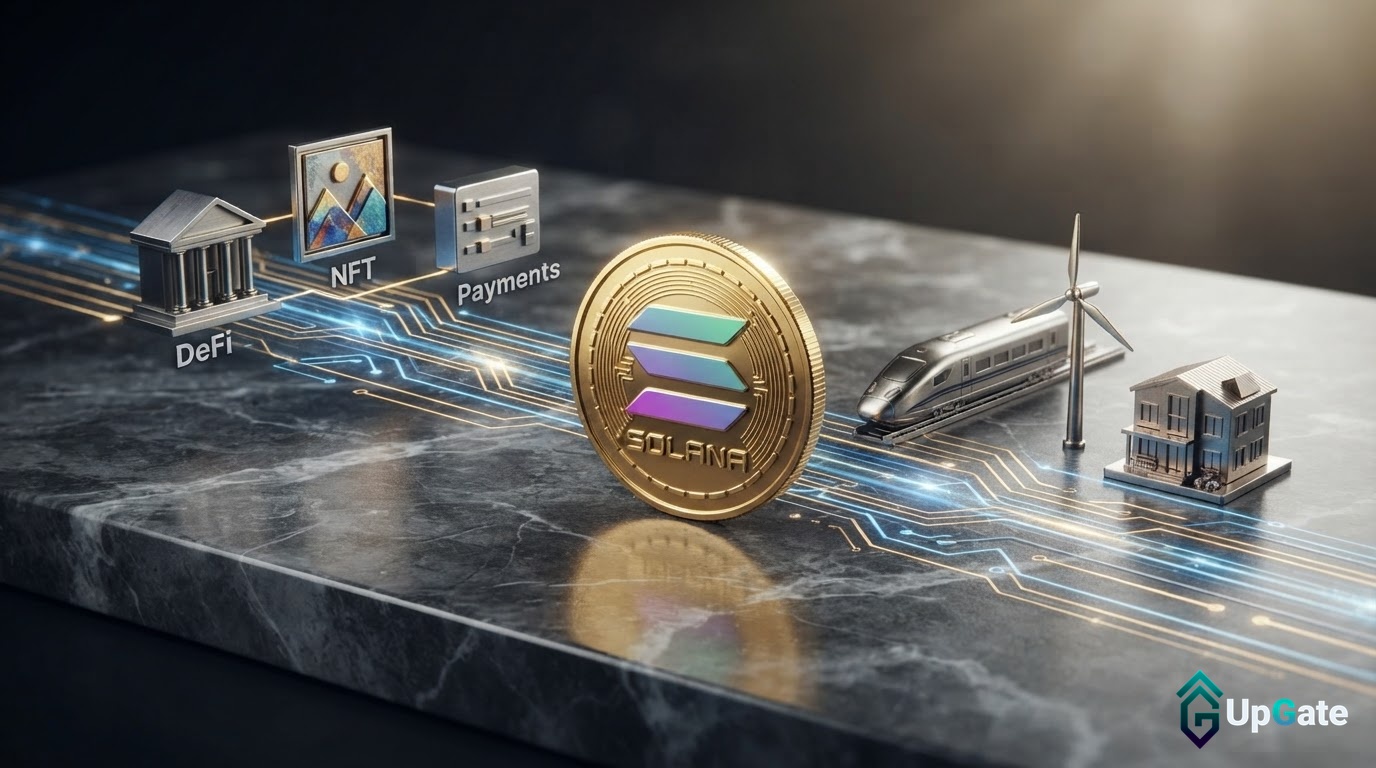
    Solana’s ecosystem is demonstrating diversification, evidenced by $193.1 million in application revenue over the past 30 days and a substantial surge in real-world asset (RWA) value. Over the last year, the value of RWAs on the Solana network has grown from $700 million to $4.37 billion.

    The $193.1 million in application revenue generated in the past 30 days highlights active development and usage on the platform. According to Castle Labs research, this figure is nearly double the total revenue generated by Hyperliquid during the same period.

    The expansion of real-world assets is a key indicator of this diversification. The growth from $700 million to $4.37 billion in RWA value over the past year signifies a move towards more tangible and utility-driven applications, suggesting a shift away from speculative assets as a primary growth driver.

    This evolution indicates a maturing network with broadening utility. The substantial revenue generated by applications and the significant rise in real-world asset value collectively illustrate an evolving Solana network that is broadening its utility and appeal.

    Why This Matters

    The materials describe a narrow update: Solana’s application revenue reached $193. Solana’s growth is moving beyond meme coins.

    Broader Context

    Source materials place the factual news in this context: Solana Apps Generate $193M in 30 Days Amid Real-World Assets Surge.

  • Pi Network Price Surges 4% Following Developer Summit Announcement

    Pi Network Price Surges 4% Following Developer Summit Announcement

    Pi Network Announces Inaugural Ecosystem Summit

    Pi Network is set to host its first-ever Pi Ecosystem Summit from November 17-19, 2026, a three-day online event designed to bring together developers and community members. The summit will concentrate on platform updates, developer tools, and applications aimed at expanding the utility of the Pi cryptocurrency.

    The announcement has coincided with a notable uptick in the price of Pi Network’s native token, PI. The cryptocurrency reportedly saw a 4% rebound, reaching approximately $0.0804. Analysts have identified $0.086 as a potential recovery target, with further resistance anticipated in the $0.09 to $0.10 range.

    Focus on Developers and Application Growth

    Unlike Pi Day and Pi2Day, which celebrate the network’s overall progress, the Pi Ecosystem Summit will specifically highlight the innovations being built for the Pi ecosystem. The event aims to foster growth by showcasing new tools, applications, and services developed by the community.

    According to a recent tweet from the Pi Network team, the summit will feature platform updates, demonstrations of developer tools, showcases of existing applications, and discussions involving developers and the Pi Core Team. These sessions are intended to illustrate how developers are leveraging Pi’s tools to create new services and enhance user experience.

    Exploring Resources and Future Opportunities

    The summit will also serve as a platform for developers and “Pioneers” (Pi Network users) to explore available resources and discover emerging projects. The overarching goal is to facilitate the creation of more practical applications and provide users with expanded real-world use cases for Pi.

    A significant component of the summit will involve in-depth demonstrations of Pi’s development tools, explaining how developers can utilize the platform’s features and resources to build applications. The event will also feature showcases of applications developed by both companies and community developers, detailing the services they offer and their integration with Pi.

    Upcoming Hackathon and Core Team Engagement

    Further details are expected regarding an upcoming Pi hackathon, which is poised to offer developers a new avenue for building applications on the Pi platform. While specific details will be unveiled during the summit, the hackathon is anticipated to be a key opportunity for innovation.

    Discussions between developers and the Pi Core Team will also form a crucial part of the summit, addressing developer needs, desired functionalities, and strategies to enhance Pi’s overall usefulness through their applications.

    Technological Advancements Underpinning the Summit

    The Pi Ecosystem Summit takes place as Pi Network continues to advance its underlying technology. The Core Team has scheduled a Protocol 28 Mainnet upgrade, which is expected to introduce support for more sophisticated smart contracts, including subscription services, escrow functionalities, and NFTs.

  • Crypto PACs Ramp Up Spending Against Sherrod Brown

    Crypto PACs Ramp Up Spending Against Sherrod Brown

    Industry PACs Boost Spending to Oppose Senator Sherrod Brown

    At least two industry-aligned political action committees (PACs) have collectively injected over $52 million into efforts to prevent Sherrod Brown’s return to the Senate. Affiliates of the Fairshake PAC, significantly funded by cryptocurrency firms Coinbase and Ripple Labs, have escalated their initial spending plans by more than 50%, signaling the potential importance of this race for control of Congress in 2026.

    Fairshake Affiliate Dominates Spending in Ohio Senate Race

    Filings with the Federal Election Commission (FEC) on Thursday revealed that Defend American Jobs, a group associated with Fairshake that supports Republican candidates, spent $46.6 million on media campaigns targeting former lawmaker Sherrod Brown and promoting Republican incumbent Jon Husted in Ohio’s 2026 Senate race. This expenditure represents a substantial increase from Fairshake’s September announcement of a $30 million plan to oppose Brown’s Senate bid.

    Senator Brown, in an interview aired Friday on Pod Save America, addressed the attack ads funded by the crypto industry, stating, “I’ve spent my career taking on Wall Street, taking on big pharma, taking on big oil and been successful in many cases.”

    Digital Freedom Fund Also Increases Ad Spending

    With early voting already underway in Ohio for nearly three weeks, Fairshake’s affiliate was not the sole crypto-aligned PAC to ramp up its spending. The Digital Freedom Fund, a Super PAC established by Gemini co-founders Tyler and Cameron Winklevoss, reported approximately $3 million in ad spending this week aimed at opposing Brown and supporting Husted. This brings the group’s total media investment in the Ohio Senate race to over $5.9 million.

    Fairshake’s current expenditures have already surpassed its 2024 efforts, when the PAC allocated $41 million to support Republican Bernie Moreno and oppose Brown, who was then seeking reelection. During his tenure, the Democratic senator chaired the Senate Banking Committee and was a vocal critic of policies favored by the cryptocurrency industry.

    Fairshake Expands Focus Beyond Ohio

    The Ohio race is not Fairshake’s sole focus as the midterm elections approach. Defend American Jobs also reported spending more than $6.7 million to oppose Independent candidate Dan Osborn in Nebraska’s Senate race. Osborn is competing against Republican Pete Ricketts, who, during his time in office, voted in favor of the Digital Asset Market Clarity Act and the Guiding and Establishing National Innovation for US Stablecoins Act.

    Cointelegraph reached out to Fairshake and Husted’s campaign for comment but did not receive an immediate response.

    Fairshake has been transparent about its objective to “back pro-crypto candidates” in 2026, aiming to populate the next congressional session with lawmakers supportive of industry-backed policies. The PAC reported in January that it held $193 million in cash reserves in anticipation of the elections.

    Beyond PACs like Fairshake and Digital Freedom Fund, other organizations with ties to the crypto sector have also engaged in efforts to influence 2026 voters. The Fellowship committee, backed by Cantor Fitzgerald and Anchorage Digital, reported spending over $11 million between August 2025 and August 2026, primarily on media supporting candidates for the House and Senate.

  • Deutsche Bank to Offer Bitcoin, Ethereum Custody Soon

    Deutsche Bank to Offer Bitcoin, Ethereum Custody Soon

    Deutsche Bank Set to Launch Bitcoin and Ethereum Custody Services Within Weeks

    Germany’s largest bank is poised to enter the digital asset space by offering cryptocurrency custody for Bitcoin and Ethereum in the coming weeks. This move marks a significant step in Deutsche Bank’s expansion of its digital asset business, with plans to extend its reach into Asian financial centers by 2027.

    Digital Asset Expansion

    The initial offering will cater to institutional clients, including asset managers, hedge funds, and corporations, enabling them to hold Bitcoin and Ethereum securely through the bank. This service is designed to provide a regulated, bank-backed alternative to relying solely on external cryptocurrency exchanges for asset storage.

    Deutsche Bank is collaborating with Swiss digital asset technology firm Taurus to power its custody solutions. The bank previously led a $65 million funding round for Taurus in 2023 and has been integrating the firm’s technology into its digital asset strategy.

    Future Services and Asian Expansion

    Beyond initial custody, Deutsche Bank has ambitious plans for its digital asset offerings. Future services are expected to include fiat-to-stablecoin conversions and tokenized deposits. The bank also aims to facilitate the issuance of blockchain-based securities, such as digital bonds, for its corporate clients. These initiatives are intended to bridge traditional banking with blockchain technology, offering institutional clients enhanced digital asset management capabilities.

    Gerald Podobnik, co-head of Deutsche Bank’s corporate bank, confirmed the upcoming launch during the IMF and World Bank meetings in Bangkok. He highlighted digital assets as a key component of the corporate bank’s growth strategy, which targets 8% expansion by 2028.

    Following the initial launch in Germany, Deutsche Bank intends to expand its digital asset services to Asian financial hubs, including Singapore and Hong Kong, in 2027. This expansion aims to leverage the bank’s existing corporate banking presence in the region and capitalize on the growing interest from financial institutions in crypto custody, stablecoins, and tokenized securities. The precise timeline and scope of these services will be contingent on regulatory approvals and the bank’s strategic rollout.

  • Bitcoin Holds Near $82K Amidst Fed Hike Uncertainty

    Bitcoin Holds Near $82K Amidst Fed Hike Uncertainty

    Bitcoin held its ground above $80,000 on October 16, trading within a narrow range of approximately $81,800 to $82,060. This stability followed a dip to around $79,700 the previous day, with the subsequent recovery attributed to comments from Fed Chair Kevin Warsh. Traders interpreted Warsh’s remarks as an indication that the central bank is not poised for an immediate interest rate increase.

    Inflationary Pressures and Fed Uncertainty

    The initial pressure on Bitcoin stemmed from inflation data. The US consumer price index for September registered a year-on-year increase of 3.7%, surpassing the consensus forecast of 3.6%. While a tenth of a percentage point might seem minor, it was sufficient to fuel expectations among rate traders that the Federal Reserve might opt for another rate hike at its upcoming meeting on October 27–28.

    However, Fed Chair Kevin Warsh’s subsequent statements shifted market sentiment. He indicated that the Fed was not prepared to offer forward guidance on the future direction of monetary policy. This ambiguity was perceived by traders as less hawkish than anticipated. Consequently, the probability of a rate increase at the upcoming meeting, as tracked by the CME FedWatch Tool, fell from approximately 28% to around 15%.

    South Korean Market Turmoil and Bitcoin’s Resilience

    While US rate expectations were in flux, South Korea’s stock market experienced a significant downturn. The KOSPI index plunged as much as 7.5%, primarily driven by declines in memory chip manufacturers. Investors expressed concerns about the sustainability of current artificial intelligence spending and the intensifying competition from China. Shares of major players like Samsung Electronics and SK Hynix saw drops ranging from 9% to 11%.

    Despite the volatility in global markets, including the sharp sell-off in Korean tech stocks which later saw some recovery, Bitcoin’s ability to maintain its position above the $80,000 mark was notable.

    Fed Policy and Market Implications

    Kevin Warsh assumed the role of Fed Chair in May 2026, a tenure that has already witnessed a significant policy shift. In September, the Fed implemented its first interest rate hike since 2023, raising the target range to 3.75% to 4%. This move marked a reversal from the accommodative stance markets had become accustomed to, placing the fight against inflation at the forefront of Fed policy.

    With September’s CPI figures exceeding expectations, the central question became whether a second rate hike would follow swiftly. Warsh’s reluctance to provide definitive guidance leaves this uncertainty unresolved heading into the late October meeting.

    The immediate implication is that Bitcoin’s short-term trajectory remains closely tied to the Federal Reserve’s upcoming decision. The substantial drop in the odds of a rate hike, from roughly 28% to 15%, coincided with Bitcoin’s rebound from approximately $79,700 to the $82,000 level.

    Bitcoin demonstrated its capacity to absorb multiple shocks in rapid succession: an unexpected inflation reading, a significant intraday decline in a major Asian stock index, and prevailing uncertainty surrounding Fed policy. Despite these challenges, the cryptocurrency concluded the period trading above $80,000. The Federal Reserve’s meeting on October 27–28 is anticipated, and the probabilities indicated by the CME FedWatch Tool are likely to remain a key barometer of market sentiment regarding the potential risks associated with the gathering.