Category: Uncategorized

  • XRP’s $60 Target: A Long-Term Technical Possibility Requiring Years of Patience

    XRP’s $60 Target: A Long-Term Technical Possibility Requiring Years of Patience

    A decade-old technical pattern on XRP’s monthly chart suggests a potential price target of $60, according to analyst Ali Martinez. However, this projection is contingent on a reported monthly close above a critical resistance level of $3.66, a scenario that requires substantial time and a significant upward price movement, with uncertainties surrounding whether XRP will achieve this level.

    Current XRP Market Snapshot

    XRP is currently trading within a range that has presented challenges for bullish sentiment. In the last 48 hours, the cryptocurrency has oscillated between $1.39 and $1.43. It is consolidating just above its 24-hour floor near $1.39–$1.40, with immediate resistance at $1.43 and a secondary ceiling at $1.48 based on the 7-day range. XRP’s 7-day performance is currently tracking between +1.9% and +4.5%, indicating a period of consolidation rather than a strong upward trend.

    The Long-Term Technical Projection

    The decade-old ascending triangle pattern identified by Martinez is a key element of the $60 prediction. For this pattern to signal a notable move, XRP must achieve a monthly close above the upper boundary, which is set at $3.66. A reported monthly close above this level would theoretically unlock the technical target of $60. At such a price, XRP’s market cap would approach $3.76 trillion, based on current supply figures.

    Assessing the $60 Target

    However, the timeframe for such a move is considerable. Martinez suggests that achieving the $60 target would require patience measured in years, not weeks. A potential 4,100% move from current levels over a decade is considered possible but is framed as a long-term investment rather than a short-term trade. The exact timeframe for any potential movement towards the $60 target remains speculative.

    Shifting Investor Focus to Emerging Projects

    Amidst this long-term outlook for XRP, some traders are reportedly shifting their focus to earlier-stage infrastructure projects that may offer more immediate upside potential. This shift reflects a search for asymmetric upside without the extended waiting periods associated with long-term technical targets like XRP’s $60 projection.

    Spotlight: Bitcoin Hyper

    One such project highlighted is Bitcoin Hyper ($HYPER), a Bitcoin Layer 2 solution that integrates the Solana Virtual Machine. Bitcoin Hyper aims to enhance the developer experience on Bitcoin’s base layer, claiming to run smart contracts faster than Solana’s mainnet. The presale for Bitcoin Hyper has reportedly raised $33 million, with the current token price at $0.0136858. Early buyers are also being offered 35% staking rewards. The long-term success and adoption of Bitcoin Hyper are yet to be determined.

    Uncertainties and Context

    Key uncertainties remain regarding XRP’s future. It is uncertain whether XRP will achieve a monthly close above the $3.66 resistance level. It is also uncertain whether XRP will achieve a monthly close above $3.66. It is important to note that XRP has recently absorbed a 1 billion token escrow unlock, valued at approximately $1.38 billion, without a significant immediate impact on its price consolidation. While the technical setup for XRP presents a compelling long-term possibility, current market conditions suggest a period of consolidation, with investor attention increasingly exploring alternative opportunities in the evolving blockchain landscape.

    Why This Matters

    The materials describe a narrow update: Analyst Ali Martinez has identified a decade-old ascending triangle pattern on XRP’s monthly chart, with an upper boundary at $3. Whether XRP will achieve a monthly close above $3.66.

    Broader Context

    Source materials place the market analysis in this context: XRP price is sitting well inside a range that’s frustrated bulls for weeks, even though the whole market is in a bullish prediction environment.


  • Tokenized Stocks Surge as SPY, Google, and Robinhood Lead Rally

    Tokenized Stocks Surge as SPY, Google, and Robinhood Lead Rally

    Tokenized Stocks Surge as SPY, Google, and Robinhood Lead On-Chain Rally

    Tokenized versions of major stocks, including the SPDR S&P 500 ETF Trust (SPY), Alphabet (Google), and Robinhood’s own shares, have driven a significant surge in on-chain trading activity over the past month. Data from Token Terminal reveals that SPY on Robinhood Chain experienced a remarkable increase of over 1,300% in 30 days, reaching a market capitalization exceeding $17 million.

    This trend highlights a rapidly growing interest from both retail investors and platforms in tokenized equities across various blockchains and issuers. Despite this expansion, trading volume within the tokenized stock category remains concentrated among a select few assets.

    According to data posted by Token Terminal on September 7, SPY’s deployment on Robinhood Chain saw the most substantial growth among tokenized stocks in the preceding 30 days, climbing 1,314% to a market cap of $17.4 million. Following closely was Reality’s rGOOGL on Arbitrum, which rose 530.9% to $18.8 million, and Binance bStocks’ HOODb, which gained 428.7% to $5.7 million.

    The upward momentum was not confined to these top performers. Binance bStocks’ MSTRb reached $53.8 million after a 334.6% increase, making it the largest asset by market capitalization among the top five listed by Token Terminal. Robinhood’s tokenized NVIDIA (NVDA) shares climbed 284.4% to $15.2 million.

    Other Robinhood-issued assets also posted significant gains. SPACEX rose 276.6% to $8.7 million, AAPL gained 249.9% to $5.6 million, and GameStop (GME) increased 219.4% to $3.9 million. Across the broader market, dozens of other tokenized stocks recorded gains of at least 50% during the same period.

    However, a closer examination of trading activity reveals a more concentrated picture. Token Terminal separately reported that QQQb was the most actively traded tokenized stock over the past 90 days, with $4.5 billion in volume. This was followed by SPYx at $1.5 billion and SPCXb at $1.1 billion.

    These three tokens alone accounted for $7.1 billion, or 44.7%, of the total decentralized exchange volume in the tokenized stock category, out of a total of $15.9 billion. This overall volume itself saw a substantial increase of 1,250.8%.

    This surge in activity builds upon the momentum Robinhood Chain has experienced since its launch in early July. As previously reported, the network quickly surpassed $200 million in total value locked within its first week, attracting attention for both meme coin trading and tokenized stocks.

    Tokenized equities were already identified as the fastest-growing category tracked by CoinGecko between January 2024 and May 2026. The number of listed coins expanded from 14 to 478, a jump of over 3,300%, outpacing the growth of real-world assets and AI-linked tokens during the same timeframe.

    Despite the rapid expansion, not all perspectives on tokenization are entirely positive. The International Monetary Fund (IMF) issued a warning in an April note, suggesting that tokenization’s efficiency gains come at the cost of reduced settlement times. This, the IMF argued, diminishes the window for banks and regulators to manage liquidity and intervene before potential problems become irreversible, leaving less room to correct mistakes.

  • Brazilian Banks Expand Crypto Offerings Following Regulatory Clarity

    Brazilian Banks Expand Crypto Offerings Following Regulatory Clarity

    Major Brazilian banks are expanding their cryptocurrency offerings to clients, a move spurred by the implementation of new regulations from the Central Bank of Brazil. This expansion signals a growing institutional comfort with digital assets, facilitated by clearer regulatory frameworks that provide a more secure environment for launching such products.

    Several prominent financial institutions, including Itaú, Nubank, and Banco do Brasil, have increased the variety of crypto assets available through their platforms. Itaú now offers 15 different crypto assets via its investment app, while Nubank lists 28. Banco do Brasil has processed over R$11 million (approximately $2.1 million) in Bitcoin and Ethereum transactions since January.

    These developments follow the Central Bank of Brazil’s publication of three key resolutions in November 2025, which established a clearer regulatory path for the virtual assets sector. These regulations require firms dealing with cryptocurrencies to obtain licenses and meet specific capital and account segregation requirements by October 30, 2026. This regulatory clarity has been cited as a crucial factor in enabling banks to “launch their products” with greater confidence.

    Banks Facilitate, Do Not Own Crypto

    Despite the expanded client services, Brazilian banks are maintaining a clear distinction between facilitating crypto transactions for their customers and holding these assets on their own balance sheets. Central Bank filings from March 2026, reviewed by Folha de S.Paulo, indicate that Brazilian banks have zero holdings of virtual assets on their books. this may indicate that while banks can custody and process crypto on behalf of clients, they are not taking on the direct price, liquidity, or credit risks associated with owning these assets themselves.

    Market Context and Stablecoin Innovation

    The broader crypto market in Brazil has seen substantial activity. In 2025, Brazilians transacted R$505.5 billion (approximately $98.7 billion) through cryptocurrency. Corporate transactions accounted for a significant majority of this volume, representing 98.3% of the total tracked by Receita Federal.

    In a notable development, Banco Safra launched its own dollar-pegged stablecoin, Safra Dólar, in September 2025. This move aligns with a broader trend where banks are building their own stablecoin infrastructure rather than relying on crypto-native firms. Resolution 521 from the Central Bank treats purchases or exchanges of dollar-pegged tokens as foreign exchange operations, further integrating these assets into the traditional financial system.

    Compliance Deadline Looms for Crypto Firms

    The regulatory landscape is pushing the approximately 120 crypto firms operating in Brazil, many of which are currently unlicensed, towards compliance. The deadline of October 30, 2026, for obtaining licenses, meeting capital requirements, and segregating client accounts, presents a significant challenge and opportunity for the industry. Banks that have already navigated these regulatory hurdles are now better positioned to expand their crypto offerings.

    While the expansion of crypto services by Brazilian banks is a clear signal of evolving institutional engagement with digital assets, the approach remains cautious. The focus is on providing regulated access for clients rather than direct proprietary investment, a strategy shaped by the new regulatory environment and the inherent risks associated with virtual assets.

    Why This Matters

    The materials describe a narrow update: Several major Brazilian banks, including Itaú, Nubank, and Banco do Brasil, have increased the number of crypto assets available to their clients. The exact number of crypto firms that may successfully obtain licenses by the deadline.

  • Malone Lam Faces Plea Hearing in $245 Million Bitcoin Theft Case

    Malone Lam Faces Plea Hearing in $245 Million Bitcoin Theft Case

    Malone Lam, identified as an organizer of a crew accused of stealing $245 million in Bitcoin through sophisticated social engineering tactics, is scheduled for a plea agreement hearing in federal court in Washington on Tuesday. This hearing is a critical juncture in the prosecution of the “Social Engineering Enterprise,” a group of 18 individuals charged in a racketeering conspiracy. The enterprise allegedly targeted victims by impersonating tech support and, in some instances, resorting to physical break-ins to steal cryptocurrency hardware wallets.

    The upcoming hearing for Lam, a 22-year-old from Singapore, is central to understanding the legal proceedings against the alleged enterprise. Prosecutors contend that the group used stolen cryptocurrency databases to identify targets. In one documented instance, a victim, identified as Victim-7 in Washington, was reportedly tricked into installing remote desktop software and surrendering security codes by callers posing as representatives from Google and Gemini. The indictment details how the crew escalated their methods, with members allegedly flying to victims’ homes and breaking in to seize hardware wallets when victims kept their cryptocurrency offline.

    Evidence presented in court filings suggests a high degree of organization within the Social Engineering Enterprise. The stolen funds were reportedly laundered through Monero and exchanges that do not require identification, with cash being returned in bulk, sometimes shipped domestically in stuffed toys. Malone Lam is alleged to have spent a substantial portion of the illicit gains on luxury items, including $4 million at Los Angeles nightclubs in a single month and over 30 cars titled to a shell company named Crypto Administration LLC. Prosecutors also claim that proceeds from the fraud were used to fund Lam’s defense.

    The case has also revealed internal conflicts and external threats faced by the group. According to the indictment, after the scale of the theft became known, the crew themselves became targets. In one incident, the parents of co-defendant Veer Chetal were reportedly attacked and tied up in Danbury, Connecticut, by individuals seeking Chetal’s share of the stolen funds. An off-duty FBI agent was present during this incident.

    As of now, ten of the 18 charged individuals have pleaded guilty. Judge Colleen Kollar-Kotelly has already sentenced three members of the enterprise. The court has rejected attempts to characterize the group as merely “mischievous young kids,” underscoring the seriousness of the charges.

    Despite the ongoing legal proceedings, the indictment suggests that criminal activity persisted, with social engineering attacks reportedly being attempted from Dubai as recently as early 2025. Members allegedly relayed messages to and from Lam while he was in a Miami jail, discussing operations in coded language about “playing tournaments.”

    Several uncertainties remain in the case, including the precise roles of all 18 indicted individuals, the full extent of the $245 million Bitcoin theft beyond Victim-7, and the specific details of the coded communications. The plea hearing for Malone Lam is expected to provide further clarity on the prosecution’s strategy and the potential resolution for one of the key figures in this large-scale cryptocurrency fraud.

    Why This Matters

    The materials describe a narrow update: Malone Lam, identified as an organizer of a crew that stole $245 million in Bitcoin from a single investor through social engineering tactics, is due in court for a plea hearing. The exact roles of all 18 individuals in the Social Engineering Enterprise.

    Broader Context

    Source materials place the factual news in this context: Malone Lam is the 22-year-old Singaporean whom prosecutors identify as an organizer of the crew that took $245 million in Bitcoin from a single investor.

  • Ukraine Ceasefire Odds Plummet on Polymarket

    Ukraine Ceasefire Odds Plummet on Polymarket

    Polymarket Ukraine Ceasefire Odds Plummet Amid Shifting Expectations

    Odds on the prediction market Polymarket for a Russia-Ukraine ceasefire by December 31, 2026, have dramatically fallen to just 13%, a significant drop from 40% recorded the previous day. A contract for an earlier deadline, October 31, was priced even lower, implying a 7% probability of a ceasefire. Both figures are contingent on a resolution rule that demands more than a mere diplomatic announcement.

    The Polymarket event will only resolve as “Yes” if a ceasefire is implemented by 11:59 p.m. Eastern European Time on the specified date and remains continuously in effect for a minimum of 10 calendar days. A ceasefire announced on December 30, for instance, that concludes before the 10-day continuity requirement is met, would not satisfy the market’s criteria. This establishes a considerably higher threshold than a simple diplomatic declaration.

    In contrast, the prediction market Kalshi does not currently feature an active market for a potential Ukraine-Russia ceasefire. Instead, it offers markets on whether Ukrainian President Volodymyr Zelensky will visit Russia this year and whether he and Russian President Vladimir Putin will hold a meeting.

    A Ukrainian media outlet, “Glavkom,” reported that a new peace plan attributed to Donald Trump, brought forth by Kushner & Witkoff, constitutes a “total surrender” to Russia. This alleged plan includes a complete ceasefire and the withdrawal of Ukrainian forces from Donbas and the Zaporizhzhia Oblast, with the potential deployment of a UN contingent in those areas.

    The current pricing on Polymarket suggests that a qualifying ceasefire by the end of the year remains an unlikely prospect, rather than simply indicating that peace talks or a temporary cessation of hostilities are improbable. These are distinct outcomes under the market’s rules. A brief pause, a partial agreement, or an announced truce that fails to endure for 10 full calendar days would not meet the condition for a “Yes” resolution.

    Market data indicates a total volume of approximately $1.8 million, with $327,300 in liquidity and $621,390 in open interest. The source also notes that no trader count is provided and that the contracts for different dates share a single event structure. Consequently, the reported market depth does not necessarily reflect broad, independent participation, and prices across the October and December timeframes may represent concentrated views or correlated positioning rather than separate assessments of each deadline.

    Policy Checkpoints and Diplomatic Signals

    The market summary identifies the European Union’s individual sanctions rollover, scheduled around September 15, as a near-term policy test of Western cohesion, pressure on Russia, and diplomatic maneuvering room. EU individual sanctions were extended through September 15. A renewal, loosening, or visible disagreement among member states could alter expectations for negotiations and a durable ceasefire, although the source acknowledges that policy signals do not automatically translate into a ceasefire.

    The market summary suggests that a year-end ceasefire would become more plausible if autumn diplomacy yields a framework that can withstand the 10-day continuity test, particularly following the UN General Assembly session and sanctions-related signaling in September. Developments such as sustained talks, a monitored pause in attacks, or a formal settlement mechanism accepted by both parties are identified as factors that could support such a framework.

    Conversely, the summary posits that the December deadline could lose support if negotiations falter, sanctions are tightened, or the conflict escalates into the winter months. Its analysis for the October deadline similarly points to a rapid diplomatic breakthrough around UN General Assembly week and a shift in EU sanctions policy as crucial factors for achieving that earlier deadline.

    The EU’s individual sanctions rollover, with listings extended through September 15, remains a key policy checkpoint highlighted in the market summary. The high-level week of the UN General Assembly, which follows shortly thereafter, may present a concentrated period for diplomatic signaling or initiatives.

    Market Dynamics and Interpretation

    New participation or significant changes in large positions within Polymarket’s Ukraine ceasefire odds could also influence reported odds independently of real-world developments. Given that the breadth of participation cannot be verified from the available data, market prices should be interpreted in conjunction with the platform’s specific resolution rules, shared event structure, liquidity, and the potential for concentrated positioning.

  • Hunter Biden to Airdrop Meme Coin to Trump Supporters

    Hunter Biden to Airdrop Meme Coin to Trump Supporters

    Hunter Biden Launches Meme Coin Tied to Laptop Scandal

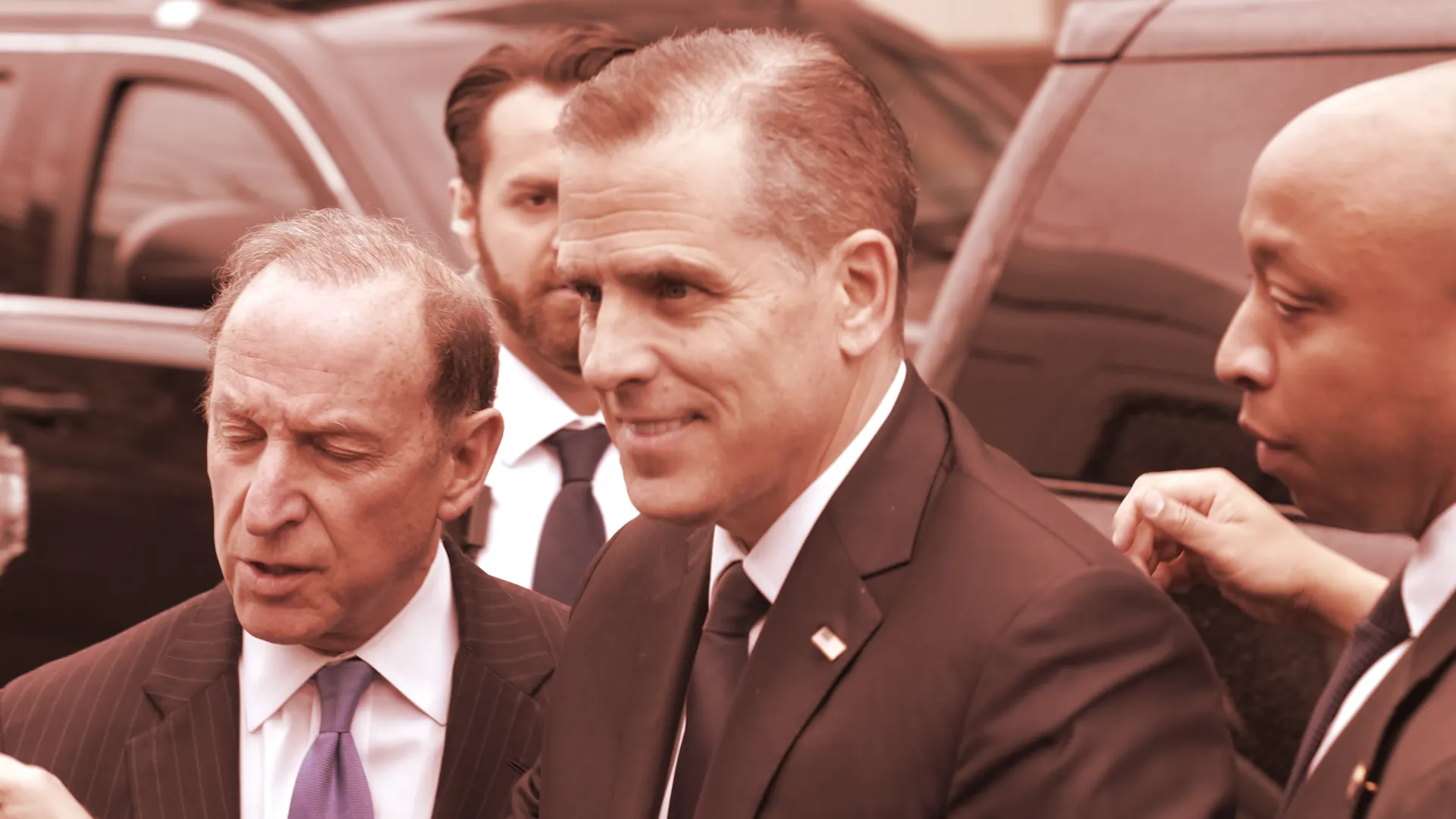
    Hunter Biden, son of former President Joe Biden, is venturing into the cryptocurrency space by launching a meme coin named LAPTOP, slated for release on September 9. The project, announced via a post on X, directly leverages the controversy surrounding a laptop that became a focal point of political debate.

    According to The Wall Street Journal, the LAPTOP meme coin will operate on Base, an Ethereum layer-2 network developed by Coinbase in 2023, designed for faster and more cost-effective transactions.

    The choice of name is a clear reference to the laptop that a Delaware repair shop turned over in 2019. The contents of this device were published by the New York Post weeks before the 2020 presidential election, sparking a prolonged political firestorm. The Journal reports that Biden is not merely lending his name to the project but is actively involved as a founding team member.

    The LAPTOP token will have a total supply of 1 billion coins. Founders, including Biden, will hold 30% of this supply, which will be subject to a vesting schedule: locked for six months and then gradually released over two years. This mechanism is intended to prevent early dumping of tokens by insiders.

    An additional 20% of the total supply is allocated for charity donations, liquidity provision, payments to exchange partners and market makers, as well as covering the accounting and legal expenses for the token’s foundation.

    The project team also plans to burn 30% of the supply if certain criteria are met, such as Bitcoin reaching a new all-time high or a Democrat winning the 2028 presidential election.

    The remaining 20% of the tokens are earmarked for two rounds of airdrops, which are free token giveaways to specific wallet holders. This aspect of the project is designed to attract a particular audience.

    Eligibility for these airdrops will extend to subscribers of Biden’s Substack newsletter and members of Andrew Callaghan’s Channel 5 mailing list. A separate portion of the airdrop is reserved for traders who have incurred losses on TRUMP, a meme coin associated with former President Donald Trump. This segment is notable given that the TRUMP coin has experienced a consistent downward trend since its inception.

    Entities connected to the Trump Organization reportedly control 80% of the TRUMP coin’s supply under their own multi-year vesting schedule. This concentration of tokens in the hands of founders mirrors the structure of Biden’s LAPTOP coin, with both projects placing a significant portion of their supply with their respective founding groups.

  • AI Threats Prompt Harmony Blockchain Shutdown Proposal

    AI Threats Prompt Harmony Blockchain Shutdown Proposal

    Harmony Proposes Blockchain Shutdown Amid AI and State Actor Threats

    Harmony, a blockchain platform that once vied for prominence alongside Ethereum, has put forth a proposal to cease operations on Sunday, citing escalating threats from artificial intelligence agents and state-sponsored actors as the primary drivers for the decision.

    The announcement arrives as the cryptocurrency industry grapples with an intensifying wave of sophisticated cyberattacks, many of which are reportedly amplified by advanced AI models such as Anthropic’s Claude Mythos and OpenAI’s GPT-6 Astra.

    “The threats posed by state actors and AI agents are too great,” the Harmony Team stated on the social media platform X. “Since our mainnet launch in 2019, our community has been resilient through attacks and changes—but it is time to fully sunset the Harmony network.”

    To navigate these challenges, Harmony is proposing a migration of its native ONE token to the Ethereum blockchain. The initiative would leverage newly issued tokens to finance a new ecosystem project dubbed “The Remix Economy for AI Video.” Under this plan, network validators, responsible for verifying transactions, would have the option to assume governance roles or participate in the AI-video venture.

    Launched in 2019, Harmony operates as a layer-1 blockchain utilizing a proof-of-stake consensus mechanism, where validators commit tokens to secure the network, and sharding technology, which divides transaction processing into parallel segments. This architecture was designed to address the “blockchain trilemma” by enhancing transaction capacity without compromising security or decentralization.

    Transitioning ONE to Ethereum

    According to Harmony’s proposal, the migration process would involve recording ONE balances at the network’s final block through a “snapshot” to determine each holder’s allocation of replacement tokens on Ethereum. This process is intended to encompass all wallets, staked tokens, validator rewards, smart contracts, and holdings on centralized exchanges.

    Replacement tokens would be distributed via airdrop to the same wallet addresses on Ethereum. Delegated stakes and unclaimed rewards would be directed to individual governor vaults, and exchange listings for the token would also transition to the new platform.

    While the proposal indicates that holders would not be required to submit a claim for their replacement tokens, users with assets held within smart contracts face a separate deadline.

    “Multisig safes, liquidity pools, and onchain apps cannot be migrated; users are urged to exit all smart contracts before September 10, 2026,” the Harmony Team cautioned.

    Harmony also plans to compensate eligible validators and their delegators from a dedicated pool of $1.372 million, distributed in four quarterly installments. This compensation is contingent upon validators maintaining their stakes, signing an agreement, and assuming governor roles.

    “The ONE token’s total supply and emission rate will remain unchanged. Tokens issued through emissions will now be allocated to our new mission, “The Remix Economy for AI Video”, subject to governor feedback,” the team elaborated.

    AI and Crypto Security Under Scrutiny

    The proposed migration follows a series of high-profile attacks that have intensified scrutiny of blockchain network security.

    In August, Harmony confirmed an exploit that resulted in the creation of approximately 4 billion unauthorized ONE tokens. The team subsequently released a patch and explored the possibility of a rollback, which would revert transactions by restoring an earlier state of the blockchain.

    Sunday’s announcement on X highlights the increasing influence of AI in cryptocurrency security, with companies reporting suspected AI-assisted attacks and developers employing AI to identify and rectify vulnerabilities.

    Earlier this year, in July, Coinkite, the maker of the Coldcard hardware wallet, suggested that an attacker may have used AI to exploit a flaw that made wallet keys more susceptible to guessing—a vulnerability that their own AI review had overlooked. The company subsequently overhauled its security measures in August after experiencing thefts exceeding $100 million.

    In the wake of the Coldcard incident, developers established the Bitcoin Red Team, a volunteer group dedicated to proactively identifying vulnerabilities before they can be exploited by malicious actors. This team integrates AI models, including Moonshot AI’s Kimi K3, with human expertise to scrutinize wallets, payment applications, and other Bitcoin software, privately alerting developers to any discovered flaws.

    The Bitcoin Red Team has grown to approximately 20 to 25 volunteers, according to pseudonymous member and developer Calle. He stated that the team has not identified any issues within Bitcoin’s underlying protocol.

    “The reason why the Bitcoin Red Team exists right now is because we need to get ahead of the attackers as fast as possible,” Calle told Decrypt.

  • Irish Gangs Use Private Vaults for Crypto Key Storage

    Irish Gangs Use Private Vaults for Crypto Key Storage

    Organized Crime Rings Storing Crypto Keys in Vaults, Irish Authorities Report

    Organized crime groups in Ireland are increasingly using secure vaults not only for illicit cash, luxury goods, and counterfeit documents, but also to store the private keys and seed phrases that control cryptocurrency wallets, according to the head of the Criminal Assets Bureau.

    Detective Chief Superintendent Michael Gubbins, who leads the state’s asset-seizure agency, told the Sunday Independent that this emerging trend was uncovered through the bureau’s investigations and has been flagged to the government’s Anti-Money Laundering Steering Committee.

    “The contents of these vaults could be cryptocurrency keys, or cash, or watches, or could even be passports,” Gubbins stated, adding that this observation stems from the bureau’s direct experience.

    The Anti-Money Laundering Steering Committee is currently preparing Ireland for new EU regulations scheduled to take effect next summer. These rules will impose a ban on cash transactions exceeding €10,000 and mandate that businesses verify the identity of individuals making cash payments of €3,000 or more. Consequently, crypto-asset service providers, luxury goods retailers, and crowdfunding platforms will face enhanced regulatory oversight. Ireland recently published its inaugural national anti-money laundering strategy, following an action plan that bolstered safeguards for cryptocurrencies.

    Gangs are reportedly turning to cryptocurrency as a means to mitigate the risk of asset seizure and to leverage the perceived anonymity it offers. “They believe there’s an anonymity attached to it,” Gubbins explained, although he also acknowledged that price volatility and the potential loss of wallet passwords present significant challenges.

    Despite this shift, Gubbins indicated that the use of cryptocurrency in Ireland remains “still quite basic,” with cash continuing to be the predominant medium for illicit funds. “It’s still a cash business for those engaged in drug trafficking,” he noted.

    The Criminal Assets Bureau has instead encountered professional money launderers for hire, including operators of hawala systems. Hawala is an informal financial network where cash deposited in one country can be paid out in another without physically crossing borders. Gubbins estimated the commission for such services to be around 6%. In one investigation, the bureau successfully recovered €230,000 from a safe deposit box at a private vault company.

    In a separate ongoing operation, the bureau is managing the largest cryptocurrency seizure in its history. With assistance from Europol, investigators successfully accessed the first of 12 cryptocurrency wallets in March. These wallets contain 6,000 Bitcoin (BTC) that were confiscated from a cannabis grower in 2019. The grower’s private keys, reportedly written down and concealed within a fishing rod case, were subsequently lost. Gubbins confirmed that over €130 million of the total €360 million holding has now been liquidated.

    Last year, the Criminal Assets Bureau returned nearly €15 million to the Irish exchequer.

  • XRP Faces Market Indecision Amidst Ecosystem Growth and Corporate Ambitions

    XRP Faces Market Indecision Amidst Ecosystem Growth and Corporate Ambitions

    XRP is currently trading around $1.40, with its 24-hour trading volume hovering between $1.4 and $1.8 billion, a level the source describes as indicating indecision rather than conviction. Technically, XRP remains above its 50-day moving average of $1.19 and its 200-day moving average of $1.28. However, the Relative Strength Index (RSI) reads 41, which is neutral, and the Moving Average Convergence Divergence (MACD) remains bearish. Declining volume on recent upticks suggests a potential ceiling forming rather than an imminent notable move, according to the source.

    Despite these technical observations, significant developments are occurring within the Ripple ecosystem. XRPL Korea has announced speakers for its upcoming XRP Seoul 2026 event, scheduled for October 3, 2026, at the Grand Hyatt Seoul. Among the reported speakers is Ashish Birla, CEO of Evernorth. Birla is recognized as an early member of the Ripple team, and his company, Evernorth, is pursuing a Nasdaq listing through a Special Purpose Acquisition Company (SPAC) merger. A stated goal of Evernorth is to build a $1 billion XRP reserve. Also scheduled to speak at the event is Hugo Philion, co-founder of Flare, who will discuss the smart-contract functionality of XRP and Bitcoin in decentralized finance (DeFi).

    The article outlines potential price scenarios for XRP. A clean break above the short-term resistance level of $1.43 could lead to a retest of $1.50, with consolidation above that level potentially extending toward $1.60–$1.68, and a more aggressive target of $1.80 mentioned in relation to a past bounce from $1.32. Conversely, continued price action between the support level of $1.39 and resistance at $1.43 suggests the market is waiting for confirmation. A failure to hold the $1.35 level could see XRP decline toward $1.28, with $1.22 as the next potential support level, according to the source.

    However, the article also points out the limitations for large-cap assets like XRP. While Evernorth’s Nasdaq path and its $1 billion reserve target are described as real long-term signals, the current market capitalization of XRP may already price in institutional adoption. The potential upside from the current price of $1.40 to a target of $1.80 represents approximately a 28% move, which the source characterizes as a capped return rather than a multiple. This presents a challenge for large-cap holders, where significant catalysts may lead to limited gains.

    In contrast to the established nature of XRP, the article introduces LiquidChain, a Layer 3 protocol aiming to reduce fragmentation in cross-chain DeFi by aggregating liquidity from Bitcoin, Ethereum, and Solana. LiquidChain’s core features include Single-Step Execution and Verifiable Settlement. The protocol is currently in its presale phase, with a price of $0.014953 and has raised approximately $960,000 so far. Investors are encouraged to research LiquidChain directly, as stated by the source.

    The interplay between ecosystem growth, corporate ambitions, and XRP’s market performance reveals a complex picture. While developments like Evernorth’s Nasdaq pursuit and the XRPL Korea event signal ongoing activity, XRP’s current technicals and market structure suggest a period of indecision. The article implies that while catalysts exist, the immediate upside potential for XRP may be constrained, prompting a look towards earlier-stage infrastructure plays for potentially different investment profiles. The article discusses Ripple’s presence in Korea and a related company’s Nasdaq listing aspirations.

    Why This Matters

    The materials describe a narrow update: XRPL Korea announced speakers for XRP Seoul 2026, including Evernorth CEO Ashish Birla, an early Ripple team member whose company is seeking a Nasdaq listing via SPAC merger with a goal of building a $1 billion XRP reserve. Whether event buzz actually moves XRP price.

    Broader Context

    Source materials place the factual news in this context: The article discusses Ripple’s presence in Korea and a related company’s Nasdaq listing aspirations.

  • Buterin’s Net Worth: 90% Against AI

    Buterin’s Net Worth: 90% Against AI

    Buterin Dismisses AI-Driven Bitcoin Crash Prediction

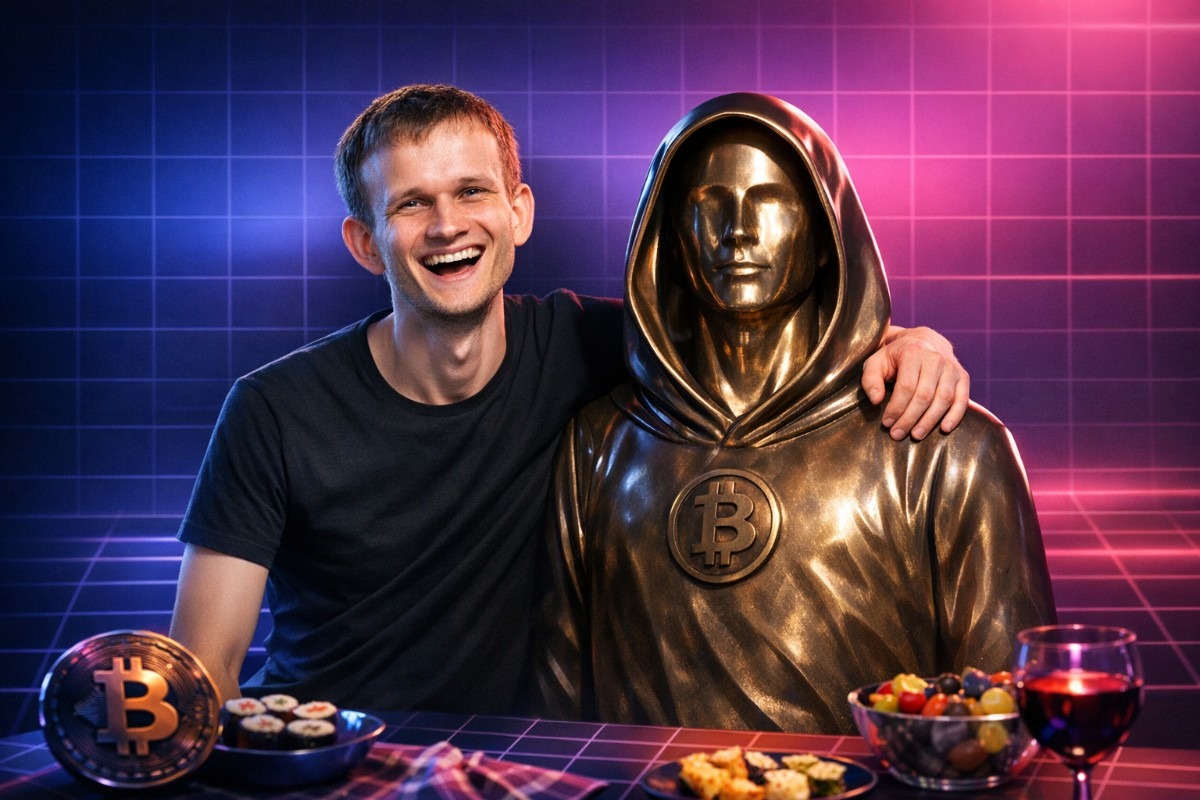
    Ethereum co-founder Vitalik Buterin has publicly rejected a forecast suggesting that artificial intelligence could lead to a Bitcoin price collapse of over 50% within two years. Buterin stated that his existing cryptocurrency holdings effectively place approximately 90% of his net worth on the opposing side of this bearish outlook.

    Bitcoin is currently trading just below $80,000, having reached a three-month high of $82,500 on September 3. Using $80,000 as a reference, a 50% drop would see Bitcoin fall to $40,000.

    The prediction originated from a Silicon Valley investor and host of the “Doom Debates” podcast, who expressed a 50% confidence that Bitcoin would lose more than half its value in the next two years. The investor’s concern is that advancements in AI could compromise the security or robustness guarantees that investors associate with the Bitcoin network. Specifically, the argument posits that increasingly sophisticated AI could enable novel attacks against the technology underpinning Bitcoin. This concern highlights a potential divergence between the perceived security of Bitcoin and the evolving capabilities of AI.

    For the broader cryptocurrency market, this debate underscores a distinction between fundamental technical concerns and market participants’ reactions to perceived threats. While discussions about AI-related risks do not inherently imply that Bitcoin’s cryptography has been breached, they have drawn attention to the network’s capacity to adapt to emerging security challenges.

    Buterin countered by stating his optimism regarding long-term cybersecurity and his expectation that Bitcoin can manage issues that do not necessitate widespread social consensus. He differentiated between network-level vulnerabilities, which could potentially be addressed through upgrades by developers, node operators, and mining pools, and a fundamental breakdown of Bitcoin’s core cryptography. Buterin characterized the probability of actual breaches in Bitcoin’s hash algorithms or proof-of-work mechanism as “tiny.”

    He further indicated that while he would be open to a formal bet, his current investment portfolio already reflects his conviction, with roughly 90% of his net worth aligned against the bearish AI prediction. Buterin noted that similar cryptographic considerations apply to Ethereum, emphasizing the interconnectedness of these assumptions across various crypto networks.

    In a separate context, Buterin referenced advancements in succinct proofs and fully homomorphic encryption expected by 2026. Reports also indicate that Ethereum’s recent roadmap overhaul has prioritized quantum safety.

    The investor’s view is not the sole instance of linking AI to potential downward pressure on Bitcoin. BitMEX co-founder Arthur Hayes has cautioned that AI-driven credit stress could trigger a market sell-off, potentially pushing Bitcoin below $60,000. Bitcoin critic Peter Schiff has argued that AI could compete with Bitcoin for essential resources such as investment capital, electricity, and data-center capacity.

    These various perspectives address different potential pressures: the investor’s concern focuses on network security expectations, Hayes’ warning pertains to broader market dynamics, and Schiff’s argument centers on resource competition. However, none of these analyses definitively predict an AI-driven event.

    Bitcoin experienced a stall below the $80,000 to $82,200 resistance zone over the weekend, trading between $79,750 and $80,100 on Saturday. Data from the same period indicated that wallets holding at least 100 BTC accumulated approximately 60,000 BTC in August, while smaller wallets divested a comparable amount.

    This accumulation data does not resolve the disagreement between the investor and Buterin. It represents a single market data point within a broader debate primarily focused on potential AI-related security risks and the Bitcoin ecosystem’s resilience.

    The core of the disagreement lies in the possibility that AI could undermine Bitcoin’s expected security guarantees, leading to a significant price decline. At a Bitcoin price near $80,000, a more than 50% drop would translate to a value around $40,000. The current reporting presents these as competing viewpoints on AI, security, and market pressures, without definitively establishing which will prevail over the two-year timeframe discussed.