Category: Uncategorized

  • Standard Chartered Launches Regulated Crypto Trading Service in UAE for Professional Investors

    Standard Chartered Launches Regulated Crypto Trading Service in UAE for Professional Investors

    Standard Chartered has launched a cryptocurrency trading service in the United Arab Emirates (UAE) for eligible Professional Investor clients, allowing them to buy and sell Bitcoin and Ethereum. The service integrates trading, custody, and settlement within the bank’s existing accounts and a closed-loop ecosystem, a move Standard Chartered says aims to reduce reliance on third-party platforms and wallets.

    The bank has secured licensing approval from Dubai’s Virtual Assets Regulatory Authority (VARA) for this offering. Standard Chartered describes the service as a global first for the bank and the first of its kind by an international bank in the UAE. The initial rollout is restricted to eligible Professional Investor clients within the UAE.

    Integrated Ecosystem and Regulatory Approval

    According to the bank’s announcement, the closed-loop structure is designed to mitigate risks associated with third-party wallets. The bank states that the offering combines institutional-grade custody, liquidity, and client access within a single digital-asset ecosystem. Samir Subberwal, Global Head of Wealth and Personal Banking at Standard Chartered, highlighted the launch as a significant milestone, integrating digital assets into the bank’s core wealth offering amid growing client interest.

    Rola Abu Manneh, the bank’s Chief Executive Officer for the UAE, Middle East and Pakistan, noted that the UAE was a strategic choice for this launch due to its progressive approach to innovation, robust regulatory environment, and increasing leadership in digital assets. Standard Chartered’s existing wealth capabilities already include cryptocurrency ETFs on its cash-equities platform and exposure through structured products and OTC derivatives.


    Client Focus and Undisclosed Details

    This launch effectively shifts access to Bitcoin and Ethereum into a regulated banking relationship. The closed-loop structure centralizes trading, custody, and settlement functions within the bank’s infrastructure, eliminating the need for clients to manage assets across both a bank and external crypto providers. The VARA regulatory approval is a key element, situating the new service within an authorized UAE framework.

    The restriction to Professional Investor clients signifies that Standard Chartered is enhancing its wealth management services with crypto trading capabilities, rather than introducing a broad consumer product at this stage. Standard Chartered plans to expand the offering to other markets over time, although specific destinations and timelines for this expansion have not yet been disclosed.

    Several details regarding the new service remain undisclosed. These include trading fees, minimum investment amounts, and transaction limits. It is also not specified whether clients can transfer purchased assets outside of the bank’s ecosystem, and the precise mechanics of execution are not described.

    Why This Matters

    The materials describe a narrow update: Standard Chartered has introduced a crypto trading service in the UAE, enabling eligible Professional Investor clients to buy and sell Bitcoin and Ethereum. Trading fees are not specified.

    Broader Context

    Source materials place the factual news in this context: Standard Chartered’s broader wealth capabilities already include cryptocurrency ETFs on its cash-equities platform and exposure through structured products and OTC derivatives.

  • ETH Surges as BTC and XRP Lag

    ETH Surges as BTC and XRP Lag

    Ethereum Captures Trader Attention as Bitcoin and XRP Face Growing Fear

    Ethereum is currently drawing the lion’s share of attention from cryptocurrency traders, while Bitcoin and XRP are experiencing increasing apprehension. Data from Santiment reveals that the world’s largest altcoin by market capitalization is seeing a ratio of 2.05 bullish comments for every bearish comment across platforms like X, Reddit, and Telegram.

    This shift in sentiment coincides with Ethereum trading above key support levels, as traders closely monitor staking demand and upcoming network upgrades.

    The same confidence is not being extended to Bitcoin, which is struggling to garner similar enthusiasm. Its bullish-to-bearish comment ratio has fallen to 0.82. Persistent rejections near the $87,000 mark, a brief dip towards $81,000, and significant long liquidations have all contributed to market concerns.

    XRP is also under pressure, with a sentiment ratio of 0.92. The token has seen a decline of over 9% in the past week, and the $1.40 level continues to prove a difficult barrier to reclaim. Santiment suggests that this divergence in sentiment could become significant if prices begin to recover. While the prevailing fear surrounding Bitcoin and XRP might present opportunities for a potential rebound, the high level of optimism for Ethereum could indicate a market that is overheating.

    Analyst Predicts Ambitious Upside for Ethereum

    Meanwhile, analyst Crypto Patel has outlined an ambitious outlook for Ethereum, setting a long-term target of $15,000 for the current bull cycle. The $1,600 to $2,000 range has been identified as a potential zone for re-accumulation, with intermediate targets projected at $3,270, $4,892, and $10,000.

    According to Crypto Patel, a confirmed breakout above $4,892 could pave the way for a more substantial rally. However, for this optimistic scenario to materialize, Ethereum will need to maintain its hold on key support levels and overcome significant resistance.

    Spot Ethereum ETFs See Inflows After Prolonged Outflows

    Spot Ethereum Exchange-Traded Funds (ETFs) finally experienced a positive inflow of capital after ten consecutive days of outflows. On October 13th, these funds recorded net inflows totaling $24.84 million, marking their only positive day in October thus far. Grayscale’s Ethereum fund led the gains with $16.3 million, while Fidelity’s FETH attracted an additional $8.11 million. Other funds reported no flows for the day.

    While this rebound is a welcome development, it has done little to offset the recent significant withdrawals. These ETFs have collectively seen net outflows of approximately $695 million in October, indicating that investor demand remains under pressure.

    A similar trend was observed in spot Bitcoin ETFs, which collectively attracted $175.6 million. XRP funds, however, saw no flows for three consecutive days.

  • Starknet Launches Shadow Accounts for Private DeFi Operations

    Starknet Launches Shadow Accounts for Private DeFi Operations

    Starknet Launches Shadow Accounts, Enabling Independent On-Chain Identities for DeFi Interactions

    Starknet, the Ethereum Layer 2 scaling solution, has introduced Shadow Accounts, a new feature designed to allow users to maintain distinct on-chain identities for each decentralized finance (DeFi) application, thereby obscuring their activity from their primary wallet. Developed by StarkWare, this functionality aims to enhance user privacy without compromising the transparency of transactions.

    According to an official announcement on X by StarkWare, Shadow Accounts generate unique and persistent addresses for every DeFi application. Users can fund these shadow accounts using shielded balances within STRK20 privacy pools. This enables them to engage in lending, trading, and other DeFi operations with a separate on-chain persona, preventing direct traceability back to their main wallet.

    In essence, activities such as trading on Uniswap, borrowing on Aave, or providing liquidity on Curve, which were previously linkable through a single main wallet address, can now be isolated. Shadow Accounts ensure that each activity is independent, breaking the chain of on-chain correlation analysis across different protocols.

    Starknet’s official technical documentation clarifies that while the balances and transactions associated with Shadow Accounts remain fully visible on-chain, the intention is not to make the transactions themselves opaque. Instead, the feature focuses on obscuring the link between the shadow account and the funding main wallet.

    For users, the process involves connecting their wallet to an integrated DeFi application, switching from public to privacy mode, depositing assets into a vault, and then allowing the shadow account to manage that position until the funds are withdrawn back to a shielded balance. This process preserves the inherent transparency of DeFi protocols while altering the picture of “who is doing what” visible to external observers.

    Currently, Shadow Accounts are being rolled out with a focus on vault scenarios. However, StarkWare has indicated plans to gradually extend this functionality to cover liquidity provision, lending, staking, derivatives trading, prediction markets, and NFT marketplaces. The underlying logic is that any scenario requiring an “on-chain identity” can be separated from the main wallet using shadow accounts, offering users more granular identity management while maintaining transparency.

    This is not StarkWare’s first foray into privacy features. In June, the company launched the STRK20 privacy framework, facilitating private transfers and shielded token balances on Starknet. Later that month, they showcased a Private KYC system, allowing users to complete verification without revealing their full identity profile. Shadow Accounts represent the next step in this roadmap, evolving from “private transfers” to “private operations.”

    On-chain privacy has been a persistent point of contention in the DeFi space. The complete transparency of on-chain data can enable activities like whale watching, MEV (Maximal Extractable Value) harvesting, and front-running attacks. Conversely, completely anonymous on-chain behavior can raise regulatory concerns. Starknet’s Shadow Accounts adopt a middle ground: transactions remain transparent and auditable, while the identity linkage of “who is doing what” is obscured through zero-knowledge (ZK) technology.

    Compared to mixers like Tornado Cash, which completely erase the origin and destination of funds (leading to significant regulatory scrutiny), Shadow Accounts’ design of “separate identities without hidden transactions” aligns more closely with a compliance framework that institutions might find acceptable. External auditors can still trace the compliance of each DeFi operation, but the complete picture of an ordinary user’s activity is no longer easily pieced together.

    Future considerations include the current limitation of Shadow Accounts to Starknet-native applications. The willingness of the broader DeFi ecosystem to integrate this feature and the speed of support from mainstream wallets such as Argent X and Braavos will determine whether Shadow Accounts become a significant shift in user habits or remain primarily a technological demonstration.

  • Bitcoin Surges as Altcoins Fall Before CPI

    Bitcoin Surges as Altcoins Fall Before CPI

    Bitcoin Dominance Surges as Altcoins Retreat Ahead of CPI Data

    Bitcoin’s price has seen a period of relative stagnation over the past 24 hours, with no significant upward or downward movements. However, its dominance over the altcoin market has climbed to 60% on CoinMarketCap, a trend attributed to the widespread declines seen across most alternative cryptocurrencies, particularly those in the mid-cap segment.

    Bitcoin’s Volatile Week

    The cryptocurrency faced resistance at the $87,000 mark on multiple occasions early last week. The second rejection proved particularly impactful, initiating a more substantial downturn. This decline culminated on Thursday evening, with Bitcoin slumping to $80,400, its lowest point in several weeks.

    After shedding nearly $7,000 in approximately 72 hours, Bitcoin began to recover over the weekend, reaching $83,000. It maintained this level for the subsequent 36 hours and even tested $84,400 on Monday morning. However, another rejection followed, and by Tuesday morning, bears appeared to regain control, pushing Bitcoin back below $81,000.

    Despite the bearish pressure, two positive developments emerged. Firstly, Bitcoin quickly rebounded to over $83,000. Secondly, it established a higher low, a technical indicator often viewed as a bullish signal. Since then, the asset has traded sideways between $83,000 and $84,000, currently hovering just above the lower end of this range. Further volatility is anticipated later today with the release of September’s Consumer Price Index (CPI) figures.

    Altcoin Market Struggles

    Bitcoin’s increasing dominance is underscored by the struggles of most altcoins in recent days. While Bitcoin’s market capitalization has remained largely stable at $1.670 trillion, many larger-cap altcoins are currently trading in the red. Ethereum (ETH) has fallen back to $2,500, XRP is moving further away from the $1.40 level, and Solana (SOL) has dropped to $107. Smaller altcoins have also experienced significant losses, with RAIN plummeting by nearly 10% and Quant (QNT) down by 7.5%. Further declines are evident across a range of assets including Cardano (ADA), Hype (HYPE), Chainlink (LINK), Stellar (XLM), NEAR Protocol (NEAR), and Bittensor (TAO), among others.

    Conversely, a few altcoins are showing modest gains, including Zcash (ZEC), Monero (XMR), Tron (TRX), and Bitcoin Cash (BCH). Notably, BitTorrent (BTW) has seen a dramatic surge of 47%, trading above $2.60. However, Celestia (TIA), MultiversX (M), Curve DAO Token (CRV), and Render (RNDR) have each experienced daily losses ranging from 8% to 10%.

    The overall cryptocurrency market capitalization has decreased by another 0.5% to $2.790 trillion, according to CoinMarketCap.

  • Ripple Partners with Meritz Securities, First Korean Securities Firm

    Ripple Partners with Meritz Securities, First Korean Securities Firm

    Ripple Partners with Meritz Securities to Expand Digital Asset Services in South Korea

    Blockchain solutions firm Ripple has announced a strategic partnership with Meritz Securities, a prominent South Korean securities firm. This collaboration marks Ripple’s inaugural partnership with a securities firm in South Korea and its fourth institutional alliance in the country this year. The agreement aims to integrate Ripple’s digital asset custody and tokenization technologies into South Korea’s capital markets.

    Meritz to Explore Ripple Custody and Tokenization

    Under the terms of the partnership, Meritz Securities will conduct a thorough study of Ripple Custody and its tokenization capabilities. The objective is to assess their suitability for integration into Meritz’s existing securities business operations. Ripple Custody is designed to offer financial institutions secure storage, transfer, and settlement solutions for digital assets, along with robust management of private keys. Leveraging Ripple’s established technology is expected to accelerate Meritz’s development of these services, potentially bypassing the significant time and cost associated with building such infrastructure in-house.

    Broader Digital Asset Exploration by Meritz

    Beyond custody solutions, Meritz Securities is actively exploring a range of digital asset services. These include the potential development of spot cryptocurrency exchange-traded funds (ETFs), security tokens, fractional investment offerings, and advanced trading platforms. The firm is also investigating the creation of South Korean won-denominated stablecoins, which could facilitate digital payments and money transfers. These initiatives suggest Meritz’s intention to utilize Ripple’s technology for a diverse array of applications, extending beyond mere cryptocurrency storage to encompass investment products and digital payment systems.

    Strategic Significance for Ripple and South Korea

    The partnership is considered a significant move for Ripple, providing it with a direct pathway into South Korea’s substantial $4.51 trillion capital markets through an established financial institution. Fiona Murray, Ripple’s Managing Director for Asia Pacific, highlighted the company’s comprehensive infrastructure, stating, “Ripple brings the full infrastructure stack across payments, custody and tokenization, backed by more than 85 licenses and a network spanning more than 60 markets globally.”

    This latest alliance follows Ripple’s previous collaborations in South Korea with Kyobo Life Insurance for tokenized government bond settlement, Kbank for digital asset wallet infrastructure, and Jeonbuk Bank for cross-border payment solutions. The timing of this partnership is particularly noteworthy, as South Korea is in the process of refining its digital asset regulations, with a comprehensive regulatory framework slated to be implemented in February 2027.

  • Fidelity ETF Clients Pour $103M into Bitcoin in One Day

    Fidelity ETF Clients Pour $103M into Bitcoin in One Day

    Fidelity Bitcoin ETF Dominates Inflows as Clients Buy Over $100 Million

    Fidelity’s spot Bitcoin exchange-traded fund experienced a remarkably strong Monday, with clients of the Fidelity Wise Origin Bitcoin Fund (FBTC) purchasing $103.06 million worth of the cryptocurrency on October 13, 2026.

    This significant inflow alone would mark a successful trading day. However, what truly set it apart was Fidelity’s dominance, capturing nearly all the capital flowing into U.S. spot Bitcoin ETFs on that particular day.

    The broader sector recorded net inflows of $109.8 million. FBTC’s substantial contribution, estimated at approximately $103.1 million according to research data, left the remaining U.S. spot Bitcoin ETFs to share a modest $6.7 million in net inflows. These inflows occurred as Bitcoin traded above the $86,000 mark.

    Firms such as SoSoValue and Farside Investors meticulously track the primary market activity for these funds, which involves the daily creation and redemption of ETF shares. These creations are crucial because a spot ETF must hold the underlying asset. When investors inject capital into FBTC, the fund is compelled to acquire actual Bitcoin to back the newly issued shares.

    October has not presented a consistent trend for ETF flows. The early part of the month saw a fluctuation between inflows and outflows. On October 1, the sector collectively registered a net inflow of $102.7 million, with BlackRock’s iShares Bitcoin Trust (IBIT) leading the charge. Later that same week, FBTC experienced outflows.

    This pattern of volatility is characteristic of Fidelity’s fund. FBTC is recognized as one of the most active products in its category, frequently experiencing substantial inflows and outflows in response to market movements.

    U.S. spot Bitcoin ETFs debuted in January 2024. Since their launch, the group of ETFs has accumulated approximately $57 billion in cumulative net inflows. Total assets across the sector have surpassed $100 billion at various points this year.

    Within this competitive landscape, FBTC typically ranks just behind IBIT in terms of both assets under management and trading volume. FBTC maintains a competitive fee structure of 0.25%, placing it among the lowest-cost major Bitcoin ETFs, comparable to IBIT. This fee has also been subject to waivers during certain periods.

    On-chain data plays a vital role in distinguishing ETF-driven activity from standard retail transactions, providing analysts with a clearer understanding of the demand channeled through these regulated investment vehicles.

    The concentration of inflows into a single fund is a noteworthy development. When one ETF captures the vast majority of the sector’s net inflow, it suggests that other products may have experienced flat trading days or minor outflows that effectively canceled each other out.

    FBTC’s own trading history serves as a reminder of the inherent volatility in the market. The same fund that attracted $103.06 million on October 13 saw significant outflows just days after the sector’s robust performance on October 1.

    The flow data compiled by SoSoValue and Farside Investors will continue to provide a daily assessment of market activity. For now, Fidelity can claim bragging rights, and its clients have demonstrably increased their Bitcoin holdings by $103 million.

  • Bitcoin ETFs Attract Significantly More Net Inflows Than Ether ETFs on October 13, 2026

    Bitcoin ETFs Attract Significantly More Net Inflows Than Ether ETFs on October 13, 2026

    US spot Bitcoin ETFs saw net inflows of $175.6 million on October 13, 2026, a figure substantially higher than the $24.8 million in net inflows for US spot Ether ETFs on the same day. This divergence highlights differing investor sentiment towards the two leading digital assets as channeled through regulated investment products.

    Over the 30-day period preceding October 13, Bitcoin ETFs attracted approximately $2.06 billion in net inflows. In contrast, Ether ETFs experienced a net outflow of $192 million during the same timeframe. This longer-term trend further underscores a stronger institutional appetite for Bitcoin exposure via ETFs compared to Ether.

    Key Fund Performance

    Fidelity’s Wise Origin Bitcoin Fund (FBTC) was a significant contributor to the daily inflows, posting $103.1 million. On the Ether side, the Grayscale Ethereum Staking Mini Trust led with $16.7 million in inflows, accounting for a substantial portion of the total Ether ETF inflows for the day.

    Volatility and Scale

    Despite the positive inflows on October 13, Bitcoin ETFs had experienced significant outflows earlier in the month, with $487 million leaving on October 7 and another $244 million on October 8. This suggests a degree of volatility in investor sentiment even within the Bitcoin ETF market.

    The scale of assets managed by each type of ETF also reflects this difference in adoption. As of October 13, spot Bitcoin ETFs held approximately $100.75 billion in net assets, while spot Ether ETFs held around $14.48 billion. Since their launch on January 11, 2024, Bitcoin ETFs have accumulated $57.68 billion in net inflows, compared to $13.16 billion for Ether ETFs.

    In terms of market representation, spot Bitcoin ETFs account for roughly 6% of Bitcoin’s market capitalization, while spot Ether ETFs represent about 4.7% of Ether’s market capitalization. These figures indicate that while Bitcoin ETFs hold a larger share of their underlying asset’s market cap, both products are becoming increasingly significant channels for institutional investment.

    Spot ETFs offer investors a way to gain exposure to Bitcoin or Ether through traditional brokerage accounts, eliminating the need for direct management of digital wallets and private keys. The daily flow data for these products has become a closely watched indicator of institutional interest in digital assets since the Bitcoin ETFs began trading in January 2024.

    Why This Matters

    The materials describe a narrow update: On October 13, 2026, spot Bitcoin ETFs saw net inflows of $175. Daily flow data for Bitcoin products has become one of the most closely watched indicators of institutional appetite since their launch in January 2024.

    Broader Context

    Source materials place the factual news in this context: US spot Bitcoin ETFs took in $175.6 million in net inflows, while spot ether ETFs added $24.8 million.

  • Sberbank Added to Bank of Russia’s Crypto Exchange Register

    Sberbank Added to Bank of Russia’s Crypto Exchange Register

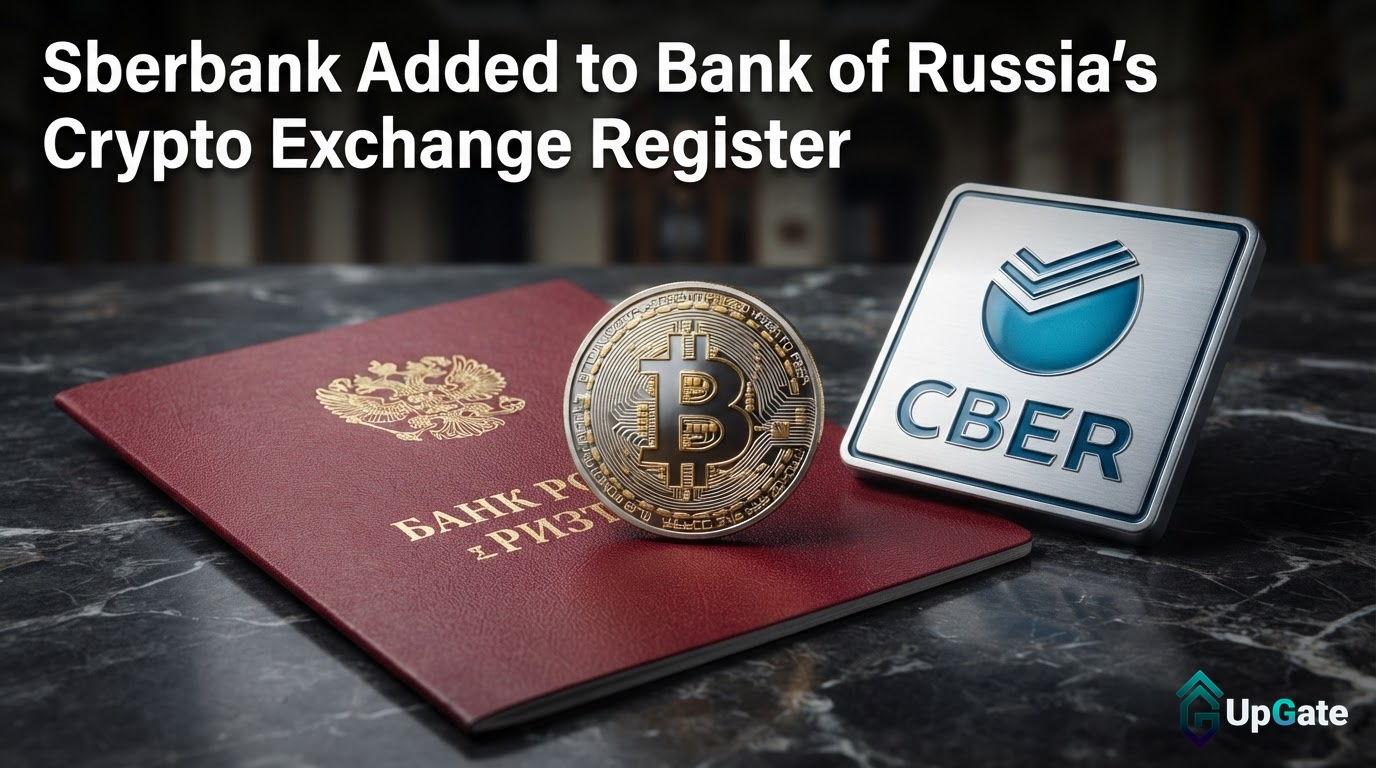
    Sberbank has been added to the Bank of Russia’s register of crypto exchange organizations, a development that brings the financial institution closer to launching its cryptocurrency trading services. This inclusion permits Sberbank to engage in buying and selling digital currencies on its own account, operating outside of organized trading as defined by the central bank.

    The move follows Sberbank’s earlier placement on the Bank of Russia’s separate register of digital depositories. Sberbank and VTB are currently the only two firms that appear on both of these regulatory lists. A digital depository is responsible for maintaining records of clients’ cryptocurrency holdings, facilitating transfers between them, and providing access to the addresses where these assets are stored.

    Firms were able to apply for inclusion on both the crypto exchange and digital depository registers starting October 5. The Bank of Russia made its initial additions to these registers on October 6, including four crypto exchange organizations and five digital depositories. Among the first entities listed for crypto exchange operations were VTB, T-Invest Lab (part of T-Technologies, which also owns T-Bank), Zefir, and Sistema-Crypto.

    Subsequently, on October 8, the non-bank credit organization FinPilot and Professional Bank were added to the crypto exchange list. Moi Bitcoin and the Kirov-based lender Khlynov joined the same register on October 9. Sberbank and Paradise Technology were the most recent additions to the crypto exchange register, joining on Monday. On the same day, the digital depository list expanded to six firms with the addition of TT.

    The Bank of Russia stated that the initial nine entities admitted to these registers were processed under the transitional provisions of Russia’s law on digital currencies and digital rights, which came into effect on September 1. Registered firms are required to adhere to the central bank’s regulations for cryptocurrency transactions from their respective listing dates. The deadline for full compliance with the law is set for September 1, 2027.

    Sberbank has been active in the digital asset space, having secured a license to issue and exchange digital assets in March 2022. Since 2025, the bank has been involved in selling structured bonds and digital financial assets linked to Bitcoin (BTC) and Ethereum (ETH). In December 2025, Sberbank also completed a pilot program for loans collateralized by cryptocurrency.

    On July 24, Alexander Vedyakhin, First Deputy Chairman of Sberbank, indicated the bank’s intention to develop crypto trading infrastructure and a digital depository, with a target launch date of December 1. This announcement followed the State Duma’s passage of the crypto law in its third reading, which occurred three days prior.

    Sberbank applied for depository status on the very first day that applications were accepted. The bank has announced that its initial cryptocurrency offerings will support Bitcoin (BTC), Ethereum (ETH), and Tether (USDT). These services are planned to be integrated directly into existing Sberbank platforms, including SberBank Online, SberInvestments, and SberBusiness, without the need for a separate application.

    Broader Context

    Source materials place the factual news in this context: Sberbank joined the Bank of Russia’s register of crypto exchange organizations on Monday, bringing the list to ten firms.

    Why This Matters

    Sberbank’s addition to the Bank of Russia’s register of crypto exchange organizations signifies a step towards offering digital currency trading services. This dual registration, alongside its presence on the digital depository register, positions Sberbank as one of the few entities prepared to operate within Russia’s evolving digital asset regulatory framework. The bank aims to launch these services by December 1, supporting key cryptocurrencies within its existing banking platforms.

  • Bitcoin Surges Past $83K, Ether Reclaims $2,500 Amid $216M Liquidation Surge

    Bitcoin Surges Past $83K, Ether Reclaims $2,500 Amid $216M Liquidation Surge

    Bitcoin Rebounds Past $83,000, Ethereum Tops $2,500 Amid Significant Liquidations

    The cryptocurrency market saw a notable rebound in the past 24 hours, with Bitcoin climbing 2.37% to reclaim the $83,000 level and Ethereum surging 3.46% to settle above $2,500. The broader market experienced significant liquidations totaling $216 million, with short positions accounting for nearly 60% of the total. The Crypto Fear & Greed Index also rose from 57 to 62, indicating a return to “greed.” This rally occurred despite a slight dip in U.S. equities on Tuesday, as crypto and South Korean markets moved independently.

    Market Movements

    On Wednesday, the crypto market continued its upward trend. Bitcoin rose 2.37% over the last 24 hours to $83,410.82, reaching an intraday high of $84,168 and a low of $81,432.44. After briefly testing the $81,000 mark on Tuesday, the cryptocurrency managed to regain its footing above $83,000. Ethereum demonstrated stronger performance, increasing by 3.46% to $2,507.32, with its trading range between $2,421.85 and $2,538.52, successfully reclaiming the $2,500 threshold.

    Liquidations and Market Sentiment

    According to data from CoinGlass, total liquidations across all cryptocurrency contracts in the past 24 hours reached $216.8 million. Short positions accounted for $129.2 million in liquidations, while long positions saw $87.61 million liquidated. The significant proportion of short liquidations, nearing 60%, suggests that this recent rally was primarily driven by short covering and a short squeeze. Long traders who entered at higher prices also incurred losses during the dip to $81,000.

    U.S. Equities and Global Markets

    U.S. stock markets experienced a slight decline on Tuesday. The Dow Jones Industrial Average fell 180.45 points (0.35%) to 51,670.10, the Nasdaq dropped 0.15% to 27,204.38, and the S&P 500 edged down 1.79 points (0.02%) to 7,805.45. While major banks like JPMorgan Chase, Goldman Sachs, Citigroup, and Wells Fargo reported earnings that generally exceeded expectations on Tuesday, a downturn in memory and semiconductor stocks, influenced by concerns over competition from China’s CXMT new chips, offset the positive financial news.

    Crypto Market Divergence

    In contrast, the cryptocurrency market showed resilience. Reports indicate that Bitcoin briefly dipped below $81,000 during Tuesday’s Asian trading session, mirroring a 5.46% drop in South Korea’s KOSPI index. However, it subsequently decoupled from the Korean stock market and Nasdaq futures, strengthening and recovering the $83,000 level. Institutional buying continues to be a supportive factor, with Strive increasing its Bitcoin holdings by 3,311 BTC in a single week, bringing its total holdings to over 32,000 BTC. The market’s attention is now shifting to the U.S. September CPI data, scheduled for release on Thursday.

    Altcoin Performance

    Other major altcoins also saw gains. Solana increased by 4.2% to $107.42, with an intraday high of $109.07. It had touched a nearly 14-day low of $102.94 on Wednesday morning before rebounding. XRP rose 3.87% to $1.3724, reaching an intraday high of $1.3824. Bitcoin’s price remains within its recent trading range, with a 14-day peak of $86,789.89 on October 2nd and a low of $80,651.78 on October 9th, indicating that the sideways consolidation pattern persists.

    Technical Indicators

    Bitcoin: The daily candlestick closed at $83,169, with the 14-day Relative Strength Index (RSI) at 52.0, indicating a neutral zone. The closing price is below the 20-day Simple Moving Average (SMA) of $83,985 but above the 50-day SMA ($81,130) and the 200-day SMA ($72,167). The Moving Average Convergence Divergence (MACD) shows a bearish crossover, but the histogram is narrowing, suggesting weakening momentum. The price is trading below the middle Bollinger Band. Key resistance levels are identified at the SMA20 ($83,985), the upper Bollinger Band ($86,367), and the 30-day high ($87,396). Support levels are found at the lower Bollinger Band ($81,602), the SMA50 ($81,130), and the 30-day low ($74,968).

    Ethereum: The daily candlestick closed at $2,498, with the 14-day RSI at 43.1, suggesting a weak trend. The closing price is below the 20-day SMA ($2,627) and the 50-day SMA ($2,557) but above the 200-day SMA ($2,139). The MACD also exhibits a bearish crossover with a narrowing histogram, and the price is trading near the lower Bollinger Band ($2,439). Resistance levels are at the SMA50 ($2,557), the SMA20 ($2,627), and the 30-day high ($2,807). Support levels are at the lower Bollinger Band ($2,439), the 30-day low ($2,359), and the SMA200 ($2,139).

    Fear and Greed Index

    The Crypto Fear & Greed Index stands at 62 today, a 5-point increase from yesterday’s 57, placing it in the “greed” territory. Over the past eight days, the index has fluctuated between 57 and 71, consistently remaining in the greedy zone. This suggests that market participants’ risk appetite has rebounded after yesterday’s pullback. Ahead of Thursday’s CPI data release, the ability of Bitcoin to hold the $83,000 level will be a key short-term observation.

  • StoneX Raises Securitize Target Price on Tokenized Stock Growth

    StoneX Raises Securitize Target Price on Tokenized Stock Growth

    StoneX Boosts Securitize Price Target, Citing Shift to Market Operator Role

    Wall Street analytics firm StoneX has raised its price target for tokenization platform Securitize (NASDAQ: SECZ) by 50%, from $12 to $18, while maintaining a “Buy” rating. Analysts believe Securitize’s newly launched tokenized U.S. stock trading platform marks a significant transformation for the company, shifting its identity from a mere tokenization provider to a market operator. StoneX projects Securitize’s revenue could reach $198.5 million by 2028.

    Securitize Stocks Platform Drives Revenue Shift

    StoneX analyst Mark Palmer highlighted that Securitize’s recently introduced tokenized stock trading platform is poised to unlock a substantial new revenue stream. Despite a surge in SECZ’s stock price last week following the announcement of the “Securitize Stocks” platform, the shares dipped 10% in intraday trading on Monday. The new target price still represents an approximately 45% upside from the current trading level.

    Palmer noted in his report, “While SECZ’s stock price surged last week on the news of Securitize Stocks’ launch, the market is still valuing it as a tokenization provider, overlooking its transformation into a market operator.”

    This distinction is crucial to understanding Securitize’s past and future. According to StoneX data, Securitize facilitated $5.3 billion in trading volume in the second quarter of this year. However, the majority of this volume did not generate revenue. Company management acknowledged during an August earnings call that current tokenization revenue primarily stems from “integration fees” rather than transaction fees.

    In essence, Securitize previously earned setup fees for onboarding clients’ assets onto the blockchain. With the launch of Securitize Stocks, the company now earns commissions on each transaction and account service, transitioning its revenue model from one-time charges to recurring income.

    Tokenized Equities on Solana

    Securitize Stocks, which went live last Thursday, has brought major U.S. stocks like Apple, Nvidia, and Tesla onto the Solana blockchain, with transactions settled in USDC. These tokenized stocks are backed 1:1, with each token representing one share of the underlying equity, entitling holders to dividends and shareholder rights.

    StoneX forecasts Securitize’s revenue to approach $120 million in 2027 and nearly $200 million in 2028, representing a compound annual growth rate of approximately 65%. Palmer’s $18 price target implies a 14.5x enterprise value to revenue multiple based on the 2028 projected revenue.

    Beyond trading and service fees, StoneX also suggests Securitize could generate additional income from collateralized lending in the future, a standard revenue source for traditional brokerages that remains largely untapped in the crypto space.

    Market Skepticism and Regulatory Hurdles

    The 10% drop in SECZ shares after StoneX raised its target underscores lingering market skepticism regarding the business model of tokenized equities. A key question remains: when will transaction fee revenue truly materialize at scale?

    Historically, traditional brokerages have made slow progress in tokenization. For instance, Morgan Stanley’s tokenized stock offerings are not expected until the first quarter of 2027 and are currently limited to internal institutional use. Securitize, as an external platform, faces distinct regulatory and market acceptance challenges.

    Furthermore, a significant portion of Securitize’s $5.3 billion in trading volume may originate from large institutional trades or one-off allocations rather than high-frequency retail trading, suggesting that fee revenue may not scale proportionally with trading volume.

    Global Implications and IMF Warnings

    For Asian investors, tokenized equities offer the potential to bypass traditional cross-border investment regulations and time lags. Currently, Taiwanese investors seeking to hold stocks like Nvidia or Tesla must do so through overseas brokers or ETFs. If Securitize’s tokenized stocks become available in Asia – the company has partnered with South Korea’s LG CNS for a February launch – Asian users could theoretically trade U.S. stocks directly on Solana using USDC.

    However, the International Monetary Fund (IMF) has recently issued warnings about tokenized equities, noting that 24-hour trading leads to 1.5 times higher volatility than traditional markets and that insufficient liquidity could result in sharp price swings. These risk factors will undoubtedly be considered by Asian regulators during their approval processes.

    Key Factors for Securitize’s Future

    Securitize’s next critical steps involve two key areas: first, the actual trading volume and fee data from its tokenized stock platform. StoneX’s projections are based on the assumption of expanding trading scale, which requires tangible data for validation. Second, regulatory developments, particularly the U.S. Securities and Exchange Commission’s stance on tokenized equities, will determine whether this market can truly take off.

    For investors, the narrative of Securitize transitioning from a provider to a market operator is compelling. However, the reasonableness of its valuation hinges on whether revenue can indeed approach $120 million by 2027. StoneX’s 14.5x EV/Revenue multiple is considered high for a tech stock, reflecting optimism for the Real World Assets (RWA) sector.