Category: Uncategorized

  • Optimism Price Forecast: Will OP Fuel Ethereum’s Superchain Surge?

    Optimism Price Forecast: Will OP Fuel Ethereum’s Superchain Surge?

    Optimism’s OP Stack is enabling projects to construct bespoke blockchains leveraging shared technology and standards, a strategy that could significantly broaden the network’s influence beyond its native Layer 2.

    Superchain Ambitions and Ecosystem Growth

    The growth of Optimism’s “Superchain” concept, which envisions a network of interconnected blockchains built on common infrastructure rather than a singular Layer 2 solution, is central to its future prospects. This approach allows applications to operate with greater speed and lower costs compared to the Ethereum mainnet, while still settling transactions on Ethereum. The ecosystem is poised to accommodate a diverse range of applications, from decentralized finance (DeFi) and consumer-facing platforms to gaming and custom-built chains, according to recent analyses.

    The OP Stack: A Foundation for Custom Chains

    The OP Stack represents a more ambitious play than simply scaling Optimism’s own network. This technology empowers projects to launch their own independent blockchains, all while benefiting from shared infrastructure and standardized protocols. A successful expansion of this model could see Optimism gain from a flourishing, multi-chain ecosystem rather than being confined to the performance of a single network.

    Ethereum’s robust liquidity and active developer community present a significant opportunity for scaling solutions. However, a single blockchain architecture struggles to efficiently support the vast array of applications required at scale. Optimism’s Superchain vision aims to foster interconnected growth across multiple chains through unified technological foundations.

    Bullish Case and Potential Token Value

    The optimistic outlook for Optimism hinges on the potential for widespread adoption of the OP Stack. If a substantial number of prominent applications and corporations opt to build their Layer 2 networks using this framework, the OP Stack could emerge as a dominant standard for Ethereum scaling. This scenario could drive demand for the OP token, which has recently shown upward momentum and may target $0.25 or even $0.36 if demand continues to rise. Such a development would position Optimism at the forefront of a broader infrastructure trend.

    Risks and Challenges Ahead

    Despite the compelling technical narrative, adoption is not guaranteed, and the proliferation of new chains does not automatically translate into increased value for OP token holders. The competitive landscape for Ethereum scaling is fierce, with numerous projects vying for applications, developers, and liquidity. Optimism must offer more than just a sophisticated technical proposition to differentiate itself.

    A persistent challenge for the Superchain model is the question of how its expansion directly benefits the OP token. The success of the network and the performance of its native token are not always directly correlated.

    Measuring Progress Beyond Hype

    Ultimately, the trajectory of Optimism’s price prediction will likely depend less on speculative enthusiasm and more on tangible advancements. Key metrics to watch include Superchain activity, the rate of OP Stack adoption, the launch of new chains, stablecoin liquidity, decentralized exchange volume, developer growth, and the actual utility of the OP token. While the underlying infrastructure thesis is strong, the token must demonstrate its ability to capture value from the ecosystem it is designed to support.
  • Industry Groups Seek Expedited Review of Illinois’s 0.2% Crypto Tax Amid Legal Uncertainty

    Industry Groups Seek Expedited Review of Illinois’s 0.2% Crypto Tax Amid Legal Uncertainty

    Industry organizations are pushing for an expedited court review of Illinois’s 0.2% digital-asset tax, seeking a swift resolution on the lawfulness of the measure. The tax is currently slated to take effect on July 1, 2027, following a six-month delay.

    In a filing with the Circuit Court of Sangamon County, Illinois, groups including the Crypto Council for Innovation (CCI) and the Blockchain Association (BA) have requested an expedited schedule for summary judgment. This move aims to resolve the legal merits of the tax as quickly as possible, with a potential decision on its lawfulness by March.

    Legal Challenge and Expedited Timeline

    The organizations are joining existing legal challenges against the tax. The Digital Chamber and the Illinois Blockchain Association have also filed lawsuits. The request for expedited review consolidates the efforts to address the tax’s legality.

    According to the filing, the CCI and BA are seeking to “reach a decision on the tax’s lawfulness as quickly as possible.” This push for an accelerated legal process comes after Illinois officials agreed to delay the tax’s implementation. The delay, which extends from January 1 to July 1, 2027, was part of a settlement in a lawsuit filed by the Digital Chamber.

    Background of the Tax Delay

    This delay was reportedly agreed upon in response to claims that the Digital Asset Tax Act was included in the state’s budget without adequate debate or public feedback. Digital Chamber CEO Cody Carbone stated that the organization would continue legal proceedings “until this tax is struck down for good.”

    CCI CEO Ji Kim commented on the urgency, stating, “While pausing enforcement of the Digital Asset Tax Act protects Illinois consumers and businesses from this onerous and legally flawed tax until July 1, it remains imperative that the merits are determined as soon as possible.”

    The outcome of the request for an expedited schedule remains uncertain, as it is subject to court approval. If granted, a decision on the merits of the law could be reached by March, significantly sooner than the tax’s current effective date.

    Why This Matters

    The push for an expedited review by industry organizations highlights a proactive legal strategy to resolve regulatory uncertainty surrounding Illinois’s digital-asset tax. The potential for a court decision by March, should the expedited schedule be approved, could provide clarity on the tax’s lawfulness sooner than anticipated, influencing future regulatory approaches to digital assets in the state.

    In related news, Summer Mersinger is scheduled to step down as CEO of the Blockchain Association. Kristin Smith is expected to take over as interim head. Mersinger is anticipated to remain with the organization until the end of 2026.

    Broader Context

    Source materials place the factual news in this context: Illinois officials already agreed to delay implementation of a 0.2% tax on crypto assets, but industry-aligned organizations are pushing for summary judgment on the merits.

  • BitGo Reaffirms Custodial Role, Emphasizing Client Asset Control Amid Service Expansion

    BitGo Reaffirms Custodial Role, Emphasizing Client Asset Control Amid Service Expansion

    BitGo is reinforcing its commitment to safeguarding client assets by emphasizing its strict operational framework, which prevents the company from accessing or redeploying client funds without explicit authorization. This assurance comes as BitGo expands its offerings into areas such as prime brokerage, staking, and tokenized assets, services that could traditionally involve custodians utilizing client funds.

    Custodial Safeguards in Practice

    According to BitGo’s Chief Product Officer Eugene Hahr, the company operates strictly as a custodian, meaning client assets remain under the full ownership and control of the client at all times. This principle is underpinned by several key operational and contractual safeguards. BitGo’s custodial services agreements explicitly state that the company cannot access or deploy client assets without direct authorization from the client. This is further supported by a policy of holding assets on a strict 1:1 basis, meaning no rehypothecation occurs. Client assets are maintained in segregated accounts, ensuring they are kept separate from the company’s own funds.

    Technological measures also play a crucial role in enforcing BitGo’s custodial stance. The company utilizes multi-signature wallets, which require multiple approvals for any transaction, akin to a joint bank account needing more than one signature. Additionally, BitGo employs multi-party computation (MPC) technology. MPC splits cryptographic keys into pieces held by different parties, allowing transactions to be signed collaboratively without a complete key ever existing in one place. Both multi-signature and MPC setups are designed to restrict unilateral transaction authorization, according to BitGo, preventing the company from moving client funds on its own.

    Navigating Expansion

    BitGo’s expansion into prime brokerage and staking services presents a familiar question for institutional clients: how are their assets protected when the custodian offers services that could generate additional revenue by putting those assets to work? BitGo’s messaging indicates a strategy to grow into these areas without crossing the line from custodian to user of client funds. Clients can opt into activities like staking, but the default position is that no asset movement occurs without their explicit consent.

    Insurance and Oversight

    To further bolster confidence, BitGo carries insurance coverage of up to $250 million from Lloyd’s of London. However, it is noted that this figure represents a ceiling on coverage and not a may provide that every possible loss would be fully compensated. BitGo’s banking arm, BitGo Bank & Trust, NA, operates as a federally chartered institution overseen by the Office of the Comptroller of the Currency (OCC), adding a layer of regulatory oversight.

    Hahr has also highlighted the importance of robust custody infrastructure for scaling tokenized equities, particularly in markets that operate 24/7. Unlike traditional stock exchanges that close at night and on weekends, crypto markets are always active, requiring continuous operational support for digital assets.

    While BitGo emphasizes its strict custodial protocols and technological safeguards, an uncertainty remains regarding whether the $250 million insurance coverage from Lloyd’s of London would cover every possible loss scenario. Nevertheless, the company’s core message focuses on maintaining client control and asset security as it navigates its business expansion.

    Why This Matters

    The materials describe a narrow update: BitGo’s Chief Product Officer Eugene Hahr has reiterated that the company operates strictly as a custodian and cannot access or redeploy client assets without explicit client authorization. Whether the $250 million insurance coverage from Lloyd’s of London would cover every possible loss.

    Broader Context

    Source materials place the factual news in this context: BitGo is pushing into prime brokerage, staking and tokenized assets.

  • Riot Platforms Shifts Bitcoin Custody to BitGo Bank & Trust

    Riot Platforms Shifts Bitcoin Custody to BitGo Bank & Trust

    Riot Platforms Shifts Digital Assets to BitGo in Custody Deal

    Riot Platforms has entered into a custody agreement with BitGo Bank & Trust, National Association, moving its digital assets from NYDIG Trust Company LLC to BitGo’s secure vaults.

    Custody Transition

    Under the new arrangement, Riot (NASDAQ: RIOT) will transfer its digital assets currently held by NYDIG Trust to BitGo, which will subsequently act as the custodian for these assets. The specific terms of the agreement, including the amount of Bitcoin being transferred and the effective date, have not been publicly disclosed by Riot.

    However, research suggests the custody transition is slated for September 2026. This timing aligns with another significant financial maneuver by Riot in the same month: the repayment of a $200 million Coinbase Credit facility. This repayment freed up Bitcoin collateral that had been held in custody with Coinbase.

    Regulatory Landscape and BitGo’s Expansion

    The move to BitGo comes as the company solidifies its position in the digital asset custody space. In December 2025, BitGo Bank & Trust received approval from the Office of the Comptroller of the Currency (OCC) to operate as a federally chartered national trust bank. This followed BitGo Holdings, Inc.’s acquisition of NYDIG’s institutional trading business in August 2026 for approximately $42.5 million.

    This acquisition is part of BitGo’s broader strategy to expand its trading, settlement, and custody services. Securing Riot as a custody client is seen as a significant step in this expansion. Riot had previously utilized NYDIG for segregated cold storage of its Bitcoin holdings since November 2023.

    Strategic Implications for Riot

    While Riot has not publicly detailed the reasons for switching custodians, the timeline indicates that NYDIG sold its institutional trading arm to BitGo just one month prior to the planned custody transition.

    For Riot shareholders, the primary concern is the security and accessibility of the company’s Bitcoin holdings. The shift from a state-chartered trust company to a federally chartered national trust bank is expected to enhance the regulatory standing of the entity holding the digital assets.

    This move aligns with a broader trend observed in the market, where institutional investors are increasingly favoring regulated bank custodians for their digital assets. Regulatory clarity has become a crucial factor for custody providers competing for major clients. BitGo’s acquisition of NYDIG’s trading business and the subsequent onboarding of a prominent client like Riot underscore the growing importance of scale and regulatory compliance in the digital asset custody market.

    With the $200 million Coinbase facility settled and its collateral released, Riot has reduced the amount of its Bitcoin tied up with lenders. Consolidating its custody with a single, regulated bank could streamline the company’s management and reporting of its digital asset holdings.

    Future Outlook

    Key developments to monitor include any forthcoming SEC filings that may detail the agreement’s terms, the final amount of Bitcoin transferred, and Riot’s strategy for utilizing its newly freed-up collateral, whether for new financing or to hold outright.

  • Injective Markets Heavily Tied to Tokenized Assets

    Injective Markets Heavily Tied to Tokenized Assets

    Injective Blockchain Expands Tokenized Asset Offerings, Achieves SEC Transfer Agent Status

    Injective, a Layer-1 blockchain designed for financial applications, has significantly expanded its offerings of tokenized real-world assets (RWAs), with nearly half of its markets now providing exposure to these instruments. As of mid-October 2026, the platform hosts 135 active RWA perpetual markets, encompassing a diverse range of asset classes.

    A perpetual is a type of futures contract that does not have an expiration date, allowing traders to speculate on an asset’s price movements without directly owning the underlying asset.

    Equities Lead the Charge in RWA Markets

    Equities form the largest segment of Injective’s RWA market, featuring over 111 stock markets. The platform also offers markets for foreign exchange, commodities, and indices. Notably, Injective has introduced markets for pre-IPO assets, including private companies such as SpaceX and OpenAI, which are not yet traded on public exchanges.

    Since early 2025, Injective’s RWA perpetual markets have collectively generated over $5.3 billion in trading volume. In August 2026, monthly activity reached approximately $210 million.

    Landmark SEC Registration Paves Way for On-Chain Securities

    On October 12, 2026, Injective made history by becoming the first Layer-1 blockchain to be registered as an SEC transfer agent. This registration enables Injective to maintain compliant on-chain records of securities ownership. The distinction is crucial: while a perpetual contract tracks a price, a tokenized security registered through a transfer agent is intended to represent legal ownership.

    This regulatory milestone followed the publication of a new whitepaper on October 7, 2026, which outlined three key features: native RWA issuance, role-based permissions, and iAssets, a suite of derivatives products. Role-based permissions empower issuers to control asset access and transfers, a requirement for regulated securities.

    Tokenization Efforts and Trader Appeal

    On-chain tokenization efforts are gaining momentum, with over $1 billion worth of mortgage records already processed. Pineapple Financial, a participant on the platform, aims to tokenize more than $10 billion in assets.

    For traders, Injective offers a unified on-chain venue for accessing equities, foreign exchange, commodities, and pre-IPO companies. However, perpetuals tracking pre-IPO companies present unique challenges, as the absence of public price discovery can complicate valuation and lead to volatility and wide spreads in thinly traded markets.

    Future Outlook for Injective’s RWA Ecosystem

    Several key developments will be worth monitoring in the coming months. These include whether monthly RWA trading volume can surpass the approximately $210 million recorded in August, whether Injective’s transfer agent status will spur native securities issuance on the blockchain, and if Pineapple Financial will progress towards its ambitious $10 billion tokenization target.

  • Solana Schedules Next Major Upgrade

    Solana Schedules Next Major Upgrade

    Solana Sets October 21 for Alpenglow Upgrade, Promising Near-Instant Transaction Finality

    Solana has scheduled October 21 for the rollout of Alpenglow, a comprehensive system upgrade designed to replace the current consensus mechanism used by its validators. The transition is slated to coincide with the start of epoch 1064, which the Solana Foundation anticipates will commence around 3:00 PM UTC on that Wednesday.

    Alpenglow will supersede TowerBFT, the existing consensus system, with the ambitious goal of achieving transaction finality in approximately 150 milliseconds. Transaction finality signifies the point at which a transaction becomes irreversible. Under the current TowerBFT system, this process takes around 12.8 seconds.

    While payments on Solana are currently confirmed with considerable speed, this confirmation does not guarantee irreversibility. Until TowerBFT completes its 13-second cycle, there remains a theoretical possibility that a block could be discarded. This lingering uncertainty compels entities handling significant financial transactions to await the full confirmation window. With finality reduced to about 150 milliseconds, the irreversible confirmation will arrive almost as swiftly as the initial optimistic one, a crucial improvement for applications like checkout systems accepting SOL, decentralized finance (DeFi) platforms, and trading desks settling positions.

    TowerBFT operates by having validators submit their votes as on-chain transactions. A block is only considered final once votes from 32 slots have accumulated. Votor, the voting protocol integrated with Alpenglow, shifts vote processing off-chain. This allows validators to communicate directly, bundle votes into certificates, and achieve block finality after a single round of voting, or at most two.

    If 80% or more of the staked assets back a block in the initial round, it is finalized immediately. Should support fall between 60% and 80%, a second round with a 60% threshold determines whether the block is finalized or skipped. The Solana Foundation states that this design can tolerate up to 20% malicious stake and an additional 20% of offline stake.

    Alpenglow Mainnet Activation

    Alpenglow is set to go live on the mainnet-beta on Wednesday, October 21, at approximately 2:50 PM UTC. This upgrade represents 18 months of development for a migration that will occur within a single slot, drastically reducing finality from seconds to around 150 milliseconds.

    Ordinary users will not need to take any action, and wallets and applications are expected to function as they do currently. The Solana Virtual Machine, transaction formats, programs, and fees will remain unchanged. For developers, the distinction between “confirmed” and “finalized” commitment levels will effectively disappear.

    Each vote account will require an additional 0.8 SOL, beyond its rent-exempt balance, to cover the new Validator Admission Ticket. This is a per-epoch fee of the same amount that will be burned. It replaces the approximately 1 SOL per epoch that validators previously spent on vote transaction fees under TowerBFT. Validators unable to cover this fee will be excluded from voting and block production for the subsequent epoch.

    The feature gate for Alpenglow will activate at the beginning of epoch 1064. However, TowerBFT will continue to manage consensus for an additional 5,000 slots, approximately 18 minutes, before Alpenglow assumes full control at slot 459,653,000. This staggered approach is designed to ensure stability and mitigate any potential issues during the transition.

    Validators approved Alpenglow in September 2025, with the SIMD-0326 proposal passing with 98.27% of the votes cast in favor. In May, Anza Lead Economist Max Resnick indicated to Decrypt that the team was targeting a late Q3 or early Q4 mainnet activation, suggesting the current timeline is proceeding as planned.

    The October 21 deployment will introduce Votor, the first component of Alpenglow. Rotor, which will replace Turbine—Solana’s system for broadcasting block data among validators—is slated for a later release, with no specific date yet announced.

  • Standard Chartered Enables Direct Bitcoin and Ethereum Trading for Wealthy UAE Clients

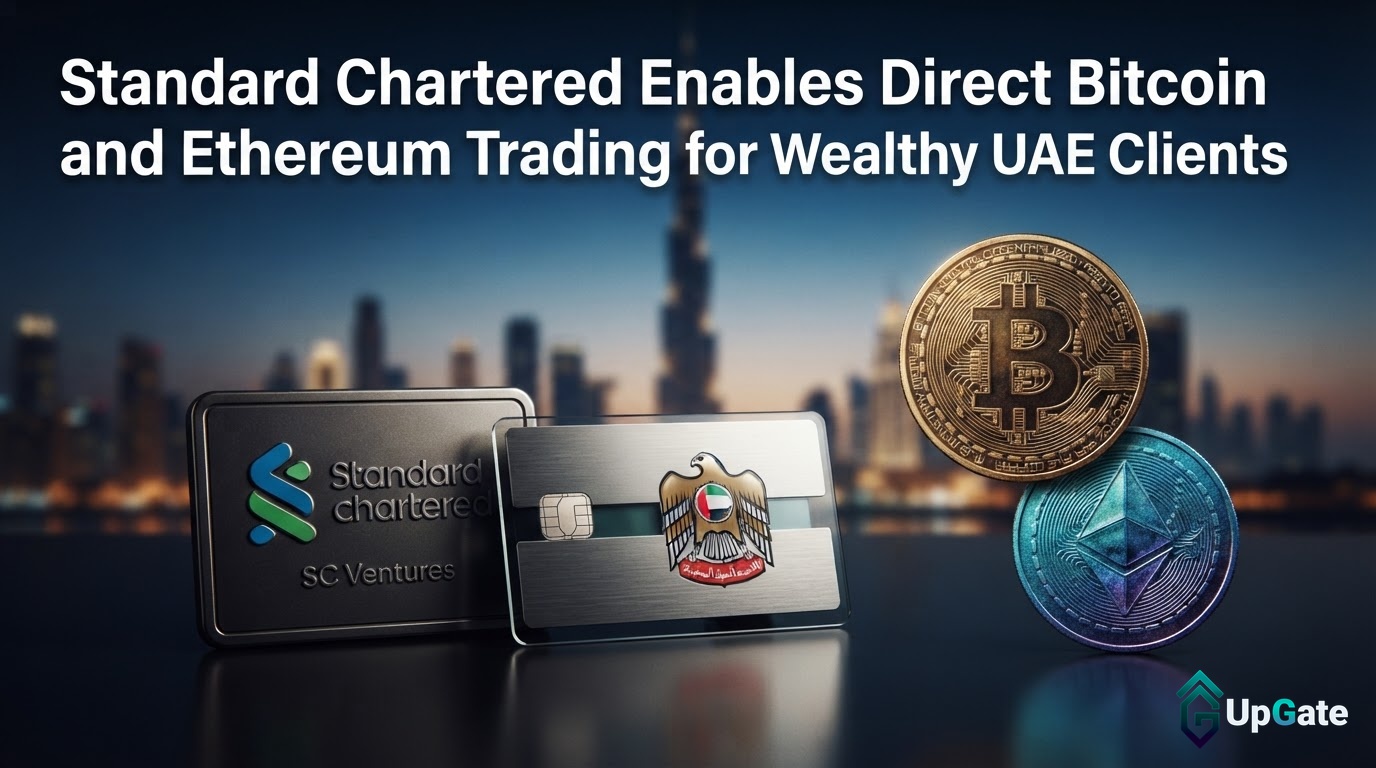
    Standard Chartered Enables Direct Bitcoin and Ethereum Trading for Wealthy UAE Clients

    Standard Chartered announced on Wednesday that it is enabling direct trading of Bitcoin and Ethereum for its affluent clients in the United Arab Emirates. This new service allows eligible clients to buy and sell the cryptocurrencies directly from their bank accounts, eliminating the need for separate digital wallets or third-party trading platforms.

    Broader Context

    Source materials place the factual news in this context: Standard Chartered is a British lender.

    Service Integration and Security

    The service is available to clients classified as Professional Investors and operates under licensing approval from Dubai’s Virtual Assets Regulatory Authority (VARA). Standard Chartered will handle the custody and settlement of these digital assets through a closed-loop model. The bank states this approach reduces clients’ exposure to third-party wallet risks.

    Samir Subberwal, the bank’s global head of wealth solutions, retail products, data and analytics, highlighted the significance of this integration, stating, “This launch represents a significant milestone for Standard Chartered as we bring digital assets into our core wealth offering.” He added, “Clients now want more than access, and are looking for the security that comes with buying through a regulated institution.”

    Expanding Crypto Offerings

    This move integrates digital assets into Standard Chartered’s core wealth management offering. Previously, the bank provided indirect exposure to cryptocurrencies through instruments like ETFs, structured products, and over-the-counter derivatives. Standard Chartered also brought its institutional crypto desk to the UAE last month through its unit in the Dubai International Financial Centre, which is overseen by the Dubai Financial Services Authority.

    Standard Chartered’s crypto custody service went live in the UAE in September 2024. The bank also operates a crypto custody service in the EU via a Luxembourg entity, which became operational a few months after the UAE launch.

    Context and Background

    Standard Chartered is a global systemically important bank, and the UAE is identified as one of its four global wealth hubs. The bank’s venture arm, SC Ventures, backs Zodia Markets, a digital asset infrastructure provider.

    While the bank has historically been involved in the digital asset space, including through analyst commentary, this direct trading service for wealth clients in the UAE is described as a global first for Standard Chartered and the first crypto trading offering from an international bank in the UAE. The bank has not provided specific details on the exact date of the announcement on Wednesday, nor the precise timeframe for the EU custody service launch or the UAE institutional desk launch.

  • Evernorth to Deploy 473 Million XRP with Ripple, Kraken, Coinbase

    Evernorth to Deploy 473 Million XRP with Ripple, Kraken, Coinbase

    Evernorth Taps Ripple, Kraken, Coinbase, and BitGo for XRP Treasury Strategy

    Evernorth Holdings, a digital asset treasury company, has named Ripple, Kraken, Coinbase, and BitGo as its inaugural institutional execution partners. The company intends to leverage its substantial holdings of 473 million XRP to generate returns, moving beyond a simple buy-and-hold approach.

    The strategic partnerships are designed to facilitate institutional strategies for Evernorth’s XRP treasury. The company’s CEO, Asheesh Birla, stated that the objective is to generate earnings and, over time, increase the amount of XRP represented per share.

    The announcement, made on October 14, coincided with Evernorth’s ringing of the Nasdaq closing bell to mark its public debut. This treasury strategy represents a significant step in Evernorth’s ambition to enhance institutional access to the XRP market.

    “We’re putting our treasury to work,” Birla remarked, emphasizing the company’s desire to actively participate in the growth of the XRP ecosystem. He further elaborated that the company aims to grow XRP per share while simultaneously supporting the broader ecosystem.

    The selection of Ripple, Kraken, Coinbase, and BitGo was based on their robust institutional infrastructure, licensing, financial stability, and proven track record serving public companies and asset managers.

    Each partner will play a distinct role in supporting Evernorth’s operations. Ripple will provide connectivity to the XRP ecosystem and its underlying infrastructure. Kraken and Coinbase will offer exchange services for trade execution, while BitGo will handle the institutional custody of Evernorth’s digital assets.

    Collectively, these four partners will enable Evernorth to manage its XRP holdings and implement its planned strategies, adhering to the stringent controls and reporting standards expected of a Nasdaq-listed entity.

    Evernorth has not yet disclosed the specific allocation of its XRP treasury across various strategies or provided concrete return targets. The success of these plans will also be contingent on prevailing market conditions and the emergence of new opportunities, such as the development of credit markets on the XRP Ledger.

  • SUI ETFs Attract Consistent Inflows Amidst Network Growth and Technical Buy Signal

    SUI ETFs Attract Consistent Inflows Amidst Network Growth and Technical Buy Signal

    US-listed SUI Exchange Traded Funds (ETFs) have experienced five consecutive weeks of inflows, accumulating approximately 14 million SUI tokens. This sustained investor interest coincides with significant network developments and a positive buy signal from the SuperTrend indicator on the 4-hour chart, suggesting potential for network expansion.

    Network Advancements and Partnerships

    Several key advancements are bolstering the SUI ecosystem. The network recently demonstrated its capacity during a live stress test at Basecamp, reportedly handling over 40 million transactions per second, a figure more than six times its previous record. This test simulated AI agent activity using over 10,000 programmable tunnels, with transactions settled on the Sui network. This development aligns with a collaboration announced with Alibaba Cloud, aimed at integrating cloud and AI inference services into Sui’s Agent Payments system. According to the latest findings by Ali Martinez, this could allow AI agents to pay for services using stablecoins within set spending limits.

    Further expanding SUI’s utility, the network is being integrated into Samsung Wallet’s offering for Galaxy devices in the United States. This integration is expected to support stablecoin transfers without gas fees for an estimated 82 million eligible devices. Additionally, Circle’s Cross-Chain Transfer Protocol V2 has launched on Sui, enabling native USDC to move between Sui and 29 other supported blockchains, enhancing payment and DeFi options.

    The SUI ecosystem is also seeing progress in its Bitcoin finance initiatives. The project, known as Hashi, is preparing for a phased mainnet rollout this month. Hashi has reportedly secured over $500 million in capital commitments from more than 20 participating institutions, with Anchorage Digital named as a launch partner.

    Performance and Stability

    These developments come as the Sui network has surpassed a significant milestone, recording over 5 billion total transactions, with the current figure standing around 5.02 billion, according to BSCN. For the past 30 days, the network has reported 100% uptime. However, the network has faced stability challenges earlier this year. In May, Sui experienced three major outages within a 48-hour period, resulting in over 15 hours of downtime. Prior to that, a consensus bug in January halted block production and transaction processing for approximately five hours and 52 minutes.

    Outlook

    While the current uptime metrics show improvement, these past incidents highlight the ongoing need for network stability as it scales. The sustained inflows into SUI ETFs, combined with the technical buy signal and the ongoing development of its ecosystem, indicate growing momentum. However, the long-term success of these integrations and projects, alongside the network’s ability to maintain consistent uptime, remains a key area for observation.

    Why This Matters

    The materials describe a narrow update: US-listed SUI ETFs have seen consistent inflows for five weeks, totaling around 14 million SUI. The exact timing and impact of the ‘next leg higher’ for SUI.

    Broader Context

    Source materials place the factual news in this context: Amid weakening demand for Bitcoin and Ethereum exchange-traded funds, US-listed SUI ETFs are moving in the opposite direction.

  • Ethereum Dominates Tokenized ETF Market with $303M Cap

    Ethereum Dominates Tokenized ETF Market with $303M Cap

    Ethereum Leads Tokenized ETF Market, But Dominance Faces Challenges

    Ethereum currently holds the largest market capitalization in the tokenized exchange-traded fund (ETF) market, with a valuation of $303 million, according to data shared on X.

    Tokenized ETFs can be understood as digital representations of shares in traditional funds. These tokens reside on a blockchain, while the underlying assets are held by an issuer that guarantees their value. This innovation allows investors to hold and transfer fund exposure much like any other cryptocurrency, including outside of conventional market hours.

    Ethereum’s prominence in this specialized sector has been a consistent feature, though not without fluctuations. Research tracking the market indicates that in May 2026, Ethereum accounted for approximately 74% of the tokenized ETF market, valued at roughly $321 million. By July of the same year, its market share had decreased to about 62%, despite an increase in its total value to approximately $326 million. In August 2026, Ethereum’s share stood at 52.5%, with a market capitalization of around $335 million. The current $303 million valuation for Ethereum is below its August peak but still secures its leading position.

    The overall tokenized ETF market experienced significant growth during the same period, expanding from approximately $297.5 million at the close of the first quarter of 2026 to $639 million by August 2026.

    A substantial portion of Ethereum’s strong performance in this space is attributed to a single issuer: Ondo Finance. As the leading tokenized ETF issuer on the Ethereum network, Ondo Finance accounts for a significant share of the platform’s market presence. Ondo’s offerings include 1:1 backed tokenized ETFs and stocks that are available for trading around the clock.

    The research highlights that aggressive product launches by issuers like Ondo have been a key driver of the overall market’s expansion. Major financial institutions such as BlackRock and Franklin Templeton have also entered this arena, partnering to introduce their own tokenized offerings.

    However, Ethereum’s lead in the tokenized ETF segment becomes less pronounced when considering the broader category of tokenized stocks and ETFs combined. By early October 2026, this wider market had reached approximately $3.7 billion. In this expanded landscape, BNB Chain led with roughly $1.1 billion, followed by Ethereum at about $828 million and Solana at approximately $738 million. The emergence of various tokenized stock products on Solana and BNB Chain poses a potential threat to Ethereum’s dominance in specific market niches.

    For context, the traditional ETF industry is valued at over $23 trillion, with the entire tokenized ETF market representing a mere 0.003% of that figure.

    The key takeaway for Ethereum is that its current first-place position does not guarantee a secure or unassailable lead. Its market share in tokenized ETFs dropped from approximately 74% in May to 52.5% in August, a decline of over 20 percentage points within a period of rapid market expansion.

    The research suggests that maintaining its leading edge will likely require continuous adaptation and potentially new strategic alliances to effectively compete with rivals like BNB Chain and Solana. Given that Ondo Finance is a major contributor to Ethereum’s tokenized ETF value, the strategic decisions made by Ondo and similar issuers regarding the deployment of new products will play a crucial role in shaping future market rankings.