Category: Uncategorized

  • BingX EU Obtains Austrian MiCA License for 29 EEA Nations

    BingX EU Obtains Austrian MiCA License for 29 EEA Nations

    Crypto Exchange BingX Secures European License Amid Regulatory Shift

    Vienna, Austria – Global crypto trading platform BingX has obtained authorization from Austria’s Financial Market Authority (FMA) for its European operations, marking a significant step under the European Union’s new Markets in Crypto-Assets Regulation (MiCA). The Vienna-based entity, BingX EU, announced on October 14, 2026, that the approval grants it the ability to offer crypto-asset services across all 29 member states of the European Economic Area (EEA).

    Navigating the MiCA Framework

    The authorization comes into effect following the conclusion of MiCA’s transitional period on July 1, after which only officially licensed providers are permitted to serve clients within the EEA. BingX EU has now secured this crucial license, positioning it as a registered crypto-asset service provider (CASP) under MiCA’s terminology. The license specifically permits BingX EU to provide custody, exchange, and brokerage services for crypto assets. The operational entity in Vienna is registered as MEGE zweite GmbH.

    Launch Date Remains Unspecified

    Despite securing the regulatory green light, BingX EU has not yet announced a specific launch date for its services to European customers. As of mid-October 2026, the platform had not yet appeared on the CASP register maintained by the European Securities and Markets Authority (ESMA), the EU’s securities watchdog. This registry serves as a public record of authorized entities.

    BingX EU’s application process with the FMA had progressed significantly by June 16, 2026. However, the final approval arrived several months after the July 1 deadline for the MiCA transitional period. Founded in 2018, BingX reports a global user base exceeding 40 million.

    Austria Emerges as a Key Licensing Hub

    Under MiCA’s harmonized regulatory framework, a license granted by a single member state’s regulator provides access to the entire EU bloc. BingX EU’s choice of Austria’s FMA as its licensing authority aligns with a growing trend, as other platforms like Bybit and Bitpanda have also secured authorizations in the country. This positions Austria as an increasingly important hub for crypto-related licensing within the EU.

    For BingX, this license transforms Europe from a complex regulatory landscape into a unified market opportunity. The company can now target both retail and institutional clients across the EEA under a single set of rules, eliminating the need for fragmented, country-specific approvals.

    Key Considerations Moving Forward

    Several aspects warrant attention as BingX EU progresses. Firstly, the absence of a launch date means the authorization is currently a potential capability rather than an active service offering for European consumers.

    Secondly, its eventual appearance on the ESMA register will provide official, bloc-wide confirmation of its authorized status. Until then, potential users may wish to verify BingX EU’s standing directly with the FMA.

    Thirdly, the specific suite of services BingX EU will offer, within the scope of custody, exchange, and brokerage, will be crucial in determining its competitive positioning against existing players operating under the same MiCA regime.

    Finally, Austria’s growing prominence as a licensing jurisdiction could lead to the FMA’s supervisory approach having a substantial influence on the future landscape of crypto services across the entire EEA, should more global exchanges follow suit and seek authorization through Vienna.

  • Polygon Labs Secures Extensive US Regulatory Licenses for Digital Asset Exchange Through Coinme Acquisition

    Polygon Labs Secures Extensive US Regulatory Licenses for Digital Asset Exchange Through Coinme Acquisition

    Polygon Labs announced on Wednesday the completion of its acquisition of Coinme, a significant move that bolsters its regulatory standing in the United States for the bidirectional exchange of U.S. dollars and digital assets. The integrated U.S. payment business has secured 37 money transmitter licenses and 11 state exemptions, alongside FinCEN Money Services Business (MSB) registration, enabling these operations across 48 states.

    This acquisition represents the final component of a $250 million dual acquisition deal announced in January, which also included the wallet infrastructure provider Sequence. The completion of the Coinme integration is a key step in Polygon Labs’ strategic pivot towards becoming a payment-oriented blockchain company, a transformation CEO Marc Boiron stated was necessary.

    Leveraging Coinme’s existing licenses and its offline retail network, which reportedly spanned 50,000 locations and served over one million users at the time of the initial acquisition announcement, Polygon aims to establish a compliant channel for fiat on-ramps and off-ramps. According to Polygon’s official blog, this network is positioned as a critical asset for Polygon’s entry into stablecoin payments.

    The integrated payment platform is branded as ‘Open Money Stack’. This platform aims to offer businesses a more direct exchange route between stablecoins and local fiat currencies. Rahul Shinghal, co-founder and CEO of Tazapay, a client of the platform, noted its attractiveness for businesses requiring cross-border settlements.

    Acquiring Coinme’s licenses provides Polygon with a strategic advantage, allowing it to bypass the lengthy and costly process of obtaining these regulatory approvals individually. The combination of 37 money transmitter licenses, 11 state exemptions, and FinCEN’s MSB registration creates a comprehensive compliance matrix in the U.S. market, noted as being more extensive than what many crypto payment startups typically possess.

    This development is viewed as a critical execution phase in Polygon’s transformation narrative, shifting its focus from an L2 developer to a payment infrastructure provider. For the broader crypto payment industry, the acquisition underscores the importance of compliant connections to fiat currency for stablecoins to achieve mainstream commerce adoption.

    However, uncertainties remain regarding the future success of this strategy. Key factors to observe include whether Coinme’s offline locations can be effectively converted into stablecoin exchange volume and if the ‘Open Money Stack’ platform can attract a significant number of cross-border operators. The performance of this licensed model in the U.S. could potentially serve as a reference for regulators and operators in other regions, including Taiwan and Asia.

    Why This Matters

    The materials describe a narrow update: Polygon Labs finalized its acquisition of Coinme. Whether Coinme’s 50,000 offline locations can be effectively converted into stablecoin exchange volume.

    Broader Context

    Source materials place the factual news in this context: Polygon Labs is officially completing the acquisition of crypto exchange Coinme.

  • Microsoft Copilot AI Forecasts Massive Chainlink (LINK) Surge

    Microsoft Copilot AI Forecasts Massive Chainlink (LINK) Surge

    Microsoft Copilot AI has generated a bold prediction for Chainlink (LINK), suggesting the cryptocurrency could reach between $200 and $350 by January 1, 2027. This forecast, however, hinges on a significant crypto bull market resurgence, potentially amplified by a major catalyst, which could even push LINK’s price beyond $500.

    Currently, LINK is trading in the $12.70–$13.05 range as of October 14, 2026.

    Speculative Bull Market Scenario

    The optimistic outlook anticipates a robust bull market emerging in late 2026. This surge would be fueled by the widespread adoption of Chainlink’s Cross-Chain Interoperability Protocol (CCIP) and its decentralized oracle network. The scenario envisions major asset managers and an international standards body designating these Chainlink services as the default for regulated tokenized funds and cross-border settlements.

    Under this speculative framework, staking LINK would become a critical component, driving substantial demand. Such a scenario could see LINK’s price ascend from its current approximately $12.80–$13.00 level to the predicted $200–$350 range, or even $500, by early 2027.

    This prediction relies on a confluence of institutional adoption and speculative interest. However, it remains a highly speculative scenario, requiring an unlikely level of coordination among various stakeholders.

    Technical Analysis and Price Targets

    On higher timeframes, LINK has been consolidating within the $12.50–$13.50 region, having pulled back from earlier peaks near $15–$16. The price is currently holding above key intermediate support levels and longer-term moving averages.

    In a typical bull market, a sustained break above the $15–$18 range would pave the way toward the previous all-time high of approximately $53. However, in the extraordinary scenario of adoption by standards bodies and asset managers, surpassing this prior high could trigger significant measured-move extensions and Fibonacci projections from its multi-year base. This could theoretically support a move into the $200–$350+ zone, contingent on a dramatic expansion in trading volume and institutional inflows.

    The Relative Strength Index (RSI) is currently neutral, indicating ample room for it to reach the extreme overbought levels often seen during parabolic price movements. Nearer-term support levels are identified in the $12.00–$12.50 and $11.00–$11.50 zones. Maintaining these levels would preserve the broader recovery structure, allowing the market to price in any significant narrative shifts.

    In summary, while current chart patterns suggest potential for continued upside in a standard bull market, achieving the multi-thousand-percent gains implied by the $200–$500 price targets would necessitate an exceptional surge in structural demand driven by regulated tokenized infrastructure.

    Broader Market Context

    Ethereum (ETH) is not experiencing a freefall, but consecutive outflows from exchange-traded funds (ETFs) and an uncertain macroeconomic outlook are putting pressure on the $2,500 support level. A failure to hold this support could lead to increased pressure on leveraged long positions. Conversely, positive inflation data (CPI) could boost risk appetite and potentially trigger a rebound.

    In this environment, a single large, unverified position should not be considered a substitute for broader market confirmation. Traders looking for diversification beyond single assets might consider exploring early-stage infrastructure projects.

    One such project is LiquidChain ($LIQUID), a Layer 3 infrastructure initiative on its own L3 network. LiquidChain aims to consolidate liquidity from Bitcoin, Ethereum, and Solana into a single execution environment. The project’s token is currently priced at $0.014965 and has raised over $984,000. It is offering a substantial 1100% Annual Percentage Yield (APY) reward, exclusively for presale buyers.

    Key features of the LiquidChain project include a Unified Liquidity Layer, Single-Step Execution, Verifiable Settlement, and a Deploy-Once Architecture. This design allows developers to deploy applications once and gain access to all three major ecosystems.

    Interested parties are advised to research LiquidChain before the presale window closes.

  • Solana Establishes Shanghai ‘Builder Station’ Focused on Developer Infrastructure Amidst China’s Crypto Regulations

    Solana Establishes Shanghai ‘Builder Station’ Focused on Developer Infrastructure Amidst China’s Crypto Regulations

    Solana has established a physical presence in Shanghai with the opening of its first “Builder Station,” a strategic initiative aimed at fostering developer collaboration on Layer 1 infrastructure and applications. The initiative, which commenced on March 20, 2026, at the Hongqiao Alibaba Center, operates within China’s stringent regulatory environment for virtual currencies.

    The “Builder Station” is positioned as a hub for developers rather than traders, deliberately avoiding direct promotion of digital assets. This approach aligns with China’s restrictive rules on virtual currencies, focusing instead on technology infrastructure, AI development, and robotics. Solana’s Chief Product Officer Vibhu drew attention to the Shanghai location on October 14, 2026, with Solana Foundation President Lily Liu backing up his statement. A subsequent “Solana Accelerate China” tour is scheduled from October 16-22, 2026, with planned stops in Shanghai, Hangzhou, Shenzhen, and Beijing.

    The establishment of the “Builder Station” has support from the local government of Shanghai’s Minhang District. This backing suggests that local officials may see value in hosting developer activity tied to technology, even as virtual currency regulations remain strict. By focusing on infrastructure, AI, and robotics, Solana aims to engage engineers and companies in sectors that already garner significant attention in China, potentially making its blockchain proposition more accessible.

    In contrast to Solana’s reported physical presence, no comparable recent initiatives from BNB Chain in China have been documented. The strategic decision to avoid token promotion means that any benefits derived from this initiative are more likely to manifest in developer activity and partnerships rather than direct retail demand from mainland users.

    Uncertainties remain regarding the long-term success and impact of Solana’s developer-first strategy in China, the specific nature of collaborations on Layer 1 infrastructure and applications, and the verifiability of claims about the office space. The effectiveness of this approach will likely become clearer following the “Solana Accelerate China” tour and subsequent developer engagement.

    Why This Matters

    The materials describe a narrow update: Solana opened its first “Builder Station” in Shanghai on March 20, 2026, at the Hongqiao Alibaba Center, with support from the local Minhang District government. The long-term success and impact of Solana’s developer-first approach in China.

    Broader Context

    Source materials place the factual news in this context: Solana now has a physical address in Shanghai.

  • Samsung Wallet to Support USDC Transfers on Solana for Eligible US Users

    Samsung Wallet to Support USDC Transfers on Solana for Eligible US Users

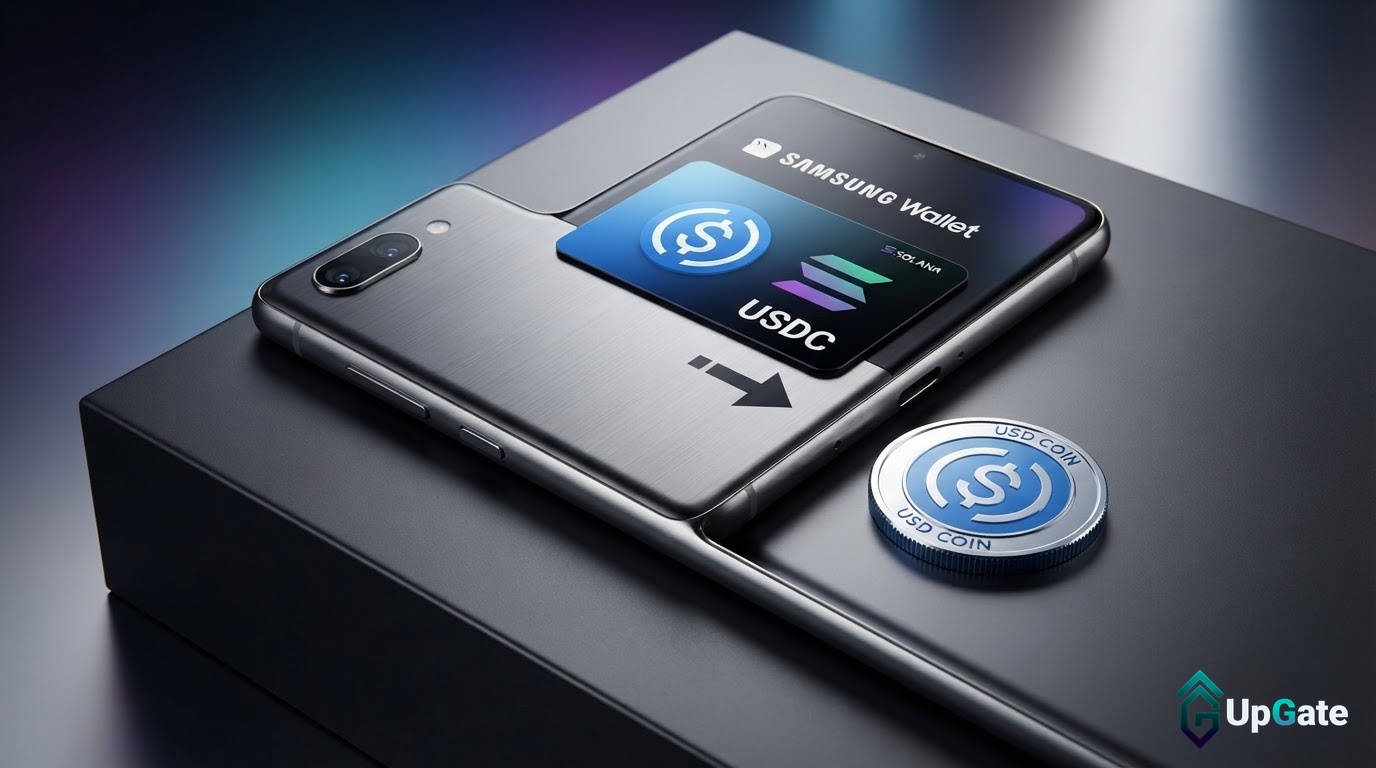
    Samsung Wallet and Pay applications are set to support USD Coin (USDC) stablecoin transfers on the Solana blockchain for eligible users in the United States. The feature is scheduled for rollout in the last week of October 2026, as announced on October 7, 2026.

    This integration will allow eligible users to send USDC to external wallets, convert it to their local currency, and deposit it into bank accounts in over 60 countries. The service will be available on 82 million compatible Galaxy devices. To be eligible, users must be 18 years or older, pass identity verification, and use biometric authentication for transactions. A compatible device running Android 13 or later is also required.

    Samsung states it may not charge a fee for sending USDC to external wallets. However, network fees or fees on the recipient’s side may still apply. The company is integrating this capability directly into its existing Wallet and Pay apps, aiming to leverage its user base without requiring new app downloads or account creations.

    Solana provides the blockchain infrastructure for these transfers. Bastion supplies a licensed stablecoin framework for the payment service, and Coinbase acts as the sub-custodian for the USDC. Sui is also listed as a supporting blockchain partner.

    The integration occurs as Solana’s stablecoin ecosystem shows growth. Stablecoin supply on the Solana network increased by nearly 20% year over year. In 2026, Solana processed more than $5.25 trillion in stablecoin transaction volume, and its stablecoin supply reached a record $17.51 billion in September 2026.

    Samsung had previously teased upcoming stablecoin features in July 2026. The October announcement clarified the use of USDC on Solana.

    Cross-border transfers are a potential use case, with the ability to cash out into local bank accounts in numerous countries. Some commentary suggests this integration could positively influence the market for Solana.

    However, the service has limitations. Expansion beyond the United States is dependent on local regulations. Not all 82 million device owners will meet eligibility criteria due to factors such as age and operating system version. Users should also be aware that network or recipient-side fees may still be incurred.

    Why This Matters

    The materials describe a narrow update: Samsung Electronics has integrated USDC stablecoin transfers on the Solana blockchain into its Wallet and Pay apps for eligible US users. Expansion to markets outside the US depends on local regulations.

    Broader Context

    Source materials place the factual news in this context: Samsung is putting a stablecoin in the same app where people keep their boarding passes.

  • Coinbase’s Historical Cold Storage Key Generation: A Deep Dive into Security Measures

    Coinbase’s Historical Cold Storage Key Generation: A Deep Dive into Security Measures

    Coinbase historically implemented exceptionally rigorous security protocols for generating its cold storage keys, a critical process designed to safeguard customer assets against sophisticated threats. These measures included the use of Faraday-caged tents at secret San Francisco locations and air-gapped laptops, all aimed at preventing potential electromagnetic side-channel attacks and insider compromises during the nascent stages of key creation.

    Elaborate Physical and Digital Safeguards

    The cornerstone of Coinbase’s security was the generation of keys within Faraday cages. These specialized enclosures block electromagnetic signals, thereby thwarting potential attackers who might attempt to capture faint emissions from electronic devices to reconstruct sensitive data. To further complicate surveillance, these tents were frequently relocated to unpredictable sites across San Francisco.

    For the actual key generation and printing, Coinbase employed two factory-sealed laptops—one running Linux and the other a MacBook. Crucially, both machines were air-gapped, meaning they were never connected to any network. To mitigate the risk of pre-ceremony tampering, the specific laptops to be used were selected via a coin toss, ensuring that no single machine could be targeted for compromise beforehand.

    Procedural Security and Evolution

    Upon completion of the key generation, all hardware, including the laptops and printers, underwent physical destruction. This step was particularly important for printers, which can retain data from print jobs, thus closing a potential vulnerability that might otherwise be overlooked.

    The generated keys were then secured using Shamir’s secret sharing, a cryptographic technique that divides a key into multiple parts. This method necessitates the cooperation of several individuals to reconstruct the complete key, significantly reducing the risk of a single insider gaining access to customer funds.

    Over time, Coinbase refined these procedures. Later iterations of the key generation process included an independent auditor to verify the integrity of the ceremony, adding an extra layer of assurance and transparency.

    Historical Context and Key Takeaways

    These sophisticated measures were not Coinbase’s initial approach. Early on, the company relied on simpler methods, such as USB drives and paper backups stored in bank safe-deposit boxes. Despite these less complex systems, Coinbase reported that approximately 87% of customer funds were held offline by late 2012, underscoring an early commitment to asset security.

    The fundamental lesson from Coinbase’s historical practices is that the security of cold storage is intrinsically linked to the moment its keys are born. If keys are compromised during their creation, any subsequent storage safeguards become moot. This highlights the importance for cryptocurrency users to inquire not only about where their assets are stored but also about the methods their custodians employ for generating and protecting the critical keys that control those assets.

    Why This Matters

    The materials describe a narrow update: Coinbase generated cold storage keys within Faraday-caged tents at secret, moving locations in San Francisco. Cold storage is only as strong as the moment the keys are born.

    Broader Context

    Source materials place the factual news in this context: Coinbase once generated the keys to its cold storage inside Faraday-caged tents, set up at secret locations around San Francisco.

  • SEC Greenlights Cboe Prediction Market Options for Coinbase, Nvidia, Tesla

    SEC Greenlights Cboe Prediction Market Options for Coinbase, Nvidia, Tesla

    SEC Approves Novel Binary Options Tied to Company Performance Metrics

    The U.S. Securities and Exchange Commission (SEC) has greenlit a new class of financial products that allow investors to bet on specific company performance indicators, moving beyond traditional stock price speculation. Cboe Global Markets has received approval to list and trade binary options linked to key performance metrics reported by public companies, marking a significant development in the exchange-traded derivatives market.

    How the New Contracts Work

    These binary options function as straightforward “yes” or “no” propositions with financial stakes. Investors will wager on whether a company’s reported metric will meet or exceed a predetermined threshold. If the metric achieves the target, the contract pays out $1; if it falls short, it pays $0. The outcome is determined by the official figures disclosed by companies in their SEC filings.

    Initial Offerings and Participating Companies

    The initial rollout will feature over 100 metrics from 23 companies, including prominent names such as Coinbase, Nvidia, Tesla, and Apple. These metrics are distinct operational figures, such as Coinbase’s trading volume, Nvidia’s data-center revenue, and Tesla’s vehicle delivery numbers, rather than broader stock price movements.

    Retail Access and Fee Waivers

    Robinhood Markets is set to be the first retail broker to offer these new contracts to its clients. Both Cboe and Robinhood have announced plans to waive fees on these products until December 31, 2026, although this fee arrangement is subject to ongoing regulatory review.

    Trading Yet to Commence

    Despite the SEC’s approval, trading in these binary options has not yet begun. Cboe Clear U.S. is awaiting its temporary registration to handle the clearing of these contracts, meaning they are approved in principle but not yet live for trading.

    Investor Protections and Regulatory Distinction

    These new products will operate under existing securities-options investor protection frameworks. This distinguishes them from “event contracts” typically overseen by the Commodity Futures Trading Commission (CFTC), which generally governs similar derivative products.

    Market Reaction

    The market’s initial response was mixed. Cboe shares saw a gain of over 4% following the announcement, while Robinhood shares experienced a decline of nearly 9%.

    Crypto Market Implications

    The introduction of these contracts has a direct implication for the cryptocurrency sector. With Coinbase’s trading volume as one of the available metrics, a key indicator of crypto market activity can now be traded as a binary option. This provides traders with an avenue to speculate on specific exchange activity without the direct risk associated with holding Coinbase stock.

    Key Factors to Watch

    Several developments will be crucial moving forward. The securing of temporary registration by Cboe Clear U.S. is the immediate prerequisite for actual trading to commence. Additionally, the survival of the proposed fee waivers through regulatory review by the end of 2026 will be closely monitored.

  • Optimism Price Forecast: Will OP Fuel Ethereum’s Superchain Surge?

    Optimism Price Forecast: Will OP Fuel Ethereum’s Superchain Surge?

    Optimism’s OP Stack is enabling projects to construct bespoke blockchains leveraging shared technology and standards, a strategy that could significantly broaden the network’s influence beyond its native Layer 2.

    Superchain Ambitions and Ecosystem Growth

    The growth of Optimism’s “Superchain” concept, which envisions a network of interconnected blockchains built on common infrastructure rather than a singular Layer 2 solution, is central to its future prospects. This approach allows applications to operate with greater speed and lower costs compared to the Ethereum mainnet, while still settling transactions on Ethereum. The ecosystem is poised to accommodate a diverse range of applications, from decentralized finance (DeFi) and consumer-facing platforms to gaming and custom-built chains, according to recent analyses.

    The OP Stack: A Foundation for Custom Chains

    The OP Stack represents a more ambitious play than simply scaling Optimism’s own network. This technology empowers projects to launch their own independent blockchains, all while benefiting from shared infrastructure and standardized protocols. A successful expansion of this model could see Optimism gain from a flourishing, multi-chain ecosystem rather than being confined to the performance of a single network.

    Ethereum’s robust liquidity and active developer community present a significant opportunity for scaling solutions. However, a single blockchain architecture struggles to efficiently support the vast array of applications required at scale. Optimism’s Superchain vision aims to foster interconnected growth across multiple chains through unified technological foundations.

    Bullish Case and Potential Token Value

    The optimistic outlook for Optimism hinges on the potential for widespread adoption of the OP Stack. If a substantial number of prominent applications and corporations opt to build their Layer 2 networks using this framework, the OP Stack could emerge as a dominant standard for Ethereum scaling. This scenario could drive demand for the OP token, which has recently shown upward momentum and may target $0.25 or even $0.36 if demand continues to rise. Such a development would position Optimism at the forefront of a broader infrastructure trend.

    Risks and Challenges Ahead

    Despite the compelling technical narrative, adoption is not guaranteed, and the proliferation of new chains does not automatically translate into increased value for OP token holders. The competitive landscape for Ethereum scaling is fierce, with numerous projects vying for applications, developers, and liquidity. Optimism must offer more than just a sophisticated technical proposition to differentiate itself.

    A persistent challenge for the Superchain model is the question of how its expansion directly benefits the OP token. The success of the network and the performance of its native token are not always directly correlated.

    Measuring Progress Beyond Hype

    Ultimately, the trajectory of Optimism’s price prediction will likely depend less on speculative enthusiasm and more on tangible advancements. Key metrics to watch include Superchain activity, the rate of OP Stack adoption, the launch of new chains, stablecoin liquidity, decentralized exchange volume, developer growth, and the actual utility of the OP token. While the underlying infrastructure thesis is strong, the token must demonstrate its ability to capture value from the ecosystem it is designed to support.

  • Industry Groups Seek Expedited Review of Illinois’s 0.2% Crypto Tax Amid Legal Uncertainty

    Industry Groups Seek Expedited Review of Illinois’s 0.2% Crypto Tax Amid Legal Uncertainty

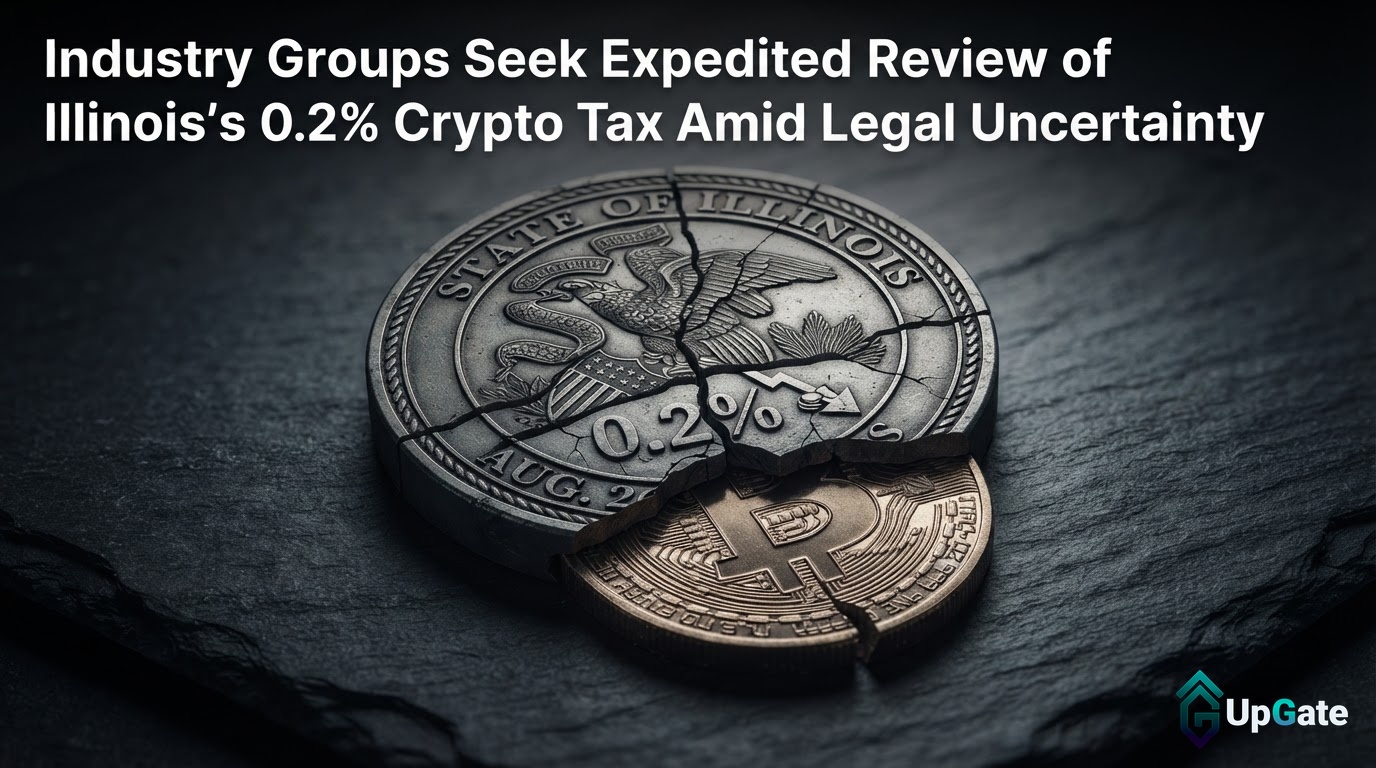
    Industry organizations are pushing for an expedited court review of Illinois’s 0.2% digital-asset tax, seeking a swift resolution on the lawfulness of the measure. The tax is currently slated to take effect on July 1, 2027, following a six-month delay.

    In a filing with the Circuit Court of Sangamon County, Illinois, groups including the Crypto Council for Innovation (CCI) and the Blockchain Association (BA) have requested an expedited schedule for summary judgment. This move aims to resolve the legal merits of the tax as quickly as possible, with a potential decision on its lawfulness by March.

    Legal Challenge and Expedited Timeline

    The organizations are joining existing legal challenges against the tax. The Digital Chamber and the Illinois Blockchain Association have also filed lawsuits. The request for expedited review consolidates the efforts to address the tax’s legality.

    According to the filing, the CCI and BA are seeking to “reach a decision on the tax’s lawfulness as quickly as possible.” This push for an accelerated legal process comes after Illinois officials agreed to delay the tax’s implementation. The delay, which extends from January 1 to July 1, 2027, was part of a settlement in a lawsuit filed by the Digital Chamber.

    Background of the Tax Delay

    This delay was reportedly agreed upon in response to claims that the Digital Asset Tax Act was included in the state’s budget without adequate debate or public feedback. Digital Chamber CEO Cody Carbone stated that the organization would continue legal proceedings “until this tax is struck down for good.”

    CCI CEO Ji Kim commented on the urgency, stating, “While pausing enforcement of the Digital Asset Tax Act protects Illinois consumers and businesses from this onerous and legally flawed tax until July 1, it remains imperative that the merits are determined as soon as possible.”

    The outcome of the request for an expedited schedule remains uncertain, as it is subject to court approval. If granted, a decision on the merits of the law could be reached by March, significantly sooner than the tax’s current effective date.

    Why This Matters

    The push for an expedited review by industry organizations highlights a proactive legal strategy to resolve regulatory uncertainty surrounding Illinois’s digital-asset tax. The potential for a court decision by March, should the expedited schedule be approved, could provide clarity on the tax’s lawfulness sooner than anticipated, influencing future regulatory approaches to digital assets in the state.

    In related news, Summer Mersinger is scheduled to step down as CEO of the Blockchain Association. Kristin Smith is expected to take over as interim head. Mersinger is anticipated to remain with the organization until the end of 2026.

    Broader Context

    Source materials place the factual news in this context: Illinois officials already agreed to delay implementation of a 0.2% tax on crypto assets, but industry-aligned organizations are pushing for summary judgment on the merits.

  • BitGo Reaffirms Custodial Role, Emphasizing Client Asset Control Amid Service Expansion

    BitGo Reaffirms Custodial Role, Emphasizing Client Asset Control Amid Service Expansion

    BitGo is reinforcing its commitment to safeguarding client assets by emphasizing its strict operational framework, which prevents the company from accessing or redeploying client funds without explicit authorization. This assurance comes as BitGo expands its offerings into areas such as prime brokerage, staking, and tokenized assets, services that could traditionally involve custodians utilizing client funds.

    Custodial Safeguards in Practice

    According to BitGo’s Chief Product Officer Eugene Hahr, the company operates strictly as a custodian, meaning client assets remain under the full ownership and control of the client at all times. This principle is underpinned by several key operational and contractual safeguards. BitGo’s custodial services agreements explicitly state that the company cannot access or deploy client assets without direct authorization from the client. This is further supported by a policy of holding assets on a strict 1:1 basis, meaning no rehypothecation occurs. Client assets are maintained in segregated accounts, ensuring they are kept separate from the company’s own funds.

    Technological measures also play a crucial role in enforcing BitGo’s custodial stance. The company utilizes multi-signature wallets, which require multiple approvals for any transaction, akin to a joint bank account needing more than one signature. Additionally, BitGo employs multi-party computation (MPC) technology. MPC splits cryptographic keys into pieces held by different parties, allowing transactions to be signed collaboratively without a complete key ever existing in one place. Both multi-signature and MPC setups are designed to restrict unilateral transaction authorization, according to BitGo, preventing the company from moving client funds on its own.

    Navigating Expansion

    BitGo’s expansion into prime brokerage and staking services presents a familiar question for institutional clients: how are their assets protected when the custodian offers services that could generate additional revenue by putting those assets to work? BitGo’s messaging indicates a strategy to grow into these areas without crossing the line from custodian to user of client funds. Clients can opt into activities like staking, but the default position is that no asset movement occurs without their explicit consent.

    Insurance and Oversight

    To further bolster confidence, BitGo carries insurance coverage of up to $250 million from Lloyd’s of London. However, it is noted that this figure represents a ceiling on coverage and not a may provide that every possible loss would be fully compensated. BitGo’s banking arm, BitGo Bank & Trust, NA, operates as a federally chartered institution overseen by the Office of the Comptroller of the Currency (OCC), adding a layer of regulatory oversight.

    Hahr has also highlighted the importance of robust custody infrastructure for scaling tokenized equities, particularly in markets that operate 24/7. Unlike traditional stock exchanges that close at night and on weekends, crypto markets are always active, requiring continuous operational support for digital assets.

    While BitGo emphasizes its strict custodial protocols and technological safeguards, an uncertainty remains regarding whether the $250 million insurance coverage from Lloyd’s of London would cover every possible loss scenario. Nevertheless, the company’s core message focuses on maintaining client control and asset security as it navigates its business expansion.

    Why This Matters

    The materials describe a narrow update: BitGo’s Chief Product Officer Eugene Hahr has reiterated that the company operates strictly as a custodian and cannot access or redeploy client assets without explicit client authorization. Whether the $250 million insurance coverage from Lloyd’s of London would cover every possible loss.

    Broader Context

    Source materials place the factual news in this context: BitGo is pushing into prime brokerage, staking and tokenized assets.