Category: Uncategorized

  • TSMC CEO: No Chip Slowdown as Foundry Posts Record Profit

    TSMC CEO: No Chip Slowdown as Foundry Posts Record Profit

    Taiwan Semiconductor Manufacturing Co. (TSMC) continues to grapple with a persistent challenge: demand for its chips consistently outstrips its production capacity. On October 15, 2026, the company announced its sixth consecutive quarter of record net profit.

    Robust Demand Fuels Record Profits

    CEO C.C. Wei characterized demand as “extremely robust” and indicated no signs of a slowdown in the artificial intelligence (AI) trend. TSMC’s net profit for the third quarter reached NT$763.1 billion, equivalent to approximately $23.6 billion. This represents a substantial 68.7% increase compared to the same period in the previous year.

    The financial results surpassed analyst expectations by a significant margin, extending a remarkable streak of 11 consecutive quarters of year-over-year profit growth. Revenue for the quarter climbed to NT$1.494 trillion, or about $46.7 billion, marking a 50.9% year-over-year increase and a 17.6% gain from the preceding quarter. Advanced process technologies were a key driver, accounting for 79% of total wafer revenue during the period.

    Upgraded Outlook and Aggressive Guidance

    In light of these strong results, TSMC’s management has revised its full-year 2026 revenue growth outlook upward to approximately 44% in U.S. dollar terms, an increase from the previous forecast of “slightly above 40%.”

    The company’s guidance for the fourth quarter is even more ambitious. TSMC anticipates revenue to fall between $52.3 billion and $54.3 billion, suggesting a year-over-year growth rate of roughly 55% to 61%. Capital expenditure guidance for 2026 remains unchanged, set between $60 billion and $64 billion.

    Expanding U.S. Footprint

    TSMC is also intensifying its investment in U.S. manufacturing capabilities. The company’s total commitment to its U.S. facilities now stands at $265 billion, which includes an additional $100 billion earmarked for its operations in Arizona.

    As a leading contract chip manufacturer, TSMC does not design its own chips but produces them for a wide array of companies, positioning it as the foundry behind a significant portion of the world’s most advanced processors.

    Investor Confidence and Market Position

    This dominant position has not gone unnoticed by investors. TSMC’s market capitalization is approaching $2 trillion, roughly double that of its competitor, Samsung Electronics. The company’s stock has seen a notable surge, climbing nearly 60% in 2026 alone.

    Navigating Economic Uncertainties

    Despite the strong performance, TSMC has flagged ongoing macroeconomic uncertainties that are influencing its planning for 2027. The company specifically highlighted consumer-sensitive segments, noting that business areas tied to smartphones and other everyday electronics could face increased vulnerability should household spending decline.

    Key indicators to monitor moving forward include whether fourth-quarter revenue falls within the projected $52.3 billion to $54.3 billion range, the shape of capital expenditure plans for 2027, and the resilience of consumer-facing demand in parallel with the robust AI sector.

  • Evernorth’s $648M Strategy Fuels XRP Price Surge

    Evernorth’s $648M Strategy Fuels XRP Price Surge

    XRP Trades Near $1.30 as Inflation Fears Overshadow Institutional Treasury Plan

    XRP is currently trading around $1.30, marking a 6% decline over the past 24 hours. Traders are grappling with persistent U.S. inflation data while simultaneously assessing a significant institutional treasury initiative. Evernorth has appointed four execution partners to manage its substantial holdings of 473 million XRP, with deployment slated to commence in the fourth quarter of 2026. The question remains whether this announcement will influence the outlook for XRP’s price.

    Institutional Partnerships for XRP Holdings

    Ripple, Kraken, Coinbase, and BitGo have been selected to support Evernorth’s institutional strategies. The objective is to generate returns from the company’s XRP reserves, rather than allowing them to remain inactive. Evernorth, recently listed on Nasdaq under the ticker XRPN, stated that these partners bring essential infrastructure, licensing, and risk management expertise to the table.

    A tweet from @Ripple announced: “BREAKING: Evernorth begins deploying its $648 million, 473 million XRP treasury starting Q4, partnering with Ripple, Kraken, Coinbase and BitGo. @Ripple pic.twitter.com/g8m0FY7VEK”

    Macroeconomic Headwinds and XRP’s Price Action

    Despite the strategic treasury plan, the immediate concern for XRP appears to be macroeconomic factors rather than the 2026 deployment timeline. Stubbornly high inflation figures could temper expectations for interest rate cuts, thereby pressuring risk assets and complicating any bullish technical trends for XRP. The key question is whether the $1.30 level can hold as investors await further clarity.

    XRP’s price hovers near $1.30 after touching an intraday low of $1.28, with the daily trading range extending to $1.33. This intraday low places the $1.28 support zone under immediate pressure. A decisive breach of this level could lead to a decline towards $1.25, while a sustained recovery would likely require a move back above the $1.40–$1.42 resistance area. Analysts have previously identified $1.25 as a potential downside target if support falters.

    Treasury Management and Market Impact

    Evernorth’s valuation, the relatively thin float of its stock, and potential dilution concerns also warrant consideration. A large treasury does not automatically translate into immediate spot demand for XRP. For the time being, a patient approach appears to be the prevailing strategy.

    XRP’s near-term outlook remains under pressure, and Evernorth’s strategy is still months away from full implementation. This leaves traders with a familiar dilemma: await a confirmed support level and a volume-backed recovery, or consider allocating capital to other opportunities.

    The potential upside in an established asset may seem modest when facing overhead resistance. However, shifting focus to an early-stage token introduces significantly different risks, including uncertainties related to execution and liquidity.

    Maxi Doge Meme Token Emerges

    Separately, Maxi Doge ($MAXI), an Ethereum ERC-20 meme token, has garnered attention. Built around a canine persona and a high-leverage trading culture, its price is currently $0.0002844, with $4.8 million raised. The project also boasts a 60% APY staking reward, trading competitions exclusively for holders with leaderboard prizes, and a Maxi Fund treasury dedicated to liquidity and partnerships.

    Demand for meme tokens can surge rapidly. Investors are advised to research Maxi Doge thoroughly and assess its terms and risks before considering any investment.

    Discover: The Best Token Presales

  • Apple Intelligence Clears China Regulatory Hurdle

    Apple Intelligence Clears China Regulatory Hurdle

    Apple Intelligence Secures Chinese Regulatory Approval, Paving Way for Exclusive Foreign AI Service on iPhones

    Apple’s generative AI suite, Apple Intelligence, has received the necessary regulatory approvals in China, marking it as the sole foreign service of its kind permitted to operate on iPhones within the country.

    Regulatory Hurdles Cleared

    The initial approval was granted by the Cyberspace Administration of China, the nation’s internet regulator, on July 15, 2026. This clearance positioned Apple Intelligence alongside domestic competitors like Huawei and Xiaomi on the roster of AI services authorized for use on smartphones in China, with Apple being the only international entity in this group.

    A subsequent approval arrived on September 29, 2026, from the Ministry of Industry and Information Technology (MIIT). This endorsement updated network access permissions for forthcoming hardware, including the iPhone Duo and the iPhone 18 Pro. The MIIT’s decision also broadened network access to encompass Apple Intelligence in conjunction with Alibaba’s AI models.

    Phased Rollout and Key Partnerships

    Apple intends to introduce these features in December 2026 via iOS 27.3. However, the initial rollout will omit the new Siri AI assistant and certain creative tools developed by Apple.

    The generative text and image capabilities will be supplied by Alibaba, which will also manage the processing of cloud-based queries through its infrastructure. Baidu is slated to power the search functionalities within the AI suite.

    Market Performance and Strategic Implications

    The company recently reported a significant 24% year-on-year increase in iPhone shipments to China during the second quarter of 2026. This growth propelled Apple to the second position among smartphone vendors in the country, trailing only Huawei.

    The absence of the new Siri and some creative tools means Apple Intelligence in China will launch with features that Apple has highlighted as core to the user experience in other markets.

    The partnership with Alibaba is particularly noteworthy. With Alibaba’s models now integrated into the network access approval alongside Apple Intelligence, the Chinese tech giant secures a prominent role within one of the most popular premium smartphone lines in the country. For Baidu, powering search within Apple’s AI offering provides an additional avenue to engage with iPhone users.

    The MIIT’s updated permissions for the iPhone Duo and iPhone 18 Pro indicate Apple’s strategy to equip its next generation of devices with AI capabilities pre-installed upon shipping to China, rather than implementing them at a later stage.

  • Divergent Crypto ETF Flows: Bitcoin Funds See Outflows, XRP Funds Attract Inflows

    Divergent Crypto ETF Flows: Bitcoin Funds See Outflows, XRP Funds Attract Inflows

    US spot Bitcoin ETFs experienced net outflows totaling $151 million for the week ending Wednesday, a continuation from the previous week’s $681 million in outflows. On Wednesday alone, Bitcoin ETFs recorded $262 million in outflows, according to SoSoValue data. This occurred as Bitcoin traded around $80,741 at the time of publication, down 3.2% over the past 24 hours. Bitcoin’s price fell below $82,000 following Wednesday’s US inflation report, a factor that may have influenced investor decisions regarding Bitcoin ETFs.

    In contrast to the broader outflows affecting many digital asset ETFs, XRP ETFs bucked the trend by attracting positive net flows for the week. On Wednesday, XRP ETFs saw inflows of approximately $740,000, positioning them as an outlier in the current crypto ETF market.

    The outflows extended to other digital asset ETFs. Ether ETFs shed around $130 million on Wednesday, contributing to $190 million in weekly outflows, following substantial outflows in previous weeks. Solana ETFs recorded $1.3 million in outflows on Wednesday, extending their outflow streak to eight trading sessions and totaling $3 million in withdrawals for the week. Zcash ETFs also experienced net outflows for the week, totaling $3.2 million, despite attracting $3.7 million on Wednesday.

    The divergent flows between Bitcoin ETFs and XRP ETFs highlight a segmentation in investor sentiment within the digital asset market. While major Bitcoin ETFs are experiencing sustained outflows, potentially influenced by price volatility and macroeconomic data, XRP ETFs are demonstrating positive momentum. This indicates that investor interest is not uniform, suggesting a more nuanced market landscape than a simple risk-on or risk-off environment.

    The outflows from Bitcoin ETFs on Wednesday reversed inflows from the previous day. The performance of Ether, Solana, and Zcash ETFs further contextualizes the outflows, highlighting a general trend of reduced investment in several digital asset funds, with XRP ETFs standing out as a notable exception.

    Why This Matters

    The materials describe a narrow update: US spot Bitcoin ETFs recorded $262 million in outflows on Wednesday, contributing to a weekly net outflow of $151 million. The outflows came as Bitcoin continued to decline after falling below $82,000 following Wednesday’s US inflation report.

    Broader Context

    Source materials place the factual news in this context: US spot Bitcoin exchange-traded funds (ETFs) returned to net outflows for the week on Wednesday as BTC fell below $82,000.

  • Australia’s ASIC Proposes Crypto Exchange Draft: $14M Capital Hurdle, April 2027 Launch

    Australia’s ASIC Proposes Crypto Exchange Draft: $14M Capital Hurdle, April 2027 Launch

    ASIC Unveils Draft Regulations for Crypto Trading Platforms

    The Australian Securities and Investments Commission (ASIC) on Thursday released draft regulations for cryptocurrency trading platforms, proposing capital, custody, and trading standards. The consultation period for these proposals will run until November 27. Under the proposed rules, platforms without third-party custody arrangements will be required to hold AUD 14 million in net tangible assets. Non-compliant entities operating without a license after the legislation takes effect in April 2027 will face significant penalties.

    New Framework for Digital Assets

    The draft regulations, known as Consultation Paper 392, are a significant step in Australia’s formalization of digital asset legislation. They lay out the specific rules for implementing the Corporations Amendment (Digital Assets Framework) Act, which was passed by Parliament in April. The consultation period concludes on November 27, with ASIC aiming to publish the final standards by March 2027. The legislation is set to become effective on April 8, 2027, providing licensed entities with a transition period until October 7 to apply for their licenses.

    ASIC Commissioner Alan Kirkland stated, “Our guidance and standards acknowledge the growing role of digital assets and tokenisation within traditional financial systems.” The framework aims to clarify how crypto platforms will obtain licenses, protect customer assets, and meet financial requirements.

    Capital Requirements and Custody Options

    A key feature of the draft is the introduction of three alternative capital models. The most stringent option mandates that platforms without qualified third-party custody arrangements must maintain net tangible assets of at least AUD 14 million (approximately USD 9.7 million) or 10% of average revenue, whichever is greater.

    Amy-Rose Goodey, CEO of the Digital Economy Council of Australia, indicated that the council would review the capital models thoroughly with its members, paying close attention to their proportionality across different business sizes and the preferential conditions available for third-party custody. “From our perspective, this level of resource commitment and diligence is entirely uncontroversial when clients entrust their assets to you,” she added.

    Shange Chandra, CEO of OKX Australia, described the standards as “appropriately onerous,” noting that they would reward compliant firms while challenging those that have been slow to act.

    Global Custody and Emergency Access

    The draft also allows for offshore custody arrangements, reflecting the global nature of the digital asset market, rather than mandating domestic custody. Goodey highlighted the significance of this approach, acknowledging the global reach of digital asset markets.

    However, ASIC is seeking industry input on whether Australian platforms should have the right to emergency access to private keys if an overseas parent or affiliated company collapses, to safeguard local customer assets. This addresses a critical risk in cross-border crypto operations, where Australian users’ assets could be frozen or caught in liquidation processes if overseas custodians or parent companies face liquidity crises or bankruptcy.

    This issue remains unresolved globally. Singapore’s Monetary Authority (MAS), in its 2023 Digital Payment Token framework, introduced similar requirements for offshore custody, obliging platforms to demonstrate they can ensure customer asset safety in emergencies. If Australia moves towards mandatory “emergency key access,” it could increase compliance burdens for offshore custodians, potentially influencing market choices for offshore solutions.

    Trading Restrictions and Conflict of Interest

    ASIC has also proposed restrictions to address potential conflicts of interest on exchanges. These include prohibiting platforms from trading on their own behalf, limiting arrangements that could lead to preferential treatment of specific tokens, and introducing best execution requirements.

    These rules target long-standing concerns in the crypto exchange space, such as the grey areas surrounding proprietary trading desks, arrangements between users’ hedging or liquidity providers and exchanges, and “preferential terms” for token listings. Goodey believes these restrictions warrant careful consideration, as they will impact how Australian exchanges operate and access liquidity.

    Australia’s Regulatory Position in Asia

    Australia’s digital asset framework is positioned as moderately strict among Asian economies. Hong Kong implemented a licensing regime for crypto exchanges at the end of 2023, requiring licensed operators to be based locally and meet capital and compliance standards, while allowing offshore platforms to continue operating if they do not actively market to Hong Kong users. Singapore, through the MAS’s Digital Payment Token (DPT) licensing system, imposes stringent AML/KYC and capital requirements on exchanges.

    Taiwan’s current regulation of crypto exchanges primarily relies on the Financial Supervisory Commission’s anti-money laundering guidelines for virtual assets, requiring risk assessments and compliance procedures but without a comprehensive licensing system. In contrast, Australia’s framework is more defined, with legislation passed in April and ASIC now developing the detailed rules, set for full implementation in 2027.

    This means that after April 2027, crypto platforms operating in Australia will either need an ASIC-issued license or face compliance risks. ASIC has previously warned that unlicensed operators could face penalties of up to 10% of annual revenue, a figure that could be crippling for mid-sized platforms.

    Key Considerations for the Final Rules

    The consultation period for the draft regulations ends on November 27, after which ASIC will incorporate industry feedback into the final details. Three key areas to watch are:

    Firstly, the specific details of the three capital models are not yet fully disclosed. ASIC may adopt a compromise, maintaining higher capital requirements for large platforms while offering more lenient options for small and medium-sized businesses.

    Secondly, the requirement for emergency key access to offshore custody. If made mandatory, it could deter some offshore custodians, requiring ASIC to balance user protection with the viability of offshore solutions.

    Thirdly, the stringency of restrictions on proprietary trading. This will affect the depth of liquidity on Australian exchanges. Overly strict limitations could push operators towards offshore platforms, potentially exposing users to weaker regulatory oversight.

    Australia’s 18-month roadmap from legislation to implementation places it among the more advanced economies in Asia. If the final standards successfully balance user protection with market vitality, they could serve as a reference for other nations.


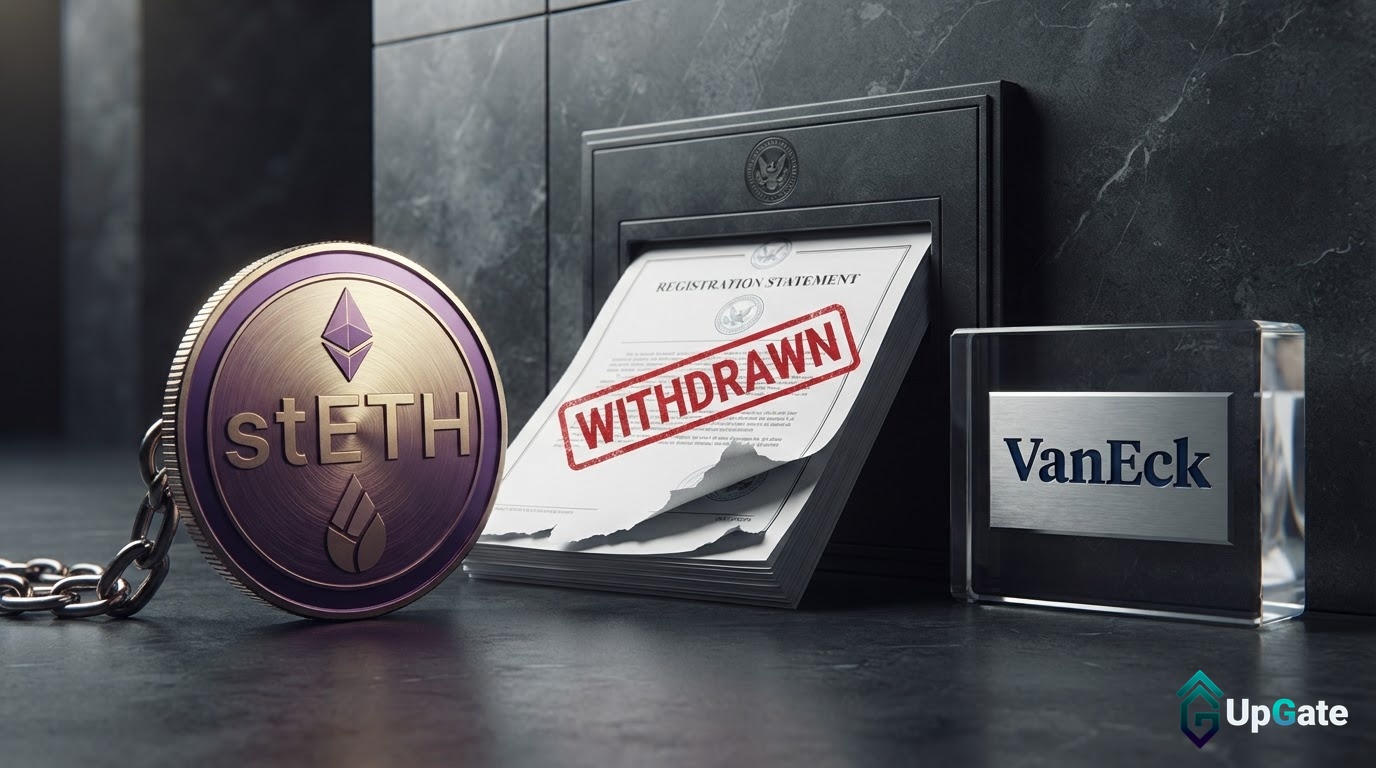
  • VanEck Withdraws Proposed Lido Staked Ethereum ETF Registration Amid Regulatory Uncertainty

    VanEck Withdraws Proposed Lido Staked Ethereum ETF Registration Amid Regulatory Uncertainty

    VanEck has requested the withdrawal of its registration for a proposed Lido Staked Ethereum ETF, nearly a year after initially filing the application with the Securities and Exchange Commission (SEC). The asset manager stated it no longer intends to proceed with the fund. Crucially, no shares were ever issued or sold, meaning the withdrawal will not impact existing ETF holders or necessitate asset sales.

    The withdrawal, submitted last night UK time, concerns a planned product that would have offered investors exposure to staked Ether through a listed vehicle. The proposed ETF aimed to hold stETH, Lido’s liquid-staking token, and track its price while accruing staking rewards, utilizing a MarketVector benchmark. This structure differed from holding spot Ether directly, exposing investors to the specific market mechanics of stETH.

    Navigating Regulatory Ambiguity

    The decision to withdraw comes amidst a complex regulatory landscape for staked cryptocurrency assets. An SEC staff statement issued in August 2025 addressed certain liquid-staking arrangements, distinguishing between qualifying activities and those involving managerial or entrepreneurial efforts. However, this guidance was conditional and did not automatically provide a clear regulatory path for ETFs holding staking tokens.

    The prospectus for the VanEck ETF had identified several risks, including potential validator penalties, smart-contract vulnerabilities, liquidity constraints, and fluctuations in Ethereum’s market value. While Ethereum’s underlying network continues to evolve, network development alone does not resolve the regulatory or product risks outlined in the filing.

    Market Structure and Implications

    VanEck’s withdrawal highlights the product design challenges and regulatory ambiguities that remain for staked crypto products seeking institutional adoption. The Lido Ecosystem Foundation had previously welcomed VanEck’s application in October 2025, viewing it as a potential bridge between liquid staking and traditional investment markets. At that time, Lido reported that its users had earned over $2 billion in staking rewards since launch, with the protocol’s total value locked nearing $40 billion.

    This withdrawal does not affect any existing ETF holders, as the registration statement had not become effective and no securities were issued or sold. The SEC filing requests consent to make the withdrawal effective as of October 14 or at the earliest practicable date thereafter. VanEck has not indicated whether it plans to re-file or propose a different staking-linked ETF in the future.

    Why This Matters

    VanEck’s withdrawal of its proposed Lido Staked Ethereum ETF registration underscores the significant regulatory uncertainties and product development challenges inherent in bringing staked cryptocurrency assets to institutional investors. The SEC’s conditional guidance on liquid staking, coupled with the inherent risks detailed in the prospectus, suggests that a clear regulatory path for such products remains elusive. This event signals a cautious approach from major asset managers navigating the evolving landscape of digital asset investment vehicles.

    Broader Context

    VanEck Digital Assets asked the SEC last night, UK time, to withdraw the registration for its proposed Lido Staked Ethereum ETF, nearly a year after filing. The request concerns a planned route for brokerage investors to gain exposure to staked Ether through a listed product. The filing suggests the registration statement had not become effective, no securities had been or would be issued or sold under it, and no preliminary prospectus had been distributed. Those details matter for market structure: there are no ETF holders who need to redeem and no fund assets that must be sold to meet withdrawals. The SEC filing requests consent to make the withdrawal effective as of October 14 or at the earliest practicable date afterward.

  • Tether Paid Millions to Bo Hines’ Firm While He Was at the White House

    Tether Paid Millions to Bo Hines’ Firm While He Was at the White House

    Tether, the issuer of the world’s largest stablecoin, USDT, sent approximately $6.3 million to a consulting firm co-founded by Bo Hines, according to a report by The Wall Street Journal. Crucially, at least a portion of these funds were transferred while Hines was still employed by the White House.

    Hines later transitioned to Tether, where he now oversees the company’s U.S. operations. This sequence of events has ignited scrutiny over potential conflicts of interest, as Hines played a role in advancing the stablecoin legislation that now governs companies like his current employer.

    Consulting Firm and Ownership

    The firm in question is Nxum. The Wall Street Journal reported that Hines co-founded Nxum and maintained a one-third ownership stake throughout his tenure in government.

    Payment Timing and Government Role

    Tether’s payments to Nxum were part of a deal brokered in May 2025. The initial payment occurred while Hines was still holding his government position as executive director of the White House’s digital assets council, a role he occupied from January to August 2025. The Journal’s findings are based on internal documents and payment records.

    Advocacy for Stablecoin Legislation

    During the same period, Hines was a vocal proponent of the GENIUS Act. This bill established federal regulations for dollar-pegged stablecoins, and President Trump signed it into law in July 2025.

    Tether’s Business and Regulatory Landscape

    As the issuer of USDT, Tether’s business is directly impacted by federal stablecoin frameworks, which dictate who can issue these tokens in the U.S. and under what conditions.

    Transition to Tether

    Hines departed the White House in August 2025. In the same month, he joined Tether as a strategic advisor. By September 2025, he had been appointed CEO of Tether’s U.S. operations, with a primary objective of expanding the company’s presence within the country.

    Nxum’s Defense

    Nxum has contested the interpretation of these events. The firm asserts that Hines had no involvement with Tether during his government service. Furthermore, the reporting indicates Hines participated in discussions concerning the GENIUS Act during a period when he was not actively involved in Nxum’s operations. This distinction appears to be central to Nxum’s defense: while Hines owned a stake in the firm, he was not managing its day-to-day activities.

    Potential Implications

    The GENIUS Act was presented as a framework designed to bring order and credibility to the stablecoin market. A narrative suggesting that a key advocate had financial ties to a major issuer during the law’s development could provide critics with new grounds for criticism.

    For Tether’s ambitions in the U.S., the timing of these revelations is particularly sensitive. The company is seeking to establish a domestic presence under the very regulatory framework that Hines helped to shape, with Hines himself now leading that charge.

    Nxum maintains that Hines maintained a professional distance from Tether while serving in government. However, the payment records detailed by The Wall Street Journal indicate that funds were transferred regardless, and this apparent disconnect between the two entities is likely to remain the focus of scrutiny.

  • Australia’s ASIC Seeks Feedback on Proposed Crypto Platform Rules

    Australia’s ASIC Seeks Feedback on Proposed Crypto Platform Rules

    Australia’s securities regulator, the Australian Securities and Investments Commission (ASIC), has opened a public consultation on proposed capital, custody, and trading rules for cryptocurrency platforms. This initiative follows the passage of digital asset legislation in April and aims to establish clear requirements for the sector.

    The consultation, launched on Thursday, seeks industry feedback on key proposals concerning capital requirements, custody arrangements, and trading restrictions. The deadline for submissions is November 27. ASIC anticipates publishing its final standards and guidance in March 2027, with the new law scheduled to take effect on April 8, 2027. Licensed operators will then have until October 7, 2027, to apply for their licenses.

    Key proposals include three alternative capital models. Under one model, operators without qualifying third-party custody must maintain at least AUD 14 million (approximately USD 9.7 million) in net tangible assets, or 10% of average revenue, whichever is greater. ASIC also proposes restrictions on platforms trading for their own account and accepting benefits that favor specific tokens, aiming to mitigate potential conflicts of interest.

    Custody arrangements are another focus, with ASIC proposing to allow offshore custody. However, this is conditional on robust safeguards being in place to address potential failures of an overseas parent or related company. The consultation specifically requests input on these safeguards and whether Australian operators should retain emergency access to private keys in such scenarios.

    Interpretations suggest these proposed standards will reward operators who have already invested in compliance, capital, and custody, while challenging those who have delayed such investments. The potential allowance for offshore custody is viewed as significant, acknowledging the global nature of digital asset markets.

    Despite the detailed proposals, several uncertainties remain. Specific safeguards for offshore custody in the event of a parent company’s failure require further definition. The proportionality of the proposed capital models for businesses of varying sizes and the concessions available for third-party custody within these models are also areas needing clarification.

    These proposed rules and standards are designed to provide crypto operators with greater clarity on licensing, customer asset safeguarding, and financial obligations under the new regulatory framework. The upcoming implementation is expected to reshape the operational landscape, potentially leading to industry consolidation.

    The proposed restrictions on principal trading, affiliated liquidity arrangements, and best execution requirements are also highlighted as areas requiring careful consideration due to their potential impact on how Australian exchanges operate and access liquidity. This consultation period is a critical step in shaping Australia’s final regulatory framework for digital assets.

    Why This Matters

    The materials describe a narrow update: ASIC has opened a consultation on proposed rules for crypto platforms, including capital requirements, custody arrangements, and trading restrictions. Specific safeguards for offshore custody if an overseas parent or related company fails.

    Broader Context

    Source materials place the factual news in this context: The consultation follows Parliament’s passage of digital asset legislation in April.

  • White House Prioritizes Bitcoin Security Over New Purchases

    White House Prioritizes Bitcoin Security Over New Purchases

    The U.S. government is a significant Bitcoin holder, and before acquiring any more, it intends to ensure a precise accounting of its existing digital assets.

    Focus on Existing Holdings

    Patrick Witt, executive director of the President’s Council of Advisers on Digital Assets, stated on October 14, 2026, that the White House’s immediate priority is the safeguarding and accurate accounting of its current Bitcoin holdings. Any expansion of the Strategic Bitcoin Reserve would be a secondary consideration, if it occurs at all.

    Those anticipating immediate government purchases will need to remain patient. Witt indicated that no specific acquisition strategies have been finalized, nor are there any imminent policy changes or announced timelines for such actions.

    Scale of Government Holdings

    As of early October 2026, the government’s Bitcoin reserves were estimated to be between 319,000 and 328,000 BTC. At prevailing market prices of $82,000 to $83,000 per Bitcoin, this portfolio is valued at approximately $26 billion to $28 billion.

    Recent activity has seen these digital assets on the move. In early October, reports indicated the transfer of over $1 billion worth of Bitcoin, with substantial amounts directed to Coinbase Prime addresses. These movements suggest a consolidation of custody rather than an intent to liquidate, with the coins being secured in institutional-grade storage.

    The majority of the government’s Bitcoin holdings originated from forfeitures linked to cases such as the Silk Road marketplace and the Bitfinex hack.

    Strategic Bitcoin Reserve Established

    The Strategic Bitcoin Reserve was established by executive order on March 6, 2025. Its capitalization is exclusively derived from forfeited Bitcoin, meaning no taxpayer funds have been directly used to acquire these assets.

    This policy represents a departure from previous practices, where seized Bitcoin was typically auctioned off. The current strategy emphasizes strategic holding, with the deposited Bitcoin intended for retention rather than sale.

    Fiscal Constraints and Future Acquisition

    A key fiscal constraint is embedded within the plan: any future acquisition strategy must be budget-neutral, imposing no new costs on taxpayers. To date, no budget-neutral acquisition approach has progressed beyond the discussion phase, and no purchases have been made or detailed.

    Market Implications

    For market participants, the near-term outlook is straightforward: the government is neither actively buying nor selling, thereby removing a potential source of sudden supply or demand volatility. A holder of an estimated 319,000 to 328,000 BTC that commits to not selling effectively removes a significant potential overhang from the market.

    Conversely, the narrative of steady government demand as a future buying force is now deferred. Some market observers had viewed the reserve as a potential source of consistent demand, a scenario that Witt’s comments now push into an undefined future.

    Key Indicators to Monitor

    Several concrete developments warrant attention. Firstly, the administration’s potential publication of a formal accounting of its holdings would replace current estimates with official figures. Secondly, further on-chain movements from government addresses will be scrutinized; consolidation into custody aligns with the current narrative, while transfers to sale venues would contradict it. Thirdly, any tangible progress on a budget-neutral acquisition plan is crucial. Until such a plan advances beyond discussion, the Strategic Bitcoin Reserve will remain primarily a holding operation for seized assets rather than an active market participant.

  • Bitcoin Drops Below $81K, Sparking $485M in Liquidations

    Bitcoin Drops Below $81K, Sparking $485M in Liquidations

    Bitcoin Tumbles Below $81,000, Triggering Over $1 Billion in Crypto Liquidations

    Bitcoin’s price dipped below the $81,000 mark on October 8, 2026, a move that swiftly impacted leveraged traders. In a single hour, more than $485 million in cryptocurrency positions were liquidated, with the majority being long positions. This marks the first time Bitcoin has traded below $81,000 since mid-September.

    Sharp Price Drop Sparks Mass Liquidations

    The intraday low for Bitcoin ranged between $80,350 and $80,500, depending on the data source. Initial estimates placed the one-hour liquidation total between $480 million and $489 million. The selling pressure continued throughout the day, with total crypto liquidations exceeding $1 billion over a 24-hour period. Long positions constituted a significant portion of this figure, accounting for approximately $930 million to $1.05 billion.

    Ethereum and Altcoins Follow Bitcoin’s Decline

    Ethereum experienced a substantial hit, with ETH liquidations ranging from $294 million to $333 million. In some analyses, Ethereum’s liquidation figures even surpassed those of Bitcoin. The broader altcoin market mirrored Bitcoin’s downturn, with Ethereum, XRP, Solana, and Dogecoin all registering steep declines.

    Macroeconomic Factors and Government Bitcoin Transfers Contribute to Sell-off

    Several macroeconomic factors appeared to contribute to the market’s volatility. The 10-year Treasury yield climbed to 5.31%, moving in tandem with Bitcoin’s decline. Simultaneously, Brent crude surged to $105 per barrel amid escalating geopolitical tensions in the Middle East. These conditions also prompted outflows from U.S. spot Bitcoin ETFs, totaling hundreds of millions of dollars.

    Adding to the market pressure, U.S. government-controlled addresses transferred between 3,200 and 12,267 BTC prior to the price drop. This Bitcoin was reportedly linked to significant hacks and the collapse of major exchanges, with the transfers valued anywhere from several hundred million dollars to over $1 billion.

    Thin Liquidity and Crowded Trades Amplified the Slide

    Analysts pointed to elevated open interest, the total value of outstanding derivatives contracts, heading into the market move. They cited thin liquidity and heavily concentrated long positions as factors that amplified the price decline.

    The recent slide erased some of Bitcoin’s recent gains. The cryptocurrency had surged above $81,000 following a rally that began on September 21, and this latest move reversed a portion of those advances.

    While a billion dollars in daily liquidations is a significant figure, it does not represent a record. That distinction belongs to a $19 billion liquidation event in October 2025.