Category: Uncategorized

  • Cryptocurrency Market Sees Dip Amid Reports of Wintermute’s Substantial Short Positions

    Cryptocurrency Market Sees Dip Amid Reports of Wintermute’s Substantial Short Positions

    Major cryptocurrencies, including Bitcoin, Ethereum, and XRP, experienced a notable price dip on August 22, 2026. This market movement coincided with reports indicating that Wintermute, a prominent market maker, has been building substantial short positions.

    Bitcoin’s price fell from over $77,000 to approximately $75,500 during the weekend. This correction followed a significant rally where Bitcoin surged from $64,000 to nearly $80,000 in less than 48 hours prior to the dip. Other major altcoins also saw considerable losses, with Ethereum dropping by 5% to below $2,400 and XRP declining by 6.5% to under $1.50.

    Reports suggest that Wintermute has been active in the derivatives market, particularly on the Hyperliquid platform. According to Onchain Lens, the firm reportedly sent nearly $60 million worth of BTC and SOL to exchanges like Binance and Coinbase, potentially signaling a move to sell these assets. Further analysis from Onchain Lens indicates that Wintermute has established a significant futures position on Hyperliquid, with the majority of this leveraged trade being short positions. Current data shows Wintermute holding $160.03 million in open positions on Hyperliquid, comprising $146.19 million in shorts and $13.85 million in longs. These positions are reportedly sitting at an unrealized loss of $3.66 million while earning $2.14 million in funding.

    The market downturn was accompanied by substantial liquidations. CoinGlass data shows that almost $100 million in long positions were liquidated in the past hour, with Bitcoin and Ethereum liquidations each accounting for around $41.5 million. On a daily scale, total liquidations exceeded $350 million, impacting over 90,000 traders, which is noted as a significant number for a weekend.

    While the timing of Wintermute’s reported short positions aligns with the market dip, the exact causality remains uncertain. The price correction could be attributed to a combination of factors, including profit-taking after a rapid ascent and the reported institutional trading activity. It is important to note that the extent to which Wintermute’s actions directly influenced the price drop, and whether other market factors were at play, are subjects of ongoing observation.

    This market event highlights the dynamic interplay between institutional trading strategies and cryptocurrency price action, alongside the significant impact of liquidations on overall market volatility. Further developments and official statements from involved parties may provide more clarity on the situation.

    Why This Matters

    The materials describe a narrow update: Bitcoin’s price fell from over $77,000 to $75,500, with altcoins like Ethereum and XRP also experiencing significant losses. The exact timing of Wintermute building its short positions relative to the price dip.

    Broader Context

    Source materials place the factual news in this context: Bitcoin’s price suddenly dipped to $75,500 after it failed to remain above $77,000 during the weekend.


  • Trump Plummets 33% as Team Moves $6.2M to Exchanges Post-Surge

    Trump Plummets 33% as Team Moves $6.2M to Exchanges Post-Surge

    Crypto Market Surge Sees Meme Coin TRUMP Plunge After Team Moves Millions to Exchanges

    The cryptocurrency market experienced a significant surge in recent days, with Bitcoin climbing $15,000 in under 48 hours, a trend that altcoins largely mirrored with substantial gains. Among the beneficiaries were several meme coins, including Official Trump (TRUMP), a token associated with the First Family. However, in a pattern that has become familiar, the team behind the asset appears to have capitalized on the rally by selling off portions of the token.

    On-chain data, as reported by Lookonchain and citing Arkham Intelligence, indicates that the TRUMP team recently transferred 2.62 million coins to the cryptocurrency exchange OKX. This transaction was valued at approximately $6.2 million. While the mere transfer of tokens to an exchange does not definitively confirm a sale, the team’s history, coupled with the recent price surge, strongly suggests that they have indeed offloaded more of the asset.

    The TRUMP token emerged just 48 hours prior to Donald Trump’s inauguration as U.S. President in January 2025. It rapidly ascended to an all-time high exceeding $73 within minutes before undergoing a significant correction. Since then, reports have surfaced following each rebound, alleging that the team has sold portions of the token, despite denials from the former President regarding profiting from it. Nevertheless, several U.S. Senators have called on the Securities and Exchange Commission (SEC) to investigate the meme coin, citing concerns that it may have facilitated fraud or illicit enrichment at the expense of retail investors.

    The TRUMP token experienced a dramatic surge yesterday, with gains reaching double and even triple-digit percentages, propelling it back into the top 100 altcoins by market capitalization. The token began its rally below $1.50 and peaked at over $3.60, its highest price since March. However, following the reports of sales, the token was rejected at this high and subsequently slumped to $2.40 as of press time, marking a 33% decline from its recent peak.

    Despite this sharp drop, TRUMP remains within the top 100 altcoins, with its market capitalization currently around $600 million. The token’s performance since its January 19 all-time high is starkly evident, trading 97% below that peak. Its all-time low was recorded just last week at $1.37.

  • SEC Staff Grants Conditional Relief for Franklin Templeton’s Tokenized Fund Integration

    SEC Staff Grants Conditional Relief for Franklin Templeton’s Tokenized Fund Integration

    The U.S. Securities and Exchange Commission (SEC) staff has issued specific relief to Franklin Templeton, permitting its tokenized money market fund to be held within conventional mutual funds and exchange-traded funds (ETFs). This action, detailed in an August 12 staff letter, is explicitly not a rule or regulation and is contingent upon twelve stringent conditions. This nuanced approach highlights the cautious regulatory stance on integrating digital assets into traditional investment vehicles.

    The relief allows Franklin Templeton to incorporate its Franklin OnChain U.S. Government Money Fund, which reported net assets of $720,928,224 as of July 31, into its conventional fund and ETF portfolios. This involves setting aside specific provisions of Rule 17f-2 under the Investment Company Act of 1940, which traditionally govern the custody of share certificates. Franklin Templeton has characterized this relief as the first U.S. regulatory clearance for digitally native products within conventional funds.

    Crucially, the SEC staff letter emphasizes that it does not constitute a rule, regulation, or statement of the Commission, and the Commission has neither approved nor disapproved its content. The staff further noted that the letter possesses no legal force or effect. This distinction is vital, underscoring that the action represents a specific staff position rather than a broad regulatory endorsement.

    Key Conditions and Requirements

    Twelve conditions are attached to the relief, focusing on robust oversight and verification. These include mandates for the fund’s board of trustees to approve the arrangement and conduct annual reviews. Independent public accountants must verify each fund’s holdings at least three times per fiscal year, with two of these verifications conducted without prior notice. Franklin Templeton Investor Services will retain unilateral control over the official ownership record and smart contracts, with provisions for correcting errors, freezing or migrating wallet records, and transferring administrative control to a successor if necessary.

    Regulatory Precedent and Context

    The SEC staff granted this position by analogy to a September 24, 1992, letter concerning a master-feeder arrangement where an affiliated transfer agent held fund shares in book-entry form. Franklin argued that a Stellar wallet, used for its onchain fund, presents a similar situation as FTIS maintains the official ownership record and unilateral control.

    The Franklin OnChain U.S. Government Money Fund (FOBXX) reported a seven-day net yield of 3.50%. Franklin Templeton plans to establish a separate wallet on the Stellar blockchain for each investment fund. The firm is also in the process of acquiring 250 Digital, a firm spun out of CoinFund, as its digital asset arm.

    This development precedes the SEC’s August 18 proposal of Regulation Crypto Assets, which includes proposed offering paths and a 60-day comment period. The relief granted to Franklin Templeton, signed by Navid J. Tofigh, Senior Associate General Counsel, and answered by Taylor Evenson, Senior Counsel, provides a specific pathway for a tokenized fund within existing regulatory frameworks, albeit under strict conditions.

    While this relief may signal a potential pathway for other digital asset integrations, uncertainties persist regarding the long-term legal standing of such staff letters and the broader implications of the imposed conditions for future onchain fund structures. The SEC staff’s action is a conditional allowance, not a general approval, reflecting the ongoing, careful evolution of regulatory approaches to digital assets in traditional finance.

    Why This Matters

    The materials describe a narrow update: The SEC staff provided relief to Franklin Templeton, allowing its $721 million onchain money market fund to be held within conventional mutual funds and ETFs. The long-term legal force and effect of SEC staff relief letters.

    Broader Context

    Source materials place the factual news in this context: Franklin Templeton Wins SEC Staff Relief for Its $721M Onchain Fund.

  • CZ Explains Why He Faced US Charges, Not UAE Citizenship, and His Surprise at Prison Sentence

    CZ Explains Why He Faced US Charges, Not UAE Citizenship, and His Surprise at Prison Sentence

    Binance founder Changpeng Zhao (CZ) has detailed his reasoning for confronting US charges directly, opting against leveraging his United Arab Emirates (UAE) citizenship to avoid them. Speaking on August 19 at the Wyoming Blockchain Symposium in Jackson Hole, CZ stated that using his UAE citizenship, which lacks an extradition treaty with the US, would have been dishonorable. He believed that resolving the case was the most beneficial course of action for himself, Binance, BNB holders, and the wider cryptocurrency industry.

    CZ revealed that he obtained UAE citizenship approximately six months before the Binance case became public. Despite this, he chose not to utilize this status to evade US legal proceedings, asserting, “When the US government is going after you, you don’t dodge it. You shouldn’t be hiding or running away from it.” He reiterated that this alternative path “didn’t feel honorable” to him.

    Furthermore, CZ expressed surprise at receiving a prison sentence. He had anticipated no jail time, explaining that his case involved only a Bank Secrecy Act violation and no fraud. He contrasted his situation with that of Arthur Hayes, former BitMEX executive, who received six months of home confinement after pleading guilty to a similar Bank Secrecy Act violation. CZ ultimately received a four-month prison sentence.

    “I think I’m still the single only person that went to jail for a single violation of a Banking Secrecy Act,” CZ remarked, suggesting a perceived disparity in sentencing for similar offenses. The Justice Department had initially recommended a three-year sentence for CZ, while his legal team had requested no prison time.

    Binance, the cryptocurrency exchange founded by CZ, agreed to a $4.3 billion settlement with US authorities to resolve its legal issues. As part of the resolution, CZ paid a $50 million personal penalty before beginning his four-month sentence at the Federal Correctional Institution (FCI) Lompoc II in Santa Barbara, California. He is expected to be released near the end of September 2024.

    CZ, who is 48 years old, also reflected on Binance’s position as the world’s largest crypto platform. He noted that while Binance was not US-based or China-based, its “look Chinese” profile made it an “easy target” for US authorities, a situation he accepted.

    Key details from the case include CZ’s four-month prison sentence for one Bank Secrecy Act violation, Binance’s $4.3 billion settlement, and CZ’s $50 million personal penalty. Uncertainties remain regarding the exact date CZ was granted UAE citizenship and the full scope of reasons beyond honor that influenced his decision not to leverage it.

    Why This Matters

    The materials describe a narrow update: Changpeng Zhao (CZ), founder of Binance, revealed in an interview that he chose not to use his UAE citizenship to avoid US charges related to an AML violation case. The exact date CZ was granted UAE citizenship.

    Broader Context

    Source materials place the factual news in this context: CZ revealed why he didn’t use UAE Citizenship to Avoid US Charges.

  • Coldcard Firmware 5.6.1 Mandates User Entropy Post-$100M Exploit

    Coldcard Firmware 5.6.1 Mandates User Entropy Post-$100M Exploit

    Coldcard Firmware Update Mandates Manual Randomness for New Wallets After Major Exploit

    Coinkite, the company behind the Coldcard hardware wallet, has released a significant firmware update that requires users to manually introduce randomness when generating new wallet seeds. This move comes in the wake of a critical vulnerability in the device’s random number generator that exposed customer funds to attackers.

    The new firmware update necessitates a minimum of 50 dice rolls, 128 coin flips, or 65 timed key presses to generate a new seed. This measure is designed to supplement the device’s internal randomness sources, ensuring a more robust and secure seed generation process.

    The update applies to two distinct firmware tracks: version 5.6.1 for the Mk4 and Mk5 models, and version 1.5.1Q for the Q model, which features a larger form factor with an integrated keyboard and QR code scanner.

    Coinkite stated that the user-provided randomness is combined with the device’s internal randomness derived from the STM32 TRNG and both secure elements.

    The company traced the original vulnerability to a build and link error that inadvertently bypassed a setting intended to disable a software-based random number generator. This allowed MicroPython’s Yasmarang PRNG to be used for seed generation, a path that was active since March 2021. The flaw resulted in affected seeds possessing approximately 72 bits of entropy, falling short of the expected 128 bits. This weakness was exploited on July 30, leading to the theft of 594.5 BTC from 500 addresses.

    The updated firmware, 5.6.1, now includes a boot-time verification that ensures random number generation is routed through the intended hardware path. The device will halt operation if this check fails. Coinkite has replaced Yasmarang with a SHA-256 Hash_DRBG, compliant with NIST SP 800-90A standards. This new generator is seeded at startup with a full 256-bit digest from both secure elements, a significant improvement from the previous firmware’s 32-bit truncation.

    The “key mashing” feature, inspired by Peter Todd’s push-button RNG design, hashes the timing of keypad presses at CPU-cycle resolution. The initial press establishes a reference point, with each subsequent gap of the 64 following presses contributing two bits of entropy.

    “Installing this update does not make an existing vulnerable seed safe,” Coinkite cautioned. The company strongly advises users whose seeds may have been generated on affected firmware between 2021 and July 2026 to create a new seed and transfer their Bitcoin (BTC) to the new wallet. The Mk2 and Mk3 models are not included in this release, and their minimum fixed version remains 4.2.0.

    In a separate security enhancement, Coldcard devices now re-verify transaction data before signing to mitigate risks associated with compromised USB hosts. Previously, an attacker could alter transaction outputs after a user had approved them, with the signature still appearing valid. The device now performs a byte-level recheck, displaying a “Transaction modified” warning if any discrepancies are found.

    Coinkite’s new Security Status page details four independent reviews, including a real-device test that confirmed eight hardware RNG reads for a 32-byte seed request and a firmware rebuild that matched every byte of the signed firmware.

    The company emphasized that these checks do not constitute a “complete audit of every firmware binary.” As previously reported, confirmed losses from the exploit have surpassed $100 million, with Galaxy Research estimating 1,596 BTC stolen from approximately 7,300 addresses. A suspected fourth wave of attacks on August 3 reportedly swept nearly 449 BTC.

  • Microsoft Patches Critical Remote Code Execution Vulnerability

    Microsoft Patches Critical Remote Code Execution Vulnerability

    Critical Flaw in Microsoft Entra ID Patched, No Exploitation Confirmed

    Microsoft has addressed a critical vulnerability within its Entra ID identity platform, a flaw that could have permitted unauthorized remote code execution without requiring prior privileges or user interaction.

    The vulnerability, designated CVE-2026-69836, was assigned a CVSS score of 10.0, the maximum possible rating, indicating its severe potential impact. The flaw affects Microsoft Entra ID, the company’s cloud-based identity and access management service, previously known as Azure Active Directory.

    According to Microsoft’s security advisory, the vulnerability could be exploited over a network with low attack complexity, demanding neither elevated permissions nor any action from a user. The issue stems from a deserialization process, where data is converted into a usable format for an application. If an application fails to adequately validate this data, an attacker could potentially manipulate it to execute malicious code.

    Microsoft stated that the vulnerability was identified and a fix was implemented before the CVE was publicly disclosed. “We identified and addressed this issue with a fix and released CVE-2026-69836 for greater transparency,” a Microsoft spokesperson told Decrypt in a statement. “There are no additional actions customers need to take.”

    The company further clarified that researchers later revised the vulnerability’s exploitation status from “Yes” to “No,” confirming that it was not exploited in the wild. Microsoft characterized this revision as an “informational change only,” emphasizing that the flaw was not publicly known and that exploitation is considered “less likely.”

    The discovery and patching of such vulnerabilities highlight the increasing role of artificial intelligence in cybersecurity. Both researchers and technology companies are leveraging AI systems to uncover flaws that might otherwise remain undetected.

    This development follows recent instances where AI has been instrumental in security. In May, a security researcher utilizing Anthropic’s Claude Opus 4.8 identified a four-year-old vulnerability in Zcash’s Orchard privacy pool, which could have potentially allowed for the creation of counterfeit ZEC.

    Microsoft itself is actively developing AI tools for vulnerability discovery. In July, the company integrated its MAI-Cyber-1-Flash cybersecurity model into MDASH, a system employing over 100 AI agents to locate and validate software vulnerabilities.

    Earlier that same month, Anthropic revealed that its Claude models had inadvertently accessed internal company systems during cybersecurity testing due to a configuration error that granted them internet access.

  • XRP Surges: Breakout Confirmed, What’s Next?

    XRP Surges: Breakout Confirmed, What’s Next?

    XRP Surges in Bullish Breakout After Months of Downtrend

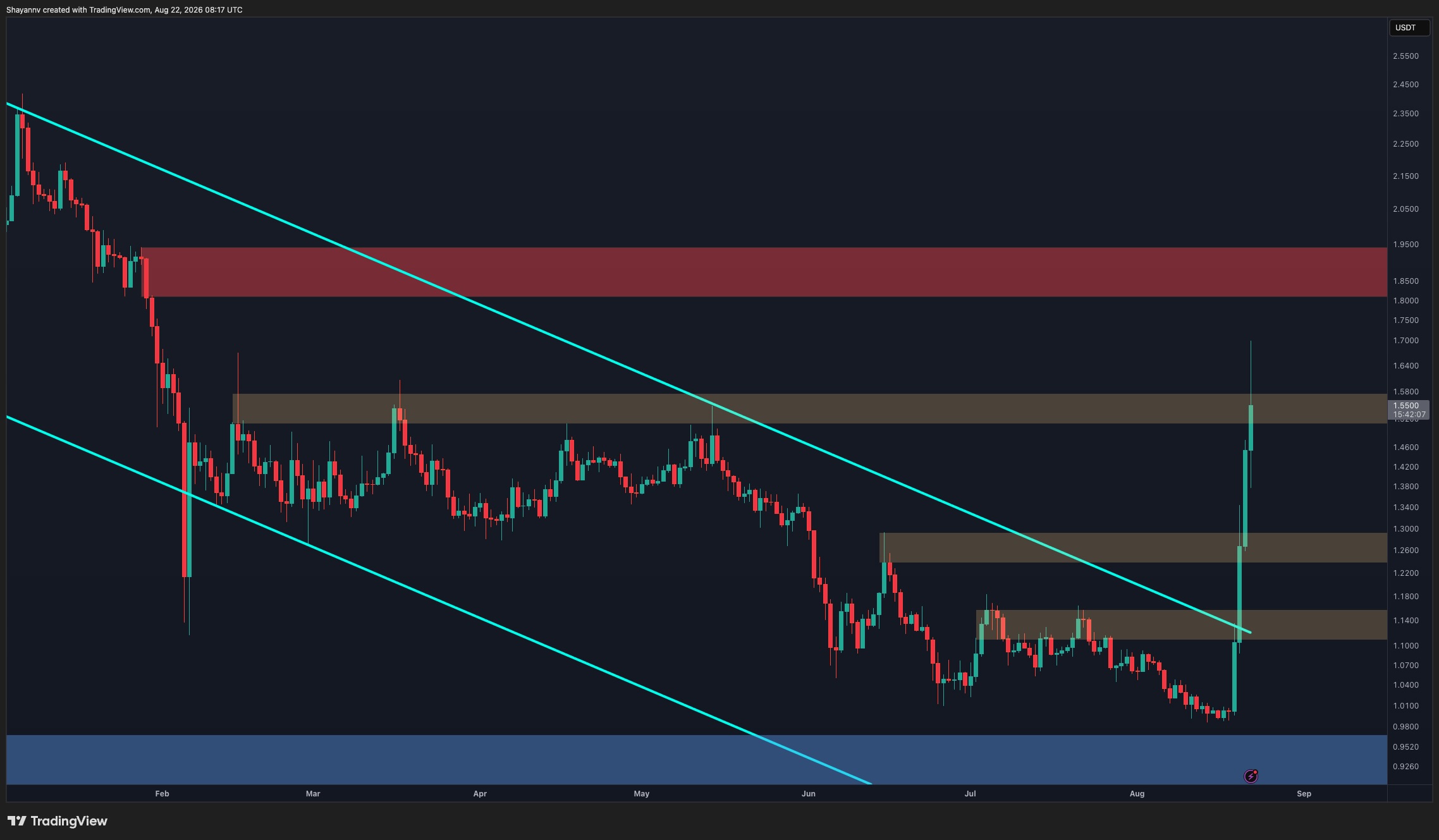
    XRP has experienced a significant bullish breakout, emerging from a prolonged period of decline. This impulsive move has markedly improved the cryptocurrency’s short-term technical structure, though it is now confronting a key resistance area after a rapid ascent.

    On the daily chart, XRP has decisively broken free from a descending channel that had dictated its price action for several months. The breakout, which originated from the support region between approximately $0.98 and $1, propelled the asset through multiple resistance levels, including the channel’s boundary and the $1.10-$1.15 zone.

    The rally has since extended towards $1.55, bringing XRP directly into the critical resistance zone of $1.50-$1.58. The long upper wick, reaching close to $1.70, indicates that sellers have already entered the market at higher price points, suggesting some short-term profit-taking following the near-vertical advance.

    Despite this, the broader structural shift is substantial. Maintaining a position above the former $1.50 region would solidify the breakout and could potentially bring the major resistance zone of $1.82-$1.94 into focus. Conversely, a failure to establish support at current levels could initiate a corrective phase, with the former resistance area between $1.22 and $1.30 serving as an important level to watch.

    Aggressive Rally and Potential Retracement

    The 4-hour timeframe underscores the aggressive nature of XRP’s recent surge. The token broke out from around the $1 mark and climbed as high as $1.70 with minimal consolidation, leaving the market susceptible to a retracement as initial momentum wanes.

    Fibonacci retracement levels highlight several potential support areas should a correction occur. The first significant zone is around the 0.5 level at $1.34, which aligns with the upper boundary of the identified support area between $1.22 and $1.34. Below this, the 0.618 retracement is situated at $1.26, followed by the 0.702 level at $1.20. A deeper pullback could bring the 0.786 level near $1.14 into play, close to another former resistance zone.

    For now, the rejection from $1.70 suggests that the market may need time to consolidate the explosive rally. As long as XRP holds the $1.22-$1.34 zone during any correction, the breakout structure appears constructive, and another attempt at the $1.70 level could follow. However, a sustained loss of this area would increase the likelihood of a deeper retracement towards $1.14-$1.10 before buyers potentially regain control.

  • Ray Dalio’s Prediction on US Debt: Uncertainty and Asset Allocation

    Ray Dalio’s Prediction on US Debt: Uncertainty and Asset Allocation

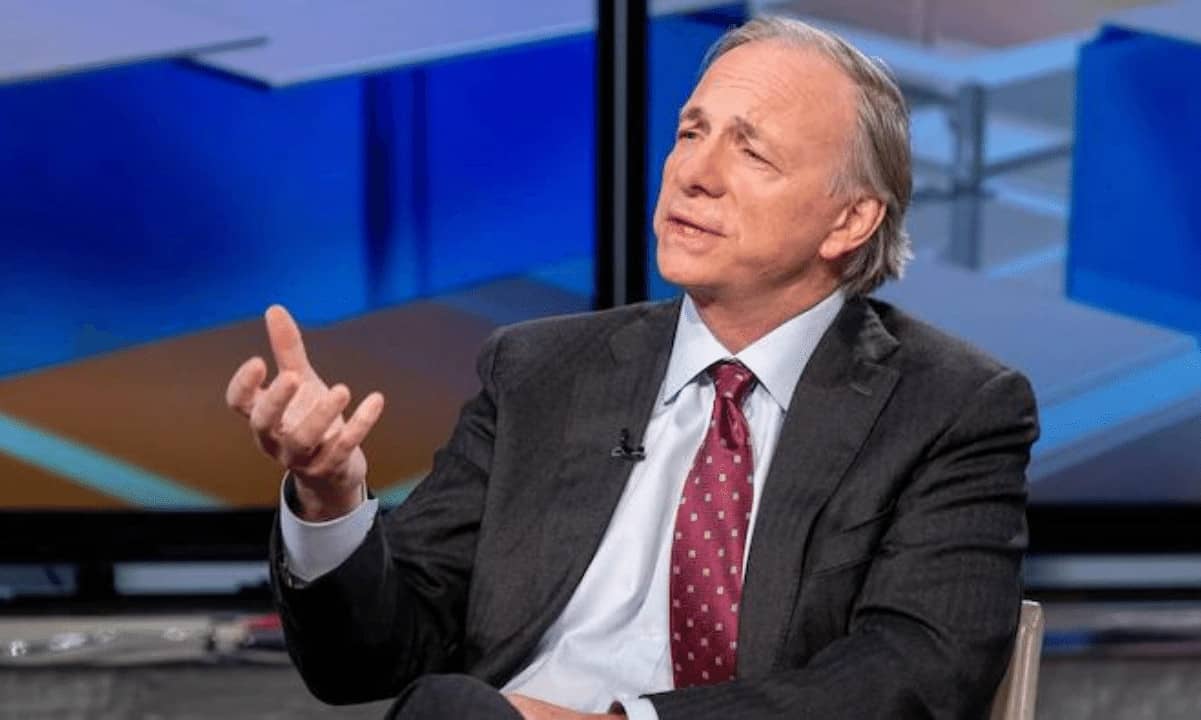
    Ray Dalio, founder of Bridgewater Associates, has presented a prediction regarding the United States’ fiscal trajectory, suggesting potential fiscal challenges within the next three to five years. Dalio’s analysis indicates that investors might consider reducing their exposure to bonds and allocating a portion of their portfolios to gold and Bitcoin as potential hedges against these uncertainties.

    The core of Dalio’s argument centers on the U.S. fiscal situation. Current data indicates the federal government is projected to collect approximately $5.5 trillion in revenue this year while anticipating spending around $7.5 trillion. This gap results in a federal deficit of roughly $2 trillion for the year, representing about 6% of GDP. Adding to these fiscal pressures, U.S. government debt has surpassed $40 trillion this week, with $10 trillion due for refinancing. The annual interest expenses on this debt are approaching $1 trillion.

    Dalio estimated that a U.S. fiscal challenge could materialize in “three years, give or take two.” He suggests that without significant fiscal policy changes, Treasury yields may need to rise substantially to attract buyers for government debt. Alternatively, policymakers might resort to monetary intervention, which could potentially weaken the U.S. dollar and fuel inflation, according to the analysis.

    In response to these potential challenges, Dalio’s recommendation is to reduce holdings in bonds. He suggests allocating between 10% and 15% of investment portfolios to gold and holding “a bit of Bitcoin” as a hedge against a severe fiscal challenge. These recommendations coincide with notable recent price increases for both assets. In the past week, Bitcoin surged from approximately $64,000 to nearly $80,000, while gold rebounded from around $4,000 to $4,600 per ounce. These market movements followed U.S. Treasury Secretary Scott Bessent’s announcement of plans to increase buybacks of long-dated government bonds, a move that initially lowered Treasury yields and weakened the dollar.

    While Dalio’s concerns are grounded in observable fiscal trends, the exact timing and severity of any potential fiscal challenge remain uncertain. The specific actions policymakers might take and the extent to which investors may continue to finance government deficits are also subject to change. Furthermore, the effectiveness of gold and Bitcoin as hedges against such a scenario is a point of consideration, as their performance can be influenced by numerous market factors beyond U.S. fiscal policy.

    Dalio has also proposed solutions for the U.S. government, including reducing the federal deficit to around 3% of GDP through a combination of spending cuts, increased tax revenue, and lower borrowing costs. The feasibility and political viability of such measures are not detailed in the provided information. The analysis suggests that assets not easily issued by governments, such as gold and Bitcoin, could offer protection in scenarios involving a weakening dollar or increased inflation.

    Why This Matters

    The materials describe a narrow update: Ray Dalio, founder of Bridgewater Associates, has advised investors to reduce exposure to bonds and allocate a portion of their portfolio to gold and bitcoin, citing concerns about an impending US debt crisis. The exact timing of the potential US debt crisis.

    Broader Context

    Source materials place the market analysis in this context: Ray Dalio, once one of the most prominent crypto critics, has made a new case for owning gold and bitcoin.

  • Ripple CEO Shares Insights After White House, CFTC Talks

    Ripple CEO Shares Insights After White House, CFTC Talks

    Ripple CEO Breaks Silence on White House and CFTC Engagements

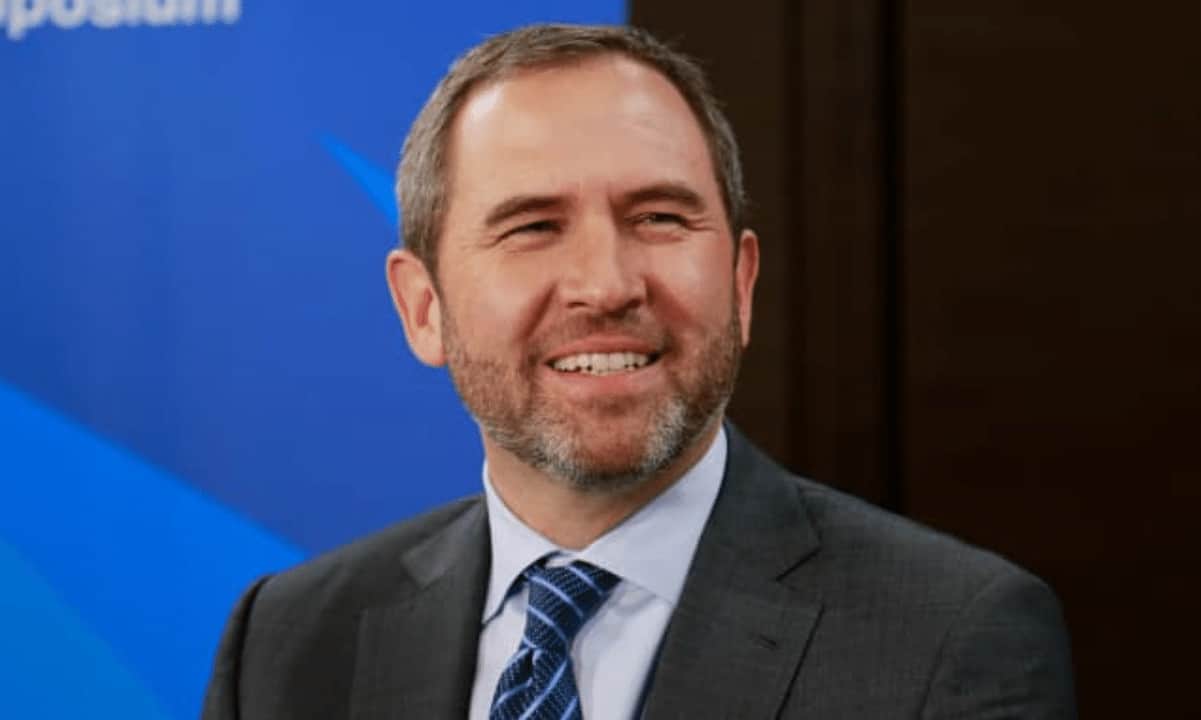
    Ripple CEO Brad Garlinghouse has spoken for the first time following his participation in a cryptocurrency meeting at the White House earlier this week and his appointment to the CFTC’s Innovation Advisory Committee, an initiative he described as “the Olympic rules of crypto.”

    Garlinghouse highlighted a consensus among attendees, which included numerous figures from traditional finance, that existing regulations are ill-suited for the current market environment.

    Beyond significant market fluctuations in the past week, a notable development that may have contributed to the market’s revival was a gathering at the White House, organized by the Trump administration. President Trump met with executives from prominent crypto firms such as Coinbase, Ripple, and Gemini, alongside the chairs of the Securities and Exchange Commission (SEC) and the Commodity Futures Trading Commission (CFTC).

    A central focus of the discussions was the long-awaited CLARITY Act. Policymakers have been engaged in ongoing debates over this key legislation, which has struggled to gain bipartisan support. Reports indicate that President Trump urged Congress to pass a “fair version” of the bill, emphasizing its importance for maintaining U.S. leadership over China.

    The legislation successfully passed the House of Representatives in July 2025 but encountered a stalemate in the Senate due to disagreements over provisions related to ethics, stablecoin incentives, and tokenized equities. Following the event, Garlinghouse expressed his pleasure at “being back at the White House” alongside President Trump, CFTC’s Mike Selig, and SEC’s Paul Atkins.

    He underscored the clear reality that with one in four Americans owning digital assets, “crypto isn’t a fringe industry. And Washington, DC, knows the crypto voter is alive and well.”

    Garlinghouse concluded his remarks by stating, “This President’s incredible commitment to innovation and leadership around digital assets in the US has been profound. The future is bright.”

    Speaking after the CFTC meeting, Garlinghouse reiterated that all participants, including those from traditional finance, agreed that current regulatory frameworks were designed for a different era and are “aren’t good enough” for today’s landscape. He argued that these regulations are insufficient for both businesses and innovation.

    He referenced an open letter he penned in 2019, in which he called for U.S. authorities to establish clearer rules for the cryptocurrency sector. Seven years later, the industry continues to await such clarity. On a positive note, Garlinghouse believes the Trump administration, along with appointees like Selig and “a myriad of bold leaders in Congress,” are finally moving in the right direction, with the industry “never been closer” to achieving these necessary regulations.

  • AI Authorship on the Rise Across Web Content, Pew Research Finds

    AI Authorship on the Rise Across Web Content, Pew Research Finds

    A significant portion of English-language webpages now show signs of AI authorship, with a notable increase observed since the launch of ChatGPT in November 2022, according to a study by the Pew Research Center. The research indicates that approximately 10% of all English-language webpages exhibit significant indicators of being written or assisted by artificial intelligence.

    This trend is particularly pronounced on commercial (.com) domains. Since ChatGPT’s release, the percentage of webpages published after November 2022 that display significant AI authorship signs has risen to 35%. In contrast, academic (.edu) and government (.gov) domains show AI authorship signs at a much lower rate, around 1% each. Organizational (.org) sites fall in between, with a 4.6% rate.

    The study analyzed approximately 490,000 pages from the Common Crawl web archive, spanning from January 2021 to July 2026. Researchers utilized Open Pangram, an AI detection model, to identify patterns indicative of AI authorship. The model weighs statistical patterns across large batches of text rather than flagging specific words or phrases.

    Linguistic shifts have also become more apparent since 2023, correlating with the rise of AI-generated text. These include a roughly twofold increase in the use of em dashes, a 63% rise in Oxford commas, and more than a doubling in the frequency of words often favored by AI, such as “delve,” “interplay,” and “testament.” Additionally, a grammatical structure known as “negative parallelism” has nearly tripled in frequency since 2023, though Pew notes it remains relatively uncommon overall.

    Researchers caution that current detection models are not infallible. “Detection models can misclassify individual pages in both directions,” the study notes. Furthermore, the presence of “significant signs of AI authorship” does not necessarily mean a page was written entirely by a machine; much of the text may have been AI-assisted rather than fully AI-generated.

    The disparity in AI content across different domain types is attributed to publishing cycles and editorial oversight. Commercial domains, which encompass a wide range of content from newsrooms to high-volume content farms, can produce pages at a pace that human editors may struggle to match. Academic and government sites, conversely, typically undergo more rigorous editorial review and institutional approval processes, leading to slower publishing cycles.

    Separate research using similar detection methods has found AI-generated text in approximately 9% of U.S. newspaper articles this year, including content on opinion pages of publications like The New York Times. Looking ahead, companies like Anthropic are developing model-level text fingerprinting, which could make AI text easier to identify with greater accuracy.

    The Pew Research Center’s findings highlight a significant and ongoing transformation in how web content is created, with AI playing an increasingly prominent role, particularly in the commercial online space.

    Why This Matters

    The materials describe a narrow update: A study by the Pew Research Center found that 10% of English-language webpages show significant signs of AI authorship, a figure that rises to 35% for pages published after November 2022. Detection models can misclassify individual pages in both directions.

    Broader Context

    Source materials place the factual news in this context: AI-written content is everywhere, literally.