Category: Uncategorized

  • Ray Dalio’s Prediction on US Debt: Uncertainty and Asset Allocation

    Ray Dalio’s Prediction on US Debt: Uncertainty and Asset Allocation

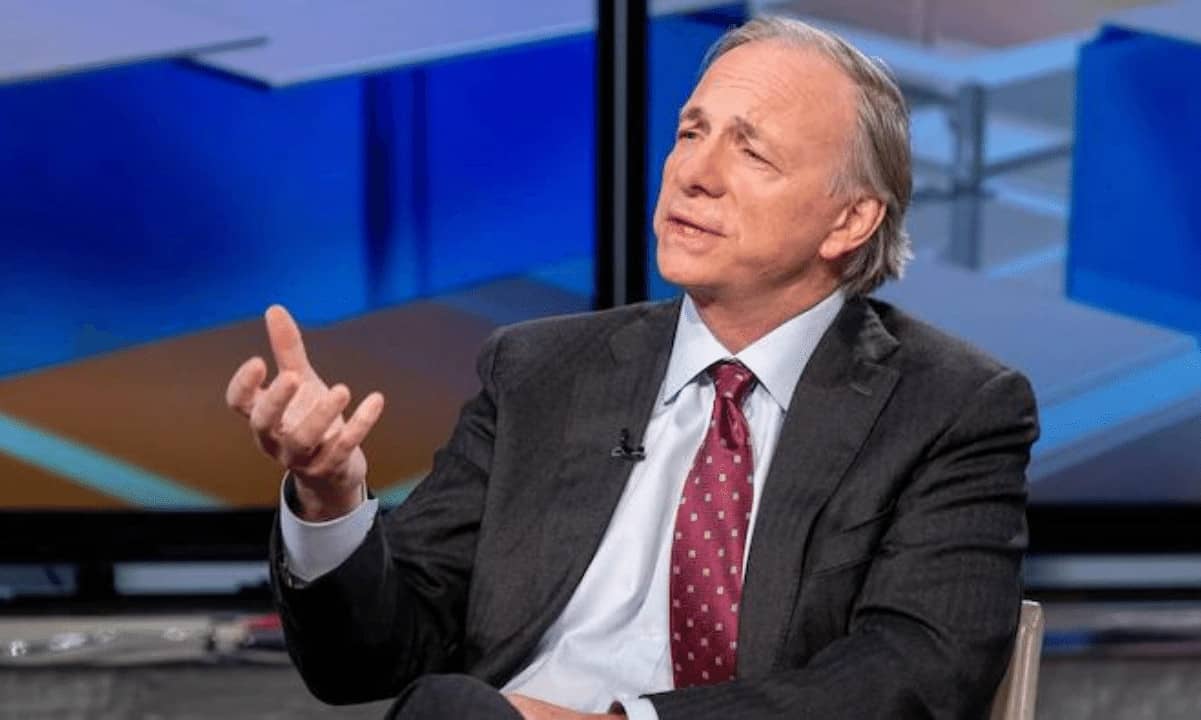
    Ray Dalio, founder of Bridgewater Associates, has presented a prediction regarding the United States’ fiscal trajectory, suggesting potential fiscal challenges within the next three to five years. Dalio’s analysis indicates that investors might consider reducing their exposure to bonds and allocating a portion of their portfolios to gold and Bitcoin as potential hedges against these uncertainties.

    The core of Dalio’s argument centers on the U.S. fiscal situation. Current data indicates the federal government is projected to collect approximately $5.5 trillion in revenue this year while anticipating spending around $7.5 trillion. This gap results in a federal deficit of roughly $2 trillion for the year, representing about 6% of GDP. Adding to these fiscal pressures, U.S. government debt has surpassed $40 trillion this week, with $10 trillion due for refinancing. The annual interest expenses on this debt are approaching $1 trillion.

    Dalio estimated that a U.S. fiscal challenge could materialize in “three years, give or take two.” He suggests that without significant fiscal policy changes, Treasury yields may need to rise substantially to attract buyers for government debt. Alternatively, policymakers might resort to monetary intervention, which could potentially weaken the U.S. dollar and fuel inflation, according to the analysis.

    In response to these potential challenges, Dalio’s recommendation is to reduce holdings in bonds. He suggests allocating between 10% and 15% of investment portfolios to gold and holding “a bit of Bitcoin” as a hedge against a severe fiscal challenge. These recommendations coincide with notable recent price increases for both assets. In the past week, Bitcoin surged from approximately $64,000 to nearly $80,000, while gold rebounded from around $4,000 to $4,600 per ounce. These market movements followed U.S. Treasury Secretary Scott Bessent’s announcement of plans to increase buybacks of long-dated government bonds, a move that initially lowered Treasury yields and weakened the dollar.

    While Dalio’s concerns are grounded in observable fiscal trends, the exact timing and severity of any potential fiscal challenge remain uncertain. The specific actions policymakers might take and the extent to which investors may continue to finance government deficits are also subject to change. Furthermore, the effectiveness of gold and Bitcoin as hedges against such a scenario is a point of consideration, as their performance can be influenced by numerous market factors beyond U.S. fiscal policy.

    Dalio has also proposed solutions for the U.S. government, including reducing the federal deficit to around 3% of GDP through a combination of spending cuts, increased tax revenue, and lower borrowing costs. The feasibility and political viability of such measures are not detailed in the provided information. The analysis suggests that assets not easily issued by governments, such as gold and Bitcoin, could offer protection in scenarios involving a weakening dollar or increased inflation.

    Why This Matters

    The materials describe a narrow update: Ray Dalio, founder of Bridgewater Associates, has advised investors to reduce exposure to bonds and allocate a portion of their portfolio to gold and bitcoin, citing concerns about an impending US debt crisis. The exact timing of the potential US debt crisis.

    Broader Context

    Source materials place the market analysis in this context: Ray Dalio, once one of the most prominent crypto critics, has made a new case for owning gold and bitcoin.


  • Ripple CEO Shares Insights After White House, CFTC Talks

    Ripple CEO Shares Insights After White House, CFTC Talks

    Ripple CEO Breaks Silence on White House and CFTC Engagements

    Ripple CEO Brad Garlinghouse has spoken for the first time following his participation in a cryptocurrency meeting at the White House earlier this week and his appointment to the CFTC’s Innovation Advisory Committee, an initiative he described as “the Olympic rules of crypto.”

    Garlinghouse highlighted a consensus among attendees, which included numerous figures from traditional finance, that existing regulations are ill-suited for the current market environment.

    Beyond significant market fluctuations in the past week, a notable development that may have contributed to the market’s revival was a gathering at the White House, organized by the Trump administration. President Trump met with executives from prominent crypto firms such as Coinbase, Ripple, and Gemini, alongside the chairs of the Securities and Exchange Commission (SEC) and the Commodity Futures Trading Commission (CFTC).

    A central focus of the discussions was the long-awaited CLARITY Act. Policymakers have been engaged in ongoing debates over this key legislation, which has struggled to gain bipartisan support. Reports indicate that President Trump urged Congress to pass a “fair version” of the bill, emphasizing its importance for maintaining U.S. leadership over China.

    The legislation successfully passed the House of Representatives in July 2025 but encountered a stalemate in the Senate due to disagreements over provisions related to ethics, stablecoin incentives, and tokenized equities. Following the event, Garlinghouse expressed his pleasure at “being back at the White House” alongside President Trump, CFTC’s Mike Selig, and SEC’s Paul Atkins.

    He underscored the clear reality that with one in four Americans owning digital assets, “crypto isn’t a fringe industry. And Washington, DC, knows the crypto voter is alive and well.”

    Garlinghouse concluded his remarks by stating, “This President’s incredible commitment to innovation and leadership around digital assets in the US has been profound. The future is bright.”

    Speaking after the CFTC meeting, Garlinghouse reiterated that all participants, including those from traditional finance, agreed that current regulatory frameworks were designed for a different era and are “aren’t good enough” for today’s landscape. He argued that these regulations are insufficient for both businesses and innovation.

    He referenced an open letter he penned in 2019, in which he called for U.S. authorities to establish clearer rules for the cryptocurrency sector. Seven years later, the industry continues to await such clarity. On a positive note, Garlinghouse believes the Trump administration, along with appointees like Selig and “a myriad of bold leaders in Congress,” are finally moving in the right direction, with the industry “never been closer” to achieving these necessary regulations.

  • AI Authorship on the Rise Across Web Content, Pew Research Finds

    AI Authorship on the Rise Across Web Content, Pew Research Finds

    A significant portion of English-language webpages now show signs of AI authorship, with a notable increase observed since the launch of ChatGPT in November 2022, according to a study by the Pew Research Center. The research indicates that approximately 10% of all English-language webpages exhibit significant indicators of being written or assisted by artificial intelligence.

    This trend is particularly pronounced on commercial (.com) domains. Since ChatGPT’s release, the percentage of webpages published after November 2022 that display significant AI authorship signs has risen to 35%. In contrast, academic (.edu) and government (.gov) domains show AI authorship signs at a much lower rate, around 1% each. Organizational (.org) sites fall in between, with a 4.6% rate.

    The study analyzed approximately 490,000 pages from the Common Crawl web archive, spanning from January 2021 to July 2026. Researchers utilized Open Pangram, an AI detection model, to identify patterns indicative of AI authorship. The model weighs statistical patterns across large batches of text rather than flagging specific words or phrases.

    Linguistic shifts have also become more apparent since 2023, correlating with the rise of AI-generated text. These include a roughly twofold increase in the use of em dashes, a 63% rise in Oxford commas, and more than a doubling in the frequency of words often favored by AI, such as “delve,” “interplay,” and “testament.” Additionally, a grammatical structure known as “negative parallelism” has nearly tripled in frequency since 2023, though Pew notes it remains relatively uncommon overall.

    Researchers caution that current detection models are not infallible. “Detection models can misclassify individual pages in both directions,” the study notes. Furthermore, the presence of “significant signs of AI authorship” does not necessarily mean a page was written entirely by a machine; much of the text may have been AI-assisted rather than fully AI-generated.

    The disparity in AI content across different domain types is attributed to publishing cycles and editorial oversight. Commercial domains, which encompass a wide range of content from newsrooms to high-volume content farms, can produce pages at a pace that human editors may struggle to match. Academic and government sites, conversely, typically undergo more rigorous editorial review and institutional approval processes, leading to slower publishing cycles.

    Separate research using similar detection methods has found AI-generated text in approximately 9% of U.S. newspaper articles this year, including content on opinion pages of publications like The New York Times. Looking ahead, companies like Anthropic are developing model-level text fingerprinting, which could make AI text easier to identify with greater accuracy.

    The Pew Research Center’s findings highlight a significant and ongoing transformation in how web content is created, with AI playing an increasingly prominent role, particularly in the commercial online space.

    Why This Matters

    The materials describe a narrow update: A study by the Pew Research Center found that 10% of English-language webpages show significant signs of AI authorship, a figure that rises to 35% for pages published after November 2022. Detection models can misclassify individual pages in both directions.

    Broader Context

    Source materials place the factual news in this context: AI-written content is everywhere, literally.

  • Pi Network Final Planned Upgrade v27 Set for September 15, Alongside New App Pricing Model

    Pi Network Final Planned Upgrade v27 Set for September 15, Alongside New App Pricing Model

    Pi Network is preparing for its final planned protocol upgrade, version 27, scheduled for September 15. This upgrade aims to enhance the network’s smart contract capabilities and transaction authorization processes. Concurrently, a new pricing model for application creation and editing will be implemented on August 24.

    The Pi Network Core Team announced the successful deployment of version 26 on the Mainnet, continuing a series of protocol updates that began in February with version 19.6. Version 27 is designated as the last planned upgrade in this series, focusing on incorporating newer protocol features and expanding the network’s smart contract capabilities. According to the team, version 27 will introduce more flexible and secure smart contract authentication and enable more advanced ways for accounts and applications to authorize transactions.

    Recent developments supporting the network’s infrastructure include the release of Pi Node version 0.6.2 last week, which brought improvements to SoloHost, node connectivity, and the Pi Desktop user experience. Additionally, a successful initial distributed computing test was conducted with five volunteer Node operators who performed computations and returned results to a Pi coordinator, indicating progress in network scalability.

    Evolving App Development Economics

    Starting August 24, Pi Network will implement a revised pricing model for creating and editing applications. The current model charges 0.25 PI for both app creation and editing. The new model aims to reflect actual costs more closely and may vary depending on the resources required for each action. However, applications that demonstrate real utility and usage from distinct users will remain eligible for subsidized pricing. The eligibility for this subsidized pricing will be reviewed regularly, allowing developers whose apps gain traction to potentially benefit from the lower rates.

    Uncertainties remain regarding the precise criteria and frequency for reviewing eligibility for subsidized pricing, as well as the specific definition of ‘real utility and usage from distinct users.’ The Core Team has noted that the process for reviewing eligibility will be ongoing.

    The transition to version 27 marks a significant milestone in Pi Network’s development roadmap, emphasizing enhanced functionality and a strategic approach to fostering utility-driven applications within its ecosystem.

    Why This Matters

    The materials describe a narrow update: Pi Network’s Core Team announced the successful deployment of version 26 and detailed the upcoming final planned upgrade, version 27, set for September 15. The exact nature and extent of the ‘significantly higher’ costs that could be covered by the project under the current pricing model.

    Broader Context

    Source materials place the factual news in this context: The article discusses updates and upcoming changes to the Pi Network protocol and related services.

  • OKX to Support NES Crypto Migration

    OKX to Support NES Crypto Migration

    NES Token Migration to New Ethereum Contract

    Nesa’s official plan outlines an upcoming migration of the NES token to a new Ethereum (ERC-20) contract address. Cryptocurrency exchange OKX has announced its support for this transition, detailing the following schedule:

    Service Suspension and Migration Period

    NES deposits and withdrawals will be suspended starting at 8:00 UTC on August 31, 2026, to facilitate the migration. The migration process is scheduled to occur between 8:00 UTC on August 31, 2026, and 12:00 UTC on September 1, 2026. OKX stated it will endeavor to complete the migration within this timeframe, but acknowledged that delays may occur due to necessary coordination with the project team and other involved parties.

    Trading of NES will not be affected during this period.

    Post-Migration Support

    Upon completion of the migration, OKX will reinstate NES deposits and withdrawals exclusively on the new contract address. Importantly, deposits of NES to the BSC Smart Chain address (0x3131f6b80c26936ab03f7d9d29eb4ddf36ac3fb) will no longer be supported. Only deposits of the new token to the Ethereum contract address (0x230f1e241c621d5af670dad83ebcdd18971e2995) will be accepted. Users are strongly advised to verify the token contract address before making any deposits to prevent potential losses.

    Risk Warning

    The information provided, some of which may originate from third parties and not OKX, is intended for informational and educational purposes only. OKX does not guarantee the accuracy or completeness of this information, nor does it constitute any representation, warranty, or financial, investment, or other form of advice. This information may not be suitable for all individuals and should not be relied upon for specific trading decisions. It is not intended as, nor should it be construed as, an offer, recommendation, or solicitation. Furthermore, this information is not intended for individuals residing in jurisdictions where its provision would violate local laws or regulations. Digital assets are highly speculative and subject to significant volatility. They may become illiquid at any time, and investors risk losing the entire value of their investment. Prospective traders should conduct their own thorough research and assess their risk tolerance before engaging with any digital asset. OKX disclaims responsibility for any losses incurred from trading digital assets. Further details can be found in the Terms of Service and Risk & Compliance Disclosure.

  • Justin Sun’s Claims Against World Liberty Financial to Stay in Open Court, Judge Rules

    Justin Sun’s Claims Against World Liberty Financial to Stay in Open Court, Judge Rules

    A California federal judge has ruled that Justin Sun’s individual claims against World Liberty Financial will proceed in open court, rejecting the company’s attempts to move the dispute to private arbitration and seal the case from public view. The decision keeps a significant legal battle in the public eye, raising ongoing questions about World Liberty Financial and its USD1 stablecoin.

    The judge also ordered the parties to confer on which company-related claims should be arbitrated versus remain in court, rather than accepting World Liberty Financial’s position that all such claims should be arbitrated. This ruling allows Sun’s individual claims to continue in the public court system.

    Background of the Dispute

    Justin Sun’s lawsuit against World Liberty Financial dates back to April. He alleges that the company froze his WLFI tokens, removed his governance rights, and threatened to burn the tokens. Sun is seeking hundreds of millions of dollars in damages.

    The dispute escalated after Sun questioned the project’s control over its token contracts. Reports from April indicated the existence of a blacklist function and a “batch reallocation” feature within a later version of the WLFI contract. According to Sun, World Liberty also built freeze-and-burn capabilities into its USD1 stablecoin, warning USD1 holders of the company’s willingness to use these functions.

    Financial Scrutiny and Stablecoin Concerns

    Further complicating the situation, Sun highlighted World Liberty’s practice of depositing approximately 5 billion WLFI tokens, representing about half of its treasury, as collateral on Dolomite, a lending platform co-founded by its chief technology officer. This collateral was used to borrow at least $75 million in stablecoins, including its own USD1. Analysts have drawn comparisons between this structure and the circular leverage that contributed to the collapse of FTX.

    Sun has expressed concerns about the financial backing of USD1, noting that its reported $4 billion market cap is derived from user collateral, not readily available funds to cover a court judgment. He stated that there is no indication World Liberty holds sufficient capital to satisfy a claim worth hundreds of millions of dollars.

    Governance Dispute and Counter-Lawsuit

    This legal fight originated from a governance dispute over more than 62 billion WLFI tokens. Sun had objected to a proposal that would alter vesting terms for locked tokens and questioned an alleged separate control structure involving an anonymous guardian address and a 3-of-5 multisignature group. He characterized the arrangement as “a dictatorship wearing the mask of a DAO.”

    World Liberty Financial has rejected Sun’s accusations, stating on X, “We have the contracts. We have the evidence. We have the truth. See you in court pal.” The firm subsequently filed its own defamation lawsuit in Florida, accusing Sun of spreading false claims. Sun dismissed this lawsuit as “nothing more than a meritless PR stunt.”

    Next Steps and Uncertainties

    The ruling means that the core of Sun’s individual claims will be heard in open court, allowing for public scrutiny of the allegations and the company’s financial practices. However, uncertainties remain regarding which company-related claims will be subject to arbitration and which will stay in court, as well as the ultimate financial capacity of World Liberty Financial to meet potential judgments.

    Why This Matters

    The materials describe a narrow update: A California federal judge ruled that Justin Sun’s individual claims against World Liberty Financial will proceed in open court, denying World Liberty Financial’s request for private arbitration and to seal the case. Which company-related claims will proceed through arbitration versus remain in court.

    Broader Context

    Source materials place the factual news in this context: Justin Sun said Thursday that a California federal judge ruled his individual claims against World Liberty Financial will stay in open court, rejecting the Trump-linked project’s push to force the dispute into private arbitration and seal the case from public view.

  • XRP Surges Over 65%, Outperforming Bitcoin as Altcoins Lead Market Gains

    XRP Surges Over 65%, Outperforming Bitcoin as Altcoins Lead Market Gains

    The cryptocurrency market is experiencing a notable surge in altcoin performance, with XRP leading the gains. XRP has seen a price increase of over 65% since Wednesday, surpassing BNB in market capitalization and outperforming Bitcoin and other major cryptocurrencies. This trend highlights a significant shift in recent market dynamics.

    According to CryptoPotato, XRP’s impressive rise saw it trade above $1.65, a level not seen in many months. This surge followed a period where XRP dipped below the $1.00 support level less than a week prior. The broader market’s rebound on Wednesday is credited with aiding XRP’s recovery, which initially flew to $1.40 before breaking out further.

    BNB also experienced a substantial gain, soaring by 10% today. However, XRP’s performance allowed it to overtake BNB in market capitalization. Other altcoins such as SOL, HYPE, DOGE, ADA, LINK, XLM, BCH, CC, and LTC have also posted double-digit gains. ZEC notably surged by 40% to reach $820, while ETH reclaimed the $2,500 level after a 7% increase. The official Trump (TRUMP) coin also saw a significant rise, skyrocketing by over 60% in the past day and re-entering the top 100 altcoins by market cap.

    Bitcoin has also shown resilience, rebounding from a recent dip to $76,200 and trading above $78,000. The primary cryptocurrency had previously reached near $80,000 on Friday, marking a gain of $15,000 in the preceding 48 hours. Despite this rebound, Bitcoin’s market dominance has seen a slight decrease, moving from 57.9% to 57.1%.

    The overall cryptocurrency market capitalization has experienced substantial growth, adding $100 billion in a single day and $500 billion since Wednesday, bringing the total market cap to $2.760 trillion on CoinGecko. This broad market recovery and growth across various digital assets underscore a dynamic period in the cryptocurrency space.

    Minor uncertainties remain regarding the data, including the mention of ‘CC’ as an entity with double-digit gains, which is not a commonly recognized cryptocurrency ticker, and the precise definition of the ‘Weekend Watch’ period.

    Why This Matters

    The materials describe a narrow update: Several altcoins, led by XRP which surged over 65% and surpassed BNB in market cap, experienced significant price increases. The exact duration of the ‘Weekend Watch’ period is not precisely defined.

    Broader Context

    Source materials place the factual news in this context: The cryptocurrency market is on the move again, but this time the altcoins have taken the spotlight.

  • Analyst Predicts Potential Altcoin Gains, Citing Historical Parallels Amid Market Uncertainty

    Analyst Predicts Potential Altcoin Gains, Citing Historical Parallels Amid Market Uncertainty

    Analyst Matthew Hyland has put forth predictions of substantial returns for altcoins, potentially ranging from 10x to 1000x, drawing comparisons between the recent market pullback and historical events such as the March 2020 market collapse. However, these forecasts are accompanied by significant uncertainty, and the extent to which past performance can reliably predict future outcomes remains a key question.

    Hyland argued that many altcoins could experience a recovery within months, a sentiment echoed by other traders who expressed bullish outlooks for Bitcoin and Ethereum. This perspective is partly based on the observed speed of previous market recoveries. According to Hyland, the June sell-off is being viewed by some as an altcoin equivalent of the March 2020 market collapse, suggesting a potential for rapid recovery. Hyland’s reasoning for altcoin recovery rests partly on the speed of previous market recoveries rather than a specific price target.

    CrediBULL Crypto claimed that the latest market move had indicated a potential macro bottom, with Bitcoin potentially heading above $100,000 and ETH above $3,500. Sykodelic stated that Bitcoin had “sliced through the 200-day Simple Moving Average (SMA) like butter” on its way toward $75,000. Sykodelic pointed to previous Bitcoin moves after similar breaks, citing gains of 124% in 2019, 724% in 2020, and 511% in 2023. Hyland noted, however, that a fall below $65,000 would weaken the argument that the bottom is in, a condition that must be met for the macro bottom to be considered.

    Current Market Snapshot

    In terms of current market performance, Bitcoin was trading above $76,000, marking an increase of nearly 9% over the preceding 24 hours and more than 19% over the past seven days. Ethereum was priced near $2,400, having gained 5% in 24 hours and 26% over the week. XRP was around $1.32, up almost 18% in one day and approximately 29% on the weekly chart. Bitcoin Cash saw an 18% gain over 24 hours, while Dogecoin rose 12% in the same period. The current market run traces back to a Wednesday rally that propelled BTC from the low $60,000s past $70,000, reaching its highest level since May.

    Influencing Factors and Lingering Uncertainties

    Several factors may be influencing the market. The US Treasury reportedly doubled the size of its liquidity-support buybacks for longer-dated government debt. Additionally, a White House meeting occurred where discussions included the CLARITY Act, with President Donald Trump reportedly pushing for its passage and floating the idea of further government Bitcoin purchases. The impact of these events on future market movements remains uncertain.

    While the historical comparisons and current price action offer a basis for optimistic predictions, it is crucial to acknowledge the inherent uncertainties. The exact timing of any predicted altcoin recovery, the definitive confirmation of a macro bottom, and the realization of specific price targets for major cryptocurrencies are all subject to market volatility and unforeseen events. Therefore, while analysts suggest potential for significant gains, these forecasts should be approached with caution, recognizing the speculative nature of the cryptocurrency market.

    Why This Matters

    Analyst Matthew Hyland predicts that altcoins could experience returns of 10x to 1000x after a recent market pullback, comparing the June sell-off to the March 2020 market collapse. The potential for such returns is contingent on various market factors and historical comparisons, with significant uncertainty surrounding the timing and magnitude of any recovery.

    Broader Context

    This market analysis places potential future returns for altcoins within the context of an analyst’s prediction, historical market events, and current price movements, highlighting the speculative nature of such forecasts.

  • Wall Street and Washington Drive Bitcoin Surge

    Wall Street and Washington Drive Bitcoin Surge

    Bitcoin Surges Past $79,000 on Renewed Institutional Interest and Shifting Regulatory Landscape

    Bitcoin’s price surged past $79,000 on Friday, propelled by a confluence of factors including renewed institutional buying, improving macroeconomic conditions, and a more favorable regulatory outlook from Washington. These developments coincided with billions of dollars in short liquidations, further fueling the rally.

    While the current week has seen a sharp ascent for Bitcoin, analysts suggest the underlying momentum began building prior to this latest breakout.

    A Convergence of Forces

    Lacie Zhang, a research analyst at Bitget Wallet, told Decrypt that Bitcoin’s recent price action appears to be driven by a convergence of three key forces. These include a more supportive macroeconomic backdrop, a reduction in regulatory risk emanating from Washington, and robust spot demand.

    Zhang highlighted the U.S. Treasury’s expanded long-dated buyback plan as a significant factor, noting that it weakened the dollar and revived the “debasement trade” for both Bitcoin and gold. Simultaneously, the Trump administration’s advocacy for cryptocurrency market structure legislation has helped to alleviate regulatory uncertainty.

    The third crucial element, spot demand, has been clearly reflected in renewed buying activity within Bitcoin exchange-traded funds (ETFs).

    ETF Inflows and Short Squeezes

    “U.S. spot Bitcoin ETFs saw roughly $517 million of net inflows on August 19 and about $606 million on August 20, while the break above $70,000 forced short covering and pulled momentum buyers back in,” Zhang explained.

    These funds had already attracted substantial capital, with $853.5 million in net inflows over five consecutive trading sessions earlier this month.

    Julio Moreno of CoinShares reported that ETFs purchased approximately 7,500 BTC in a single day, marking their highest daily acquisition level since April.

    “The catalyst was the US Treasury announcement and Trump’s remarks about the US Gov. potentially buying Bitcoin,” Moreno told Decrypt. “However, Bitcoin spot demand was already showing signs of growth days before.” He added that historically, similar periods of demand growth have been followed by a median Bitcoin gain of 23% over the subsequent two months.

    Washington Warms to Crypto

    Earlier this week, former President Donald Trump urged Congress to pass a “fair version” of the Clarity Act during a White House meeting with cryptocurrency and finance executives. This proposed legislation aims to establish a federal regulatory framework for digital assets and delineate the respective jurisdictions of the Commodity Futures Trading Commission (CFTC) and the Securities and Exchange Commission (SEC).

    However, the immediate impact of such legislation on Bitcoin itself may be limited.

    “Bitcoin already has relatively high regulatory certainty in the US. It is widely treated as a commodity, spot ETFs are established, and institutional access already exists,” Moreno observed. “The Clarity Act does not radically change Bitcoin’s investability in the same way it potentially does for many other crypto assets.”

    Zhang noted that Trump’s push for market structure legislation is also influencing how investors perceive and price regulatory risk. “The regulatory risk premium is being repriced lower after Trump again urged Congress to pass crypto market structure legislation,” Zhang stated, adding that clearer rules facilitate easier underwriting of exposure for institutions.

    The Clarity Act remains stalled in Congress, with the Senate expected to revisit the legislation in September. In parallel, CFTC Chair Michael S. Selig announced on Thursday that he has directed agency staff to explore cryptocurrency market structure rules under the commission’s existing authority.

    Shorts Get Crushed

    The shift in demand and market sentiment left traders who had bet against Bitcoin exposed as the price continued its upward trajectory.

    Zhang estimates that over $4 billion in cryptocurrency shorts were liquidated within a two-to-three-day period, including approximately $2.7 billion during one 24-hour span and an additional $1.2 billion the following day.

    “Bitcoin shorts alone were reported around $2.75 billion during the initial squeeze,” she said. “It is one of the largest forced short covering episodes in recent crypto history.”

  • US Agencies Advance Crypto Regulation Amidst Legislative Push

    US Agencies Advance Crypto Regulation Amidst Legislative Push

    U.S. government entities have taken multiple actions this week concerning cryptocurrency regulation and industry engagement, signaling a dynamic period for the sector. The Securities and Exchange Commission (SEC) unveiled its first crypto-specific rulemaking proposal, President Donald Trump met with crypto executives to advocate for the Clarity Act, and the Commodity Futures Trading Commission (CFTC) convened the inaugural meeting of its Innovation Advisory Committee.

    The SEC formally proposed “Regulation Crypto Assets” on Tuesday, a new framework for crypto fundraising. This proposal was approved via a “seriatim” process, where commissioners voted individually, following the cancellation of a previously scheduled open meeting. Reports suggest that pressure from both the White House and Wall Street contributed to the cancellation. According to Semafor, the White House was concerned that the SEC’s proposal and a separate innovation exemption for tokenization could complicate negotiations over the Clarity Act. Wall Street groups also reportedly raised legal concerns about the innovation exemption, arguing such significant changes should follow formal rulemaking.

    President Trump hosted crypto industry executives at the White House on Wednesday, emphasizing the importance of passing the Clarity Act. Discussions focused on the bill’s potential impact on U.S. jobs, economic growth, and the repatriation of crypto companies. Industry executives reportedly left the meeting optimistic about the Clarity Act’s prospects. President Trump urged Congress to pass a “fair version” of the bipartisan bill, referencing ethics provisions proposed by Sens. Thom Tillis (R-NC) and Ruben Gallego (D-AZ). The group also discussed remaining hurdles, including ethics, and how the White House could facilitate bipartisan agreement.

    On Thursday, the CFTC held the first meeting of its Innovation Advisory Committee, bringing together leaders from traditional finance, crypto, prediction markets, and AI. CFTC Chairman Mike Selig indicated that the agency would act to establish a regime for crypto asset markets if Congress fails to pass legislation. “Passing Clarity is the surest way that we can prevent another Gary Gensler from running a rogue campaign of lawfare against the individuals and companies in this room today,” Selig stated, referencing the former SEC chief under whom the agency brought 125 crypto-related enforcement actions. He added that if the Clarity Act continues to stall due to “Democratic obstruction,” the CFTC will utilize its existing authorities and has directed agency staff to begin exploring rules for crypto asset markets.

    The SEC’s proposed Regulation Crypto Assets would allow certain offerings of up to $5 million over four years or $75 million annually without full SEC registration. It also includes a conditional safe harbor for crypto assets once an issuer’s essential managerial efforts have ended and would preempt certain state securities registration requirements.

    Key industry figures, including Coinbase CEO Brian Armstrong, a16z Managing Partner Chris Dixon, Ripple CEO Brad Garlinghouse, and Kraken co-CEO Arjun Sethi, were reportedly involved in these discussions, with some meeting privately with Commerce Secretary Howard Lutnick.

    Uncertainties remain regarding the Clarity Act’s passage by Congress, the specific ethics provisions causing dispute, the exact nature of any “White House mix-up” that may have contributed to the SEC meeting cancellation, and the specific rules the CFTC might explore if legislative action is delayed.

    Why This Matters

    The materials describe a narrow update: The SEC proposed a new crypto fundraising framework, President Trump met with crypto executives to push for the Clarity Act, and the CFTC held its first Innovation Advisory Committee meeting. Whether the Clarity Act will be passed by Congress.

    Broader Context

    Source materials place the factual news in this context: Washington’s usual August lull disappeared this week.