Category: Uncategorized

  • XRP Price Update: August 21st

    XRP Price Update: August 21st

    XRP Surges Over 20% in 24 Hours, Signaling Potential Trend Reversal

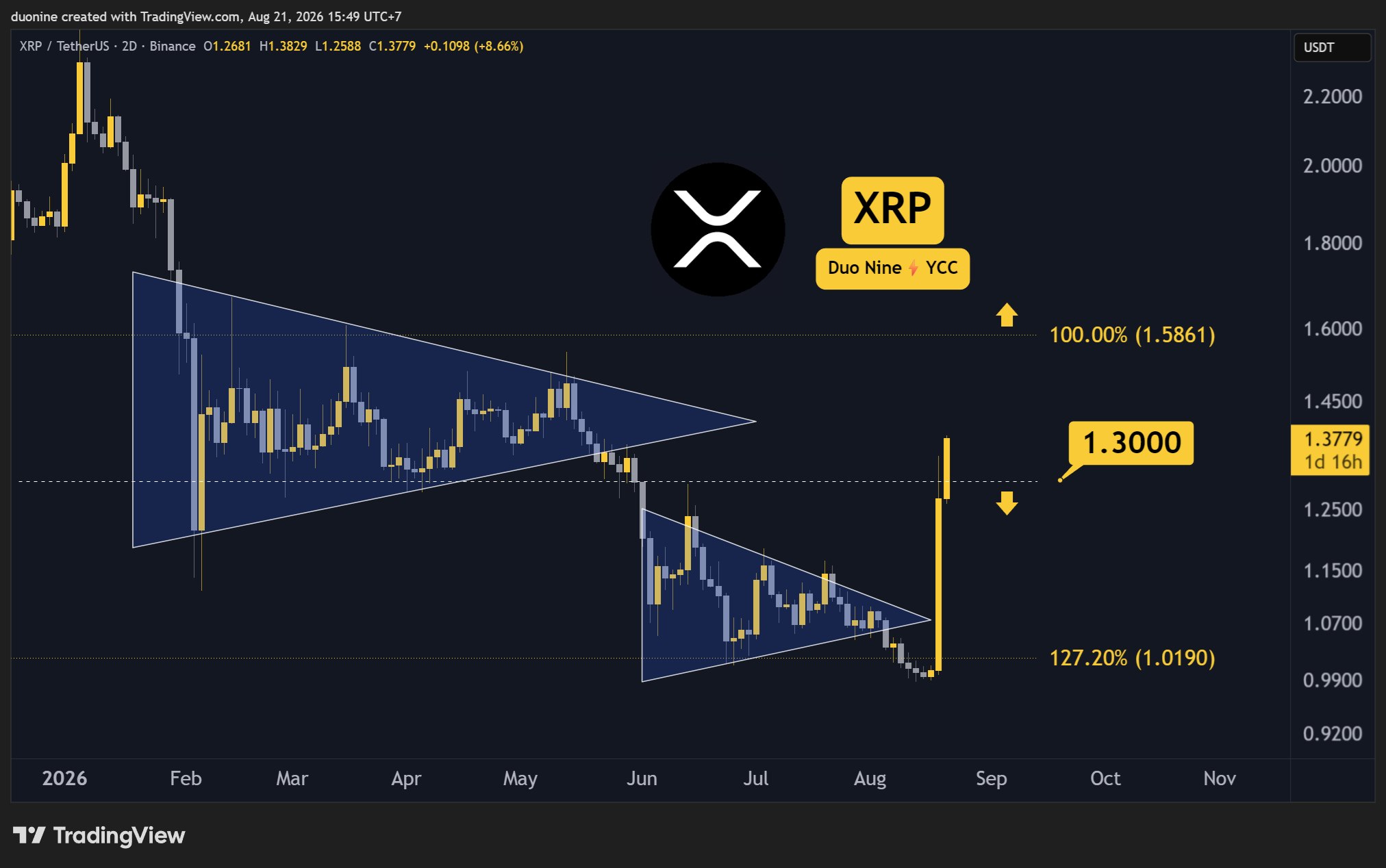
    XRP has experienced a significant surge of over 20% in the past 24 hours, showing no immediate signs of slowing down. This sharp increase follows a period where the cryptocurrency narrowly avoided falling below the critical $1 support level. The current rally appears to be part of a broader market-wide uptrend, with XRP capitalizing on the prevailing momentum.

    Key Price Levels to Watch

    Analysts are closely monitoring key support levels for XRP at $1 and $1.3. On the resistance side, immediate targets are identified at $1.6 and $2.

    At the time of reporting, XRP’s price has successfully broken through the $1.3 resistance, which is now expected to serve as a significant support zone. Should the upward momentum continue, the next major price target is projected to be $1.6.

    Buyers Re-emerge, Volume Spikes

    After months of trading within a narrow range just above the $1 mark, XRP has seen a strong return of buyer interest. Trading volume has surged to levels not observed since the market downturn in February. Crucially, the current market dynamic shows buyers in control, a stark contrast to the previous seller dominance.

    This robust rally has effectively reversed most of the losses incurred since the beginning of the year. If XRP can successfully reclaim the $1.6 level, it would mark a higher high and officially signal an end to its recent downtrend.

    Overbought Conditions and Future Outlook

    The aggressive buying activity has propelled XRP’s daily Relative Strength Index (RSI) above 80, indicating an overbought condition. This suggests a degree of caution for investors entering the market at this stage, as a significant portion of the upward move may have already occurred, even if XRP reaches the $1.6 target.

    Regardless of immediate price fluctuations, XRP’s recent performance has sent a strong message, potentially setting a bullish tone for the remainder of the year. Ideally, the cryptocurrency would now consolidate its recent gains, confirming the upward trajectory before attempting further advances.

  • XRP Surges Past $1.30: Key Drivers of Ripple’s Rally Revealed

    XRP Surges Past $1.30: Key Drivers of Ripple’s Rally Revealed

    XRP Surges Past $1.30, Fueled by Whales and Analyst Optimism

    Just days after speculation swirled around whether Ripple’s cross-border token, XRP, would breach the critical $1.00 support level, the cryptocurrency has staged an impressive recovery. Analysts had previously projected potential price drops to as low as $0.60.

    However, the market landscape shifted dramatically. A surge in Bitcoin’s price propelled the entire cryptocurrency market upward, with XRP taking center stage. The token rocketed to $1.30, its highest point in months, marking a 30% gain from its recent lows.

    Whales Drive the Rally

    The most significant factor behind XRP’s resurgence appears to be the activity of “whales” – large holders of the cryptocurrency. Reports indicate that these major players accumulated over 300 million XRP tokens within a 96-hour period, directly contributing to the substantial price increase. This followed an earlier accumulation of 72 million coins at the end of the previous week.

    Data shared by market observer Vincent Van Code on X corroborates this trend. Van Code highlighted that 53% of all significant buy orders originated from large players, with medium traders accounting for 35% and smaller investors making up just 12%.

    “Retail is not the driving force of this rally. This is great news,” Van Code concluded, suggesting that the current upward momentum is driven by more substantial market participants.

    ETF Inflows Remain Modest

    While spot XRP Exchange-Traded Funds (ETFs) saw positive performance for three consecutive days, their actual inflows remain relatively modest compared to peaks seen in November and December of the previous year. This suggests that ETFs are likely not the primary catalyst for the current recovery.

    Analysts Project Significant Upside

    The recent 30% surge has emboldened analysts to issue bullish predictions for XRP. Crypto Patel envisions XRP potentially reaching $10, a target he deems plausible. He referenced historical precedents, noting that in 2017, a $3 price was considered improbable, yet XRP achieved it the following year. Similarly, in 2023, despite widespread skepticism, XRP experienced a significant rally from $0.50 to $2.60 within a month. Patel suggested that the $1.00 dip acted as an accumulation zone, with “$10-$20 absolutely on the table.”

    Other analysts also expressed optimism. Mikybull Crypto predicted a “god candle” for XRP following a retest of the Ichimoku cloud, while CW observed that the asset has broken through a major resistance level, signaling the end of a prolonged downtrend and the commencement of a “full-fledged uptrend.”

  • Ripple’s SEC Legal Battle: A Cautionary Tale Driving US Crypto Regulation Debate

    Ripple’s SEC Legal Battle: A Cautionary Tale Driving US Crypto Regulation Debate

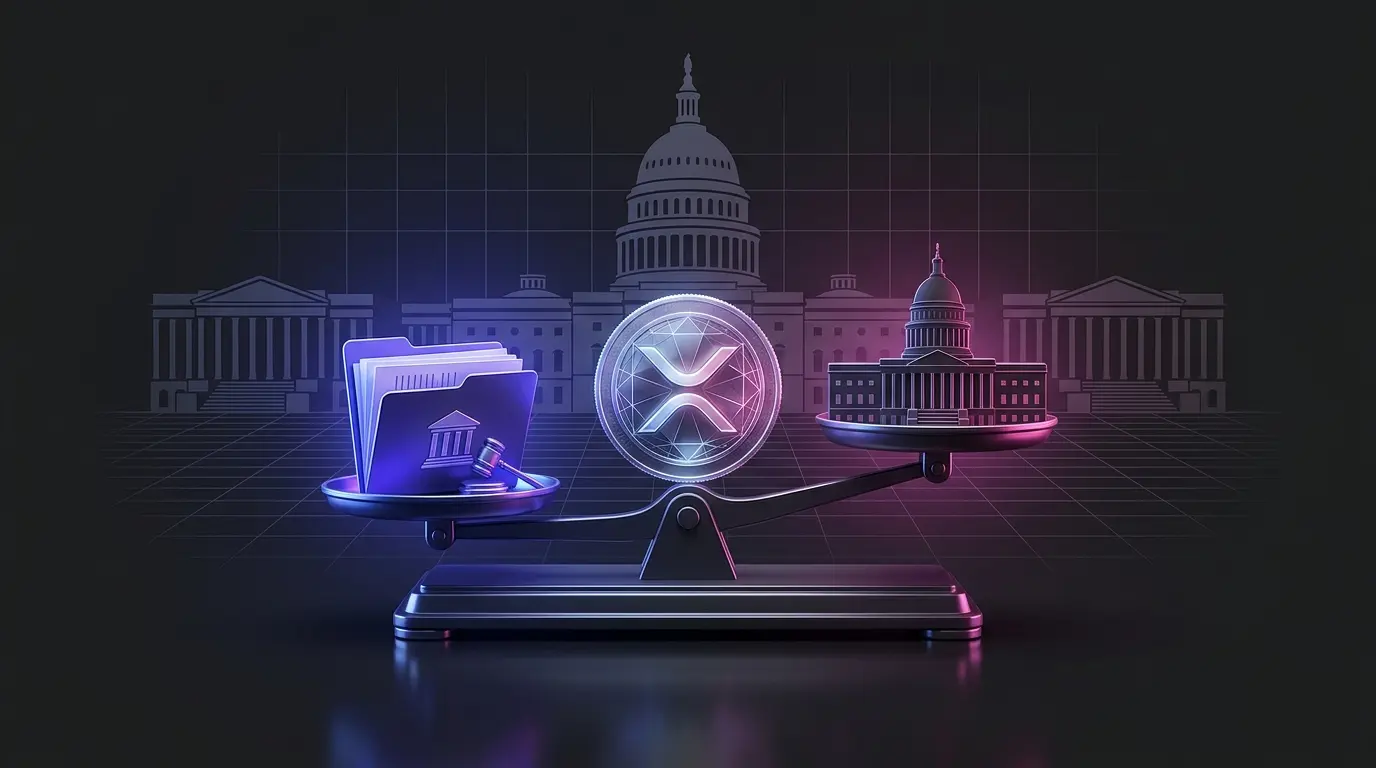
    The protracted legal battle between Ripple and the U.S. Securities and Exchange Commission (SEC), which concluded after more than four years and approximately $150 million in legal costs, is now being presented as a significant cautionary tale for the future of cryptocurrency regulation in the United States. The outcome, which distinguished between institutional sales and secondary market trading of XRP, is being leveraged by Ripple’s leadership to advocate for clearer legislative frameworks.

    Why This Matters

    The materials describe a narrow update: Ripple and its executives spent over four years and approximately $150 million fighting a lawsuit with the SEC over unregistered securities sales of XRP. Whether the CLARITY Act framework will move through Congress this session.

    Broader Context

    Source materials place the factual news in this context: Ripple CEO Brad Garlinghouse is using his company’s own legal bill as evidence that Washington’s approach to digital assets has a direct, measurable cost.

    The Cost of Ambiguity

    According to Ripple CEO Brad Garlinghouse, the substantial financial and operational toll of the lawsuit underscores the negative impact of regulatory ambiguity. He stated that a majority of the company’s hiring during the legal stretch occurred outside the United States, suggesting that regulatory uncertainty pushes capital and jobs offshore. This sentiment aligns with the broader industry concern that a lack of clear rules hinders innovation and drives businesses to more favorable jurisdictions.

    Case Outcome and Its Nuances

    The SEC initially sued Ripple, Garlinghouse, and co-founder Chris Larsen in December 2020, alleging that the company had raised funds through unregistered securities sales of XRP. The case navigated numerous rulings before both parties filed a joint stipulation dismissing their appeals in August 2025. Per the SEC’s own litigation release, this resolution left a civil penalty of $125,035,150 and a registration-related injunction in place.

    This outcome, however, did not categorically declare XRP exempt from securities law but rather differentiated between how it was sold to institutional investors and its trading on secondary markets. Ripple views this distinction as a template for how crypto assets should be regulated going forward, arguing for a more defined approach than the case-by-case litigation model that consumed its legal budget.

    Garlinghouse has previously called the resolution a “long overdue surrender by the SEC,” contending that the agency pursued the case to intimidate the industry rather than to police fraud. He emphasized that “America needs clear crypto rules to protect users and keep innovation at home.”

    Shifting Regulatory Signals

    Recent developments suggest a potential shift in regulatory sentiment. Around August 19, a White House innovation meeting brought together crypto executives and regulators to discuss digital-asset policy. During this meeting, CFTC Chair Michael Selig indicated a move away from an enforcement-led regulatory approach. Selig said that innovators were now being welcomed to the White House, contrasting with a previous environment where they might have been “railroaded to the big house.” He also noted that additional regulatory roadmap details would follow at the CFTC’s inaugural Innovation Advisory Committee meeting on August 20, which included digital assets and emerging financial products on its agenda.

    Selig’s comments, made with Ripple’s leadership present, are seen by some as tightening the odds that market-structure legislation will be prioritized before the next election cycle. The practical argument for such legislation, like the proposed CLARITY Act, is that it would replace the current litigation-heavy model with a defined split of jurisdiction between the SEC and the Commodity Futures Trading Commission (CFTC). This approach mirrors industry proposals for a token safe harbor, which would allow projects to raise funds and build networks without facing enforcement actions years into their operational history.

    Uncertainty Ahead

    However, uncertainties remain regarding the legislative path forward. Whether the CLARITY Act or similar frameworks will successfully move through Congress this session is an open question. Ripple’s post-litigation position and financial standing are likely to remain reference points in this ongoing debate, regardless of the legislative outcome.

    For traders, the immediate takeaway is that the SEC’s case against Ripple is closed, with the established penalty and injunction standing as final. The broader signal, however, is political: a shift in regulatory posture from a key agency, coupled with industry advocacy, may increase the impetus for legislative action to define the future of digital asset regulation in the United States.

  • Bybit to Support Nibiru Network Upgrade

    Bybit to Support Nibiru Network Upgrade

    Bybit to Support Nibiru Network Upgrade

    Cryptocurrency exchange Bybit has announced its support for the upcoming Nibiru (NIBI) v2.18.1 network upgrade. The upgrade is scheduled to occur on August 21, 2026, at approximately 06:50 AM UTC, or at block height 44,788,180.

    To facilitate a seamless transition, Bybit will temporarily suspend all deposits and withdrawals for the Nibiru (NIBI) token. This suspension will commence on August 21, 2026, at 06:00 AM UTC.

    Trading activities on the platform will remain unaffected during the upgrade period.

    Bybit has stated that there will be no additional announcements regarding the resumption of deposit and withdrawal services. Users wishing to be notified when these services are back online are advised to visit the Deposit or Withdrawal page and select the “Set Alert” option.

    Further details regarding the network upgrade can be found in the official release notes.

  • HSBC, Standard Chartered Execute First Live Tokenized Deposit Transfer on SWIFT Blockchain Ledger

    HSBC, Standard Chartered Execute First Live Tokenized Deposit Transfer on SWIFT Blockchain Ledger

    HSBC and Standard Chartered have completed the first live tokenized deposit transfer utilizing SWIFT’s new blockchain-based ledger, a development that signals a move toward integrating digital assets into traditional financial infrastructure. The transaction, which took place on August 19, involved the exchange of payment messages between the banks’ respective tokenized deposit services, with the resulting obligations recorded on both systems.

    SWIFT’s ledger functioned as an orchestration layer, netting obligations between HSBC and Standard Chartered before final settlement occurred through existing payment rails. This event is part of a broader pilot program involving 17 banks from six continents actively testing live transactions on the network.

    The SWIFT ledger’s minimum viable product (MVP) is built on open-source foundations, employing an Ethereum Virtual Machine-compatible architecture based on Hyperledger Besu. Consensys developed the conceptual prototype for the project, announced in September 2025. According to SWIFT, the ledger is designed for integration with the broader digital asset ecosystem, with SWIFT managing the ledger to oversee transaction workflows, validate funding commitments, and coordinate interbank processes.

    “HSBC’s interoperability transaction with Standard Chartered via SWIFT is a landmark moment for the promise of tokenised deposits,” said Lewis Sun, Head of Digital Currencies at HSBC. Mark Willis, Head of Emerging Payments, Transaction Services and Digital Assets at Standard Chartered, noted that “tokenized deposits are a key pillar of Standard Chartered’s digital assets strategy, which aims to build end-to-end solutions.”

    Other banks piloting transactions on the network include ANZ, BNP Paribas, BNY, Citi, DBS, MUFG, UBS, and Wells Fargo. “With our new ledger capability, we’re extending the trust and stability of established finance into the frontiers of digital money,” said Thierry Chilosi, Chief Business Officer at Swift.

    Meanwhile, American banks are developing their own infrastructure. The Clearing House is creating a tokenized deposit network named The Bridge, with participation from JPMorgan Chase, Bank of America, Citigroup, and Wells Fargo. This network is slated for launch in the first half of 2027 and is intended to be accessible to all U.S. banks. However, Bank of America’s Mark Monaco has stated that clients are not yet demonstrating significant demand for tokenized deposits.

    HSBC has previous experience with digital asset transactions, having participated in a S$400 million digital bond issuance with SGX and Temasek that reduced primary settlement time from five days to two. SWIFT itself is a critical component of global financial infrastructure, processing the equivalent of world GDP every two to three days across more than 200 markets, with 75% of payments reaching beneficiary banks within 10 minutes.

    The successful execution of this live tokenized deposit transfer by HSBC and Standard Chartered on SWIFT’s platform represents a step toward integrating tokenized deposits into existing financial infrastructure. The ongoing piloting by 17 banks indicates industry adoption and testing of this technology. However, the development of competing networks like ‘The Bridge’ suggests a dynamic and potentially fragmented market for tokenized deposit solutions.

    Why This Matters

    The materials describe a narrow update: HSBC and Standard Chartered successfully executed a live tokenized deposit transaction on SWIFT’s new blockchain ledger. Client demand for tokenized deposits is not yet high, according to Bank of America.

    Broader Context

    Source materials place the factual news in this context: HSBC and Standard Chartered executed the first live tokenized deposit transaction on SWIFT’s blockchain-based ledger, the two banks said on August 19, six weeks after the network opened to an initial cohort of 17 banks.

  • Prediction Markets Navigate Regulatory Uncertainty Amid Industry Debate

    Prediction Markets Navigate Regulatory Uncertainty Amid Industry Debate

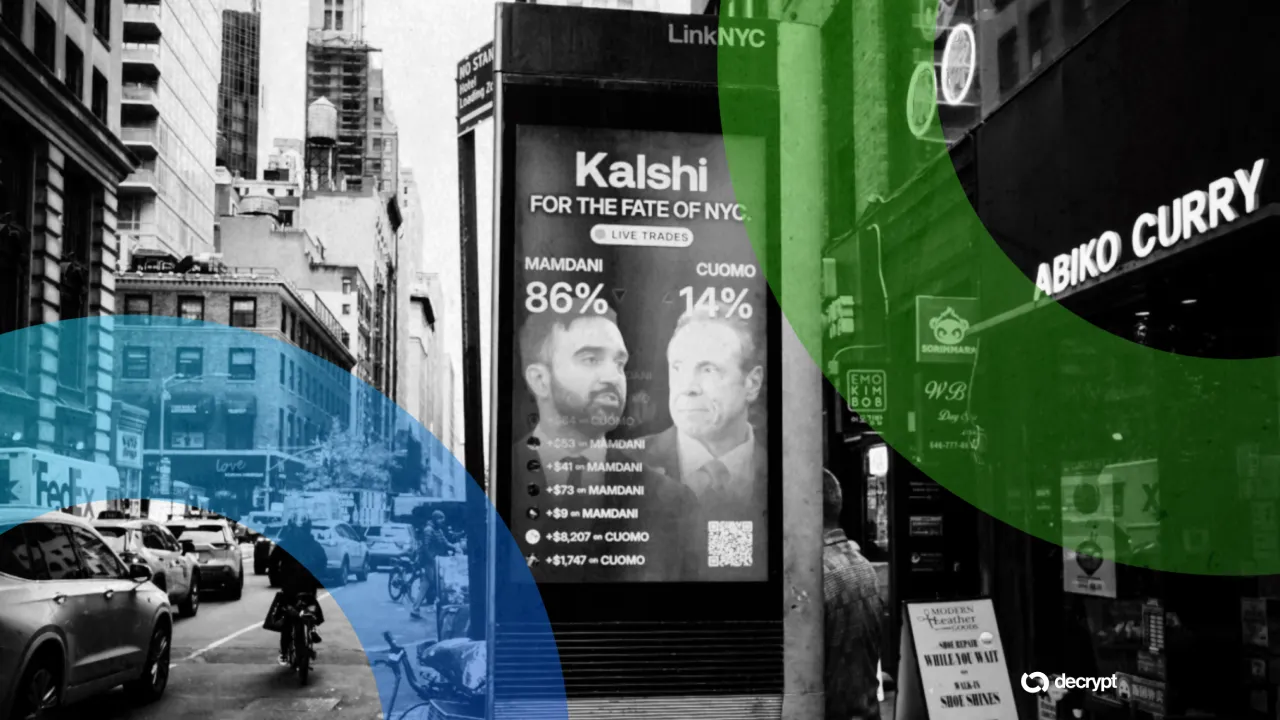
    The integrity and oversight of prediction markets are subjects of ongoing debate, with established players like CME Group expressing concerns about manipulation and newer platforms like Kalshi advocating for regulatory frameworks to address market risks. This tension was evident during a recent Commodity Futures Trading Commission (CFTC) roundtable in Washington, D.C., where executives from traditional finance, crypto, and prediction markets discussed the evolving regulatory landscape.

    During the roundtable, CME Group Chairman Terry Duffy voiced concerns regarding the potential for market manipulation and the types of contracts offered by platforms such as Kalshi. According to Duffy, “We are running the most envious markets in the United States of America,” and he questioned the nature of some prediction market contracts, referencing the “Nathan’s hot dog eating contest” as an example. He also commented on regulatory resources, stating, “I have more people in my regulatory department than you have in your whole company.”

    Kalshi co-founder Luana Lopes Lara responded by emphasizing that all markets carry risks and that regulation is the appropriate mechanism for addressing issues. Lara stated, “Every market has risk and every nascent market may have risks as well, and there have been issues in every single traditional market and every single exchange here, onshore and offshore.” She added, “And I think the point of having regulation is that you find these issues, you address these issues, and there’s a way to address them in a correct way.”

    DraftKings CEO Jason Robins urged participants to focus on the issues at hand and avoid personal attacks, underscoring a desire for more constructive discourse as the industry navigates regulatory questions.

    Prediction markets allow users to wager on the outcomes of future events through futures contracts, with a typical settlement value of $1. The CFTC has been actively scrutinizing these markets, contributing to significant regulatory uncertainty. The agency has taken legal action against states attempting to regulate event contracts under gambling laws, asserting its own jurisdiction.

    In June, the CFTC proposed restrictions on certain contracts, particularly those involving war, assassination, or specific sports proposition bets, which are considered more susceptible to manipulation. Earlier this month, nine Democratic senators also urged the CFTC to prohibit wildfire event contracts, citing concerns about potential incentives for arson, insider trading, and disaster profiteering.

    Adding to the complex regulatory environment, a Washington judge recently ordered Kalshi to cease offering certain contracts within the state, finding they likely violated state gambling and consumer protection laws. This ruling came shortly after the CFTC ordered Kalshi to continue trading amidst a separate dispute concerning New York’s attempt to block its contracts, illustrating the fragmented and contested nature of regulatory oversight.

    The core of the debate revolves around whether these contracts constitute federally regulated derivatives or gambling products subject to state law. This ongoing regulatory uncertainty impacts the future development and oversight of prediction markets, with the ultimate framework for their operation remaining unclear. The differing perspectives from established exchanges and newer platforms highlight the challenges in defining market integrity and appropriate regulatory measures in this evolving financial space.

    Why This Matters

    The materials describe a narrow update: During a CFTC roundtable discussion on prediction markets, CME Group Chairman Terry Duffy expressed concerns about market manipulation and the types of contracts offered by Kalshi. The ultimate regulatory framework for prediction markets.

    Broader Context

    Source materials place the factual news in this context: The confrontation unfolded during a Commodity Futures Trading Commission meeting in Washington, D.C., as executives from traditional finance, crypto, and prediction markets debated how event contracts should be regulated.

  • Grayscale in Talks for 200,000 ZEC Contribution to Zcash Trust

    Grayscale in Talks for 200,000 ZEC Contribution to Zcash Trust

    Grayscale in Talks for Significant Zcash Contribution as Trust Eyes NYSE Arca Listing

    Grayscale has revealed ongoing discussions with a subsidiary of Digital Currency Group (DCG) concerning a potential contribution of approximately 200,000 ZEC to its Zcash Trust. This development, disclosed in an August 18 amendment to a registration statement, signals a move to list the trust on the NYSE Arca.

    Grayscale Investments Sponsors, the entity overseeing the trust, stated it is in talks with DCG International Investments Ltd. for the subsidiary to acquire shares via an authorized participant in exchange for the specified tokens. The filing clarifies that “because these discussions are not binding agreements or commitments to purchase, the Potential Investor could determine to purchase more, fewer, or no Shares.”

    The trust also intends to trade under the ticker ZCSH, a symbol already associated with its shares on the OTCQX market. As of June 30, the trust’s net asset value stood at $155.2 million, holding roughly 2.3% of circulating ZEC. On August 12, its shares closed at $36.6, representing a 7% discount to the net asset value per share.

    Since October 2021, the trust’s shares have traded at a discount for 700 days, with a maximum discount reaching 55% and a peak premium of 240%. The Securities and Exchange Commission (SEC) has yet to approve or disapprove these shares.

    Should the proposed contribution proceed, Grayscale’s parent company would assume a controlling stake. The filing indicates that DCG “may, directly and indirectly through the Potential Investor and other affiliates, own a majority of the Shares representing ownership in the Trust,” thereby holding “the ability to control the outcome of virtually all matters presented to our shareholders for their approval.”

    DCG is also actively involved in mining the asset. Its subsidiary, Fortitude Mining, mines ZEC and manages network infrastructure. Furthermore, Foundry Digital operates a ZEC mining pool that accounted for approximately 15.4% of the Zcash Network’s hash rate for the month ending July 2026.

    The filing warns that DCG “could prioritize its own interests in these and other investments over those of the Trust.” This comes as Zcash recently implemented the Ironwood upgrade and its turnstile mechanism following the discovery of a counterfeiting bug in the Orchard shielded pool.

    The Sponsor’s Fee, identified as the trust’s sole anticipated ordinary recurring expense, is noted in Amendment No. 4 with its annual rate left unspecified, similar to the trust’s intended new name. Coinbase Custody Trust Company currently holds the ZEC, with Coinbase acting as the prime broker.

    Grayscale has previously navigated similar conversions. The SEC previously approved its Digital Large Cap Fund for NYSE Arca listing under generic listing standards that eliminated the need for a 19(b) filing. The asset manager had also previously filed to convert its XRP trust into an ETF on the same exchange.

    As of August 19, ZEC was trading at $550.78, with a market capitalization of $9.3 billion, according to CoinGecko.

  • AI Predicts XRP Growth Potential by 2030

    AI Predicts XRP Growth Potential by 2030

    AI and Analysts Offer Divergent XRP Price Predictions for 2030

    Artificial intelligence and financial analysts are presenting a wide spectrum of potential values for XRP by the end of 2030, with the ultimate outcome hinging on crucial factors like regulatory clarity and the adoption of Ripple’s products.

    An investment of $1,000 in XRP at $1.07 would yield approximately 935 tokens. AI chatbot Claude AI projects that these tokens could be worth anywhere from $4,675 to $26,180 by 2030. This broad range underscores the significant impact of underlying assumptions on the final prediction.

    Standard Chartered’s Bullish Outlook Tied to Regulatory and ETF Factors

    Geoffrey Kendrick of Standard Chartered has put forth what is described as a “bank-grade roadmap,” forecasting XRP prices of $7 in 2027, $12.60 in 2028, and $28 by 2030. However, this optimistic scenario is contingent on two key conditions: the passage of the CLARITY Act and spot ETF inflows exceeding $4 billion.

    Current inflows stand at approximately $1 billion since November 2025, indicating a fourfold gap between existing flows and the level required by Kendrick’s model.

    Bitwise’s Similar Projections and Downside Risks

    Bitwise arrives at a comparable conclusion through a similar analytical path. Its most optimistic model forecasts a price of $29.32, which includes a speculative allocation for a U.S. strategic XRP reserve. Claude, meanwhile, does not treat downside scenarios as hypothetical. Bitwise’s own bear case predicts a price of $0.13, which would reduce the initial $1,000 investment to roughly $122.

    Structural Concerns and the Rise of RLUSD

    A more immediate structural concern is the increasing institutional volume on the network being captured by Ripple’s RLUSD stablecoin, rather than XRP itself. This dynamic leads several analysts to consider price targets between $8 and $12 as more realistic than the higher projections. While utility is emerging, it may not be directly benefiting the XRP token.

    Recent Price Action and Technical Indicators

    The recent daily chart activity offers context for why lower price predictions warrant attention. XRP traded near $2.65 last October and experienced a ten-month decline. In February, the price broke below the $1.80 level, pushing it towards $1.15. The spring saw a trading range between $1.30 and $1.55, which persisted into May.

    June saw this range broken, and the downward trend continued through the summer, with the price touching $0.995 before the latest trading session. This recent session marked a significant shift, with a sharp reversal lifting XRP back above $1.08 in a single day.

    The closing price was $1.08250, an increase of 8.13%, or $0.08136. The daily trading range spanned from $0.99524 to $1.08261.

    Immediate support levels are identified at $1.00, followed by $0.95 and $0.85. Resistance is anticipated at $1.15, then $1.25 and $1.40. The Relative Strength Index (RSI) stands at 59.05, with its signal line considerably lower at 38.23. This gap of nearly 21 points is unusually wide and reflects a dramatic one-day shift in momentum.

    The oscillator has moved from oversold territory to above the midline, indicating a bullish flip in momentum. However, such rapid price movements rarely sustain without a period of consolidation.

    The Crucial Distinction: XRP Token vs.

    Stablecoin Adoption

    The vast difference between the $122 and $26,180 potential outcomes hinges on whether institutions ultimately utilize the XRP token or the stablecoin. Observing where new volume is directed will be key to determining which end of the predicted range becomes reality.

    XRP’s long-term upside potential is increasingly dependent on whether institutional activity directly benefits XRP itself or is instead absorbed by products like RLUSD.

    LiquidChain’s Approach to Interoperability

    LiquidChain is addressing this challenge from a different perspective. Instead of betting on the success of a single asset within one ecosystem, it is developing infrastructure designed to connect liquidity across several of the largest blockchain networks.

    Currently, Bitcoin, Ethereum, and Solana largely operate as distinct markets. Moving assets between them involves bridges, additional fees, fragmented liquidity, and the need to redevelop applications for each chain.

    LiquidChain is creating a unified execution layer intended to integrate these three major networks. This would allow a single deployment to access multiple ecosystems without incurring repeated cross-chain transaction costs.

    This strategy positions the project to benefit from capital movement itself, irrespective of which large-cap token leads the next market cycle. The presale is currently priced at $0.01454, with over $940,000 raised, leaving substantial room for price adjustments if this infrastructure thesis gains traction.

  • Gemini AI Forecasts Surprise Ethereum Surge by 2026

    Gemini AI Forecasts Surprise Ethereum Surge by 2026

    Ethereum Poised for Significant Growth Fueled by Network Upgrades, AI Predicts

    Google’s Gemini AI has forecast a substantial increase in Ethereum’s transaction capacity, projecting a potential surge in its value by the end of 2026. The AI model anticipates Ethereum’s throughput could reach 200 million gas, a significant jump that could redefine the network’s capabilities. Gemini’s price prediction targets a range of $3,200 to $4,200, with a base case of $3,500, a notable increase from its current $2,100 valuation.

    Key Upgrades Driving Network Expansion

    This optimistic outlook is underpinned by recent advancements on Ethereum’s testnets. The Platåberget testnet, part of the Glamsterdam upgrade, is introducing block-level access lists through EIP-7928. Concurrently, EIP-7732 is set to implement enshrined proposer-builder separation. These developments are expected to collectively boost Layer-1 gas throughput significantly, moving towards the 200 million gas target.

    Further enhancements are on the horizon with the Hegota upgrade, which has confirmed FOCIL via EIP-7805. Native account abstraction is also under evaluation through EIP-8141. Both initiatives are designed to facilitate stateless validation using Verkle trees, a move that could lead to reduced hardware requirements for running nodes and pave the way for institutional-grade network efficiency.

    Market Dynamics and Potential Challenges

    Despite the technical advancements, the market faces potential headwinds. Macroeconomic factors are identified as a primary risk. In the short term, technical resistance is observed around the 200-day exponential moving average (EMA), currently near $2,140. A more significant threat looms if Ethereum loses the $1,800 support zone, which could trigger a decline towards $1,200.

    The daily chart for Ether (ETH) has shown a strong recovery in recent sessions. After peaking near $4,950 last September, ETH experienced a prolonged downturn, falling to around $2,600 in November and December. February saw a sharp decline to near $1,780. The spring months brought a partial recovery to $2,450 by May, but June reversed these gains, with the price hitting a low around $1,480. July and August saw a gradual rebuilding of value, culminating in a recent sharp upward movement that pushed ETH past $2,100.

    The latest closing price was $2,124.2, marking a 10.83% increase and a gain of $207.6. The daily trading range spanned from $1,904.9 to $2,132.2. Key support levels are identified at $2,000, $1,800, and $1,480. Resistance is anticipated at $2,140 (the 200-day EMA), followed by $2,450 and $2,800.

    The Relative Strength Index (RSI) stands at 77.11, with its signal line considerably lower at 54.97. This wide gap suggests an extreme and rapid shift in momentum, indicating that the oscillator is now in overbought territory. While momentum is strongly bullish, such stretched readings often precede a cooling-off period before further upward movement.

    Gemini’s base case prediction requires a 65% increase from the current price, with overcoming the 200-day EMA serving as the initial hurdle.

    Bitcoin Hyper Aims to Enhance Bitcoin’s Capabilities

    In parallel, the Bitcoin Hyper project is addressing a similar bottleneck in the cryptocurrency space, but from a different angle. It aims to provide Bitcoin with a faster execution environment without altering the core Bitcoin network.

    Operating on the Solana Virtual Machine, Bitcoin Hyper is designed to introduce high-speed transactions, reduced fees, and smart contract functionality to a Bitcoin Layer 2 ecosystem. Its Canonical Bridge will facilitate the transfer of BTC into this environment, while the HYPER token will manage gas fees, staking, and governance.

    This approach focuses on expanding the utility of Bitcoin capital rather than modifying Bitcoin itself. The project’s presale has already garnered over $33 million, and early investors can currently stake HYPER for yields of up to 35% APY, in anticipation of the project’s planned 2026 launch.

  • Alibaba Revenue Up 9%, AI Cloud Soars 45%, Profit Plummets

    Alibaba Revenue Up 9%, AI Cloud Soars 45%, Profit Plummets

    Alibaba Reports Strong Revenue Growth Driven by Cloud and AI

    Chinese technology giant Alibaba announced first-quarter revenue of 268.95 billion yuan (approximately $40 billion) on Thursday, marking a 9% increase year-over-year and slightly surpassing analyst expectations of 268.88 billion yuan. This represents the company’s fastest quarterly growth rate in approximately three years, with the surge primarily attributed to its cloud and artificial intelligence businesses.

    Cloud and AI Fueling Expansion

    The company’s cloud division emerged as the primary engine of growth. Alibaba Cloud’s external revenue saw an accelerated expansion of 45%, while revenue from AI-related products reached 12.38 billion yuan ($1.82 billion). This marks the twelfth consecutive quarter of triple-digit year-over-year growth for AI products. CEO Eddie Wu highlighted the improved commercialization of the company’s comprehensive AI strategy as the key driver behind the quarter’s performance, according to Alibaba’s earnings statement.

    However, this aggressive AI push comes at a significant cost. Capital expenditures surged by 75% to 67.7 billion yuan ($10 billion). Alibaba attributed this increase primarily to rising chip prices and the expansion of computing capacity to meet the escalating demand for AI, which is currently outpacing supply. Consequently, free cash flow swung to an outflow exceeding $6.6 billion for the quarter, according to Bloomberg.

    The market’s reaction was swift. Alibaba’s U.S.-listed shares experienced a decline of around 5% shortly after the market opened, though they showed signs of recovery by midday.

    Monetizing AI Through Distribution and Partnerships

    Alibaba’s cloud performance coincides with a strategic shift towards distributing its Qwen models more broadly, moving beyond just their development. Earlier this month, the company released Qwen 3.8-Max, its most advanced model to date, as open weights for the first time at such a large scale. In April, the free tier of its Qwen Code coding agent was discontinued.

    The company is also extending its reach beyond China’s domestic market. Apple is reportedly integrating its in-house AI model with Alibaba’s Qwen to power Apple Intelligence on Chinese iPhones. This potential deal could position Apple as the first foreign company permitted to operate a proprietary AI model within China.

    This focus on distribution and partnerships is beginning to reflect in the data. Chinese open-weight models have seen a dramatic increase in usage, jumping from under 2% of tokens generated on OpenRouter in late 2024 to approximately 61% by mid-2026. This growth has occurred even as Alibaba’s quarterly profit has decreased by three-quarters.