Category: Uncategorized

  • CFTC Rescues Kalshi in New York

    CFTC Rescues Kalshi in New York

    CFTC Intervenes to Keep Prediction Market Operating in New York Amid State Lawsuit

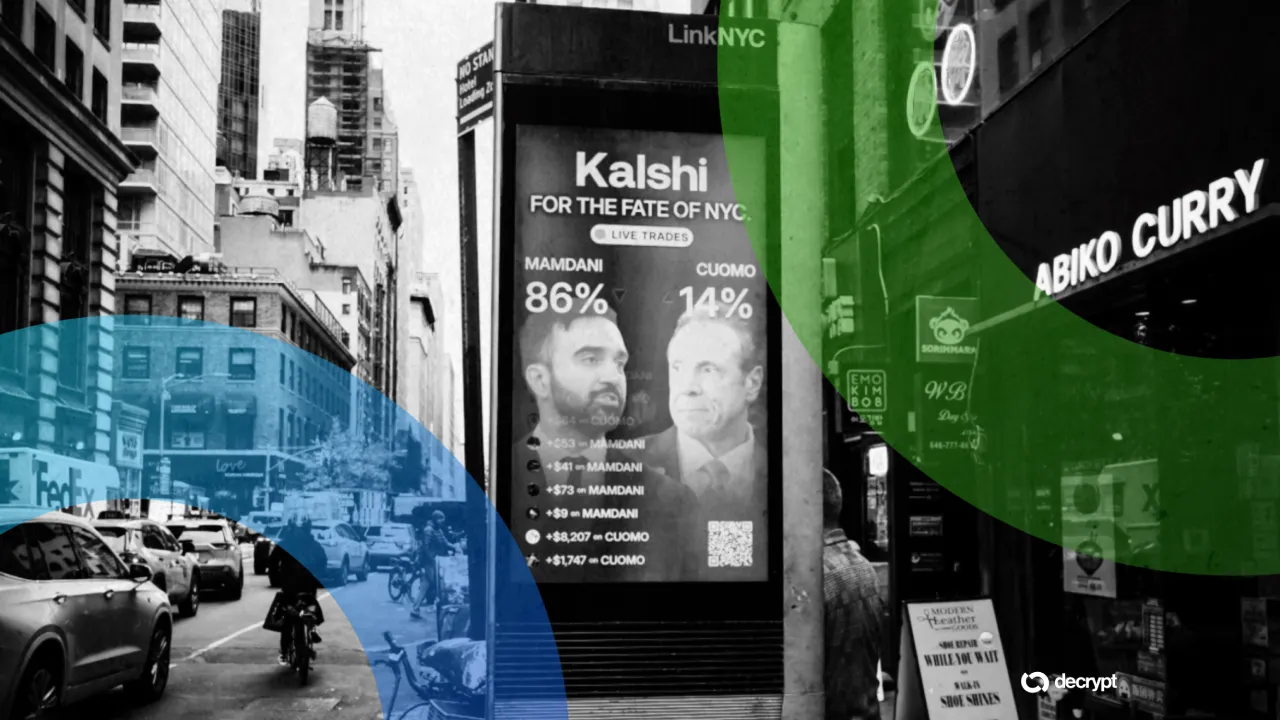
    The Commodity Futures Trading Commission (CFTC) has invoked emergency authority to prevent New York from shutting down the prediction market platform Kalshi, just as the company experiences a significant surge in revenue. The federal regulator’s intervention comes days after New York Attorney General Letitia James filed a lawsuit seeking to block Kalshi’s sports-related contracts. Kalshi had formally requested the CFTC’s intervention.

    The implications of this dispute are substantial. According to a report by The Information, Kalshi has reached an annualized revenue run rate exceeding $4 billion, a doubling of its figures from just two months prior. The company is reportedly raising capital at a valuation of $40 billion, positioning it as one of the fastest-growing entities in the financial sector. This rapid expansion coincides with state-level efforts to curb its operations.

    New York contends that sports prediction markets constitute gambling, circumventing state licensing requirements and tax obligations. The state asserts that these revenues are crucial for funding schools and programs aimed at addressing problem gambling. The CFTC, however, maintains that these contracts are federally regulated swaps. CFTC Chairman Mike Selig, appointed by the Trump administration and known for his crypto-friendly stance, argued that “Congress did not intend for derivatives exchanges to be regulated under a patchwork of state gaming laws.” He accused New York of attempting to stifle these contracts through its “iron curtain of state gaming laws” and asserted that these are interstate financial markets which New York has no jurisdiction to regulate.

    This marks the third instance of the CFTC intervening on behalf of Kalshi, following a similar action in Michigan. The CFTC has also initiated its own lawsuit against New York. However, the underlying legal cases remain unresolved, and a judge has previously ruled against Kalshi’s attempt to halt the state’s lawsuit. Meanwhile, Kalshi continues to report escalating revenues and secure higher valuations.

    The central question at stake is whether a federal license grants these platforms the ability to operate nationwide, or if individual state regulators will retain veto power. The CFTC has decisively sided with the former, and with Kalshi’s revenue doubling, both parties have significant financial interests riding on the outcome.


  • Large Wallets Accumulate XRP Despite Summer Slump

    Large Wallets Accumulate XRP Despite Summer Slump

    XRP’s Price Under Pressure, But “Whale” Wallets Continue to Grow

    XRP has faced persistent selling pressure, mirroring the volatile trading seen across the broader cryptocurrency market. The digital asset has struggled throughout the summer, experiencing a decline of nearly 30% since mid-May.

    Despite the downturn, large XRP holders, often referred to as “whales,” have continued to expand their holdings. Santiment’s latest analysis reveals that the number of wallets containing at least 1 million XRP has increased by 32 over the past three months, even as the market capitalization has fallen by 29%. Concurrently, Ripple’s stablecoin, RLUSD, has emerged as a significant player in the institutional stablecoin space. The company’s existing payment, custody, and tokenization infrastructure also continues to anchor the XRP Ledger to settlement use cases.

    Santiment suggests that the simultaneous rise in million-XRP wallets and a declining market cap indicates that stronger, long-term holders are absorbing market sell-offs. The analytics firm commented, “Patience is replacing simple price-related hype, and future volatility becomes more interesting for bulls.”

    Looking at the broader market picture, XRP is currently in deeply oversold territory. Analyst Ali Martinez has noted the emergence of fresh buy signals. Earlier this week, Martinez reported that large investors had acquired over 380 million XRP units within a seven-day period, valued at approximately $400 million at the time. Such accumulation could potentially reduce the available supply on the market and provide price support if demand remains stable or increases. This activity could also attract smaller retail investors. The monthly TD Sequential indicator has also flashed a buy signal, a pattern that has historically preceded significant price rallies.

    Meanwhile, market observer CR87 has identified XRP as being at a “critical level.” The price faces the risk of falling to the $0.50-$0.60 range if it fails to hold the $1.03 mark. Conversely, for bullish sentiment to take hold, reclaiming $1.47 would represent the initial sign of strength. Similarly, X user Diana has predicted further downside if the token breaks below the $1 level, with a potential target of $0.86. However, a strong rebound around the $1 mark, followed by a move back above $1.036, could temper the bearish outlook.

    On the institutional front, U.S.-based spot XRP Exchange-Traded Funds (ETFs) saw substantial inflows totaling $1.17 billion between November and December 2025. However, this momentum has waned in recent months. These products attracted only $15.59 million in January. The following month, this figure nearly quadrupled to $58.09 million. March then recorded the first monthly outflow, amounting to $31.16 million.

    Performance remained mixed from April to July 2026. The funds garnered $81.6 million in April and $132 million in May, following the CLARITY Act’s passage through the Senate Banking Committee. This slowed to $59.46 million in June and $27.29 million in July. As of early August, inflows have been minimal, totaling just $1 million.

  • Harmony’s ONE Plummets 37% After Token Mint Attack

    Harmony’s ONE Plummets 37% After Token Mint Attack

    Harmony Blockchain Hit by Exploit, Billions of Tokens Minted Illegally

    Layer-1 blockchain Harmony has confirmed it was the target of an exploit that saw an attacker illegally mint approximately 4 billion ONE tokens. The incident sent the token’s value plummeting by 37%, reaching about $0.00077, according to data from CoinGecko.

    On-chain analyst Juiceberg first flagged the unauthorized minting early Wednesday, estimating close to 4 billion tokens – representing about 26% of the total supply – had been created through empty blocks. Around 2.8 billion of these tokens were subsequently funneled onto exchanges as the price declined.

    In a follow-up post, the analyst stated that the attacker still held roughly 115 million ONE tokens to sell on-chain, approximately 2.9% of the total minted. “The overwhelming majority (~97%) is already on exchanges,” Juiceberg wrote, indicating the tokens had either been sold or were held in deposit wallets.

    Harmony acknowledged the situation in a tweet, stating it was “working with our team and appropriate exchanges to stop and freeze the funds.” The blockchain also indicated it was preparing a patch and considering rollback options. In a subsequent post, Harmony identified four specific wallets, providing them in both Harmony and hex formats, and urged exchanges to block any activity linked to them.

    “We are working with our team and appropriate exchanges to stop and freeze the funds. We are working on a patch and rollback options. Will update when we have new information,” Harmony protocol tweeted on August 12, 2026.

    Just over two hours after its initial statement, Harmony paused its bridge and released a patch a minute later. The blockchain instructed validators to upgrade to a new build designed to prevent further unauthorized minting, noting that addressing the already created tokens would require another update. This action came five hours after Juiceberg’s initial alert.

    The project has yet to disclose the specific vulnerability that enabled the exploit, confirm the exact number of tokens created, or detail how much reached exchanges. An unusual observation noted by Juiceberg was that Harmony’s totalSupply endpoint did not reflect the newly minted tokens, and price trackers continued to list the circulating supply at approximately 14.87 billion.

    A rollback would revert the network to its state prior to the exploit, effectively erasing subsequent events from its history. However, this approach carries the risk of invalidating transactions made by legitimate users after the attack.

    This is not the first security incident for Harmony. In June 2022, hackers drained approximately $100 million from its Horizon cross-chain bridge, an attack later attributed by the FBI to North Korea’s Lazarus Group.

    Harmony’s initial proposal to address the 2022 hack involved reimbursing victims with ONE tokens. This would have necessitated minting billions of new tokens on top of the existing circulating supply and performing a hard fork of the chain. The plan faced significant criticism, leading the team to replace it with a solution funded from its treasury. Now, four years later, an attacker has managed to mint a comparable amount of tokens without authorization.

    Harmony’s ONE token now holds a market capitalization of roughly $11.5 million, placing it outside the top 1,000 cryptocurrencies. The token last traded near its October 2021 all-time high of $0.38 more than four years ago and has fallen by over 99% from that peak.

  • SEC, CFTC Issue Digital Asset Guidance as CLARITY Act Stalls in Senate

    SEC, CFTC Issue Digital Asset Guidance as CLARITY Act Stalls in Senate

    The Securities and Exchange Commission (SEC) and the Commodity Futures Trading Commission (CFTC) have jointly released guidance classifying digital assets, establishing a temporary regulatory map for the cryptocurrency market. This move comes as legislative efforts to provide statutory clarity through the CLARITY Act remain stalled in the Senate.

    The joint guidance categorizes digital assets into five types: digital commodities, digital collectibles, digital tools, stablecoins, and digital securities. This classification aims to offer a working framework for market participants, addressing what SEC Chair Paul Atkins described as the agency’s “persistent failure to provide clarity” on whether crypto assets implicate federal securities laws. “For over a decade, market participants have operated without clear guidance on the fundamental question – does a crypto asset implicate federal securities laws? So today, I’m pleased to announce that the SEC’s persistent failure to provide clarity on this question is over,” Atkins stated.

    Why This Matters

    The materials describe a narrow update: The SEC and CFTC jointly released guidance classifying digital assets into five categories (digital commodities, digital collectibles, digital tools, stablecoins, and digital securities). The direction of Bitcoin following CPI data.

    Broader Context

    Source materials place the factual news in this context: The SEC issued joint guidance with the CFTC last week, classifying digital assets into five categories: digital commodities, digital collectibles, digital tools, stablecoins, and digital securities, signaling that the agency will build its own crypto regulatory framework rather than wait indefinitely for the Senate’s stalled CLARITY Act.

    Guidance vs.

    Statute

    However, the guidance is explicitly an interpretation, not a statute, meaning it can be revised or withdrawn by a future commission without congressional approval. This distinction is crucial for market participants pricing regulatory risk. The SEC’s classification places digital securities firmly under its jurisdiction, while noting it can still assert authority over other asset types in specific cases. This ambiguity is precisely what market structure legislation, such as the CLARITY Act, was intended to resolve.

    Legislative Roadblocks

    The CLARITY Act has faced significant hurdles in the Senate. While it passed the House with a 294-134 vote in July 2025, its progress in the Senate has been slow. The Senate Banking Committee advanced the bill 15-9 in May, but it has been on the Senate calendar since June 1 without a floor vote. Further complications arose when Republicans added an ethics provision on July 22, which Democrats rejected. The Senate Agriculture Committee also advanced its section of the bill without Democratic votes.

    According to Ian Katz, managing partner at Capital Alpha, regulators are proceeding with interpretations because formal rulemaking is slow. “They’re not completely putting the brakes on, waiting for legislation,” he commented. The SEC’s guidance is seen by some as overdue rather than optional, with Atkins previewing a broader framework that could include exemptions for startups and fundraising, and safe harbors for assets that have outgrown securities treatment – elements typically found in statute.

    Market Implications and Outlook

    The timeline for legislative action is becoming increasingly urgent. Senator Bernie Moreno stated, “If we don’t get the CLARITY Act passed by May, digital asset legislation will not pass for the foreseeable future.” Even if the Senate Banking Committee marks up its bill in April, it would need to be merged with the Agriculture Committee’s version, secure a 60-vote threshold on the Senate floor, and be reconciled with the House’s version, all before political cycles potentially freeze legislative activity.

    For traders and investors, the stalled legislative process means continued regulatory uncertainty. The SEC’s interpretation, unlike a passed statute, lacks permanence. This gap between statutory law and agency interpretation is expected to continue influencing how durable pricing power crypto regulation carries.

    Amidst this regulatory landscape, the crypto market is also bracing for economic data, such as the upcoming CPI report, which could impact Bitcoin’s price, currently consolidating around $64,000.

  • CFTC Intervenes to Maintain Kalshi Trading Amidst New York AG Lawsuit

    CFTC Intervenes to Maintain Kalshi Trading Amidst New York AG Lawsuit

    The Commodity Futures Trading Commission (CFTC) invoked its emergency authority on Tuesday to order Kalshi to continue trading, following the exchange’s notification of a market emergency. This intervention comes after the New York Attorney General filed a lawsuit seeking to halt Kalshi’s nationwide offering of event contracts and demanding over $36 billion in damages.

    The CFTC’s order directs KalshiEX to operate in line with the Commodity Exchange Act, the federal standards governing designated contract markets. The exchange had notified the CFTC of a market emergency on July 31, the same day New York Attorney General Letitia James filed her petition in state court. The lawsuit seeks a restraining order to prevent Kalshi from offering event contracts across the country and claims damages exceeding $36 billion, according to the petition.

    CFTC Chairman Michael Selig criticized the New York Attorney General’s action, stating that the state is attempting to regulate interstate financial markets under state gaming laws. According to CFTC Chairman Michael Selig, New York wanted event contract derivatives to “waste away under its iron curtain of state gaming laws” before any final ruling. He argued that exchanges matching bids in one state against offers in another, and clearing trades centrally, constitute interstate financial venues rather than gambling operations. “New York has no business regulating these interstate financial markets,” Selig stated, adding that Congress did not intend for derivatives exchanges to be subject to a patchwork of state gaming laws.

    The petition filed by the New York Attorney General reportedly cites Kalshi’s valuation at $22 billion and its annualized trading volume at $178 billion. The petition treats Kalshi as an unlicensed gambling business across eight counts, seeking three times its gains and $100,000 for every sports wagering offer.

    Kalshi has faced previous legal setbacks. On July 7, a judge in the Southern District of New York denied Kalshi a preliminary injunction against the state gaming regulator. Further, on July 27, a judge refused protection pending appeal for the exchange. In June, Michigan restrained Kalshi’s sports markets, and in July, Washington obtained a preliminary injunction against the platform.

    The CFTC has indicated it has sued nine states and has filed amicus briefs in the Sixth and Ninth Circuits, as well as before the Supreme Judicial Court of Massachusetts. President Donald Trump has publicly supported the CFTC’s stance, describing state officials who oppose prediction markets as “SCUM.”

    Significant uncertainties remain regarding the ultimate outcome of the New York lawsuit and the broader regulatory status of event contracts. The legal definition of these instruments as interstate financial markets versus gambling operations is a central point of contention, and the resolution of the CFTC’s lawsuits against nine states is also pending.

    The CFTC’s intervention highlights a critical juncture in the regulation of novel financial instruments, signaling a potential federal stance against state-level attempts to classify and regulate these markets as gambling. However, the legal challenges and jurisdictional conflicts underscore the ongoing debate over federal versus state authority in financial market oversight.

    Why This Matters

    The materials describe a narrow update: The CFTC used its emergency authority to order Kalshi to continue trading. The ultimate outcome of the New York lawsuit against Kalshi.

    Broader Context

    Source materials place the factual news in this context: The Commodity Futures Trading Commission has invoked its emergency authority to order Kalshi to carry on trading, acting on Tuesday after the exchange itself notified the agency of a market emergency.

  • Harmony Exploited: 4B Tokens Minted Unauthorized, ONE Dumps to ATL

    Harmony Exploited: 4B Tokens Minted Unauthorized, ONE Dumps to ATL

    Harmony Blockchain Hit by Exploit, Billions of ONE Tokens Minted

    The Layer 1 blockchain Harmony has been targeted by an attacker who minted at least 4 billion of its native ONE token, causing the cryptocurrency to plummet to a new all-time low.

    Data from CoinGecko indicates that the ONE token fell to $0.0005735 following the incident.

    On August 12, X user Juiceberg was among the first to report the exploit, stating that an unidentified individual had minted 4 billion ONE tokens, representing approximately 26% of the total supply. The attacker then moved about 2.8 billion of these tokens to exchanges.

    “The attacker has roughly 115M ONE left to sell onchain — about 2.9% of the ~4B they minted,” the on-chain analyst wrote. “Approximately 97% is already on exchanges and has either been sold or is sitting in deposit wallets ready to sell.”

    The Harmony protocol later acknowledged the incident but did not immediately disclose the root cause or confirm the exact number of tokens minted by the hacker. The team stated they were collaborating with several exchanges to freeze the illicitly minted funds and were developing a patch to address the vulnerability, along with rollback options. They pledged to provide further updates as new information became available.

    Harmony has identified four wallet addresses associated with the theft: one1uap…43014510, one17u300a…6408efe5, one1a5hur07z…73bb08eb, and one1h56hkx…58ff1a70ba. The protocol has requested all exchanges to block and freeze any funds traceable to these addresses. In response to the exploit, the team has also paused the LayerZero-Harmony bridge and instructed validators to apply a patch to prevent further unauthorized minting of ONE tokens.

    “We’ll follow up with another update to address already minted tokens,” the team stated.

    This is not the first security breach for Harmony. In 2022, the protocol lost approximately $100 million when its Horizon Bridge was exploited.

    Prior to the latest incident, the ONE token was trading around $0.00117. It experienced a sharp decline to approximately $0.00057, marking a new all-time low. At the time of reporting, the token had recovered slightly, trading 33% above its all-time low, but still represented a nearly 40% loss within a 24-hour period. Over the past seven days, the asset has fallen 32%, and its monthly chart shows a decline of over 28%, according to CoinGecko data.

    The Harmony exploit occurred shortly after a separate incident that targeted the XRPL-Coreum bridge, resulting in the theft of nearly 200,000 XRP. In that attack, the hacker reportedly manipulated the bridge’s deposit-checking system to misinterpret a wallet-to-wallet transfer as a legitimate deposit.

  • VIP Earn: Up to 20% Higher APR, Increased Quotas

    VIP Earn: Up to 20% Higher APR, Increased Quotas

    Binance Enhances VIP Program with Higher Yields and Expanded Quotas

    Binance has rolled out an enhanced VIP Earn program, offering its premium users significantly higher Annual Percentage Rates (APRs) and increased subscription quotas for a range of digital assets. The move aims to boost capital efficiency for VIP clients by providing more lucrative opportunities for their idle balances.

    Under the revamped program, VIP users can now access exclusive APRs that are up to 20% higher than standard retail rates. Furthermore, they are eligible for subscription quotas up to ten times larger across more than 20 different tokens. This initiative is designed to add a substantial layer of value to the existing Binance VIP Program, encouraging users to leverage their assets for greater returns.

    Accessing VIP Earn

    Users can begin exploring the benefits of VIP Earn by navigating to the “Earn” section and selecting “VIP Earn” on either the Binance website or within the Binance mobile application.

    Preview for Non-VIP Users

    While full access to VIP Earn is reserved for Binance VIP members, non-VIP users can still preview the program. They are granted view-only access to the VIP Earn hub, allowing them to see the exclusive rates and quotas available. This provides a glimpse into the advantages of the VIP program, with the expectation that users will upgrade to gain full functionality.

    Becoming a Binance VIP

    Information on how to achieve Binance VIP status is available through the platform’s designated channels.

  • DOSUSDT Perpetual Contract Launches in Innovation Zone with 20x Leverage

    DOSUSDT Perpetual Contract Launches in Innovation Zone with 20x Leverage

    Bybit Lists DOSUSDT Perpetual Contract in Innovation Zone

    Cryptocurrency exchange Bybit has announced the listing of the DOSUSDT Perpetual Contract within its Innovation Zone. Trading for the new contract is now live, offering users leverage of up to 20x.

    The DOSUSDT Perpetual Contract is based on the DAPPOS (DOS) underlying asset and settles in USDT. Key trading parameters include a tick size of 0.0001, maximum leverage of 20, and a capped funding rate of 2.5%. Funding fees will be settled every four hours, and trading will be available 24/7.

    For further information on DAPPOS, users can visit the official website at dappos.com or follow their official X account at x.com/dappOS_com.

    Bybit has cautioned that contracts listed in the Innovation Zone, including DOSUSDT, will incur higher trading fees compared to other available contracts. Additional details regarding the Innovation Zone can be found on Bybit’s help center.

  • XRP Bridge Drained of $200K in Fake Deposit Attack

    XRP Bridge Drained of $200K in Fake Deposit Attack

    Bridge Exploited, Nearly 200,000 XRP Stolen Through Fake Deposit Scheme

    A bridge connecting the XRP Ledger and Coreum, now rebranded as tx, was exploited on August 9, resulting in the loss of nearly 200,000 XRP. An attacker successfully tricked the system into recognizing a wallet-to-wallet transfer as a legitimate deposit, leading to the theft.

    The bridge has since been halted. Investigations by the operator and external researchers indicate the failure originated in Coreum-side software, with no issues identified on the XRP Ledger itself.

    Initial Warnings and Exploitation Details

    The first public alert came from a trader known as playa, who observed that the bridge’s XRP Ledger account was rapidly losing funds. Playa initially pointed to the account’s DefaultRipple setting as the potential cause. According to playa’s observations, the balance dropped from 93,700 XRP to 77,200 XRP within minutes, part of a larger, ninety-seven-minute drain.

    Another user, Vet, clarified in the same discussion thread that the Coreum bridge was actively being exploited. Playa later acknowledged a rushed initial assessment.

    The tx team confirmed the exploit, stating that its software “incorrectly registered transactions that never actually delivered any XRP to the bridge.”

    Technical Breakdown of the Attack

    Reza Bashash provided a technical explanation of the attack mechanism. The attacker sent the bridge’s own wrapped token between two of their wallets, appending a bridge-deposit memo. Because the token was issued by the bridge, the transfer appeared in the bridge’s transaction history and was mistakenly treated as a genuine deposit.

    Relayers then approved these transactions, leading to the minting of unbacked assets on the Coreum side. The attacker subsequently withdrew real XRP against these fabricated assets. Bashash estimated the total stolen XRP at 198,715.88, which was then converted to ETH, routed through THORChain, and ultimately sent to Tornado Cash.

    Remediation and Market Impact

    The tx team has identified the vulnerability, and the bridge remains offline. A report has been filed with the FBI’s Internet Crime Complaint Center. No other bridged assets were affected by the incident. The operator is currently developing a plan to compensate affected users.

    A subsequent on-chain review revealed the same root cause from a different perspective: 21 separate Coreum relayers independently attested to the same fraudulent deposit. This allowed the attacker to mint unbacked bridge assets and repeatedly execute the scheme with increasing amounts before cashing out. Each payout on the XRP Ledger was validated by a multisignature from the bridge’s relayer quorum, explaining why the initial DefaultRipple theory proved insufficient once transaction data was scrutinized. Native XRP does not utilize trust lines in this manner, and the DefaultRipple flag is specific to the bridge’s issued tokens.

    The exploit occurred as XRP’s price was already declining. The token was trading around $1.02, near a 21-month low, and had fallen approximately 4.4% for the week. This downturn coincided with Bitcoin’s drop to around $64,000 and a broader crypto market decline of roughly $40 billion in a single day.

  • ForumPay Introduces Payment Flow for Merchants Accepting Cards and Bank Transfers

    ForumPay Introduces Payment Flow for Merchants Accepting Cards and Bank Transfers

    ForumPay has launched a new payment flow that enables merchants to accept payments via Visa, Mastercard, and bank transfers in select markets. The system automatically converts these funds into cryptocurrency, processes them through ForumPay’s infrastructure, and settles the amount in fiat currency to the merchant, thereby shielding merchants from chargeback liability and the costs associated with PCI-DSS compliance for card acceptance.

    ForumPay says this approach allows businesses to expand their checkout payment options without taking on the compliance architecture, risks, and costs typically required for card acceptance. Merchants can offer card and bank payments without registering as a card acceptance business, thus avoiding chargeback liability and PCI-DSS compliance costs.

    According to ForumPay, merchants receive the exact invoiced amount, paying only their usual crypto acceptance fees. Crucially, ForumPay passes additional card and bank transfer costs directly to the payer.

    ForumPay’s core processing technology aims to help businesses attract new customers and increase revenue. The company claims its wallet-agnostic solution allows crypto consumers to spend their preferred cryptocurrency from any wallet for various purchases. The transactional experience is described as similar to other popular payment methods but simpler, faster, and more secure.

    This development offers businesses a novel way to expand payment options, potentially reducing operational burdens and costs linked to traditional payment acceptance. ForumPay is a crypto payment infrastructure company providing cryptocurrency-to-fiat payment technology. The new payment flow was reported on August 11th, 2026, and aims to bridge traditional payment rails with crypto infrastructure.

    Why This Matters

    ForumPay’s new payment solution enables merchants to accept payments via Visa, Mastercard, and bank transfers in select markets. This new payment flow could alter how payments are processed, offering merchants a way to avoid traditional processing costs and liabilities, with associated costs shifted to the payer.

    Broader Context

    ForumPay is a crypto payment infrastructure company.