Category: Uncategorized

  • Kraken Secures UAE License, Eyes Dubai Expansion

    Kraken Secures UAE License, Eyes Dubai Expansion

    Kraken Secures Full Dubai License, Poised for UAE Market Entry

    Cryptocurrency exchange Kraken is set to launch its services in the United Arab Emirates following the acquisition of full market approval from Dubai’s Virtual Asset Regulatory Authority (VARA). This landmark decision permits Kraken’s parent company, Payward, to operate as a licensed virtual asset service provider within Dubai, catering to retail, professional, and institutional investors across the region.

    Initial Offerings and Future Expansion

    Upon launch, customers in the UAE will gain access to spot and margin trading, with trading pairs denominated in the UAE dirham (AED). A significant enhancement for users will be the ability to directly deposit and withdraw funds in dirhams, potentially eliminating the need to convert other currencies for trading activities.

    The initial service lineup will also encompass on-chain staking, xStocks, and Kraken’s crypto transfer service, Krak. Institutional clients can expect access to over-the-counter (OTC) spot trading and Kraken Prime. The company has indicated plans to progressively introduce additional products, with crypto derivatives and a broader spectrum of yield opportunities anticipated for release in late 2026 and into 2027, subject to further regulatory clearances. Furthermore, Payward intends to extend its trading infrastructure to regional partners through an embedded “trading-as-a-service” model.

    Regulatory Milestone and Global Footprint

    This latest approval represents the final phase of VARA’s licensing process. It follows a preliminary approval granted to Payward in May 2026, which enabled the company to finalize its operational setup before onboarding customers. Payward currently holds over 100 licenses and registrations globally, with a regulatory presence spanning Europe, the Americas, Asia-Pacific, and the Middle East.

    Arjun Sethi, Co-CEO of Payward and Kraken, commented on the development, stating, “From launch, clients in the UAE get the same order book and multi-asset coverage we run in every other market, under one of the clearest regulatory frameworks in the world. Payward’s regulatory infrastructure now connects them directly to Kraken’s market-leading liquidity, along with a growing range of opportunities across digital assets.”

    A Busy Year for Kraken

    Kraken has experienced a dynamic year. In April, Deutsche Börse invested $200 million in the crypto exchange. In June, Kraken partnered with Maple to introduce institutional-grade lending protections on the blockchain via a facility for digital asset-backed loans. More recently, in September, Nasdaq agreed to invest an additional $100 million in Payward, valuing the parent company at $21 billion. The two entities are also collaborating on tokenized stocks, with a targeted launch for the second quarter of 2027.


  • UK AI Security Institute Regains Access to Frontier AI Models After 17-Day Interruption

    UK AI Security Institute Regains Access to Frontier AI Models After 17-Day Interruption

    The UK AI Security Institute (AISI) has regained access to pre-release frontier AI models from US developers, concluding a 17-day period during which access was frozen. The interruption, which began around September 24, 2026, was reportedly due to a request from the Office of the National Cyber Director prioritizing US safety reviews.

    Access was restored on October 11, 2026. During the freeze, Anthropic notably withheld its Claude Mythos 5.1 model from non-US entities. UK AI Minister Kanishka Narayan is credited with playing a role in securing the renewed access for the AISI.

    Background on AISI and Voluntary Agreements

    The AISI, established in 2023 following the international AI Safety Summit at Bletchley Park, operates under voluntary agreements. These agreements, struck in 2023, mean the institute’s access to cutting-edge AI systems depends on developers choosing to share their models. The institute employs over 100 technical experts focused on safety evaluations. Previously, the AISI evaluated OpenAI’s GPT-6 Astra, an effort that contributed to its global role in assessing frontier models.

    National Priorities vs. International Collaboration

    The recent interruption highlighted the tension between international safety testing commitments and national priorities. When the Office of the National Cyber Director requested that domestic safety reviews take precedence, the existing framework adjusted accordingly. Anthropic’s decision to restrict access to its Claude Mythos 5.1 model for non-US entities during this period illustrated this dynamic, demonstrating how companies may balance global safety commitments with signals from their home government.

    The restoration of access may alleviate concerns that AI safety testing could become fragmented along national lines. According to the article, this development could reassure global researchers and technology investors who may have worried about a divergence between US and UK approaches to AI governance. The episode is also seen as setting a precedent that other nations pursuing international AI regulation through collaboration may observe.

    Future Outlook and Remaining Uncertainties

    Among the models now under review by the AISI is Google’s Gemini 4 Argon. Whether Anthropic’s Claude Mythos 5.1 will subsequently be shared with non-US entities is considered an early indicator of how normalized international access has become.

    Looking ahead, several uncertainties remain. It is unclear whether Anthropic will share its Claude Mythos 5.1 model with non-US entities. Additionally, questions persist about whether the US will formalize priority rules for domestic safety reviews, if more developers will resume sharing models with non-US evaluators, and whether the current voluntary framework from 2023 will be replaced by a more robust structure. The source states that AISI officials have pointed to future collaborations focused on using advanced AI to strengthen cyber defenses, an area that aligns with the concerns of the office that initiated the review prioritization.

    The timeline of events includes the establishment of AISI and its voluntary agreements in 2023, the approximate start of the access freeze on September 24, 2026, and the restoration of access on October 11, 2026.

    Why This Matters

    The materials describe a narrow update: The UK AI Security Institute had its access to pre-release frontier AI models from US developers frozen for 17 days, starting around September 24, 2026, due to a request from the Office of the National Cyber Director prioritizing US safety reviews. Whether Anthropic’s Claude Mythos 5.1 will be shared with non-US entities.

    Broader Context

    Source materials place the factual news in this context: AISI was set up in 2023, following the international AI Safety Summit held at Bletchley Park.

  • Bitcoin Exchange Inflows: A Mixed Signal Amid Data Ambiguity

    Bitcoin Exchange Inflows: A Mixed Signal Amid Data Ambiguity

    Centralized exchanges saw a net inflow of 11,593 Bitcoin (BTC) over a recent three-day period, a development that contrasts with a larger net outflow observed in the preceding month. However, the significance of this inflow remains uncertain due to considerable discrepancies in how different analytics providers report total exchange holdings.

    Broader Context

    Source materials place the factual news in this context: Different analytics providers report different totals for how much Bitcoin exchanges actually hold.

    Contrasting Flows: Short-Term In vs. Long-Term Out

    Over the 30 days leading up to approximately October 12, 2026, centralized exchanges experienced net outflows totaling 28,599 BTC. The recent three-day inflow of 11,593 BTC interrupts this trend, suggesting a potential shift in participant behavior. This movement implies that some market participants may be positioning their assets on exchanges for quicker access, potentially for trading, collateralization, or rebalancing purposes. However, the exact intent behind these movements cannot be definitively determined from wallet data alone.

    The Challenge of Data Discrepancies

    A significant challenge in interpreting these flows is the wide variation in estimates for total Bitcoin holdings on exchanges. While some providers estimate holdings as low as 2.68 million BTC, others place the figure as high as 3.67 million BTC. This discrepancy, which can be as large as 1 million BTC, arises from differing methodologies used by analytics firms to identify and label exchange wallets. Consequently, drawing firm conclusions about overall market liquidity based on any single provider’s total should be approached with caution.

    Historical Context and Volatility

    Historically, exchange balances have shown fluctuations. Between May and September 2026, exchange holdings increased by approximately 45,000 BTC, with a notable surge of around 28,000 BTC in August 2026. More recently, in late September 2026, exchange holdings were reported at 3,668,100 BTC, following a period where 33,839 BTC left exchanges in the week prior. In early October 2026, Santiment recorded a significant one-day outflow of 24,073 BTC, the largest in seven months, further illustrating the volatility in these balances.

    Ambiguous Signals for Liquidity

    The current situation highlights the inherent ambiguity in on-chain data when it comes to assessing market sentiment and liquidity. While coins on exchanges are generally considered more readily available for sale than those in private wallets, the recent inflow does not provide a clear signal of impending selling pressure or a change in market direction. The conflicting data points—a short-term inflow against a longer-term outflow, coupled with significant discrepancies in total holdings—make definitive interpretations difficult.

    Experts note that exchange balances are closely watched as they can indicate available liquidity. However, the wide range of estimates for these balances means that any conclusions drawn from them should be considered tentative. A more robust understanding of market liquidity would require consistent trends observed across multiple data sources over extended periods, rather than short-term movements that can be influenced by various tactical decisions by participants. Until such clarity emerges, the recent Bitcoin inflow onto exchanges remains an ambiguous signal.

  • Moscow Exchange Launches Bitcoin Spot Trading for Retail Investors

    Moscow Exchange Launches Bitcoin Spot Trading for Retail Investors

    MOEX to Launch Spot Trading for Retail Investors in Bitcoin, Ether, and Tether

    Russia’s largest stock exchange, the Moscow Exchange (MOEX), is preparing to offer ordinary citizens direct access to cryptocurrencies, with spot trading for a select group of digital assets slated to begin on December 1, 2026.

    Restrictions for Retail Investors

    However, the move comes with stipulations. Retail investors will be subject to an annual purchase limit of 300,000 rubles, approximately $3,600. Furthermore, they must successfully complete a knowledge test before being permitted to trade.

    Limited Digital Asset Menu

    The initial offering for everyday investors will include three cryptocurrencies: Bitcoin, Ether, and Tether’s USDT stablecoin. This curated selection represents the entirety of available digital assets for individuals who do not possess qualified investor status.

    Shift from Derivatives to Spot Trading

    A significant development is the introduction of spot trading itself. Previously, MOEX provided cryptocurrency exposure solely through derivatives, which are contracts that mirror an asset’s price without transferring ownership of the underlying asset. Spot trading, in contrast, will allow investors to directly own the digital coins.

    Privileges for Qualified Investors

    Qualified investors will operate under more lenient regulations, facing no purchase limits and gaining access to a broader spectrum of digital assets beyond the initial three.

    Legal and Testing Framework

    The trading framework is established under Federal Law No. 282-FZ, which became effective on September 1, 2026. The exchange commenced testing the system with professional market participants on October 1, 2026, allowing for a two-month preparatory period before the official launch.

    Integrated Infrastructure and Partnerships

    MOEX is adopting a practical approach to its infrastructure, integrating digital asset trading into its existing systems and licenses rather than establishing a separate cryptocurrency venue. This means no new licenses will be required beyond its current authorization as a trading organizer. For settlement processes, MOEX will collaborate with digital depositories to manage the transfer of assets between buyers and sellers.

    Major Banks Aligning Services

    The move is not occurring in isolation. Sberbank and VTB, two of Russia’s prominent banks, are also developing digital asset services for their clientele in anticipation of the December launch.

    Strategic Asset Selection

    The restriction to three assets is notable. Bitcoin and Ether are the two largest and most established cryptocurrencies, while USDT offers a stablecoin option pegged to the U.S. dollar. Investors seeking to trade less common altcoins will need to qualify as professional investors.

    Challenges in Repatriating Crypto Activity

    Market analysts anticipate that approximately 80% of digital asset trading volume will continue to occur through unregulated channels, underscoring the difficulties in bringing offshore cryptocurrency activity back into regulated environments. Russian citizens currently trading on unregulated platforms enjoy unrestricted purchases, no mandatory tests, and access to a vast array of tokens.

    Enhanced Regulatory Oversight

    For regulators, this framework is expected to bring greater transparency to a market that has largely operated outside of direct oversight. All trades executed on MOEX will be recorded, settled through approved depositories, and fall under the purview of the central bank.

  • Evernorth Jumps 5% on Nasdaq Debut, Launches First Pure XRP Treasury Stock

    Evernorth Jumps 5% on Nasdaq Debut, Launches First Pure XRP Treasury Stock

    Evernorth Holdings Lists on Nasdaq, Becomes First Pure XRP Treasury Company

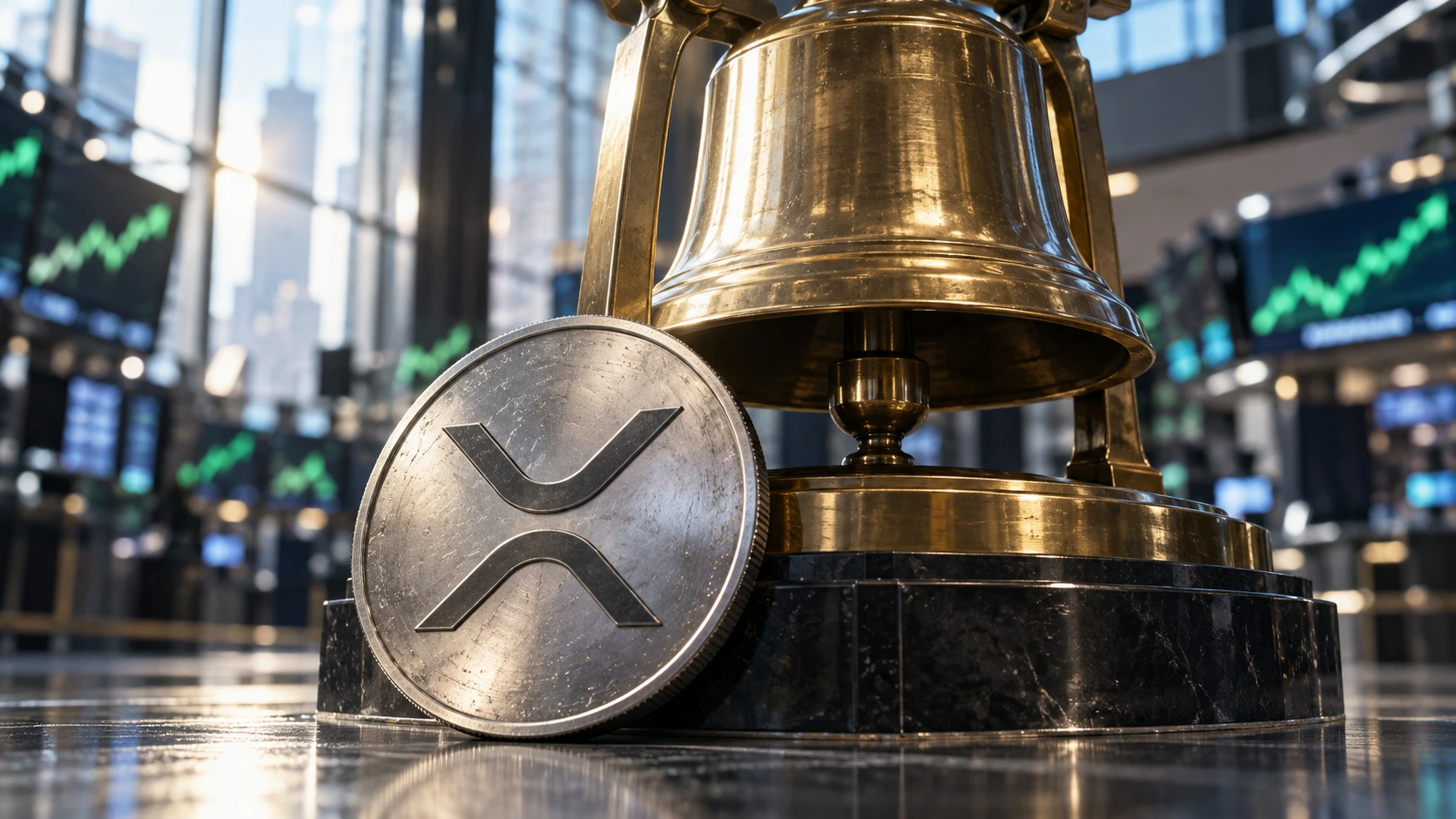
    Evernorth Holdings (XRPN) officially debuted on the Nasdaq on Monday, marking a significant milestone as the first publicly traded company to operate as a pure XRP digital asset treasury. The stock saw a 5% increase on its first day of trading. The company holds approximately 473 million XRP, valued at around $657 million, and has appointed Hugo Jeandesboz, former investment head at Coinbase, as its new Chief Investment Officer (CIO).

    First Pure XRP Treasury Stock Debuts

    The first pure XRP treasury stock has finally arrived. Evernorth Holdings (stock ticker: XRPN) rang the opening bell on the Nasdaq on Monday. Following its debut, the stock experienced an intraday surge of 5%, indicating investor interest in the company that is “all-in on XRP.”

    According to an official announcement from Evernorth, the company holds approximately 473 million XRP. At the current price of $1.39 per XRP, this amounts to a total value of roughly $657 million, positioning it as the largest publicly traded XRP treasury company. These assets were acquired through a SPAC merger transaction on October 2nd, where shareholders of the shell company Armada Acquisition Corp. II voted to combine with Evernorth.

    Evernorth’s operational model is straightforward: it not only secures its XRP in cold wallets but also deploys its treasury into decentralized finance (DeFi) yield strategies to generate additional returns. This dual model of “holding plus earning interest” is a key selling point for institutional investors.

    On the same day as its listing, Evernorth announced the appointment of Hugo Jeandesboz, former Co-Chief Investment Officer at Coinbase Asset Management, as its new Chief Investment Officer (CIO). In his new role, Jeandesboz will be responsible for treasury strategy, capital allocation, liquidity management, and the active management of its XRP holdings.

    Jeandesboz’s addition is more than just a personnel change. Having managed assets for one of the world’s largest crypto ETFs at Coinbase Asset Management, he brings an institutional-grade investment framework. For a newly listed SPAC, this signals to the market that it is not merely a speculative venture.

    XRP’s Market Position and Treasury Stock Model

    Evernorth’s listing is not an isolated event. XRP has emerged from the SEC lawsuit over the past two years, solidifying its market position. It currently ranks as the fifth-largest cryptocurrency by market capitalization, with $87.8 billion, and boasts a 24-hour trading volume of $1.48 billion. The treasury stock model is now following a path similar to the success of Bitcoin ETFs, allowing traditional investors to gain indirect exposure to XRP through the stock market without needing to open cryptocurrency exchange accounts.

    In comparison, Bitcoin treasury company MicroStrategy has accumulated over 600,000 BTC, with a market capitalization exceeding $40 billion. While Evernorth’s $657 million scale is smaller, its positioning as the “first pure XRP” entity grants it market scarcity. For investors looking to bet on XRP without engaging with exchanges, XRPN presents a clean avenue.

    SPACs have not always had a positive reputation in the crypto space, with many crypto-related SPACs performing poorly or trading below their initial offering price after listing. Evernorth’s 5% gain on its first day can be seen as a favorable market reception. However, the true test will come in the following months, with scrutiny on its holding reports, DeFi yield performance, and the correlation between XRP price fluctuations and its stock price.

    Another critical factor will be how Jeandesboz’s “active management” is implemented. If it remains limited to earning interest through DeFi deposits, the yield potential may be capped. However, if Evernorth ventures into more complex strategies, such as tokenizing real-world assets (RWAs) or engaging in cross-chain arbitrage, it could evolve into an institutional-grade asset management firm within the XRP ecosystem, rather than just another “coin-holding concept stock.”

  • Bitmine Buys 12,532 ETH, Holdings Near 5% Supply; Tom Lee Calls It Biggest Bull Market Ever

    Bitmine Buys 12,532 ETH, Holdings Near 5% Supply; Tom Lee Calls It Biggest Bull Market Ever

    Bitmine Boosts Ethereum Holdings, Nears 5% of Global Supply

    New York, NY – October 12, 2026 – Bitmine (NYSE: BMNR), a publicly traded company on the New York Stock Exchange, announced on October 12th its latest asset holdings and a chairman’s report, revealing a significant increase in its Ethereum (ETH) reserves. The company acquired an additional 12,532 ETH in the past week, pushing its total holdings to approximately 6.028 million ETH, valued at over $15.3 billion. This substantial accumulation now represents nearly 5% of Ethereum’s total global supply.

    Record-Breaking Accumulation Strategy

    Bitmine, recognized as the world’s largest corporate holder of Ethereum, released its weekly holdings transparency report on October 12th. On-chain and official data confirm that Bitmine purchased 12,532 ETH within the last seven days. This consistent acquisition strategy, initiated at the end of June 2025, marks the most continuous record of asset purchases by a publicly listed company on a weekly basis globally.

    As of October 12, 2026, Bitmine’s total digital assets and “Moonshots” portfolio are valued at approximately $16.2 billion, solidifying its position as the leading institutional holder of Ethereum reserves worldwide.

    A social media post from Bitmine on October 12, 2026, detailed the holdings: “$16.2 billion in total crypto + ‘moonshots’: – 6,028,946 ETH at $2,544 per ETH (per @coinbase ) – 214 Bitcoin (BTC) – $180 million stake in Beast Industries @MrBeast – $85 million stake in Eightco Holdings…”

    Detailed Asset Breakdown

    According to Bitmine’s comprehensive list of holdings, the company currently possesses:

    • Ethereum (ETH): 6,028,946 tokens
    • Bitcoin (BTC): 214 coins
    • Beast Industries: $180 million stake
    • Eightco Holdings: $85 million stake

    Strategic Growth and Staking Operations

    Tom Lee, Chairman of Bitmine’s Board and founder of Fundstrat, highlighted the company’s rapid expansion over the past 15 months. This period saw Bitmine’s listing on the NYSE and inclusion in the Russell 1000 index. Furthermore, through the establishment of its MAVAN staking service, Bitmine has become the world’s largest single ETH staking operator and has cultivated a strong partnership with Ethereum Foundation 2.0.

    Beyond accumulating spot assets, Bitmine generates substantial passive income by operating Ethereum validator nodes. As of October 11th, the company has staked 5,067,309 ETH, representing approximately 84% of its total holdings and valued at roughly $12.9 billion. This makes Bitmine the single largest entity globally in terms of staked ETH.

    At the current 7-day annualized yield of 2.61%, its existing staked assets are projected to generate approximately $336 million in staking rewards annually. If the company achieves 100% staking of its ETH holdings, the annualized staking income is estimated to reach around $400 million, providing a robust and stable cash flow.

    Preferred Stock Performance and Market Confidence

    The company’s 9.5% perpetual preferred stock ($BMNP), issued in June of this year at $80 per share, has recently seen its closing price rise to $99.53, an increase of approximately 24%. This performance significantly outpaces the 8% decline in long-term U.S. Treasury bonds (TLT) over the same period. Tom Lee noted that the $BMNP’s yield of approximately 9.56% is lower than comparable Bitcoin credit securities ($STRC), indicating strong market confidence in Ethereum staking yields and asset stability.

    Optimistic Outlook for Crypto Market

    In a concurrent report titled “Crypto Bull Underway — This Cycle Likely the Largest,” Tom Lee expressed an extremely optimistic outlook for the cryptocurrency market. He identified four key drivers fueling the current bull cycle: asset tokenization, large-scale wealth transfer, the absorption of market supply by Digital Asset Treasuries (DATs), and the role of cryptocurrencies as a settlement backbone for the downstream AI industry.

    Regarding wealth transfer, Lee cited data indicating that between 2026 and 2028, an estimated $1.5 to $2.0 trillion in global wealth will transition to younger generations. Given the younger demographic’s higher acceptance of cryptocurrencies and risk assets, this wealth effect is expected to be more pronounced than in the 2019-2021 cycle. Concurrently, Digital Asset Treasuries like Bitmine are continuously locking up significant market liquidity, laying a solid foundation for potential price surges.

  • Former CFTC Official Predicts Tokenized Stocks on Major Exchanges Within Two Years, Cites Broad Crypto Jurisdiction

    Former CFTC Official Predicts Tokenized Stocks on Major Exchanges Within Two Years, Cites Broad Crypto Jurisdiction

    Major U.S. stock exchanges like the NYSE and Nasdaq could see the listing of “true” tokenized stocks within the next two years, according to predictions by Caroline Pham, former Acting Chair of the Commodity Futures Trading Commission (CFTC) and current General Counsel and Chief Administrative Officer at MoonPay. Pham also asserted that the existing Commodity Exchange Act grants the CFTC broad jurisdiction over most crypto assets.

    Speaking at the Token2049 Singapore forum, Pham elaborated on the regulatory reach of the CFTC, stating that the Commodity Exchange Act’s definition of “commodity” is extensive, theoretically encompassing a wide array of digital assets including Bitcoin, Ethereum, stablecoins, and even AI computing resources. She suggested that the CFTC possesses sufficient existing regulatory frameworks to address new types of commodities without necessarily requiring new legislation from Congress. This perspective aligns with the CFTC’s past actions, such as the CFTC Crypto Sprint, which allowed registered exchanges to conduct crypto spot trading.

    Pham distinguished between “true” tokenized stocks, which would carry voting rights and shareholder governance, and synthetic tokens that merely track price movements. Beyond equities, Pham also weighed in on the future of tokenized deposits and stablecoins in wholesale markets. She predicted that tokenized deposits will become more competitive than stablecoins in this sector, emphasizing their necessity for current banking net settlement processes. While acknowledging stablecoins’ utility in scenarios involving unknown counterparties or the elimination of settlement risk, Pham indicated that wholesale market competition would likely involve both types of instruments serving different functions.

    Regarding Non-Fungible Tokens (NFTs), Pham views them primarily as customer engagement tools, drawing parallels to loyalty points or airline miles. She anticipates a potential second wave of NFT adoption following greater regulatory clarity, suggesting a shift towards consumer-facing applications rather than purely speculative or security-like uses.

    Pham’s statements come at a time when traditional finance entities are exploring integration with blockchain technology, citing collaborations between entities like Nasdaq and Payward, and ICE (parent company of the NYSE) and OKX. However, uncertainties remain regarding the precise scope of the CFTC’s jurisdiction over all specific crypto assets, the exact implementation of “true” tokenized stocks, and the future competitive balance between tokenized deposits and stablecoins. The path forward for NFTs also hinges on regulatory clarity. Pham’s current role at MoonPay and her previous leadership at the CFTC provide a unique vantage point on the intersection of digital assets and regulatory frameworks. The CFTC, under Chair Michael Selig, has also been active in proposing regulations such as Regulation CAM and Regulation CTX, aimed at establishing a federal framework for crypto leverage trading.

    Why This Matters

    The materials describe a narrow update: Caroline Pham, former Acting Chair of the CFTC and current General Counsel and Chief Administrative Officer at MoonPay, asserted at the Token2049 Singapore forum that the Commodity Exchange Act provides the CFTC with extensive regulatory authority over nearly all crypto assets, excluding only onion and movie box office receipts. The exact scope and application of CFTC’s jurisdiction over all specific crypto assets.

    Broader Context

    Source materials place the factual news in this context: Caroline Pham’s statements were made during an interview with The Block at the Token2049 Singapore forum.

  • DeFi Development Corp. Boosts Solana Treasury with 22,070 SOL

    DeFi Development Corp. Boosts Solana Treasury with 22,070 SOL

    DeFi Development Corp. Continues Aggressive SOL Accumulation

    DeFi Development Corp. has once again expanded its holdings of the cryptocurrency SOL, acquiring an additional 22,070 tokens valued at approximately $2.43 million. This latest purchase further bolsters a treasury that has become the company’s central focus.

    Treasury Growth Fuels Mission

    The recent acquisition pushes the total value of DeFi Development Corp.’s SOL holdings to an estimated $284.9 million. For a company that has fundamentally reshaped its business model around a single digital asset, this aggressive accumulation strategy signifies more than just an investment; it represents a core mission.

    This latest purchase follows a consistent pattern of acquisition. In the preceding week, the company added 26,203 SOL, which at the time, brought its total holdings to roughly $284.9 million.

    The broader trajectory of the company’s treasury is particularly noteworthy. As of early October 2026, DeFi Development Corp.’s treasury held approximately 2.564 million SOL and SOL equivalents, with a valuation around $302 million.

    Since resuming active purchasing in late August 2026, the company has increased its SOL position by over 226,000 tokens and equivalents. This growth is attributed to two primary streams: direct market purchases and rewards generated from staking its holdings.

    In-House Staking Operations

    DeFi Development Corp. operates its own Solana validators. These validators are crucial for processing transactions and securing the Solana network, earning rewards for their services. By managing its own validators, the company retains a larger portion of these rewards, avoiding the fees associated with third-party services.

    Funding Future Accumulation

    To facilitate its ongoing SOL accumulation strategy without diluting its common stock, DeFi Development Corp. has established a variable rate Series C Perpetual Preferred Stock program, known as CHAD. This program, with a potential value of up to $300 million, is described by the company as an “at-the-market” initiative designed to fund further token acquisition.

    Chief Executive Joseph Onorati has been transparent with investors about the company’s strategy, characterizing the treasury model as providing “leveraged exposure to Solana.”

    Strategic Pivot to SOL Treasury

    DeFi Development Corp. did not originally begin as a Solana-focused entity. In April 2025, the company underwent a significant business pivot, reorienting its operations to prioritize the accumulation of SOL as its primary treasury asset.

    Since this strategic shift, the company has positioned itself as a conduit for public market investors seeking exposure to Solana. Through its stock ticker, DFDV, investors can gain exposure to the cryptocurrency without directly engaging with crypto exchanges or digital wallets. This unique positioning has established DeFi Development Corp. as one of the leading companies dedicated to building a substantial SOL treasury.

    Equity-Wrapped Crypto Exposure

    For investors, DeFi Development Corp. offers a distinct product: exposure to SOL encapsulated within an equity structure. This offering appeals to both institutional and individual investors who may be unable or unwilling to hold cryptocurrency tokens directly, whether due to regulatory mandates, custody concerns, or a preference for traditional brokerage accounts.

    Key Risks and Considerations

    Several factors warrant close observation. The success of the CHAD program in raising capital will directly influence the pace of the company’s continued SOL purchases. Furthermore, a sustained decline in SOL’s market value would present a significant test for both the treasury’s valuation and investor confidence in the “leveraged exposure” proposition.

    The consistency of the company’s purchasing activity is also a key indicator. The recent weekly acquisitions of 26,203 SOL and 22,070 SOL suggest a deliberate and sustained accumulation strategy rather than sporadic, opportunistic buys.

  • UK AI Safety Testers Regain Pre-Release Access to US Models Following Policy Reversal

    UK AI Safety Testers Regain Pre-Release Access to US Models Following Policy Reversal

    The UK’s AI Security Institute (AISI) has regained the ability to evaluate advanced AI models from major US developers, including OpenAI and Anthropic, before their public release. This restoration of pre-release access follows a reversal by the White House on October 11, 2026, reinstating a voluntary arrangement that had been paused just weeks earlier.

    Policy Shifts and Their Impact

    The pause, initiated by a White House directive in September 2026, required US developers to withhold new models from AISI until US reviews were completed. This sequencing rule, which granted American officials a first look at sensitive AI capabilities, had tangible consequences. Notably, Anthropic restricted the release of its Claude Mythos 5.1 model to US organizations, adhering to the White House request.

    The October 11 reversal effectively unwinds this restriction, allowing US developers to once again share pre-release models with AISI under the voluntary framework that predated the September directive. This means British testers can examine models for safety risks and potential misuse prior to their public launch.

    UK’s AI Safety Ambitions

    This development did not occur in isolation. UK AI Minister Kanishka Narayan actively advocated for British evaluators to regain access. His case reportedly emphasized the established trust and early access that underpinned UK relationships with developers like OpenAI, arguing that the pause undercut these foundations.

    The AISI, established following the AI Safety Summit at Bletchley Park in November 2023, focuses on evaluating advanced AI systems for cybersecurity and biological threat risks, feeding its findings into UK AI governance policy. The UK is also considering proposals for mandatory incident reporting, which could introduce a compulsory layer to current voluntary testing arrangements.

    Developer and Geopolitical Considerations

    For AI developers, the policy reversal alleviates a potential logistical challenge. Anthropic’s decision regarding Claude Mythos 5.1 illustrated how government directives can influence product availability. A return to the previous arrangement reduces the likelihood of fragmented, country-specific product launches.

    Washington’s recent focus has been on domestic security, prioritizing US review of sensitive capabilities. London, meanwhile, aims to solidify its position as an independent and trusted evaluator for companies and governments.

    Navigating Conditional Cooperation

    However, the voluntary nature of the access arrangement means it remains subject to developer goodwill and potential future shifts in White House policy. This situation highlights the conditional nature of international AI safety cooperation, which is susceptible to policy shifts and relies on voluntary agreements.

    While the UK’s regained access is a positive step, it underscores the ongoing need for more stable frameworks for AI safety evaluation. The UK’s consideration of mandatory incident reporting, if adopted, could provide a more consistent channel for regulators, independent of developer cooperation or immediate White House approval.

    Why This Matters

    The materials describe a narrow update: The UK’s AI Security Institute (AISI) can again evaluate advanced AI models from US developers like OpenAI and Anthropic before their public release. Whether the voluntary pre-release access arrangement will continue in the future, as it depends on developer goodwill and White House preferences.

    Broader Context

    Source materials place the factual news in this context: The UK’s AI Security Institute (AISI) can once again evaluate advanced models from major US developers, including OpenAI and Anthropic, before those models reach the public.

  • South Korean Bank Explores Bitcoin as Collateral

    South Korean Bank Explores Bitcoin as Collateral

    Bitcoin is currently trading at $83,500, having recovered from a dip into the $80,300–$80,400 range. While this rebound has stabilized the market, it has not fully offset a roughly 3% decline over the past week. The question remains whether a new application for Bitcoin by a bank could alter this near-term outlook.

    South Korean Bank Introduces Bitcoin-Backed Loans

    Jeonbuk Bank, a subsidiary of JB Financial Group, has launched a new service offering won-denominated loans to corporate clients, using Bitcoin as collateral. The initial phase of this program is limited to Bitcoin, with a specialized custodian managing the collateral. The bank will issue loans in South Korean won and retains the right to pursue recovery through court-supervised legal processes.

    This development marks a significant institutional move, with Jeonbuk Bank becoming the first in South Korea to offer such a service. The bank has indicated that the expansion of this offering will depend on client demand and evolving regulatory frameworks.

    Loan terms, including loan-to-value ratios and interest rates, have not yet been disclosed, making it difficult to gauge the potential scale of demand. Local reports on the launch have provided the primary details of the initiative.

    Market Analysis and Outlook

    The introduction of Bitcoin-backed loans is being viewed as a meaningful signal of institutional adoption. However, with Bitcoin’s price still trading below a key swing zone and facing potential macro economic shifts, the immediate focus is on whether current support levels can hold.

    Bitcoin has managed to reclaim the $80,000 mark, but the broader market structure suggests a volatile rebound within a larger pullback. The immediate support zone is identified as $79,600–$80,400. Holding this level would support the ongoing recovery narrative. A sustained move above the $83,000–$83,500 swing area would further improve the short-term technical outlook.

    Currently, Bitcoin is trading below the $84,000 resistance range. For this level to be significant, it needs to act as support rather than just a temporary breach. Daily momentum indicators have weakened, and the weekly loss of approximately 3% continues to exert downward pressure.

    Upcoming United States Consumer Price Index (CPI) data could influence interest rate expectations and overall risk appetite, with direct implications for leveraged positions in the cryptocurrency market. In a broader context, the demand and outflows from Bitcoin Exchange-Traded Funds (ETFs) will provide insights into whether institutional participation is bolstering or hindering the current recovery.

    At present, the technical chart presents a conditional setup rather than a confirmed breakout. Investors are advised to monitor key price levels and avoid interpreting the bank’s announcement as an immediate price floor.

    While Jeonbuk Bank’s initiative supports the argument that Bitcoin is finding increasing utility within traditional finance, access through collateralized lending does not automatically translate to immediate spot market demand. Furthermore, a decline in Bitcoin’s price back towards support levels could introduce liquidation risks, adding another layer to the institutional narrative. This inherent tension is a notable factor in the current market.

    Bitcoin Hyper Layer 2 Solution

    For traders looking beyond the immediate price action of Bitcoin, the Bitcoin Layer 2 solution, Bitcoin Hyper ($HYPER), is gaining attention. This project integrates the Solana Virtual Machine (SVM), positioning itself as the first Bitcoin Layer 2 to offer fast and scalable smart contract capabilities while maintaining Bitcoin’s core security and trust principles.

    Bitcoin Hyper’s stated features include low-latency transaction processing and a decentralized canonical bridge for Bitcoin transfers. The token is currently priced at $0.0136875, and its presale has raised nearly $33.2 million. A high Annual Percentage Yield (APY) of 30% is available through staking, exclusively for participants in the funding stage. Investors are encouraged to research Bitcoin Hyper and its technical aspects before the presale concludes.