Category: Uncategorized

  • 1inch Launches Aqua Shared Liquidity Layer on 13 EVM Chains

    1inch Launches Aqua Shared Liquidity Layer on 13 EVM Chains

    1inch has launched Aqua, its shared liquidity layer, making it available to all users across 13 EVM chains after an eight-month developer-only phase. The protocol aims to provide risk-controlled execution with full self-custody by functioning as a registry rather than a traditional liquidity pool.

    Aqua went live on Tuesday, accessible on chains including Ethereum, Arbitrum, Base, BNB Chain, and Robinhood Chain. In this registry model, liquidity providers approve token balances and create positions that draw on these approved amounts without depositing tokens into a smart contract. Swaps are executed atomically, with the protocol pulling tokens and returning proceeds and fees when a swap matches a position’s terms.

    According to 1inch, Aqua is positioned as the first risk-controlled liquidity venue, signaling a move toward what the company describes as ‘risk-controlled and regulated DeFi.’ The protocol enforces on-chain verification of counterparties at the time of a swap. 1inch defines a ‘verified counterparty’ as a market maker or arbitrage bot that has undergone verification.

    Liquidity providers on Aqua set approvals per token and per chain, which can be revoked. The system caps exposure by a provider’s actual holdings, not by the combined size of their positions. For instance, a $100,000 balance could support multiple positions, but a swap can only execute against available tokens in the wallet, as nothing is borrowed.

    To incentivize participation, the 1inch Foundation has committed 10 million 1INCH tokens for provider rewards, and 500,000 USDC from the 1inch DAO will be distributed through Merkl. Aqua has undergone eight independent audits by firms including OpenZeppelin, Nethermind, Hexens, and Bailsec, according to 1inch.

    1inch has cautioned that Aqua is built for ‘experienced users,’ noting that fees are not guaranteed, prices can move against a position, and providers inherently carry market and smart contract risk. The exact launch date of Tuesday was not specified, and the full list of 13 EVM chains was not provided.

    1inch claims Aqua has the potential to ‘transform how capital and yield strategies operate in DeFi,’ aiming to provide deeper liquidity across the industry and reduce fragmentation. The protocol’s design emphasizes self-custody and risk control to address challenges in decentralized finance liquidity provision.

    Why This Matters

    The materials describe a narrow update: 1inch has made its shared liquidity layer, Aqua, available to all users after an eight-month developer-only phase. The exact date of the Tuesday launch is not specified.

    Broader Context

    Source materials place the factual news in this context: 1inch has opened Aqua, its sharedDeFiliquidity layer, to all users, eight months after releasing it to developers only.

  • GIGADEVICEUSDT Perpetual Contract Launches with 25x Leverage

    GIGADEVICEUSDT Perpetual Contract Launches with 25x Leverage

    Bybit Launches GIGADEVICEUSDT Perpetual Contract

    Cryptocurrency exchange Bybit has announced the listing of the GIGADEVICEUSDT Perpetual Contract, with trading now live. The new contract offers users leverage of up to 25x.

    The GIGADEVICEUSDT Perpetual Contract is also accessible through Bybit’s Futures bots, including Futures Grid, Futures Martingale, and Futures Combo.

    Contract Details:

    • Contract Type: USDT Perpetual Contract
    • Underlying Asset: GigaDevice (GIGADEVICE)
    • Settlement Asset: USDT
    • Tick Size: 0.01
    • Maximum Leverage: 25x
    • Capped Funding Rate: 2%
    • Funding Fee Settlement Interval: Every 8 hours
    • Trading Hours: 24/7

    Official Information:

  • Cartoonist Sues AI Meme Generator Over Copyrighted Comic Strip Template

    Cartoonist Sues AI Meme Generator Over Copyrighted Comic Strip Template

    A Filipino cartoonist has filed a lawsuit against an AI-powered advertising generator, alleging the company sold access to his copyrighted comic strip as a template for paying subscribers. The complaint, lodged by Elmer Saflor, known online as ‘Superelmer,’ against Memes.ai (Memes Apps), marks a new front in legal battles over AI and creative content, distinct from disputes focused on AI training data.

    Saflor’s lawsuit, filed on July 1, 2024, in the Central District of California, claims that Memes.ai offered his comic strip, ‘Running Away Balloon,’ to its subscribers as an advertising template. The original comic, which depicts a stick figure reaching for ‘opportunities’ while being held back by ‘shyness,’ was first posted to Facebook in April 2017. Saflor registered the copyright for the work in 2024.

    Memes.ai operates as an AI ad generator with subscription plans ranging from $40 to $199 per month. The company markets its services to brands, agencies, and marketers, with its website stating that generated ads are for customer business use, including paid advertising. According to the complaint, Saflor alleges that Memes.ai made his artwork available in its template library, searchable by subscribers.

    A New Legal Frontier: Beyond AI Training Data

    Unlike recent high-profile lawsuits against AI firms such as Stability AI and Midjourney, which have primarily centered on whether ingesting works to train AI models constitutes fair use, Saflor’s complaint focuses on ordinary reproduction and public display infringement. The lawsuit reportedly leans on the company’s own marketing materials to argue that the infringement was willful. Saflor is seeking a permanent injunction to stop the alleged use, an accounting of profits, disgorgement of those profits, and statutory damages.

    Under the Copyright Act, statutory damages for willful infringement can be capped at $150,000 per work. Saflor’s broader goal, according to reports, is to use the case to push for discovery and raise questions about how AI-powered platforms utilize creators’ work for commercial purposes.

    Potential Implications and Expert Views

    Internet law scholar Eric Goldman has commented on the potential reach of a ruling against Memes.ai, suggesting that targeting the supplier rather than the advertiser could create significant legal complexities. The case also comes in the wake of a 2024 federal appeals court ruling that found a political campaign infringed on the ‘Success Kid’ meme, indicating a shifting legal landscape for meme usage in commercial and political contexts.

    Saflor’s filing does not address the issue of AI model training fair use. Instead, it targets the direct commercial offering of his specific artwork as a template. The outcome of this lawsuit could have implications for other AI meme generators and how they commercialize creative assets, potentially raising broader questions about creator rights and platform responsibilities in the evolving AI landscape. The uncertainties surrounding the case include whether Memes.ai’s use constitutes ordinary infringement, the extent of its impact on other meme generators, and the final resolution of Saflor’s claims for damages and broader legal questions.

    Broader Context

    Source materials place the factual news in this context: The lawsuit is filed against Memes.ai, an AI ad generator.

  • CZ Binance Proposes ASEAN Crypto License Passporting System to Reduce Regulatory Hurdles

    CZ Binance Proposes ASEAN Crypto License Passporting System to Reduce Regulatory Hurdles

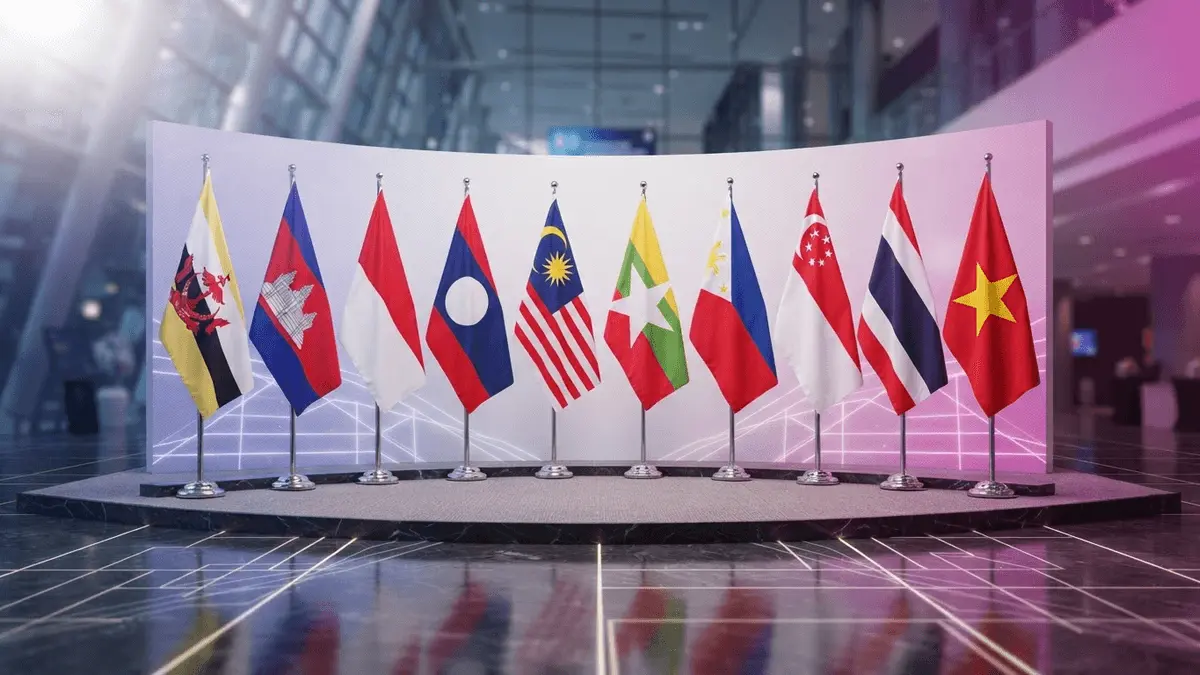
    Changpeng Zhao (CZ Binance) has publicly backed a proposal for a crypto license passporting system across ASEAN member states, suggesting that companies already licensed in one country should face a streamlined approval process to operate in others. The proposal, put forth at the ASEAN Tech Summit Manila 2026 on July 28, aims to reduce compliance overhead for crypto and stablecoin service providers operating within Southeast Asia’s fragmented regulatory landscape.

    According to Changpeng Zhao, the current system requires firms seeking a regional presence to undergo parallel licensing processes across multiple jurisdictions simultaneously. This, he argued, scales compliance costs in a way that disadvantages smaller, well-regulated operators relative to larger incumbents. Zhao endorsed an idea of license portability across the region, stating that cross-border regulatory coordination is primarily a political issue rather than a technical one.

    Southeast Asia currently lacks a bloc-wide passport for crypto companies, with each ASEAN member state maintaining its own digital asset licensing regime, including separate anti-money laundering requirements, conduct rules, and capital standards. Zhao argued that allowing more licensed platforms to compete regionally could improve services and reduce costs for consumers.

    A Model for Harmonization

    The regulatory framework proposed by Zhao mirrors the European Union’s Markets in Crypto-Assets Regulation (MiCA). Under MiCA, a crypto-asset service provider authorized in one EU member state can passport its services across all 27 member states by notifying its home regulator, without requiring a fresh application. Zhao referenced this EU model as a functional template for what ASEAN could build.

    While the comparison to MiCA is structurally apt, political dynamics between the EU and ASEAN differ. The implementation of MiCA is ongoing, with the European Securities and Markets Authority (ESMA) involved in its timeline. Brad Garlinghouse, CEO of Ripple, has made a parallel case in the U.S. context, framing regulatory incoherence as a drag on institutional crypto adoption, a problem of legislative will rather than technical incapacity.

    Regional Precedents

    There are regional precedents for streamlined processes within ASEAN. The ASEAN Capital Markets Forum’s (ACMF) Collective Investment Schemes Framework, operationalized in Malaysia, Singapore, and Thailand in 2014 and joined by the Philippines in 2021, allows funds authorized in a home jurisdiction to be offered in participating host markets through a streamlined authorization process. The ACMF Pass also extends a similar fast-track model to investment advisers.

    These existing frameworks are narrower than the crypto-specific passporting proposed by Zhao and Lito Villanueva, the FinTech Alliance PH founding chair with whom Zhao spoke. They remain subject to host-market requirements, but they establish that ASEAN regulators have accepted the logic of mutual recognition in principle. However, crypto-specific passporting would require agreement on supervision standards and consumer protection floors that do not yet exist at the bloc level, though the institutional machinery for building them is present.

    Path Forward and Uncertainties

    Regulators would retain the right to review applicants entering their jurisdiction under Zhao’s proposal, but the threshold for entry would be fundamentally lower than starting from scratch in every market. The success of such a system hinges on how nine politically distinct ASEAN regulators may agree on mutual recognition standards and the specific supervision standards and consumer protection floors that would be established.

    For crypto exchanges like Binance, the remarks in Manila align with a broader pattern of positioning Asia as a primary licensing growth market. Ripple’s multi-jurisdictional expansion strategy illustrates the operational reality CZ is addressing: operating at scale across Southeast Asia requires either accepting full licensing overhead in every market or pushing regulators toward a lighter mutual-recognition model. The adoption of the proposed streamlined approval process by ASEAN member states remains uncertain.

    Why This Matters

    The materials describe a narrow update: At the ASEAN Tech Summit Manila 2026, Changpeng Zhao (CZ Binance) publicly supported a crypto license passporting system for ASEAN. How nine politically distinct ASEAN regulators may agree on mutual recognition standards.

    Broader Context

    Source materials place the factual news in this context: Changpeng Zhao (CZ Binance) publicly backed a crypto license passporting system across ASEAN at the ASEAN Tech Summit Manila 2026 on July 28, arguing that firms already licensed in one member state should face only a streamlined approval process, not a full re-application, to operate across the rest of the bloc.

  • Portfolio Margin Collateral Ratio and USDⓈ-M Perpetual Leverage Tiers Update

    Portfolio Margin Collateral Ratio and USDⓈ-M Perpetual Leverage Tiers Update

    Binance to Adjust Portfolio Margin and Futures Leverage Parameters

    Binance announced upcoming adjustments to its Portfolio Margin Pro and USDⓈ-M Perpetual Contracts, set to take effect on July 31, 2026. The changes aim to refine collateral ratios and leverage tiers for various assets.

    Portfolio Margin Updates

    Effective July 31, 2026, at 06:00 (UTC), Binance will update the collateral ratio and tiered collateral ratio for specific assets under Portfolio Margin and Portfolio Margin Pro. These updates are expected to be completed within approximately 30 minutes.

    The following assets under Portfolio Margin will see adjusted collateral ratios:

    • STX: Collateral Ratio changes from 30% to 10%.
    • SANTOS: Collateral Ratio changes from 30% to 10%.
    • EURI: Collateral Ratio changes from 20% to 30%.

    For Portfolio Margin Pro, the following tiered collateral ratios will be adjusted:

    STX

    | Tier | Floor (USD) | Cap (USD) | Collateral Ratio (Before) | Tier | Floor (USD) | Cap (USD) | Collateral Ratio (After) |
    | :— | :———- | :———- | :———————— | :— | :———- | :———- | :———————– |
    | 9 | 0 | 100,000 | 100% | 10 | 0 | 50,000 | 100% |
    | | 100,000 | 250,000 | 80% | | 50,000 | 100,000 | 80% |
    | | 250,000 | 500,000 | 50% | | 100,000 | 200,000 | 50% |
    | | 500,000 | 99,999,999,999 | 10% | | 200,000 | 400,000 | 20% |
    | | | | | | 400,000 | 99,999,999,999 | 10% |

    WBTC

    | Tier | Floor (USD) | Cap (USD) | Collateral Ratio (Before) | Tier | Floor (USD) | Cap (USD) | Collateral Ratio (After) |
    | :— | :———- | :———- | :———————— | :— | :———- | :———- | :———————– |
    | 10 | 0 | 50,000 | 100% | 8 | 0 | 200,000 | 100% |
    | | 50,000 | 100,000 | 80% | | 200,000 | 400,000 | 80% |
    | | 100,000 | 200,000 | 50% | | 400,000 | 800,000 | 70% |
    | | 200,000 | 400,000 | 20% | | 800,000 | 1,000,000 | 40% |
    | | 400,000 | 99,999,999,999 | 10% | | 1,000,000 | 99,999,999,999 | 20% |

    SXT, RUNE, IMX, COMP, BERA, SKL, ENJ, BIO

    | Tier | Floor (USD) | Cap (USD) | Collateral Ratio (Before) | Tier | Floor (USD) | Cap (USD) | Collateral Ratio (After) |
    | :— | :———- | :———- | :———————— | :— | :———- | :———- | :———————– |
    | 10 | 0 | 50,000 | 100% | 9 | 0 | 100,000 | 100% |
    | | 50,000 | 100,000 | 80% | | 100,000 | 250,000 | 80% |
    | | 100,000 | 200,000 | 50% | | 200,000 | 400,000 | 20% |
    | | 200,000 | 400,000 | 20% | | 400,000 | 99,999,999,999 | 10% |
    | | 400,000 | 99,999,999,999 | 10% | | | | N/A |

    Binance Futures Leverage and Margin Tier Adjustments

    In addition to Portfolio Margin changes, Binance Futures will update the leverage and margin tiers for several USDⓈ-M Perpetual Contracts. These updates are scheduled for July 31, 2026, at 06:30 (UTC) and are expected to be completed within approximately one hour.

    Important Note: Existing positions opened before these updates will be affected. Futures running grid strategies may expire due to these changes, and users are advised to adjust their positions accordingly.

    STXUSDT (USDⓈ-M Perpetual Contract)

    | Leverage Before Change | Position Before Change (Notional Value in USDT) | Maintenance Margin Rate Before Change | Leverage After Change | Position After Change (Notional Value in USDT) | Maintenance Margin Rate After Change |
    | :——————— | :———————————————- | :———————————- | :——————– | :——————————————— | :———————————– |
    | 51 – 75x | 0 < Position ≤ 5,000 | 1.00% | 51 – 75x | 0 < Position ≤ 5,000 | 1.00% |
    | 26 – 50x | 5,000 < Position ≤ 10,000 | 1.50% | 26 – 50x | 5,000 < Position ≤ 10,000 | 1.50% |
    | 21 – 25x | 10,000 < Position ≤ 50,000 | 2.00% | 21 – 25x | 10,000 < Position ≤ 25,000 | 2.00% |
    | 16 – 20x | 50,000 < Position ≤ 100,000 | 2.50% | 11 – 20x | 25,000 < Position ≤ 50,000 | 2.50% |
    | 11 – 15x | 100,000 < Position ≤ 175,000 | 3.33% | NA | | |
    | 6 – 10x | 175,000 < Position ≤ 250,000 | 5.00% | 6 – 10x | 50,000 < Position ≤ 125,000 | 5.00% |
    | 5x | 250,000 < Position ≤ 750,000 | 10.00% | 5x | 125,000 < Position ≤ 250,000 | 10.00% |
    | 4x | 750,000 < Position ≤ 1,500,000 | 12.50% | 4x | 250,000 < Position ≤ 500,000 | 12.50% |
    | 3x | 1,500,000 < Position ≤ 4,500,000 | 16.67% | 3x | 500,000 < Position ≤ 1,000,000 | 16.67% |
    | 2x | 4,500,000 < Position ≤ 7,500,000 | 25.00% | 2x | 1,000,000 < Position ≤ 7,500,000 | 25.00% |
    | 1x | 7,500,000 < Position ≤ 12,000,000 | 50.00% | 1x | 7,500,000 < Position ≤ 12,500,000 | 50.00% |

    CHRUSDT, IDOLUSDT, HIVEUSDT, STEEMUSDT, CTKUSDT, and WAXPUSDT (USDⓈ-M Perpetual Contracts)

    | Leverage Before Change | Position Before Change (Notional Value in USDT) | Maintenance Margin Rate Before Change | Leverage After Change | Position After Change (Notional Value in USDT) | Maintenance Margin Rate After Change |
    | :——————— | :———————————————- | :———————————- | :——————– | :——————————————— | :———————————– |
    | 21 – 50x | 0 < Position ≤ 5,000 | 1.50% | 21 – 25x | 0 < Position ≤ 5,000 | 2.00% |
    | 11 – 20x | 5,000 < Position ≤ 10,000 | 2.50% | 11 – 20x | 5,000 < Position ≤ 10,000 | 2.50% |
    | 6 – 10x | 10,000 < Position ≤ 20,000 | 5.00% | 6 – 10x | 10,000 < Position ≤ 20,000 | 5.00% |
    | 5x | 20,000 < Position ≤ 50,000 | 10.00% | 5x | 20,000 < Position ≤ 50,000 | 10.00% |
    | 4x | 50,000 < Position ≤ 250,000 | 12.50% | 4x | 50,000 < Position ≤ 100,000 | 12.50% |
    | 3x | 250,000 < Position ≤ 500,000 | 16.67% | 3x | 100,000 < Position ≤ 250,000 | 16.67% |
    | 2x | 500,000 < Position ≤ 7,500,000 | 25.00% | 2x | 250,000 < Position ≤ 2,500,000 | 25.00% |
    | 1x | 7,500,000 < Position ≤ 12,500,000 | 50.00% | 1x | 2,500,000 < Position ≤ 5,000,000 | 50.00% |

    ICXUSDT, CETUSUSDT, BREVUSDT, METISUSDT, CTSIUSDT, ILVUSDT, and COTIUSDT (USDⓈ-M Perpetual Contracts)

    | Leverage Before Change | Position Before Change (Notional Value in USDT) | Maintenance Margin Rate Before Change | Leverage After Change | Position After Change (Notional Value in USDT) | Maintenance Margin Rate After Change |
    | :——————— | :———————————————- | :———————————- | :——————– | :——————————————— | :———————————– |
    | 26 – 50x | 0 < Position ≤ 5,000 | 1.50% | 21 – 50x | 0 < Position ≤ 5,000 | 1.50% |
    | 21 – 25x | 5,000 < Position ≤ 10,000 | 2.00% | NA | | |
    | 11 – 20x | 10,000 < Position ≤ 25,000 | 2.50% | 11 – 20x | 5,000 < Position ≤ 10,000 | 2.50% |
    | 6 – 10x | 25,000 < Position ≤ 62,500 | 5.00% | 6 – 10x | 10,000 < Position ≤ 20,000 | 5.00% |
    | 5x | 62,500 < Position ≤ 125,000 | 10.00% | 5x | 20,000 < Position ≤ 50,000 | 10.00% |
    | 4x | 125,000 < Position ≤ 250,000 | 12.50% | 4x | 50,000 < Position ≤ 250,000 | 12.50% |
    | 3x | 250,000 < Position ≤ 500,000 | 16.67% | 3x | 250,000 < Position ≤ 500,000 | 16.67% |
    | 2x | 500,000 < Position ≤ 7,500,000 | 25.00% | 2x | 500,000 < Position ≤ 7,500,000 | 25.00% |
    | 1x | 7,500,000 < Position ≤ 12,500,000 | 50.00% | 1x | 7,500,000 < Position ≤ 12,500,000 | 50.00% |

    MOVEUSDT (USDⓈ-M Perpetual Contract)

    | Leverage Before Change | Position Before Change (Notional Value in USDT) | Maintenance Margin Rate Before Change | Leverage After Change | Position After Change (Notional Value in USDT) | Maintenance Margin Rate After Change |
    | :——————— | :———————————————- | :———————————- | :——————– | :——————————————— | :———————————– |
    | 21 – 50x | 0 < Position ≤ 5,000 | 1.50% | 21 – 25x | 0 < Position ≤ 5,000 | 2.00% |
    | 11 – 20x | 5,000 < Position ≤ 10,000 | 2.50% | 11 – 20x | 5,000 < Position ≤ 10,000 | 2.50% |
    | 6 – 10x | 10,000 < Position ≤ 20,000 | 5.00% | 6 – 10x | 10,000 < Position ≤ 20,000 | 5.00% |
    | 5x | 20,000 < Position ≤ 50,000 | 10.00% | 5x | 20,000 < Position ≤ 50,000 | 10.00% |
    | 4x | 50,000 < Position ≤ 250,000 | 12.50% | 4x | 50,000 < Position ≤ 100,000 | 12.50% |
    | 3x | 250,000 < Position ≤ 500,000 | 16.67% | 3x | 100,000 < Position ≤ 250,000 | 16.67% |
    | 2x | 500,000 < Position ≤ 7,500,000 | 25.00% | 2x | 250,000 < Position ≤ 2,500,000 | 25.00% |
    | 1x | 7,500,000 < Position ≤ 12,500,000 | 50.00% | 1x | 2,500,000 < Position ≤ 5,000,000 | 50.00% |

    STORJUSDT (USDⓈ-M Perpetual Contract)

    | Leverage Before Change | Position Before Change (Notional Value in USDT) | Maintenance Margin Rate Before Change | Leverage After Change | Position After Change (Notional Value in USDT) | Maintenance Margin Rate After Change |
    | :——————— | :———————————————- | :———————————- | :——————– | :——————————————— | :———————————– |
    | 26 – 50x | 0 < Position ≤ 5,000 | 1.50% | NA | | |
    | 21 – 25x | 5,000 < Position ≤ 10,000 | 2.00% | 21 – 25x | 0 < Position ≤ 5,000 | 2.00% |
    | 11 – 20x | 10,000 < Position ≤ 25,000 | 2.50% | 11 – 20x | 5,000 < Position ≤ 10,000 | 2.50% |
    | 6 – 10x | 25,000 < Position ≤ 62,500 | 5.00% | 6 – 10x | 10,000 < Position ≤ 20,000 | 5.00% |
    | 5x | 62,500 < Position ≤ 125,000 | 10.00% | 5x | 20,000 < Position ≤ 50,000 | 10.00% |
    | 4x | 125,000 < Position ≤ 250,000 | 12.50% | 4x | 50,000 < Position ≤ 100,000 | 12.50% |
    | 3x | 250,000 < Position ≤ 500,000 | 16.67% | 3x | 100,000 < Position ≤ 250,000 | 16.67% |
    | 2x | 500,000 < Position ≤ 7,500,000 | 25.00% | 2x | 250,000 < Position ≤ 2,500,000 | 25.00% |
    | 1x | 7,500,000 < Position ≤ 12,500,000 | 50.00% | 1x | 2,500,000 < Position ≤ 5,000,000 | 50.00% |

    BOTUSDT, WENUSDT, SHAZUSDT, and PENGUSDT (USDⓈ-M Perpetual Contracts)

    | Leverage Before Change | Position Before Change (Notional Value in USDT) | Maintenance Margin Rate Before Change | Leverage After Change | Position After Change (Notional Value in USDT) | Maintenance Margin Rate After Change |
    | :——————— | :———————————————- | :———————————- | :——————– | :——————————————— | :———————————– |
    | 21 – 25x | 0 < Position ≤ 250,000 | 2.00% | NA | | |
    | 16 – 20x | 250,000 < Position ≤ 1,000,000 | 2.50% | 11 – 20x | 0 < Position ≤ 200,000 | 2.50% |
    | 11 – 15x | 1,000,000 < Position ≤ 2,000,000 | 3.33% | NA | | |
    | 6 – 10x | 2,000,000 < Position ≤ 5,000,000 | 5.00% | 6 – 10x | 200,000 < Position ≤ 400,000 | 5.00% |
    | 5x | 5,000,000 < Position ≤ 8,000,000 | 10.00% | 5x | 400,000 < Position ≤ 1,000,000 | 10.00% |
    | 4x | 8,000,000 < Position ≤ 15,000,000 | 12.50% | 4x | 1,000,000 < Position ≤ 1,500,000 | 12.50% |
    | 3x | 15,000,000 < Position ≤ 25,000,000 | 16.67% | 3x | 1,500,000 < Position ≤ 5,000,000 | 16.67% |
    | 2x | 25,000,000 < Position ≤ 50,000,000 | 25.00% | 2x | 5,000,000 < Position ≤ 7,500,000 | 25.00% |
    | 1x | 50,000,000 < Position ≤ 200,000,000 | 50.00% | 1x | 7,500,000 < Position ≤ 12,500,000 | 50.00% |

    Users are advised to monitor their Unified Maintenance Margin Ratio (uniMMR) closely, as changes in collateral ratios can impact it and potentially lead to liquidation or losses.


  • Judge Blocks Minnesota Prediction Market Ban

    Judge Blocks Minnesota Prediction Market Ban

    Judge Blocks Minnesota’s Prediction Market Ban

    A federal judge has halted Minnesota’s attempt to criminalize prediction markets, granting a preliminary injunction to Kalshi, Polymarket, and the Commodity Futures Trading Commission (CFTC) just days before the state law was set to take effect. U.S. District Judge Katherine Menendez issued the order Monday, finding that the plaintiffs were likely to prevail on claims of federal preemption and would suffer irreparable harm if the law were enforced.

    The statute, SF 3432, was slated to become law on Saturday. The judge’s 44-page ruling specifically bars enforcement against trading platforms already registered with the CFTC as designated contract markets. The injunction will remain in place pending a final decision on the merits of the case.

    Preemption Hinges on “Swap” Definition

    At the heart of the legal challenge is whether the trades offered on prediction markets qualify as “swaps” under the Commodity Exchange Act (CEA). Judge Menendez determined that contracts related to events with “clear potential economic, financial, or commercial consequences” – such as Senate races, World Cup winners, or the reopening of the Strait of Hormuz – would likely meet this definition. However, she indicated that markets focused on less consequential events, like the winner of “Love Island USA” or mid-match announcer comments, might not.

    This distinction is crucial given the nature of the legal challenge. The CFTC’s lawsuit is a facial challenge, meaning it must demonstrate that the law is invalid in all circumstances. While Judge Menendez acknowledged that the Minnesota statute “may not be preempted in all its applications,” she issued the injunction to maintain the status quo, criticizing both sides for presenting the dispute as an “all-or-nothing proposition.” She suggested that any permanent relief granted could be “much narrower.”

    State Disagrees with Ruling

    Minnesota’s Attorney General, Keith Ellison, stated that the state “respectfully disagree[s]” with the court’s interpretation. In a memorandum, Ellison argued that the prediction market platforms could comply with federal requirements while still restricting their offerings within Minnesota. He expressed concern that the court’s decision “allows predatory gambling apps to proliferate.”

    The CFTC has initiated similar legal actions against other states, including Illinois, Arizona, Connecticut, and Wisconsin. In Minnesota, both the Department of Justice and the CFTC filed their challenges within hours of the bill’s passage, with Kalshi following suit days later.

    The judge’s order arrived just one day before a self-imposed deadline by the CFTC. In a letter dated July 24, the agency informed Judge Menendez that if a ruling or stay was not issued by the close of business Tuesday, it would consider its motion “constructively denied” and seek interim relief from the Eighth Circuit Court of Appeals. Kalshi and Polymarket indicated they would pursue the same course of action.

  • Bitcoin Price Dips to $63,000, Triggering $80 Billion Market Cap Loss

    Bitcoin Price Dips to $63,000, Triggering $80 Billion Market Cap Loss

    The cryptocurrency market experienced a significant downturn, with Bitcoin falling to $63,000 and the total market capitalization decreasing by $80 billion over the past day, as of press time.

    The total market capitalization has fallen to $2.250 trillion from a previous high of $2.330 trillion. Bitcoin’s market cap dropped to $1.720 trillion. The price of Bitcoin reached $63,000, its lowest point in 10 days, contributing to approximately $700 million in liquidations across the market.

    Altcoin Performance

    Several altcoins also saw notable price drops. Ethereum (ETH) fell below $1,900, a daily decline of 4.2%. HYPE decreased by 8% to $55, while BEAT dropped by 25% to $2.74. Other cryptocurrencies, including NEAR and SHIB, experienced daily declines of 10% and 9% respectively, and PI saw a 9% drop.

    Market Context and Volatility

    This recent downturn follows a period of recovery. Last week, Bitcoin rallied from $63,750 to a monthly peak of $67,000 within 36 hours. On Monday, Bitcoin reached $65,600. Initially, the market’s performance on Monday was interpreted as a positive reaction to the de-escalation of Middle Eastern attacks, but this effect proved short-lived.

    As of press time, Bitcoin has slightly recovered to $63,400, though it remains down 3% for the day. Bitcoin’s dominance over altcoins is currently below 57%. Yesterday, Ethereum had reached a two-month peak at $1,980.

    Uncertainties

    Uncertainties remain regarding the duration of the current market downturn and the long-term impact of geopolitical de-escalation on cryptocurrency markets. The precise reasons for the sharp decline and its potential future trajectory are still subjects of observation.

    Why This Matters

    The materials describe a narrow update: Bitcoin experienced a sharp decline, dropping to $63,000, which contributed to a broader market sell-off. The exact duration of the current downturn.

  • BlackRock Endorses CLARITY Act Amidst Programmable Money Revolution Forecast

    BlackRock Endorses CLARITY Act Amidst Programmable Money Revolution Forecast

    Crypto Market Rebounds as Global Adoption Accelerates, US Regulation Looms

    New York, NY – The cryptocurrency market is experiencing a resurgence, driven by increasing adoption outside the United States, according to Tom Lee, chairman of Bitmine. Speaking on CNBC, Lee highlighted that regulatory clarity emerging from Europe, Japan, and Russia is fueling market momentum.

    Lee expressed optimism that similar legislative action in the U.S. would significantly boost the market, transforming it into the “programmable software layer of money.” He elaborated, “Because crypto is turning money into software, a lot of things can turn into money.” This evolution, he suggested, could lead to assets like loyalty points and reputation functioning akin to currency, particularly with the advent of AI agents, a key application for cryptocurrency.

    The sentiment was echoed by Samara Cohen, BlackRock’s Senior Managing Director and Global Head of Market Development. She described the CLARITY Act as an “important step toward establishing a regulatory framework for digital assets that puts investors first.” Cohen believes the bill will “help the United States shape the next era of market structure — supporting innovation while preserving the transparency, resilience and investor protections that keep the US the global leader in capital markets.”

    The CLARITY Act, which garnered strong bipartisan support in the House in July 2025, advanced from the Senate Banking Committee on May 14, 2026. However, recent negotiations have focused on an ethics clause that would prohibit the president and members of Congress from issuing or sponsoring digital assets. A consolidated Senate text, incorporating these ethics provisions, was released on July 22.

    Senate Majority Leader John Thune indicated on July 23 that a vote on the bill is unlikely before the summer recess, with ethics concerns remaining the primary obstacle. With no floor vote currently scheduled, the practical deadline for passage in 2026 is before the Senate’s August recess, around August 7. Failure to pass the bill before then would likely defer action to the post-midterm “lame-duck” session or into 2027.

    “The procedural steps … make finishing before recess extremely difficult,” commented policy relations consultant Anne Kelley. She added, “I know many people are disappointed it won’t clear by early August. That does not mean CLARITY is done for the year.”

    Despite the delays, Lee remained hopeful, noting, “It does sound like a lot of concessions were given, but those who oppose the bill still want to extract something else.” He also pointed to significant backing for the CLARITY Act from major financial institutions, including Goldman Sachs, BlackRock, Fidelity, Franklin Templeton, and Charles Schwab, urging Congress to “act and pass this bill.”

  • Analyst Projects Ethereum Could Reach $20,000 Amid Technical Signals, But Uncertainties Remain

    Analyst Projects Ethereum Could Reach $20,000 Amid Technical Signals, But Uncertainties Remain

    Ethereum (ETH) is currently trading above $1,900, marking a nearly 4% gain in the last 24 hours and approximately 24% over the past month. Amidst this recent upward movement, pseudonymous trader CrediBULL Crypto has reiterated a price target of $20,000 or higher for Ethereum, citing technical chart patterns and historical performance relative to Bitcoin (BTC).

    Analyst’s Bullish Outlook

    According to CrediBULL Crypto, Ethereum is completing a multi-year base against Bitcoin and is poised for its first significant bull run since 2017. The analyst’s projection is based on long-term chart structures of both the ETH/USD and ETH/BTC pairs. CrediBULL Crypto noted that the ETH/BTC chart has been in a decline for approximately four years, suggesting it is now entering a long-term accumulation zone. Furthermore, the analyst stated that the ETH/USD chart has completed the first leg of a larger five-wave structure. A key invalidation level for this bullish outlook is identified near $1,385, with the expectation that if this support holds, ETH could advance towards $10,000 before a subsequent wave potentially pushes it above $20,000.

    CrediBULL Crypto previously outlined a $20,000 target for Ethereum three weeks prior, when the cryptocurrency was trading near $1,500. The analyst compared the current setup to April of the previous year, when ETH was trading at a similar price point and was widely considered to be in a weak position, yet it later surpassed its all-time high. CrediBULL Crypto views the current price action, holding above the last low, as an indication that the broader uptrend remains intact.

    Divergent Views and Supporting Indicators

    Other market participants have also commented on Ethereum’s potential. Trader Saiyan set a base case target of $10,000 for the current cycle, though Cheds Trading expressed skepticism, stating, “That’s not happening.” Conversely, analyst Sykodelik argued that a move above $10,000 for ETH is not unrealistic.

    Additional technical indicators are being monitored for signs of a potential market bottom. Trader NoName pointed to a pattern of four lower highs as evidence that the bear market may have found a floor. Ali Martinez noted a bullish crossover in Ethereum’s MVRV ratio, a metric used to assess market valuation. Furthermore, funding rates on Binance have climbed to their highest level in six months. Analysts at CryptoQuant suggest that rising funding rates indicate a shift in market sentiment, even though Ethereum’s price remains significantly below its all-time high, approximately 60% lower.

    Uncertainties and Market Context

    Despite these bullish signals and projections, significant uncertainties remain. The actualization of the $20,000 price target is speculative, and the timing of any potential bull run is not guaranteed. The trajectory of Bitcoin’s performance also plays a role, as historical ETH/BTC ratios are cited as a factor supporting higher ETH prices if Bitcoin experiences further expansion.

    It is important to note that Ethereum is still substantially below its all-time high, and while some indicators suggest a potential shift in sentiment and technical structure, the market remains subject to volatility and unforeseen events.

    Why This Matters

    The materials describe a narrow update: A pseudonymous trader, CrediBULL Crypto, has reiterated a price target of $20,000+ for Ethereum, suggesting it is completing a multi-year base against Bitcoin and is poised for its first bull run since 2017. Whether Ethereum may actually reach $20,000.

  • Crypto Markets Reel as $700M Liquidated Amid FOMC Fears

    Crypto Markets Reel as $700M Liquidated Amid FOMC Fears

    Bitcoin Reverses Gains, Plunges to Ten-Day Low Amid Market Sell-Off

    Bitcoin’s rally on Monday, which saw the cryptocurrency reach $65,600 on two occasions, has abruptly reversed. The digital asset has not only relinquished all its gains but has fallen further, hitting a ten-day low.

    Most altcoins have mirrored Bitcoin’s decline, contributing to a surge in daily liquidations to approximately $700 million.

    The recent market movements paint a stark picture. Bitcoin had held steady above $64,000 over the weekend before climbing to a multi-day peak of $65,600 on Monday. Attempts to breach this resistance level twice were unsuccessful. The second rejection proved particularly sharp, sending the asset down by nearly $3,000 in a matter of hours. Consequently, Bitcoin plummeted to $63,000, a level not seen since July 17.

    Popular analyst CRYPTOWZRD commented on the recent downturn, suggesting that the largest digital asset has closed bearishly. The analyst emphasized the importance of Bitcoin maintaining its position above the current support level of $63,000, warning that failure to do so could lead to further declines to new local lows.

    Ethereum, which had been the top performer yesterday with a surge to a two-month high of $1,980, has since shed $100 and is now trading well below $1,900. XRP has experienced a 4.5% drop, falling to $1.06 and slipping below the significant $1.10 support. Solana (SOL) has seen a similar percentage decrease, while HYPE has plummeted by 6%.

    The significant market downturn has impacted over-leveraged traders, with more than 165,000 participants facing liquidation in the past 24 hours. The total value of liquidated positions has climbed to nearly $700 million on a daily basis, with Bitcoin and Ethereum accounting for the largest portions.

    This morning’s market crash occurs just one day before the U.S. Federal Reserve is scheduled to announce its interest rate decision. The prevailing uncertainty surrounding a potential rate hike has negatively affected risk-on assets, including cryptocurrencies.