Category: Uncategorized

  • Editorial in ‘Week in Review’ Newsletter Suggests Bitcoin Fatigue, Lacks Specifics

    Editorial in ‘Week in Review’ Newsletter Suggests Bitcoin Fatigue, Lacks Specifics

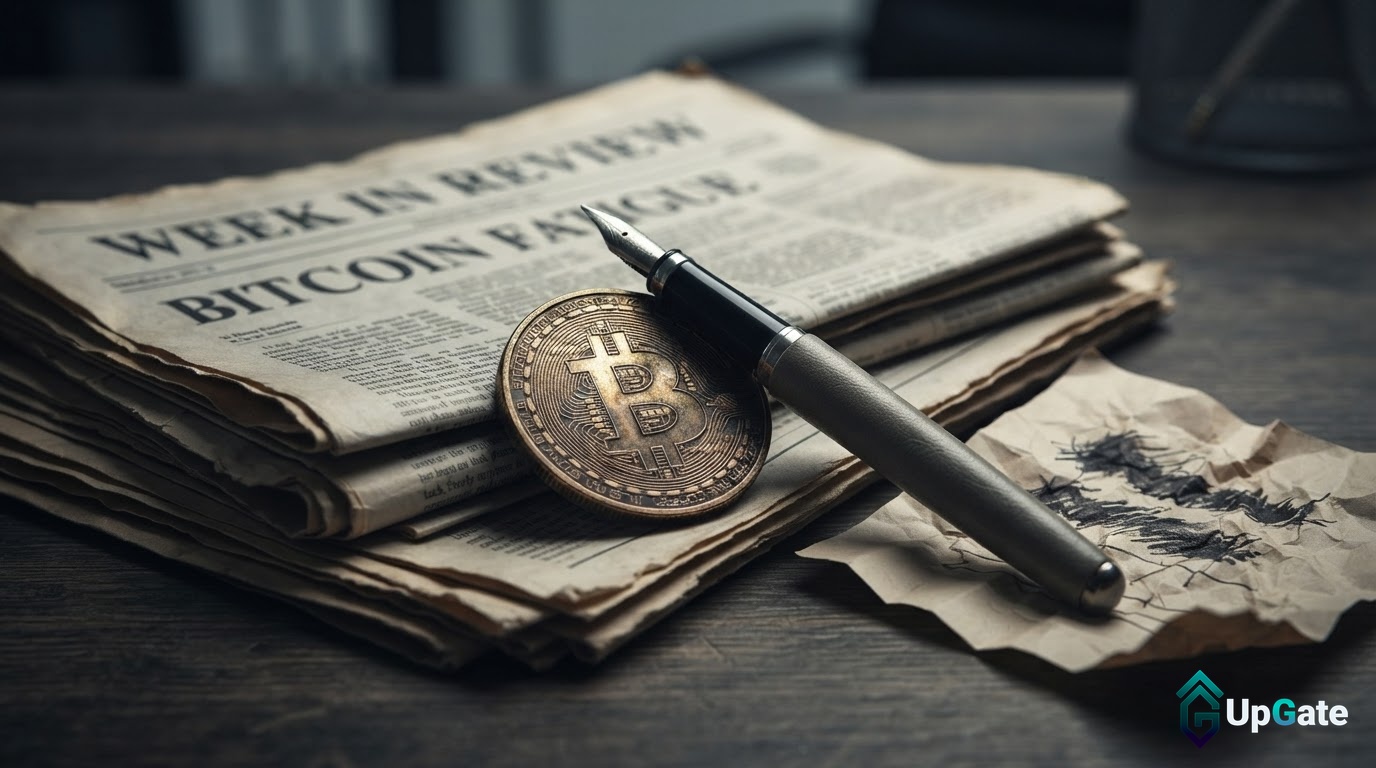
    An editorial in this week’s ‘Week in Review’ newsletter suggests that Bitcoin is showing signs of fatigue. The newsletter, a weekly publication sent to subscribers, includes commentary on major stories, with this particular piece offering an opinion on Bitcoin’s market condition.

    The editorial states that Bitcoin is “finally showing signs of fatigue.” However, the source material does not provide specific metrics or data points to support this assertion, nor does it detail the potential duration or extent of this perceived fatigue.

    This commentary originates from an opinion piece within a newsletter, distinct from a data-driven market analysis. While the ‘Week in Review’ aims to provide weekly insights, the editorial’s claim about Bitcoin’s fatigue should be understood within this context.

    The editorial’s signal of potential Bitcoin fatigue is noted, but its implications remain uncertain due to the lack of specific evidence and context. The piece does not offer a comprehensive analysis of Bitcoin’s future performance or definitively declare a market downturn.

    Readers should consider this editorial’s claim with an awareness of its limitations. It serves as an observation within the broader market landscape rather than a conclusive prediction or a detailed, evidence-based assessment of a market shift.

    Why This Matters

    The materials describe a narrow update: The editorial notes that Bitcoin is exhibiting signs of fatigue. The specific duration or extent of Bitcoin’s fatigue is not detailed.

    Broader Context

    Source materials place the opinion in this context: This editorial is from this week’s edition of the newsletter Week in Review, sent to subscribers on Friday. Subscribe to the newsletter to get this weekly editorial the second it’s finished. The newsletter also includes the biggest stories of the week, with a comment on each story. Bitcoin is finally showing signs of fatigue after […].

  • Zcash: Securing Keys Against AI and Quantum Threats

    Zcash: Securing Keys Against AI and Quantum Threats

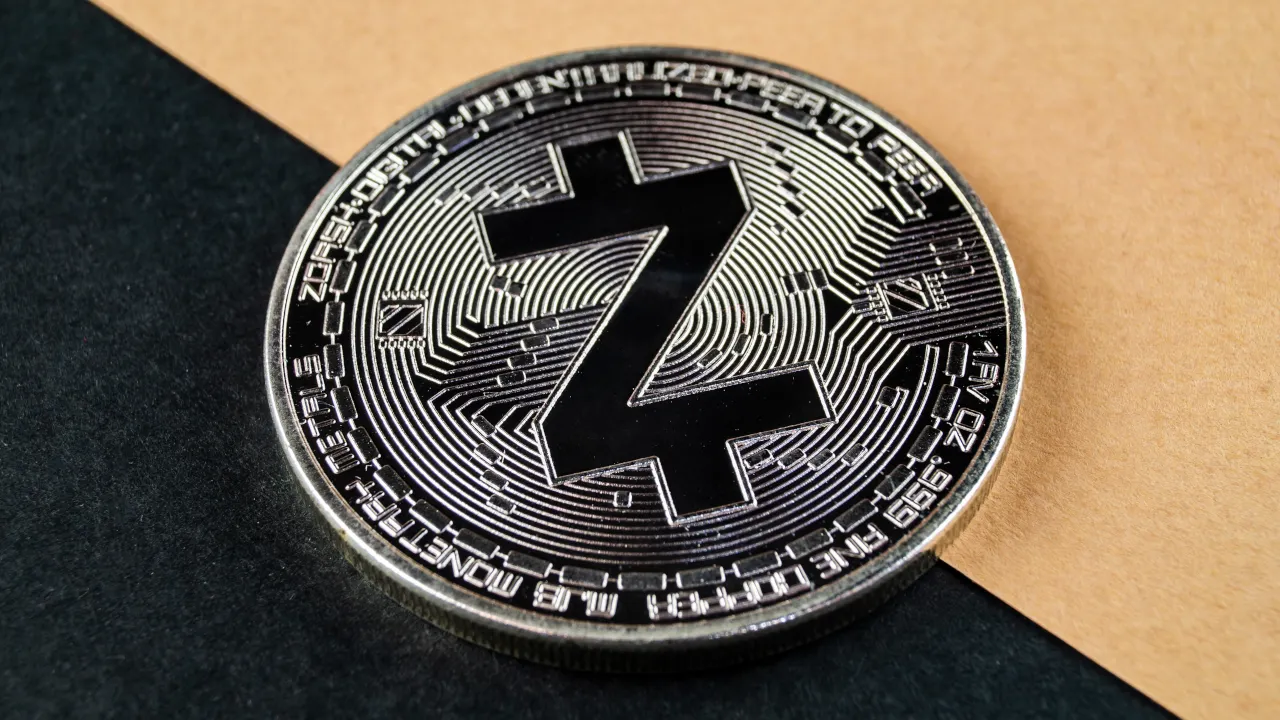
    Zcash Developers Unveil Quantum-Resistant Plan for Transparent Transactions

    While much of the cryptocurrency community remains in a state of cautious deliberation, a team of Zcash developers has announced a concrete plan to address future cryptographic threats. Zakura, a company developing a Zcash full node, anticipates the integration of post-quantum signature opcodes into the Zcash network as early as January. These opcodes are fundamental instructions that will enable the network to validate a new class of digital signatures.

    The stated objective, as detailed in an engineering post by Roman Akhtariev, is to achieve “full post-quantum safe transparent pools with hash based signatures.”

    Zcash offers two distinct transaction types: shielded payments, which obscure the sender, recipient, and transaction amount, and transparent payments, which are publicly verifiable, similar to those on the Bitcoin network. A transparent address comprises a hash of a public key, which remains concealed until the owner initiates a transaction and reveals the key on the blockchain.

    Zakura’s strategy employs a dual-layered defense. Wallets will be designed to adopt a new address after each transaction, thereby keeping public keys from being exposed. This will be complemented by the addition of a hash-based backup signature known as WOTS. Hash-based cryptographic schemes are designed to circumvent the elliptic-curve mathematics that experts fear could eventually be compromised by artificial intelligence or quantum computing.

    However, the practice of rotating addresses introduces a potential privacy challenge. When a wallet requests a server to check balances across multiple addresses, the server can infer that these addresses belong to the same user. Zakura claims to mitigate this issue through private information retrieval (PIR), a cryptographic technique that allows a wallet to retrieve specific data without disclosing which records it is querying. This feature is set to be rolled out this week within the Vizor wallet, where users can already test it by enabling “private queries” in the settings.

    “While others are worrying about the viability of rotating transparent addresses, we’re already solving linkability,” Zakura stated on the social media platform X.

    This statement appears to be a direct response to Ethereum Foundation researcher Justin Drake, who recently advised cryptocurrency holders to calmly transfer their funds to new addresses. The public reaction to Drake’s call to action, however, was notably less composed.

    Drake had previously warned that advancements in AI-driven mathematics could compromise the ECDSA signatures that secure Bitcoin and Ethereum even before quantum computers become a threat, potentially occurring “in the worst case in months not years.” Ethereum co-founder Vitalik Buterin has since commented on the discussion, expressing his belief that it is “plausible” that AI-driven mathematical breakthroughs could break encryption within the next two years.

    The Zakura plan currently addresses only the transparent aspects of Zcash. The company’s post did not specify the timeline or method for activating the new opcodes across the broader network.

    This development occurs as Zcash garners increasing interest from institutional investors, evidenced by a proposed U.S. ETF linked to the Winklevoss twins and Europe’s first Zcash ETP. It also follows a recent network upgrade aimed at accelerating private payment processing by a factor of three.

  • Bitfinex ETH Longs Hit Four-Year High

    Bitfinex ETH Longs Hit Four-Year High

    Ethereum Long Positions on Bitfinex Hit Four-Year High Amid Bullish Bets

    Margin traders on the cryptocurrency exchange Bitfinex are demonstrating a significant bullish sentiment towards Ethereum, with long positions reaching their highest level in over four years.

    As of October 11, 2026, data from Bitfinex’s margin trading platform indicated approximately 283,410 ETH held in long positions. Valued at current prices, this represents a substantial bullish bet of roughly $709 million, marking the largest such wager on the platform since at least 2022.

    A margin long position is a leveraged trade where a trader borrows funds to acquire more of an asset than they could afford outright, anticipating a price increase to profit.

    This surge is particularly notable given that Bitfinex longs stood at around 82,500 ETH in late August. The increase to over 283,000 ETH since then represents a dramatic shift, with a significant portion of this growth occurring rapidly.

    According to margin data, long positions experienced a 157% surge in just seven days. The current total is hovering just below the 90-day peak of 283,598 ETH, recorded on October 8.

    Conversely, short positions on Bitfinex, which represent bets against ETH, have diminished considerably, totaling approximately 3,530 ETH, or about $8.8 million. This creates a stark long-to-short ratio of roughly 80:1.

    The buildup in long positions occurred while Ethereum was trading around the $2,500 mark. This accumulation followed a period of price volatility that included a recent dip, suggesting that some traders viewed this weakness as an opportune entry point.

    The current market dynamic stands in sharp contrast to the situation just a few weeks prior. In late September 2026, short positions on Bitfinex had surged to a four-year high, ranging between 73,000 and 101,000 ETH. These short positions have since unwound sharply, with the current figure of approximately 3,530 ETH representing a small fraction of that late-September peak.

    Commentary on social media platform X has interpreted the significant increase in long positions as a sign of strong conviction among large “whale” traders on Bitfinex.

    This pronounced imbalance has also fueled discussions about a potential short squeeze. Such an event occurs when rising prices compel short sellers to buy back the asset to cover their losing positions, thereby driving prices even higher. However, with short interest at approximately $8.8 million against $709 million in longs, there appears to be limited short interest remaining on Bitfinex to fuel a significant squeeze. The momentum for such a move likely dissipated during the late-September unwind.

    When long positions dominate to this extent, a more significant risk could be a “long squeeze.” This scenario involves a price decline triggering forced selling from leveraged bullish traders, which can then accelerate the downward price movement.

    For observers tracking Ethereum’s trajectory, key indicators to watch include whether long positions surpass the October 8 peak of 283,598 ETH, which would signal continued accumulation. Monitoring the short side is also crucial; a resurgence in short positions from the current low base could indicate a return of skeptical sentiment. Finally, attention should be paid to Ethereum’s price action around the $2,500 level, where much of this recent buildup has taken place.

  • Altcoin Surges 53% Amidst Market Calm, BTC Holds $83K

    Altcoin Surges 53% Amidst Market Calm, BTC Holds $83K

    Bitcoin’s weekend inertia persists, with the cryptocurrency trading largely unchanged around $83,000 over the past 36 hours. However, increased volatility is anticipated later today or tomorrow morning.

    Larger-cap altcoins have also seen minimal price action in either direction over the past day, but a new contender has emerged among the mid-cap segment.

    The primary cryptocurrency began October with a significant surge, surpassing $87,000 on the second day of the month. This rally was short-lived, as bearish sentiment quickly emerged, pushing the price back below $84,000 on the same day. A rebound to around $85,000 occurred last weekend, followed by an attempt to break higher on Monday morning, which stalled at $86,600.

    Subsequent price declines proved more substantial. Bitcoin initially fell to $83,600, then bounced to $84,400. However, bears regained control, driving the price down to $82,400 on Wednesday and a multi-week low of $80,400 on Thursday. After shedding nearly $7,000 in a matter of days, the cryptocurrency experienced a rebound on Friday.

    This bullish attempt was capped at $83,500. Since then, Bitcoin has been trading sideways, hovering around $83,000 with no significant price movements. Further volatility is expected tonight or tomorrow morning, potentially influenced by recent geopolitical developments, including attacks on Saudi Arabia and President Trump’s remarks regarding potential U.S. involvement.

    Bitcoin’s market capitalization remains at $1.660 trillion, with its dominance over altcoins at 59.5% according to CoinMarketCap.

    As noted, larger-cap altcoins have shown little movement. Ethereum is trading near $2,500, XRP has fallen below $1.40, while Zcash and HYPE have seen gains of approximately 1%. BNB, Solana, Tron, Dogecoin, Monero, Chainlink, and Cardano are trading slightly in the red.

    Meanwhile, Starknet (STRK) has captured market attention, surging over 53% to nearly $0.11. The asset has gained more than 105% in the past week. Other notable double-digit gainers include Celestia (TIA), up 21% to trade near $0.60, and Aerodrome Finance (AERO), up 15% to $1.

    The total market capitalization of all cryptocurrency assets remains stable at $2.8 trillion on CoinMarketCap.

  • Buterin: AI Could Accelerate Ethereum Roadmap by Decades

    Buterin: AI Could Accelerate Ethereum Roadmap by Decades

    Vitalik Buterin believes artificial intelligence has effectively granted Ethereum an additional two decades for its development. Speaking at the Network State Conference 2026 in Singapore, the Ethereum co-founder stated that AI is significantly accelerating progress on the network’s protocol upgrades.

    Without AI’s assistance, Buterin suggested, some of the ambitious goals outlined in Ethereum’s roadmap might not have been achievable until 2040 or even 2050.

    The interview, which took place on October 9, 2026, and was reported the following day, centered on the Lean Roadmap, Ethereum’s comprehensive plan to revamp its core protocol. Buterin’s central assertion was that AI is now shouldering a considerable portion of the research and coding required for this overhaul, including some of the most complex tasks.

    A prime example of this AI contribution is in formal verification, specifically using Lean 4. Lean 4 is a programming language and proof assistant designed for creating mathematical proofs that can be meticulously checked by a computer. According to a research summary, AI’s involvement in Lean 4 substantially reduces the need for human auditors to meticulously review vast quantities of code.

    The roadmap Buterin detailed is far from a minor adjustment. Ethereum is transitioning towards an architecture built upon recursive STARKs, automated formal verification, and enhanced quantum resistance. To clarify these terms: STARKs are cryptographic proofs that allow one party to demonstrate a computation was performed correctly without requiring everyone else to re-execute it. Recursive STARKs are proofs capable of verifying other proofs. Quantum resistance refers to the network’s ability to withstand future quantum computers, which could potentially compromise current cryptographic methods.

    AI as a Crucial Enabler

    This is precisely where AI plays a pivotal role, according to Buterin. The research summary highlights AI as a critical enabler as Ethereum progresses toward this more sophisticated technical design.

    The next significant milestone on the development calendar is the Hegota upgrade, anticipated around 2027. This upgrade is characterized as the final “normal” fork in Ethereum’s history. Following Hegota, the focus is expected to shift towards advanced cryptographic techniques and formal verification, with AI integration playing a central role.

    Evidence already suggests AI’s capacity for meaningful protocol work. In early 2026, experimental efforts yielded a prototype Ethereum client that addressed approximately 65 roadmap items. This prototype also successfully synchronized with the Ethereum mainnet.

    The Dual Role of AI

    This is not the first time Buterin has commented on AI’s impact this year. Earlier in 2026, he discussed what the research summary terms AI’s dual role in cryptocurrency development. On one hand, AI can significantly accelerate technical progress. On the other, it introduces security concerns regarding vulnerabilities, including the potential for the same AI tools to aid attackers in discovering weaknesses more rapidly.

    This inherent tension makes the formal verification aspect particularly compelling. If AI can generate code at an accelerated pace, the ability to mathematically prove that code’s correctness serves as a natural safeguard against the very risks AI introduces.

    For developers, the most apparent implication is a shift in their roles. As AI takes on more responsibility for proof-writing and code auditing, core researchers may find themselves dedicating more time to design decisions and less to manual verification. Buterin’s projection of achieving goals between 2040 and 2050 suggests he views AI as the catalyst that transforms a distant possibility into a near-term reality.

    Navigating Security Risks

    The security implications of AI integration remain a critical consideration. Relying on AI for essential infrastructure code heightens the importance of rigorous verification, as even a subtle error in widely adopted blockchain technology can have significant consequences.

    Key developments to monitor include progress on the Hegota upgrade, further outcomes from AI-assisted client experiments, and the extent to which formal verification within the Lean Roadmap ultimately becomes machine-generated.

  • Win and Wait, Lose and Earn: Understand Papertrade’s 1000x “Liquidation Mining”

    Win and Wait, Lose and Earn: Understand Papertrade’s 1000x “Liquidation Mining”

    Papertrade Launches with High Leverage, Zero Liquidity, and Immediate Scrutiny

    Papertrade, a new decentralized exchange (DEX) that launched on October 10th, has immediately drawn attention for its high-leverage trading, a novel approach to liquidity, and significant risks highlighted even before its debut. The protocol operates as the counterparty to all trades, meaning it directly assumes the risk of winning traders’ payouts. If a winner’s profits cannot be covered by losers’ funds, they are placed in a queue to be paid later. MONI Research had previously identified the price oracle and the queuing system for payouts as major risks, and on its first day of operation, accusations of price manipulation on Hyperliquid to exploit Papertrade’s pricing emerged.

    Opening Day Performance: A Tale of Two Extremes

    The launch day for Papertrade presented a starkly divided picture. At 10 AM EST on October 10th, the pre-deposit phase saw 11,465 addresses deposit approximately $138 million. Within 24 hours, the nominal trading volume reached an astonishing $596.28 billion. However, the protocol’s internal statistics revealed that traders incurred a net realized loss of approximately $30.24 million. TradingBeats data indicated that 14,158 positions were liquidated, resulting in a loss of approximately $23.116 million in isolated margin.

    Price Manipulation Allegations Surface on Day One

    Just eight hours after the platform went live, a user on X, @Dr_bobo54, posted allegations that someone was manipulating Hyperliquid’s price feed to open multi-billion dollar long positions on Papertrade for arbitrage. This concern was not unexpected, as MONI Research analyst HONKAYO had identified the price source as the primary risk in a pre-launch analysis on October 2nd.

    Papertrade operates without a traditional liquidity provider (LP). Instead, the protocol itself acts as the counterparty for all positions, with the losses of one set of traders funding the profits of another. This analysis juxtaposes HONKAYO’s pre-launch assessment with the events of the first trading day.

    Protocol Mechanics: A Casino-Like Model

    HONKAYO’s analysis pointed out that Papertrade uses the midpoint of the best bid and ask prices from Hyperliquid as its reference price. The protocol does not hedge its positions on Hyperliquid; rather, it records the trades and settles profits and losses using its own cash pool, making its economic nature more akin to a casino.

    Initially, Papertrade only supports BTC and ETH markets, employing isolated margin and a zero funding rate system. Founder Blurr explained in an interview that even major assets are difficult to manage with 1000x leverage, and more volatile cryptocurrencies would lead the protocol to lose more than it collects.

    The absence of a local order book means all trades are executed at the midpoint of the bid and ask prices, which is marketed as “zero slippage.” However, HONKAYO cautioned that winning trades are subject to a “payment curve” before funds are credited. Small price fluctuations result in a heavier discount, meaning an initial profit of $1,000 might only yield $600. Blurr admitted that this calculation method is largely adapted from Rollbit. The protocol charges a fee of 1% of the profit or loss, according to Blurr.

    Therefore, “zero slippage” refers to the entry and exit prices, not the final amount credited to the user.

    The Queuing System: A Debt of Future Losses

    HONKAYO illustrated the queuing system with an empty pool scenario: if a trader deposits $100 and profits $100, the protocol can return the initial margin but lacks the additional $100. This profit then becomes a queued debt.

    If the next loser incurs a $40 loss, this amount is paid to the winning trader, leaving a remaining debt of $60. Only when another trader loses $60 is the debt fully cleared. Subsequent winners then join the queue. Blurr provided a larger example: if a pool has $5 million and a trader wins $6 million, they receive the $5 million from the pool, with the remaining $1 million pending future losses.

    The risk lies in the waiting period. If traders leave due to prolonged queues, the funds needed to cover debts may disappear. The team views the queuing system as an early safety net, ideally used minimally. The risk disclosures, however, permit the cash pool to go negative. Blurr’s explanation can be cross-referenced with an interview video.

    PAPER Tokenomics and Inflationary Concerns

    PAPER, the native token, has an initial supply of zero. The team claims there is no pre-mining or allocation for the team or venture capitalists; tokens are minted when users realize losses or are liquidated. When the protocol’s tracked cash falls below $2 million, 100 PAPER tokens are minted for every $1 lost. Above this threshold, the minting curve tightens. HONKAYO calculated a tiered system: approximately 50 tokens per dollar when the LP cumulative earnings reach a high of $50 million, 10 tokens at $260 million, and 1 token at $1.08 billion. The 12 billion token cap is not absolute; if the LP cash falls below $2 million again, the rate reverts to 100 tokens per dollar, creating a path for unlimited inflation.

    PAPER can be staked immediately, with stakers receiving a majority of protocol fees and any cash exceeding target balances. However, initial transfers are restricted, and there is no market price.

    This mechanism could incentivize users to intentionally incur losses to farm tokens. HONKAYO expressed concern that once the emission rate decreases, trading volume driven by bots could evaporate. His simulations indicated that PAPER at 100x leverage has the lowest cost, at approximately $2.55 per 1,000 tokens, while 1000x leverage costs $5.06, suggesting that the highest leverage is not always the cheapest way to farm tokens.

    Price Manipulation: The Core Risk

    The primary risk stems from Papertrade directly reading Hyperliquid’s public price quotes. HONKAYO pointed out that attackers can manipulate the best bid and ask prices to execute trades on Papertrade at distorted rates, then wait for the market to correct. This strategy becomes profitable when the pool’s funds exceed the cost of price manipulation. The team has implemented a $5 million cash cap to mitigate this, hoping the pool remains below the cost of manipulating the BTC or ETH order books, but this assumption has not been independently tested.

    First Day Exploitation Allegations

    The risks were immediately apparent on the first day. On October 10th, @Dr_bobo54 posted that two wallets were manipulating Hyperliquid’s ETH price by 10 to 20 basis points using approximately $20 million per trade, while simultaneously opening nine-figure long positions on Papertrade.

    Paper trade @papertrade_xyz getting actively exploited by two wallets moving ETH 10-20bps on hyperliquid using $20m clips or so and trading 9 fig longs on paper.

    >

    Glaring issue with the protocol as is, needs to be fixed ASAP for any chance at sustainability pic.twitter.com/KHXjp9qF5s

    >

    — Boblob (@Dr_bobo54) October 10, 2026

    Trader Rune retweeted this, noting that the official explanation itself revealed this risk. On-chain monitoring also showed an address that, approximately eight hours after launch, had a net profit of about $1.28 million. This address then opened 30 short positions at $2,507.35, totaling approximately $297 million in nominal value, and sold about 6,600 ETH on Hyperliquid, pushing the price down to $2,504.40. However, the positions were not closed, ETH rebounded to $2,509.95, and all short positions were liquidated, resulting in a loss of approximately $450,000.

    The community speculated that the team blocked the liquidation. Some analyses suggested using official oracle prices aggregated from multiple exchanges on Hyperliquid instead. However, these are currently unconfirmed allegations, monitoring, and speculation, and the team has not issued a public response as of this report.

    Simulation Limitations and Centralized Operations

    HONKAYO also reviewed an independent simulation that analyzed approximately 3.6 million historical high-leverage trades on Hyperliquid across 608 scenarios. All scenarios maintained solvency, with the worst-case queued debt at around $61,974. However, the weakest scenario assumed only 25% of selected activity flowed in and excluded price manipulation and relay delays, leading HONKAYO to conclude it was only suitable for testing assumptions and insufficient to guarantee deposits.

    Early operational aspects also leaned towards centralization. Trades were initially routed through the official website and the project’s proprietary relayers. Liquidations took precedence over position closures, and new positions were prioritized last. The team retained the authority to halt new positions and close markets in emergencies.

    papertrade launch details

    >

    papertrade is a fair launched smart contract exchange built on the hyperevm blockchain. as a fully onchain protocol, papertrade has significant advantages – decentralization, reliability, composability, transparency. it also has the usual onchain…

    >

    — papertrade.xyz (@papertrade_xyz) October 1, 2026

    As of MONI’s deadline, the official contract address and verified source code had not been published. The audit report from Guardian Audits, hired by the team, was also not yet available in their repository. It remains unverified whether these will be provided post-launch.

    Team and Origins

    The Papertrade team was initiated by Jez and Blurr. Jez is identified as Colin Hong, whose resume includes MIT, Morgan Stanley, and a Venture Partner role at Standard Crypto. However, HONKAYO cautioned that this does not imply an investment by the fund in Papertrade. Blurr remains anonymous, stating the project was built by only two to three individuals, and funding details have not been disclosed. The concept originates from a paper on queuing mechanisms and the Martingaler whitepaper from the summer of 2024.

    Introducing @papertradexyz – a fair-launched, fully-onchain perpetuals exchange built on Hyperliquid by @izebeleth & @blurr
    -1000x leverage -0 slippage -No funding costs -Self-bootstrapping LP

    >

    Coming soon. Learn more at: https://t.co/izPx6pov7h pic.twitter.com/KHXjp9qF5s

    >

    — papertrade.xyz (@papertrade_xyz) May 12, 2026

    Competitive Landscape

    Compared to competitors like Hyperliquid and Lighter, which offer deeper markets and real-time settlement, or gTrade, which requires pre-funding, HONKAYO believes the mechanics are easily replicable. The primary advantages are seen in reliable payouts, pool liquidity, execution, and distribution.

    Key Observations for the Future

    Overlaying pre-launch projections with first-day data, three key areas warrant observation moving forward.

    First, the mathematics of price manipulation: at 1000x leverage, a 0.1% move in the reference price effectively doubles the margin. If the reported multi-billion dollar nominal volume is accurate, a 10 to 20 basis point move would translate to hundreds of thousands to millions of dollars in paper profits, with the attacker’s cost on Hyperliquid limited to slippage and fees. While the payment curve discounts small fluctuations, the official range for this discount remains undisclosed.

    Second, the $5 million cash cap may not be sufficient. The queuing mechanism allows winners’ claims to exceed the pool’s balance, with the excess becoming a debt owed to future losers. The cap limits immediate payout capacity, not the total debt incurred. The ultimate cost falls on queued winners and PAPER stakers. Traders on Papertrade avoid slippage, but the slippage is merely shifted to Hyperliquid, paid by the manipulator, becoming an attack cost.

    Third, the leverage distribution on the first day: 5,836 addresses (73.3%) utilized 1000x leverage. Positions with 1000x leverage accounted for 89.4% of liquidations and 86.9% of margin losses, with a median time from opening to liquidation of just 7 minutes and 35 seconds. However, the remaining open nominal positions of approximately $1.979 billion correspond to only about $17.377 million in margin, averaging around 114x leverage.

    It is speculated that most 1000x leverage positions were liquidated within minutes. The remaining open positions likely consist of lower leverage trades, aligning with MONI’s simulations suggesting that maximum leverage is not always the most cost-effective strategy. The top 15 profit earners were all long ETH positions. The champion, with $10,000 in margin, opened a $10 million nominal long position, held for 31 minutes, saw ETH rise by 0.78%, and profited approximately $66,400. Roughly calculated at 1000x, the initial profit should have been around $78,000. The actual received amount of about 85% suggests the difference is likely the discount from the payment curve and the 1% fee, serving as a practical demonstration of the “zero slippage” caveat.

    Moving forward, attention should be paid to the metrics highlighted by MONI.

    In conclusion, Papertrade is best viewed as a high-risk mechanism experiment rather than a stable trading venue. In the short term, the focus should be on the veracity of the manipulation allegations and the official response, as well as the rapid clearing of queued debts after significant market movements, rather than nominal trading volume.

    If the team publicly releases its contracts and audit reports, adopts multi-source pricing, and clears all queued debts within a week following major market swings, the design will have passed its initial test. Conversely, if the allegations prove true and no remedies are implemented, even substantial trading volumes will merely be amplified numbers under 1000x leverage.
  • Argentina’s Central Bank Rejects Crypto Integration for Two Years

    Argentina’s Central Bank Rejects Crypto Integration for Two Years

    Argentina’s Central Bank has rejected the integration of cryptocurrencies into payment service providers and the banking sector for the next two years. This decision leaves open the possibility of such integration in a potential second term for President Milei.

    The Central Bank’s move establishes a clear two-year period during which new cryptocurrency integrations within the formal financial system will not be permitted. This regulatory stance highlights a cautious approach to digital assets within Argentina’s established financial infrastructure.

    While the immediate future sees a rejection of crypto integration, the Central Bank has hinted at a potential shift in policy beyond the initial two-year timeframe. This potential change is contingent on political developments, specifically the possibility of a second term for President Milei. In such a scenario, the Central Bank suggested it might reconsider the current prohibition on banks managing cryptocurrencies.

    However, significant uncertainties surround these future possibilities. The occurrence of a second Milei term is not guaranteed, and consequently, the timeline for any potential crypto banking integration beyond the initial two-year period remains undefined. These factors contribute to a landscape where future regulatory directions are conditional and subject to political outcomes.

    The decision by Argentina’s Central Bank impacts the immediate landscape for cryptocurrency adoption within the country’s formal financial sector. It signals a period of regulatory caution while leaving the door ajar for future policy adjustments, albeit under specific political conditions.

    Why This Matters

    The materials describe a narrow update: The Central Bank of Argentina has decided against integrating cryptocurrencies into payment service providers and the banking sector for the immediate future, specifically for the next two years. Whether a second Milei term will occur.

    Broader Context

    Source materials place the factual news in this context: Argentina has reached one […].

  • OpenAI’s 722 Math Papers Render Years of Scholar Work Obsolete

    OpenAI’s 722 Math Papers Render Years of Scholar Work Obsolete

    Mathematicians Weigh In on OpenAI’s 722 Math Papers: Promising, But Verification Will Take Years

    Four days after OpenAI released 722 AI-generated mathematics manuscripts, The Verge spoke with over 30 mathematicians who concluded that the papers contain genuine breakthroughs, though discerning which results are reliable could take years.

    Initial Reactions and Concerns

    Mathematicians’ initial assessment of OpenAI’s batch of AI-generated math papers is that they contain “real stuff,” but it will likely take years to determine which papers are correct. OpenAI uploaded the 722 AI-produced math manuscripts to GitHub on October 7th, only to retract three of them the following day in an update log.

    The Verge’s interviews with more than 30 mathematicians revealed descriptions of the work as “astonishing,” “unprecedented,” and “surreal.” The majority agreed that simply understanding what OpenAI has released will take years, and expressed concern that OpenAI might release another batch before the mathematical community has had a chance to digest the current one.

    The Challenge of Verification

    Currently, no one can definitively answer the question of accuracy, and OpenAI itself admits uncertainty. The README states that the model was tested on approximately 4,000 problems during its evaluation, which OpenAI then grouped and filtered to produce the current catalog of 719 manuscripts, organized into 372 groups. These numbers cannot be directly divided to calculate a success rate, as a single problem might be incorporated into multiple groups after categorization.

    The degree of verification varies significantly. Lean, a programming language for computer-assisted proof checking, offers a higher degree of logical certainty for results that have been formalized in Lean. OpenAI’s update log indicates that 300 out of 719, or about 42%, of the main results have formalizations, less than half. The README also concedes that results without formalization may be problematic.

    Furthermore, formalization does not guarantee correctness. Interviewees pointed out that the statements verified by computers do not always align with the claims made in the papers, requiring individual verification.

    Kevin Buzzard of Imperial College London noted that in his field of algebraic number theory, only about six of the papers immediately appeared noteworthy, and almost none of these had undergone Lean verification. He faces the choice of reading “potentially incorrect garbage” or waiting for others to read and formalize the work before confirming its accuracy.

    Some researchers have privately commented that certain papers seem to retrace paths already explored by others, while others mentioned that results originally intended for hundreds of pages have been condensed into a few dozen.

    Errors and Retractions Emerge

    Errors have already surfaced. The update log reveals a sign error in a paper discussing Weil classes, rendering its argument invalid. Two other papers related to the Hodge conjecture, which built upon this work, were also retracted. An additional 14 papers have been revised. Crucially, none of the results have yet undergone peer review.

    High Standards, Despite Presentation

    Setting aside the presentation, multiple interviewees believe the overall standard of the work is high. Before the advent of AI, many of these findings would have been sufficient for publication in top journals and would have secured academic positions for their authors. Jared Duker Lichtman of Stanford University even suggested that “dozens” of the results are strong enough to make their authors serious contenders for the Fields Medal, one of mathematics’ highest honors. These include advancements towards the Riemann Hypothesis, special cases of the Hodge Conjecture, and the four-dimensional Kakeya Conjecture. This is his personal assessment.

    However, OpenAI’s README notes that the Riemann and Hodge conjecture papers were not produced through the same standardized process as the other results, and does not explain the differences. One version of the Riemann conjecture paper also underwent manual editing.

    Scott Armstrong of Sorbonne University emphasized that these are not obscure problems; many are well-known challenges that have eluded mathematicians for decades.

    Impact on the Research Community

    For some mathematicians, OpenAI’s release of these papers feels like their own research projects have been rendered obsolete overnight. Colva Roney-Dougal of the University of St Andrews stated, “A group of my friends and colleagues just had their research grant applications completely wiped out.” Armstrong is aware of an entire research program by a team that has been nearly eliminated. Tristan Buckmaster of New York University has also heard of three individuals whose projects have been erased.

    The most severely affected are PhD students, early-career researchers, and those without tenure, as unsolved problems often form the basis of doctoral dissertations, grant applications, and job searches. Bartosz Naskręcki of Adam Mickiewicz University in Poland commented, “This is a social problem that AI labs are completely ignoring.”

    Mixed Feelings on AI in Mathematics

    The majority of interviewees do not oppose the use of AI in mathematics, and many use AI tools themselves.

    The unease stems from OpenAI’s approach: a high-profile announcement, preliminary drafts, leaving the mathematical community to digest the findings, and then immediately moving on to the next objective. Rumors are already circulating among mathematicians about a potential next wave of releases, and OpenAI has not responded to The Verge’s inquiries about whether another batch is forthcoming. Armstrong remarked, “Something will come along in two months to overshadow this.” Despite being one of the more optimistic mathematicians about AI and using it himself, he admitted, “I have trouble sleeping at night,” with his immediate goal being to complete his current research “before OpenAI beats me to it.”

  • Tron Quantum-Resistant Testnet Live, Sun Says Mainnet Ready

    Tron Quantum-Resistant Testnet Live, Sun Says Mainnet Ready

    Tron Testnet Goes Live with Post-Quantum Cryptography, Sun Claims Mainnet Deployment “Ready at Any Moment”

    Tron founder Justin Sun announced on X that the blockchain’s post-quantum cryptography solution has been officially implemented on its testnet, with mainnet upgrades “ready to launch at any time.”

    “We are closely monitoring advancements in quantum computing and AI, and we are prepared to bring quantum resistance to our mainnet,” Sun stated. He further emphasized, “We are committed to safeguarding user assets, and TRON is poised to be one of the few public chains to possess quantum resistance well before Q-Day.” Q-Day refers to the hypothetical future point when quantum computing capabilities will be sufficient to break current cryptographic standards.

    TRON’s post-quantum cryptography is now live on testnet. We’re closely tracking progress in quantum computing and AI, and we’re ready to bring quantum resistance to mainnet at any time.

    We’re committed to keeping user assets secure, and TRON is set to be one of the few major…
    — H.E. Justin Sun 👨‍🚀 🌞 (@justinsuntron) October 10, 2026

    Currently, the vast majority of blockchains, including Bitcoin and Ethereum, rely on Elliptic Curve Cryptography (ECC) for securing private keys and transaction signatures. However, when quantum computers reach a sufficient scale, Shor’s algorithm could potentially reverse-engineer private keys from public keys, posing a risk of all ECC-based wallets being compromised.

    Leading global laboratories are accelerating research and development in quantum hardware, and several institutions have already begun proactive preparations for post-quantum solutions.

    Tron is not the only blockchain taking action. Earlier this year, a consortium led by Strategy announced a $15 million investment to fund post-quantum security research for Bitcoin. The Ethereum Foundation has publicly outlined proposals for migrating to post-quantum cryptography on its official website, while Algorand has proposed a timeline for introducing post-quantum accounts by 2027.

    Security firm AmericanFortress also published a technical paper in July proposing a cryptographic solution that enhances existing wallets with post-quantum protection without requiring fund migration or changes to wallet addresses. The paper was published on the Cryptography ePrint Archive and has not yet undergone peer review.

    While Sun claims mainnet deployment is “ready at any time,” the original announcement lacked technical specifics. Crucial details such as which post-quantum algorithm will be adopted (NIST-standardized CRYSTALS-Dilithium, Kyber, or a proprietary solution), the duration of the upgrade, whether user intervention will be necessary, and how existing contracts and wallets will achieve compatibility remain undisclosed.

    From a market perspective, the impact of a post-quantum upgrade on user confidence is noteworthy. Bitcoin and Ethereum, the two chains with the highest market capitalization, are still in the research and proposal stages. If Tron successfully launches its mainnet first, it could establish a distinct security narrative advantage, particularly within its stablecoin ecosystem. TRON’s USDT circulation has consistently led the market, making its users particularly sensitive to asset security.

    Another point of observation is that post-quantum upgrades typically require synchronized coordination among validators, full nodes, and end-users, presenting a significant technical hurdle. The validation results from Tron’s testnet, community feedback, and the specific mainnet schedule will be key to assessing the credibility of the “ready at any time” claim.

  • 波場 TRON Bolsters Compliance and Security Through Global Engagement and Tech Advancements

    波場 TRON Bolsters Compliance and Security Through Global Engagement and Tech Advancements

    波場 TRON is actively enhancing its compliance and security framework through international participation and the implementation of advanced technological measures. Recent engagements include participation in the 5th INTERPOL New Technologies Forum in Vienna and the CoinDesk Policy & Regulation 2026 conference in Washington D.C., alongside digital asset training in Brazil. These initiatives underscore 波場 TRON’s commitment to addressing financial crime and future-proofing its network.

    Combating Financial Crime with T3 FCU
    A key component of these efforts is the T3 Financial Crime Unit (T3 FCU), a collaboration established in September 2024 between 波場 TRON, Tether, and TRM Labs. The T3 FCU has demonstrated significant success in combating illicit activities, assisting in the freezing of over $450 million in assets. Notably, in 2025, the unit aided Brazilian Federal Police in ‘Operation Lusocoin,’ leading to the freezing of approximately 4.33 million USDT and other assets valued at around 3 billion BRL. More recently, in August 2025, the T3 FCU partnered with Binance, the first official member of the T3+ global collaboration plan, to freeze nearly $6 million in assets linked to ‘pig butchering’ scams. The effectiveness of such public-private partnerships was recognized by the Financial Action Task Force (FATF), which featured the T3 FCU as a case study in its 2025 guidance on asset recovery.

    Technological Advancements in Security
    In parallel with its anti-financial crime initiatives, 波場 TRON is investing in technological advancements to bolster network security. The network has deployed a post-quantum signature scheme on its Nile testnet, preparing for potential cryptographic risks associated with future quantum computing. Furthermore, 波場 TRON has integrated OpenZeppelin’s audited smart contract libraries and security upgrade tools, enhancing its infrastructure’s resilience. These developments are part of a broader strategy to form a clear compliance construction path through international exchange, cross-industry collaboration, and security infrastructure upgrades.

    Network Scale and Compliance Needs
    The scale of financial activity on 波場 TRON necessitates these continuous enhancements. The network boasts a cumulative transfer volume exceeding $30 trillion, with a circulating supply of USDT surpassing $94 billion and over 408 million accounts. This significant activity highlights the importance of robust risk monitoring, cross-border investigation collaboration, and advanced security technologies.

    波場 TRON’s engagement in international dialogues and its implementation of security measures are indicative of a strategic focus on regulatory compliance and adapting to the evolving digital asset landscape. The network’s proactive approach, from participating in global forums to deploying cutting-edge security technologies and fostering effective public-private partnerships, positions it to navigate the complexities of the global financial infrastructure.

    Why This Matters

    The materials describe a narrow update: 波場 TRON has been actively engaging in international dialogues regarding blockchain compliance and security, including participation in the INTERPOL New Technologies Forum, CoinDesk Policy & Regulation conference, and digital asset training in Brazil. The exact timeline for the full deployment and impact of the post-quantum signature scheme.

    Broader Context

    Source materials place the factual news in this context: 波場 TRON has been continuously participating in global compliance and law enforcement issue exchanges in recent years.