Category: Uncategorized

  • Gemini AI Forecasts Massive Solana Surge by 2026

    Gemini AI Forecasts Massive Solana Surge by 2026

    Gemini AI Forecasts Significant Solana Surge by Late 2026

    Google’s Gemini AI has generated a price target for Solana that warrants serious attention, projecting a breakout range of $250 to $320 by late 2026. Such an ascent would represent more than a threefold increase from Solana’s current trading price.

    The optimistic outlook hinges primarily on Solana’s underlying architecture. Currently trading around $74, the AI’s bullish thesis centers on the network’s monolithic design and its capacity to handle substantial high-frequency trading volumes from both retail and institutional investors.

    Solana’s renowned speed has always been its key differentiator, and Gemini AI views this as the bedrock of its potential. A crucial catalyst identified by the model is the approval of a spot ETF, which could unlock significant institutional capital inflows.

    Combined with Solana’s established presence in decentralized physical infrastructure networks, this scenario suggests a path where the network leverages and amplifies its existing strengths rather than relying on entirely new developments. If these factors align, Gemini AI sees a realistic trajectory toward the projected $250 to $320 price zone.

    The Bearish Outlook and Technical Indicators

    Conversely, the bearish case for Solana is rooted in challenges the network has previously encountered. A tightening of global liquidity could disproportionately impact higher-beta assets like Solana.

    Persistent network congestion remains another significant risk, as past slowdowns have prompted developers and users to migrate to Layer 2 competitors. If both these pressures materialize simultaneously, Gemini AI anticipates Solana could become trapped in a structural accumulation range between $45 and $60, hindering any breakout potential.

    On the technical front, Solana is currently trading around $73.99, having experienced a considerable decline from its summer highs above $250. This extended downtrend has seen limited significant rebounds.

    Recently, the price formed a double bottom near $60 before recovering above $70, signaling a potential resurgence of buyer interest. Immediate resistance is observed near $90, followed by a more substantial barrier around $100, where previous rallies faltered earlier this year. Support remains firm at $60, with the recent low serving as a critical level. The Relative Strength Index (RSI) stands at 51.53, with its signal line at 41.70, indicating that momentum has surpassed its average for the first time in a while. This divergence suggests building buying pressure that may precede a genuine breakout attempt.

    Overall, Solana’s momentum appears to have shifted from negative to cautiously positive. A sustained break above $90 could position Solana for a genuine multi-month ascent toward the $250 target, transforming it from a mere numerical projection into a tangible possibility.

    The Shifting Landscape of Crypto Investment

    The current market dynamics suggest that established large-cap cryptocurrencies are not facing fundamental trouble but rather a temporary plateau. Bitcoin, Ethereum, and XRP have been testing similar resistance levels for weeks without significant breakthroughs.

    The reliance on future macro catalysts and institutional decisions for the next phase of growth for these assets can be viewed as a passive waiting game rather than an active investment strategy. The capital that drives market cycles often moves preemptively, before the ultimate destination becomes widely apparent.

    Smaller market cap infrastructure projects, operating on different principles, possess the ability to achieve significant revaluations from capital flows that would be negligible for larger assets. The opportunity lies in the discrepancy between a project’s intrinsic value and its current market valuation, a gap that closes rapidly upon market discovery.

    Addressing DeFi’s Interoperability Challenge

    The fragmentation across multiple blockchain networks presents a persistent and costly problem in decentralized finance (DeFi). Bitcoin, Ethereum, and Solana currently operate as isolated ecosystems, lacking native interoperability. Every transfer of value between these networks incurs costs through fees, slippage, and failed transactions.

    LiquidChain aims to resolve this issue by enabling free cross-chain transfers, as predicted by Perplexity AI. It proposes a unified execution environment for these three networks, allowing for single deployments and complete ecosystem access without transaction taxes.

    The LiquidChain presale is currently priced at $0.01454, having raised over $840,000, positioning it as an early-stage, undiscovered opportunity. While its execution and adoption remain unproven, established assets offer predictability within known market ceilings. LiquidChain represents an entry point that may cease to exist once it gains broader market recognition.


  • Polymarket Accused of Fake Bets for Viral Growth

    Polymarket Accused of Fake Bets for Viral Growth

    Polymarket Accused of Staging Fake Bets for Viral Growth

    Recent findings by The Wall Street Journal (WSJ) have cast a shadow over the promotional tactics of prediction platform Polymarket, revealing that a significant portion of the winning bets that fueled its rapid expansion were placed on counterfeit versions of its website.

    According to the WSJ report, Polymarket allegedly compensated college-aged content creators to stage approximately $1.9 million in fabricated wagers. An investigative team assembled by the WSJ examined over 1,100 videos posted by these creators and found no evidence of genuine blockchain transactions for any of them, rendering them unverifiable on any digital ledger.

    Polymarket’s business model is built on the assertion that all trades are settled in USD Coin (USDC) on the Polygon blockchain, with these transactions being publicly accessible and verifiable. However, the company’s promotional materials appear to contradict this claim.

    The platform reportedly paid creators between $2,000 and $3,000 per month to publish videos showcasing seemingly successful bets. In reality, these trades were executed on imitation sites, such as poiymarket.com, which were designed to closely resemble the legitimate Polymarket platform.

    An analysis of more than 1,000 betting videos from 10 creators, promoted between December 2025 and mid-May 2026, revealed that none represented actual bets. While marketing firms amplified these videos to boost viewership, creators were instructed not to disclose that they were being paid for the content. The scheme reportedly involved creators manipulating headlines and using outdated footage to suggest they had won bets, even when the winnings were fictitious.

    Notably, bets that were celebrated as multi-million dollar wins in promotional clips would have resulted in substantial losses for actual traders. The WSJ reviewed approximately 118 clips where creators claimed to have won around $900,000; however, the same wagers would have led to over $166,000 in losses in the real market.

    In one instance, a creator claimed a $100,000 win after U.S. President Donald Trump allegedly uttered the word “McDonald’s” in January. The investigation found that Trump did not make such a public statement that month, and the video used to support the win was from an earlier period. Tragically, at least 50 individuals who had actually placed that bet on Polymarket reportedly lost their stakes.

    As scrutiny intensifies over these promotional practices, many of the creators involved have begun removing the videos depicting fake winning bets from their social media accounts. Polymarket has also taken down the dummy website, poiymarket.com.

    These allegations surface as Polymarket prepares to re-enter the United States market, having recently received approval from regulators. The platform has indicated its intention to audit its promotional content in light of these revelations.

  • Grok AI Forecasts Major XRP Surge by 2026

    Grok AI Forecasts Major XRP Surge by 2026

    Grok AI Forecasts Significant XRP Price Surge by 2026

    Grok AI, Elon Musk’s artificial intelligence model, has issued a prediction for XRP’s price that initially appears audacious but gains credibility upon closer examination. The model forecasts XRP reaching between $5 and $8 by the end of 2026, a substantial increase from its current trading levels.

    The bullish outlook for XRP is supported by a confluence of factors, exceeding the typical catalysts seen in a full market cycle for most cryptocurrencies. XRP is currently trading around $1.14, amidst the presence of multiple spot ETFs already active in the market.

    Furthermore, the U.S. Securities and Exchange Commission (SEC) has dropped its appeal, effectively ending a significant legal challenge. The proposed CLARITY Act is also navigating key Senate hurdles, promising to alleviate considerable regulatory uncertainty that has long hampered XRP’s progress.

    Ripple, the company behind XRP, is actively pursuing a national trust bank charter. This initiative, if successful, would position the company with a stronger institutional foundation than nearly any other crypto issuer.

    On the operational front, On-Demand Liquidity (ODL) volumes are experiencing robust growth as cross-border payment systems increasingly rely on XRP. The adoption of RLUSD is also accelerating, with the XRP Ledger recording over $1.9 billion in net real-world asset inflows.

    When these elements are considered collectively, XRP emerges as a digital asset with tangible utility, now bolstered by a clearer regulatory landscape. Standard Chartered has even developed an $8 billion valuation case for XRP, predicated on an assumption of $4 to $8 billion in ETF inflows. While this is a significant assumption, it is not entirely implausible given the rapid expansion of the ETF market this year.

    Bearish Outlook and Technical Analysis

    The bearish perspective offers a more conservative outlook. Potential delays in legislative progress or a broader market downturn could limit XRP’s ascent to a range between $2.50 and $3.50.

    There is also a possibility that XRP’s price could briefly retrace to test support levels between $0.90 and $1.00 before a substantial breakout occurs. Even with this potential downside, the risk-reward profile from current levels still heavily favors bullish sentiment.

    Technical analysis of the daily chart reveals XRP consolidating near $1.1468. This follows a prolonged decline from highs exceeding $3.60, which were established in mid-2025. The downward trend appears to have formed a textbook descending channel, characterized by a series of lower highs and lower lows over nearly a year.

    XRP recently touched the lower boundary of this channel near $1.00 and is now encountering resistance just above $1.20. A decisive break above this level could pave the way for a move towards $1.40, followed by the $1.60 zone, an area that has seen multiple rejections earlier this year.

    Immediate support is located at $1.00, with a deeper support level at $0.90 should sellers regain control. The Relative Strength Index (RSI) stands at 42.53, with a signal line at 39.95, indicating a slight positive shift in momentum after months below the midline. This narrow gap above the signal line suggests nascent buying pressure, though it does not yet confirm a sustained reversal.

    Overall momentum appears to be stabilizing rather than accelerating. If XRP can maintain its current base and reclaim the channel resistance, the dramatic price appreciation predicted by Grok AI becomes more plausible.

    The Rotation to Undiscovered Opportunities

    There comes a point in every market cycle when investor focus shifts away from established assets. Large-cap cryptocurrencies do not typically decline all at once; their growth gradually decelerates, returns compress, and they face persistent resistance at key levels. While the underlying narratives may remain intact, price action ceases to respond. Bitcoin, Ethereum, and XRP are currently in this phase, with XRP having been poised for its next significant move for an extended period.

    When this occurs, capital does not remain idle; it seeks out the next promising opportunity. These emerging opportunities rarely appear fully formed when the rotation begins. They often manifest as early-stage presales, modest fundraising rounds, or projects with unproven teams addressing acknowledged industry problems that have yet to be solved. This combination is frequently overlooked until its significance becomes undeniable.

    Cross-chain liquidity represents such a problem. Bitcoin, Ethereum, and Solana are dominant ecosystems with entirely separate liquidity systems. The absence of native interoperability forces users and developers operating across these networks to incur costs in the form of fees, slippage, failed transactions, and wasted time. This fragmentation is a fundamental limitation inherent in the original design of these networks.

    LiquidChain is developing a foundational layer designed to render this problem obsolete. It aims to create a single execution environment that connects all three major ecosystems simultaneously. This would enable developers to deploy applications once and reach users across all networks without incurring cross-chain taxes on every interaction.

    The LiquidChain presale is currently priced at $0.01454, with over $800,000 raised to date. The market has yet to fully recognize this opportunity, but that is expected to change.

    The risk profile at this stage is typical for early-stage projects. Adoption, liquidity, and execution remain unproven. This is not a disclaimer but rather the inherent nature of investing in nascent technologies. The projects that deliver 10x or 100x returns are not those that appear safe at the outset, but rather those that solve a critical problem before the broader market fully comprehends it. LiquidChain is currently within that window of opportunity.

  • ICE and OKX Partner for Tokenized Securities on Wall Street

    ICE and OKX Partner for Tokenized Securities on Wall Street

    ICE and OKX Forge Joint Venture for Digital Asset Products

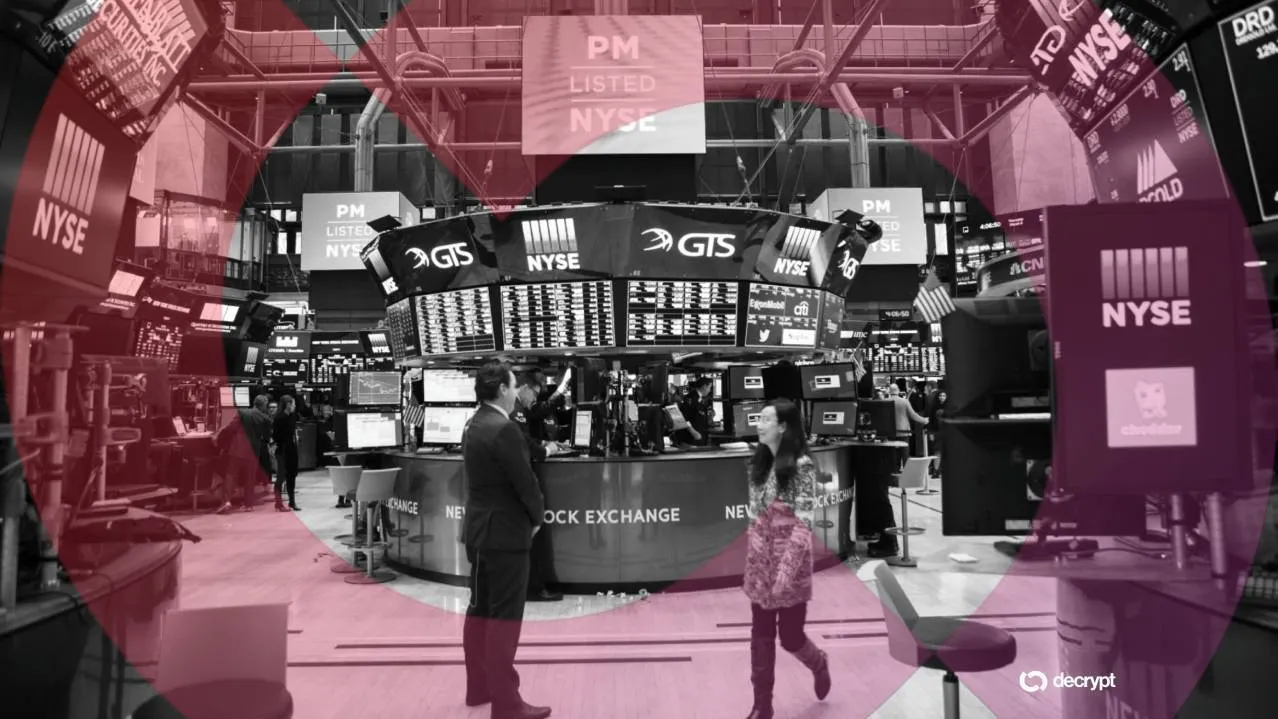
    Intercontinental Exchange (ICE), the parent company of the New York Stock Exchange, and OKX, a prominent cryptocurrency exchange, have announced a strategic joint venture to develop tokenization and digital asset products. The collaboration, revealed on Monday, is contingent upon regulatory approval.

    Upon completion, the venture aims to provide OKX’s global customer base with access to tokenized equities listed on the NYSE, as well as exposure to futures contracts offered by ICE.

    “The ICE-OKX joint venture is a step towards building the infrastructure that will define how global markets operate in the decades ahead,” stated Trabue Bland, senior vice president for futures exchanges at ICE. Bland further indicated that the initiative seeks to expand ICE’s offerings to the approximately 120 million retail traders who utilize OKX.

    The joint venture will be co-chaired by ICE and Andrew Cuomo, former New York Attorney General and Governor, who has been associated with OKX since 2023.

    “The next chapter of financial markets will be defined by how well innovation and government regulation can move forward together,” Cuomo remarked in a statement. He also expressed enthusiasm for the potential societal impact of blockchain technology, citing its capacity for “the democratization of finance, bringing basic financial services to underserved populations.”

    Specifics regarding the types of tokenization or blockchain initiatives the joint venture will undertake were not immediately available. While representatives from both firms did not respond to requests for comment from Decrypt, an OKX spokesperson informed Fortune that the venture will concentrate on tokenizing NYSE-listed equities.

    This announcement follows a prior collaboration earlier this year, where the two entities introduced crypto-native perpetual futures for oil to non-U.S. residents. The latest development also builds upon ICE’s earlier investment in OKX, where the NYSE parent acquired a minority stake in the international crypto exchange at a valuation of $25 billion.

  • AI Picks Top 5 Crypto Surges for Next Bull Run

    AI Picks Top 5 Crypto Surges for Next Bull Run

    The prolonged bear market has left numerous crypto investors underwater, as prices of countless digital assets have crashed by double digits over the past several months.
    Despite the grim reality, the current environment might be an ideal time to invest in tokens that could deliver substantial gains in the next bull run. The real challenge is identifying which ones fit that profile, so three of the most popular AI-powered chatbots were consulted for their perspectives.

    ChatGPT’s Picks

    ChatGPT started with Solana (SOL), describing it as its “easiest” pick. It claimed the token boasts the best combination of liquidity, institutional interest, retail attention, and ecosystem activity. The AI predicted that if the next bull cycle is driven by meme coins, Solana will be “one of the clearest winners.”

    Hyperliquid (HYPE) ranked second. ChatGPT praised its role in the DeFi sector, its rising popularity, and its strong fundamentals, but warned that an exploit on the exchange could undermine its chances of becoming a top performer during the eventual bull run.

    Third place goes to Chainlink (LINK), which was labeled “not flashy” but deserving of attention. “If banks, funds, stablecoin issuers, and asset managers keep moving assets on-chain, they need data, proof of reserves, cross-chain messaging, and settlement infrastructure. That is exactly where Chainlink wants to sit. Chainlink’s CCIP and institutional tokenization push make it a strong ‘picks and shovels’ play for the next cycle. LINK could benefit even if the winning chains are different, because Chainlink is infrastructure across ecosystems,” its analysis reads.

    Ondo (ONDO) and Sui (SUI) completed ChatGPT’s top 5 list. The former was classified as a “direct RWA pick,” while the latter was described as having “strong technology, fast execution, a growing ecosystem, and enough retail appeal to move hard in a bull market.”

    Gemini’s Selections

    Google’s Gemini also placed SOL in the top spot in its rankings. It claimed that the asset has cemented itself as the primary alternative to Ethereum, highlighting its “blistering speed” and low transaction fees.

    Chainlink comes second, while NEAR Protocol (NEAR), with its close ties to emerging Artificial Intelligence (AI) technology, ranks third. Arbitrum (ARB) is fourth, and SUI completed the top 5 group.

    Perplexity’s Analysis

    While ChatGPT and Gemini both left Bitcoin (BTC) off their lists, Perplexity placed it at the very top of its own. It praised the asset as the undisputed leader in the crypto market, adding that it typically draws significant attention when risk appetite returns.

    The chatbot picked Ethereum (ETH) as the second-best option, noting that it remains the core smart contract platform, with DeFi, NFTs, and ETF-driven institutional interest as key catalysts. Its top 5 club also includes Solana (SOL), Chainlink (LINK), and Bittensor (TAO).

    “These coins are not just ‘hype picks’; they map to major cycle narratives like institutional adoption, scalable blockchains, tokenization, and AI infrastructure. That usually matters more in bull runs than trying to guess the single most viral meme coin,” it stated.

  • Taiko Urges Users to Withdraw Bridge Funds After Security Breach

    Taiko Urges Users to Withdraw Bridge Funds After Security Breach

    Developers Urge Fund Withdrawals After Taiko Network Compromise

    Developers behind the Taiko network have issued an urgent plea for users to withdraw funds from all bridges operating on its Ethereum layer-2 blockchain, citing a confirmed compromise of its chain state verification mechanism.

    In a security advisory released Sunday, the project stated that the fundamental security assumptions underpinning all bridges on Taiko could no longer be considered valid. The development team indicated they are actively collaborating with their Security Council and ecosystem partners to contain the incident, halt affected systems where feasible, and implement both technical and legal remediation strategies.

    “We strongly advise all users to withdraw their funds from all bridges deployed on Taiko immediately,” the team announced on the social media platform X.

    Taiko is an Ethereum layer-2 network that leverages zero-knowledge rollups to enhance transaction processing efficiency while maintaining compatibility with Ethereum. Co-founded by Daniel Wang, former CEO of Loopring, the network officially launched its mainnet in May 2024, serving as dedicated data storage for Ethereum scaling solutions.

    The Taiko team has not yet disclosed the specific cause of the breach or provided an estimate of the financial losses incurred. However, blockchain security firm BlockSec Phalcon reported that the attack resulted in losses exceeding $1.7 million. In a preliminary assessment, BlockSec Phalcon suggested that the likely culprit was an exposed Raiko SGX enclave signing key that had been made publicly accessible on GitHub.

    “Because the enclave signing key was publicly accessible, the SGX prover trust model may have been broken,” BlockSec Phalcon stated on X. “The exposed key may have allowed the attacker to register attacker-controlled SGX instances via SgxVerifier.registerInstance.”

    According to BlockSec, attackers may have exploited compromised verifier instances to generate fraudulent proofs that were subsequently accepted by Taiko’s verification contracts. The attacker then purportedly used a forged signal to register a fake bridge message, which triggered the release of Ethereum-based assets from the protocol’s ERC20Vault.

    This incident on Taiko follows a series of significant exploits within the cryptocurrency space. In April, attackers made off with $292 million from KelpDAO’s cross-chain bridge in an attack later attributed to North Korea’s Lazarus Group. In May, Echo Protocol revealed a breach involving the unauthorized minting of $77 million worth of eBTC on Monad, although the project estimated realized losses at approximately $816,000. Earlier this month, the Solana-based exchange Raydium reported a loss of $1.34 million after attackers exploited deprecated liquidity pools.

    Collectively, decentralized finance (DeFi) protocols have seen losses exceeding $840 million in the first five months of the year.

  • Pi Network Gains 6% in Two Weeks: Rally or Rebound?

    Pi Network Gains 6% in Two Weeks: Rally or Rebound?

    Pi Network Token Shows Modest Gains Amidst Ongoing Scrutiny

    Despite persistent controversy surrounding the Pi Network project, its native token, PI, continues to capture market attention, frequently appearing in price forecasts. The digital asset has recently staged a rebound, leaving observers to question whether this marks a temporary surge followed by a renewed downturn, or the commencement of a more substantial rally.

    Earlier in June, the broader cryptocurrency market experienced a significant collapse, and PI was not immune. Its valuation plummeted to an all-time low of $0.12, with its market capitalization briefly dipping below $1.3 billion. Over the past two weeks, PI has seen a modest recovery, climbing approximately 6% to its current trading level of $0.135, according to CoinGecko data.

    However, several market analysts are urging caution. X user Crypto With Gopal identified a classic “head and shoulders pattern” on PI’s price chart, a bearish formation that typically signals an impending correction. Simultaneously, the analyst noted that buyers are “aggressively defending the neckline” and attempting to regain upward momentum. “Market psychology shows sellers losing strength as the right shoulder develops,” they added.

    Another perspective comes from the X account Pi Network News, which highlighted PI’s bounce from the $0.13 support level. The account stated that $0.14 remains “a key sell wall” and suggested that PI’s potential gains are contingent on Bitcoin (BTC) holding above $60,000. “Next resistance: $0.15–$0.155 if momentum builds,” the analysis read.

    Examining key technical indicators offers further insight. The token’s Relative Strength Index (RSI) has fallen to approximately 7 on a monthly scale, indicating a deeply oversold condition and potentially increasing the likelihood of a significant rebound. The RSI, which ranges from 0 to 100, typically signals an incoming pullback when it exceeds 70.

    The upcoming token unlocks also contribute to a potentially bullish outlook. Approximately 127.5 million PI tokens are scheduled for release over the next 30 days, averaging around 4.2 million per day. This release schedule is considerably less aggressive than in previous months and could foster price stabilization.

    PI is considered a highly speculative cryptocurrency, heavily influenced by significant announcements and major project updates. This context fuels anticipation among many “Pioneers” for Pi2Day, a symbolic community date celebrated annually on June 28. Speculation is rife that the Core Team may unveil substantial news on this day, potentially including a listing on a major exchange like Binance, which could trigger a significant price surge. However, at present, these remain unconfirmed rumors, and expectations should be tempered with caution.

  • XRP’s Major Warning Sign Persists Despite Easing Whale Activity

    XRP’s Major Warning Sign Persists Despite Easing Whale Activity

    Selling Pressure Eases for XRP as Whales Reduce Binance Transfers

    New analysis from CryptoQuant suggests that selling pressure on Ripple’s XRP is moderating, as large holders are reportedly transferring less of the cryptocurrency to the Binance exchange.

    Binance serves as a significant liquidity hub for XRP, making the movement of large XRP holdings, often referred to as “whale transfers,” a key indicator of potential selling activity. Historically, substantial deposits by major investors could lead to an increase in short-term supply. However, current data from CryptoQuant indicates that both “Whale Flow” and “Whale Transactions” are at 417, suggesting that large holders are not actively moving significant amounts of XRP to the exchange.

    According to CryptoQuant, XRP is currently trading at $1.12, a level below the McGinley Dynamic indicator, which is positioned between $1.15 and $1.16. The McGinley Dynamic is an adaptive moving average designed to react more swiftly to market shifts than traditional averages, and it is commonly employed to identify dynamic support and resistance levels. Prices trading below this indicator are typically interpreted as a sign of weakening momentum.

    The analysis recalls several instances of increased whale transfers to Binance in early June. During that period, XRP experienced a sharp decline from the $1.30-$1.50 range and has not yet managed to reclaim the McGinley Dynamic level. Nevertheless, the recent reduction in whale inflows is seen as an indication that selling pressure has eased.

    Despite this improvement in whale activity, CryptoQuant maintains a cautious outlook, describing the market sentiment as mixed. The McGinley Dynamic continues to signal a bearish short-term trend, while Whale Flow data remains neutral to positive. The firm emphasized that XRP would need to regain the McGinley Dynamic level to support a more robust recovery.

    Should XRP remain below this indicator and large inflows to Binance resume, a further price decline could occur. However, downside risks may be contained as long as the Whale Transaction support zone near $1.08 holds firm.

    Market analysts remain divided on XRP’s immediate future. Some traders anticipate a rally if the cryptocurrency breaks above the $1.18-$1.30 range, while a move below $1.08 could invalidate this bullish outlook.

    More optimistic forecasts have projected XRP reaching targets as high as $8 or even $17. However, such significant gains would necessitate a substantial increase in the cryptocurrency’s market value, particularly at a time when the network itself appears to be facing challenges related to low user engagement.

    Notably, institutional demand for XRP has remained relatively strong, even amidst broader weakness in the cryptocurrency exchange-traded fund (ETF) market. Over the past week, XRP-focused ETFs attracted over $10.6 million in inflows. In contrast, U.S.-based spot Bitcoin ETFs experienced outflows totaling $227 million, and Ethereum funds saw losses exceeding $10 million during the same period.

  • Solana, Toss Bank Ink Remittance Deal

    Solana, Toss Bank Ink Remittance Deal

    Solana Foundation and Toss Bank Forge Partnership to Enhance Global Remittance

    The Solana Foundation has entered into a Memorandum of Understanding (MOU) with Toss Bank, marking a significant first for the South Korean internet-only bank and the Solana ecosystem. This collaboration is strategically positioned within the broader technology narrative of Toss Bank’s parent company, Viva Republica, as it prepares for an initial public offering (IPO).

    The announcement saw Solana’s native token, SOL, trading at $74, with a reported 8% increase in trading volume over a 24-hour period. However, concurrent developments concerning peace talks between the United States and Iran may complicate the precise attribution of this trading volume solely to the MOU.

    Toss Bank, which serves 15 million customers in South Korea and operates as the country’s third-largest digital bank, is slated to utilize Solana for a proof of concept (PoC) focused on global remittance and settlement. This initiative promises to offer Toss Bank’s extensive customer base faster and more cost-effective global digital finance solutions powered by Solana. The bank’s existing overseas remittance service already extends to 30 countries and covers seven major currencies, providing the Solana-based PoC with a substantial existing user base from its inception.

    Key Areas of Collaboration

    The MOU outlines four primary areas of cooperation:

    • Global Remittance and Settlement PoC: Development of a proof of concept for global remittance and settlement infrastructure built on the Solana blockchain.
    • Joint Research: Collaborative research into blockchain-based payment and settlement models.
    • Digital Asset Exploration: Exploration of financial services involving stablecoins and other digital assets.
    • Long-Term Cooperation: Establishment of a framework for future collaboration, including integration with overseas banking partners and adherence to Anti-Money Laundering (AML) and Know Your Customer (KYC) compliance systems.

    The immediate focus of this partnership is the PoC, with all subsequent developments contingent on its outcomes.

    Jin-hyun Park, Head of Strategy at Toss Bank, stated that the partnership will initiate “a phased pilot within the innovative services already provided by Toss Bank,” with the explicit aim of delivering “quicker and more economical global digital finance through Solana” to its 15 million customers. This framing emphasizes an upgrade to existing services rather than a speculative venture into cryptocurrency.

    Solana’s technical capabilities, including sub-second transaction finality and minimal transaction fees, present a compelling case for high-volume cross-border settlement, offering a competitive alternative to traditional correspondent banking costs. The roadmap for tokenization is expected to follow, dependent on the PoC’s results and regulatory approvals.

    Strategic Alignment with Viva Republica’s IPO

    This collaboration is part of a broader strategy by the Solana Foundation to build institutional infrastructure within South Korea. Previously, the foundation signed an MOU with local firm Wavebridge to develop a KRW-pegged stablecoin designed for institutional applications, featuring on-chain settlement and tokenized deposit functionalities. The Toss Bank partnership integrates seamlessly into this wider Korean market strategy.

    Viva Republica, the parent company of Toss Bank and the broader Toss super-app ecosystem, is reportedly targeting a US IPO in 2026 with a valuation projected to exceed $10 billion. The company has secured over $1.2 billion in funding from investors such as GIC, Sequoia China, and Kleiner Perkins, and has bolstered Toss Bank’s capital to approximately 1.4 trillion won (around $1 billion) to support its growth and readiness for listing.

    The Solana MOU serves a dual purpose in Viva Republica’s IPO narrative. Firstly, it positions the company as a cross-border payments platform targeting the vast global payments market, rather than solely a domestic neobank, which typically commands lower valuations on US exchanges. Secondly, by emphasizing a compliance-first architecture with AML/KYC integration and a regulated stablecoin framework, Toss Bank aligns itself with regulated innovators, a distinction that appeals to institutional investors. Furthermore, the adoption of blockchain settlement rails is expected to reduce the marginal cost per remittance transaction, supporting the margin expansion narrative crucial for pre-IPO companies.

    Regulatory Landscape and Future Outlook

    The regulatory environment in South Korea adds a layer of urgency to these developments. With plans to implement foreign exchange controls on crypto transfers starting December 2026, Toss Bank’s proactive approach, utilizing a licensed and compliance-integrated framework, positions it favorably ahead of these regulatory changes. The Bank of Korea’s ongoing pilots for wholesale CBDCs and tokenized deposits provide a policy backdrop that supports the political viability of bank-grade stablecoin remittance products.

    While this partnership represents a significant strategic move, the ultimate impact will depend on the successful execution and validation of the PoC by Viva Republica.

  • Meta AI Forecasts Unexpected Bitcoin Price for 2026

    Meta AI Forecasts Unexpected Bitcoin Price for 2026

    Meta AI Forecasts Bitcoin Surge to $150,000 by 2026

    Meta’s artificial intelligence division has released a Bitcoin price prediction that is poised to capture significant attention. The AI model suggests a potential trajectory for Bitcoin to reach $150,000 by the close of 2026, a forecast underpinned by several key market dynamics.

    The Bull Case: Halving Cycles and ETF Inflows

    The optimistic outlook for Bitcoin is heavily influenced by its historical four-year halving cycle. Currently trading around $64,000, Bitcoin has historically seen major rallies following the halving events, typically peaking in the fourth quarter of the subsequent year. The recent halving has effectively cut the rate of new Bitcoin supply entering the market by half.

    This supply reduction, coupled with anticipated positive flows into Bitcoin Exchange-Traded Funds (ETFs) – which could eventually reach $250 billion in assets – and potential regulatory clarity from the CLARITY Act progressing through Washington, creates a favorable environment for substantial capital inflows.

    Furthermore, financial advisors have maintained significant holdings of over 150,000 BTC, with minimal trimming of positions even during periods of record outflows, indicating a strong underlying conviction. The prospect of Federal Reserve interest rate cuts and an increasing number of corporate treasuries allocating capital to Bitcoin further bolster the macro backdrop, shifting from a potential headwind to a tailwind for the cryptocurrency.

    Wall Street’s Optimism and Potential Risks

    Major financial institutions are also projecting significant upside for Bitcoin. Galaxy Digital has forecast a price of $200,000, JPMorgan anticipates $170,000, and Bernstein aligns with the $150,000 base case. These projections represent gains well exceeding 100% from current levels.

    However, the bear case remains a consideration. Persistent ETF outflows and a broader market drying up of risk appetite could see Bitcoin fall below $60,000, potentially testing levels around $50,000 or $58,000. Such a decline would challenge investors who entered the market expecting a continuous upward trend.

    Despite these risks, on-chain activity has recently shifted into a bullish phase, and long-term holders are demonstrating a reluctance to sell, providing a degree of stability to the market floor.

    Technical Analysis: Charting the Path Forward

    From a technical perspective, Bitcoin is currently trading around $64,548, having recently bounced off a multi-month base. Earlier this year, the cryptocurrency formed a double top near $128,000 before experiencing a significant pullback to the low $60,000s. This correction appears to be a healthy consolidation within a larger uptrend rather than a trend reversal. Key support levels are identified around $60,000, with a more substantial cushion near $50,000 if selling pressure intensifies.

    On the resistance side, the $80,000 mark presents the initial hurdle, followed by $100,000, and then the prior high of approximately $128,000. The Relative Strength Index (RSI) is currently at 37.25, below its signal line of 40.88, indicating that momentum is subdued and leaning soft. This suggests that sellers currently hold a slight short-term advantage, though the RSI is far from oversold territory, which would typically signal panic.

    Overall momentum is neutral to cautious, reflecting a market pausing before its next significant move. A reclaim of $80,000 and its subsequent flip into support could elevate the six-figure target from an ambitious goal to a more probable next destination on the chart.

    The Rotation in Motion: Beyond Established Assets

    Many investors only recognize market rotations after they have concluded. Currently, a significant shift is still underway. Large-cap cryptocurrencies like Bitcoin, Ethereum, and XRP have been consolidating, testing resistance levels for weeks as the macro catalysts that could drive them higher are repeatedly pushed back. Remaining in these assets simply waiting for external decisions to influence price movements can be characterized as being in a queue rather than an active investment position.

    Experienced capital, having navigated multiple market cycles, tends to reposition itself proactively, often before a move becomes apparent to the broader market. This early-stage repositioning is particularly impactful for smaller market cap projects, where relatively modest capital can lead to substantial price appreciation. This asymmetry represents unpriced information, as the market has yet to fully value the project’s potential, and the gap between its current price and future recognition is where significant gains are realized.

    LiquidChain: Addressing DeFi Fragmentation

    The decentralized finance (DeFi) landscape is currently hampered by fragmentation, with Bitcoin, Ethereum, and Solana operating with isolated liquidity pools. Users bridging assets between these ecosystems incur costs through fees, slippage, and failed transactions.

    LiquidChain aims to address this by merging these three ecosystems into a single execution layer. This would allow for a “deploy once, reach every chain” model, eliminating additional costs associated with cross-chain transfers.

    The LiquidChain Presale Opportunity

    This innovative approach has yet to be fully priced into the market. LiquidChain’s presale is currently priced at $0.01454, having raised approximately $820,000 to date. This represents an early-stage opportunity, distinct from the more predictable, albeit capped, growth offered by established cryptocurrencies. The LiquidChain trade is characterized by its earlier stage, potentially rougher path, and a target that is not yet clearly defined.

    Explore the LiquidChain Presale