Category: Uncategorized

  • bStocks Launches 24/7 Tokenized Securities

    Binance Introduces Tokenized US Stocks, Offering 24/7 Trading and Fractional Ownership

    Binance, the global cryptocurrency exchange, has launched “bStocks,” tokenized securities that allow users to trade fractional shares of U.S. companies. Issued by BTech Holdings Limited, an affiliate of Binance, these bStocks are classified as certificates representing financial instruments, not direct ownership of underlying shares.

    Trading and Conversion

    Binance users can now trade and convert bStocks on the spot market around the clock, free from traditional market hour restrictions. The platform offers instant conversion between stocks and bStocks at a 1:1 ratio with no associated fees.

    Backing and Verification

    Each bStock is fully backed 1:1 by a U.S. share held in a regulated custodian. This collateral is publicly verifiable through a dedicated Proof of Collateral page, ensuring transparency and security.

    Automated Corporate Actions

    Corporate actions, such as dividends and stock splits, are automatically processed through a mechanism called the “Multiplier.” This feature reinvests net dividend values directly into the token, with no action required from the holder. Dividends are subject to applicable U.S. withholding tax (currently 30%) before reinvestment.

    Accessible Investment

    The bStocks offering allows investors to gain exposure to fractional U.S. stocks with an entry point as low as $5, making it accessible to a wider range of investors.

    Blockchain Integration and Self-Custody

    Transactions settle in under a second, eliminating the need for traditional settlement windows or waiting for market sessions. As bStocks are standard BEP-20 tokens, users have the flexibility to withdraw them to any compatible BNB Smart Chain wallet for self-custody or utilize them within decentralized finance (DeFi) protocols on the BNB Smart Chain.

    Important Disclaimers

    Binance has emphasized that information regarding Tokenized Securities is not an offer, solicitation, promotion, recommendation, or invitation to buy or sell securities in any jurisdiction. Tokenized Securities are not offered, sold, distributed, made available, or accessible in the United States or to U.S. persons. They have not been registered under U.S. securities laws, and no public offering will be conducted in the United States or other jurisdictions, with the exception of the ADGM. Users accessing this product must represent and warrant that they are not U.S. persons, are not located in the United States, are not acting for the benefit of any U.S. person, and will not transact in Tokenized Securities from within the United States.

    The entities involved in this offering include Nest Exchange Limited, Nest Clearing and Custody Limited, and Nest Trading Limited.

  • Bitcoin Holds Near $64K, Cardano Aims for Recovery: Weekend Outlook

    Bitcoin Holds Near $64K, Cardano Aims for Recovery: Weekend Outlook

    Bitcoin Holds Steady Near $64,000 Amidst Market Fluctuations

    Bitcoin’s attempt to breach the $64,000 mark yesterday was met with resistance, and the cryptocurrency is trading close to that level on Saturday morning. The broader altcoin market has seen modest gains for most larger-cap assets, including ADA and HYPE, both up approximately 3%. However, XMR has experienced a significant downturn.

    The primary cryptocurrency showed resilience following a substantial price decline in the first week of June, which saw it plummet to a 19-month low of $59,100 on Friday. Following this dip, Bitcoin staged a recovery, surging towards $64,000 on June 8.

    However, escalating geopolitical tensions, particularly concerning new attacks in the US-Iran war front and surrounding regions, coupled with higher-than-expected May CPI figures – the highest in years – have stalled Bitcoin’s recovery efforts.

    Throughout the past week, BTC dipped below $61,000 on several occasions but managed to defend this level, signaling an intention for a more significant rebound. The peak price was reached yesterday, shortly before the SPCX trading debut on Wall Street, with a surge to nearly $64,500. Nevertheless, bearish sentiment intervened, and BTC is now trading just below $64,000.

    Bitcoin’s market capitalization has risen to approximately $1.280 trillion, according to CG data. Its dominance over altcoins has also increased, reaching 56.4%.

    Altcoin Performance Varies

    Ethereum continues its gradual ascent, inching closer to the $1,700 mark with another minor daily increase. BNB, XRP, and TRX have recorded similar gains of less than 1%. DOGE and SOL are up between 1.6% and 1.7%, while HYPE has seen a more substantial jump of over 3% to $59. Cardano’s native token is also attempting a recovery, up 3% to well above $0.17 following recent sharp declines.

    In contrast, XMR has reversed earlier weekly gains, dropping by more than 12% to $340. NEAR and ZEC are also trading slightly in the red. Conversely, BEAT, TAO, and ICP have posted significant gains, some reaching up to 11%.

    The total cryptocurrency market capitalization has remained stable, hovering near $2.270 trillion, as reported by CG.

  • Pi Network (PI) Update: Essential Information for Pioneers

    Pi Network (PI) Update: Essential Information for Pioneers

    Pi Network Enhances Launchpad with New Test Token and Streamlined Participation

    The core development team behind the Pi Network project has unveiled an updated participation and flow model for its Pi Launchpad, aiming to foster stronger community ties and boost engagement. This initiative includes opening up testing for a second token, dubbed ‘SLICE,’ which will be available for two weeks.

    According to a recent post on X (formerly Twitter), the Pi Launchpad has integrated data and feedback gathered from its initial testnet token. That first test commenced on PiDay 2026 (March 14) and saw participation from nearly 480,000 Pioneers, who provided “valuable feedback on the Launchpad mechanism.”

    The team stated that this feedback has been instrumental in refining the participation process, leading to a simpler flow, updated Launchpad mechanics, and an improved user experience. Following these enhancements, Pi Network has now launched its second test token, ‘SLICE.’ Testing for SLICE began and will continue until Pi2Day on June 28.

    Pioneers interested in participating in the SLICE test are instructed to:

    • Open Pi Launchpad within the Pi Browser.
    • Review the SLICE test token and its associated project details.
    • Select a commitment amount using Test-Pi.
    • Confirm their participation.
    • Engage with the Slice of Pi application and submit feedback.

    The purpose of this testing phase is to assess the effectiveness of the updates in achieving key objectives and to offer Pi Network users another opportunity to “learn the new ecosystem token mechanics.” The development team emphasized that SLICE is strictly a Testnet token and will not be deployed to the Mainnet.

    Despite these protocol updates and product launches, the native Pi token has experienced significant price depreciation. The broader market downturn in recent weeks severely impacted the token, pushing it to an all-time low of under $0.12 on June 6.

    While the token has since seen a modest recovery of approximately 7%, its overall market performance remains challenging. It is currently down 95.7% from its all-time high recorded in late February 2025.

    However, certain on-chain metrics and the upcoming token unlock schedule suggest that PI may have passed its lowest point. The Relative Strength Index (RSI) is currently in deeply oversold territory, which could signal an impending major reversal, although a clear breakout attempt has yet to materialize.

  • Garlinghouse Rebuts Dimon’s Crypto Attacks

    Garlinghouse Rebuts Dimon’s Crypto Attacks

    Ripple CEO Criticizes JPMorgan’s Dimon Over CLARITY Act Remarks

    Ripple CEO Brad Garlinghouse has publicly criticized JPMorgan Chase CEO Jamie Dimon for his recent statements attacking the CLARITY Act, a proposed piece of legislation concerning cryptocurrency regulation. Garlinghouse accused Dimon of consistently dismissing the crypto industry for years while misrepresenting the bill’s actual purpose.

    During an interview with Fox Business host Maria Bartiromo, Garlinghouse directly addressed comments Dimon made earlier this month. In those remarks, the banking executive alleged that Coinbase CEO Brian Armstrong was lobbying for the bill in Washington and claimed the proposed legislation would weaken protections against money laundering and violations of the Bank Secrecy Act.

    Garlinghouse suggested that Dimon was either intentionally attempting to undermine support for the CLARITY Act or fundamentally misunderstanding its provisions.

    “As much as we can talk about whether or not Brian Armstrong is representing the industry, he is not; he is representing Coinbase, and in certain ways he is going to look out for Coinbase’s best interest,” Garlinghouse stated. “But at the end of the day, I think what Jamie Dimon did was a disservice. He’s representing that this reduces compliance concerns, that it makes it easier to do bad things. That’s just not true. It’s either intentional misrepresentation or even negligent to try to make support for the Clarity Act go away.”

    Dimon’s criticism of the bill and Armstrong was also evident at the Reagan National Economic Forum last month. At the event, Dimon stated that banks would not accept the bill in its current form and made disparaging remarks about Armstrong, reportedly saying, “He’s the only one, and he’s spending hundreds of millions of dollars in Washington on this thing. He’s full of shit.”

    Economist Peter Schiff has also weighed in, criticizing Dimon’s comments and arguing that stablecoin issuers should not be subjected to the same banking regulations as traditional lenders. Schiff, a known critic of the crypto industry, differentiated stablecoins, which he noted are typically fully backed and invested in U.S. Treasuries, from banks that operate with FDIC insurance and engage in riskier lending practices. He asserted that stablecoins serve a legitimate purpose.

    The CLARITY Act is currently progressing through Congress but is encountering increasing opposition from major financial institutions. The bill’s primary objective is to delineate regulatory oversight for different types of cryptocurrencies, assigning responsibilities between the Securities and Exchange Commission (SEC) and the Commodity Futures Trading Commission (CFTC) in an effort to reduce regulatory ambiguity in the United States.

    After passing the House in 2025, the legislation moved through the Senate Banking Committee last month. However, it still requires further debate in the full Senate. A significant point of contention involves provisions related to stablecoin yields, which banks contend could permit crypto firms to offer interest-like returns without adhering to the same regulatory requirements imposed on traditional financial institutions.

  • Crypto Firms Eye Trump White House UFC Event Dominance

    Crypto Firms Eye Trump White House UFC Event Dominance

    Crypto Firms Set for Prominent Display at White House UFC Event

    Cryptocurrency companies are poised to gain significant marketing exposure this Sunday, thanks to President Donald Trump’s hosting of a UFC event on the White House South Lawn. The Octagon, the iconic fighting ring of the mixed martial arts organization, is expected to feature the logos of several crypto firms, including VeChain, Polymarket, and Stake. This visibility comes years after UFC secured a major sponsorship deal with Crypto.com, a co-presenting partner for Sunday’s event, and underscores the indirect ways in which Trump’s pro-crypto stance is manifesting in high-profile government settings.

    Polymarket Highlights Civic Engagement

    A spokesperson for Polymarket, a prediction market that counts Donald Trump Jr. as an advisor, stated that the company is a proud sponsor of UFC Freedom 250. The spokesperson emphasized the shared spirit of competition, participation, and civic engagement that prediction markets embody. The company, which primarily operates internationally, expressed particular honor in presenting a community-focused award recognizing exceptional service from military personnel, law enforcement, and first responders.

    Exodus Joins as Official Payments Partner

    The UFC has recently expanded its partnerships with other crypto firms. Exodus, a self-custodial finance platform, was named the championship’s official payments partner less than two weeks ago. An Exodus spokesperson confirmed the firm’s pride in supporting the event as part of a broader sponsorship with the league. They clarified that the arrangement is not tied to any specific political party, candidate, or policy agenda, but rather aims to connect with a global audience. Exodus team members are expected to be involved in fan experience activations around the event.

    Legal Challenges and White House Denials

    Despite allegations of corruption surrounding ventures linked to the president, the White House has consistently denied that such dealings create conflicts of interest. Earlier this week, a federal judge dismissed a request from two Virginia residents seeking to halt Sunday’s UFC fight. The plaintiffs had argued that the for-profit event, which also coincides with Trump’s 80th birthday, could not legally be held on federal grounds. U.S. District Judge Amit Mehta ruled that the plaintiffs lacked legal standing and had waited too long to seek an emergency injunction.

    Significant Bonuses and Past Collaborations

    Weeks prior, UFC CEO Dana White announced at a press conference that athletes receiving a Fight of the Night bonus would be awarded the largest bonus in the promotion’s history: $1 million worth of Crypto.com’s native token, CRO. Last year, Trump Media, the operator of Truth Social, began collaborating with Crypto.com on prediction markets, exchange-traded funds, and a publicly traded treasury firm that buys CRO. Concurrently, Crypto.com has made substantial donations to the pro-Trump super PAC, MAGA Inc.

    Echoes of Past Sponsorships

    The current publicity bears resemblance to another event held in Washington D.C. last year, which also coincided with Trump’s birthday. For the U.S. Army’s 250th-anniversary military parade, Coinbase served as a sponsor, with its logo displayed alongside military hardware and personnel. That sponsorship, alongside defense contractors like Palantir, drew criticism from some within the crypto community who viewed it as a contradiction to the industry’s inherent skepticism of state power. Nevertheless, Kara Calvert, Coinbase’s vice president of U.S. policy, expressed her honor in representing the firm at the event.

  • DOGECOIN POISED FOR PARABOLIC SURGE: ANALYST

    DOGECOIN POISED FOR PARABOLIC SURGE: ANALYST

    DOGE’s recent performance has mirrored the broader cryptocurrency market’s downturn and a cooling interest in meme coins, leading to a significant drop below the $0.10 mark. Despite this, the original meme coin is now trading above $0.081, a level identified by prominent analyst Ali Martinez as a crucial “lower mid-range boundary” within its five-year parallel channel since 2021.

    Analyst Bullish on Dogecoin’s Potential for a Parabolic Surge

    Martinez suggests that Dogecoin’s historical pattern of multi-year consolidation preceding bull markets could repeat. He posits that maintaining its current position above this key threshold could pave the way for another significant upward trajectory.

    This is not the first time Martinez has expressed optimism regarding DOGE this week. He previously highlighted a buy signal from the Tom DeMark Sequential indicator, suggesting an imminent rebound. This technical analysis tool had accurately predicted Dogecoin’s correction in early May, when its price fell from $0.113 to $0.078.

    Other market watchers, including Trader Tardigrade and MikybullCrypto, also anticipate a positive future for Dogecoin. Trader Tardigrade believes “Doge season is ahead of us,” while MikybullCrypto views the current price levels as an opportune zone for accumulation.

    Earlier, MikybullCrypto had asserted that Dogecoin had reached a point capable of triggering “a massive rally” to a new all-time high, even envisioning a surge to $2.50. Such a price would necessitate a market capitalization exceeding $360 billion, a level currently surpassed only by Bitcoin.

    Whale Activity and Exchange Flows Bolster Bullish Sentiment

    The behavior of large Dogecoin investors has further fueled bullish sentiment. Recent reports indicate that these “whales” acquired 200 million DOGE in a single week, potentially positioning themselves for future price appreciation. This accumulation by major players could inspire smaller investors to inject fresh capital into the ecosystem.

    Additionally, Dogecoin’s exchange netflow data reveals a trend of outflows dominating inflows over the past several weeks. This suggests that investors are increasingly moving their holdings off centralized exchanges into self-custody, thereby reducing immediate selling pressure and potentially supporting a price increase.

  • Hoskinson Abandons X for Discord Amidst ‘Endless Rage’

    Hoskinson Abandons X for Discord Amidst ‘Endless Rage’

    Cardano Co-Founder Plans Exodus from X to Discord Amidst Online Toxicity

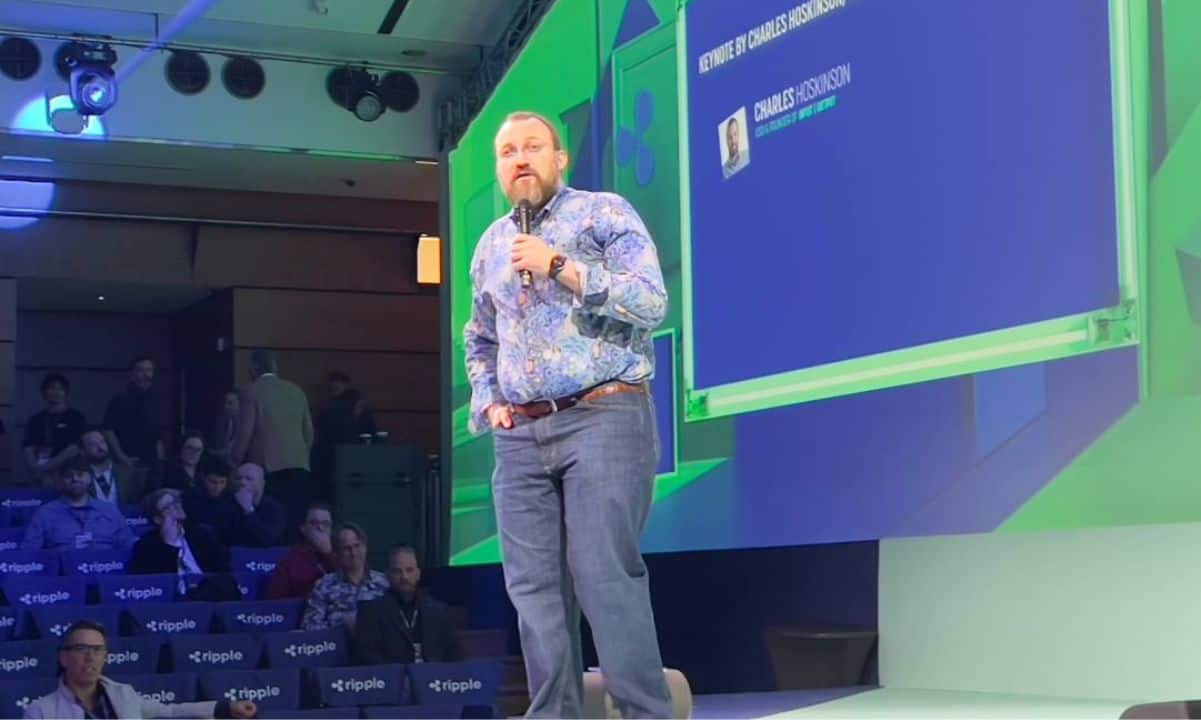
    Charles Hoskinson, a co-founder of the Cardano blockchain, has announced plans to transition the ADA community away from the social media platform X, formerly Twitter, following months of enduring what he describes as expletive-laden attacks.

    Hoskinson revealed in a late Thursday post on X that he has been in discussions with Phillip Pon, the chief executive of EMURGO, to develop a strategy for establishing a Discord-based hub. This initiative aims to foster a more positive and productive environment for the Cardano ecosystem.

    “Dropping by to let everyone know that I spoke with Phillip Pon, and we are working out a plan to create a discord for a great migration of the Cardano community from X,” Hoskinson wrote. He envisions the new platform offering “happy, positive, well-moderated channels,” a stark contrast to what he characterized as the “drama, lies, endless rage, and embittered people” prevalent on X.

    Despite his intention to move the community, Hoskinson indicated he would continue to use X for livestreams due to his substantial following, which exceeds one million users.

    The blockchain developer also stated that future “Ask Me Anything” sessions would be exclusively hosted on the Cardano and Midnight Discord servers. Midnight is a privacy-focused blockchain protocol developed by IOG.

    “I’ve seen some commentary that broadcasting means I’m back on X. For those people, I can’t solve stupid… Enjoy your scandals of the week and FUD,” he commented, dismissing suggestions that his continued use of X for broadcasts signified a change of heart.

    This proposed migration comes after months of Hoskinson publicly voicing concerns about the alleged toxicity X has introduced into the Cardano community. In an April 24 YouTube livestream, he mentioned working on an artificial intelligence project named Project Nyx, intended to automate some of his online interactions. However, X’s platform rules, which require AI-managed accounts to be labeled as bots, complicated these plans by potentially reducing post visibility.

    Last week, Cardano community member Christian Taylor conducted an analysis of approximately 130 responses to an X post urging users to cease “constant anti-@IOHK_Charles threads.” Taylor’s findings, aided by the AI tool Grok, highlighted two primary issues Hoskinson faces on the platform. Grok identified “raw toxicity,” with roughly one in three replies being hostile, abusive, or heavily profane. The AI also detected patterns of targeted harassment, including consistent linguistic styles, thinly veiled anonymous accounts, and “cross-chain references that point toward organized amplification.”

    However, the analysis also acknowledged that some negative comments stemmed from genuine community frustration, including concerns over financial losses, delivery timelines, and questions regarding Cardano’s leadership and their accountability.

    In market news, ADA, the native cryptocurrency of Cardano, saw a modest increase of over 3% following Hoskinson’s announcement, trading near $0.17 at the time of reporting. This uptick contrasts with the previous week, when a separate announcement by Hoskinson regarding a temporary break from social media led to an 11% drop in the coin’s value.

  • Moonshot AI’s Kimi: 300 AI Agents Now on Your Desktop

    Moonshot AI’s Kimi: 300 AI Agents Now on Your Desktop

    Moonshot AI Launches Kimi Work, a Desktop Agent for Localized AI Tasks

    Moonshot AI, a prominent Chinese AI startup, has unveiled Kimi Work, a new downloadable desktop agent designed for macOS and Windows. This application aims to bring AI capabilities directly to users’ machines, allowing it to access local files, control web browsers, and execute scheduled tasks. The Beijing-based company announced the product this week, offering free downloads while the app is currently undergoing internal testing.

    Bridging the Gap Between Cloud and Local AI

    Kimi Work builds upon the foundation laid by Moonshot’s WebBridge extension, which was released a month prior. WebBridge enabled AI agents to control real Chrome or Edge browser sessions locally. Kimi Work expands this concept into a comprehensive desktop product. The core proposition is a departure from the prevailing cloud-based AI model. Typically, users submit prompts to cloud servers, which then utilize sandboxed browsers to perform actions and return results. Kimi Work reverses this paradigm by operating directly on the user’s computer.

    Local Access and Enhanced Capabilities

    As a locally installed application, Kimi Work gains direct access to a user’s files and can interact with their computer system. This allows it to perform a range of tasks, such as manipulating PDFs, organizing desktop files, retrieving stock data from a browser, compiling reports in HTML format, and sending them via email. The functionality is positioned as a fully developed and integrated solution within the Kimi ecosystem, offering unique features not found in competing tools like OpenClaw or Hermes.

    Agent Swarm and Browser Integration

    A key innovation in Kimi Work is its Agent Swarm feature. This allows the agent to initiate multiple sub-agents in parallel, potentially up to 300, with each sub-agent handling a distinct part of a larger task. The integration with WebBridge is also crucial, as it grants the agent control of the user’s actual browser through the Chrome DevTools Protocol. This method ensures that logged-in sessions and cookies remain on the user’s machine.

    Scheduling, File Access, and Market Data

    Kimi Work includes a built-in Cron engine for scheduling tasks based on daily, hourly, or conditional triggers. A “Keep Computer Awake” toggle is available for tasks that need to run overnight. The application also features a local file layer that enables the agent to read mounted folders and run Python scripts in the background. Furthermore, Kimi Work comes with pre-integrated native market data for A-shares, Hong Kong stocks, and U.S. equities, eliminating the need for API setup. Completed research can be directly converted into PowerPoint or Excel formats.

    Underlying Technology and Context Window

    Internally, Kimi Work is powered by Moonshot’s Kimi K2.6 model, a mixture-of-experts architecture with approximately one trillion parameters. Released on April 20, K2.6 activates around 32 billion parameters per token and boasts a 256K-token context window. This extensive context window is significant, enabling the agent to retain a large amount of information across complex, multi-step workflows without losing track of its initial objectives. The Kimi K2.6 model also served as the base for Cursor’s specialized coding LLM, “Composer 2.”

    Cloud Inference and On-Device Options

    While Kimi Work’s actions occur locally, the inference for the K2.6 model can still be routed through Moonshot’s cloud API. For users seeking complete on-device inference, the model weights are available on Hugging Face under a Modified MIT License. However, running a trillion-parameter model locally requires substantial hardware resources that are not typically found in standard home user setups.

    Privacy Considerations and Safety Measures

    The “local” aspect of Kimi Work refers to where actions are executed, not necessarily where the AI model runs. The privacy implications are nuanced, as WebBridge’s control over the user’s logged-in browser means it could potentially access sensitive information like bank accounts, emails, and internal company tools. Researchers have previously highlighted the risk of AI agents exhibiting “blind goal-directedness,” where they execute tasks without fully recognizing potential risks. Moonshot has addressed this by including an “ask before acting” mode, which requires user approval before modifying files or running code. While this is a crucial safety feature, it does not guarantee absolute security.

    The Growing Desktop Agent Landscape

    The market for desktop AI agents has rapidly expanded. Anthropic’s Claude has offered full desktop computer use since late 2024, while OpenAI released Codex Background Computer Use for macOS in April 2026, enabling parallel desktop sessions. Google’s Gemini computer use, derived from Project Mariner, focuses on browser workflows. Microsoft’s Copilot Studio, introduced in May 2026, targets enterprise automation and integrates models from OpenAI and Anthropic.

    User Demand for Flexibility

    The trend suggests a user preference for flexibility over being confined to a single provider. Tools like OpenClaw, Hermes, and NanoClaw offer local platforms that can configure AI agents using any LLM via API. Kimi Work distinguishes itself with its local-first design combined with the 300-agent swarm capability. While many competitors operate in cloud sandboxes, limiting their access to real logged-in sessions, or offer desktop control without coordinated parallel agents, Kimi Work aims to provide both. A trade-off is that tasks cease when the laptop is closed, unlike Moonshot’s cloud-based Kimi Claw, which operates 24/7.

    Pricing and Availability

    Kimi Work is available as a free download, with advanced agent features requiring a paid subscription. Moonshot’s Moderato tier starts at $19 per month and includes access to K2.6, Deep Research, and Kimi Code. The Agent Swarm feature with a limited number of sub-agents is unlocked at the Allegretto tier ($39/month). The full 300-agent swarm and professional workflows are available in the Allegro ($99/month) and Vivace ($199/month) tiers. Downloads for macOS (Apple Silicon) and Windows are accessible at kimi.com. The internal testing phase means some features may evolve before a broader rollout.


  • Pi Network (PI) Shows 3 Bullish Signs, Potential Bottom Reached

    Pi Network (PI) Shows 3 Bullish Signs, Potential Bottom Reached

    Pi Network’s Ecosystem Evolves as Key Indicators Hint at Potential Price Rebound

    The development team behind Pi Network is continuing to refine its ecosystem, with the recent transition to protocol v24 marking a significant milestone. An upgrade to v25 is anticipated later this month.

    Despite these advancements, the price of PI has yet to see a substantial recovery. However, several key factors suggest that a turnaround may be on the horizon.

    PI first entered the trading market in February of last year, initially drawing considerable investor interest. At its peak, the cryptocurrency’s valuation soared to approximately $3, but this surge proved to be short-lived. In the months that followed, the price experienced a sharp decline, currently trading around $0.12. This figure is close to its all-time low, representing a staggering 96% drop from its highest point.

    While prevailing market conditions remain bearish, three important elements point towards a potential rebound for PI. The first is the asset’s Relative Strength Index (RSI), which has fallen to an extremely oversold level of approximately 2.6 on a monthly scale. This indicates that the valuation has depreciated too rapidly over a short period, a pattern that has historically preceded price recoveries. Conversely, RSI readings above 70 typically signal an impending market correction.

    Another significant development is the decrease in the amount of PI tokens held on exchanges. After reaching an all-time high of over 550 million tokens, the figure has recently dropped to 545 million. This reduction is viewed as a bullish indicator, as it lessens immediate selling pressure.

    Finally, upcoming token unlocks warrant close observation. Today, June 12, is projected to be a peak unlock day, with nearly 15 million coins scheduled for release. However, the pace of unlocks is expected to slow considerably over the subsequent four weeks. The average daily unlock rate is projected to decrease to 4.8 million, which could contribute to a more stable environment conducive to price recovery.

    The PI community has long believed that a listing on Binance, the world’s largest cryptocurrency exchange, would serve as a powerful catalyst for a significant price increase. Last year, Binance appeared to be considering such a move after polling its users on their desire to see PI available on the platform. Despite an overwhelming majority voting in favor, the exchange has yet to confirm a listing.

    Speculation among some X users suggests that an announcement regarding a potential Binance listing could be made on June 28, a date recognized by Pioneers as Pi2Day. Other developments anticipated on this symbolic day include initiatives aimed at ecosystem growth and the introduction of new products. It is important to note that the Pi Network team may not make any announcements on this date, and therefore, managing expectations is advisable.

  • Americans Bet $34 Billion on Offshore Prediction Markets

    Americans Bet $34 Billion on Offshore Prediction Markets

    Americans may have contributed as much as $34 billion to offshore prediction market trading volumes in the 12 months leading up to April 2026, according to a new study commissioned by the Coalition for Prediction Markets. This industry group includes regulated operators such as Kalshi, Crypto.com, and Coinbase.

    The research, conducted by Rutgers professor Harry Crane, a member of the CFTC Innovation Advisory Committee, compared data from offshore platforms—those that do not permit U.S. users and are not regulated by the Commodity Futures Trading Commission (CFTC)—with platforms exclusively serving U.S. users or non-U.S. users.

    “As a share of all U.S. prediction market activity (including regulated and offshore platforms), we estimate 12.5–31.5% of U.S. prediction market volume occurs on offshore platforms,” the study stated.

    “Based on current third-party estimates of industry growth, U.S.-based activity on offshore prediction markets could grow to an estimated $133 billion in annual volume by 2030, assuming constant relative market shares of regulated and offshore markets,” the study added.

    Offshore Market Activity

    Harry Crane analyzed the largest offshore prediction market exchanges, which are prohibited from serving U.S. users. His findings indicate that between $11 billion and $34 billion in offshore prediction market activity originates from U.S. users, a figure described as a conservative estimate.

    Polymarket’s Role

    The study highlighted Polymarket, the largest offshore platform, estimating that approximately $10.6 billion to $26.7 billion of its $55.6 billion in trailing 12-month trading volume was attributable to U.S. users, despite their technical prohibition on the platform. Polymarket, which was compelled to move offshore by the CFTC in 2022, announced last fall that it had received regulatory approval to operate in the U.S. Since then, it has gradually launched its regulated Polymarket U.S. platform, though the study’s data did not separate volumes from this new entity due to reliability concerns. Data from a Dune dashboard indicates that the regulated U.S. version of Polymarket has posted approximately $5 billion in notional volumes to date.

    A representative for Polymarket did not immediately respond to a request for comment.

    Broader Concerns

    While Polymarket was the largest offshore market examined, the study also analyzed data from other unregulated markets, including Opinion, Predict, Limitless, and Myriad. (Myriad is a product of Decrypt’s parent company, Dastan).

    The Coalition for Prediction Markets, comprised of regulated operators, views this trend as a significant concern, arguing that offshore markets do not adhere to the same standards as those operating under U.S. regulations.

    “Americans are using VPNs to access unregulated, offshore prediction market platforms that offer contracts on death and war,” the Coalition posted on X. “Now, we finally know how big this market is.”

    The Coalition further stated, “These platforms are not subject to the same customer verification requirements, anti-money laundering controls, or market integrity oversight that protect American traders.”

    Regulatory Scrutiny

    The findings emerge as the CFTC faces increasing pressure and scrutiny. On Wednesday, the agency proposed new rules that would ban market outcomes dependent on war or assassination. However, states and lawmakers have been pushing back against the CFTC’s regulatory approach and the expanding scope of prediction markets under its purview.

    CFTC Chairman Mike Selig has maintained a firm stance on the agency’s jurisdiction over these platforms, stating in February, “see you in court,” as states began challenging the regulator’s authority. Earlier this week, Democratic Senator Elizabeth Warren sought clarification on the regulator’s oversight capabilities, questioning its effectiveness in regulating prediction markets, particularly in light of significant workforce reductions.