Category: Uncategorized

  • Solana Surges to 13-Month High in Unique Active Addresses

    Solana Surges to 13-Month High in Unique Active Addresses

    Solana Network Sees Surge in Activity Amidst ETF Outflows

    Solana’s blockchain has experienced its most active period in over a year, with unique active addresses reaching 1.88 million as of October 9, 2026. This figure represents a 13-month high, according to on-chain data compiled by SolanaFloor and the Blockworks analytics dashboard.

    However, the surge in user activity on the network contrasts with the performance of U.S. spot SOL Exchange Traded Funds (ETFs), which have seen significant money outflows.

    Network Growth Accelerates

    Santiment data indicates that Solana’s network growth has accelerated by an impressive 124% since early September 2026. This translates to an average of approximately 1.71 million new wallets being created daily. Daily active addresses have also seen a sharp increase, climbing 58% to roughly 4.27 million unique wallets. It is important to note that these figures are derived from different tracking sources and should not be considered directly comparable.

    Furthermore, the number of funded wallets—addresses holding a balance—rose by 38.5% month-over-month, reaching a total of 16.1 million.

    Record Program Activity and Stablecoin Usage

    In September 2026, the Solana network recorded over 8,400 monthly active programs, setting a new record. Programs on Solana function as smart contracts, powering applications, exchanges, games, and payment tools on the blockchain.

    Daily active stablecoin addresses on Solana also reached a significant milestone, hitting 888,000 in September. This represents a substantial 269% increase compared to the same month in the previous year. The total stablecoin supply on the network has now surpassed $15 billion, distributed across more than 14 million addresses.

    ETF Outflows and Future Outlook

    Despite the robust on-chain activity, U.S. spot SOL ETFs have recorded net outflows exceeding $22 million in early October. This reversal follows a September that saw strong inflows into these same investment products.

    The substantial growth in stablecoin activity may offer a key insight into Solana’s evolving use case. The 269% year-over-year increase in daily active stablecoin addresses, coupled with over $15 billion in supply, suggests that Solana is increasingly being utilized for dollar transactions, moving beyond just token trading.

    Key metrics to monitor moving forward include the sustained level of unique active addresses around the 1.88 million mark, the continuation of funded wallet growth at a pace comparable to its recent 38.5% monthly increase, and whether ETF flows will return to positive territory.

  • DogeOS Testnet Launches Ahead of Dogecoin Upgrade

    DogeOS Testnet Launches Ahead of Dogecoin Upgrade

    Dogecoin’s New Frontier: A Joke Coin Eyes Decentralized Finance with DogeOS

    Dogecoin, a cryptocurrency famously born from a meme, is charting a new course, moving beyond its origins as a joke and a payment mechanism to explore the burgeoning world of decentralized finance (DeFi). The team behind the MyDoge wallet has launched DogeOS, a novel application layer, with its public testnet, dubbed Chikyū, going live on September 30, 2026.

    Building on Dogecoin’s Foundation

    Chikyū, operating under chain ID 6281971, aims to provide developers with a dedicated platform for building smart contract applications that ultimately settle on the Dogecoin blockchain, all without necessitating alterations to the original chain’s core protocols.

    DogeOS functions as an EVM-compatible zero-knowledge rollup. This architecture allows transactions to be processed off the main Dogecoin chain in batches, with cryptographic proofs subsequently verifying the validity of this bundled activity. The EVM compatibility is a key feature, meaning DogeOS utilizes the same programming language as Ethereum. This interoperability is designed to enable developers familiar with Ethereum’s tools to deploy applications on DogeOS with relative ease, avoiding the need to start from scratch.

    Ambitious Performance Targets

    The testnet’s performance metrics are a significant highlight. DogeOS aims to achieve approximately 300 transactions per second (TPS) with block times of around three seconds. This represents a substantial leap compared to Dogecoin’s base layer, which currently handles about 30 TPS and generates blocks roughly every minute. If these targets are met, it would translate to a tenfold increase in throughput and blocks that are approximately twenty times faster.

    DOGE at the Core of Gas Fees

    Gas fees on DogeOS will be paid in DOGE, ensuring the native token remains central to the network’s operations. To facilitate testing, users can claim 42.069 test DOGE daily from a faucet, a nod to the project’s meme-infused origins that has evidently persisted through its engineering development.

    Expanding Use Cases Beyond Tipping

    The envisioned applications for DogeOS extend far beyond its initial use case of internet tipping. The development team has outlined plans for lending protocols, perpetual futures exchanges, and a broader spectrum of DeFi applications, alongside gaming and consumer-focused applications tailored for DOGE holders.

    Several projects have already begun integrating with the testnet. Superposition Finance is developing lending solutions, Barkswap is focusing on liquidity, and USDoge is working on stablecoins, with Derps and other projects also in the pipeline.

    Seed Funding and Foundation Support

    The development of DogeOS has been bolstered by significant financial backing. The project secured $6.9 million in a seed funding round in May 2025, led by Polychain Capital. Furthermore, DogeOS has garnered support from within the established Dogecoin community, with Timothy Stebbing of the Dogecoin Foundation endorsing the project as a means to enhance utility at a higher layer without modifying the foundational ledger.

    Security Model and Future Development

    The security of rollups is intrinsically linked to the systems that validate their operations. Currently, DogeOS employs a hybrid approach, incorporating validators, a trusted execution environment, and a permissioned sequencer. A select group of authorized parties is responsible for ordering transactions and providing final sign-offs. State changes are only accepted upon the validation of zero-knowledge proofs and the receipt of validator signatures.

    A crucial missing piece for enhanced security is native proof-checking directly on the Dogecoin blockchain. A proposal for a Dogecoin Core upgrade, known as OP_CHECKZKP, which would enable the base chain to verify zero-knowledge proofs natively, was submitted on July 22, 2025, but has yet to be implemented. Consequently, no mainnet launch timeline for DogeOS has been publicly announced.

    Until Dogecoin can independently verify these proofs, the rollup’s security will partially rely on the integrity of its operators, rather than being solely anchored by mathematical principles on the main chain.

    The DOGE Token’s Evolving Role

    The design of DogeOS, with its reliance on DOGE for gas fees, represents the most direct integration of the native token. Should DogeOS achieve substantial activity on its mainnet, every transaction, loan, and trade executed on the layer would consume DOGE, thereby bestowing the token with a functional utility that transcends speculation and basic payments.

    For developers, EVM compatibility significantly lowers the barrier to entry. Teams already active on Ethereum-compatible chains can readily port their existing code, which helps explain the early emergence of lending, liquidity, and stablecoin projects on the testnet. The development of stablecoins, exemplified by USDoge, is particularly noteworthy, as DeFi ecosystems often require dollar-pegged assets for trading pairs and collateral to foster growth. The inclusion of a stablecoin project on the testnet addresses this fundamental building block.

    Key Risks and Future Outlook

    The primary challenges facing DogeOS revolve around timing and decentralization. With the OP_CHECKZKP proposal still pending and no mainnet launch date established, DogeOS currently operates with a more centralized security framework than its zero-knowledge branding might initially suggest.

    Key developments to monitor include progress on the OP_CHECKZKP proposal within Dogecoin Core, any forthcoming announcements regarding a mainnet schedule, and the extent to which testnet projects like Superposition Finance and Barkswap attract significant developer and user engagement.


  • F2Pool Co-Founder’s Address Exchanges Bitcoin for Ethereum, On-Chain Data Shows

    F2Pool Co-Founder’s Address Exchanges Bitcoin for Ethereum, On-Chain Data Shows

    An address tied to F2Pool co-founder Wang Chun recently exchanged 235.5 Wrapped Bitcoin (WBTC), valued at approximately $19.31 million, for 7,848.5 Ethereum (ETH). This transaction was flagged by on-chain analyst EmberCN shortly after Bitcoin’s price fell below $80.5K.

    The verified details suggest the quantities of WBTC and ETH exchanged, their approximate U.S. dollar value, and the timing of the trade relative to Bitcoin’s price movement. Onchain analyst EmberCN flagged this specific trade, providing an initial observation of the activity.

    While some observers interpret this on-chain activity as part of a longer-term strategy, such interpretations carry inherent limitations. A source claim suggests this is “the latest move in a months-long bet that sees ETH outrunning BTC from here on out.” However, attributing definitive future market performance or investor conviction solely based on this single transaction is speculative, and the metric does not suggest price direction.

    The exchange occurred in the context of a recent dip in Bitcoin’s price. While the address is linked to F2Pool co-founder Wang Chun, the specific motivations for this exchange remain unconfirmed beyond the general interpretation of a potential preference for ETH over BTC in the longer term.

    This event, as flagged by EmberCN, highlights the ongoing dynamic between Bitcoin and Ethereum. While such transactions can serve as signals for potential shifts in investor sentiment, it is crucial to approach their interpretation with caution. The factual basis of the exchange is clear, but the broader implications and future market movements remain subjects of analysis rather than certainty.

    Why This Matters

    An address associated with F2Pool co-founder Wang Chun exchanged 235.5 WBTC for 7,848.5 ETH. The trade is interpreted by some as part of a bet on Ethereum outperforming Bitcoin, though this interpretation is speculative.

    Broader Context

    The article describes a specific on-chain transaction involving a known figure in the crypto space, framed within the context of a broader market sentiment or prediction regarding the performance of Bitcoin versus Ethereum.

  • Binance ETH Reserves Plummet Amid Withdrawal Surge

    Binance ETH Reserves Plummet Amid Withdrawal Surge

    Binance’s Ethereum Holdings Hit Six-Month Low Amidst Record Withdrawals

    Binance, the world’s largest cryptocurrency exchange, has seen its Ethereum reserves dwindle to their lowest point in six months. In early October 2026, the exchange held 3.47 million ETH, as users continued to withdraw coins at an unprecedented rate.

    Steady Decline in Reserves

    The latest figure of 3.47 million ETH follows a previous reading of 3.57 million ETH. In late September 2026, Binance’s holdings stood at 3.54 million ETH, indicating a consistent downward trend rather than a temporary fluctuation. This decline is even more pronounced when viewed over a longer period. In August 2026, Binance held approximately 3.92 million ETH, meaning its current reserves are down by 11.5%.

    Record Withdrawal Activity

    The outflow of ETH from Binance also reached a new milestone. On October 6, the exchange processed over 320,000 ETH withdrawal transactions, marking the highest number of such transactions on record.

    Broader Market Downturn

    This surge in withdrawals coincided with a challenging period for Ethereum itself. The cryptocurrency experienced a price drop of approximately 10-11% over three days, wiping out more than $38 billion from Ethereum’s market capitalization. The broader altcoin market fared no better, collectively losing over $110 billion in market value during the same three-day window.

    Divergent Investor Behavior

    While retail and on-exchange users were actively moving ETH out of Binance and into their personal wallets, institutional products presented a contrasting picture. US-listed spot ETH exchange-traded funds (ETFs) recorded eight consecutive days of outflows in October 2026, totaling around $580 million. This means that capital was exiting the regulated, Wall Street-backed version of ETH concurrently with coins leaving Binance.

    Typically, ETF outflows signify investors redeeming shares and reducing their exposure. Conversely, exchange withdrawals often indicate that holders are moving their assets to more secure locations for safekeeping.

    Shift Towards Self-Custody

    Research suggests that many Binance users are transferring their assets into self-custody wallets or utilizing them for other purposes, rather than selling them amidst weak market prices. Exchange reserve data is considered a key on-chain metric because coins held on an exchange are readily available for sale, whereas those in private wallets are generally less accessible for immediate liquidation.

    Consistent Trend of Holding

    The decline in Binance’s Ethereum reserves aligns with a broader trend observed throughout 2026, where withdrawals have frequently reflected a preference for holding assets rather than distributing them. The October figures reinforce this pattern.

    Potential Destinations for Withdrawn ETH

    While the primary driver appears to be a move towards self-custody, other explanations for the outflows are also plausible. Withdrawn ETH could be directed towards staking, other platforms, or on-chain applications. Research points to “other productive uses” as a potential destination for these assets.

    Institutional Caution vs. Retail Accumulation

    The divergence between ETF outflows and exchange withdrawals is a significant development. Eight consecutive days of outflows from ETH ETFs, totaling approximately $580 million, suggest that a segment of institutional investors is stepping back. This contrasts with on-chain holders who appear to be accumulating or holding their positions.

    The widening gap in behavior between different types of ETH investors is evident. Retail and exchange users seem to be maintaining their holdings, while some fund investors are exiting the market.

  • Anthropic Unlocks Top AI for Cybersecurity Scanning

    Anthropic Unlocks Top AI for Cybersecurity Scanning

    Anthropic Launches “OSS Scanner” to Proactively Identify Code Vulnerabilities in Open-Source Projects

    San Francisco, CA – Artificial intelligence company Anthropic has unveiled “OSS Scanner,” a new opt-in service designed to allow open-source software projects to request scans of their code for vulnerabilities using Anthropic’s most advanced AI models, including the undisclosed Claude Mythos. The initiative, launched on Thursday, October 9th, saw immediate interest from prominent cryptocurrency-related projects, with Nethermind, ZEUS, and VirtEngine submitting applications within the first 24 hours.

    The move comes as the cybersecurity landscape faces increasing pressure from AI-assisted attacks, prompting projects to seek an edge in patching defensive gaps before malicious actors can exploit them.

    A Faster Approach to Vulnerability Detection

    OSS Scanner is an evolution of Anthropic’s previous Project Glasswing. Historically, Anthropic would periodically scan open-source software for vulnerabilities, but each discovery required a manual review before it could be reported, a process that proved to be slow. In an official announcement, Anthropic explained that the pace of manual review meant they “could not always share vulnerabilities as quickly as possible.” OSS Scanner aims to significantly shorten this defensive window by delivering scan reports directly to participating projects immediately after completion.

    Early Adopters Seek Critical Audits

    Among the first to apply is Nethermind, a developer of Ethereum client software, which has requested an audit of its entire codebase on GitHub. ZEUS, a Bitcoin and Lightning wallet, is seeking to identify weaknesses that could impact payments, private keys, and Lightning services. VirtEngine, a decentralized computing market built on the Cosmos SDK, is another applicant. Anthropic will evaluate each request on a case-by-case basis, considering the project’s infrastructure importance, exposure to remote attacks, and user dependency before deciding whether to accept the audit.

    The Growing Threat of AI-Powered Attacks

    The urgency behind these applications is underscored by several AI-assisted attacks that have occurred this year. In August, Bitcoin exchange service Boltz temporarily suspended operations after attackers developed exploits faster than the team could patch them. Crypto payment service PayPerQ has also reported multiple suspected AI-driven attacks.

    These incidents align with a warning issued by Anthropic in a cybersecurity mission statement released concurrently with the OSS Scanner announcement: in the short term, AI’s balance tips toward the attacker. AI lowers the barrier to entry for launching attacks, while verifying and fixing vulnerabilities still relies on human effort and cannot keep pace. The decentralized nature of crypto infrastructure, the inability to enforce client upgrades, and its 24/7 remote accessibility make it particularly vulnerable in this asymmetric environment.

    A Defensive Advantage in an Asymmetric Landscape

    Anthropic positions OSS Scanner as a “defensive advantage,” leveraging its most powerful models to identify vulnerabilities that attackers might exploit in open-source projects. This direction resonates with the current sentiment in the crypto community. Ethereum researcher Justin Drake has repeatedly called for a “shelter-in-place” mode, expressing concerns that AI’s advancements in cryptography and vulnerability discovery could outpace defensive upgrade capabilities.

    Structural Challenges and Future Outlook

    However, OSS Scanner also highlights a structural issue: access to frontier AI models remains limited. The service is currently offered unilaterally by Anthropic and operates on an application and review basis, meaning not all projects will receive audit resources. As attackers gain access to AI capabilities through lower barriers, the long-term asymmetry will persist if defenders rely solely on the goodwill of a few AI companies to patch vulnerabilities.

    Key questions for the crypto community moving forward include whether OSS Scanner will expand to offer access to more models or APIs for developers to conduct their own scans. It remains to be seen if other AI companies, such as OpenAI, Google, and xAI, will introduce similar services. The ultimate concern is whether AI-powered defense will become an exclusive “security privilege” affordable only to large corporations.

  • Bitcoin Surges Past $81,000 Amidst $1 Billion Liquidations

    Bitcoin Surges Past $81,000 Amidst $1 Billion Liquidations

    Bitcoin’s price extended its decline for a fourth consecutive day, briefly dipping below $81,000 before recovering, as the total cryptocurrency market capitalization fell below $2.8 trillion to a one-month low. The immediate concern is whether Bitcoin can withstand volatile spot Bitcoin ETF flows, forced selling, and a less favorable macroeconomic environment.

    Key Support Levels Under Pressure

    Currently, $80,000 represents both a psychological barrier and a critical dividing line for Bitcoin’s recent bullish trend. While the price has not yet confirmed a definitive break below this level, the prevailing pressure makes it a more significant test than a typical intraday fluctuation. Demand from Bitcoin ETFs is now a factor in this crucial test, although daily fund flows do not establish a fixed price floor.

    Momentum in spot ETF inflows had previously slowed and shifted to net outflows over the preceding four trading days. This change has removed a significant source of demand that had been underpinning the market.

    Macroeconomic Headwinds Mount

    The broader economic landscape is adding further pressure. Rising U.S. Treasury yields, a strengthening dollar, and a general aversion to risk among investors can weigh on high-beta assets as they re-evaluate the cost of holding risk. The resulting pressure from yields and the dollar on Bitcoin is significant because it can dampen demand even without any crypto-specific catalysts.

    Derivatives Fuel Forced Selling

    Derivatives markets provided a more direct source of forced selling. Over a 24-hour period, more than 180,000 traders faced liquidations, with total crypto liquidations exceeding $1 billion, including $940 million in long positions.

    As leveraged long positions were unwound amid falling prices, these liquidations contributed to short-term downward momentum. This also illustrates how sharp market movements are not solely driven by spot selling. Broader cryptocurrency leverage and liquidation pressures can amplify price breaks, leaving the market vulnerable to further forced closures if prices continue to decline.

    Technical Outlook and Potential Downside

    Bitcoin briefly traded below $82,000 a few hours ago before reclaiming the level. The failure to maintain a close above $82,000 serves as a warning that the bullish structure may be compromised, with $80,000 now acting as the next, more decisive confirmation level.

    A decisive break below $80,000 would pose a threat to the higher-low trend that has been intact since July. Subsequent support levels are analytical downside areas rather than guaranteed targets, marking potential zones where the market might find support if selling pressure persists.

    Broader Market Weakness

    The selling pressure was not confined to Bitcoin. Major crypto assets experienced declines of 3% to 5% over 24 hours, with Ethereum trading near $2,400, BNB around $720, and XRP around $1.40. This widespread weakness is consistent with a market-wide reduction in risk appetite, rather than a move isolated to Bitcoin.

    Path to Stabilization

    A sustained hold above $82,000, coupled with a stabilization in ETF flows, would alleviate the immediate pressure on support levels. Neither of these conditions has been established by the brief rebound alone. The latest price action shows Bitcoin reclaiming a level after trading below it.

    The downside scenario becomes more concerning if Bitcoin decisively loses $80,000 while ETF outflows continue, long liquidations persist, Treasury yields climb, and the dollar strengthens further. In such a scenario, the $75,000 area would come into focus.

    For now, Bitcoin’s $80,000 support remains a risk line rather than a confirmed breakdown. The next signals to watch will be whether the price can hold above $82,000 and whether selling pressure abates. Without such stabilization, ETF outflows and leveraged positioning leave the market exposed to another test of its structural floor.

  • Ripple Prime Ventures into Leveraged ETF Financing Market

    Ripple Prime Ventures into Leveraged ETF Financing Market

    Ripple Prime is expanding its services into the leveraged exchange-traded fund (ETF) financing market by offering total-return swaps to fund managers. This strategic move, building on the company’s acquisition of Hidden Road, aims to capture recurring fees from financing charges in a segment traditionally dominated by banks, while also exposing Ripple to market risks associated with the underlying assets.

    The U.S. leveraged ETF market is substantial, comprising 593 funds with over $256 billion in assets, according to Morningstar Direct data cited in a Wall Street Journal report. Ripple Prime’s entry into this market tests whether a firm originating from the crypto industry can successfully compete in a balance-sheet-intensive segment long held by traditional financial institutions.

    Strategic Expansion and Acquisition

    Following its acquisition of Hidden Road, which was completed in 2025, Ripple’s prime brokerage business was established as Ripple Prime. The acquisition, announced in April 2025 for $1.25 billion, integrated Hidden Road’s multi-asset capabilities in clearing, brokerage, and financing. Ripple Prime’s services were recently highlighted with an announcement on Tuesday, October 6, detailing its brokerage, clearing, and financing offerings for Brevan Howard.

    Financing Mechanism and Revenue Potential

    Leveraged ETFs utilize derivatives, including total-return swaps, to magnify daily investment performance. Ripple Prime’s offering of these swaps allows fund managers to finance their ETF positions. For example, the Tradr 2X Long SDNK Daily ETF pays Ripple a rate tied to the overnight bank funding rate plus four percentage points. As of Wednesday, October 7, this translated to approximately 8% of the fund’s assets on an annualized basis, representing a source of recurring fees for Ripple Prime.

    Inherent Risks and Competitive Landscape

    However, this expansion also introduces market risks. Providing swap financing means Ripple Prime is exposed to the performance of the underlying assets financed by these swaps. While the move diversifies Ripple’s business beyond traditional crypto services, it enters a competitive landscape where firms like Jane Street and Clear Street are also gaining traction.

    Implications for XRP

    The implications for XRP, the cryptocurrency associated with Ripple, appear limited. The news is viewed more as a long-term ecosystem development rather than a direct bullish catalyst for XRP’s price. Unless Ripple Prime’s expansion demonstrably creates measurable demand for XRP, increases its token utility, or triggers fresh buying interest, the immediate price impact on XRP is expected to be constrained. XRP is currently trading around $1.41, with little immediate sign of a positive market reaction to this news.

    Ripple’s broader institutional strategy includes other markets such as custody and tokenization-related partnerships, exemplified by its work with Meritz Securities in South Korea. However, it is important to note that XRP does not underlie or collateralize these ETF swaps. Investors are advised to monitor XRP’s trading volume, market sentiment, and price action around key resistance levels before interpreting this expansion as a direct driver of a rally.

    The success of Ripple Prime in this new venture hinges on its ability to navigate the complexities of balance-sheet-intensive financing and compete effectively against established players, while managing the inherent market risks associated with leveraged ETF financing.

    Broader Context

    Source materials place the factual news in this context: The U.S. leveraged ETF market has 593 funds and more than $256 billion in assets, including XRP, and Ripple Prime is making itself known in the news by entering the financing chain, providing total-return swaps to fund managers.

  • Thailand Finalizes Spot Bitcoin and Ether ETF Regulations, Effective October 16

    Thailand Finalizes Spot Bitcoin and Ether ETF Regulations, Effective October 16

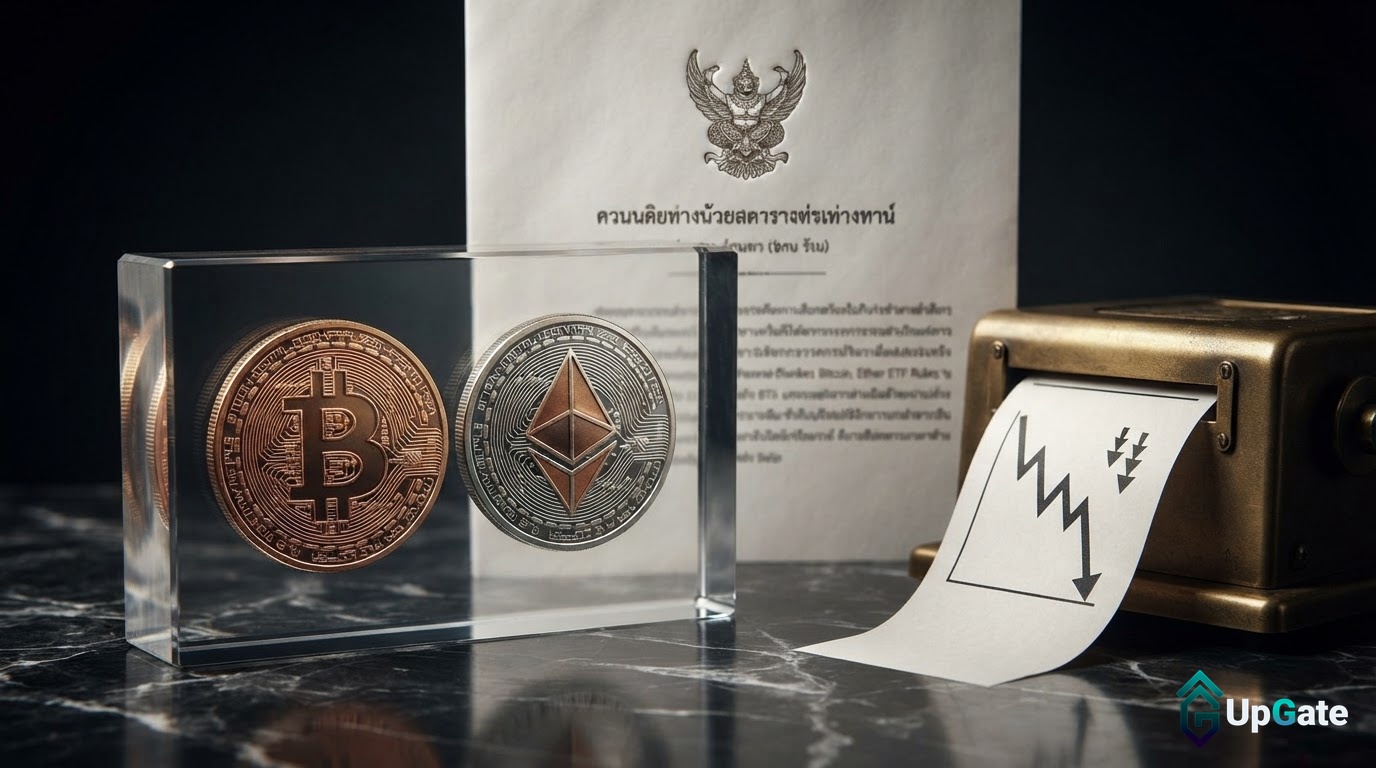
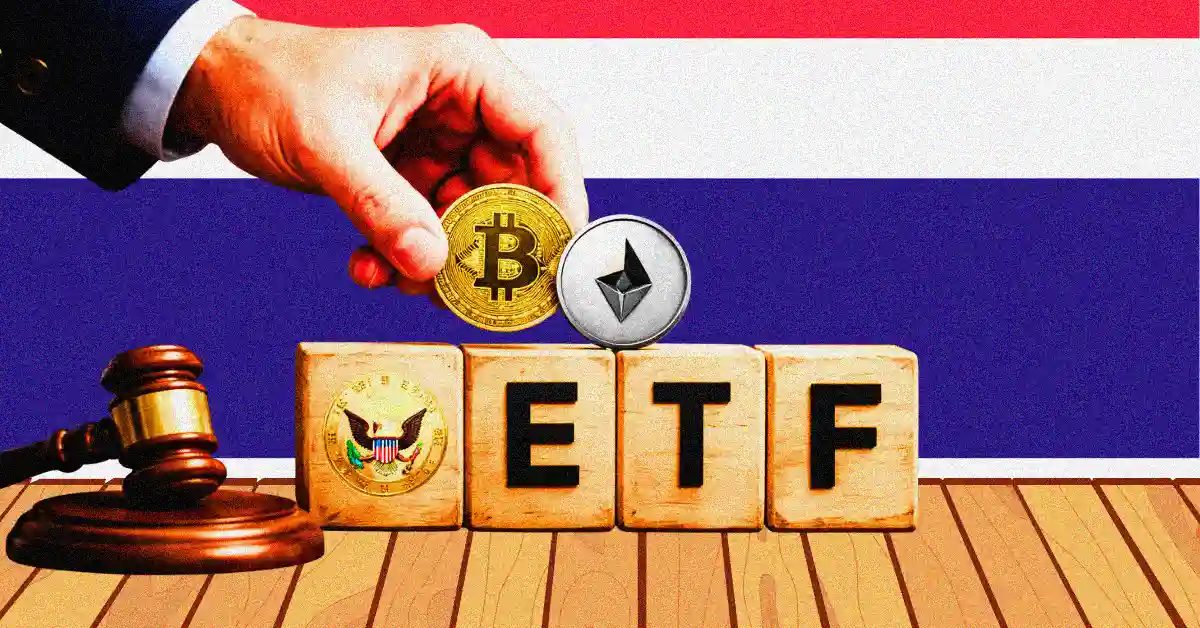
    Thailand’s Securities and Exchange Commission (SEC) has finalized regulations for spot exchange-traded funds (ETFs) tracking Bitcoin and Ether, with the rules set to take effect on October 16th. This development paves the way for such investment products to be listed on the Thailand Stock Exchange (SET).

    The finalized framework, comprising 11 official announcements, mandates that these ETFs will initially focus on a single cryptocurrency asset, with Bitcoin and Ether as the sole qualified underlying assets. The regulations prohibit the mixing of multiple tokens within a single ETF and explicitly forbid exposure through futures or other derivative contracts. To ensure alignment with the underlying asset, each fund must maintain an average net exposure of at least 80% of its net asset value (NAV) to the single crypto asset annually.

    Regarding investor access, Thai-domiciled mutual funds and private equity funds may invest in these ETFs, subject to existing limits. However, retail investors’ access to overseas crypto ETFs through brokers remains restricted, primarily available to institutional and ultra-high-net-worth clients.

    The regulatory process included principle consultations from April to May 2026 and specific draft consultations from August to September 2026. While the regulations are finalized, asset management companies must still submit applications and obtain official approval before any products can be listed. The scope of qualified crypto assets may expand in the future, depending on market liquidity, acceptance, network security, and investor protection.

    These finalized regulations mark a significant step for Thailand in establishing a regulated environment for digital asset investment products, aiming to enhance investor protection and market integrity.

    Why This Matters

    The materials describe a narrow update: The Thailand SEC has finalized regulations for the issuance and management of Bitcoin and Ether spot ETFs. The future scope of qualified crypto assets to be determined based on market liquidity, acceptance, network security, and investor protection.

    Broader Context

    Source materials place the factual news in this context: Thailand SEC拟开放「散户海外加密衍生品」!三道门槛:合规交易所、中央清算、风险控制.

  • Thailand Finalizes Bitcoin, Ether ETF Rules; Market Faces Declining Trader Activity

    Thailand Finalizes Bitcoin, Ether ETF Rules; Market Faces Declining Trader Activity

    Thailand’s securities regulator has finalized the rules for Bitcoin and Ether exchange-traded funds (ETFs), with the first listings permitted to begin on October 16. This regulatory step comes as the domestic market for such products has experienced a significant decline in active traders since the start of 2024.

    The framework established by Thailand’s securities regulator allows for the introduction of cryptocurrency-backed ETFs, with the Securities and Exchange Commission setting October 16 as the commencement date for listings.

    However, the market into which these ETFs will launch is facing a contraction. Reports indicate that the local market has lost more than half of its active traders since the beginning of the year. This reduction in market participation presents a potential challenge for the adoption and success of the newly permitted Bitcoin and Ether ETFs.

    The finalized rules and the upcoming listing date signify a regulatory advancement for digital assets in Thailand. The concurrent trend of decreasing active traders, however, suggests that initial demand may be constrained, highlighting a juxtaposition between regulatory progress and current market conditions.

    Why This Matters

    The materials describe a narrow update: Thailand’s securities regulator has established the framework for bitcoin and ether exchange-traded funds (ETFs), with the initial offerings permitted to be listed starting October 16. New ETF listings may face limited domestic demand due to a shrinking trader base.

    Broader Context

    Source materials place the factual news in this context: Thailand’s securities regulator has finalized the rules for bitcoin and ether exchange-traded funds (ETFs), and the first products can list from Oct. 16. The catch, however, is that the local market they are built for has lost more than half its active traders since 2024.

  • Thailand Approves Bitcoin and Ether ETFs for Stock Exchange

    Thailand Approves Bitcoin and Ether ETFs for Stock Exchange

    Thailand Approves Spot Bitcoin and Ether ETFs for October 2026 Trading

    Bangkok, Thailand – Thailand’s Securities and Exchange Commission (SEC) has finalized new regulations paving the way for spot Bitcoin and Ether exchange-traded funds (ETFs) to trade on the Stock Exchange of Thailand starting October 16, 2026. This significant development aims to provide a regulated avenue for both retail and institutional investors to gain exposure to cryptocurrencies through local investment funds.

    New Framework Establishes Investor Safeguards

    The newly established framework comprises 11 regulatory notifications that detail the rules governing crypto ETF trading and investor protection. While the rules are not an endorsement of specific ETF products, they introduce stringent safeguards designed to enhance investor security.

    Under the new regulations, each ETF will be permitted to track the price of only a single cryptocurrency, with initial offerings limited to Bitcoin or Ether. These funds will be required to maintain at least 80% of their value invested in the chosen cryptocurrency, calculated as an average over the financial year.

    Custody and Operational Requirements

    The Thai SEC has also stipulated strict rules for the custody of crypto assets. Funds must utilize local crypto custodians that have received approval from the Thai SEC. Furthermore, asset management companies seeking to launch these ETFs must demonstrate they possess the necessary staff, systems, and service providers to operate the funds safely and effectively.

    Restrictions on Leverage and Cross-Border Investment

    To mitigate risks, the SEC has implemented safeguards against excessive borrowing. Brokerages will be prohibited from offering margin loans or leveraged financing to investors purchasing crypto ETFs.

    The new rules also broaden access for domestic investment firms, allowing Thai mutual funds and private funds to invest in locally established crypto ETFs. This creates an additional pathway for institutional capital to enter the cryptocurrency market. However, retail investors will continue to be restricted from investing in overseas crypto ETFs and related depositary receipts offered by Thai brokerages. Such access will be reserved for institutional investors and ultra-high-net-worth individuals.

    Product Approval Pending

    Although the regulatory framework is set to take effect on October 16, 2026, the SEC has not yet approved any specific Bitcoin or Ether ETF products. The new rules lay out the conditions for funds to enter the market, but their actual launch will be contingent on products meeting these requirements. The availability of suitable investment products and overall market liquidity will be key factors as Thailand opens its stock exchange to regulated cryptocurrency investments.