Category: Uncategorized

  • SEC Halts Tokenized Stock Exemption Over Concerns

    SEC Halts Tokenized Stock Exemption Over Concerns

    The Securities and Exchange Commission (SEC) has delayed plans to release a broad exemption that would have allowed U.S. crypto firms to trade tokenized stocks and other tokenized assets, Bloomberg reported on Friday. This decision slows a significant effort to integrate blockchain technology into mainstream securities markets.

    Delay Due to Feedback

    According to sources familiar with the matter, who spoke on condition of anonymity, the SEC staff had been preparing to release the “innovation exemption” as early as this week. However, the timeline has shifted as the SEC considers feedback from stock exchange officials and other market participants who have held discussions with agency staff in recent days.

    Key Concerns

    A primary point of contention is a provision that would permit trading in third-party tokens – digital representations of company shares issued without the knowledge or approval of the underlying corporations.

    This prospect has raised concerns among some former regulators and market experts, Bloomberg noted, who warn it could create complex issues for public companies trying to manage dividends and count shareholder votes as tokens become more widespread across networks.

    Commissioner’s Defense

    SEC Chair Paul Atkins had previously indicated the agency would soon unveil its proposed innovation exemption, which could serve as a regulatory sandbox for on-chain equities. The delay impacts companies preparing to launch tokenized asset projects under the anticipated framework.

    Amid criticism of the delayed exemption, SEC Commissioner Hester Peirce defended the proposal’s limited scope.

    “The framework was limited in scope and would facilitate trading only of digital representations of the same underlying equity security that an investor could purchase in the secondary market today, not synthetics,” Peirce wrote on X. She also acknowledged public interest in the rule, while criticizing the surrounding hyperbole.

  • Kalshi Launches Lobbying Group Amid Insider Trading Investigation

    Kalshi Launches Lobbying Group Amid Insider Trading Investigation

    Kalshi Launches Advocacy Group to Shape Perception of Prediction Markets

    Kalshi announced the formation of an advocacy group on Friday, aiming to influence policymakers’ views on prediction markets, positioning the move as a strategy to compete with sportsbooks and casinos.

    Group’s Mission and Focus

    Americans for Fair Markets (AFM) will actively counter “interests that are focused on protecting their monopolies and seeding lies,” according to a Kalshi blog post. The organization will concentrate on legislation that supports innovation, market integrity, and consumer protection.

    Strategic Advisor and Funding

    Kalshi stated that the group has appointed Taylor Budowich, a former senior White House staffer who resigned in September, as a strategic advisor. Budowich previously led communications for the White House and a pro-Trump super PAC.

    While the organization’s website uses a color scheme similar to Kalshi’s logo, Americans for Fair Markets has other members, a spokesperson told Decrypt. The spokesperson declined to disclose the group’s funding but described it as “well capitalized.”

    Context of Increased Scrutiny

    The launch of Americans for Fair Markets highlights Kalshi’s efforts to distinguish itself from its main competitor, Polymarket, and traditional betting platforms on Capitol Hill. Prediction markets are facing increased scrutiny from lawmakers due to concerns about insider trading.

    On Friday, House Oversight Committee Chair James Comer (R-KY) announced investigations into insider trading on Polymarket and Kalshi. The lawmaker cited suspicious bets on military actions related to Venezuela and Iran, which have led to arrests in the U.S. and Israel in recent months.

    Regulatory Differences and Industry Debate

    Although both platforms have recently enhanced their safeguards, Kalshi has emphasized its status as a federally regulated exchange under the CFTC. Polymarket also has a regulated platform in the U.S., but most of its bets are placed on its international counterpart.

    “A handful of legislators and a gaming lobby want to ban prediction markets outright,” AFM’s website states. “It would push them offshore—onto unregulated platforms with no identity verification, no consumer protections, no insider trading rules, and no cop on the beat.”

    However, the gaming lobby argues that prediction platforms are the ones engaging in deceptive practices, as American Gaming Association President and CEO Bill Miller made clear during testimony before Congress on Wednesday.

    “These so-called prediction markets are deceptively calling sports betting financial contracts and investing,” he said. “Despite messaging designed to beguile policymakers and the public, they are increasingly being exposed as backdoor sports-betting operations.”

  • XRP’s Primary Elliott Wave Supports Price Above $8

    XRP’s Primary Elliott Wave Supports Price Above $8

    XRP Navigates Critical Technical Zone, Analyst Says Bullish Structure Intact

    XRP is currently trading within a crucial technical zone, according to a new two-week chart analysis, which suggests that the broader Elliott Wave structure remains unbroken. The analysis, shared by crypto analyst Dark Defender, indicates that XRP is nearing the apex of a narrowing resistance and support pattern. The next significant price movement will determine whether the cryptocurrency remains constrained by short-term resistance or initiates a more substantial upward rally towards defined resistance levels.

    Elliott Wave Count Still Bullish

    Dark Defender’s analysis is based on the premise that XRP’s primary Elliott Wave structure is still valid on the two-week candlestick timeframe. The chart illustrates XRP progressing through a larger five-wave sequence, with current price action occurring near the conclusion of Wave 4.

    According to Elliott Wave theory, Wave 4 is the second corrective phase within a five-wave impulse, preceding the final Wave 5 expansion, provided the entire impulse structure is not invalidated by a breakdown. As depicted in the chart, XRP is being squeezed between a descending orange resistance line and a rising blue support line. The XRP price touched the blue support line in March and has since generated several bullish two-week candlesticks. The current candlestick has again touched the descending orange resistance line, indicating that XRP’s consolidation phase is nearing its end.

    The analyst highlighted support between $1.36 and $1.31. This range is significant because XRP is currently trading around $1.36, meaning the price action is testing the lower boundary of the setup in real-time. A sustained hold above this zone would preserve the bullish wave count, while a breach of this area would invalidate the possibility that the current structure is still preparing for a Wave 5 move.

    Fibonacci Price Levels and $8 Target

    The most critical short-term battle is around the orange resistance line. Dark Defender anticipates XRP breaking this resistance and experiencing a strong rally through the end of May. Since the rejection at $3.65 in July 2025, XRP has formed lower highs under that descending trendline, which is now around $1.47.

    The projected path on the chart shows XRP breaking above $1.47 and then extending into the higher Fibonacci extensions. The first notable extension is the 161.80% extension at $1.8818. The 361.80% extension, a Fibonacci level associated with extended Wave 3 and Wave 5 completions in strong impulsive structures, maps to $3.5632. However, it is the 644.40% extension that anchors the full bullish prediction of $8.7822, which is labeled as the Wave 5 target.

  • Advocates Urge Congress to Update Bank Secrecy Act

    Advocates Urge Congress to Update Bank Secrecy Act

    Hearing on Modernizing Anti-Money Laundering Laws

    Executives from the cryptocurrency industry, policy researchers, and national security experts testified before a House subcommittee on Thursday, offering insights on how to modernize anti-money laundering (AML) laws in the age of artificial intelligence and digital assets.

    The House Financial Services Committee’s Subcommittee on National Security, Illicit Finance, and International Financial Institutions held a hearing on “Modernizing the BSA for Financial Crime in the 21st Century,” focusing on the Bank Secrecy Act (BSA), the 1970 law that mandates banks and financial institutions to report suspicious activity and large transactions.

    The hearing took place as crypto firms, banks, and civil liberties groups advocate for a shift in the BSA’s focus toward actionable intelligence rather than the volume of reports, while the Trump administration is expanding its reach over non-citizen customers.

    Ari Redbord, Global Head of Policy at TRM Labs, testified before the subcommittee, stating that North Korea stole over $2 billion in digital assets in 2025 and another $600 million in early 2026, while “pig butchering” networks defrauded Americans of more than $35 billion last year.

    Redbord warned that AI-enabled scam activity surged by 500% over the past year, and illicit funds now move across wallets within 24 to 48 hours. This compresses response windows to the point where “retrospective reporting frameworks are structurally incapable of generating a response in time” because “the framework that helped us win yesterday will not be enough to win today.”

    The Bank Secrecy Act is the foundation of U.S. anti-money laundering law, requiring banks and crypto firms registered as money services businesses to file suspicious activity reports, currency transaction reports for amounts over $10,000, and to verify customer identities.

    Subcommittee Chairman Warren Davidson (R-OH) opened the hearing by describing the BSA as a “bloated surveillance machine demanding endless reports without delivering proportional results,” noting that institutions file nearly 5 million suspicious activity reports (SARs) and 21 million currency transaction reports (CTRs) annually.

    Proposed Reforms and Concerns

    Redbord proposed formal recognition for stablecoin financial intelligence units like T3 FCU, a collaboration between Tether, TRON, and TRM that has frozen over $450 million in illicit USDT since September 2024, and a “digital asset hold law” granting exchanges a statutory safe harbor to freeze suspect funds pending law enforcement review.

    He also suggested that institutions should hold “the least amount of information that they need on an individual customer in order to make a decision” about illicit risk, warning that every new database is “a honeypot” for ransomware groups and state-sponsored hackers.

    During the hearing, Cato Institute researcher Nicholas Anthony argued that the problem with the BSA was not inefficiency but surveillance itself, stating that “the history of financial surveillance has been a history of ever-moving goalposts” from tax enforcement to “fraud and immigration.” He presented options ranging from adjusting thresholds for inflation to repealing the BSA regime entirely.

    John Court, general counsel at the Bank Policy Institute, supported reform rather than repeal, calling the Treasury’s proposed AML rule “a vast improvement” and advocating for higher reporting thresholds, simpler filings, risk-based oversight, and explicit approval for banks to use AI in transaction monitoring.

    Atlantic Council Senior Fellow Carole House cautioned against significant cuts to the framework, noting that reducing the compliance burden should not come at the cost of “opening the door to adversaries seeking to harm Americans and U.S. national security interests.”

    AI as a Point of Consensus

    AI was a point of consensus among most witnesses. Davidson, Redbord, Carole House, and Court all supported the broader use of machine learning and AI in transaction monitoring. Redbord was particularly enthusiastic, telling lawmakers that “AI investigative tools can compress weeks of manual analysis into minutes” and calling for federal funding of AI-native investigative tools across various agencies.

    The hearing occurred shortly after President Donald Trump signed an executive order directing regulators to strengthen customer due diligence and customer identification requirements under the BSA while expanding scrutiny around account ownership and financial risks associated with immigration enforcement. The order directs the Treasury to tighten BSA customer due diligence rules and flag risks tied to ITIN use, off-the-books wages, and foreign consular IDs, while also asking the CFPB to weigh potential deportation risks in lending decisions.
  • NYSE Parent, OKX Launch Regulated Oil Futures

    NYSE Parent, OKX Launch Regulated Oil Futures

    OKX, the international cryptocurrency exchange, announced on Friday that it is expanding access to crypto-native derivatives modeled on Intercontinental Exchange’s (ICE) energy benchmarks for traders outside the United States. This move highlights Wall Street’s efforts to compete with the rapid growth of Hyperliquid.

    Global Expansion

    OKX, along with the parent company of the New York Stock Exchange, is targeting traders in the United Arab Emirates, Europe, Australia, and Singapore. The exchange is positioning this as “a major step forward in expanding regulated access to global commodity markets through digital asset infrastructure.”

    Derivatives Tied to Oil Futures

    The derivatives offered by OKX, known as perpetual futures, will be linked to ICE’s pricing for Brent and WTI oil futures. This will allow traders to speculate around the clock on a market that has gained increased attention due to the conflict in the Middle East and its impact on the Strait of Hormuz.

    “Oil markets are critical to the world economy,” said Haider Rafique, OKX Global Managing Partner, in a statement. “Bringing them into regulated perpetual futures is exactly the kind of bridge between traditional and digital markets that market participants have been asking for.”

    Regulatory Scrutiny

    This offering comes as the Justice Department and the Commodity Futures Trading Commission (CFTC) are reportedly investigating billions of dollars’ worth of suspicious oil bets that occurred before major announcements by President Donald Trump and a top Iranian official regarding the war in Iran, according to ABC News.

    Earlier this week, Hyperliquid’s policy arm responded to market integrity concerns that ICE and CME Group had brought to the attention of regulators, as reported by Bloomberg. These concerns reportedly stem from the unregulated nature of the decentralized exchange’s platform, which does not require customers to complete know-your-customer (KYC) procedures.

    Market Landscape

    Hyperliquid, which launched in 2023, has become the leading platform for offering open access to perpetual futures. Unlike traditional futures, perpetual futures do not expire and can be held open indefinitely, with periodic payments between traders.

    While Hyperliquid’s platform currently has $9.6 billion in outstanding trades, Binance dominates the crypto derivatives market with $26 billion in notional open interest, according to CoinGecko. OKX’s open interest stood at $8.2 billion on Friday.

    Hyperliquid’s native token recently traded around $60.18, a 39% increase over the past seven days, nearing its all-time high from the previous day.

  • Goldman Sachs’ XRP Sell-Off: What It Means for Investors

    Goldman Sachs’ XRP Sell-Off: What It Means for Investors

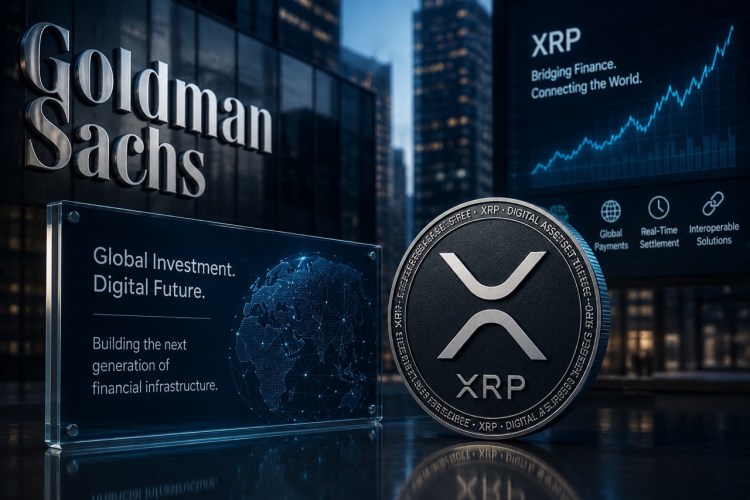
    Goldman Sachs has eliminated its exposure to XRP exchange-traded funds (ETFs), reducing its holdings from approximately $154 million to zero during the first quarter of 2026. The move has drawn attention within the XRP community, as Goldman Sachs was previously one of the largest disclosed institutional holders of XRP-linked ETF products. However, the market’s reaction to the exit may be more significant than the liquidation itself.

    Goldman Sachs Cuts XRP ETF Exposure

    Goldman Sachs entered the XRP ETF market in late 2025 with a significant position. By the end of the fourth quarter of 2025, the bank had accumulated roughly $154 million in XRP ETF exposure, spread across products from Bitwise, Grayscale, Franklin Templeton, and 21Shares. This made Goldman Sachs the holder of nearly 73% of all known institutional XRP ETF investments at the time.

    However, Goldman Sachs’ recent Form 13F filing, submitted to the SEC in mid-May, revealed no XRP-linked ETF holdings at the end of the first quarter of 2026. The filing indicates that the XRP liquidation was part of a broader portfolio adjustment. Goldman also closed out its Solana ETF exposure, reduced its Ethereum ETF holdings by about 70%, and trimmed its Bitcoin ETF exposure, although it maintained a substantial Bitcoin ETF position of nearly $700 million.

    Market Absorbs the Sale

    An XRP commentator known as X Finance Bull on the social media platform X noted that the market’s response to Goldman’s exit was noteworthy. The commentator pointed out that despite Goldman Sachs selling its entire $154 million XRP ETF position, XRP ETFs still recorded $60.5 million in weekly net inflows during the week the news was released. This suggests that demand from other buyers was robust enough to absorb the sale and maintain positive market activity.

    Spot XRP ETFs recorded their strongest weekly inflow since January, with cumulative inflows reaching approximately $1.39 billion. Assuming the entire selloff occurred during the same week XRP ETFs posted net inflows, total buying demand would have had to exceed $214 million to offset Goldman’s $154 million exit and still leave the market positive. This suggests that the sale may be more complex than a bearish headline implies. A large exit is only damaging if there is insufficient demand to offset it. In this case, Goldman’s selling pressure was not only absorbed but also surpassed by new buying. This indicates sustained demand for XRP and provides holders with a stronger basis for confidence in their positions, despite Goldman Sachs’ exit.

  • Republicans Launch Probe of Kalshi, Polymarket for Insider Trading

    Republicans Launch Probe of Kalshi, Polymarket for Insider Trading

    House Oversight Committee Launches Investigation into Prediction Market Platforms

    Investigation Focus

    The chairman of the House Oversight Committee announced Friday the launch of an investigation into the prediction market platforms Kalshi and Polymarket. The investigation will center on potential insider trading by users on both platforms, specifically concerning wagers that leverage non-public information, according to Committee Chair James Comer (R-KY).

    Congressional Action Considered

    “This growing pattern of insider trading activity on prediction market platforms indicates that Congressional action may be necessary,” Congressman Comer stated.

    Document Requests

    Comer sent letters to Kalshi CEO Tarek Mansour and Polymarket CEO Shayne Coplan on Friday, requesting a range of documents related to the companies’ internal operations. The requested information includes documentation and communications pertaining to know-your-customer (KYC) standards, policies and procedures for detecting suspicious trades, analysis of the impact of insider trading scandals on the companies’ reputations, and deliberations regarding wagers tied to armed conflicts.

    Specific Wager Scrutiny

    Comer has also requested that Kalshi and Polymarket provide internal communications and documents related to wagers on the Iran war and the U.S. attack on Venezuela earlier this year.

    Recent Events Prompting Inquiry

    The investigation follows the recent arrest of a U.S. soldier for allegedly placing Polymarket bets on the timing of American military actions using classified information. Additionally, Kalshi fined multiple U.S. politicians for betting on the outcomes of their own elections. Comer’s actions also appear to be influenced by a New York Times investigation that identified over 80 instances of potential insider trading on Polymarket.

    Growing Scrutiny of Prediction Markets

    In recent months, Kalshi and Polymarket have faced increased scrutiny from lawmakers concerned about the potential for widespread insider trading within the prediction market sector. Last month, the Senate unanimously passed a resolution banning its members and staff from trading on prediction markets.

    Platforms’ Response and Potential Risks

    In response to the growing pressure, both companies have taken steps to assure regulators that they are actively working to identify and eliminate insider traders on their platforms. However, this assurance could present challenges.

    “If they can catch this guy, why can’t you catch another?” said Dan Boyle, a partner at Boies Schiller Flexner and a former federal prosecutor focused on gambling-related fraud, referring to lawmakers’ potential concerns. Boyle added, “If their position was ‘We just don’t have the ability to catch some of these issues,’ that would be one position. But they’re making a push to show they have the [detection] technology, and they are able and willing to use it.”

    Republican-Led Investigation

    Unlike previous requests from Democratic lawmakers to investigate crypto firms, the House’s prediction market investigation is supported by Republican committee leadership. As the majority party in the House, the GOP leadership on the House Oversight Committee likely has the votes to issue legally binding subpoenas.

  • Dogecoin Surges as Whales Bet on SpaceX IPO

    Dogecoin Surges as Whales Bet on SpaceX IPO

    Dogecoin, the original dog-themed cryptocurrency, is trading at $0.105, up 2% over the past 24 hours, as significant accumulation by large holders coincides with a major initial public offering filing.

    Whale Activity and SpaceX IPO

    On-chain data indicates that large holders have acquired 525 million DOGE in the last 96 hours, a sum valued at approximately $1.99 billion. This period of accumulation closely aligns with SpaceX’s submission of its S-1 filing to the Securities and Exchange Commission (SEC), signaling its intention to debut on the Nasdaq. The launch is reportedly scheduled for June 12 under the ticker SPCX, with a valuation of $1.75 trillion, a figure that could make Elon Musk the world’s first trillionaire.

    Musk’s influence on DOGE sentiment is well-established. Furthermore, SpaceX already holds $1.4 billion in Bitcoin, highlighting the company’s connection to the cryptocurrency market as it prepares for its public market debut.

    Market Analysis and Price Predictions

    Analysts have identified the $0.11–$0.12 range as a key resistance zone for DOGE, where the cryptocurrency has previously faced rejection. While the asset is considered bullish in the short term, it is embedded within a broader bearish structure. Short-term holders currently hold substantial profits, increasing the likelihood of profit-taking at these levels. Immediate support is situated around $0.095, approximately 10% below the current price.

    For Dogecoin to maintain its upward trajectory, continued whale accumulation is crucial, especially with the potential for the SpaceX IPO to positively impact assets associated with Musk. In a favorable scenario, DOGE could surpass $0.12 and target $0.15 if resistance is decisively broken. The most probable scenario, however, is for DOGE to consolidate between $0.10 and $0.11, awaiting a more significant catalyst. The cryptocurrency has seen an 8% gain over the past 30 days, indicating existing momentum.

    Market Cap and Alternative Investments

    At its current price, DOGE has a market capitalization of $25.4 billion. While it offers potential for gains, the scale of the market makes it unlikely to generate life-changing returns from smaller investments. This is where early-stage memecoin presales come into play.

    Maxi Doge Presale

    Maxi Doge ($MAXI), an Ethereum ERC-20 memecoin, is built around a “1000x leverage trading mentality,” incorporating gym-bro culture and on-chain competition mechanics. The presale has raised $4.7 million at a current price of $0.0002819, with a 65% staking annual percentage yield (APY) available to holders. Features include holder-only trading competitions with leaderboard rewards, a Maxi Fund treasury supporting liquidity and partnerships, and meme-driven marketing strategies.

  • Polymarket Suffers $700K Loss in Wallet Exploit

    Polymarket Suffers $700K Loss in Wallet Exploit

    On-chain investigator ZachXBT flagged a suspected drain tied to Polymarket on Friday, reporting that over $520,000 had been taken from addresses linked to the prediction market’s Polygon infrastructure.

    Polymarket Acknowledges Breach

    Polymarket developers later acknowledged the incident, stating that it involved an internal rewards wallet and did not affect user funds or market outcomes.

    “Findings point to a private key compromise of a wallet used for internal top-up operations, not contracts or core infrastructure,” the Polymarket Developers account tweeted.

    Over an hour after the initial disclosure, the on-chain analytics platform Bubblemaps estimated the loss at approximately $700,000. Bubblemaps indicated that the funds were split across 16 addresses and routed through centralized exchanges and other services.

    Prediction markets on Polymarket utilize contracts that record bets and pay winners after an external service confirms the result. The wallet involved in Friday’s incident appears to have been used for rewards payments, separate from the contracts that handle user funds and market outcomes.

    Experts Weigh In

    Andy Yajin Zhou, associate professor at the Chinese University of Hong Kong and co-founder of on-chain security firm BlockSec, told Decrypt that their initial review aligned with the Polymarket developers’ account, suggesting a private key compromise rather than a flaw in the platform’s core systems.

    “Based on our initial analysis, this does not appear to be a flaw in the adapter contract logic or prediction market infrastructure itself,” Zhou said. “At this stage, we have not identified evidence suggesting a protocol-level exploit, oracle manipulation, or a generalized vulnerability in adapter-based market infrastructure.”

    Zhou explained that incidents like this highlight operational security risks, including key management, access control, signing policies, monitoring, and other safeguards surrounding wallets used for routine operations.

    Blockchain security firm Cyvers reached a similar conclusion, stating that the incident appeared to affect operational or admin wallets instead of Polymarket’s core contracts or its system used for settling markets, pointing to a broader industry risk around privileged wallets.

    “Even when prediction market protocols are secure at the smart contract level, privileged adapter or admin wallets remain a critical attack surface if key management or operational security is compromised,” Hakan Unal, senior security operation lead at Cyvers, told Decrypt.

    Dan Dadybayo, strategy lead at crypto infrastructure developer Horizontal Systems, told Decrypt that the incident fits a broader shift in how attackers are targeting crypto projects.

    “This increasingly looks like a key management failure rather than a smart contract exploit,” Dadybayo said. “The interesting shift across crypto is that attackers are no longer primarily breaking protocols. They’re targeting the operational layers around them: admin wallets, permissions, and infrastructure.”

    Decrypt has reached out to Polymarket for comment and will update this article should they respond. This is a developing story.

  • CEO Predicts XRP Surge by Year-End

    CEO Predicts XRP Surge by Year-End

    Canary Capital CEO Steven McClurg forecasts a 30% increase in investor interest in XRP before December, along with a potential doubling of its current price.

    The Path to Year-End

    McClurg, who heads one of the first firms to file for a spot XRP exchange-traded fund in the U.S., outlined a three-phase market trajectory for the remainder of 2026. He anticipates a challenging near term, with summer expected to exert pressure on both equities and the broader crypto market. The lead-up to midterm elections is also expected to divert attention and capital from markets.

    However, McClurg’s outlook becomes more optimistic after the election season. He believes that ETF inflows will likely accelerate post-midterms, driven by the potential passage of the CLARITY Act and increased activity in real-world asset tokenization. He suggests that institutional investors have been awaiting regulatory clarity before committing larger investments.

    ETF Inflows Already Building

    McClurg’s comments follow a strong week for XRP ETFs. Net inflows reached $60 million last week, the best single-week performance of 2026, bringing the total cumulative figure to $1.39 billion. McClurg anticipates a further 30% growth in this number by year-end.

    XRP is currently trading around $1.40. A doubling of its price by December would place the token above $2.80. Regardless of whether the prediction materializes, the inflow data indicates a real and growing institutional interest in XRP exposure through regulated fund products.

    A Specific Target With A Specific Timeline

    McClurg’s forecast is specific, with a defined timeline. Such precision from a fund executive with a direct stake in the XRP market is likely to attract attention, and his comments are already circulating widely. His broader prediction hinges on regulatory progress, capital rotation following the elections, and continued ETF adoption. For his year-end target to be achieved, all three factors would need to align. The summer period, by his own admission, will serve as a test of this thesis before the second half of the year.