Category: Uncategorized

  • XRP Futures Surge Fails to Boost Price

    XRP Futures Surge Fails to Boost Price

    XRP Price Stagnates Amidst Surging Derivatives Activity

    The price of XRP remains below $1.40 despite a surge in derivatives activity. Futures volume has consistently exceeded $2 billion, while spot volume hovers around $400 million. However, the price has shown little movement.

    CME-listed XRP futures reached a notional volume of $63 billion within their first year, with 1.32 million contracts representing 28.6 billion XRP traded as of mid-May.

    The development of regulated derivatives infrastructure is evident. However, the spot price has been stagnant for an extended period, leading to speculation about potential price manipulation.

    XRP’s 24-hour range is $1.37, within a wider 7-day range that peaked at $1.54. The $1.50 level has been rejected multiple times. Technical analysis suggests that bulls need a decisive close above $1.5 to overcome the resistance.

    A bull-flag structure has been identified, potentially indicating a move towards $1.60 in the long term, which would represent a more than 20% increase from current levels if the pattern is confirmed by volume.

    For now, XRP is likely to consolidate between $1.35 and $1.45 as open interest declines and traders await a catalyst.

    The derivatives market’s influence is a key factor. The coexistence of XRP ETF demand and stagnant price action has occurred previously, a pattern that typically resolves with significant price movement in one direction. The substantial open interest suggests an impending resolution.

    XRP’s situation reflects a maturity issue: significant institutional infrastructure, regulatory clarity, and $63 billion in derivatives activity have not translated into a new all-time high for the spot price.

    The asymmetric upside enjoyed by early XRP holders is structurally unavailable at its current market capitalization. Some traders are shifting their focus to earlier-stage projects where the infrastructure narrative is newer.

    Bitcoin Hyper ($HYPER) is positioning itself as the first Bitcoin Layer 2 with full Solana Virtual Machine (SVM) integration. Hyper offers faster transaction finality than Solana, with Bitcoin’s security as the base layer.

    The project has raised $32.7 million at a current presale price of $0.0136. It combines low-latency L2 processing with a decentralized bridge for BTC transfers and a 36% APY staking rewards program. It directly addresses Bitcoin’s limitations: slow transactions, high fees, and the absence of programmable smart contracts.

  • Bitcoin Stalls at $78,000 as HYPE and ZEC Surge

    Bitcoin Stalls at $78,000 as HYPE and ZEC Surge

    Bitcoin’s Price Stalls

    Bitcoin’s price recovery, which began a few days ago, pushed the asset to just over $78,000 before encountering resistance and declining by approximately $500.

    Minor gains are evident for BNB, SOL, and DOGE. However, as the headline suggests, two larger-cap altcoins have outperformed.

    Bitcoin faced rejection at $82,000 on several occasions last week, with the most recent instance occurring on Thursday. At that time, the cryptocurrency had gained over $3,000 within hours of the CLARITY Act passing the US Senate Banking Committee. However, it failed to sustain its climb and quickly lost the $80,000 psychological level.

    By Friday evening, the price had fallen below $79,000, and further declined to below $78,000 on Saturday. Following a relatively calm Sunday, the largest digital asset fell again on Monday and Tuesday, dropping to $76,000, its lowest price in over three weeks.

    After losing over $6,000 in several days, buyers finally intervened, preventing further losses. Bitcoin began a gradual recovery, reaching over $77,000 yesterday and exceeding $78,000 earlier this morning. However, it has since retreated below that level.

    Its market capitalization has decreased to under $1.560 trillion, while its dominance over altcoins has slightly decreased to 58.2% on CoinGecko.

    Altcoin Performance

    Ethereum continues its underwhelming performance, showing slight daily losses, but remains above $2,100. In contrast, BNB, SOL, DOGE, BCH, and XMR have seen gains of 1-2%. HYPE has shown the most significant gains among the larger-cap altcoins, rising 19% daily to $58, nearing a new all-time high.

    ZEC has added over 13% in value and is trading well above $660. DASH, MNT, ONDO, and TAO also saw gains, followed by SUI and NEAR in terms of daily performance.

    The total crypto market capitalization has increased by over $30 billion in a day, approaching $2.680 trillion on CoinGecko.

  • Here are a few options:

*   **SpaceX Holds $1.4B in Bitcoin; Hyperliquid Outpaces Solana**
*   **Crypto Roundup: SpaceX’s Bitcoin Holdings, Hyperliquid’s Surge, Korean Funeral Firm’s Collapse**
*   **Bitcoin Holdings, Hyperliquid Growth, and Funeral Firm’s Downfall Dominate Crypto News**

    Here are a few options: * **SpaceX Holds $1.4B in Bitcoin; Hyperliquid Outpaces Solana** * **Crypto Roundup: SpaceX’s Bitcoin Holdings, Hyperliquid’s Surge, Korean Funeral Firm’s Collapse** * **Bitcoin Holdings, Hyperliquid Growth, and Funeral Firm’s Downfall Dominate Crypto News**

    SpaceX Reveals Bitcoin Holdings in IPO Filing

    SpaceX has made headlines with the revelation of its Bitcoin holdings in its IPO filing, while Hyperliquid has surpassed Solana in fully diluted valuation (FDV). Additionally, a South Korean funeral firm suffered significant losses from a leveraged crypto trade. These stories are currently dominating discussions across social media platforms.

    Hyperliquid has surged in the market, with its FDV reaching $54 billion, exceeding Solana’s. The associated HYPE token saw a 20% increase, outperforming other major tokens during a market downturn. This highlights the platform’s growing influence in decentralized trading as the memecoin season on Solana cools.

    The pre-IPO shares of SpaceX are now available on both Binance (SPCXUSDT) and Hyperliquid. This development further fueled the HYPE rally, adding momentum to the gains driven by news from Circle and Coinbase. It demonstrates the Hyperliquid ecosystem’s maturation amidst volatile market conditions and shifting dynamics.

    In its IPO filing, SpaceX disclosed Bitcoin holdings of 18,712 BTC, valued at $1.45 billion. This figure exceeds expectations and underscores SpaceX’s commitment to crypto as a treasury reserve strategy. The company’s Bitcoin holdings signal a broader interest in institutional adoption.

    Market reactions to the SpaceX news have been mixed but largely positive, with many viewing it as a validation of Bitcoin. The company continues to push boundaries in both space exploration and finance, aligning with industry trends toward asset diversification and long-term value preservation.

    Korean Funeral Firm Suffers Losses in Leveraged Trade

    In South Korea, the funeral firm Bumo Sarang lost $33 million of its customers’ prepaid funds after making a leveraged 2x bet on the BitMine ETF, which performed poorly. The firm’s decision to use customer funds for high-risk trading has raised serious ethical questions about its corporate responsibility.

    This incident serves as a reminder of the dangers of leveraged crypto trading for entities outside the industry. However, it also highlights the increasing trend of institutional adoption, even among businesses unrelated to crypto.

    Other Market Developments

    Nakamoto, another crypto treasury company, is planning a 1-for-40 reverse stock split following a dramatic 99% price decline in its shares. This restructuring aims to boost investor confidence and meet exchange listing requirements.

    Simultaneously, Bitcoin ETFs experienced another $1 billion in outflows as investor sentiment cooled, with $648 million leaving in the latest wave amid increased activity on Wall Street and profit-taking.

    In other news, an order from former President Trump has lined up Kraken, Ripple, Coinbase, and Circle for direct Fed payment rails, which is being seen as a major win for the crypto industry. This order could lead to greater integration with traditional banking systems.

    The Fed has proposed limited master accounts, which crypto firms have long sought to improve banking access and reduce reliance on traditional intermediaries. The U.S. Treasury has also imposed sanctions on drug traffickers who were laundering profits through crypto channels, continuing efforts to curb illicit activities.

    In contrast, Singapore revoked Bsquared’s crypto permit due to an alleged serious breach of compliance rules. This sends a strong signal to the industry regarding regulatory scrutiny in Asia, as Japan prepares to open its payment system to foreign stablecoins starting June 1, as part of efforts to modernize finance and attract international business.

  • HYPE Jumps Above $57, Nearing All-Time High

    HYPE Jumps Above $57, Nearing All-Time High

    HYPE Token Surges

    Hyperliquid’s HYPE token surged above $57 on Thursday, just eight months after its last visit to those levels. The rally was fueled by a wave of short liquidations and buying driven by exchange-traded funds (ETFs), pushing the token within 2% of its all-time high near $59, reached in September 2025.

    The surge has made HYPE one of the market’s strongest large-cap performers this year, as traders increase their leveraged bets on the rapidly growing perpetual futures platform.

    Short Squeeze Intensifies

    According to on-chain analytics firm Santiment, funding rate data across exchanges registered a sharp spike into negative territory on May 18 and 19. This indicated that a large number of traders were opening short positions, betting on a price decline.

    However, the price continued to climb. As it rose, bearish traders were forced to automatically buy back their positions to avoid liquidation, which added further upward pressure.

    Data from CoinGlass illustrates the impact on short positions. Over the past 12 hours alone, approximately $21 million in HYPE futures positions were wiped out, with shorts accounting for all but $677,000 of that figure. In 24 hours, short liquidations reached $30.6 million, compared to $1.08 million on the long side, highlighting the extent of the short squeeze.

    Open Interest Remains High

    The situation is further distinguished by the fact that open interest did not collapse during the liquidations, as is often the case. While Santiment reported HYPE’s open interest above $1.92 billion, data from CoinGlass indicates it is now closer to $2.5 billion.

    This is because new traders continued to enter the market, replacing those who were liquidated, a trend typically seen with assets that attract genuine investor interest.

    Strong Performance

    At the time of writing, HYPE was up nearly 17% in 24 hours and more than 46% over the past seven days. Over the past year, it has gained over 111%, significantly outperforming major cryptocurrencies like Bitcoin, Ethereum, Solana, XRP, BNB, and DOGE.

    Institutional Interest

    The token’s rally has coincided with increasing institutional interest in Hyperliquid. Santiment pointed to new HYPE-linked ETFs launched in May by Bitwise and 21Shares as a key catalyst.

    Bitwise’s Matt Hougan recently praised Hyperliquid, calling it “one of the fastest-growing financial businesses” he had seen and arguing that investors were still undervaluing both the platform and its token.

    Meanwhile, his colleague, Hunter Horsley, noted on May 21 that the network, along with Solana, is forming a new category he termed “revenue chains.” He highlighted that Hyperliquid has generated $790 million in total blockchain revenue, ahead of Solana’s $532 million, with Tron and Ethereum following at $471 million and $425 million, respectively.

    Previous Gains

    Prior to this latest surge, HYPE had already gained around 24% from its May 13 low near $38, partly due to the passage of the CLARITY Act on May 14 and the launch of synthetic SpaceX perpetual contracts on the Hyperliquid-linked platform Trade.xyz.

  • Sui Enables Gas-Free Stablecoin Transfers with Fireblocks

    Sui Enables Gas-Free Stablecoin Transfers with Fireblocks

    Sui Launches Gasless Stablecoin Transfers

    Grand Cayman, Cayman Islands, May 20th, 2026 – Sui announced the launch of gasless stablecoin transfers, a new protocol-level feature enabling peer-to-peer stablecoin transfers without requiring users to hold SUI. This innovation reduces stablecoin transfer fees to $0.00.

    The feature allows users and businesses to send supported stablecoins on Sui without incurring gas fees or managing a separate SUI token balance. The rollout to validators is underway.

    Major stablecoins, including USDsui, suiUSDe, AUSD, FDUSD, USDB, USDC, and USDY, are supported. The feature aims to simplify payment workflows and eliminate the need to hold a separate token for transactions, a significant hurdle for stablecoin adoption.

    Fireblocks, a platform securing over $14 trillion in digital asset transactions, has integrated the new solution. Numerous institutional custodians and retail-facing wallets will also support gasless transactions at launch. This will allow users to send select stablecoins without holding or spending SUI on transaction fees.

    “Stablecoins are becoming a core part of global finance, but the infrastructure around them still creates unnecessary complexity,” said Adeniyi Abiodun, Co-Founder and CPO of Mysten Labs, the original contributor to Sui. “With gasless stablecoin transfers, we are one step closer in making Sui the global rail for payments, whether they are for businesses, AI agents, and consumers.”

    Fireblocks’ support enhances the institutional accessibility of Sui’s payments infrastructure, enabling enterprises and financial service providers to securely manage stablecoin activity on the network.

    “The future of payments will run on stablecoin rails, but the experience for institutions still needs to catch up,” said Ran Goldi, SVP Payments & Network at Fireblocks. “Sui is making all the right moves, with gasless stablecoin transfers that removes a major point of friction for enterprises building onchain payment flows and customer experiences.”

    Structural Change

    Gasless stablecoin transfers represent a structural change to how peer-to-peer transfers of supported stablecoins operate on Sui Mainnet. This is not a subsidy, sponsorship program, or temporary promotional initiative. In a competitive market, Sui aims to become the default stablecoin infrastructure for businesses seeking to reduce complexity and costs, traders seeking to avoid fees, and AI agents looking for the most cost-effective payment methods.

    Since August 2025, Sui has surpassed $1 trillion in stablecoin transfer volume. Its stablecoin ecosystem has expanded across institutional, retail, and developer use cases. Sui’s architecture and object-centric design support high-frequency payment activity with predictable performance and low operational overhead, making it suitable for emerging payment applications, agentic commerce, and enterprise-grade financial systems.

    These new protocol mechanisms reduce processing costs, and gasless stablecoin transfers eliminate gas pre-funding and volatile treasury management. This results in simpler infrastructure for institutions and a cost model that supports agentic commerce and autonomous systems. Free transfers ensure that gas fees never exceed the value of the payment, enabling micropayments at any scale.

    Ecosystem Momentum

    Recent momentum across the Sui ecosystem highlights the growing demand for scalable financial infrastructure and stablecoin-based payments. In 2026, four SUI exchange-traded products from 21Shares, Grayscale, and Canary Capital launched globally, expanding institutional access to the Sui ecosystem. Simultaneously, initiatives like Bridge-issued Sui Dollar (USDSui) and Ethena-issued eSui Dollar (SuiUSDe) have expanded Sui’s digital dollar ecosystem.

    Gasless stablecoin transfers are now rolling out on Sui Mainnet.

    About Sui

    Sui is a next-generation Layer 1 blockchain designed for scalable finance and global payments. Founded by the core team behind Meta’s stablecoin initiative and powered by an object-centric model, Sui makes assets, permissions, and user data programmable and ownable. Sui offers builders the tools to create high-performance payments and financial applications, including instant agentic payments.

    About Fireblocks

    Fireblocks is a digital asset infrastructure company, empowering organizations to build, manage, and grow their business on the blockchain. The platform streamlines stablecoin payments, settlement, custody, tokenization, trading, accounting operations, and compliance reporting. Thousands of organizations trust Fireblocks to secure over $14 trillion in digital asset transactions across 150+ blockchains.

  • Circle to Integrate Hyperliquid, Aiming to Boost Market Share

    Circle to Integrate Hyperliquid, Aiming to Boost Market Share

    USDC Deal Analysis

    Bankless has examined the recent collaboration between Hyperliquid (HYPE), Coinbase (COIN), and Circle (CRCL), moving beyond the typical “partnership announcement” narrative to assess its potential impact on USDC. The analysis suggests the deal is more than a public relations exercise, particularly given the growing momentum in the stablecoin market, where deeper shifts in market share have been slower than some investors anticipate. Bankless views USDC’s current position as significant but incomplete, positioning Hyperliquid as the platform that could help Circle’s stablecoin translate momentum into tangible market share gains.

    As reported by Bitcoinist, Coinbase is expanding its role by becoming the official treasury deployer of USDC on Hyperliquid. Under this plan, Coinbase will treat USDC as an Aligned Quote Asset (AQA), with Hyperliquid’s USDH token expected to be phased out gradually.

    Bankless highlights concrete improvements resulting from this move, including a significantly improved revenue split—roughly double what Hyperliquid was earning with USDH—along with additional regulatory and institutional support. The report also emphasizes user experience benefits, given that USDC is a trusted stablecoin already integrated into the exchange experience for many traders. Bankless notes that USDC is primarily used in Hyperliquid’s HIP-3 markets, which have driven much of the platform’s visibility over the past six months.

    The analysis then shifts to a more strategic perspective. Bankless argues that the Coinbase and Circle deal is more than just “PR” because, despite USDC’s momentum following the GENIUS Act approval, its supply share has not meaningfully changed. Hyperliquid is presented as the solution to this mismatch, offering an additional distribution channel that could allow stablecoin growth to compound rather than merely coexist with the current market dynamics.

    Binance Reinforces USDT Dominance

    To support the claim that USDC’s supply share is stagnant, Bankless points to the stablecoin market composition. In April 2024, Tether’s USDT held 67% of the stablecoin supply, while USDC held 27.6%. A year later, USDT holds 67.3% and USDC 28.1%. While USDC transaction volume is accelerating, the structural picture remains largely unchanged, which the report identifies as the central problem.

    The report argues that this is due to USDC’s strength in the United States, where competition is concentrated. Outside the US, USDT remains the default dollar for saving, investing, and trading, creating a tougher environment for USDC to establish itself as the base currency across global trading venues. Therefore, distribution is presented as the priority, with perpetuals framed as the natural battleground. Stablecoins are the quote asset for perpetuals, and the ecosystem that dominates the largest exchange tends to reinforce itself. On Binance, USDT is the standard against which many of the largest markets trade. This means traders frequently transact against USDT, strengthening its supply, liquidity, deposits, withdrawals, and on-chain activity.

    Hyperliquid May Fix That

    Hyperliquid, according to Bankless, offers USDC a way to combat this cycle. The report includes market indicators to demonstrate Hyperliquid’s share in the perpetuals ecosystem. It claims Hyperliquid holds 30% of the on-chain perpetuals market share, commands 46% of on-chain open interest, and operates at approximately 50% of Bybit’s volume, around 30% of OKX’s volume, roughly 79% of Coinbase International’s, and about 13% of Binance’s.

    While Hyperliquid is still smaller than Binance overall, Bankless suggests the trend is clear: perpetuals are becoming an environment where USDC can gain more consistent exposure. The conclusion is that Coinbase and Circle can leverage Hyperliquid’s reach while USDC benefits from being the stablecoin underpinning the trading activity.

  • Dogecoin ETFs See Biggest Inflows Since January

    Dogecoin ETFs See Biggest Inflows Since January

    Dogecoin ETF Inflows Surge in May

    Dogecoin spot ETFs are experiencing a resurgence in inflows this month, with data from SoSoValue indicating net additions of $2.15 million so far in May. This marks the strongest monthly inflow for DOGE products since January and suggests a revival of demand after a period of relative quiet.

    The May data provides a more positive outlook for DOGE ETF investors, highlighting the return of inflows and a net positive performance every month since the product group’s launch in November 2025. However, the scale of these inflows remains a key consideration. While significant for the nascent DOGE ETF market, the inflows are modest in absolute terms and concentrated across a limited number of trading days, rather than demonstrating consistent daily accumulation, according to SoSoValue data.

    Inflow Momentum

    From May 1 to May 19, DOGE spot ETFs recorded five positive inflow days: $400,194 on May 5, $227,207.79 on May 6, $393,135 on May 11, $272,886 on May 14, and $860,958 on May 18. This brings the month-to-date total to $2,154,380.79. Although there were no negative-flow days during this period, eight sessions, including May 19, saw zero net inflow.

    This distinction is important. While the trend is positive, it does not represent a continuous daily accumulation pattern. May’s inflow total is largely driven by a few sessions, particularly May 18, which accounted for approximately 40% of the month’s net inflows. This data suggests episodic demand returning to the still-small DOGE ETF market, rather than a broad, uninterrupted buying trend.

    Cumulative Performance

    DOGE spot ETFs concluded May 19 with $11.78 million in cumulative net inflows, up from $9.63 million at the beginning of the month. Total net assets increased from $13.19 million on May 1 to $14.51 million on May 19, despite a decline in the price of DOGE. Month-to-date trading value reached approximately $10.06 million.

    The monthly performance strengthens the “since launch” narrative. The data series begins in November 2025, when DOGE spot ETFs saw $2.16 million in net inflows. December remained positive at $177,891.84 despite an outflow of $972,840.16 on December 4. January was the strongest month with $4.07 million in net inflows, followed by $252,534 in February, $972,455.30 in March, $1.99 million in April, and $2.15 million so far in May.

    Fund-Level Analysis

    The current fund-level breakdown reveals a concentrated market. As of May 19, Grayscale’s GDOG held the largest cumulative net inflow at $10.97 million and net assets of $9.88 million. TDOG, the 21Shares product, showed $2.19 million in cumulative net inflows and $3.96 million in net assets. Bitwise’s BWOW was the outlier, with a cumulative net outflow of $1.38 million and only $678,470 in net assets.

    Trading Activity and Premiums/Discounts

    Trading activity remains limited. On May 19, GDOG traded $187,930, while TDOG and BWOW traded just $5,480 and $4,290, respectively. All three funds recorded zero daily net inflow that day. Premiums and discounts were small, with GDOG at a 0.01% premium and TDOG and BWOW at discounts of 0.19% and 0.20%, indicating no significant pricing discrepancies relative to their net asset value.

    Market Context

    Compared to larger altcoin ETF categories, the primary takeaway is the scale. While DOGE’s flow direction has improved, the asset base is still modest, meaning that a single inflow day under $1 million can significantly impact the monthly narrative.

    For DOGE investors, May offers evidence of renewed ETF demand. For market structure observers, it is still an early-stage, shallow product set where liquidity, sponsor concentration, and day-to-day flow fluctuations are as important as the headline inflow streak.

    At the time of publication, DOGE was trading at $0.10.

  • Multicoin Bullish on Zcash, Says Tushar Jain

    Multicoin Bullish on Zcash, Says Tushar Jain

    Multicoin Capital’s Zcash Investment Rationale

    Multicoin Capital co-founder Tushar Jain explained that the firm’s recent investment in Zcash was driven by a confluence of factors: stronger market traction, improving infrastructure, and a broader return to crypto’s privacy focus. Speaking on the Bankless podcast released on May 19, Jain positioned Zcash as a credible contender in the private store-of-value space, moving beyond its previous status as a “left for dead” asset.

    Jain noted that Multicoin had observed Zcash for years without being convinced. He believed the asset had suffered from a lack of attention, poor usability, and insufficient evidence of sustained market interest in privacy. However, this changed after Zcash experienced a sharp rally, followed by a correction, yet retained a strong community and a higher market baseline than in previous years.

    Multicoin’s Zcash Thesis

    “When I see something like that, I always pause and wonder, is this some manufactured thing? Is it sustainable? Is there a real groundswell of support here?” Jain said. “And when you see the price do what it did last year and then what we saw was it pulled back very significantly. As I saw it pull back, what I saw was one, the people who were talking about it were still excited about it. Two, the place where it pulled back on the chart actually demonstrated much better attention and strength than where the thing was trading for years and years before that.” This observation helped convince Multicoin to invest. The firm viewed the correction not as a failure, but as a stress test. Jain argued that Zcash retained its core supporters, indicating that interest in the asset was not merely a short-lived speculative surge.

    The discussion, which also included Helius Labs founder Mert Mumtaz, framed Zcash as a potential solution to crypto’s unresolved privacy challenges. Mumtaz, who began seriously considering Zcash in early 2024 after reviewing its scaling plans, argued that privacy had become “the major thing that crypto has forgotten,” particularly as institutional adoption pushes more financial activity onto transparent platforms.

    Jain’s investment thesis centers on Zcash’s potential as a store of value, rather than a high-throughput payments network. He believes that in the store-of-value sector, social coordination, brand recognition, and perceived monetary properties are as important as technical capabilities. In this context, Jain argued, Zcash is establishing itself as a Schelling point for private wealth storage.

    “The market that Zcash is competing for is the store of value market,” Jain said. “Like that’s the job that it does is it’s for storing value and it is far more scalable than Bitcoin and so enables more transactions and such. But the core value prop is store of value.” Jain compared this dynamic to Bitcoin’s early reflexivity, where increased adoption as a store of value strengthens its position in that role. He believes Zcash can benefit from a similar feedback loop, especially if it remains the leading privacy asset by market capitalization, trading volume, and other relevant metrics.

    Zcash vs. Monero and Future Prospects

    The guests also contrasted Zcash with Monero. Mumtaz argued that Monero’s ring-signature design relies on decoys, while Zcash’s shielded model offers a stronger cryptographic foundation. Jain emphasized the importance of brand, positioning Zcash as “privacy for the normal person” rather than a tool for illicit activities.

    “Zcash is not for that,” Jain said, referring to Monero’s darker market associations. “Zcash is for the regular person who says, no, I care about my privacy, not because I’m doing anything illegal or I have anything to hide, but because I don’t need to reveal all of my financial transaction history to every single person with whom I interact.” This positioning, he argued, could make Zcash more appealing to institutions and a wider user base. The asset’s transparent mode may facilitate institutional exposure, while improved wallet infrastructure and decentralized access routes could drive more activity into the shielded pool over time.

    The podcast also addressed the bear case, acknowledging that investors have often overestimated the demand for privacy, and previous privacy-focused narratives have often failed. Jain acknowledged that Zcash had previously faced challenges, including high inflation, usability issues, weak marketing, and reliance on centralized exchanges. However, he believes the last 18 months have brought significant changes, citing improved wallet infrastructure, increased attention, and a macro environment that favors private stores of value.

    Mumtaz added that upcoming developments could further boost adoption, including Ledger support for shielded ZEC, a rising shielded pool share of roughly 31% to 32%, planned block-time reductions from 75 seconds to 25 seconds, and ongoing work on quantum resistance.

    At the time of the podcast’s release, ZEC was trading at $584.82.

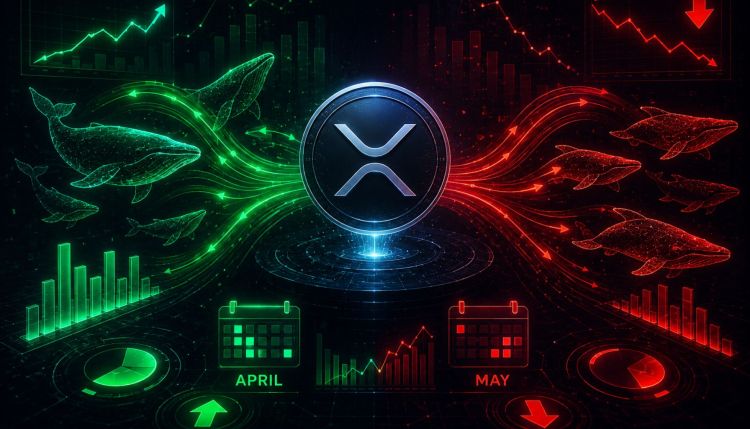
  • XRP Sees Inflows in April, Outflows in May: Data

    XRP Sees Inflows in April, Outflows in May: Data

    XRP Struggles Amidst Institutional Hesitation

    XRP is facing resistance, with selling pressure weighing on its price, which has retreated from the $1.45 level that briefly offered hope for a sustained recovery. Market sentiment is cautious, and a report by Arab Chain, which tracks institutional accumulation behavior, has identified a shift in large investor activity. This provides an on-chain explanation for the current weakness.

    Institutional Accumulation Declines

    The institutional accumulation indicator for XRP on Binance has fallen to approximately -0.0059, returning to negative territory after a period of improvement throughout April. This regression is significant due to the preceding trends. From late March onward, the indicator had been gradually increasing, reflecting growing institutional buying interest as XRP’s price recovered towards $1.45. While the positive readings were not dramatic, they were consistent, indicating that large investors were cautiously rebuilding their exposure.

    This constructive dynamic has reversed. The same institutional accumulation that supported the April recovery has cooled in May, coinciding with the price decline back towards $1.38. This sequence – institutional buying improving alongside price advances, then fading alongside price declines – is not coincidental. It highlights the specific category of participants whose presence or absence directly influences whether XRP’s recovery has structural support or is simply driven by momentum.

    Institutions Step Back

    The Arab Chain report clarifies that the current indicator decline should not be interpreted as a distribution signal. The institutional accumulation index has returned to negative territory, but the reading of -0.0059 is close to neutral, rather than at deeply negative levels that would indicate widespread institutional exit or active selling by large holders.

    According to the analysis, the negative reading likely reflects a phase of caution and reassessment rather than a conviction in a bearish direction. Institutional participants who were gradually rebuilding XRP exposure through April have paused, not reversed their positions. The momentum that was building has stabilized rather than collapsed, and the liquidity conditions that supported the April improvement have softened without triggering aggressive outflows.

    The report identifies a specific and actionable forward signal: a return of the institutional accumulation indicator to positive territory, even marginally, would represent early confirmation that large investors are resuming the buying behavior seen during the April price improvement. This signal would not guarantee a recovery, but it would restore the structural support that underpinned the previous advance. Until this return appears, XRP is navigating a market where potential buyers have stepped back to reassess, rather than stepped away entirely.

    Consolidation and Technical Outlook

    XRP is trading near $1.37 after another failed attempt to reclaim the $1.45 resistance region, reinforcing the broader consolidation structure that has dominated price action since the February capitulation event. The daily chart reflects a market trapped between weakening bullish momentum and the absence of aggressive selling pressure, creating an environment defined more by exhaustion than conviction.

    Following the sharp collapse towards the $1.15 region in February, XRP stabilized and entered a prolonged sideways range between approximately $1.30 and $1.50. Buyers have repeatedly attempted to push the price higher, but every breakout effort has faded once XRP approached the descending 100-day moving average. Meanwhile, the 200-day moving average remains significantly higher near the $1.70 region, confirming that the broader trend structure still favors sellers.

    Volume has steadily declined throughout the consolidation period, aligning with the recent deterioration in institutional accumulation metrics on Binance. The fading participation suggests large investors are no longer supporting the market with the same consistency seen during April’s recovery phase. Technically, the $1.30 support zone remains the most important level for bulls to defend. A breakdown below this region could trigger another leg lower towards the February lows, while reclaiming the $1.45-$1.50 resistance area would likely be required to restore bullish momentum and attract renewed institutional participation.

  • Trump Order Puts Crypto-Bank Access in Spotlight

    Trump Order Puts Crypto-Bank Access in Spotlight

    Wyoming Crypto Banks Could Gain Access to Federal Reserve Accounts

    Special purpose depository institutions in Wyoming, which are centered around cryptocurrency, may soon gain access to something they have long been denied: a Federal Reserve master account. A new executive order signed by U.S. President Donald Trump opens the possibility, alongside a broader effort to integrate crypto and financial technology companies into the U.S. banking system.

    Federal Reserve Role Under Review

    The order directs the Federal Reserve’s Board of Governors to assess whether uninsured depository institutions and non-bank financial companies dealing in digital assets should have direct access to Reserve Bank payment accounts and services. It also tasks the Fed with examining legal obstacles to such access and, if current law permits, establishing clear application procedures. Decisions on completed applications would be required within 90 days.

    This directive is part of a larger policy initiative. Trump signed the order on Monday, instructing federal regulators across multiple agencies to update their rules and facilitate collaboration between crypto and fintech firms and traditional financial institutions. The order sets a government-wide objective of reducing unnecessary barriers to entry and promoting cooperation between technology-driven financial companies and federally regulated banks.

    Agencies Given 90 Days to Comply

    The Securities and Exchange Commission, Commodity Futures Trading Commission, Office of the Comptroller of the Currency, and the Federal Deposit Insurance Corp are among the agencies required to take action. Each agency has been instructed to review its current supervisory practices within 90 days, with a focus on policies that may prevent fintech firms from partnering with federally regulated institutions.

    Regulators are also asked to explore ways to streamline the application process for fintech companies seeking bank charters, deposit insurance, and other federal approvals. The order emphasizes that the review should prioritize consumer protection, market integrity, and financial stability.

    The order defines fintech broadly, encompassing companies providing services related to digital assets, blockchain infrastructure, payment processing, custody, lending, brokerage, and securities market operations.

    Broader Policy Shift

    This move contrasts with calls from Sen. Elizabeth Warren, who has advocated for stricter limitations on banking access for crypto companies. Trump’s order takes the opposite approach.

    Of note, on the same day the order was signed, Trump’s media company, Truth Social, withdrew its SEC filings for a Bitcoin exchange-traded fund, a combined Bitcoin-Ethereum ETF, and a crypto blue chip ETF. This action was viewed as incongruous with the administration’s broader push to integrate crypto into the mainstream financial system.