Category: Uncategorized

  • Winklevoss Asset Services Files for Proposed Zcash ETF with SEC

    Winklevoss Asset Services Files for Proposed Zcash ETF with SEC

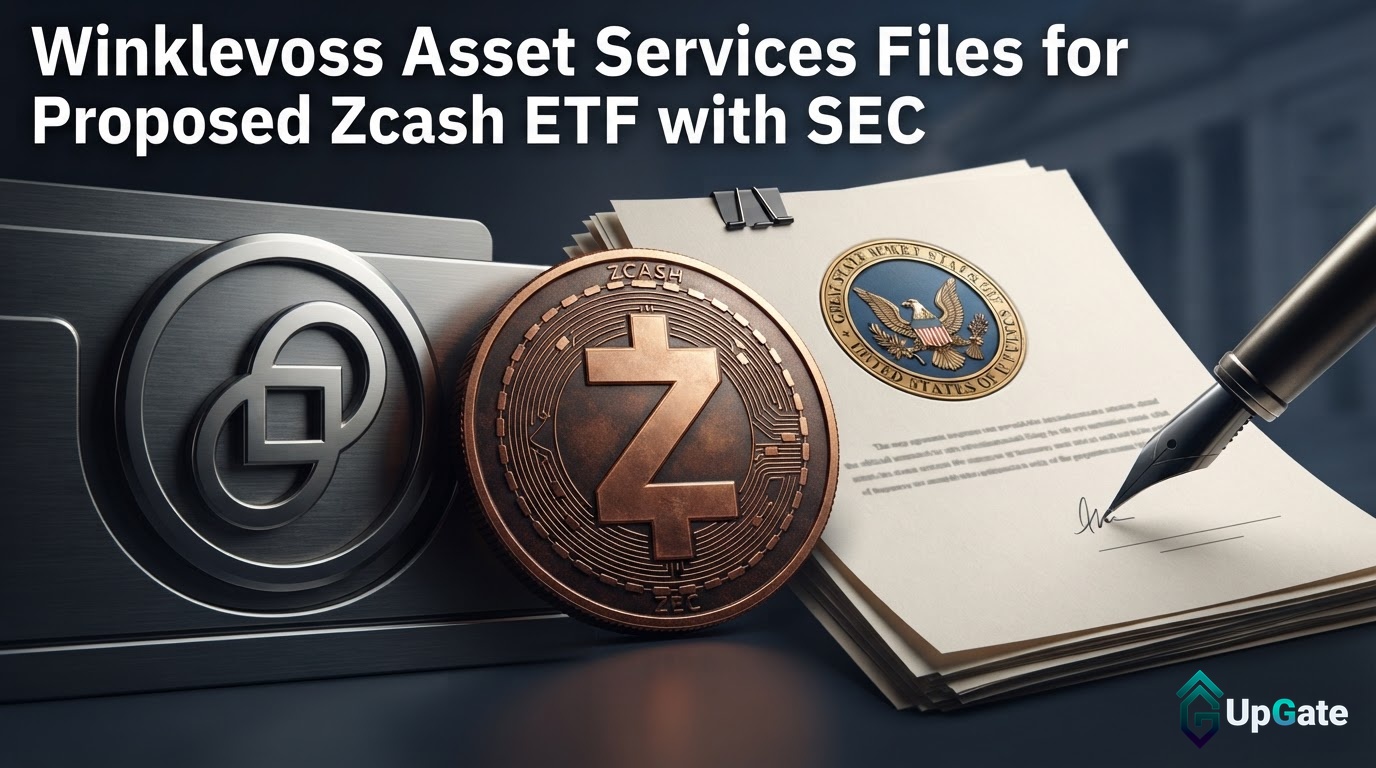
    Winklevoss Asset Services has filed an S-1 registration statement with the U.S. Securities and Exchange Commission (SEC) for a proposed exchange-traded fund (ETF) that would directly hold Zcash (ZEC). The ETF, intended to be listed on the Nasdaq, is named the Winklevoss Zcash ETF.

    The preliminary prospectus outlines a sponsor fee of 0.25%. Winklevoss Capital has indicated nonbinding interest in purchasing up to $100 million of the ETF’s shares.

    It remains uncertain whether the SEC will approve the Winklevoss Zcash ETF, and the exact listing date on Nasdaq is undetermined. The final sponsor fee is also subject to change.

    Why This Matters

    The filing by Winklevoss Asset Services for the proposed Zcash ETF is a documented update.

    Broader Context

    Winklevoss Asset Services has filed an S-1 with the SEC for the Winklevoss Zcash ETF, a proposed Nasdaq-listed product designed to hold ZEC directly. The preliminary prospectus sets a 0.25% sponsor fee, while Winklevoss Capital has indicated nonbinding interest in purchasing up to $100 million of shares.

  • Altman’s AI Predicts XRP Surge to Unbelievable 2027 Price

    Altman’s AI Predicts XRP Surge to Unbelievable 2027 Price

    AI Predicts Monumental XRP Surge by 2027

    Artificial intelligence models are forecasting a dramatic surge for Ripple’s XRP cryptocurrency, with predictions suggesting it could reach $50 or more by January 1, 2027. This highly optimistic outlook hinges on a monumental event for Ripple and a broader cryptocurrency bull market.

    One AI, identified as Claude, projects XRP to trade between $25 and $40 by the target date, with a potential stretch to over $50 if a full-blown crypto bull market materializes and a significant catalyst propels its value.

    XRP is currently trading in the $1.45 to $1.50 range as of October 7, 2026. This ambitious forecast assumes a robust bull market in late 2026, fueled by increased liquidity and a rare, game-changing development: major central banks adopting the XRP Ledger as a primary settlement layer for cross-border central bank digital currencies (CBDCs) and tokenized assets.

    The scenario also posits that large financial institutions might be mandated to hold XRP as a liquidity buffer, alongside substantial accumulation by sovereign wealth funds. In such a speculative environment, a combination of institutional and retail demand could drive XRP into the mid-to-high double-digit figures by early 2027.

    While acknowledging this remains a highly unlikely and purely speculative outcome, the possibility of XRP trading between $25 and $40, with a potential reach of $50, by January 1, 2027, is being discussed.

    Technical Outlook and Support Levels

    On a technical level, the weekly 20 Exponential Moving Average (EMA) at $1.34 is identified as XRP’s short-term support floor, should the weekly 50 EMA at $1.52 not be reclaimed. The market is currently characterized by what analysts describe as “noise” until one of these key averages is decisively broken or lost. A typical seven-week compression or consolidation pattern is also noted to be ongoing.

    On higher timeframes, XRP has been consolidating within the $1.45 to $1.55 region, following earlier attempts to break above $1.60. The price has managed to hold above key intermediate support levels after recovering from a mid-$1.20s dip.

    In a standard bull market scenario, a sustained break above the $1.60 to $1.70 range would typically open the path towards the previous cycle high of approximately $3.65. However, under the extreme institutional adoption scenario outlined, this previous high would likely be surpassed with considerable force, initiating a series of measured moves and Fibonacci extension targets that extend far beyond historical levels.

    Aggressive projections, combined with the kind of rapid price appreciation seen in past speculative manias, could theoretically push XRP into the $25 to $40+ zone if volume and momentum expand dramatically. The Relative Strength Index (RSI) is currently in neutral territory, indicating ample room for growth into the deeply overbought levels often associated with parabolic price movements.

    Key near-term support levels remain in the $1.40 to $1.45 and $1.30 zones. Holding these levels would preserve the broader recovery structure while the market awaits or prices in any extraordinary catalysts.

    Overall, while current chart patterns suggest potential upside in a standard bull market, only a significant surge in institutional demand and a powerful narrative shift could justify the multi-thousand-percent extensions implied by the $25 to $50 price targets.

    For traders focused on near-term movements, resistance is currently seen at $1.54 to $1.56, with a stronger breakout required to challenge the $1.70 level. This presents event-driven traders with a decision between positioning for the mature asset’s near-term range or seeking exposure in earlier-stage opportunities.

    Maxi Doge (MAXI) Enters the Meme Coin Arena

    In related news, Maxi Doge ($MAXI), an Ethereum ERC-20 meme token, has launched. The project features a 240-pound canine mascot and cultivates an identity centered around a 1000x leverage trading community.

    The presale price for $MAXI is set at $0.0002842, with the project having already raised $4.8 million. Maxi Doge also offers a substantial 60% Annual Percentage Yield (APY) on staked tokens, holder-exclusive trading competitions with leaderboard rewards, and a Maxi Fund treasury designated for liquidity and strategic partnerships.

  • Coinbase Links US Traders to Global Derivatives

    Coinbase Links US Traders to Global Derivatives

    Coinbase Opens Door to Offshore Crypto Derivatives for U.S. Traders

    New Platform Integrates Deribit, Offering Global Liquidity Under Regulatory Oversight

    For years, the most active cryptocurrency derivatives markets operated offshore, largely inaccessible to U.S. traders. That changed on October 7, 2026, when Coinbase announced it had secured regulatory approval to bridge this gap.

    The cryptocurrency exchange revealed it has completed the integration of Deribit, the prominent options trading venue it acquired for approximately $2.9 billion in August 2025. The resulting platform, dubbed the Coinbase Global Exchange, is designed to provide eligible U.S. traders with access to global liquidity for options and perpetual futures.

    Coinbase asserts it is now the sole regulated exchange enabling U.S. traders to tap into international derivatives liquidity through a unified collateral pool.

    The Coinbase Global Exchange operates under Coinbase Financial Markets, a subsidiary regulated by the Commodity Futures Trading Commission (CFTC). Coinbase Financial Markets functions as a futures commission merchant (FCM), acting as a licensed intermediary that handles customer funds and directs futures orders to the market.

    A pivotal regulatory development occurred in May 2026 when the CFTC issued guidance that designated Coinbase Financial Markets as the first U.S.-regulated FCM capable of directly connecting American clients to global derivatives markets. Coinbase views the Deribit integration as the first structured pathway for U.S. traders to access offshore-style derivatives markets under this new guidance.

    The concept of a “single collateral pool” is crucial for practical trading. Imagine a casino where each game requires a separate bankroll, leaving your funds idle at one table while you’re short at another. A single collateral pool allows traders to use their deposited assets to back positions across multiple products simultaneously. For active traders, this means their capital can be deployed more efficiently, reducing idle time.

    As of October 1, 2026, perpetual futures previously traded on the Coinbase International Exchange have been migrated to this new Deribit-powered gateway. Perpetual futures, which lack an expiry date, are a popular instrument for leveraged cryptocurrency trading.

    Access to the new platform will be rolled out in stages, with institutional clients being the first to gain entry.

    Coinbase also plans to introduce additional features to the platform, including spot margin trading and unified portfolios. Spot margin allows traders to borrow against their holdings to purchase actual cryptocurrencies, as opposed to contracts. Unified portfolios will offer traders a consolidated view and management interface for positions across various products, aligning seamlessly with the shared collateral model.

    In a separate development, the company has committed to reintroducing its Pro platform for professional traders by the end of 2026.

    As of September 30, 2026, open interest in Bitcoin options on the platform exceeded $30 billion. Open interest represents the total value of outstanding contracts, indicating the amount of capital currently committed to Bitcoin options.

    In the year preceding its integration, Deribit processed over $1 trillion in trading volume. The depth of these markets is significant, as it allows large orders to be executed without causing substantial price fluctuations, a key concern for institutional trading desks.

    Derivatives have historically constituted approximately 80% of total cryptocurrency trading volume, meaning spot trading, the direct purchase and sale of digital assets, represents a smaller portion of the overall market activity.

    Deribit established itself as a major player in crypto options, operating outside the U.S. regulatory framework. The acquisition in August 2025, valued at roughly $2.9 billion, was predicated on the expectation that regulators would eventually permit such a connection. The May 2026 CFTC guidance appears to have provided the necessary regulatory clearance, with approximately 14 months elapsing between the acquisition and the full integration.

    The most immediate impact is expected to be on institutional investors. Many large players have avoided unregulated venues due to compliance concerns, as wiring client funds to exchanges outside U.S. oversight is often problematic. A CFTC-regulated channel into global options and perpetual futures markets removes a significant barrier for these investors. Coinbase Prime’s rollout is anticipated to serve as a conduit for institutional capital.

    For retail traders in the U.S., access to options trading is anticipated later in 2026.

    Several key developments will be closely watched. Firstly, whether the institutional launch proceeds as scheduled in the coming weeks. Secondly, the rate at which the open interest in Bitcoin options, already exceeding $30 billion, grows with direct participation from U.S. institutions. Thirdly, the timely delivery of the revived Pro platform and the promised spot margin and unified portfolio features.

    This new arrangement is contingent upon the CFTC’s May 2026 guidance, which is subject to revision. While Coinbase has successfully created a valuable bridge, its stability relies on the continued approval of regulatory bodies.

  • Rep. French Hill: Current Crypto Rulemaking Insufficient, Legislative Action Urged

    Rep. French Hill: Current Crypto Rulemaking Insufficient, Legislative Action Urged

    The U.S. digital asset industry faces a persistent gap in regulatory clarity, as agency rulemaking by the Securities and Exchange Commission (SEC) and the Commodity Futures Trading Commission (CFTC) is increasingly viewed as insufficient to provide the durable legal framework needed for market stability, according to Rep. French Hill.

    Rep. French Hill, who chairs the House Financial Services Committee, stated this week that the current rulemaking efforts by the SEC and CFTC regarding digital assets do not substitute for comprehensive legislation. He believes a legislative solution is necessary for permanent law changes to ensure U.S. leadership in digital assets and blockchain technology. Hill argued that agency actions, such as exemptions and guidance, are fragile and can be challenged in court or unwound by a future administration, whereas a statute is durable.

    Regulatory Actions vs. Legislative Imperative

    This perspective emerges as the SEC and CFTC have been active in developing rules and guidance for the crypto market. The SEC has introduced an ‘innovation exemption’ for tokenized stocks and proposed new rules for how investment advisers and funds can custody crypto assets. Meanwhile, the CFTC has sent crypto-market rulemakings to the White House and floated a plan to bring crypto exchanges under federal oversight.

    However, according to Rep. French Hill, these regulatory moves fall short of what is required. He emphasized that “These regulatory policies fall short of what we have to do, which is a legislative solution.” The urgency for such a solution is underscored by the fact that a significant piece of crypto legislation, the Clarity Act, stalled in the Senate last month in a 49-50 vote. Hill expressed hope that the Clarity Act or similar legislation could still pass during the current Congress’s lame-duck session, though uncertainty remains whether a bill that failed in the Senate can be revived before the year’s end.

    Persistent Uncertainty and the Path Forward

    The core assertion is that regulatory uncertainty persists in the U.S. crypto market despite these agency actions. The limitations of current rulemaking highlight the need for legislative action as the only path to long-term stability for the U.S. digital asset industry. Hill has consistently framed legislation as the industry’s only path to lasting certainty, aiming to ensure America remains at the forefront of digital assets and blockchain technology.

    The situation presents a critical juncture for the U.S. digital asset sector. While agencies are taking steps to regulate, the lack of a durable legislative framework leaves the market vulnerable to shifts in policy and legal challenges. The long-term durability and legal standing of SEC and CFTC crypto guidance and exemptions remain uncertain, as does the future direction of crypto regulation in the U.S. without comprehensive legislation. The question of whether a bill that couldn’t clear the Senate weeks ago can be revived before year’s end looms large over the industry’s prospects.

    Why This Matters

    The materials describe a narrow update: Rep. French Hill’s continued emphasis on the need for legislative action in the digital asset space, highlighting the fragility of current agency rulemaking and the uncertainty surrounding future legislative efforts.

    Broader Context

    Source materials place the factual news in this context: The article discusses the ongoing efforts of the SEC and CFTC to regulate the cryptocurrency market through rulemaking and exemptions, contrasted with the stalled legislative efforts in Congress.

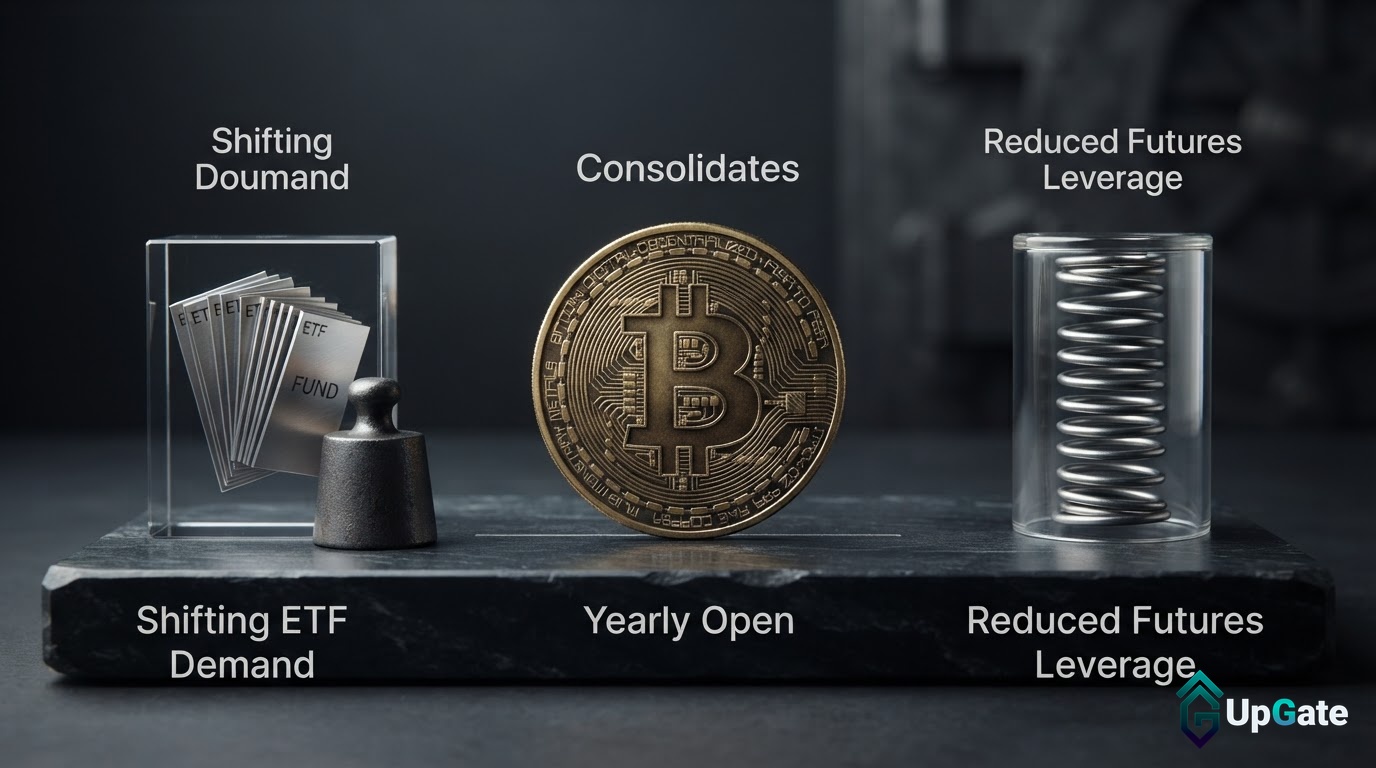
  • Bitcoin Consolidates Near Yearly Open Amid Shifting ETF Demand and Reduced Futures Leverage

    Bitcoin Consolidates Near Yearly Open Amid Shifting ETF Demand and Reduced Futures Leverage

    Bitcoin (BTC) is trading near $84,000, having repeatedly failed to surpass its yearly open price of $87,700. The current price action, occurring alongside weakening demand from spot Bitcoin Exchange Traded Funds (ETFs) and a reduction in futures leverage, suggests a period of potential consolidation rather than a reported trend reversal.

    ETF Demand Slowdown

    Demand from spot Bitcoin ETFs has cooled significantly. From September 28 to October 2, US spot Bitcoin ETFs saw net inflows of $241.1 million, a notable decrease from the $2.39 billion recorded the previous week. This slowdown was preceded by a $148.7 million outflow on September 30, which ended a nine-day streak of positive inflows. During this recent period, BlackRock’s IBIT attracted $450.2 million, while Fidelity’s FBTC experienced $168 million in outflows.

    According to Bitfinex, this weaker ETF demand is partly linked to Bitcoin trading near the average ETF holder’s cost basis of approximately $84,320. Historically, ETF inflows have averaged around $65 million when Bitcoin trades within 2% of this cost basis, compared to $136 million when it trades more than 10% above it.

    Futures Leverage Declines

    Concurrent with the dip in spot demand, futures leverage has also reduced. Open interest in Bitcoin futures had increased by $2.1 billion prior to the September payrolls report. However, following the data release, open interest fell by $1.5 billion as traders unwound positions. Aggregate futures open interest now stands at approximately 625,000 BTC, the lowest level since January 1, indicating reduced leverage in the market.

    Key Price Levels and Outlook

    Several key price levels are under scrutiny. Bitfinex sees $86,000 as a significant level. A drop below $82,600 could potentially place ETF holders back into a loss-making position. The $84,000 to $84,500 range is a critical cluster, holding around 867,000 BTC, which represents roughly 75% of Bitcoin’s supply and is considered a significant cost-basis area.

    Bitfinex expects Bitcoin to consolidate between $84,000 and its yearly open. The firm suggests that the next move will depend more on renewed spot demand than on increased futures leverage. Stronger ETF inflows could potentially support a move towards $90,000. Conversely, sustained trading below $81,300 might lead to a retest of support levels near $77,000 and the True Market Mean around $77,200.

    Uncertainties Remain

    Bitcoin’s near-term trajectory remains uncertain. It is unclear whether the current trend of failed breakouts will be reversed. The precise impact of recent macroeconomic data, such as weak payroll growth on potential interest rate decisions, also adds a layer of speculation. The market awaits clearer signals from institutional demand and macroeconomic factors to determine Bitcoin’s next significant move.

    Why This Matters

    The materials describe a narrow update: Bitcoin has repeatedly failed to surpass its yearly open price of $87,700, trading near $84,000. Whether Bitcoin may flip the trend of failed breakouts.

    Broader Context

    Source materials place the market analysis in this context: Bitcoin (BTC) was trading near $84,000 after another failure to break above its yearly open at $87,700.

  • Aave v4 on Base Sees $4.7M in Coinbase Tokenized Stock Deposits

    Aave v4 on Base Sees $4.7M in Coinbase Tokenized Stock Deposits

    Tech Giants Enter DeFi as Tokenized Stocks Fuel Lending Platforms

    Wall Street’s most sought-after technology stocks are quietly finding a new role within decentralized finance (DeFi), serving as collateral for loans. Aave v4, operating on Coinbase’s Ethereum layer-2 network, Base, has seen its holdings of tokenized stocks, issued by Coinbase, surge to $4.7 million. This figure has doubled in the past week alone.

    Notably, Meta and Nvidia represent half of these deposits, underscoring the persistent market appetite for AI-adjacent megacap companies, even within the on-chain ecosystem.

    Aave’s Equities Hub Opens for Global Users

    The Aave V4 protocol launched a dedicated Equities Hub on Base on September 25, 2026. This new feature allows eligible users outside the United States to deposit tokenized versions of major stocks and subsequently borrow USDC against them.

    At launch, the hub supports seven distinct stocks, all issued by Coinbase and identifiable by a “c” suffix. These include tokenized versions of Apple (AAPLc), Amazon (AMZNc), Microsoft (MSFTc), Meta Platforms (METAc), Nvidia (NVDAc), Tesla (TSLAc), and Netflix (NFLXc).

    Flexible Collateral and Isolated Markets

    A key feature of the Equities Hub is its flexibility, enabling users to combine different tokenized stocks as collateral. This means an investor holding both Apple and Tesla shares can leverage them together in a single position, rather than being forced to choose one over the other.

    The hub operates as an isolated market, meaning its activities are distinct from Aave’s broader lending pools. Currently, USDC is the sole asset available for borrowing, and any market fluctuations within this specific segment of Aave are contained.

    Conservative Risk Parameters and Pricing Mechanisms

    The initial risk parameters for the Equities Hub were established by the risk firm LlamaRisk, with a conservative approach. Collateralization factors for the tokenized stocks range from 65% to 79%. In practical terms, this means that for every $100 worth of tokenized shares deposited, a user can borrow between $65 and $79 in USDC, depending on the specific stock used as collateral.

    The platform has set an aggregate collateral cap at approximately $29 million, with a USDC supply cap of $32 million and a borrow cap of $21 million.

    Pricing for the tokenized stocks is sourced from Chainlink’s on-chain price feeds, which provide valuations on a 24/5 schedule, aligning with traditional equity market hours. The Aave market itself operates 24/7, with trading pausing only during official corporate actions such as stock splits or dividend distributions that alter the fundamental value of a share.

    Early Adoption and Emerging Risks

    By October 1, total deposits in the Equities Hub had reached $9 million, indicating approximately $3.8 million in new inflows in the week following its launch. The concentration of half of these deposits in METAc and NVDAc suggests that early adopters are bringing their most significant tech holdings onto the blockchain.

    A notable risk to monitor is the scheduling mismatch between Aave’s perpetual market operation and Chainlink’s 24/5 price feeds. This creates a potential vulnerability during weekends, when stock prices cannot be updated on-chain. Should significant news emerge on a Saturday, the on-chain price would not reflect it until trading resumes. Borrowers operating close to their collateral limits could face challenges reacting to such events, a scenario that LlamaRisk’s conservative collateral factors appear designed to mitigate.

    Regulatory Hurdles and Global Reach

    The exclusion of U.S. users from the Equities Hub highlights the ongoing regulatory ambiguity surrounding tokenized equities. As securities, stocks present complex questions for regulators when used for on-chain lending, issues that American authorities have yet to fully resolve. Consequently, this new product is currently accessible to users worldwide, excluding the United States.

  • NEAR’s Investment Case: Blockchain Business Drives Value, AI Offers Future Upside, Says Bitwise CIO

    NEAR’s Investment Case: Blockchain Business Drives Value, AI Offers Future Upside, Says Bitwise CIO

    NEAR’s investment case is primarily anchored by its robust blockchain business, with its burgeoning artificial intelligence ambitions serving as a significant secondary benefit, according to Bitwise Chief Investment Officer Matt Hougan. This perspective emphasizes NEAR’s current utility and revenue generation as the core value proposition, while its AI-related initiatives represent potential future growth.

    Blockchain Foundation: NEAR Intents Drives Performance
    The bedrock of NEAR’s investment case lies in its established blockchain operations, particularly its NEAR Intents product. This system has facilitated a cumulative trading volume exceeding $30 billion and is projected to generate approximately $45 million in fees this year. A portion of these fees is allocated to token buybacks, directly benefiting token holders. Hougan underscored this current business activity, stating, “When I’m investing in NEAR, I’m buying an exciting blockchain business,” characterizing the AI opportunity as “additional upside.”

    NEAR Intents streamlines cross-chain transactions by enabling users to define desired outcomes, with a network of solvers managing the execution. This functionality simplifies the often-complex process of navigating separate wallets, bridges, and exchanges, thereby enhancing accessibility for ordinary users. The success of NEAR Intents in attracting human users provides a tangible basis for its investment case, irrespective of the pace of AI agent adoption.

    Market Performance Snapshot
    In the third quarter, the NEAR token experienced a substantial surge of 198%, significantly outperforming both Bitcoin, which gained 43%, and Ethereum, which rose 71%. This performance highlights current market interest in the NEAR token, further bolstering the narrative of a strong existing blockchain business.

    AI Ambitions: Future Potential and Uncertainties
    Beyond its current blockchain utility, NEAR is positioning itself as essential infrastructure for AI agents to transact with each other and the broader digital economy. This ambition is underpinned by NEAR’s foundational contributions to AI research, notably co-founder Illia Polosukhin’s co-authorship of the 2017 paper that introduced the transformer architecture, a critical component of modern large language models. Hougan described NEAR’s strategy as developing valuable services today that could support a larger future market for autonomous agents. He also noted progress in confidential AI infrastructure, designed to safeguard data during processing.

    However, the ultimate extent to which NEAR will capture the market for AI agents and the timeline for the development of agentic finance remain subjects of uncertainty. Hougan acknowledged that human activity currently constitutes the majority of NEAR’s usage, and NEAR Intents has gained traction by simplifying crypto for individuals, rather than through widespread adoption by AI agents. His overarching argument suggests that investors can evaluate NEAR based on its existing products generating activity and fees, while its role in an economy of AI agents represents a longer-term prospect.

    In conclusion, according to the memo, NEAR’s investment case is firmly supported by its current blockchain business, exemplified by the success of NEAR Intents. Its AI ambitions present a significant, though less certain, avenue for future growth, offering additional upside potential for investors.

    Why This Matters

    The materials describe a narrow update: Bitwise CIO Matt Hougan stated that NEAR’s investment case is based on its existing blockchain business, particularly NEAR Intents, and that its AI ambitions represent additional upside potential. The pace at which agentic finance will develop.

    Broader Context

    Source materials place the market analysis in this context: Bitwise Chief Investment Officer Matt Hougan’s weekly CIO memo.

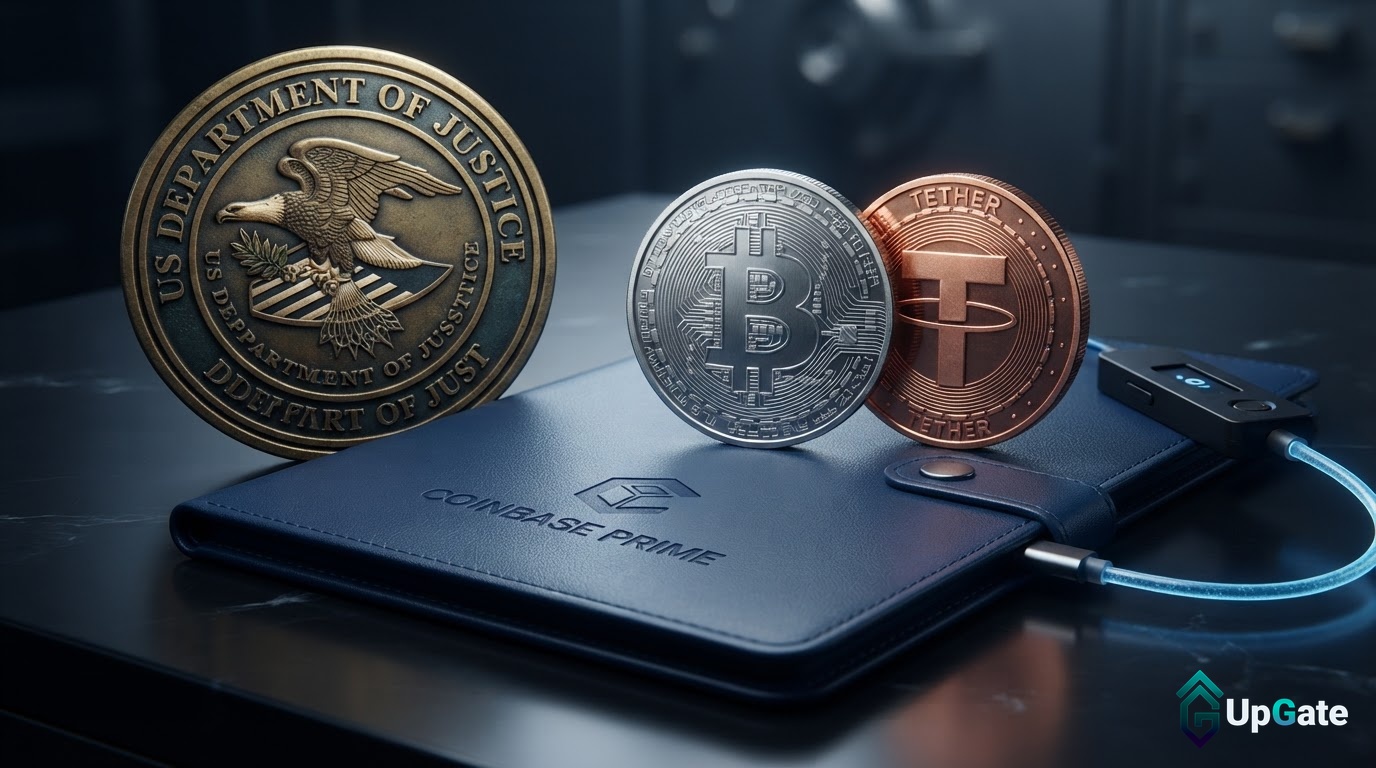
  • US Government Moves $470 Million in Seized Bitcoin and Tether to Coinbase Prime

    US Government Moves $470 Million in Seized Bitcoin and Tether to Coinbase Prime

    The U.S. government has transferred approximately $470 million in seized Bitcoin and Tether to Coinbase Prime, the institutional platform designated by the U.S. Marshals Service (USMS) for handling such assets. This move is notable for the inclusion of Tether, a stablecoin, which has not been a prominent feature in previous reported government transfers of seized cryptocurrency.

    Coinbase Prime was selected by the USMS in July 2024 to manage the custody and trading of digital assets seized in federal criminal cases. The USMS is responsible for overseeing the management of these forfeited assets. On-chain data, tracked by Arkham Intelligence, has previously shown significant shipments of seized crypto assets to Coinbase Prime.

    In mid-July 2026, for instance, an estimated $288 million to $297 million in seized assets, primarily Bitcoin, were moved to Coinbase Prime. More recently, on October 7, 2026, a larger asset shift of approximately $103 million included about 833.6 Bitcoin, valued at $71.6 million, and 40,285 BNB, worth around $31.6 million, which also landed on Coinbase Prime addresses.

    The current transfer’s specific date is not explicitly stated but is implied to be recent, with activity tracked on platforms like X. The inclusion of Tether in this $470 million transfer is a distinguishing factor, as earlier reported government transfers of seized crypto did not feature USDT, despite the government holding significant amounts of the stablecoin.

    This development occurs within the context of a broader U.S. government digital asset strategy. In March 2025, President Trump signed an executive order establishing a Strategic Bitcoin Reserve, which includes a no-sale policy for seized Bitcoin. While this policy specifically addresses Bitcoin, the movement of Tether, a stablecoin pegged to the U.S. dollar, raises different considerations. Unlike Bitcoin, selling or redeeming Tether would not typically create price pressure on the market, but it signals active management of crypto assets outside the direct protection of the Bitcoin reserve’s no-sale policy.

    Transfers to a custodian like Coinbase Prime are administrative actions and do not inherently constitute a sale. Coins can be moved for consolidation, safekeeping, or administrative handling without being placed on an exchange for sale. However, the handling of seized Bitcoin may be subject to scrutiny to determine if the government’s no-sale policy is being consistently applied.

    Estimates suggest the U.S. government holds a substantial amount of cryptocurrency, potentially between $20 billion and $28 billion, including an estimated 324,000 to 325,000 Bitcoin. The exact reasons for this specific $470 million transfer, beyond administrative handling, remain uncertain, as do the specific cases from which these assets were seized, although previous transfers have been linked to individuals like Ryan Farace and Brian Krewson.

    The government’s active management of its seized crypto portfolio, particularly the inclusion of stablecoins like Tether alongside Bitcoin, highlights the evolving nature of its digital asset strategy and the ongoing questions surrounding adherence to its stated policies, such as the Strategic Bitcoin Reserve.

    Why This Matters

    The materials describe a narrow update: The US government moved $470 million worth of seized Bitcoin and Tether to Coinbase Prime, the platform selected by the US Marshals Service for handling seized digital assets. The exact date of the $470 million transfer to Coinbase Prime.

    Broader Context

    Source materials place the factual news in this context: The US government has moved $470 million in Bitcoin and Tether from seized funds to Coinbase Prime, according to a post on X tracking the activity.

  • CLARITY Act Lives! House Financial Chair: Congress, Not SEC/CFTC, Offers Reliable Regulation

    CLARITY Act Lives! House Financial Chair: Congress, Not SEC/CFTC, Offers Reliable Regulation

    Hill Pushes for CLARITY Act Amidst Regulatory Uncertainty

    U.S. House Financial Services Committee Chairman French Hill stated unequivocally that regulatory actions by the SEC and CFTC are insufficient to replace congressional legislation, expressing hope that the CLARITY Act can still pass during the post-election lame-duck session.

    In a Fox Business interview on Wednesday, Chairman French Hill of the House Financial Services Committee asserted that while the Securities and Exchange Commission (SEC) and the Commodity Futures Trading Commission (CFTC) have begun proposing new rules for digital assets, these administrative regulatory actions are “not enough” to substitute the stability of congressional legislation. Hill believes the crypto market requires a long-term, predictable legal framework, rather than relying on the discretion of regulatory agencies.

    Last month, the Senate failed to pass the Digital Asset Market Transparency Act, or CLARITY Act, which was seen as a crucial step toward a clear regulatory path for the U.S. crypto industry. Following the bill’s failure, SEC Chairman Paul Atkins and CFTC Chairman Michael Selig, under the direction of President Donald Trump, each proposed their own crypto regulatory drafts, covering spot market classification, stablecoin compliance, and derivatives oversight.

    However, Hill made it clear in the interview that the responses from both agencies are “not keeping up” with a legislative solution. He argued that administrative regulations lack the force of law and are susceptible to change with shifts in administration, which is insufficient for crypto businesses and investors requiring long-term planning.

    Hill remains hopeful about the CLARITY Act, suggesting that lawmakers might push for its passage during the lame-duck session following the midterm elections. According to the current schedule, the Senate will have only 22 working days between the conclusion of the November midterms and the inauguration of the new Congress in 2027. The voting outcomes during this extremely narrow window will be significantly influenced by election results, potentially altering the stances of lawmakers who know whether they will retain their seats next year.

    This lame-duck legislative model has precedent. In late 2020, Congress rapidly passed the framework for the CHIPS and Science Act, which included chip subsidies and infrastructure investments, in a very short timeframe. For the crypto industry, completing CLARITY legislation before the formation of a new Congress would avert two more years of regulatory uncertainty.

    Another structural issue warranting attention is the leadership vacancies at the SEC and CFTC. As of Wednesday, the two agencies collectively have seven open positions. SEC Commissioner Hester Peirce announced her resignation last week, leaving only Chairman Atkins and Commissioner Mark Uyeda at the SEC. At the CFTC, Chairman Michael Selig is the sole commissioner in office.

    These sparse personnel numbers limit decision-making efficiency. SEC proposals for crypto-related regulations require a minimum of three commissioners’ votes to take effect; the current configuration of two commissioners makes it practically difficult for the commission to function. The CFTC faces similar challenges, with Selig having to advance new rules without the support of other commissioners.

    For the crypto industry, the delay in passing the CLARITY Act means continued reliance on SEC and CFTC administrative regulations in the short term. While these regulations are swift, they lack long-term stability and could be invalidated by subsequent legal challenges. Exchanges, custodians, and project developers will need to continue investing compliance resources to navigate the varying standards of different regulatory bodies.

    On the other hand, Hill’s public statements also signal to the market that Congress still values crypto legislation and will not cede regulatory authority entirely to administrative agencies. This is a positive long-term signal for the industry, indicating that there is still room for progress at the legislative level. Although the 22-day window of the lame-duck session is narrow, it is not impossible; Congress has passed significant legislation in even shorter periods.

  • SEI Price Poised for Breakout Amid Canary Capital ETF Filing

    SEI Price Poised for Breakout Amid Canary Capital ETF Filing

    Canary Capital Files for Staked SEI ETF, Boosting Token’s Profile

    Canary Capital has submitted an S-1 amendment for a proposed exchange-traded fund (ETF) that would hold spot SEI and stake approximately 90% of its holdings, with BitGo designated as the sole custodian. This filing has brought renewed attention to the SEI token, which experienced a significant rally of over 1,000% between 2023 and 2024, prompting speculation about potential further price increases.

    Technical Outlook for SEI

    On the weekly chart, SEI is currently trading near $0.06796, consolidating within a narrowing falling wedge pattern. The token is retesting the upper boundary of this wedge, a critical level for bullish momentum.

    A decisive break above this upper border could significantly alter the technical landscape. The initial resistance to overcome is at $0.09539. Should SEI successfully breach the wedge and establish $0.09539 as support, the next potential price targets identified by chart analysis are $0.15137 and $0.30125.

    However, these substantial gains are contingent on SEI breaking free from the pattern. A rejection at the current upper boundary could lead to a retreat within the falling wedge, prolonging the consolidation phase.

    While the proposed staked ETF provides a new narrative for SEI, the token’s price action still requires technical confirmation. A failure to surpass $0.09539 could result in SEI remaining within the wedge for an extended period. Currently, the market has a clear breakout level, a significant resistance zone, and ample room for speculative trading.