Category: Uncategorized

  • SEI Price Poised for Breakout Amid Canary Capital ETF Filing

    SEI Price Poised for Breakout Amid Canary Capital ETF Filing

    Canary Capital Files for Staked SEI ETF, Boosting Token’s Profile

    Canary Capital has submitted an S-1 amendment for a proposed exchange-traded fund (ETF) that would hold spot SEI and stake approximately 90% of its holdings, with BitGo designated as the sole custodian. This filing has brought renewed attention to the SEI token, which experienced a significant rally of over 1,000% between 2023 and 2024, prompting speculation about potential further price increases.

    Technical Outlook for SEI

    On the weekly chart, SEI is currently trading near $0.06796, consolidating within a narrowing falling wedge pattern. The token is retesting the upper boundary of this wedge, a critical level for bullish momentum.

    A decisive break above this upper border could significantly alter the technical landscape. The initial resistance to overcome is at $0.09539. Should SEI successfully breach the wedge and establish $0.09539 as support, the next potential price targets identified by chart analysis are $0.15137 and $0.30125.

    However, these substantial gains are contingent on SEI breaking free from the pattern. A rejection at the current upper boundary could lead to a retreat within the falling wedge, prolonging the consolidation phase.

    While the proposed staked ETF provides a new narrative for SEI, the token’s price action still requires technical confirmation. A failure to surpass $0.09539 could result in SEI remaining within the wedge for an extended period. Currently, the market has a clear breakout level, a significant resistance zone, and ample room for speculative trading.

  • XRP Surges on Ripple’s South Korean Partnership

    XRP Surges on Ripple’s South Korean Partnership

    Ripple and Meritz Securities Forge Strategic Partnership to Explore Digital Asset Infrastructure in South Korea

    Ripple, the blockchain payment company, has announced a strategic partnership with South Korean brokerage firm Meritz Securities to assess the potential integration of Ripple Custody and its tokenization infrastructure within the country’s capital markets. This collaboration comes at a pivotal moment as South Korea moves towards formal regulatory recognition of digital assets, while the price of XRP, Ripple’s native token, has recently dipped below $1.50.

    The partnership aims to introduce institutional-grade digital asset custody and tokenization services to the South Korean market. Meritz Securities stated that it is actively examining potential business avenues that could become relevant as digital assets are incorporated into the regulated financial system.

    The companies intend to commence their cooperation within the existing framework of securities business rules and regulations. Future expansion will be considered in stages, aligning with the ongoing development of South Korea’s digital asset regulatory landscape.

    While Meritz Securities is exploring various digital asset services that could benefit its capital markets operations amidst evolving regulations, the firm has not yet tied these potential activities to Ripple or confirmed their future implementation. The assessment will focus on how different digital asset services can be integrated into Meritz’s capital markets business.

    Tokenized securities, which represent financial assets on a blockchain, have issuance and investor rights that are contingent on the specific product and its legal structure. Consequently, the relationship between tokenization, ownership, and liquidity is crucial for evaluating any future offerings.

    Ripple Custody is designed as an institutional solution for safeguarding and managing digital assets, while Ripple’s tokenization infrastructure is intended for use by financial institutions. Both services are currently available to global financial institutions. The partnership with Meritz Securities will involve a joint review of how these offerings can be adapted for the Korean capital market.

    The announcement did not specify details regarding the blockchain network, custody volumes, asset issuance processes, customer segments, transaction mechanics, or operating models.

    For financial institutions, custody and tokenization represent distinct yet interconnected areas of infrastructure. Custody focuses on the secure holding and management of digital assets, whereas tokenization deals with the digital representation of assets. The specifics of how these functions will be integrated into a Korean service remain to be detailed.

    Institutional custody also encompasses operational controls and execution requirements that extend beyond mere asset safekeeping.

    Meritz Securities indicated that the arrangement seeks to leverage Ripple’s global digital asset infrastructure alongside the brokerage’s capital markets expertise. The firm plans to develop digital asset financial services incrementally as domestic regulations evolve.

    Fiona Murray, Ripple’s Managing Director for Asia-Pacific, stated that the company will investigate how digital asset infrastructure can support the continued growth of Korea’s capital markets. Neither company has provided a timeline for delivery or committed to a commercial launch.

    XRP is currently trading around $1.45, marking a 4.3% decrease over the past 24 hours and a 3.9% decline over the last seven days, according to CoinGecko. The token has also fallen from approximately $1.52 within the latest 24-hour period, suggesting that sellers currently hold the advantage in the short term.

    The market sentiment remains cautious, with XRP struggling to maintain recent gains despite Ripple’s expansion into South Korea’s capital markets. Prediction market data indicates that the $1.40 level is a significant downside support, while $1.60 represents a notable upside target for October.

    A sustained move above $1.60 could potentially lead to a stronger recovery in XRP’s price outlook. Conversely, a breach below $1.40 could expose the token to further declines. Currently, XRP appears to be trading within these boundaries, positioning the Ripple-Meritz partnership as a potential catalyst rather than an immediate driver of price action.

  • Lawmaker Argues Current Crypto Regulations Fall Short of Legislative Clarity

    Lawmaker Argues Current Crypto Regulations Fall Short of Legislative Clarity

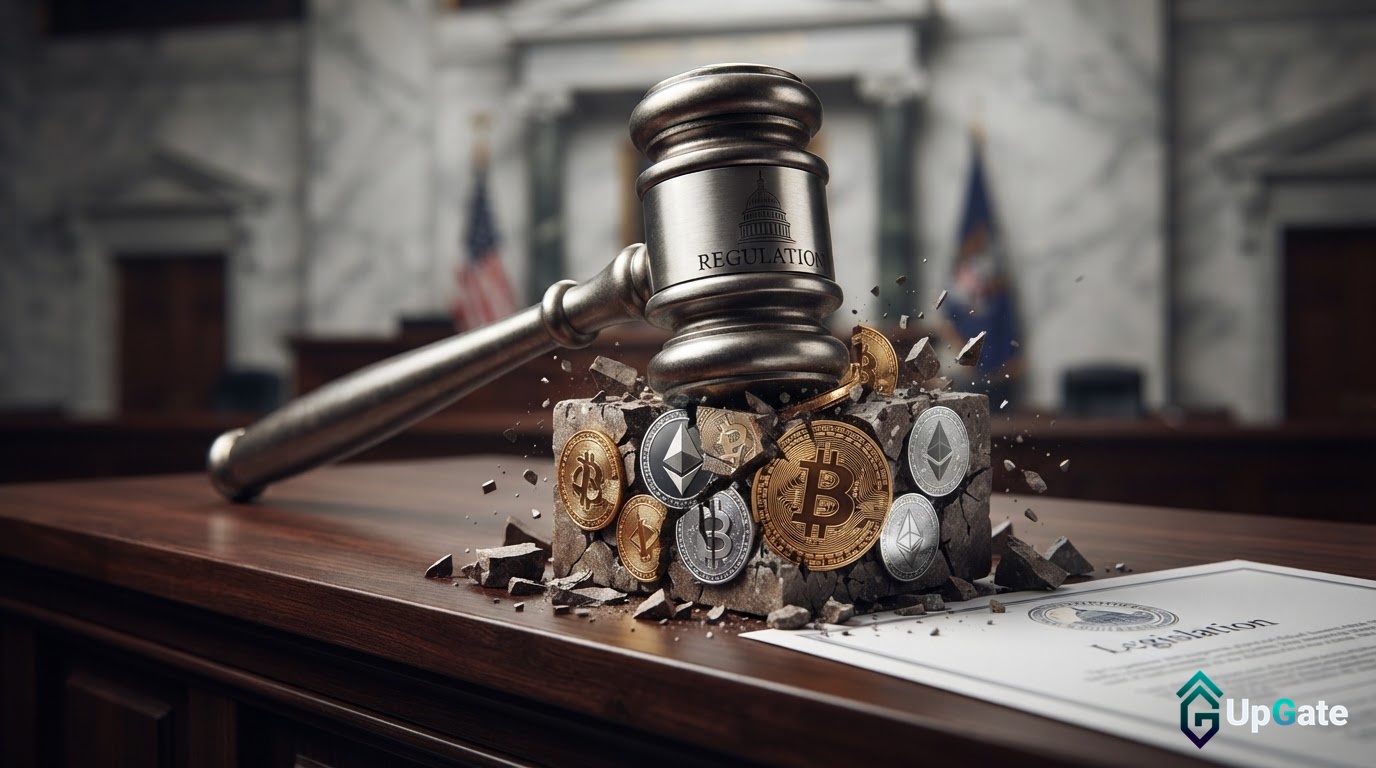
    Representative French Hill stated on Wednesday that current regulatory actions by the US Securities and Exchange Commission (SEC) and the Commodity Futures Trading Commission (CFTC) on digital assets are insufficient and do not provide the long-term stability that legislative solutions could offer. Hill expressed hope that the Digital Asset Market Clarity (CLARITY) Act could still be passed during the upcoming lame duck session of Congress.

    According to Representative French Hill, who chairs the House Financial Services Committee, the steps taken by the SEC and CFTC to address crypto regulations, particularly following the US Senate’s failure to pass the CLARITY Act last month, have fallen short of providing the necessary framework for the digital asset market. Hill emphasized the need for a “permanent law change to make sure America is number one in digital assets and blockchain technology.”

    The CLARITY Act represents a legislative effort to establish a comprehensive regulatory structure for digital assets. However, its passage has been stalled, with the US Senate failing to approve it in the previous month. The upcoming lame duck session of Congress, which spans a limited period between the US midterm elections and the start of a new congressional term in 2027, is seen by Hill as a critical, albeit narrow, window of opportunity for the bill to be considered and potentially passed. The Senate is expected to have only 22 days in session during this period.

    This situation highlights a broader debate about the most effective approach to regulating the rapidly evolving digital asset landscape. While regulators are actively pursuing rulemaking, Hill and others argue that agency-level actions may lack the permanence and comprehensive scope that only legislation can provide. This approach aims to foster greater market stability and certainty for businesses and investors operating in the digital asset space.

    The effectiveness of current regulatory actions remains a point of contention, with uncertainties surrounding the specific details and implementation of proposed rules by the SEC and CFTC. Furthermore, the regulatory bodies themselves are facing challenges, with seven leadership vacancies reported as of Wednesday. Adding to this, Commissioner Hester Peirce announced her resignation from the SEC last week, further impacting the operational capacity and continuity of these agencies.

    The potential passage of the CLARITY Act during the lame duck session is uncertain, influenced by various political factors and the limited legislative calendar. The outcome of this legislative push, alongside the ongoing efforts by regulatory agencies, will shape the future of digital asset regulation in the United States and its impact on the nation’s position in the global digital economy.

    Why This Matters

    The materials describe a narrow update: Representative French Hill expressed that regulatory actions by the SEC and CFTC regarding digital assets are inadequate and do not provide the necessary long-term stability that legislation like the CLARITY bill would offer. Whether the CLARITY Act will be passed during the lame duck session.

    Broader Context

    Source materials place the factual news in this context: The article discusses the ongoing efforts and perceived shortcomings in US regulatory actions concerning digital assets.

  • Orca DAO Proposes Acquisition, Treasury Overhaul Amidst ORCA Token Surge

    Orca DAO Proposes Acquisition, Treasury Overhaul Amidst ORCA Token Surge

    Orca, a decentralized exchange operating on the Solana blockchain, is reportedly eyeing an acquisition. The protocol’s Decentralized Autonomous Organization (DAO) has put forth a proposal to purchase an undisclosed Solana-based DeFi protocol, aiming to bolster its credit and yield product offerings.

    The market reacted swiftly to the news, with the $ORCA token surging 84% as the acquisition plan circulated, according to data from SolanaFloor.

    The proposal, titled “Resourcing Orca for Its Next Phase,” was formally submitted on September 29, 2026, following unanimous endorsement from the Governance Council on September 24. The voting period is set to conclude on October 10, 2026, meaning the outlined changes remain a proposal, not a finalized decision.

    Key Proposed Changes

    A significant alteration proposed is the redistribution of protocol fees. Under the new structure, 10% of fees would be allocated to xORCA staking rewards, and another 10% would be earmarked for buybacks managed by the Orca team. The remaining 80% would be directed towards operational expenses.

    The proposal also outlines a substantial shift in the protocol’s treasury management. Approximately 14.2 million ORCA tokens, representing roughly 19.8% of the total supply, would be moved from the community treasury. Alongside these tokens, approximately 70,000 SOL would also be transferred. These assets would be placed into a newly established Strategic Account, which would be team-controlled and exclusively designated for acquisition purposes.

    Structurally, the proposal calls for the dissolution of the current Governance Council, the very body that recently approved the plan.

    Strategic Acquisition and Market Reaction

    The central tenet of the proposal is the strategic acquisition of a leading, yet unnamed, Solana DeFi protocol. Orca’s leadership views this potential deal as a crucial step in expanding its suite of credit and yield products. The acquisition is projected to contribute to an estimated 50% increase in Orca’s Total Value Locked (TVL).

    However, the market is being asked to assess the value of an acquisition whose target remains undisclosed, presenting a challenge for investors seeking to evaluate the potential impact.

    Community Concerns

    Criticism of the proposal has primarily focused on two areas: reduced staking rewards and the concentration of power. xORCA stakers would see their share of fees decrease to 10% under the proposed fee split. Furthermore, moving a significant portion of the treasury to a team-controlled account, coupled with the dissolution of the Governance Council, is seen by some as shifting influence away from token holders and towards the core team.

    While the proposal includes measures to prevent excessive token issuance and address concerns about dilution from new minting, it does not directly resolve questions regarding the decision-making process for the allocation of existing assets.

    Market Performance and Investor Outlook

    Following the proposal’s circulation, $ORCA experienced an 84% surge, according to SolanaFloor. Broader market analysis indicates that the token gained over 80% in the week leading up to October 7, 2026, with recent trading activity ranging between approximately $2.90 and $3.15.

    For ORCA holders, the proposal presents a trade-off: a reduced immediate share of fee revenue from staking in exchange for a potential future growth driven by the team’s capital deployment strategy. The team-managed buybacks would operate at the discretion of the team, rather than following a predetermined community-controlled schedule.

    The critical date for stakeholders is October 10, 2026, when voting concludes. Following this, attention will shift to the identity of the acquired protocol, the successful integration of new credit and yield products, and whether the projected 50% increase in TVL materializes.

  • Lido Offers ETH Staking to BitGo Bank & Trust US Clients

    Lido Offers ETH Staking to BitGo Bank & Trust US Clients

    BitGo Enables Direct ETH Staking for US Clients via Lido Integration

    BitGo Bank & Trust, N.A. has announced a significant development for institutional investors in the United States, enabling eligible clients to stake Ether (ETH) directly through the Lido protocol within their existing BitGo accounts. The announcement, made on October 7, 2026, removes a key barrier for institutions looking to participate in Ethereum’s staking rewards.

    Clients will now be able to stake their ETH, receive liquid staking derivative tokens (stETH), and manage their entire position from a single, integrated platform. Liquid staking allows users to commit ETH to secure the Ethereum network and earn rewards without the traditional lock-up periods associated with direct staking. Lido issues stETH tokens, which represent a staked ETH position and can be traded or utilized elsewhere while the underlying ETH remains staked.

    This new integration streamlines the process for BitGo’s US clients, eliminating the need for additional operational workflows or the onboarding of new counterparties. All staking activities, stETH receipt, and ongoing management will now be handled seamlessly within the BitGo platform. BitGo is positioning itself as the first US-based qualified custodian to offer native ETH staking through Lido.

    Kean Gilbert, Head of Institutional Relations at the Lido Ecosystem Foundation, stated that the move provides the essential custodial support that institutions require to engage with Lido’s staking strategies. Nathan Stump, Managing Director at BitGo, highlighted that the company is maintaining its stringent security controls while ensuring the service integrates smoothly into clients’ existing asset management infrastructure.

    BitGo’s custody platform currently secures over $100 billion in digital assets, with $48 billion designated as staked assets. Lido, a leading liquid staking protocol by market share, manages over $25 billion in staked ETH, representing more than 25% of all staked ETH.

    The US launch follows an earlier expansion, with BitGo having connected clients in Europe and Asia to Lido’s staking services in July 2025. This prior rollout provided both companies with over a year of operational experience before extending the offering to the US market.

    The most immediate beneficiaries are US institutions already utilizing BitGo for ETH custody, as they can now access staking yields via Lido without needing to switch custodians or overhaul their operational systems. For Lido, this integration is expected to solidify its dominant position in the liquid staking market, potentially expanding its lead through a regulated US distribution channel.

    The move also sets a new benchmark for competitors in the custody sector. By becoming the first US qualified custodian to offer native ETH staking through Lido, BitGo has established a competitive advantage that rivals will likely seek to address.

  • Crypto Crash: Bitcoin, Ethereum, XRP Price Plunge

    Crypto Crash: Bitcoin, Ethereum, XRP Price Plunge

    Crypto Market Sees Broad Sell-Off as Key Assets Decline

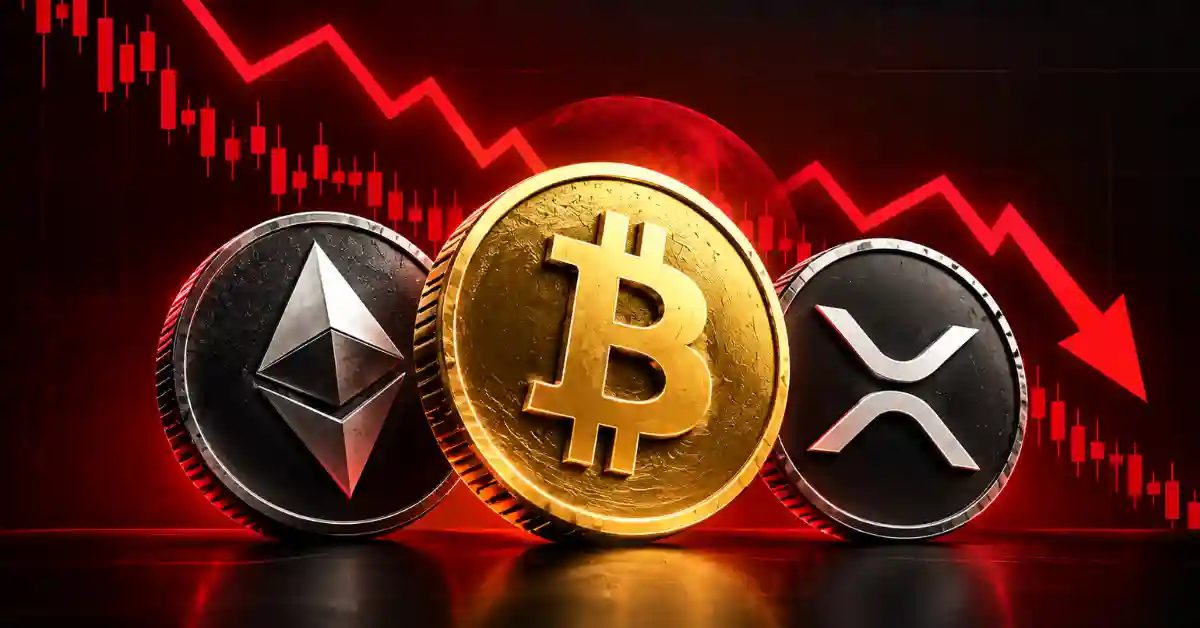
    The cryptocurrency market experienced a widespread downturn over the past 24 hours, with major digital assets including Bitcoin, Ethereum, and XRP all registering losses. Ethereum was particularly hard-hit, falling sharply after breaching a critical trendline. All three cryptocurrencies are now positioned at or near support levels that are expected to dictate their future price movements.

    Bitcoin’s Uptrend Tested Amidst Selling Pressure

    Bitcoin’s longer-term uptrend remains intact, though recent rallies have been met with significant selling pressure. According to one analyst, Bitcoin has now closed three consecutive weekly candles and one monthly candle above its 50-week moving average, a level that has historically served as a robust support during bull markets. The cryptocurrency is also maintaining its May high, hovering near $83,000.

    However, the short-term outlook for Bitcoin appears less optimistic. The analyst noted that every recent upward price movement has been met with selling, and the overlapping nature of these rallies suggests increasing strength among sellers.

    Ethereum Falters After Breaking Rising Triangle Pattern

    Ethereum emerged as the weakest performer among the three leading cryptocurrencies. Analysts report that ETH broke down from a rising triangle pattern after failing to hold support between $2,690 and $2,700. This breakdown allowed sellers to quickly drive the price down towards $2,560.

    “As long as ETH remains below the broken trendline, I anticipate continued downside pressure,” the analyst stated. They added that the price action observed between $2,550 and $2,560 will be a crucial indicator for the cryptocurrency’s next directional move.

    Adding to the bearish sentiment on the demand side, Tom Lee indicated that BitMine, a significant corporate buyer of ETH, will cease its purchases once it holds 5% of Ethereum’s total supply.

    XRP Holds Support, But Bottom Remains Unconfirmed

    XRP is currently trading within its short-term support zone, ranging from $1.32 to $1.49, with its current price at $1.44. An analyst suggested that XRP has “a lot more room to the downside” within this zone and could potentially see further declines before finding a definitive bottom.

    Despite these short-term concerns, the broader structural outlook for XRP remains constructive, according to the analyst. XRP has been establishing higher lows since August, a pattern that contrasts with its performance throughout late 2025 and most of 2026.

  • XRP Dethroned by AI Crypto in South Korea

    XRP Dethroned by AI Crypto in South Korea

    South Korean Traders Pivot to AI Cryptocurrencies, Overtaking Payment Tokens

    South Korean cryptocurrency traders are increasingly shifting their focus from payment-centric digital assets like XRP towards cryptocurrencies linked to artificial intelligence. By June 2026, AI tokens have emerged as the dominant thematic category in the country’s crypto trading landscape, according to a new report by blockchain analytics firm Chainalysis.

    The report, which analyzed crypto activity in East Asia from July 2025 to June 2026, measured thematic categories by their share of trading volume denominated in the South Korean won. AI cryptocurrencies ascended to become the most popular thematically defined investment category in South Korea by June 2026, surpassing established payment tokens.

    Chainalysis defines AI cryptocurrencies as digital assets associated with AI-focused projects or infrastructure. This category commanded a significantly larger portion of won-denominated trading compared to AI crypto markets in other major currencies. The report explicitly stated that AI cryptocurrencies had become the “single most popular thematically-defined investment category” in South Korea, eclipsing payment tokens such as XRP.

    Several AI-linked tokens saw substantial trading volumes among South Korean investors during the report’s timeframe. While specific token names were not provided in the source text, the report indicated a shift in leadership within the AI category. Tokens like VIRTUAL and KAITO were prominent in 2025, but Worldcoin and SAHARA later took the lead.

    Chainalysis observed that South Korean retail traders are engaging with the AI crypto sector with greater speed and intensity than traders in other markets examined in the report. The robust activity in South Korea’s AI crypto market is particularly striking when compared to other major currencies.

    In June 2026, the share of AI-crypto trading denominated in the Korean won was 19.5 times higher than that of the Japanese yen. AI cryptocurrencies constituted 0.91% of yen-denominated trading, a stark contrast to the substantially higher proportion seen in the South Korean market. For context, the AI crypto category represented 1.02% of euro-denominated trading, 0.20% of Brazilian real-denominated trading, and a mere 0.03% of British pound-denominated trading.

    Chainalysis attributes the surge in AI token trading to South Korea’s broader engagement with the artificial intelligence investment cycle. The country’s stock market, for instance, has significant exposure to SK Hynix, a key manufacturer of memory chips essential for AI data centers. The report noted that AI-focused crypto trading activity grew in parallel with the company’s market ascent.

    South Korea’s cryptocurrency market is also heavily influenced by retail investors. Francis Kang, executive director of Korea Blockchain Week, characterized the market as “famously retail-driven.” Chainalysis further highlighted that Korean retail investors typically pursue high-risk, high-reward investment opportunities.

    This pivot towards AI cryptocurrencies occurs as South Korea’s overall crypto market continues its expansion. The country recorded approximately $449 billion in crypto activity during the period covered by the report, representing a 12.3% increase and solidifying its position as the largest crypto market in East Asia. The nation’s exchange ecosystem also grew by 16.3%, even as the broader East Asian crypto market experienced a modest contraction.

    For XRP, the data signifies a discernible change in South Korean retail trading preferences. While XRP remains a significant asset in the market, AI-linked cryptocurrencies have now taken precedence among thematic categories as traders increasingly embrace the AI narrative.

  • Bitcoin ETFs Attract Net Inflows; Ether ETFs Face Continued Outflows

    Bitcoin ETFs Attract Net Inflows; Ether ETFs Face Continued Outflows

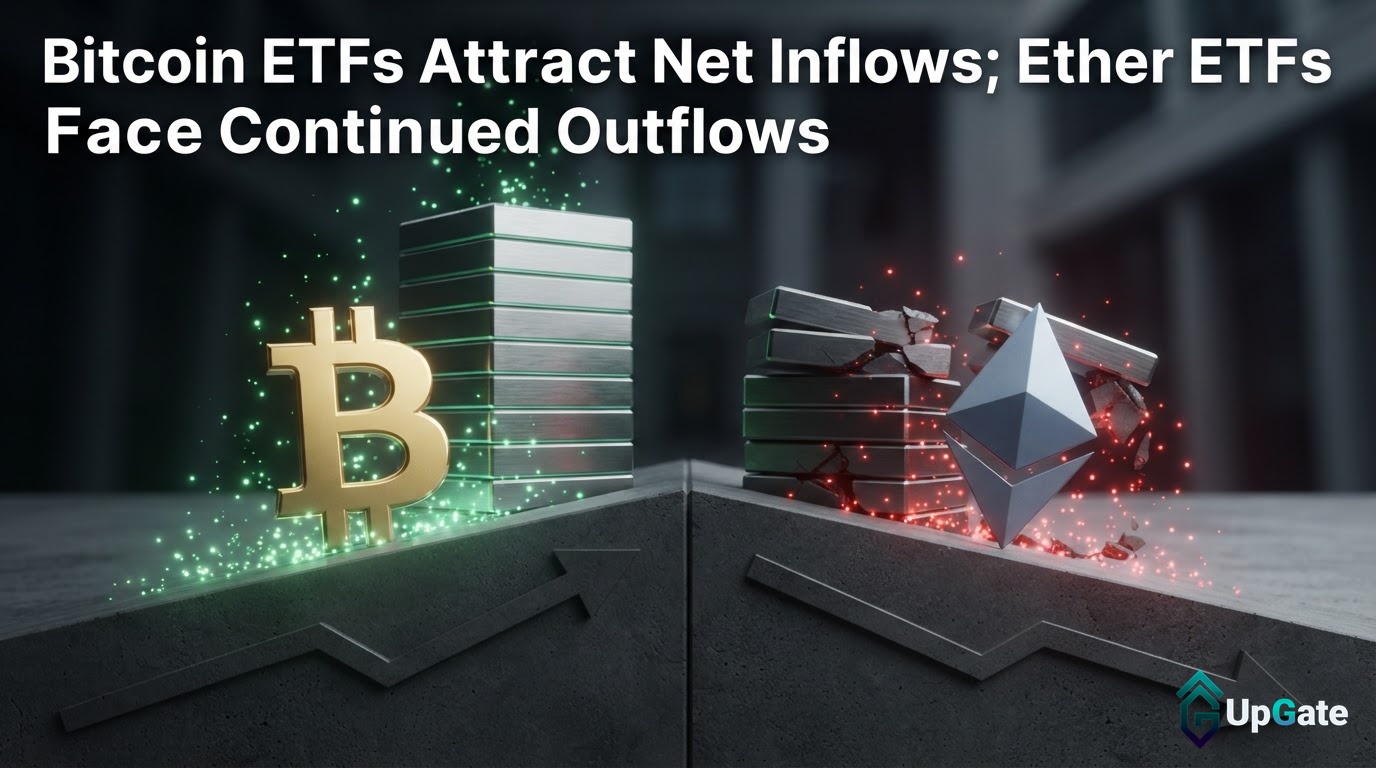
    U.S. Bitcoin exchange-traded funds (ETFs) recorded net inflows of $118.86 million on Tuesday, with Blackrock’s IBIT emerging as the primary contributor to this positive trend. In stark contrast, Ether ETFs experienced their sixth consecutive day of outflows, totaling $202 million.

    The inflows into Bitcoin ETFs, largely driven by Blackrock, signal a renewed interest in the digital asset. This comes as Ether ETFs continue to see sustained withdrawals, highlighting a divergence in investor sentiment across major cryptocurrency ETFs.

    Activity was not limited to Bitcoin and Ether. XRP and HYPE ETFs also attracted modest buying on Tuesday, indicating a mixed landscape for various digital asset investment vehicles. The contrasting performance underscores a notable split in institutional positioning within the crypto ETF market, with a clear preference shown for Bitcoin over Ether in recent flows.

    Why This Matters

    The materials describe a narrow update: On Tuesday, U. Institutional positioning split sharply across the crypto exchange-traded fund (ETF) market Tuesday.

    Broader Context

    Source materials place the factual news in this context: U.S. bitcoin ETFs returned to positive territory Tuesday with $118.86 million in net inflows, led almost entirely by Blackrock’s IBIT. Ether funds suffered a sixth consecutive day of withdrawals, while XRP and HYPE attracted modest buying. Bitcoin ETFs Flip Positive With $119M Inflow Institutional positioning split sharply across the crypto exchange-traded fund (ETF) market Tuesday. […].

  • Tether Partners Kazakhstan Central Bank on Stablecoins, Tokenized Assets

    Tether Partners Kazakhstan Central Bank on Stablecoins, Tokenized Assets

    Tether, the company behind the USDT stablecoin, has entered into a Memorandum of Understanding with the National Bank of Kazakhstan (NBK) and the Alatau City Authority (ACA). The agreement, signed on October 7, 2026, establishes a framework for exploring the potential applications of stablecoins, asset tokenization, and decentralized finance.

    Exploring Stablecoin and Tokenization Initiatives

    Under this agreement, the parties intend to collaborate on developing a stablecoin pegged to the Kazakhstani tenge. Additionally, they plan to initiate tokenization pilot projects in Alatau City, an emerging innovation district aiming to become a hub for fintech and smart city technologies. These pilot programs may utilize Hadron, Tether’s proprietary tokenization platform. Tokenization involves converting real-world assets, such as property or loans, into digital tokens that can be managed and traded on a blockchain.

    The scope of the agreement extends beyond technological implementation. It includes a commitment to studying international best practices for the issuance and regulation of stablecoins, as well as educational initiatives like workshops. The overarching objective is to promote financial stability and safeguard investor interests.

    Kazakhstan has set a target to tokenize projects valued at up to $60 million within Alatau City by the close of 2026. This figure comprises two key projects: the Iconic Tower, which aims for up to $50 million in financing, and the Birlik logistics center, targeting up to $10 million.

    Broader Digital Asset Ecosystem Development

    This MoU with Tether follows a separate agreement signed just days prior. On October 2, 2026, the Kazakhstan Stock Exchange (KASE) signed an MoU with the Alatau City Authority focused on establishing platforms for digital financial assets (DFAs). That earlier framework also encompasses tools for multi-currency stablecoin settlements.

    Alatau City is also collaborating with Dunamu to investigate the tokenization of real assets and the use of stablecoins.

    The strategic approach is characterized by a layered collaboration. The central bank contributes its monetary authority, the stock exchange provides market infrastructure, and Alatau City serves as a testing ground for these innovations. Tether brings its extensive experience in operating a stablecoin at scale and offers its tokenization platform to partners.

    The development of a local-currency stablecoin, such as one pegged to the tenge, could significantly enhance the currency’s presence in on-chain finance, an area where it currently has limited engagement, given the dominance of dollar-denominated stablecoins.

    It is important to note that the MoU is non-binding, and the proposed tenge stablecoin is an objective for exploration rather than a finalized product. The $60 million tokenization plan is also presented as an aspirational target.

    Key Developments to Monitor

    Several concrete developments will be crucial to observe moving forward. Firstly, the successful completion of the tokenization for the Iconic Tower and Birlik logistics center by the end of 2026 will be a key indicator. Secondly, the choice of platform for these tokenizations is significant; if Hadron is selected, it would represent a notable operational success for Tether. Finally, the progress of the tenge stablecoin initiative in conjunction with KASE’s settlement tools will be an important area to track.

  • Bitcoin ETFs Rebound with $119M Inflow Amid Ether Losses

    Bitcoin ETFs Rebound with $119M Inflow Amid Ether Losses

    Bitcoin ETFs See Inflows Amid Price Dip, Ether Funds Continue Outflow Streak

    US spot Bitcoin exchange-traded funds (ETFs) experienced a return to net inflows on Tuesday, bringing in $119 million, even as the cryptocurrency’s price declined. This marks a reversal from Monday’s $90 million net outflow, according to data from SoSoValue.

    The positive inflow for Bitcoin ETFs occurred despite a drop in the digital asset’s price. Bitcoin fell from above $86,600 on Tuesday to below $84,000. At the time of reporting, BTC was trading at $83,971, a 2.1% decrease over the preceding 24 hours, according to CoinGecko.

    Analysts suggest that Bitcoin’s recovery efforts are encountering increased profit-taking. MorenoDV, a contributor to CryptoQuant, noted that the cryptocurrency is trading at a significant premium to the estimated cost basis of active traders, which stands around $68,900. He indicated that the sustainability of the recovery hinges on whether new demand can absorb the current selling pressure.

    In contrast, Ether ETFs continued to see outflows, with $202 million leaving the funds on Tuesday. This represents a sharp increase from the approximately $51 million in outflows recorded on Monday. The total outflows for Ether ETFs over the past six trading sessions have now reached approximately $408 million.

    Other cryptocurrency ETFs also reported varied performance on Tuesday. XRP ETFs attracted $3.1 million in inflows, while Solana (SOL) ETFs experienced $3.7 million in outflows. Zcash (ZEC) ETFs, after two consecutive sessions of outflows, recorded no net flows on Tuesday.