Category: Uncategorized

  • Cardano’s ADA Rally Driven by New Leverage, Not Just Short Covering, On-Chain Data Indicates

    Cardano’s ADA Rally Driven by New Leverage, Not Just Short Covering, On-Chain Data Indicates

    On-chain data suggests that Cardano’s recent price increase was primarily fueled by new leveraged positions rather than solely short covering. While ADA experienced a significant rally, analysis by Santiment indicates that increased open interest points to traders establishing new positions.

    Cardano’s native token (ADA) nearly doubled in price from a multi-year low of under $0.14 in late June, reaching a multi-month peak of over $0.27 by early October. Between October 3 and October 5, a period where ADA’s price rose approximately 10%, Santiment data shows open interest increased by about 25% in dollar terms to over $300 million. Measured in ADA, open interest also climbed by roughly 13% during the same two-day span. This rise in open interest alongside a price increase typically signifies the addition of new leveraged positions.

    Santiment data challenges the narrative that the rally was solely a short squeeze. According to Santiment, covering shorts normally reduces open interest, whereas the observed increase suggests new capital entering the market through leverage. Although ADA’s funding rates reached their most negative level of the past month on October 2 before shifting positive, this may reflect changing conditions in sentiment, but the subsequent rise in open interest points to new positions being established.

    Further indicating heightened market activity, Santiment recorded 314 whale transactions worth over $100,000 on October 5. This represents approximately 2.2 times the weekday average for such transactions during the previous month, suggesting increased interest from larger holders.

    While short covering may have contributed to the price movement, the data indicates it was not the primary driver. The increase in open interest, even when measured in ADA, points to traders actively establishing new leveraged positions as the price moved higher. This distinction is crucial for understanding the market dynamics.

    Looking ahead, some analysts maintain a bullish long-term outlook for ADA. Crypto Patel noted that the token is roughly 98% above his previous accumulation zone and believes it could enter its next macro expansion phase. However, specific long-term price targets, such as $0.50 to $5.00, are considered optimistic and carry a low confidence level, contingent on the broader market structure continuing to develop favorably. Uncertainty remains regarding the exact extent to which short covering contributed to the price increase and whether the market structure will support these higher long-term price targets.

    Why This Matters

    The price of Cardano’s native token (ADA) rose by nearly 100% from a multi-year low in late June, reaching over $0.27 in early October. On-chain data from Santiment suggests this rally was primarily driven by an increase in open interest, indicating new leveraged positions were added rather than solely short covering. This distinction is important for understanding market dynamics beyond simple narratives.

    Broader Context

    Understanding the drivers of cryptocurrency price movements, such as the recent ADA rally, is crucial for investors assessing risk. The data indicates that leveraged positions played a more significant role than short covering, highlighting the importance of analyzing on-chain metrics like open interest for a more accurate market picture. The long-term outlook for ADA remains uncertain, with optimistic price targets carrying a low confidence level.


  • Capital Group ETF Boosts Strategy Holdings

    Capital Group ETF Boosts Strategy Holdings

    Capital Group Growth ETF Boosts Strategy Inc. Stake

    The Capital Group Growth ETF has significantly increased its holdings in Strategy Inc., the company formerly known as MicroStrategy, by acquiring an additional 535,304 shares. This latest purchase brings the fund’s total ownership to 2.19 million shares. The value of this stake is estimated to be between $336 million and $366 million, depending on the stock’s trading price at the time of filing. While this may seem modest for a firm managing approximately $3.3 trillion, it underscores a growing institutional interest in Strategy Inc.

    ETF Activity

    The recent acquisition was made through the Capital Group Growth ETF, which trades under the ticker CGGR. Regulatory disclosures indicate that these purchases occurred in mid-2026. However, CGGR is not the sole Capital Group entity showing an appetite for Strategy Inc. stock. In April 2026, another Capital Group fund, ANCFX, purchased 4.32 million Strategy shares for approximately $747 million. This earlier transaction boosted ANCFX’s total holdings to around 10.33 million shares, valued at roughly $1.78 billion.

    Strategy Inc.’s Bitcoin Focus

    Strategy Inc. has evolved beyond its origins as a traditional software company. It now operates as a leveraged vehicle for Bitcoin, holding hundreds of thousands of the cryptocurrency on its balance sheet. The company has financed these substantial Bitcoin acquisitions primarily through the issuance of equity and convertible notes. Convertible notes offer investors the opportunity to lend money with the potential to convert that debt into equity at a later date, providing a flexible financing mechanism.

    Appeal to Traditional Fund Managers

    This corporate structure holds significant appeal for traditional fund managers. By investing in Strategy Inc. shares, these managers can gain exposure to Bitcoin through a regulated stock exchange. This approach bypasses the complexities and risks associated with direct cryptocurrency ownership, such as securing digital wallets, managing private keys, and navigating compliance requirements for custody providers.

    Institutional Ownership and Market Dynamics

    As of June 30, 2026, institutional investors held approximately 61.55% of Strategy Inc. stock. Capital International Investors, a division of the broader Capital Group, is recognized as one of the largest institutional shareholders. Research suggests that periods of significant institutional buying in MicroStrategy (MSTR) have historically correlated with positive stock performance. However, this correlation is not a guarantee, and Strategy Inc.’s share price remains closely tied to the volatile movements of Bitcoin.

    The substantial institutional ownership, representing over 61% of the company, indicates a significant presence of professional money managers in its shareholder base. This can contribute to market stability during periods of strong sentiment. Conversely, it also has the potential to amplify market swings if a considerable number of large holders decide to divest their positions simultaneously.

    Given that Strategy Inc. funds its Bitcoin acquisitions through equity and convertible debt, its stock can exhibit amplified movements mirroring those of Bitcoin. Funds investing in Strategy Inc. are effectively accepting this amplified exposure, which can work in both positive and negative directions. The wide valuation range for CGGR’s stake—where the same 2.19 million shares could be valued at $336 million or $366 million—neatly illustrates this inherent volatility.

  • CFTC Seeks Public Input on Crypto Exchange Regulation Plan, Outlining Potential Framework

    CFTC Seeks Public Input on Crypto Exchange Regulation Plan, Outlining Potential Framework

    The U.S. Commodity Futures Trading Commission (CFTC) has initiated a 60-day public comment period for its newly released plan aimed at regulating cryptocurrency exchanges. This move signifies a formal step towards establishing federal guidelines for the digital asset industry, with the agency seeking input before drafting concrete rules.

    The CFTC’s plan, published on October 5, 2026, outlines a proposal for a federal license for crypto exchanges. The agency’s stated goals are to prevent fraud and provide clearer regulatory pathways for businesses operating in the cryptocurrency space. This initiative comes weeks after the Clarity Act, a previous legislative attempt to regulate digital assets, failed to pass the Senate.

    Regulatory Process and Public Comment

    According to the CFTC’s plan, the public will have 60 days from its publication in the Federal Register to submit comments. This period is crucial for shaping the final regulations. The agency’s approach is designed to address issues such as the fraud seen in cases like FTX, by establishing preventative measures rather than solely relying on post-event enforcement actions. The notice also appears to reframe past CFTC actions against entities like Kraken, Ooki DAO, and Uniswap as “regulation by enforcement,” suggesting a shift towards a more proactive and defined regulatory framework.

    Potential Implications and Industry Context

    Proponents suggest that a federal license could allow U.S. exchanges to offer leveraged products, which are currently restricted. This could pave the way for a more robust onshore market for perpetual futures. Furthermore, clear regulatory guidance is expected to simplify engagement with the crypto market for traditional financial institutions such as banks and brokers, who have historically faced uncertainty regarding which regulator has jurisdiction. The author suggests that this increased clarity could lead to easier onboarding for users, potentially driving user growth and broader industry expansion.

    Uncertainties Remain

    However, significant uncertainties remain. The specific details of the rules that may ultimately be drafted are not yet known, as the current document is a proposal open for public input. The ultimate impact on asset prices is also uncertain, with the possibility of gains for some assets but not necessarily all. The plan itself is a step in a process, and its final form and effectiveness are yet to be determined.

    This regulatory initiative by the CFTC represents a notable development in the ongoing effort to establish a comprehensive framework for the cryptocurrency industry in the United States. The agency’s call for public comment underscores the importance of stakeholder input in shaping future regulations. The outcome of this comment period and the subsequent rule-making process will be closely watched by investors, industry professionals, and policymakers alike.

    Why This Matters

    The materials describe a narrow update: The CFTC has published a plan to regulate crypto exchanges, which includes a proposal for a federal license. The specific details of the drafted rules are not yet known.

  • Hong Kong to Introduce Licensing for Four Virtual Asset Business Types by End-2026

    Hong Kong to Introduce Licensing for Four Virtual Asset Business Types by End-2026

    The Hong Kong government is set to introduce a bill by the end of 2026 that may establish licensing requirements for four key types of virtual asset businesses: dealing, custody, advisory, and management. This initiative represents a significant expansion of the city’s regulatory oversight for the digital asset sector.

    Secretary for Financial Services and the Treasury Christopher Hui reported the end-2026 target for submitting the bill to the Legislative Council on October 5, 2026. The proposed legislation is a joint effort by the Financial Services and the Treasury Bureau (FSTB) and the Securities and Futures Commission (SFC), with the SFC designated as the primary supervisory authority for these new licensing regimes.

    The new framework aims to regulate virtual asset dealing, custody, advisory, and management services under the guiding principle of “same business, same risks, same rules.” This approach mirrors the existing Securities and Futures Ordinance, ensuring that each new virtual asset license category aligns with a corresponding type under the established ordinance.

    This move is part of Hong Kong’s broader 2026-2030 financial market development strategy and aligns with the government’s Policy Statement 2.0 on Digital Assets. Public consultations on the proposed regimes have already been conducted. Conclusions from consultations concerning dealing and custody services, which garnered over 190 responses, were published on December 24, 2025. Separately, conclusions from consultations on advisory and management services were released on May 26, 2026, following 51 responses.

    A critical aspect of the proposal is the absence of transitional or grandfathering provisions. Consequently, businesses currently operating in these four virtual asset sectors that do not already possess licenses from the SFC or the Hong Kong Monetary Authority (HKMA) may be required to cease operations once the new regulations come into effect.

    This planned legislation builds on Hong Kong’s recent regulatory actions in the virtual asset space. The licensing of virtual asset trading platforms commenced in 2023, bringing centralized exchanges under SFC supervision. The Stablecoins Ordinance also took effect on August 1, 2025. The forthcoming bill extends this regulatory reach to over-the-counter (OTC) desks, custodians, advisers, and managers, encompassing areas that have previously operated outside the city’s primary crypto regulatory framework.

    The SFC will oversee the implementation and enforcement of the four licensing regimes, ensuring compliance with the evolving virtual asset regulations.

    Why This Matters

    The materials describe a narrow update: The Hong Kong government plans to submit a bill to the Legislative Council by the end of 2026 to license four types of virtual asset businesses: dealing, custody, advisory, and management. The bill extends oversight into areas that have so far sat outside the city’s main crypto framework.

    Broader Context

    Source materials place the factual news in this context: The guiding philosophy is “same business, same risks, same rules.”.

  • Tokenized Stocks Market Cap Reaches Record $3.8 Billion Amidst Rapid User Growth and Evolving Regulatory Landscape

    Tokenized Stocks Market Cap Reaches Record $3.8 Billion Amidst Rapid User Growth and Evolving Regulatory Landscape

    The market capitalization of tokenized stocks has surged to a new record of $3.8 billion, signaling substantial growth and increasing adoption in the sector. This milestone surpasses previous projections and highlights a significant increase in user participation, with holder addresses climbing by over 60% in the last 30 days to approximately 4.1 million.

    BNB Chain, Ethereum, and Solana are currently leading the market in terms of tokenized stock activity. Data from Token Terminal, RWA.xyz, and Binance Research shows that BNB Chain was the first blockchain to surpass $1 billion in combined tokenized stocks and ETFs. While earlier snapshots placed BNB Chain’s market share between 30% and 34% ($1.0 to $1.1 billion), Ethereum held approximately 22% to 25% ($750 to $830 million), and Solana accounted for about 20% to 23% ($680 to $740 million).

    The market crossed the $3 billion threshold for the first time in early September 2026, reaching $3.1 billion. Projections for late September or early October had anticipated a total market cap between $3.5 and $3.7 billion, a range that has now been exceeded.

    Key issuers are driving much of this activity. Ondo Finance typically holds assets above $900 million, while Binance’s bStocks and xStocks product lines are also significant contributors. Securitize has emerged as a top-tier issuer, with its SECZ product alone attracting over $430 million in inflows since July.

    User Adoption and Trading Activity

    The rapid increase in holder addresses, climbing by more than 60% in the past month, suggests broad retail participation beyond institutional involvement. This growth is further supported by increased trading activity, with decentralized exchange volume in tokenized stocks reaching $3.96 billion during one notable weekend period. Total value locked in DeFi protocols associated with tokenized equities is currently in the hundreds of millions.

    Year to date, tokenized stocks have experienced growth ranging from 300% to 800%, depending on the metric used. This rapid expansion, however, occurs within the context of the broader US equity market, which is valued at approximately $80 trillion. Tokenized stocks currently represent about 8% of the overall real-world asset market.

    Regulatory Landscape and Future Outlook

    The evolving regulatory landscape is a critical factor influencing the future of tokenized stocks. Discussions involving the Commodity Futures Trading Commission (CFTC) and the Securities and Exchange Commission (SEC)’s innovation sandbox have coincided with this period of rapid expansion. While these conversations point towards a potentially more accommodating environment, the intersection of securities law and crypto infrastructure remains an area where enforcement actions have historically occurred. The New York Stock Exchange (NYSE) is also reportedly preparing for tokenized securities trading.

    Uncertainties remain regarding the precise total value locked in DeFi protocols tied to tokenized equities and the exact year-to-date growth percentages. Furthermore, the future regulatory framework and the potential impact of traditional exchanges directly offering tokenized securities are key variables that may shape the market’s trajectory. It is important to note that tokenized stocks are not presented as fully regulated, and enforcement actions remain a historical concern in this space.

    Why This Matters

    The materials describe a narrow update: The total market capitalization of tokenized stocks has reached $3. The exact total value locked in DeFi protocols tied to tokenized equities.

    Broader Context

    Source materials place the factual news in this context: Tokenized stocks now carry a combined market cap of $3.8 billion. That is the highest figure the sector has posted, and it sits just under the $4 billion mark.

  • Circle Adds Aave as Second Lending Option for Bitcoin-Backed Borrowing Service

    Circle Adds Aave as Second Lending Option for Bitcoin-Backed Borrowing Service

    Circle has integrated Aave as a second lending protocol within its Digital Asset-Backed Borrowing (DABB) service, enabling institutional clients to borrow USDC against Bitcoin collateral. This expansion, which became operational in early October 2026, offers clients using Circle Mint more options for leveraging their digital assets.

    The DABB service, formally launched on September 21, 2026, allows eligible institutional clients to obtain liquidity without selling their Bitcoin. The process involves clients depositing Bitcoin with Circle, which mints an equivalent amount of cirBTC on a 1:1 basis. This cirBTC is backed by Bitcoin reserves held at Circle National Trust and functions as collateral for borrowing USDC, Circle’s dollar stablecoin.

    Initially, the DABB service operated exclusively with the Morpho protocol. The integration of Aave was planned from the outset but was not functional at the service’s launch. With Aave now live, clients have a choice between two distinct lending protocols for their cirBTC collateral.

    Circle serves as the custodian and token issuer, but the borrowing rates, liquidity, and liquidation procedures are governed by the third-party protocols, Aave and Morpho. Customer positions are managed within smart wallets they control, adhering to each protocol’s specific rules.

    Early activity in the DABB service, when it utilized only Morpho, demonstrated significant engagement. Shortly after launch, Morpho’s cirBTC market saw approximately $18.86 million borrowed against a liquidity pool of $157.85 million. The liquidation loan-to-value threshold on Morpho was set at 86%. By October 2, 2026, Morpho deposits on Arc, Circle’s EVM-compatible Layer 1 blockchain, had surpassed $500 million, with the cirBTC/USDC borrowing market accounting for a substantial portion of this activity.

    The addition of Aave introduces a new competitive dynamic to the DABB service. It allows borrowers and lenders to split their activity between two protocols, potentially fostering competition and enabling diversified strategies. However, borrowers engaging with Aave will need to familiarize themselves with that protocol’s specific parameters and liquidation thresholds, which may differ from those on Morpho.

    The service has limitations, notably excluding customers based in New York. This restriction impacts the potential reach of the service, particularly for major US financial institutions located in that region.

    Details regarding the specific parameters and liquidation thresholds for Aave’s cirBTC/USDC market are yet to be fully disclosed. The exact date beyond ‘early October 2026’ when the Aave integration became fully functional also remains unspecified.

    Why This Matters

    The materials describe a narrow update: Circle has added Aave as a second lending protocol for its Digital Asset-Backed Borrowing (DABB) service, which allows institutional clients to borrow USDC against Bitcoin collateral tokenized as cirBTC. The specific parameters and liquidation thresholds for Aave’s cirBTC/USDC market.

    Broader Context

    Source materials place the factual news in this context: Circle has added Aave as a lending option inside its Bitcoin-backed borrowing service for Circle Mint clients, according to The Defiant.

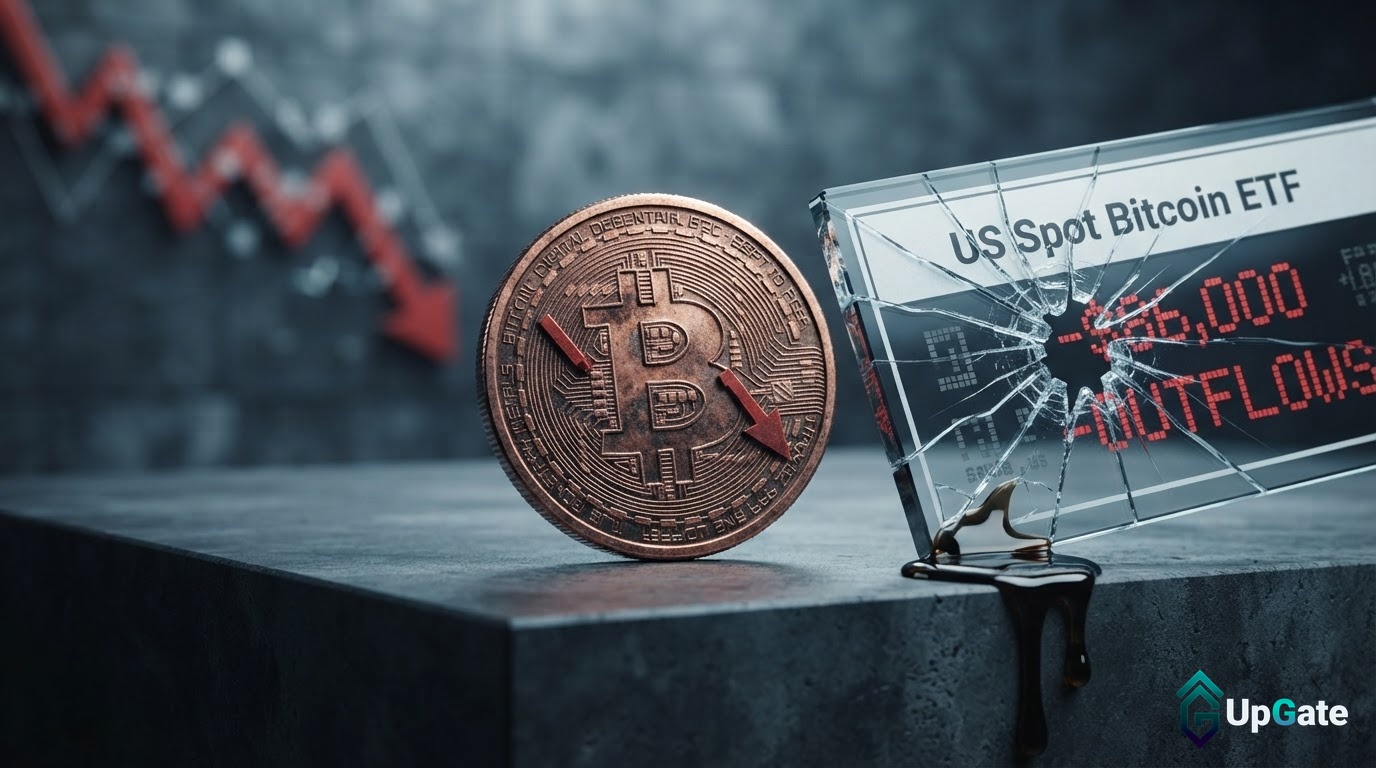
  • US Spot Bitcoin ETFs See Outflows, Bitcoin Price Drops Below $86,000

    US Spot Bitcoin ETFs See Outflows, Bitcoin Price Drops Below $86,000

    US spot Bitcoin ETFs experienced net outflows totaling $89.9 million on Monday, reversing previous inflows and coinciding with a drop in Bitcoin’s price below $86,000. This price level is approximately 32% below Bitcoin’s all-time high.

    Bitcoin traded at $85,559 at the time of publication, according to CoinGecko, significantly lower than its record high of $126,080 set on October 6, 2025. The recent outflows have contributed to a 5.8% decrease in cumulative net inflows into US spot Bitcoin ETFs, which have fallen from a peak of around $61.3 billion to $57.7 billion as of Monday, according to data from SoSoValue.

    Prior to Monday’s reversal, Bitcoin ETFs had attracted approximately $293 million over the preceding two October trading sessions, with total trading volume reaching $2.18 billion, SoSoValue reported.

    Broader ETF Market Performance

    The performance of other cryptocurrency-related ETFs on Monday presented a mixed picture. US spot Ether ETFs recorded net outflows of roughly $51 million, extending a streak of daily outflows to five consecutive trading days, during which the funds have lost a combined $206 million. Cumulative net inflows for Ether ETFs currently stand at $13.8 billion.

    Among other altcoin ETFs, Solana (SOL) funds saw net outflows of $9.3 million on Monday. Zcash (ZEC) funds also experienced outflows, amounting to $3.6 million. XRP ETFs, however, reported no net flows on Monday, following $3.3 million in outflows on Friday.

    Interpreting Market Signals

    These outflows and price movements are being observed as potential signals of shifting investor sentiment or market dynamics. However, the exact reasons behind these outflows are not detailed, and interpreting their long-term implications remains uncertain. The data reflects a snapshot of market activity on a specific Monday, and the broader context of market volatility and investor behavior contributes to the inherent unpredictability of future price movements.

    It is important to note that the specific dates for ‘Monday’ and ‘Friday’ were not provided in the source material. While these figures offer insights into recent trading activity, they do not definitively predict future market trends.

    Why This Matters

    The materials describe a narrow update: US spot Bitcoin ETFs saw net outflows of $89.9 million. The exact date of ‘Monday’ and ‘Friday’ is not specified, and these figures offer insights into recent trading activity but do not definitively predict future market trends.

  • FinCEN Scraps Crypto Wallet and Mixer Rules

    FinCEN Scraps Crypto Wallet and Mixer Rules

    FinCEN Scraps Proposed Rules on Self-Custody Wallets and Crypto Mixers

    The Financial Crimes Enforcement Network (FinCEN) on Monday rescinded two proposed rules, one concerning self-custody cryptocurrency wallets and another targeting crypto mixers.

    In its decision, the Treasury bureau cited the Trump administration’s “deregulatory agenda” as the reason for ending the proposed rule on wallets, which had been pending since December 2020.

    The first withdrawn rule, published on December 23, 2020, aimed to regulate what it termed “unhosted wallets”—those where users manage their own transactions without the involvement of a bank or other financial institution. Under the proposal, banks and money service businesses would have been required to file reports and verify customer identities when a counterparty used such a wallet for a transfer exceeding $10,000, or if multiple transfers summed to over $10,000 within a 24-hour period. Record-keeping requirements would have commenced at $3,000, and the rule also encompassed wallets held at foreign institutions outside the purview of the Bank Secrecy Act, in jurisdictions specified by the agency.

    The second proposal, originating in 2023, sought to impose special measures on crypto mixing services. These services blend coins from multiple users, making it more difficult to trace their origins. The proposal was based on a finding under section 311 of the USA PATRIOT Act, which identified international crypto mixing as a class of transactions of primary concern for money laundering. Had it been enacted, the rule would have mandated that covered financial institutions report any transaction they knew or suspected involved mixing with a foreign link. This would have included details such as amounts, wallet addresses, transaction hashes, and IP addresses, along with maintaining records of each customer’s full identity.

    Deputy Director Jimmy L. Kirby signed the notice for the wallet rule withdrawal, stating the bureau would take no further action and referencing a July 2025 White House report from the President’s Working Group on Digital Asset Markets. FinCEN indicated it had considered public comments submitted on both proposals before deciding to withdraw them.

    The Crypto Council for Innovation (CCI), an industry group that had submitted comments on the mixing proposal, described both withdrawals as “positive for the digital asset ecosystem” in a post on X. The CCI had previously warned that the proposal’s broad definition of mixing could inadvertently encompass legitimate activities and characterized the outcome as “the rulemaking process working.” Regarding the wallet rule, the CCI argued that its withdrawal would help prevent regulators from prohibiting or restricting the use of self-hosted wallets.

    These decisions come at a time when privacy-focused crypto services are facing increased legal scrutiny. For instance, Samourai Wallet co-founders Keonne Rodriguez and William Lonergan Hill have agreed to plead guilty in connection with their mixing service. Prosecutors allege the wallet processed over $2 billion in illicit transactions and laundered more than $100 million. The founders’ legal team had sought dismissal of charges following an April 2025 Justice Department memo suggesting prosecutors would no longer pursue cases based solely on user actions or regulatory technicalities. They also alleged that officials withheld internal FinCEN communications that indicated Samourai was not considered a money transmitter.

    Rodriguez and Hill were subsequently sentenced to five and four years in prison, respectively. During Rodriguez’s sentencing, the judge remarked that he had “used his talent to enable fraud.” Supporters, including analyst Kyle Chasse, maintain that the platform was designed to facilitate anonymous cryptocurrency transfers rather than to conceal illicit activities.

  • Bitcoin Buys Surge as $3.3B Drains from Binance

    Bitcoin Buys Surge as $3.3B Drains from Binance

    Binance Exchange Sees Significant Bitcoin Reserves Drop Amidst Accumulation Trend

    The cryptocurrency exchange Binance has experienced a substantial decrease in its Bitcoin reserves, shedding nearly 40,000 BTC in just 15 days, a withdrawal valued at approximately $3.3 billion. This outflow coincides with Bitcoin consolidating around the $85,000 mark, even as exchange-held supply dwindles.

    Outflows Reach Multi-Month Highs

    Weekly outflows from Binance reached 23,100 BTC, the highest level recorded since June 2023. This significant withdrawal suggests a growing trend of Bitcoin accumulation by investors.

    Despite circulating rumors of an impending Bitcoin crash, recent analysis by X user Darkfost indicates that the ongoing Bitcoin accumulation is becoming increasingly difficult to overlook. The substantial drop in Binance reserves, valued at roughly $3.3 billion over a 15-day period, occurred while Bitcoin maintained its consolidation around $85,000.

    This trend follows a surge in exchange outflows, reaching levels not observed in years. Data reveals that nearly 14,300 BTC exited Binance in the latest incomplete daily reading, surpassing the 13,800 BTC outflow recorded the previous week.

    The weekly figures are particularly noteworthy. Last week saw 23,100 BTC leave Binance, marking the strongest net weekly outflows since June 2023, representing an accumulation of approximately $1.4 billion in a single week.

    Reserves Decline Sharply

    Further data indicates a decline in Binance’s Bitcoin reserves, falling from 704,800 BTC on September 20 to 663,100 BTC. This represents a considerable reduction in the available supply held by the exchange over a mere 15-day span.

    Market Behavior Indicators

    Exchange netflows are frequently monitored for insights into market behavior. The analyst’s observation suggests that Bitcoin leaving a widely accessible exchange can be indicative of accumulation and a shift towards longer-term holding patterns.

    An additional detail warrants attention: the current outflow pattern bears resemblance to a period in 2023 when Bitcoin’s price was attempting to recover from a bear market. However, historical patterns do not guarantee future outcomes, and outflows alone do not definitively prove that prices are poised to rise.

    For the present, Bitcoin accumulation is occurring alongside consolidation near the $85,000 level. The data also points to a decrease in selling pressure, creating a scenario where reduced exchange-held supply and continued withdrawals could potentially support a price movement beyond the current trading range.

  • XRP Chart Mirrors 2016, Targets $23

    XRP Chart Mirrors 2016, Targets $23

    XRP trades near $1.50, showing a slight decline, but a long-term chart comparison suggests a potential target of $23. The current market structure bears a striking resemblance to XRP’s performance in 2016. However, that historical period began with five consecutive months of losses, a factor that significantly alters the risk profile of such a prediction.

    Chart Analysis and Price Targets

    Analysts are mapping XRP’s current chart patterns onto its 2016 trajectory, employing Fibonacci extensions to forecast future price movements. This comparative analysis highlights a notable 284% surge in March 2017, following an extended downturn. In October 2016, XRP experienced a 7% drop and continued to lose ground in each of the subsequent four months.

    For the immediate future, the critical question is not just whether the pattern appears familiar, but whether buyers can successfully reclaim resistance levels amidst persistent broader market pressure. Despite reports indicating that South Korean trading activity has propelled XRP ahead of Bitcoin and Ethereum in volume, its price remains range-bound.

    Current Market Conditions

    At $1.50, XRP has seen a 0.3% decrease over the past 24 hours, with its daily trading range reported between $1.49 and $1.51. The research indicates a positive seven-day trend, with a reading of 1.30%.

    Immediate support for XRP is observed around the $1.46–$1.48 mark. Resistance is concentrated near $1.54–$1.56, with $1.60 serving as a more significant hurdle. Approximately 2.5 billion XRP tokens are reportedly held around the $1.60 level, potentially increasing supply as the price approaches this zone.

    XRP itself is currently trading below its September high of $1.65, and the chart remains within a defined range. The current context of XRP’s support, resistance, and demand from ETF flows provides another framework for assessing these price levels.

    The Relevance of the 2016 Pattern

    The 2016 pattern could indeed hold relevance, but only if the current price action confirms the historical setup. The $23 price objective remains speculative and is not an established consensus target.

    Near-Term Catalysts

    Potential near-term catalysts for XRP include Ripple’s regular escrow releases and the proposed Evernorth transaction. The latter, approved by shareholders on September 30, involves a treasury plan of approximately 473 million XRP. However, neither event guarantees immediate demand; escrow releases do not confirm token sales, and a planned treasury does not equate to sustained market buying.

    XRP’s current trading range means that any significant upward movement hinges on resistance levels being overcome. This can be frustrating for traders seeking more dynamic price action. Even a successful breakout above $1.60 would represent a vastly different scenario from achieving a 15-fold increase in value. An early-stage token typically carries a different risk profile.

    Maxi Doge ($MAXI) Token Launch

    Maxi Doge ($MAXI) is an Ethereum ERC-20 meme token inspired by a large canine and a community focused on high-leverage trading.

    The presale for Maxi Doge is priced at $0.0002842, and the project has reportedly raised nearly $5 million. Staking is also available to presale buyers, offering a substantial 60% APY. Additional features include trading competitions exclusively for token holders with leaderboard rewards and a Maxi Fund treasury designated for liquidity and partnerships.

    The project employs meme-first marketing with a “gym-bro” humor, using the tagline: “Never skip leg-day, never skip a pump.”

    Investors are advised to research Maxi Doge and review project details before the presale concludes.