Category: Uncategorized

  • Changer+ Launches User-Friendly, Self-Custodial Stablecoin Wallet

    Changer+ Launches User-Friendly, Self-Custodial Stablecoin Wallet

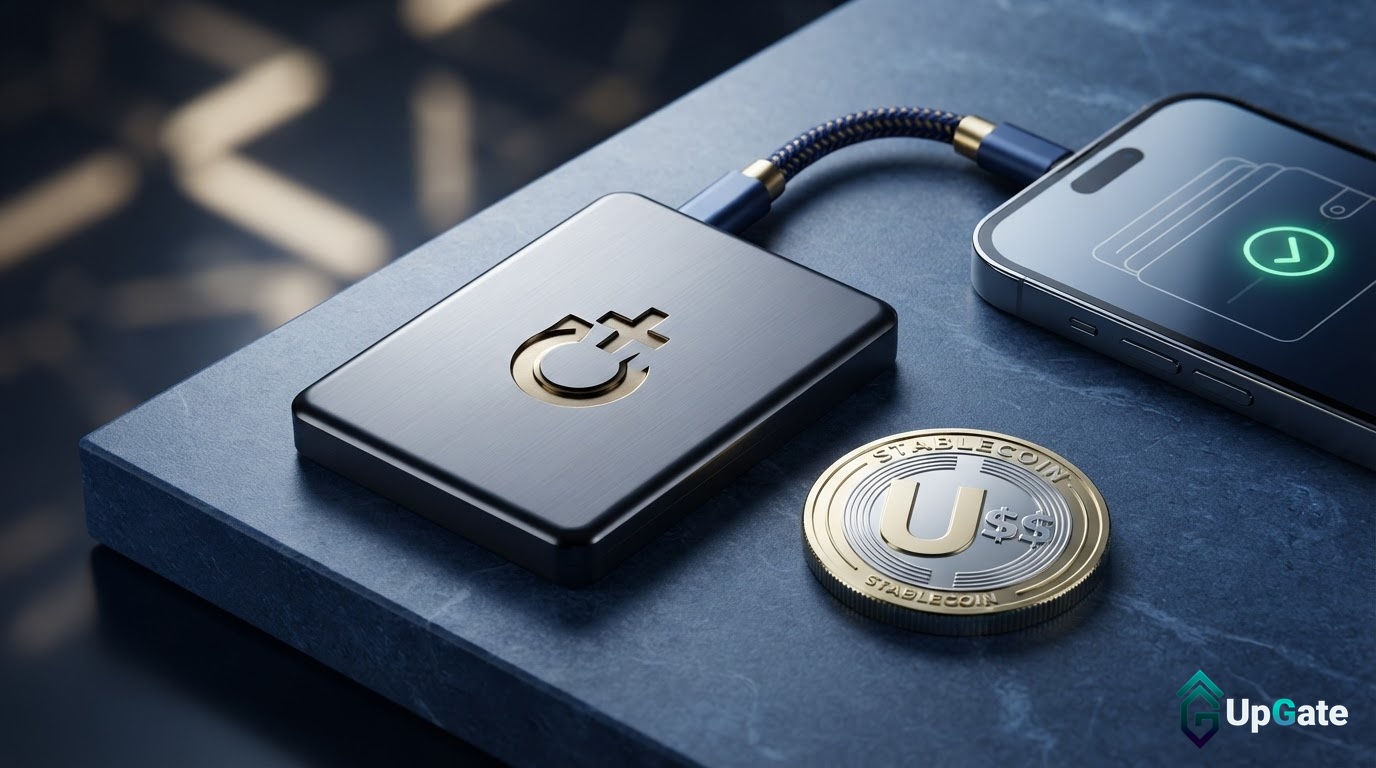
    Changer+ has introduced a self-custodial stablecoin wallet designed to simplify stablecoin management by abstracting away common blockchain complexities. The wallet aims to make holding, transferring, and using stablecoins more accessible, particularly as their adoption expands beyond cryptocurrency trading into everyday digital commerce and payments.

    This launch addresses the fragmented user experience often encountered when managing stablecoins across different networks and wallets. According to Changer+, users should not need to understand intricate blockchain mechanics, such as gas tokens or transaction processes, simply to utilize stablecoins. The company’s ambition is to provide a wallet where “stablecoins should just work.”

    Wallet Features and Support
    The new wallet supports major stablecoins, including USDT and USDC, across multiple blockchain networks such as Ethereum, TRON, BNB Chain, and Solana. A key feature is its ability to allow users to cover network transaction costs without requiring the native gas token for supported transactions. This abstraction aims to streamline the user experience, making it more akin to traditional digital payment systems.

    Changer+ emphasizes that convenience does not come at the expense of control. The wallet is self-custodial, meaning users retain ownership of their private keys and authorize their own transactions. This aligns with the Web3 principle of user ownership and control over digital assets.

    Security and Availability
    To ensure security and build trust, Changer+ has completed an independent security audit, vulnerability assessment, and penetration testing (VAPT) conducted by Echo Pulse. The wallet is available for download on both iOS and Android platforms.

    Launch Promotion
    To encourage adoption and allow users to experience the simplified functionality, Changer+ is offering a launch special. From October 6 to November 6, 2026, new users will receive three free transactions per device on Ethereum, Solana, and BNB Chain. This promotion aims to lower the barrier to entry for users to try out the wallet’s features.

    Company Background and Future Outlook
    Changer+ is a Singapore-incorporated entity and is backed by a private family office. The company states its focus is on long-term product building, emphasizing good engineering to reduce user-managed complexity while maintaining a clear and reliable experience. The wallet’s design prioritizes usability, self-custody, security, and practical utility, rather than relying on a project token or speculative rewards.

    While the wallet aims to simplify stablecoin management, some aspects remain to be detailed. Specifics regarding the exact number of stablecoins and networks planned for future support, as well as the full details of future practical use cases beyond initial mentions of eSIM data plans and a lifestyle ticket marketplace, are not yet fully elaborated. The precise terms and conditions of the launch special offer also require further clarification.

    Despite these uncertainties, the launch of Changer+’s wallet signals a potential step towards addressing the usability challenges that may hinder broader stablecoin adoption. The emphasis on self-custody alongside simplified management could appeal to a growing segment of users seeking both control and convenience in their digital asset interactions.

    Why This Matters

    The materials describe a narrow update: Changer+ has launched a new self-custodial stablecoin wallet that supports major stablecoins across multiple blockchain networks. The exact number of stablecoins and networks planned for future support.

    Broader Context

    Source materials place the announcement in this context: Changer+ is a Singapore-incorporated entity.

  • Strategy Posts $21B Q3 Gain, Strive Buys $169M Bitcoin

    Strategy Posts $21B Q3 Gain, Strive Buys $169M Bitcoin

    Bitcoin traded at $85,500, a 0.6% dip over the past 24 hours, following a recent push back above $86,000 and a brief test of levels below $87,000. Despite this pullback, price predictions for the cryptocurrency remain largely bullish. The retreat, however, has placed the recent breakout attempt under renewed scrutiny, as substantial corporate buying has yet to overcome immediate resistance.

    Strategy reported an estimated $20.91 billion gain on its Bitcoin holdings in the third quarter. Concurrently, Strive disclosed the acquisition of 2,000 BTC for $169 million, at an average price of $84,422 per coin. This latest purchase brings Strive’s total holdings to 29,462 BTC.

    These significant figures bolster the narrative of ongoing accumulation, but they do not definitively set the price trend. Bitcoin’s next directional move hinges on whether demand can absorb the supply concentrated around the $87,000 mark, and whether macroeconomic data continues to support favorable interest rate expectations.

    The cryptocurrency briefly approached $87,000 on October 5th but has since retreated. Sustained demand from exchange-traded funds (ETFs) and consistent trading volume will be crucial if the market is to break through resistance rather than revert to its previous trading range.

    The immediate price hurdle lies between $87,000 and $87,400, with $87,570 representing a broader threshold for continued upward momentum. On the downside, the $82,000 to $85,000 range, a former consolidation zone, is the first critical area that bulls must defend.

    In a bullish scenario, sustained buying pressure could clear the $87,400 resistance, paving the way for a test of $87,570. A base case scenario suggests Bitcoin will trade sideways between the breakout area and resistance as traders await new catalysts. A decisive drop below $82,000 would invalidate the breakout and bring lower support levels back into focus.

    The September jobs report, which indicated only 29,000 new payroll additions and an unemployment rate of 4.2%, was interpreted by markets as a signal of reduced near-term interest rate pressure, a positive development for risk assets. However, the question remains whether a single softer data point is sufficient to sustain this upward momentum.

    The outlook for Bitcoin’s price in October highlights key resistance levels and potential event risks to monitor. For the time being, the charts suggest a need for confirmation rather than assumption.

    Strive’s recent purchase and Strategy’s reported gains underscore the growing trend of corporate Bitcoin adoption. Nevertheless, these figures do not establish a definitive price floor. While treasury demand can bolster sentiment, Bitcoin remains susceptible to macroeconomic repricing and profit-taking near resistance levels. With the spot price hovering near $86,000, the potential for further upside may appear more incremental than early-stage investors anticipate.

    Bitcoin Hyper: A New Layer 2 Solution

    Positioning itself within the gap between established asset exposure and infrastructure investments is Bitcoin Hyper. This project claims to be the first Bitcoin Layer 2 solution to integrate with the Solana Virtual Machine (SVM). Its objective is to introduce fast smart contract capabilities and low-cost transaction execution to the Bitcoin network, while preserving its inherent security and trust model. Key features include low-latency processing and a decentralized canonical bridge for Bitcoin transfers.

    The presale price for Bitcoin Hyper is set at $0.0136872. The project has reportedly raised $33.1 million to date and continues to grow. Staking offers are available with a high annual percentage yield (APY) of 30%, exclusively for early buyers. Investors are encouraged to research Bitcoin Hyper before the early buying window closes.

  • Brandt: XRP Trails Monero, Solana, Ether Despite $2.16 Target

    Brandt: XRP Trails Monero, Solana, Ether Despite $2.16 Target

    Veteran Trader Sets New XRP Target Amid Supply Concerns

    Veteran trader Peter Brandt has set a new price target for XRP at $2.16, but cautioned that significant “overhead supply” could impede its ascent. In a recent post on X, Brandt also expressed a preference for the charting patterns of Monero, Solana, and Ether over XRP.

    Brandt shared a weekly XRP chart showing the cryptocurrency trading around $1.51. He identified a potential cup and handle pattern, which on a larger timeframe could represent the right shoulder of an inverse head and shoulders formation. Applying what he terms a “measured move” calculation, he projected the height of this pattern upward, arriving at the $2.16 target. This would represent a gain of approximately 43% from the price point on his chart.

    However, Brandt was quick to temper expectations, noting that “Targets or objectives are not sacred.” He elaborated, “Charts often fail to deliver what we first identify and morph into something else.”

    Overhead Supply Poses Challenge for XRP

    The trader pointed to the “poorly formed and abbreviated” nature of the potential right shoulder as an indication that the pattern may require more time to develop. His primary concern, however, lies in the price levels above XRP’s current trading range. Many investors who purchased XRP during the 2025 rally, when it traded between roughly $2 and $3.70, may be looking to sell as the price approaches their break-even points.

    “Note in XRP there is a TON of overhead supply to work through,” Brandt stated. “This is a negative for XRP.”

    Brandt Focuses Solely on Price Action

    Brandt, who has previously referred to XRP as a “fool coin,” reiterated his focus on price action rather than fundamental analysis. “I could care less about the fundamentals of XRP or any other coin than BTC,” he wrote. “XRP fans, please don’t take this as an offense. I trade price. Price is all that matters to me.”

    Preferred Altcoin Charts

    Brandt also compared XRP’s chart performance against four other cryptocurrencies over the same period. “Of these, my favorite by far is XMR,” he commented, referring to Monero. “I do not know the fundamental narrative. I do not need to know.”

  • Bitcoin Poised for $100,000 Surge: Expert Cites ‘Explosive Catalyst’

    Bitcoin Poised for $100,000 Surge: Expert Cites ‘Explosive Catalyst’

    Bitcoin Poised for $100,000 Surge as Treasury Yields Spark New Bull Case

    New York, NY – While typically a harbinger of trouble for risk assets, rising Treasury yields may be setting the stage for Bitcoin’s next significant upward move, according to Fundstrat’s Sean Farrell. He anticipates the cryptocurrency could reclaim the $100,000 mark before the end of the year.

    The Bullish Outlook

    Farrell, who heads digital asset strategy at Fundstrat, believes Bitcoin has already established a “durable” cycle low, signaling the commencement of a new upward trend.

    “I actually do think we could get above that $100,000 level before 2026 wraps up,” Farrell stated. He conceded that his earlier target of $115,000 for this year now appears less attainable.

    On Monday, Bitcoin was trading near $86,000. A climb to $100,000 would represent a roughly 16% increase from that level.

    How High Yields Could Fuel Bitcoin

    The 10-year Treasury yield is currently at its highest point since 2007, with markets factoring in four interest rate hikes over the next twelve months. This scenario would typically present headwinds for cryptocurrencies. However, Farrell views this dynamic as a “bull case in and of itself,” explaining his reasoning:

    The Mechanism for Bitcoin’s Gain

    Farrell characterized the Treasury’s actions as a form of market intervention akin to economic stimulus. He explained that banks absorb newly issued Treasury bills, which in turn inject money into the private market. “This leads to monetary debasement, and monetary debasement leads to Bitcoin outperformance,” he asserted.

    He noted that policymakers have adhered to a similar strategy for the past five to six years: allowing inflation to rise while keeping borrowing costs suppressed. Farrell argued that a further reduction in long-term bond issuance could serve as an “explosive catalyst” for Bitcoin and the broader cryptocurrency market.

    Tokenization Adds to Demand

    Farrell also connected the Securities and Exchange Commission’s (SEC) innovation exemption to this trend. He pointed out that the exemption mandates that each tokenized stock be backed by a stablecoin or a money market fund. If trillions of dollars in equities transition onto the blockchain, this would inevitably drive increased demand for the short-term bills that the government needs to sell.

    He highlighted Ethereum as the strongest performer in the third quarter, while Solana continues to be traded as a higher-risk play on the same underlying theme.

    Farrell’s Advice to Investors

    Farrell does not foresee a “straight shot up” for Bitcoin. He acknowledged the possibility of a 10% pullback but advised that leveraged investors should remain unconcerned. He anticipates that buyers will quickly emerge to support the price on any dips.

    “It is time to think about getting more aggressive over a medium to longer-term time horizon,” he concluded.

  • Polymarket Launches Protocol V2, New Markets Switch Nov 2

    Polymarket Launches Protocol V2, New Markets Switch Nov 2

    Polymarket Unveils Major Protocol Upgrade, Protocol V2, Set for November 2 Launch

    Polymarket, a decentralized prediction market platform, has announced the launch of Protocol V2, a significant overhaul of its core architecture. This new system is slated to power all new markets on the platform starting November 2. The upgrade marks a departure from the Gnosis Conditional Tokens Framework, which Polymarket has utilized since 2019.

    A Unified and Modular Architecture

    The rollout of Protocol V2 commenced on October 5, 2026, spearheaded by Polymarket’s development team and protocol head, Rajath Alex. The platform describes the new system as unified, modular, and thoroughly audited. A key change under V2 is that every outcome share will now reside within a single ERC-1155 positions token contract. The ERC-1155 standard allows a single smart contract to manage multiple distinct token types simultaneously, streamlining operations.

    pUSD as the Sole Collateral

    With the implementation of V2, pUSD will become the exclusive form of collateral accepted for backing positions on the Polymarket platform. This move aims to simplify accounting and settlement processes by concentrating all collateral into a single asset.

    Enhanced User Experience and Operational Efficiency

    The protocol also introduces market-specific exchanges, integrated with a router. This router acts as a front-end intermediary, directing orders to their appropriate destinations. Polymarket asserts that this enhancement will significantly improve both user experience and operational efficiency.

    Pluggable Oracles for Flexible Resolution

    Protocol V2 features an OracleAggregator that makes oracles pluggable, supporting a range of providers including UMA and Chainlink. This flexibility means Polymarket is no longer tied to a single method for determining market outcomes. Instead, it can now select the most suitable resolution source for each individual market, ensuring greater accuracy and adaptability.

    Phased Rollout and Testing

    A limited set of live test markets, known as canary markets, have been running from October 5 through October 30 to facilitate testing and gather feedback. All new markets will transition to V2 on November 2. Importantly, existing markets built on the Conditional Tokens Framework will remain unaffected, with no forced migration of open positions occurring mid-trade.

    Developer Upgrades and Data Access

    Developers will benefit from an upgraded Data API v2. This new API operates on an in-house on-chain indexer, enabling Polymarket to directly read and organize blockchain data rather than relying on external tools. The Data API v2 offers standardized data formats and cursor-based pagination, which Polymarket states will reduce friction for developers building dashboards, trading tools, and analytics on top of its data.

    Robust Security Measures

    Polymarket has prioritized security for Protocol V2, with six independent firms, including Certora, conducting audits. Furthermore, the platform is running a bug bounty program offering rewards of up to $5 million for the discovery of critical vulnerabilities.

    The key dates for this transition are October 30, marking the conclusion of the canary markets, and November 2, when Protocol V2 becomes the standard for all new market creations on Polymarket.

  • Bitcoin Surges to $86K, Ethereum Hits $2722 Amid $194M Liquidations, Fear Returns

    Bitcoin Surges to $86K, Ethereum Hits $2722 Amid $194M Liquidations, Fear Returns

    Bitcoin (BTC) dipped to $85,938 on October 6, marking a 0.8% decrease over 24 hours. Ethereum (ETH) followed suit, trading at $2,719, down 0.3%. The Crypto Fear and Greed Index rebounded to 73 after a period of low volatility, remaining in the “Greed” territory. Across the network, $194 million in leveraged positions were liquidated in the past 24 hours, affecting 64,543 traders. Meanwhile, the US Nasdaq stock index reached a new all-time high driven by strong AI stocks, though Treasury yields surged to their highest levels since 2002.

    Market Overview

    Bitcoin (BTC) was trading at $85,938 on Binance on October 6, a 0.8% decline from the previous day. The cryptocurrency saw a high of $86,999 and a low of $84,972 within the 24-hour period. Ethereum (ETH) also experienced a downturn, trading at $2,719, down 0.3%, with its trading range between $2,738 and $2,679. The Crypto Fear and Greed Index climbed back to 73 after two consecutive days of subdued fluctuations, indicating continued market greed. Over the past 24 hours, $194 million in leveraged crypto positions were liquidated across the network, resulting in the liquidation of 64,543 traders.

    Liquidation Data

    According to data from CoinGlass, total liquidations across the crypto market in the last 24 hours amounted to $194 million. Long positions accounted for $114 million of this total, while short positions comprised $80.65 million. The largest single liquidation occurred on Binance for the BTCUSDT contract, valued at $11.85 million.

    US Market Performance and Economic Indicators

    US stocks closed higher on Monday, October 5, with the Nasdaq Composite reaching a new record high, buoyed by the strength of AI-related stocks. The S&P 500 and Dow Jones Industrial Average also saw gains. Non-farm payrolls in September increased by only 29,000, falling short of the expected 90,000, and the unemployment rate rose to 4.2%. This data has tempered expectations for an imminent Federal Reserve interest rate hike. However, the 10-year Treasury yield surged to its highest point since 2002. Semiconductor stocks showed resilience, with Micron reporting better-than-expected earnings and Nvidia announcing its largest-ever share buyback program, bolstering market confidence.

    Altcoin Performance

    Solana (SOL) was trading at $121.08, a slight decrease of 0.17%, showing minimal change. XRP also followed the broader market trend, falling 0.8% to $1.5105. Major altcoins experienced minor declines, with no significant standout performers in the broader altcoin market.

    Bitcoin Technical Analysis

    Based on its UTC closing price of $85,767 on October 5, Bitcoin’s 14-day Relative Strength Index (RSI14) stood at 64.6, indicating a strong upward momentum. The 20-day Simple Moving Average (SMA20) at $83,391 was above the SMA50 ($79,505) and SMA200 ($71,618), showing a healthy upward trend with normal moving average alignment. The MACD (12,26,9) indicator displayed a bearish crossover (DIF below DEA), with the histogram widening, suggesting increasing bearish momentum. The 20-day Bollinger Bands showed the closing price above the middle band of $83,391. Key resistance levels are identified at the 30-day high of $87,396 and the upper Bollinger Band at $89,051. Support levels are located at the SMA20 ($83,391), SMA50 ($79,505), and the lower Bollinger Band ($77,730).

    Ethereum Technical Analysis

    With a closing price of $2,710, Ethereum’s 14-day RSI was 61.5, also suggesting a strong upward trend. The SMA20 ($2,664) was above the SMA50 ($2,518) and SMA200 ($2,122), with the closing price trading above the SMA20. The MACD indicator also showed a bearish crossover with widening histogram bars, indicating increasing bearish momentum. The closing price was above the middle band of the 20-day Bollinger Bands at $2,664. Resistance levels are at the 30-day high of $2,807 and the upper Bollinger Band at $2,835. Support levels are at the SMA20 ($2,664), SMA50 ($2,518), and the lower Bollinger Band ($2,494).

    Market Sentiment and Outlook

    The Crypto Fear and Greed Index has fluctuated between 65 and 74 over the past eight days (September 29 to October 6), with a rebound to 73 on October 6, suggesting a slight easing of market caution. The simultaneous surge in US stocks to new highs and the steep rise in Treasury yields present conflicting market forces. Bitcoin appears to be trading within a short-term range between the resistance level of $87,396 and the support at the SMA20 of $83,391. The upcoming Federal Reserve October meeting minutes will be a crucial signal for future interest rate policy.

  • Solana Launches Institutional Settlement Standard with J.P. Morgan Collaboration

    Solana Launches Institutional Settlement Standard with J.P. Morgan Collaboration

    Solana Foundation Targets Institutional Finance with New Settlement Tool

    The Solana Foundation is making a direct bid for institutional finance, launching an open-source program designed to enable banks to settle trades on its network with the same certainty they expect from traditional markets.

    Announced Monday, the tool, named Solana DvP (Delivery-versus-Payment), is an open-source escrow program that provides financial institutions with a standardized API for delivery-versus-payment settlement. This mechanism is fundamental to ensuring that an asset and its corresponding payment are exchanged simultaneously.

    Released under the permissive MIT license, the initiative aims to bring this settlement guarantee to public blockchain infrastructure as a reusable standard, moving away from the bespoke smart contracts that institutional trades have historically relied upon.

    The foundation stated that J.P. Morgan provided input on institutional settlement practices, which informed the design of the tool.

    “Atomic settlement removes counterparty risk that is inherent in traditional finance,” said Catherine Gu, the foundation’s head of product for digital assets. She added that the program offers institutions a single open standard “with finality in seconds instead of days.”

    Rhodel D’souza, J.P. Morgan’s head of markets digital assets, commented that a shared, open standard for atomic delivery-versus-payment is “exactly the kind of foundational infrastructure institutional market participants require.”

    In conventional markets, delivery-versus-payment involves a multi-day process through clearinghouses, depositories, and custodians, which can tie up capital for one to two days. Solana DvP streamlines this into a single atomic transaction, where both legs of the settlement occur together or not at all. The program supports SPL Token and Token-2022, including extensions crucial for regulated issuers such as permanent delegate, pausable tokens, and transfer hooks. It has also undergone external security audits. The foundation indicated plans to incorporate privacy features to ensure settlement confidentiality.

    This launch builds upon Solana’s increasing appeal among institutions focused on tokenized real-world assets.

    In August, BlackRock, the world’s largest asset manager, introduced a tokenized money market fund for stablecoin reserves, recording ownership on Solana alongside Ethereum. This fund was structured to qualify as a reserve asset under the GENIUS Act.

    Meanwhile, Kraken has utilized Solana to offer tokenized U.S. stocks to overseas customers through its xStocks product. Solana has emerged as a prominent platform for tokenized equities, and infrastructure like DvP is intended to solidify this position by providing regulated players with a trusted method for on-chain settlement.

  • Solana Unveils Open-Source DvP for Institutional Settlement

    Solana Unveils Open-Source DvP for Institutional Settlement

    Solana Unveils Open-Source DvP Program to Streamline Institutional Trades

    Solana has launched an official delivery versus payment (DvP) program, an open-source initiative designed for institutions seeking to settle trades on-chain in a single step. The program enables both parties in a transaction to settle atomically on the Solana blockchain, achieving finality in seconds rather than days, according to Decrypt. This represents a significant shift for an industry accustomed to waiting one to two business days for many trades to clear.

    DvP: Ensuring Simultaneous Exchange

    Delivery versus payment, or DvP, addresses the challenge of simultaneous exchange by ensuring that an asset and its payment are transferred at the exact same moment, or neither transaction occurs. Solana’s reference implementation applies this logic directly on-chain, facilitating the atomic exchange of tokenized securities, such as commercial paper, for payments in USDC.

    An atomic transaction is designed to either complete entirely or fail entirely, preventing scenarios where one party receives both the asset and the payment while the other is left with nothing. This structure effectively eliminates counterparty risk from the swap.

    Speed and Efficiency

    Research underpinning the implementation indicates atomic execution can occur in under one second. Solana’s finality is achieved at approximately 400 milliseconds, with transaction fees remaining very low. This stands in stark contrast to traditional settlement processes, which can take one to two days.

    The tokenized securities leverage SPL Token-2022 extensions, Solana’s advanced token standard that integrates additional features directly into the token itself. This approach eliminates the need for issuers to develop custom smart contracts to represent their assets.

    Compliance and Control

    The DvP program also incorporates compliance features, such as whitelisting, which restricts asset ownership and receipt to approved wallets. This ensures that regulated securities remain within a controlled environment.

    A Landmark Transaction

    A significant early demonstration of the program’s capabilities occurred on December 11, 2025, when J.P. Morgan facilitated a $50 million commercial paper issuance for Galaxy Digital Holdings LP on the Solana blockchain. This transaction utilized the DvP functionality for both the issuance and redemption of the commercial paper, a form of short-term corporate debt typically used for operational funding, using USDC. Galaxy Digital Holdings LP acted as the issuer in this deal.

    Solana further bolstered its enterprise offerings with the launch of its Solana Developer Platform on March 24, 2026, providing a suite of APIs for issuing and settling tokenized assets.

    Institutional Adoption

    Several major financial institutions are already exploring or implementing solutions leveraging Solana’s capabilities for asset workflows. Among them are Morgan Stanley, BNY, State Street, and Société Générale, all of whom have participated in pilots or deployed solutions.

    Open-Source Advantage

    By releasing the DvP program as open-source, Solana is lowering the barrier for institutions to review the code, customize it, and implement it without the need for lengthy proprietary license negotiations.

    Potential Market Impact

    An increase in institutions settling tokenized securities against USDC could drive demand for USDC as a settlement asset, given its role as the payment component in these transactions.

    Navigating Risks

    The primary risks associated with this development are operational and regulatory. Institutions will require assurance of the network’s reliability under heavy load, while regulators will seek clarity on how on-chain finality aligns with existing legal definitions of a completed trade.

    Future Outlook

    Key developments to monitor include whether the J.P. Morgan and Galaxy Digital deal serves as a blueprint for future issuances, the extent to which the named institutions transition from pilot programs to full production, and any subsequent growth in USDC settlement volumes related to tokenized securities in the coming months.

  • CFTC Unveils New Crypto Market Rules

    CFTC Unveils New Crypto Market Rules

    CFTC Unveils Proposed Rules for Crypto Trading and Markets

    The U.S. Commodity Futures Trading Commission (CFTC) has officially released comprehensive details regarding the regulation of crypto asset transactions and markets. The proposed framework aims to provide clearer directives for the burgeoning digital asset industry.

    Delivery and Self-Custody Clarification

    One key aspect of the proposal addresses the delivery of crypto assets in leveraged or margin trading. Under the new guidelines, retail-financed, leveraged, or margin trading will be considered complete if crypto assets are delivered to a non-custodial wallet within 28 days. This provision is intended to distinguish normal crypto purchases and self-custody from activities requiring more stringent exchange regulation.

    Federal Licensing Option for Crypto Exchanges

    The CFTC is also proposing a new, optional federal licensing system for crypto exchanges. This federal license would allow exchanges to bypass individual state registration requirements. Crucially, it would enable these licensed entities to offer retail margin, leveraged, and financed crypto trading, activities currently prohibited at the state level for spot market trading.

    Framework Details

    The proposals are divided into two main areas:

    • Derivatives and Financing Layer: This framework focuses on regulating retail crypto trading that utilizes borrowed funds, leverage, and margin, operating under Section 2(c)(2)(D) of the Commodity Exchange Act. The agency’s recognition of crypto sent to non-custodial wallets as “actual delivery” within 28 days falls under this section.

    • Market Structure and Platform Registration: This part of the proposal introduces customized, optional federal licenses for crypto exchanges under the CFTC’s Designated Contracts Management (DCM) system. These licenses would necessitate robust operational protections, including proof-of-reserves audits, anti-money laundering safeguards, and mandatory intermediation by commission-registered merchants. The primary benefit for exchanges would be the ability to operate under a single federal registration, avoiding the complexities of state-by-state compliance, and the authorization to offer leveraged and financed trading to retail customers.

    Oversight and Public Comment

    While the federal and state licensing structures offer different benefits, the CFTC would maintain ultimate oversight across the entire system. Following the publication of the proposals in the Federal Register, stakeholders, industry participants, and the public will have a 60-day period to submit comments.

    Industry Reaction and Caution

    The CFTC’s move is seen as a positive step towards regulatory clarity for the crypto sector. However, industry lawyers have cautioned that the proposed guidelines may lack permanence and could be subject to changes with shifts in agency or presidential administrations.

  • Bitcoin Rally Fuels Excitement for TOKEN2049 Singapore

    Bitcoin Rally Fuels Excitement for TOKEN2049 Singapore

    Crypto Leaders Descend on Singapore Amidst Renewed Optimism

    The titans of the cryptocurrency world are converging on Singapore this week, bringing with them a sentiment the industry has largely lacked in recent times: optimism.

    The TOKEN2049 Singapore conference, scheduled for October 7-8 at the Marina Bay Sands, arrives on the heels of a significant Bitcoin rally, fueling whispers among investors of a potential new bull market.

    Organizers anticipate approximately 25,000 attendees, representing over 7,000 companies from more than 160 countries. The event’s exhibition floor will feature over 500 exhibitors, with more than 300 speakers set to address attendees across the two-day program.

    TOKEN2049 Week, an extended series of events, runs from October 5-11 and encompasses over 1,000 associated gatherings. The conference’s timing also coincides with the highly anticipated Formula 1 Singapore Grand Prix, adding to the city-state’s vibrant atmosphere.

    The recent surge in Bitcoin’s value has been a key driver of this positive outlook. The cryptocurrency traded around $58,000 at the close of June and has since climbed to approximately $86,000. This performance marks Bitcoin’s strongest quarterly gain since late 2024.

    Major financial institutions are expected to have a significant presence at the conference, with representatives from BlackRock, J.P. Morgan, Nasdaq, and Franklin Templeton confirmed to attend.

    Industry leaders such as Hyperliquid CEO Jeff Yan and Polymarket CEO Shayne Coplan are scheduled to speak. Eric Trump, co-founder of World Liberty Financial, is also slated to appear.

    TOKEN2049 Singapore has seen substantial growth in attendance. In 2022, the event drew around 7,000 participants. By 2025, this figure had surged to a record 25,000, representing more than a threefold increase in three years. This year’s projected attendance of approximately 25,000 is expected to match last year’s record turnout.