Category: Uncategorized

  • Binance Leverage Flush Boosts Ethereum Market Structure

    Binance Leverage Flush Boosts Ethereum Market Structure

    Forced Liquidation Cleanses Binance Ethereum Market, But Bullish Momentum Hinges on Key Indicators

    Ethereum traders on the Binance exchange experienced a significant market reset recently, with approximately $345 million in long positions liquidated during a sell-off between October 8th and 9th. This analysis, published by CryptoQuant on October 16th, suggests the event helped to clear out leverage and improve the underlying market structure. However, a truly bullish outlook remains contingent on two crucial factors that are not yet present: a return of USDT to exchanges and a sustained rise in the Coinbase Premium.

    Ether (ETH) saw a roughly 10% decline from its September peaks, falling from around $2,775 to approximately $2,500. This price drop proved sufficient to trigger a substantial wave of liquidations for leveraged long positions on Binance.

    According to CryptoQuant data, long liquidations on Binance surged by 47%. Concurrently, funding rates on the exchange plummeted to near zero. Funding rates are periodic payments designed to keep perpetual futures prices aligned with spot prices. High funding rates typically indicate crowded optimism, as long traders pay a premium to maintain their positions. A rate near zero suggests a significant thinning of this optimistic crowd.

    Binance’s ETH futures open interest also saw a decline, dropping 4.7% over 30 days to approximately $6.1 billion, which represents about half of the total market. Despite this overall decrease in dollar-denominated open interest, Binance’s share of ETH futures open interest actually climbed to around 49% in the wake of the liquidations, marking its highest level since 2023.

    ETH-Denominated Open Interest Rebounds, Signaling Trader Re-engagement

    A more telling metric, however, is open interest measured in ETH rather than U.S. dollars. This figure has since rebounded to approximately 2.46 million ETH. The distinction is significant: dollar-denominated open interest automatically decreases when prices fall, irrespective of actual position closures. Measuring in ETH strips out this price effect. The rebound in ETH-denominated open interest suggests that traders are reopening positions after the market flush, rather than abandoning the market altogether.

    Further supporting a potentially healthier market, Binance’s ETH reserves fell by 2.4%, indicating reduced supply pressure. Meanwhile, Ethereum’s staking rate remains robust at 36.1%, placing it in the 98.6th percentile.

    USDT Outflow and Coinbase Premium Remain Key Watchpoints

    However, the market’s path forward is tempered by a notable outflow of USDT from Binance. USDT reserves on the exchange decreased by 2.3%, translating to a net outflow of approximately $175 million. This outflow is the primary reason CryptoQuant characterizes current conditions as neutral rather than bullish. While the leverage reset has lowered liquidation risk, a cleaner market devoid of new capital inflows is akin to a finely tuned car with an empty fuel tank.

    The second critical signal to monitor is the Coinbase Premium, which tracks the price difference between ETH on Coinbase and other exchanges. A rising premium is generally interpreted as stronger demand from buyers on the U.S.-based platform and is flagged by the research as a potential indicator of renewed institutional interest.

    Outlook: Reduced Liquidation Risk, But Sustained Growth Needs Inflows

    The immediate takeaway is that the risk of another liquidation cascade appears lower than it did in September. With funding rates near zero, the market is no longer heavily reliant on leveraged long positions.

    The $175 million USDT outflow from Binance runs counter to the typical requirements for a sustained recovery. The concentration of open interest on Binance also presents a dual-edged sword: a 49% share means that positioning on this single venue significantly shapes the overall ETH futures landscape.

    For those tracking the next market movements, the checklist from the CryptoQuant analysis is concise. Investors should watch for a renewed climb in USDT reserves across exchanges, a sustained increase in the Coinbase Premium, and whether funding rates remain subdued as ETH-denominated open interest continues to rebuild.

  • Vaneck Seeks to Withdraw SEC Application for Lido Staked Ether ETF

    Vaneck Seeks to Withdraw SEC Application for Lido Staked Ether ETF

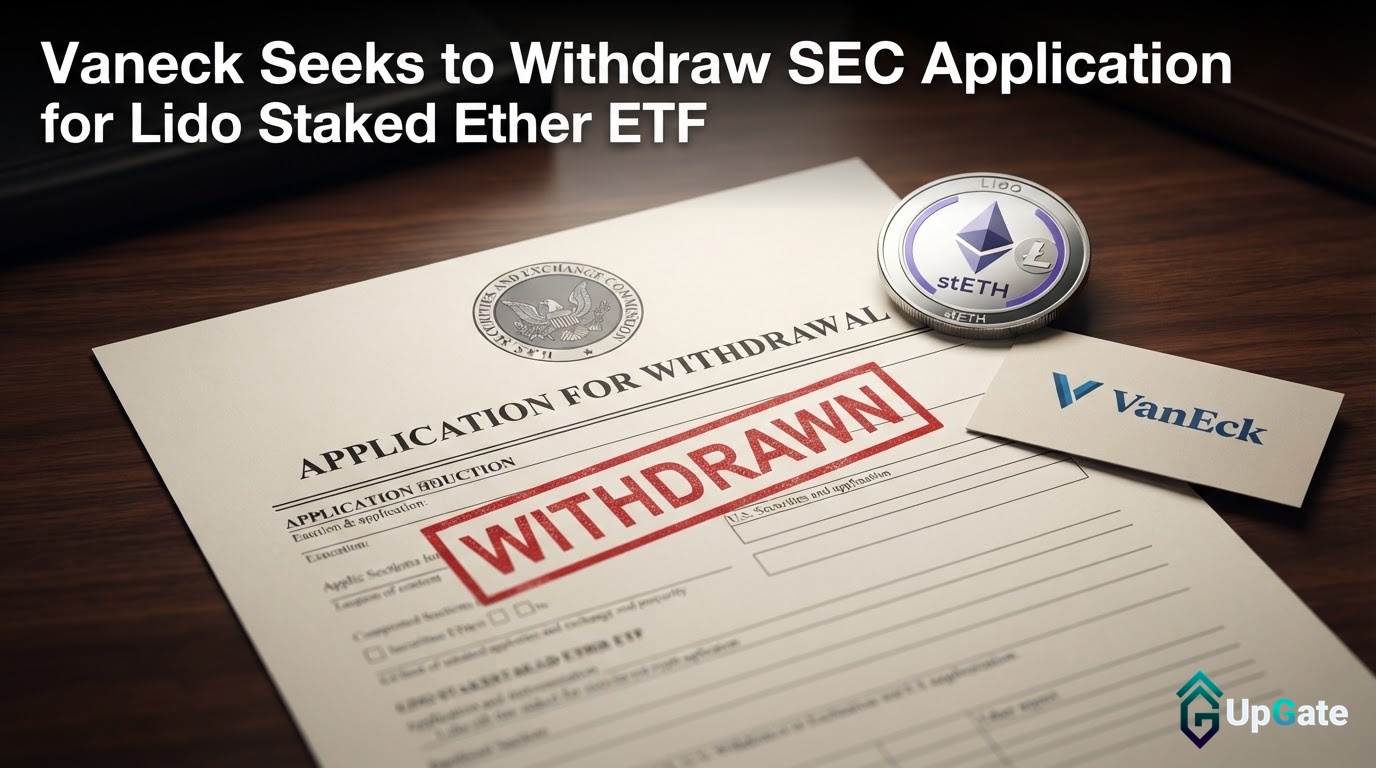
    Vaneck has formally requested to withdraw its application for a Lido Staked Ether Exchange-Traded Fund (ETF) from the U.S. Securities and Exchange Commission (SEC). The request was submitted on October 14th through a Form RW, with Matthew Babinsky, vice president of Vaneck Digital Assets, filing the document.

    This action represents a procedural step in the ETF application process, which was initially filed approximately one year ago. The withdrawal is contingent upon the SEC’s consent, introducing an element of uncertainty regarding the final outcome.

    A Lido Staked Ether ETF would have offered investors exposure to staked Ether via the Lido protocol, a process where cryptocurrency is locked to support blockchain operations in exchange for rewards. The development and approval of such financial products are subject to regulatory review by the SEC.

    Vaneck asked the SEC to withdraw its application, highlighting the inherent complexities and uncertainties in bringing cryptocurrency-related financial products to market. The specific reasons for this withdrawal, beyond the procedural filing, are not detailed in the available information. This event underscores the procedural nature of financial product approvals and regulatory engagement, rather than signaling a definitive trend in the crypto ETF market.

    Why This Matters

    The materials describe a narrow update: Vaneck has requested to withdraw its application for a Lido Staked Ether ETF from the U. The SEC’s consent to the withdrawal.

    Broader Context

    Source materials place the factual news in this context: Vaneck has asked the U.S. Securities and Exchange Commission (SEC) to let it withdraw its Lido Staked Ethereum Exchange-Traded Fund (ETF), a year after filing for it.

  • Ethereum Shows Relative Strength Amidst ETF Outflows and Market Uncertainty

    Ethereum Shows Relative Strength Amidst ETF Outflows and Market Uncertainty

    Ethereum has demonstrated relative strength in the cryptocurrency market over the past 24 hours, with its price increasing by nearly 3% to approach $2,500. This performance outpaces that of Bitcoin, which saw a 0.7% gain, and Solana, which rose by 2.0% during the same period. The rebound occurs as digital assets attempt to recover from a sell-off influenced by inflation concerns.

    Despite this upward price movement, U.S. spot Ethereum ETFs experienced significant net outflows totaling approximately $250.4 million between October 12 and 15. These outflows, which included $129.5 million on October 14 and $60.3 million on October 15, represent a headwind for a sustained rally, as reported by the article. While there was a brief inflow of $24.8 million on October 13, the overall trend for the period indicates a net withdrawal of assets.

    Technical Landscape

    Technically, Ethereum is currently positioned above the support zone of $2,350–$2,370. However, it remains below the resistance level around $2,500, which coincides with its 50-day exponential moving average (EMA). A reported break below the $2,350 support level would invalidate the current setup and could bring the $1,900–$2,000 area back into view, according to the article. A break above the $2,500 resistance could potentially lead to a further advance towards the top of the range at $2,810, though this remains a potential outcome rather than a certainty.

    Broader Market and Macroeconomic Context

    Broader market conditions and macroeconomic factors continue to play a significant role. Inflation expectations and their influence on interest rates and yields are identified as key swing factors. Hotter inflation can lift rate expectations and yields, pressuring risk assets like cryptocurrencies; easing rate concerns would remove some of that headwind. The ETF outflows add a separate warning regarding demand for Ethereum.

    Alternative Infrastructure Play

    In a related development, LiquidChain, a Layer 3 project focused on creating a unified execution environment for Bitcoin, Ethereum, and Solana liquidity, has raised close to $1 million. The project offers features such as Single-Step Execution and Verifiable Settlement, aiming to provide cross-chain access through a single deployment. LiquidChain is currently offering a staking APY of 1100% for early funding participants, with its token trading at $0.014966. The source states that the pitch for LiquidChain is infrastructure development, allowing developers to deploy once and access multiple ecosystems, rather than a direct bet on Ethereum’s immediate price movements.

    Navigating Uncertainty

    The current market signals for Ethereum present a mixed picture. While its relative strength is a positive indicator, the ongoing ETF outflows and macroeconomic uncertainties create a landscape of ambiguity. The potential for a short-term bounce exists, but a trend continuation is contingent on overcoming key resistance levels and navigating external economic pressures. The gap between a tradable bounce and a reported trend is why some market participants are exploring alternative infrastructure plays.

    Why This Matters

    The materials describe a narrow update: Ethereum’s price has risen by almost 3% in the past 24 hours, reaching close to $2,500, outperforming Bitcoin and Solana. Whether the market can maintain its momentum.

    Broader Context

    Source materials place the market analysis in this context: Ethereum is outperforming the crypto market, rising by almost 3% over the past 24 hours to just a notch under $2,500 as digital assets attempt to recover from an inflation-driven sell-off.

  • Bitcoin Tests Key 20-Month Trend Line Amidst Market Cycle Uncertainty

    Bitcoin Tests Key 20-Month Trend Line Amidst Market Cycle Uncertainty

    Bitcoin is currently positioned at a critical technical juncture, challenging its 20-month simple moving average (SMA), a level that has historically preceded significant market movements. However, the implications of this price action remain uncertain, with historical patterns offering guidance but not guarantees for future performance.

    According to CryptoQuant’s market cycle signals, Bitcoin’s current price action is being compared to historical patterns. The 20-month SMA, which stood at $87,165 as of October 16, is identified as a key trend line and an ‘inflection frontier.’ Historically, successful breakouts above this level have been followed by new market cycle highs. Data from CryptoQuant suggests that the current market conditions are in an ‘accumulation base,’ potentially indicating the market is ‘warming up’ for a rally that could surpass previous all-time highs.

    Technical Context and Historical Data

    The 20-month SMA also shows confluence with Bitcoin’s 2026 opening level at $87,490. The upper Bollinger Band is currently at $121,640, and the lower band is at $52,694. Bitcoin’s most recent all-time high was recorded at $126,200 in October 2025, with a prior all-time high of $124,709 on October 6, 2025. The current BTC price support zone is noted around $82,442.

    CryptoQuant’s indicator describes the zone between the lower Bollinger Band and the 20-month SMA as an ‘accumulation base.’ The 20-month SMA itself is referred to as an ‘inflection frontier,’ a point where prices have previously broken below from above, most recently in December 2025. With Bitcoin now approaching this level from below, historical data indicates that successful breakouts have historically coincided with new cycle highs.

    On-Chain Signals and Cautious Optimism

    Further analysis from CryptoQuant points to market cycle signals where ‘smart money’ tends to take profit once BTC/USD reaches its upper band. The firm anticipates that the next rally could continue beyond this level. Despite retail investors potentially viewing the current support around $82,442 as a ‘top,’ on-chain indicators suggest that the market is still in an early phase of potential growth.

    In late August, CEO Ki Young Ju stated that the bear market was considered ‘over,’ citing readings from the bull-bear market cycle indicator. This indicator showed a reading of 0.186 in late August, compared to 0.042 in August, suggesting accelerating recent price movement. CryptoQuant maintains an optimistic outlook on Bitcoin’s emerging bull market, despite broader macroeconomic headwinds affecting crypto and risk assets.

    Persistent Uncertainties

    However, significant uncertainties persist. It remains to be seen whether Bitcoin may successfully reclaim the 20-month trend line and if this may indeed lead to new record highs. The exact timing of future price movements is also unclear, and the impact of macroeconomic factors on crypto and risk assets cannot be discounted. Therefore, while historical patterns and on-chain data offer grounds for cautious optimism, they do not provide definitive predictions. The market is in a state of flux, and definitive statements about new highs or the end of the bear market are not supported by current evidence.

    Why This Matters

    The materials describe a narrow update: Bitcoin is currently challenging its 20-month simple moving average (SMA), which is identified as a key trend line and an ‘inflection frontier’. Whether Bitcoin may successfully reclaim the 20-month trend line.

    Broader Context

    Source materials place the market analysis in this context: Bitcoin’s market cycle signals tool.

  • GTA 6 Trailer Sparks Meme Coin Surge, Solana Rival Jumps 2,900%

    GTA 6 Trailer Sparks Meme Coin Surge, Solana Rival Jumps 2,900%

    GTA 6 Trailer Sparks Massive Surge in Meme Coin Value

    A mere two seconds of the Grand Theft Auto 6 trailer was enough to send a Solana-based meme coin soaring, enriching some traders significantly.

    Dacity Coin was prominently featured on the side of a plane in the GTA 6 launch trailer, released on Thursday. The visual depicted a man igniting a neon pink flare on the aircraft’s wing. This brief appearance triggered a dramatic surge for a meme coin of the same name, which saw its market capitalization skyrocket by 2,900%, from $104,000 to $3.18 million, within the hour following the trailer’s debut.

    Intriguingly, the token had been created just five days prior. This followed a leak of GTA 6 gameplay by the notorious “Rockstar hacker” Cyberleek, which revealed that Dacity Coin was slated to be included in the game. However, only a relatively small group of traders had taken notice at the time.

    Upon its launch on the Solana launchpad Pump.fun on October 11, Dacity Coin reached a peak market cap of $1.14 million. It subsequently fell to $144,700 over the following day and traded sideways until Thursday’s sharp ascent.

    Traders Capitalize on Early Opportunity

    The timing of the trailer’s release provided traders with ample opportunity to invest in the meme coin before its dramatic price increase. According to DEX Screener data, 24 traders profited more than $10,000 from the token, with the top earner transforming an initial investment of $1,912 into $44,000.

    Dacity Coin currently holds a market capitalization of $1.5 million, representing a roughly 53% decrease from its peak of $3.18 million.

    In the launch trailer, the plane bears the inscription “DacityCoin AudaCity.” Previously leaked footage also showed the game’s protagonist, Lucia, skydiving with an AudaCity parachute. When the parachute deploys in the leaked screenshots, it displays the slogan: “Quit your job. Sell your house. Move [ineligible].”

    According to the GTA wiki, Lucia is tasked with performing this parachute stunt to advertise the AudaCity brand and attract investment for Dacity Coin.

    If this narrative holds true, the game appears to be satirizing the extreme promotional tactics employed by meme coin creators over the years. In 2024, Decrypt reported on instances of individuals setting themselves on fire, consuming drugs on livestreams, impersonating dogs, or firing pistols out of windows to promote their respective meme coins.

    This development occurs against a backdrop of long-standing rumors about the integration of cryptocurrencies into GTA 6. Various theories had circulated, including play-to-earn features, NFT-owned properties, and even a dedicated blockchain for the game. However, all these remained unsubstantiated until Dacity Coin emerged as the first concrete indication of cryptocurrency’s presence in the upcoming title.

    The prominence of Dacity Coin within the upcoming GTA 6 game remains a key question for traders. If it plays a significant role, “degens” might stand to profit substantially from holding the token long-term. Conversely, if its presence is minimal, this could mark the end of its speculative run.

    Echoes of Past Crypto Hype in Gaming

    This scenario is not without precedent. In February 2025, Fortnite incorporated a fictional cryptocurrency called Dill Bits, prompting the rapid launch of a real-world Solana-based counterpart. This real-world token briefly reached a market cap of $4.78 million before crashing by 96%. It experienced another surge of 2,700% in April after Epic Games CEO Tim Sweeney referred to it as a scam, only to drop 82% within days.

    Sweeney himself commented on the situation, stating, “I didn’t launch it. What is wrong with you people.” Traders had speculated that he was secretly involved with the coin.

    The Dill Bits community interpreted Sweeney’s statement as a bullish sign, particularly given that Fortnite’s storyline revolved around a pickle villain named Big Dill orchestrating a crypto rug pull. However, this did not prevent DB from dropping 82.3% in the subsequent days.

    Epic Games had previously informed Decrypt that there was “no real cryptocurrency or memecoin associated with Fortnite or endorsed by Epic.”

    Rockstar Games has yet to comment on Dacity Coin, and the game studio did not respond to Decrypt’s request for comment.

  • Capital B Reports $78 Million Net Loss in H1 2026 Amid Bitcoin Impairment, Continues Asset Growth

    Capital B Reports $78 Million Net Loss in H1 2026 Amid Bitcoin Impairment, Continues Asset Growth

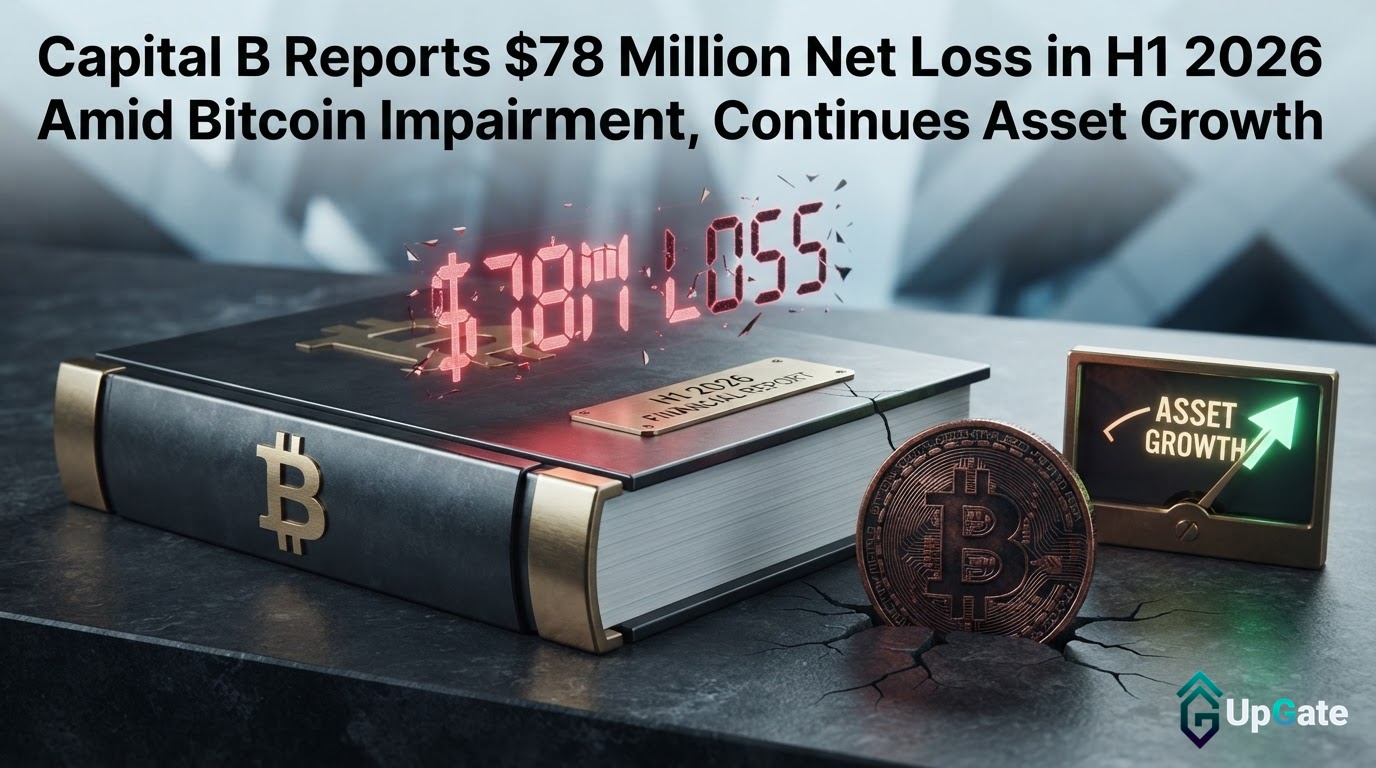
    Capital B, a European Bitcoin treasury company, reported a net loss of $78 million for the first half of 2026. The loss was primarily driven by a $75.8 million Bitcoin impairment charge, which reflects Bitcoin prices as of June 30, 2026, and had no direct cash impact, according to the company’s first-half 2026 report.

    Despite the accounting loss, Capital B’s consolidated revenue increased by 3.5% year-over-year to $6.5 million. The company’s adjusted EBITDA for the period was negative $1.2 million.

    During the first half of the year, Capital B raised $30 million in capital and increased its Bitcoin holdings by 11%. By September 30, 2026, its total Bitcoin holdings reached 3,538 BTC, a 25% increase from the beginning of the year. Capital B’s treasury is currently valued at $290 million, ranking it as the world’s 25th-largest corporate Bitcoin treasury and Europe’s second-largest, according to Bitcointreasuries.

    In market performance, Capital B’s stock price rose 0.5% in early morning trading on Friday, though it remains down 25% year-to-date, according to Yahoo Finance. In July, the company approved a 10-for-1 reverse stock split aimed at broadening its institutional investor base. Furthermore, Capital B’s shareholders approved up to $120 billion in financing capacity in June to support its Bitcoin accumulation strategy.

    Uncertainties remain regarding the long-term impact of the Bitcoin impairment charge on Capital B’s financial health, the effectiveness of the reverse stock split in broadening its institutional investor base, and the future trajectory of Bitcoin prices and their effect on Capital B’s treasury value and impairment charges.

    Why This Matters

    Capital B is navigating significant accounting losses from Bitcoin price fluctuations while actively expanding its Bitcoin holdings and securing capital, presenting a dual narrative of financial challenge and strategic growth.

    Broader Context

    Europe’s second-largest Bitcoin treasury raised $30 million and increased its Bitcoin holdings by 11% in the first half of 2026, despite reporting a $75 million Bitcoin impairment loss.

  • Fed Chair Warsh’s Bangkok Speech: Inflation Focus, Monetary Policy Ambiguity, and Economic Outlook

    Fed Chair Warsh’s Bangkok Speech: Inflation Focus, Monetary Policy Ambiguity, and Economic Outlook

    Federal Reserve Chairman Kevin Warsh delivered a speech in Bangkok on Friday morning, addressing key economic issues including inflation, monetary policy, and the global economic outlook. His remarks, made at the IMF-World Bank Annual Meetings, provided insights into the central bank’s approach without signaling a definitive next move on interest rates.

    Speaking alongside IMF Managing Director Kristalina Georgieva, Warsh reiterated the Federal Reserve’s commitment to “deliver price stability.” He noted that the central bank had removed “a close of accommodation” with a 25-basis-point rate hike in September. However, Warsh declined to provide clear indications about future policy decisions, stating that he does not “prejudge meetings” and would not announce future actions in advance.

    Market Reactions and Inflation Context

    This speech followed recent economic data that heightened market sensitivity. The September Consumer Price Index (CPI) accelerated to 3.7%, exceeding expectations and reviving concerns about persistent inflation. Following Warsh’s remarks, the implied probability of an upcoming rate increase within two weeks decreased from approximately 27% to 15%, according to reports. Markets interpreted the absence of strong warnings as a form of relief, leading to a softening of the US dollar and gains in stock futures and Asian equities.

    Broader Economic Landscape and AI’s Role

    Warsh also discussed the broader global economic landscape, expressing surprise at its resilience in the face of geopolitical and monetary policy challenges. He highlighted what he described as a significant US investment boom. Furthermore, Warsh commented on the potential impact of Artificial Intelligence (AI), characterizing it as potentially one of the most consequential economic changes of his lifetime. According to Warsh, he expects AI to become a positive supply shock over the medium term by enhancing productivity.

    Enduring Uncertainties and Bitcoin Implications

    Despite the market’s initial reaction of relief, the underlying challenge of persistent inflation remains. Warsh’s confidence in US economic growth suggests that policymakers may have room to maintain elevated interest rates if price pressures continue to be stubborn. The speech did not signal an end to monetary tightening, leaving uncertainty about the future path of interest rates.

    The implications for Bitcoin were noted as mixed. The reduction in immediate fears of a rate hike was seen as a positive factor, potentially mitigating some macro risks that had previously pushed the cryptocurrency below $80,000 after hot inflation reports. However, the broader economic uncertainties and the potential for sustained higher rates continue to influence the market.

    Key takeaways from Warsh’s address include the Federal Reserve’s ongoing focus on price stability, the lack of clear forward guidance on interest rates, and the complex global economic environment. The potential long-term impact of AI on productivity was also a significant point, with Warsh expecting it to contribute positively to the supply side of the economy over time. The speech underscored that while markets may find temporary relief, the persistent nature of inflation and the Federal Reserve’s commitment to addressing it may continue to shape monetary policy considerations.

    Broader Context

    Source materials place the market analysis in this context: Federal Reserve Chairman Kevin Warsh delivered one of the week’s most closely watched central-bank appearances on Friday morning, following the hotter-than-expected CPI and PPI reports from earlier this month that revived fears of another US rate increase.

  • Strive Boosts SATS IPO to $700M, Priced at $90

    Strive Boosts SATS IPO to $700M, Priced at $90

    Strive Inc. Secures $630 Million in Capital Raise for Bitcoin Treasury Expansion

    Strive Inc. has successfully completed a significant capital raise within the Bitcoin treasury sector, pricing its 15.00% Series A Perpetual SATS Preferred Stock offering on October 15, 2026. The deal was upsized from an initial 5 million shares to 7 million shares, with each share priced at $90, generating approximately $630 million in gross proceeds. The offering’s notional stated value, based on a $100 par value, amounts to roughly $700 million.

    Settlement for the transaction is anticipated on October 20, 2026, contingent upon the satisfaction of customary closing conditions.

    The SATS preferred stock features a fixed 15% cumulative annual dividend on its $100 stated amount. These dividends, when declared, will be paid daily, with the first payments scheduled to commence on November 9, 2026. At the $90 initial public offering price, this translates to an effective yield of approximately 16.7%.

    Barclays and Cantor Fitzgerald acted as joint book-running managers for the offering.

    The proceeds from this capital raise are designated for general corporate purposes, with a primary focus on Bitcoin acquisition and the development of related products.

    This marks Strive’s second preferred equity offering. The company’s initial offering, the SATA offering, concluded in November 2025. Notably, Strive has maintained a balance sheet free of traditional debt obligations since May 2026.

    Strive’s Growing Bitcoin Holdings and Debt-Free Strategy

    As of mid-October 2026, Strive holds an estimated 35,595 BTC. This figure represents a substantial increase from the end of 2025, when the company’s holdings were between 7,500 and 7,600 BTC.

    The absence of debt since May 2026 ensures that all of Strive’s Bitcoin holdings are unpledged. This is a crucial distinction, as pledged assets can be vulnerable to margin calls or forced liquidation during periods of significant price declines in the cryptocurrency market.

    To support its dividend obligations, Strive has structured its dividend reserves to cover payouts for up to 18 months.

    Strategic Approach to Bitcoin Accumulation

    Chairman and CEO Matt Cole has characterized Strive’s strategy as a disciplined, long-term approach to Bitcoin accumulation. Unlike some competitors, such as MicroStrategy (formerly Strategy), which have financed their Bitcoin positions through convertible notes and other debt instruments, Strive is funding its treasury accumulation program exclusively through preferred equity.

    The decision to upsize the offering by 40%, from 5 million to 7 million shares, indicates strong demand and suggests that the book was significantly oversubscribed.

    For investors seeking income, the prospect of a 16.7% effective yield on a preferred stock with exposure to Bitcoin presents a unique investment opportunity. While preferred shareholders are prioritized over common equity holders for dividend payments, the company’s capacity to sustain these dividends is intrinsically linked to its overall financial health and, indirectly, to the performance of Bitcoin.

    Strive Inc. is publicly traded on the Nasdaq under the ticker symbol ASST. With its substantial Bitcoin holdings of approximately 35,595 BTC and the recent $630 million capital infusion aimed at further accumulation, the company is solidifying its position as a prominent Bitcoin accumulator in the public markets.

  • Google’s Quantum Error Correction Advances: A Long-Term Perspective on Bitcoin Security

    Google’s Quantum Error Correction Advances: A Long-Term Perspective on Bitcoin Security

    Recent reports indicate Google has made significant progress in quantum computing error correction, reportedly reducing error rates by a factor of 40 and achieving 99.9% accuracy. While this advancement is a notable step in quantum computing research, it does not pose an immediate impact on Bitcoin’s cryptography. The practical application of such technology to break current encryption standards remains distant due to substantial scale and capability requirements. Uncertainty remains regarding the scale at which Google’s quantum error correction method can be demonstrated.

    Google’s reported technique, utilizing its Willow chip and a method called ‘magic state cultivation,’ addresses a critical component for building fault-tolerant quantum systems. Magic states are essential for quantum computation but typically consume a large portion of a quantum computer’s capacity. Improving their reliability and production could ease a major bottleneck in developing more powerful quantum machines.

    Why This Matters

    The materials describe a narrow update: Google has reportedly developed a quantum computing technique that reduces error rates by a factor of 40 and achieves 99.9% accuracy. The scale at which Google’s quantum error correction method can be demonstrated remains a key uncertainty.

    Broader Context

    Source materials place the factual news in this context: Google’s latest quantum computing technique reportedly cuts relevant error rates by a factor of 40 and reaches 99.9% accuracy, advancing a field whose eventual capabilities could impact Bitcoin cryptography.

    The Bitcoin Cryptography Challenge: Scale and Requirements

    The leap from laboratory milestones to systems capable of impacting cryptography like that used by Bitcoin is substantial. A Google white paper, published in March, estimated that breaking Bitcoin’s security would require between 1,200 and 1,450 logical qubits. Logical qubits are error-corrected units necessary for reliable computation, distinct from the physical qubits found in current processors. For comparison, Google’s Willow chip has 105 qubits, while IBM has reported 70 logical qubits, and QuEra has executed algorithms using up to 96 logical qubits. IBM’s roadmap targets 200 logical qubits by 2029 and 2,000 by 2033, indicating that the necessary scale is still years away.

    Bridging the Gap: Current Limitations and Future Uncertainty

    Furthermore, the potential impact on Bitcoin’s cryptography is conditional. It depends on future quantum machines becoming capable of deriving private keys from exposed public keys, a scenario that requires not only immense computational power but also the revelation of public keys. Experts, such as Jameson Lopp, co-founder and chief security officer of Casa, suggest that a machine powerful enough to decode a Bitcoin public key could be at least another decade away. The practical exposure would also depend on whether a public key is revealed. The exact timeline for the development of quantum computers capable of breaking Bitcoin’s cryptography remains uncertain.

    Long-Term Preparation: The Imperative for Post-Quantum Security

    Despite the distant nature of the potential impact, Google’s progress in error correction reinforces the importance of long-term preparation for a post-quantum future. The primary report estimates that approximately 6.26 million BTC are currently held in quantum-vulnerable addresses. While the immediate network impact remains unchanged, the advancement makes the longer-term possibility harder to dismiss as purely theoretical. This underscores the need for Bitcoin’s ecosystem to consider migration paths to quantum-resistant cryptographic arrangements well before a credible attack-capable machine emerges.

    Market probabilities reflect the long-term, uncertain nature of this potential impact. As reported in the source article, Polymarket assigned a 1% chance to the relevant possibility by the end of the current year and an 11% chance by the end of 2027. This indicates that while the possibility is acknowledged, it is not considered an immediate event.

    In conclusion, Google’s reported advancements in quantum error correction represent a significant development in the field of quantum computing. However, they do not establish an immediate security event or a sell signal for Bitcoin. Instead, this progress adds weight to the long-dated tail risk, highlighting that while error correction is advancing, the transition from laboratory milestones to reliable Bitcoin-breaking systems requires scale, fault tolerance, and sustained computation that current machines have not yet demonstrated. The durable implication is that Bitcoin’s post-quantum migration challenge needs to be considered and planned for well in advance of any credible quantum impact.

  • XRP Bulls Emerge, $1,000 Target Remains

    XRP Bulls Emerge, $1,000 Target Remains

    XRP Recovers Modestly After Volatile Week, Analysts Eye $1.40 as Key Resistance

    XRP is trading at $1.34, marking a gain of over 1% following a turbulent Wednesday. The digital asset’s price movement comes as Ripple CEO Brad Garlinghouse asserted that XRP possesses legal clarity, even as the CLARITY Act failed to advance. This statement has kept alive speculation surrounding a $1,000 price prediction for XRP.

    Garlinghouse Comments on Legal Clarity and Future Outlook

    Garlinghouse made his remarks after participating in the Nasdaq closing bell ceremony with Evernorth, a significant event for its XRP digital asset treasury. He expressed disappointment regarding the stalled progress of the CLARITY Act. In contrast, Ripple CTO David Schwartz has consistently highlighted the importance of everyday payments and accessible investments as crucial drivers for XRP adoption.

    Dom Kwok’s $1,000 XRP Prediction

    The ambitious $1,000 XRP price target, initially voiced by Dom Kwok at the New York Stock Exchange, continues to circulate within the crypto community.

    Market Sentiment and Technical Indicators

    Despite recent news of Cross River integrating RLUSD into its core banking infrastructure, XRP has struggled to gain significant momentum. This suggests that broader market sentiment and technical positioning are currently influencing its near-term trading.

    Currently trading at $1.34, XRP is holding above the $1.32 support level after experiencing a volatile period that saw it briefly dip near $1.28 before recovering. While the recent 24-hour rebound has been notable, the preceding 24 hours were characterized by sharper intraday price swings.

    The $1.28–$1.32 range is identified as a critical support zone, with the 200-day moving average situated around $1.28. Short-term momentum remains under pressure, as several moving averages are currently above the price. However, TD Sequential buy signals observed near $1.31 offer potential for a relief bounce. The immediate resistance lies at $1.37, with a successful reclaim of this level potentially paving the way for a move towards $1.41–$1.43.

    Longer-term price targets would necessitate a significantly stronger market structure; the $5 outlook is not considered a near-term prospect. For now, the $1.40 area represents a more immediate test of whether buyers are regaining control of the market.

    Risk and Reward in Trading

    While XRP’s bounce from its session low provides some immediate relief, the overall market setup remains conditional. A breach below $1.28 could prompt traders to reduce risk exposure. Even if support holds, a move towards $1.40 would be a significant development, though it would not materially advance the $1,000 price prediction.

    This divergence between potential short-term recovery and extraordinary long-term forecasts is leading some traders to explore higher-risk, early-stage projects.

    Maxi Doge ($MAXI) Emerges as a High-Risk Alternative

    Maxi Doge ($MAXI), an Ethereum ERC-20 meme token and trading community project, is one such example. Built around a “240-lb canine juggernaut” and a “1000x-leverage trading mentality,” its presale price is set at $0.0002844. The project has reportedly raised $4.8 million, with staking offering a substantial 60% APY.

    Key features include holder-only trading competitions with leaderboard rewards and a Maxi Fund treasury dedicated to liquidity and partnerships. The project deliberately adopts a meme-first approach, incorporating “gym-bro humor.”