Category: Uncategorized

  • VSMC Opens Singapore Fab with Initial Capacity Booked, Considers Second Facility

    VSMC Opens Singapore Fab with Initial Capacity Booked, Considers Second Facility

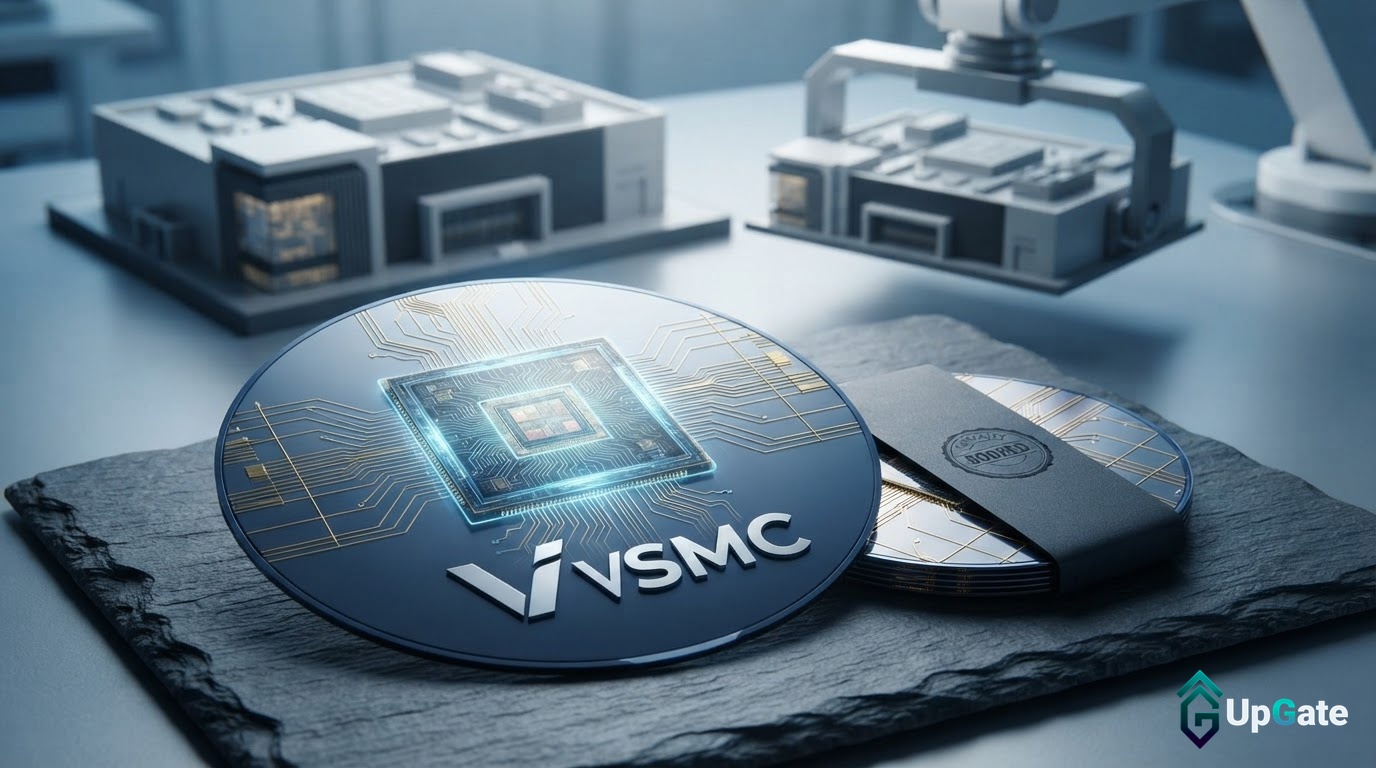
    VSMC, the joint venture between World Advanced (VIS) and NXP Semiconductors, has inaugurated its first 12-inch wafer fabrication plant in Tampines, Singapore. The facility’s initial production capacity is fully subscribed by customers, and the company is considering the construction of a second fab.

    The new fab, which commenced operations on September 28, is designed to produce mixed-signal, power management, and analog chips, as well as silicon interposers. The process technology employed ranges from 130nm to 40nm. According to World Advanced chairman Fang Ruey, the initial sample wafer yield for the fab exceeded 99%.

    This first VSMC fab represents an investment of $7.8 billion and is projected to create approximately 1,600 jobs. By the first quarter of 2027, the facility is expected to reach a monthly capacity of around 44,000 12-inch wafers. World Advanced holds a 60% stake in the joint venture, with NXP Semiconductors holding the remaining 40%.

    NXP CEO Rafael Sotomayor stated that the joint venture enhances NXP’s geographic resilience, supply control, and cost competitiveness, positioning VSMC as a manufacturing base supporting “physical AI.” This move aligns with a broader industry trend of diversifying semiconductor manufacturing locations beyond traditional hubs.

    Discussions are underway regarding a potential second fab. World Advanced chairman Fang Ruey indicated that the company is considering building another facility, which might utilize more advanced process technologies than the first. The exact cost and specific technologies for a potential second fab remain under consideration.

    The decision to include silicon interposers in the first fab’s production mix, which requires more complex manufacturing steps, coincided with a reduction in planned wafer output from an initial estimate of 55,000 to 44,000 wafers per month. This strategic choice allows VSMC to dedicate cleanroom space to components essential for advanced packaging, balancing wafer volume with product diversity.

    The opening of the VSMC fab and its immediate full capacity booking underscore the sustained demand for specialty chips, which are critical components for various applications, including automotive, industrial, and AI infrastructure. The industry continues to navigate supply constraints driven by robust demand across multiple sectors.

    VSMC was established as a joint venture between World Advanced and NXP Semiconductors approximately two years ago. NXP acquired Freescale in 2015. The current expansion in Singapore reflects a strategic effort to bolster manufacturing capabilities and ensure supply chain resilience in a dynamic global market.

    Why This Matters

    The materials describe a narrow update: VSMC, a joint venture between World Advanced (VIS) and NXP, inaugurated its first 12-inch wafer fabrication plant in Tampines, Singapore on September 28. The exact cost of the second VSMC fab.

    Broader Context

    Source materials place the factual news in this context: TSMC’s investment in World Advanced.

  • SEC’s Non-Binding Crypto Guidance Offers Clarification Amidst Regulatory Uncertainty

    SEC’s Non-Binding Crypto Guidance Offers Clarification Amidst Regulatory Uncertainty

    The U.S. Securities and Exchange Commission (SEC) has updated its frequently asked questions (FAQ) on crypto assets, providing staff guidance that certain token buybacks, network maintenance services, and staking receipt tokens may not necessarily constitute investment contracts under federal securities laws. However, the SEC explicitly stated that this guidance is not legally binding and does not alter existing regulations or create new obligations.

    Guidance Details and Caveats
    The SEC’s updated FAQ, released on Friday, offers interpretations of the Howey test. It suggests that in cases where a crypto system is operational and decentralized, token buyback plans might not be viewed as investment contracts. Similarly, services aimed at maintaining and upgrading operational networks, along with staking receipt tokens, may not automatically fall under securities regulations. This development follows similar guidance issued by the Commodity Futures Trading Commission (CFTC) on tokenized assets and blockchain accounting in the previous week.

    Regulatory Vacuum and Agency Action
    This move by the SEC and CFTC comes after legislative efforts to provide comprehensive crypto regulation stalled. The CLARITY Act, intended to define digital assets and their regulatory frameworks, failed to pass the Senate. In the absence of congressional legislation, regulatory agencies are utilizing staff guidance as a means to signal their current thinking and enforcement intentions. While not legally binding, this guidance serves as a practical reference for market participants assessing compliance risks.

    Nuanced Approach and Persistent Uncertainty
    The SEC’s approach, as indicated by this FAQ, suggests a potentially tiered regulatory framework for crypto projects. Stricter standards might apply to early-stage, centralized projects, while more lenient interpretations could be afforded to mature, decentralized networks. This nuanced approach aims to provide some direction for the industry, though the specific criteria for distinguishing between these categories remain subject to interpretation.

    Despite the clarifications, significant regulatory uncertainty persists. The SEC emphasized that the FAQ is staff guidance and has no legal binding force, meaning it could be subject to change by future administrations. This lack of definitive legal standing means that market participants must still navigate a complex and evolving regulatory landscape. The specific implications of the SEC’s guidance for individual crypto projects remain unclear, and the exact criteria for differentiating between early-stage and mature decentralized networks are not explicitly defined.

    Personnel Changes
    Adding to the evolving landscape, Hester Peirce, often referred to as “Crypto Mom” and known for her generally crypto-friendly stance, is scheduled to leave the SEC on October 2nd, after eight years of service. She is expected to join Regent University School of Law in November. Her departure marks the end of a tenure that saw significant debate and development in the SEC’s approach to digital assets.

    In summary, the SEC’s latest crypto FAQ offers directional clarification on specific activities, but its nature as non-binding staff guidance underscores the ongoing lack of comprehensive legislative clarity in the United States. Market participants will need to continue monitoring regulatory developments and exercising caution due to the inherent uncertainties.

    Why This Matters

    The materials describe a narrow update: The SEC released an updated FAQ on crypto assets, providing new interpretations of the Howey test. Whether future administrations will uphold the current staff guidance.

    Broader Context

    Source materials place the factual news in this context: SEC and CFTC are issuing staff guidance after the CLARITY Act stalled in the Senate.

  • Senate Report: Tether Fuels Iran’s Shadow Banking, 87% Terror Funds Linked to USDT

    Senate Report: Tether Fuels Iran’s Shadow Banking, 87% Terror Funds Linked to USDT

    Senate Panel Report Alleges Tether Fuels Iran’s Shadow Banking System

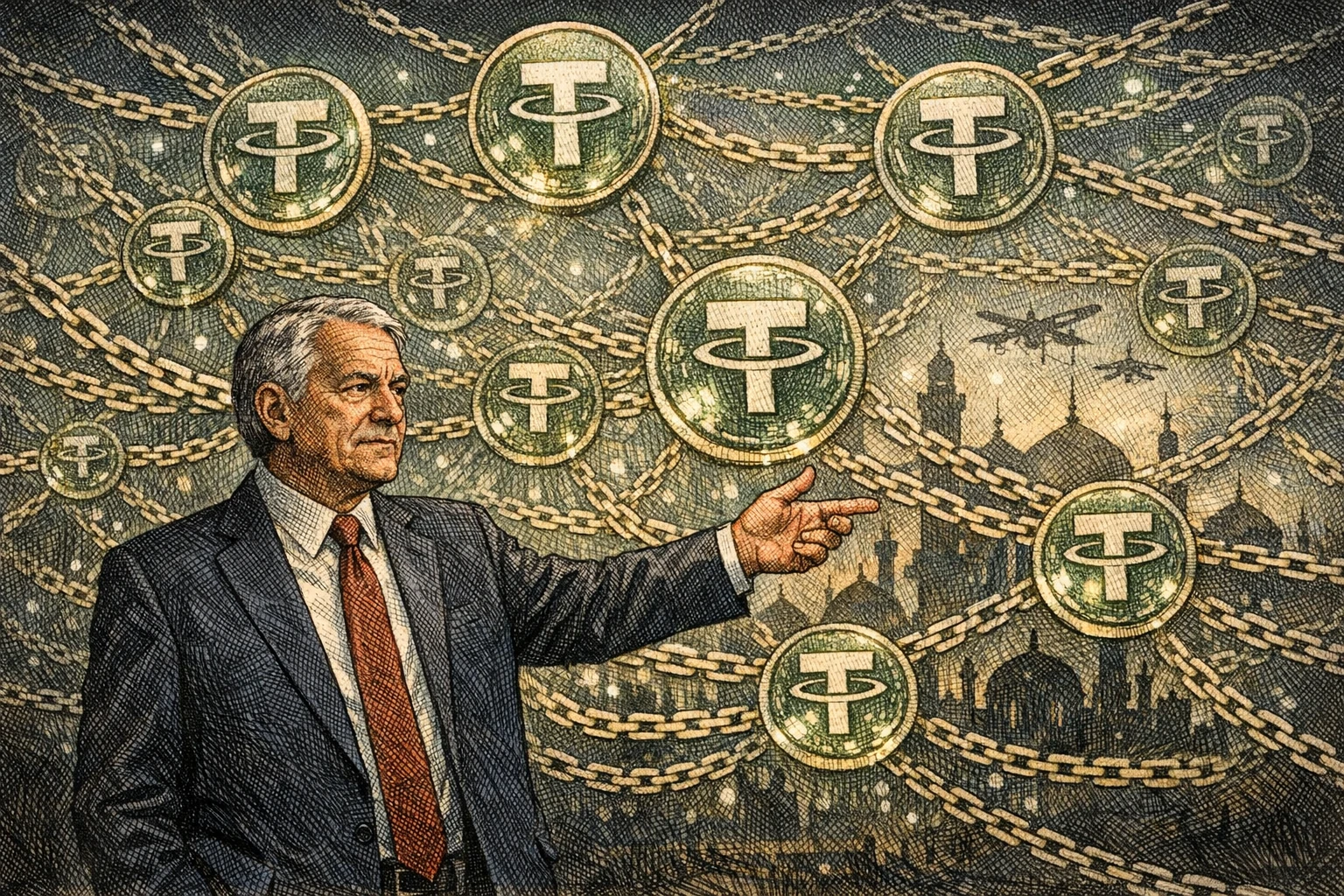
    A 28-page report released by the Democratic staff of the Senate Permanent Subcommittee on Investigations (PSI) has accused Tether and its flagship stablecoin, USDT, of becoming a core tool for Iran’s “shadow banking system.” The report claims this allows Tehran to circumvent sanctions, funding regional proxies, missile and drone programs, and human rights abuses. According to the report, 87% of the USDT transactions from 757 sanctioned, Iran-linked wallets flagged for terror financing originated from wallets primarily trading USDT. Tether, in its response, stated that it had frozen $550 million in Iran-related USDT over the past year.

    USDT as a Sanctions Evasion Tool

    The report, led by Senator Richard Blumenthal, analyzed on-chain transaction data from 846 sanctioned or Iran-related crypto wallets. It revealed how Tehran is utilizing USDT to bypass U.S. sanctions, channeling funds to regional proxies, drone and missile programs, and to finance human rights abuses. Blumenthal stated that the report exposes how Tether and its token have enabled the Iranian government to defy the sanctions regime.

    The core data presented in the report is striking: 87% of USDT transactions from 757 wallets implicated in Iranian terror financing originated from wallets that primarily traded USDT. Investigators noted that Iran’s preference for USDT is unsurprising, given its widespread use on Iranian crypto exchanges and its significantly higher liquidity compared to alternative stablecoins. This suggests that as traditional banking channels are cut off by sanctions, Iran’s financial networks naturally gravitate towards on-chain stablecoins, with USDT emerging as the preferred choice due to its dominant market share and deep liquidity.

    Allegations of Tether’s Passive Approach

    The report’s central argument is not that “Iran used USDT,” but rather that “Tether did not actively address it.” The report directly accuses Tether of repeatedly failing to freeze and block suspicious wallets. Investigators wrote, “Beyond receiving formal notices of sanctions or seizures, Tether has failed to take action against wallets exhibiting strong indicators of illicit finance, even when their association with Iranian entities or terrorist organizations has been public.”

    The key accusation in this report is not that “Tether assisted Iran,” but that Tether was “passive.” The report implies that Tether’s freezing mechanism is reactive, only acting upon formal requests from the U.S. government or other jurisdictions. However, for wallets with anomalous on-chain transaction patterns, financial dealings with known Iranian entities, and sufficient publicly available information for judgment, Tether has not proactively intervened. This, the report suggests, falls short of the Anti-Money Laundering (AML) obligations expected of traditional banking institutions.

    Calls for Investigation and Regulatory Action

    In a letter to Attorney General Todd Blanche and Treasury Secretary Scott Bessent, Blumenthal urged them to investigate potential sanctions and banking law violations by Tether. This letter signals that the PSI’s investigation will not end with the report and that more substantial regulatory actions may follow.

    The report also shifts focus to Tether’s political connections in the U.S. Blumenthal specifically mentioned Commerce Secretary Howard Lutnick, who led Cantor Fitzgerald, a firm that serves as Tether’s custodian, before entering government. Lutnick’s sons now manage the company’s operations. Separately, Bo Hines, former executive director of the White House crypto task force, is now the CEO of Tether U.S.

    Blumenthal questioned whether the continued use of USDT by the Iranian regime, given Tether’s deep ties to the Trump administration, implies that Tether has received lenient enforcement and less oversight from federal authorities regarding its anti-money laundering obligations. The implication is clear: has Tether enjoyed a “regulatory exemption” due to its political relationships?

    Tether’s Defense and the Stablecoin Dilemma

    On Monday, Tether issued a statement emphasizing its role in freezing $550 million worth of Iran-related USDT over the past year. In a Tether press release, CEO Paolo Ardoino stated that USDT is not a haven for sanctioned individuals, terrorist organizations, or criminal networks. He stressed that public blockchains offer greater visibility into fund flows than cash, and Tether acts when provided with credible information by law enforcement.

    Ardoino’s core argument is that Tether’s role is to “cooperate with law enforcement,” not to “conduct its own investigations.” While on-chain data is transparent, Tether’s position is that they freeze assets when law enforcement provides clear directives, and proactive screening is not their obligation.

    The report places stablecoins in a paradoxical position: on one hand, USDT is a powerful tool for U.S. sanctions against Iran, with Tether’s freezing capabilities allowing it to track and lock illicit funds. On the other hand, USDT also serves as a conduit for Iran to circumvent sanctions, as anyone can use it to transfer funds as long as the wallet is not flagged.

    Following the passage of the GENIUS Act, U.S. stablecoin issuers are required to hold substantial short-term U.S. Treasury debt, further integrating stablecoins with the U.S. financial system. This PSI report could become a focal point for future regulatory pressure, demanding that stablecoin issuers assume more proactive AML screening obligations, rather than merely “freezing upon notification.” For Taiwan, this also serves as a reminder to regulators: as stablecoins become mainstream tools for cross-border payments, ensuring local institutions are not entangled in international sanctions disputes will be a critical future challenge.

  • Senate Report Links Tether’s USDT to Iran’s Shadow Banking

    Senate Report Links Tether’s USDT to Iran’s Shadow Banking

    Senate Report Alleges USDT Fuels Iran’s Sanctions Evasion

    A new report from the U.S. Senate has identified Tether’s USDT stablecoin as a critical component of Iran’s efforts to circumvent international sanctions, detailing significant financial flows through the cryptocurrency. The findings, released by Democrats on the Senate Permanent Subcommittee on Investigations (PSI) on September 28, 2026, suggest that USDT has become a primary tool for Iran’s shadow banking network.

    USDT Dominance in Sanctioned Wallets

    The 28-page report, titled “Tethered to Terrorism: Crypto and Iran’s Shadow Banking Network,” analyzed 846 sanctioned crypto wallets linked to Iran. It found that 84% of these wallets transacted primarily in USDT. The reliance on the stablecoin is even more pronounced in wallets specifically connected to terrorism financing, where USDT accounted for 87% of transactions across 757 analyzed wallets.

    Iran’s Central Bank Amasses USDT Reserves

    According to the report, Iran’s Central Bank has accumulated at least $507 million in USDT. This reserve effectively provides the sanctioned nation with access to dollar-denominated liquidity without needing to engage with the traditional global banking system.

    Oil Smugglers and Broader Crypto Activity

    The investigation also revealed that sanctioned oil smugglers alone transferred over $603 million in USDT between 2021 and 2025. In 2025, Iran conducted an estimated $2 billion in cryptocurrency transactions, with USDT being the dominant currency. The report further indicated connections to Hezbollah, the Lebanese militant group designated as a terrorist organization by the U.S.

    The subcommittee has forwarded its findings to the Treasury Department and the Justice Department for further investigation.

    Tether’s Response and Senate Criticism

    Tether has stated that it is cooperating with U.S. authorities and has frozen approximately $550 million in USDT associated with Iran in 2026, including $344 million in April and over $130 million in July.

    However, the Senate report contends that these actions are insufficient and too slow. Investigators criticized Tether for delays in freezing certain wallets and for failing to proactively block others, suggesting that these lags created opportunities for funds to be moved before freezing orders could be implemented.

    The report posits that USDT’s prevalence over alternatives like Bitcoin within Iranian networks stems from its combination of dollar stability, high liquidity, and widespread acceptance, which outweigh the perceived risk of eventual freezing for illicit actors.

    Sanctions on Iranian Exchanges

    In a related development, four Iranian crypto exchanges were sanctioned on June 2, 2026, for their alleged ties to the Islamic Revolutionary Guard Corps (IRGC) and involvement in money laundering.

    Competitive Landscape Shifts

    The scrutiny of Tether’s role could benefit competing stablecoins, such as USDC, issued by Circle. Circle has positioned itself as a compliance-focused alternative and has consistently emphasized its alignment with U.S. regulatory frameworks. The report linking USDT to terrorism financing sharpens this competitive distinction.

    The report highlights an irony: the centralized control that makes USDT useful for regulators in tracking transactions is also the feature that draws criticism when that control is not exercised swiftly enough.

  • Uniswap Dominates Tokenized Stock Deposits with $82M as DeFi Welcomes Equities

    Uniswap Dominates Tokenized Stock Deposits with $82M as DeFi Welcomes Equities

    Uniswap Dominates Tokenized Stock Trading, Capturing Nearly Half of Market Liquidity

    Uniswap has emerged as the leading platform for trading tokenized stocks, attracting $82.8 million in deposits over the past 30 days. This surge positions the decentralized exchange as the primary venue for individuals seeking to trade shares of companies like Apple and Tesla without engaging with traditional brokerage accounts. Currently, Uniswap accounts for 73% of all tokenized stock deposits on Robinhood Chain, a Layer 2 network specifically designed for tokenized real-world assets.

    The broader decentralized finance (DeFi) market for tokenized stocks has reached approximately $192.6 million in total value locked (TVL). Uniswap’s substantial share means it alone contributes nearly half of the sector’s overall liquidity.

    Uniswap V4 Drives Inflows

    The recent influx of capital was largely absorbed by Uniswap’s V4 deployment, which secured $54.7 million, while its predecessor, V3, attracted an additional $28.1 million. As of early September, Uniswap V4 led all protocols in TVL for tokenized stocks, boasting $59.1 million. This figure surpasses competitors such as Kamino Lend on Solana, which held $41.7 million, and Uniswap V3’s $20.9 million.

    Enhanced Functionality with V4 Hooks

    A key innovation in Uniswap V4 is the introduction of “hooks,” which are programmable plugins enabling developers to customize the behavior of liquidity pools. For tokenized securities, these hooks allow for the enforcement of Know Your Customer (KYC) requirements, the restriction of access to verified wallets, and the adjustment of fee structures. Crucially, these features are implemented without compromising the permissionless architecture that has been a cornerstone of DeFi’s appeal.

    Robinhood Chain and Trading Volume

    Robinhood Chain, launched on July 1, 2026, is an Ethereum-compatible Layer 2 solution dedicated to tokenized real-world assets. Cumulative trading volume for Robinhood’s stock tokens has exceeded $3 billion. In the last 30 days alone, decentralized exchange volume for tokenized stocks neared $20.9 billion, with Uniswap facilitating approximately 60% of this activity.

    Diverse Issuers and Regulatory Landscape

    The tokenized stocks themselves originate from various issuers. Robinhood issues its own tokens on its dedicated chain, while other providers, including xStocks (backed by Backed), Ondo, and AnchoredFi, offer tokenized equity exposure across multiple blockchains, including Solana.

    The U.S. Securities and Exchange Commission (SEC) announced an Innovation Exemption for tokenized securities venues around September 18, 2026. This development is expected to provide a clearer legal framework for platforms like Uniswap to host regulated assets. Uniswap had proactively prepared for this shift, integrating tokenized securities, including derivatives linked to companies like Apple and Tesla, into its APIs and front-end applications in June 2026.

    Future Use Cases and Competition

    Uniswap’s V4 hooks and permissioned pools are designed to facilitate a range of downstream use cases. A tokenized Tesla share held within a Uniswap pool could potentially be used as collateral in lending markets, for margin trading, or incorporated into structured products, all executed on-chain.

    However, the competitive landscape is active. Kamino Lend’s significant TVL on Solana highlights the appeal of alternative blockchains. Solana’s advantages, such as lower transaction costs and faster finality, make it an attractive option for high-frequency tokenized stock trading.

    Risks Associated with Tokenized Stocks

    Despite the growing adoption, the security of tokenized stocks is intrinsically linked to their issuers. Should a token issuer face insolvency or regulatory action, holders could be left with digital representations of shares that no longer have a corresponding asset in a custodial account.

  • Coinbase Launches USDC-Native Clearinghouse Post-CFTC Approval

    Coinbase Launches USDC-Native Clearinghouse Post-CFTC Approval

    Coinbase Secures Key Financial License, Unveiling First USDC-Native Derivatives Clearinghouse

    Coinbase has obtained a crucial license in a segment of finance that cryptocurrency companies have long sought to penetrate. On September 28, the U.S. Commodity Futures Trading Commission (CFTC) officially registered Coinbase Clearing LLC as a derivatives clearing organization, marking a significant milestone as the nation’s first clearinghouse for derivatives operating natively with USDC.

    A New Paradigm for Clearing

    A clearinghouse functions as both a guarantor and an administrator in financial transactions. When two parties engage in a trade of futures contracts or options, the clearinghouse acts as an intermediary, ensuring that each side fulfills its obligations and receives payment. Traditionally, this process relies on the movement of U.S. dollars through conventional banking systems. Coinbase’s innovative approach replaces these established channels with USDC, Circle’s stablecoin pegged to the U.S. dollar, for both settlement and collateral purposes.

    Roots in Regulatory Evolution

    This landmark registration is the culmination of a multi-year effort to adapt financial regulations to the digital asset landscape. The groundwork was laid with the CFTC’s launch of a digital assets pilot program in December 2025. This initiative paved the way for Bitcoin, Ether, and USDC to be recognized as acceptable collateral within regulated derivatives markets, deliberately dismantling outdated restrictions that had previously excluded virtual currencies from such roles.

    Strategic Maneuvers and Partnerships

    Coinbase moved swiftly to leverage this regulatory opening. The company forged a partnership with Nodal Clear, with the aim of launching a platform in 2026 that would utilize USDC as collateral for futures trading. Prior to this registration, Coinbase Derivatives, a CFTC-recognized designated contract market, had utilized Nodal Clear as a third-party clearinghouse while pursuing direct access to USDC for its clearing operations. The establishment of Coinbase Clearing LLC represents the successful execution of this strategy, transforming a pilot program experiment into a fully authorized clearing operation.

    The Advantages of 24/7 Settlement

    The integration of USDC offers a significant operational advantage: round-the-clock settlement. Because stablecoins operate on blockchain infrastructure, collateral transfers and margin calls are no longer constrained by traditional banking hours. This capability provides institutional traders managing global risk with a substantial upgrade, enabling more agile and efficient operations across different time zones.

    Navigating New Risks

    While this development represents a significant advancement, it does not eliminate inherent risks. The stability of any clearinghouse is contingent on its risk management framework. Operating on stablecoin rails introduces specific considerations, including questions surrounding redemption reliability, potential blockchain congestion, and smart contract vulnerabilities. However, the CFTC’s approval suggests that the agency has determined these risks to be manageable within its existing supervisory structure.

    Coinbase’s Integrated Vision

    For Coinbase, the strategic implications are clear. The company already commands a significant presence in the U.S. with one of the largest cryptocurrency exchanges, a robust custody business, and an expanding institutional services division. The addition of a registered clearinghouse allows Coinbase to offer its clients a comprehensive, vertically integrated suite of services, encompassing trade execution, custody, and now clearing, all under a single corporate entity.

    Boosting USDC Demand

    The registration of Coinbase Clearing LLC is poised to generate substantial new demand for USDC. Each dollar of margin posted in USDC at Coinbase Clearing represents stablecoin supply actively engaged in a productive financial use case, rather than remaining idle on an exchange. This dynamic also benefits Circle, the issuer of USDC, as each circulating USDC is backed by reserves that generate yield for the company.

  • Researchers Demonstrate RSA Cryptography Attack by Impersonating Hardware Security Module

    Researchers Demonstrate RSA Cryptography Attack by Impersonating Hardware Security Module

    Researchers have demonstrated an attack that can impersonate a hardware security module (HSM) to forge signatures using RSA cryptography. This attack, however, does not affect cryptocurrencies like Bitcoin or Ethereum, which utilize different cryptographic algorithms. The findings highlight potential vulnerabilities in key protection mechanisms and underscore the ongoing transition to post-quantum cryptography.

    The attack, detailed in a preprint paper submitted to the IACR Cryptology ePrint Archive on September 20, was carried out by researchers from UC San Diego and France’s Institute for Research in Computer Science. According to the authors, the demonstration involved impersonating an HSM without needing to extract the private key. This was achieved by disabling the HSM’s FIPS mode, a certified security setting, which allowed it to sign unformatted numbers. The researchers then performed mathematical operations on the resulting signatures after requesting approximately 4 billion signatures using a 1024-bit RSA key.

    Understanding the Attack and its Context

    Hardware security modules are tamper-resistant devices designed to store private keys securely and perform cryptographic operations on request. They are commonly used by institutional custody providers, such as BitGo, to protect sensitive digital assets. The core principle of RSA cryptography, developed in 1977, relies on the computational difficulty of factoring large prime numbers. Standard RSA signing processes typically employ padding schemes, like PKCS#1 v1.5 or PSS, which are designed to prevent this type of oracle attack where a signing device is tricked into revealing information about the private key.

    The researchers claim that their demonstration likely poses no immediate operational threat to most modern RSA deployments. However, they suggest that this finding serves as classical evidence for moving away from RSA during the post-quantum transition. This recommendation aligns with broader industry trends as quantum computers are expected to pose a significant threat to current cryptographic standards.

    Broader Implications for Cryptography

    While this specific attack targets RSA, other cryptographic algorithms like the Elliptic Curve Digital Signature Algorithm (ECDSA), used by Bitcoin and Ethereum, are also known to be vulnerable to quantum computing. Estimates suggest that quantum computers with 10,000 to 20,000 qubits could potentially run Shor’s algorithm to break ECDSA signatures. In response to these future threats, companies like Google have set deadlines, such as 2029, to migrate their systems to post-quantum cryptography.

    This is not the first time RSA cryptography has been the subject of security concerns. In January 2023, Chinese researchers claimed a quantum method that threatened RSA, but experts dismissed that claim. The current demonstration, while using a test key and specific conditions like disabling FIPS mode, serves as a stress test for how keys are guarded and reinforces the importance of cryptographic agility.

    The authors’ findings are presented in a preprint, meaning it has not yet undergone formal peer review. However, the demonstration highlights the ongoing need for vigilance and adaptation in the field of cryptography, particularly as the world prepares for the advent of quantum computing.

    Broader Context

    Source materials place the factual news in this context: Hardware security modules (HSMs) are tamper-resistant devices that store private keys and sign on request, used by institutional custody providers like BitGo.

  • BitGo CPO Focuses on Product Clarity

    BitGo CPO Focuses on Product Clarity

    BitGo, a pioneer in digital asset custody, is now shifting its focus from securing digital assets to managing the complex operations of tokenized securities. The company, which has largely solved the challenge of safeguarding private keys and building institutional-grade infrastructure, is now looking to build upon its established foundation.

    The Next Frontier: Asset Servicing for Tokenized Securities

    For nearly a decade, the digital asset industry has concentrated on perfecting secure storage solutions, often referred to as “vaults.” BitGo, founded in 2013, has emerged as a leader in this space, now supporting over 1,550 digital assets and serving more than 4,900 clients globally. However, Chief Product Officer Eugene Hahr is now directing the company’s efforts towards the next critical phase: what can be built on top of this secure infrastructure.

    The emerging answer, according to Hahr, lies in asset servicing for tokenized securities. This encompasses essential functions such as dividend distribution, proxy voting, and the transfer of claims. These are the operational intricacies that traditional financial institutions like BNY Mellon and State Street have managed for decades within equity markets, but which remain largely underdeveloped in current crypto infrastructure.

    Real-World Applications and Regulatory Tailwinds

    This strategic pivot is not merely theoretical. The London Stock Exchange is actively developing initiatives for tokenized stocks, and regulatory bodies like the U.S. Securities and Exchange Commission (SEC) are making strides to clarify the path for tokenized assets. As stocks become tokenized, the need for services that ensure holders receive dividends, facilitate proxy voting, and manage corporate actions becomes paramount. Hahr believes BitGo is ideally positioned to provide these crucial services.

    BitGo’s recent corporate developments underscore its ambition. The company went public on the NYSE in January 2026 under the ticker BTGO. It bolstered its capabilities by acquiring NYDIG’s institutional trading business, integrating execution services into its existing custody and settlement framework. Furthermore, BitGo launched BitGo Research on September 24, 2026, and strengthened its leadership in compliance and research.

    Navigating a Competitive Landscape

    BitGo is not alone in this burgeoning market. The race to establish the foundational infrastructure for tokenized real-world assets has drawn significant competition from established players such as Fireblocks, Anchorage Digital, and Coinbase’s institutional division.

    The evolving regulatory environment presents both opportunities and challenges. Progress by the SEC in establishing frameworks for tokenized securities offers companies like BitGo a clearer roadmap for development. Hahr’s approach suggests BitGo intends to make strategic bets on the direction of regulation, rather than waiting for absolute clarity before committing to building new solutions.

  • Bitcoin’s Rate Hike Rally: Can it Survive a Bond Selloff?

    Bitcoin’s Rate Hike Rally: Can it Survive a Bond Selloff?

    Bitcoin’s recent rally has encountered headwinds from a significant shift in the bond market, prompting analysts to reassess the cryptocurrency’s trajectory.

    Bond Market Turmoil

    In mid-September, Bitcoin faced a challenging environment. The failure of the CLARITY Act in the Senate on September 15th, followed by the Federal Reserve’s interest rate hike to 3.75-4.00% the next day, saw Bitcoin briefly dip below $75,000. However, the cryptocurrency rebounded strongly, surpassing $87,000 within a week. This upward momentum stalled as the bond market experienced a dramatic move.

    On September 23rd, the 10-year U.S. Treasury yield surged by over 18 basis points, marking the largest single-day increase since April 2025. The following day, yields climbed above 5.2%, reaching levels not seen since 2007. The 30-year Treasury yield approached 5.50%, a high not observed since 2004. This sharp rise in yields was attributed to a confluence of factors, including robust Purchasing Managers’ Index (PMI) data, a weak five-year Treasury auction, and rising oil prices. Notably, even the Treasury’s $4 billion buyback of long bonds on September 24th failed to curb the upward trend in yields.

    Rate Hikes and ETF Flows

    The Federal Reserve’s rate hike, while significant, had a muted impact on Bitcoin’s immediate price action. The market had largely anticipated the move, with futures markets pricing in a hike of nearly 90% by the eve of the meeting. Some of Bitcoin’s preceding weakness was likely a reflection of this repricing.

    Evidence of this can be seen in the flows of spot Bitcoin ETFs. After experiencing outflows of approximately $750 million on September 15th and 16th, these ETFs saw inflows totaling $2.39 billion in the week ending September 25th, marking their strongest week since October 2025, according to Farside Investors.

    The Bond Selloff’s Impact

    The daily breakdown of ETF flows reveals a more nuanced picture: $999 million on Monday, followed by $715 million, $347 million, $191 million, and $135 million by Friday. While buying persisted, it diminished as yields climbed. Unlike a rate hike, which has a predetermined size, a bond selloff’s extent is dictated by market forces. Yields exceeding 5% present a direct challenge to assets like Bitcoin, which offer no yield.

    An alternative interpretation suggests that if the U.S. Treasury is compelled to borrow at higher rates, the national deficit and the supply of bonds will increase. Many in the cryptocurrency community view this as a long-term bullish case for Bitcoin. However, the immediate impact is evident in the current market flows, with Bitcoin holding its recent gains but struggling to extend them.

    Chart Analysis

    On a 3-day chart, Bitcoin broke above the $70,000 region around August 20th. After consolidating near $80,000 for several weeks, it experienced another breakout last week, reaching above $87,000 before a pullback. This second breakout is significant, potentially marking the first higher high on higher timeframes since the bear market began.

    The moving averages on the 3-day chart further support this constructive outlook. The 20-day exponential moving average (EMA) has crossed above the 50-day EMA for the first time since their bearish crossover in November 2025, which coincided with the start of the bear market. Bitcoin is currently retracing its latest upward move. The next significant support level is identified at $80,000, with the 50% Fibonacci retracement of the recent move from $75,000 to $87,000 falling just above it, around $81,000. As long as Bitcoin maintains the $80,000 area, the overall market structure can be considered constructive. A sustained move below this level would cast doubt on the higher high formation.

    Navigating Bitcoin’s Next Move with PrimeXBT

    As Bitcoin’s recovery faces pressure from rising bond yields, PrimeXBT, a global multi-asset broker and crypto asset service provider, offers traders tools to position for either a continued rally or a deeper correction. Clients can trade Bitcoin through Crypto Futures and CFDs, with options for long or short positions and adjustable leverage. PrimeXBT also facilitates the buying, exchange, and holding of Bitcoin and other cryptocurrencies.

    The platform features competitive fees for Crypto Futures, with maker fees at 0.01% and taker fees starting from 0.045%, decreasing to 0.015% for VIP 5 tier clients through its volume-based VIP program. Crypto CFDs incur no trading commission, and BTC/USD spreads can be as low as $19 for the same VIP tier.

    The same macroeconomic forces influencing Bitcoin are also impacting Gold, U.S. Dollar pairs, and major equity indices. PrimeXBT provides access to these markets, offering over 350 instruments with accounts denominated in USD, USDT, USDC, BTC, and ETH, enabling traders to act on a broader macroeconomic view across both crypto and traditional markets.

    The PXTrader 2.0 platform, powered by TradingView, offers charting capabilities to monitor the $80,000 support area and moving-average signals. Advanced order and risk-management tools are available to help traders manage their positions as the market outlook evolves. Crypto Futures execution combines a real order book and deep liquidity with volume-weighted average pricing (VWAP). With Bitcoin holding its breakout but struggling to advance, the focus shifts from identifying the rally to actively managing trades as new market signals emerge.

  • Spark Funds $210M for Bitcoin-Backed Institutional Loans

    Spark Funds $210M for Bitcoin-Backed Institutional Loans

    Spark Allocates $210 Million for Institutional Bitcoin-Backed Loans

    Spark, the lending division of the Sky ecosystem (formerly known as MakerDAO), has designated $210 million for institutional loans secured by Bitcoin and held in custody by Anchorage Digital. This collaboration aims to merge the capital efficiency of decentralized finance (DeFi) with the regulated infrastructure necessary for institutional compliance.

    So far, three institutional clients have utilized this facility, borrowing $150 million in USDC against $222 million worth of Bitcoin. This represents a collateralization ratio of approximately 148%, meaning borrowers are pledging nearly $1.50 in Bitcoin for every dollar borrowed.

    The operational framework is built upon Anchorage’s Atlas platform, which acts as the collateral agent in a three-party lending agreement. The platform oversees loan-to-value ratios, manages payments, and executes margin calls and liquidations when collateral values fall significantly.

    A key innovation of this arrangement is that borrowers are not required to move their Bitcoin entirely on-chain to access Spark’s liquidity pools. Instead, the Bitcoin remains in Anchorage’s regulated custody, while Spark provides the stablecoin lending capabilities.

    To enhance risk management, Spark integrated RedStone oracles in mid-June 2026. These oracles transmit real-time loan-to-value (LTV) data for the Anchorage-held collateral directly onto the blockchain, offering the protocol and its stakeholders continuous insight into the health of these loans.

    By the end of the second quarter of 2026, Anchorage’s share of Spark’s total lending portfolio had increased by approximately 70%, reaching around $260 million. The Anchorage channel has also emerged as the most profitable segment within Spark’s offerings, generating returns of about 6.5%.

    This expansion occurs within the context of an estimated $33 billion off-chain crypto-backed lending market.

    Anchorage Digital operates as a federally chartered digital asset bank, adhering to a regulatory framework that institutional borrowers and their legal teams can readily acknowledge. By channeling Bitcoin collateral through Anchorage, rather than demanding full on-chain deposits, Spark enables institutions to maintain compliance within traditional finance while simultaneously accessing decentralized liquidity.