Blog

  • GPT-5.6 Rumors Swirl as Users Report ChatGPT Gains Intelligence

    GPT-5.6 Rumors Swirl as Users Report ChatGPT Gains Intelligence

    Users Report Noticeable Changes in ChatGPT, Hinting at GPT-5.6 Testing

    A palpable shift in ChatGPT’s performance this week has not gone unnoticed by its user base. Across social media platforms, particularly X, users have been sharing screenshots and timing tests, coalescing around a prevailing theory: OpenAI is discreetly conducting A/B tests of a new model, GPT-5.6, within ChatGPT, offering it to select users who typically access GPT-5.5 Pro.

    Developer Anshu Chimla posted a comparative video on Thursday showcasing one-shot landing pages, accompanied by the caption: “Well well well, I’m one of the lucky ones with early GPT-5.6 Pro access.”

    Developers Observe Performance Shifts

    Developer Dobroslav Radosavljevič also took to X, describing the experience within Codex, OpenAI’s coding agent, as feeling “waaaaaaaay different than [the] 5.5 model.” While some users in the replies expressed belief, others dismissed the observations as a placebo effect.

    A consistent theme emerging from these discussions is the significant increase in processing time. Conor Dart, an X user who has been amplifying these rumors, conducted a test generating a one-prompt 3D browser game complete with physics and camera controls. The task, which took just over an hour to complete, starkly contrasted with GPT-5.5 Pro’s typical 10-minute generation time.

    “Not perfect, but for a one-prompt AI game dev test, this is seriously impressive,” Dart remarked.

    AI Insiders Weigh In on Potential New Model

    AI insider Chetas Lua reported a similar slowdown while testing a robotic simulation, expressing strong conviction that the results stemmed from OpenAI’s new model. “GPT 5.6 Pro continues to mog [Anthropic’s Fable 5] in 3D test,” Lua wrote. “Working on games one shot too.” In a separate post, Lua noted response times extending to 20 or 40 minutes, a pace not seen since before the release of GPT-5.5 Pro.

    However, not all comparisons favored the rumored model. Chris, an AI benchmarker on X, presented a spaceship-building prompt to both models. The suspected GPT-5.6 Pro took 87 minutes, compared to GPT-5.5 Extra High’s 34 minutes and 42 seconds.

    “As I’ve said before, based on great authority, GPT-5.6 will be an incremental/solid improvement over GPT-5.5, not a Fable killer,” Chris stated, while also noting that Fable 5 still outperformed both models in the spaceship’s core geometry. “My rough expectation has been that it would trade blows with Fable 5 on some benchmarks, maybe win around half depending on the category, but not clearly surpass it overall.”

    Leaked Details Suggest Advanced Capabilities

    Further details emerged from a post attributed to leaker Pankaj Kumar, suggesting a knowledge cutoff extended to December 2025. The leaks also indicated a potential increase in the “Juice Value,” a reasoning-effort setting, from 768 to 960. Additionally, the generation of SVG and 3D designs is reportedly robust enough to surpass Fable 5 in certain tasks.

    While these details have not been officially confirmed by OpenAI, they align with user observations of enhanced reasoning capabilities, an unfinished front-end, and a release candidate codenamed Kindle-Alpha.

    Stealth Testing and Anticipated Launch

    AI influencer Leo, citing unnamed sources, suggested in a thread that the suspected model is currently undergoing “stealth testing” for select Pro accounts when GPT-5.5 Pro is chosen in ChatGPT. A public launch is reportedly slated for the following Thursday, June 25.

    OpenAI’s Internal Communications and Market Pressures

    The closest indication of an official OpenAI stance comes from a memo reportedly sent by Chief Scientist Jakub Pachocki to staff, describing the next model as a “meaningful improvement” over GPT-5.5, according to a report by The Information. This memo, however, does not confirm A/B testing, a release date, or any specific technical details circulating on X, but it does validate the development of a new model.

    Decrypt reached out to OpenAI for comment regarding the testing of GPT-5.6 within ChatGPT, but received no response by the time of publication.

    Several factors may be driving OpenAI to potentially accelerate the release of a new flagship model. China’s open-source model GLM-5.2 is closely trailing Claude Opus 4.8 on the FrontierSWE benchmark, a metric assessing AI agents on multi-hour, open-ended engineering projects, and has already surpassed GPT-5.5 on the same test.

    Meanwhile, Anthropic is navigating its own challenges. The company’s leading models, Mythos 5 and Fable 5, have been temporarily withdrawn following a U.S. export control directive issued on June 12, due to a disputed jailbreak vulnerability. This situation has created an opening in the high-end market that both GLM-5.2 and a potential GPT-5.6 are positioned to exploit.

    Furthermore, financial considerations are at play. The Wall Street Journal reports that OpenAI is reportedly considering price reductions on the tokens it charges developers and enterprises, anticipating similar moves from Anthropic as both companies prepare for potential IPOs.

    Whether these developments culminate in an official GPT-5.6 release remains to be seen, as OpenAI has maintained silence amidst a week of leaked information and stealth-testing claims. However, traders on Polymarket are actively speculating, with contracts for a launch between June 22 and June 28 reaching as high as 89% this week.
  • Strive Blames Leverage Liquidations for STRC Plunge

    Strive Blames Leverage Liquidations for STRC Plunge

    Digital Credit Offerings Plunge Amidst Leverage Liquidation

    Preferred share offerings tied to Bitcoin treasury firms experienced their most significant downturn on Thursday, a day marked by sharp price declines attributed to leveraged positions, according to Strive CEO Matt Cole. Cole, however, maintained that the underlying credit instruments remain sound.

    The price drops affected SATA and STRC, the preferred equity and digital credit products respectively from Strive and Bitcoin treasury giant MicroStrategy. Both fell considerably below their par values, the price points at which they are intended to trade.

    “Today was the most difficult day in the history of digital credit,” Cole stated on X Thursday afternoon. “What happened today was a leverage liquidation event, not a deterioration in underlying credit quality.”

    Cole explained that investors often increase their exposure to attractive yield opportunities with perceived limited volatility by borrowing capital, a practice known as leveraging. “Many eventually decide that owning it is not enough. They borrow against it. They lever it,” he wrote. “That works until it doesn’t.”

    Both SATA and STRC saw exceptionally high trading volumes on Thursday. According to data shared by Strive’s Chief Risk Officer Jeff Walton, SATA recorded its second-largest trading day with $153 million, while STRC had its fourth-largest with $941 million. Walton suggested these figures, when contrasted with the significantly lower daily trading volumes of larger preferred equity instruments like JPMorgan’s JPM.PD and Blackrock’s PFF, indicate a higher likelihood of a leverage unwind.

    “Leverage appears to have been flushed, fundamentals intact, and the instruments absorbed the flow and found bids throughout the day,” Walton posted on X.

    When questioned on X about the concentration of SATA leverage, Walton indicated that Strive is “aware of a couple anecdotal sources” and is conducting a “deeper postmortem analysis” to be shared later.

    SATA and STRC are designed to trade around $100 per share. However, on Thursday, SATA dropped to a low of $92.88, while STRC fell further, reaching a daily low of $82.53 before closing at $88.59.

    While it is typical for STRC to trade below its par value following its dividend date, analysts told Decrypt on Thursday that uncertainty surrounding the firm’s dividend payment strategy appears to be contributing to “continued weakness.”

    These digital credit products, created to help Strive and MicroStrategy accumulate funds for Bitcoin purchases, have attracted retail investors seeking dividends and lower volatility compared to the firms’ common equities or direct Bitcoin exposure. However, questions about how dividend obligations will be met have raised skepticism regarding the financial engineering of these products. Last month, MicroStrategy sold 32 BTC for $2.5 million, a move signaled by Michael Saylor, demonstrating the firm’s willingness to deviate from its “never sell” stance if necessary.

    Despite bolstering its cash reserves and consistently messaging its ability to meet obligations, MicroStrategy’s common shares and preferred equity have continued to underperform. By the close of trading on Thursday, MicroStrategy (MSTR) had fallen an additional 3.46% to $112.53, marking a decline of over 32% in the past month. Shares in Strive (ASST) decreased by 3.8% to $14.85, bringing its monthly losses to nearly 6%. U.S. markets will be closed on Friday for the Juneteenth federal holiday.

  • Morgan Stanley Amends Filings, Paving Way for Low-Cost ETH, SOL ETFs

    Morgan Stanley Amends Filings, Paving Way for Low-Cost ETH, SOL ETFs

    Morgan Stanley Amends Filings, Paving Way for Potentially Cheapest ETH, SOL ETFs

    Morgan Stanley has submitted amended S-1 registration statements to the Securities and Exchange Commission (SEC) for its proposed Solana and Ethereum Exchange Traded Funds (ETFs). This move signals continued engagement with the regulator, though final launch dates are contingent on the SEC’s review process.

    The Wall Street bank updated its filings on Thursday, revealing that both funds are slated to carry a sponsorship fee of 0.14%. This rate has drawn attention, with Bloomberg ETF analyst Eric Balchunas noting it would position the funds as the lowest-cost options globally for both Ether (ETH) and Solana (SOL) ETFs.

    “Morgan Stanley Ether and Solana ETFs nearing launch. The fee on each is going to be 14bps, making them the cheapest in the U.S. and world,” Balchunas commented.

    For comparative context, Grayscale’s Mini Ethereum Trust currently has the lowest sponsorship fee among ETH trusts at 0.15%. In the SOL ETF market, Franklin Templeton’s SOEZ has the lowest rate at 0.19%.

    The updated documents also indicate that Morgan Stanley intends to incorporate staking arrangements for both investment products. The firm plans to stake a portion of the assets held by the ETFs to generate additional rewards. Figment and Galaxy Blockchain Infrastructure have been appointed as the staking providers for these funds.

    Under these arrangements, custodians will receive a 5% fee for their services, with the remaining 95% of staking rewards flowing back into the fund. This structure means investors could potentially benefit from both the price appreciation of SOL and ETH, as well as earnings from staking activities.

    Morgan Stanley initially filed its applications for the SOL and ETH ETFs in January 2026. The latest revisions mark the second time these filings have been altered. Should the SEC approve both ETFs, the Solana fund is expected to trade under the ticker MSOL, while the Ethereum fund will be listed as MSSE.

    The firm also filed for its Morgan Stanley Bitcoin Trust (MSBT) around the same period. That product launched in April, debuting with $34 million on its first day and also featuring a competitive 0.14% sponsorship fee. MSBT has experienced a notable period of zero outflows since its launch, with only one day, May 29, recording capital departure.

    In contrast, recent data from SoSoValue indicates that spot Bitcoin ETFs collectively saw a net outflow of $90.66 million on June 18, with many of these products experiencing negative flows in recent weeks. However, MSBT recorded its largest single-day inflow on that date, amounting to $10.43 million, bringing its total net inflow to $301 million.

  • Senate CLARITY Act Hits 3 Roadblocks Ahead of July 4 Recess

    Senate CLARITY Act Hits 3 Roadblocks Ahead of July 4 Recess

    Digital Asset Bill Faces Hurdles Ahead of July 4 Recess

    Senator Bill Hagerty expressed optimism on June 18 that the Digital Asset Market Clarity Act could pass the Senate before the July 4 recess, though he acknowledged the legislation might extend beyond the Independence Day break.

    Hagerty’s hopeful outlook contrasts with the procedural realities facing the bill. The CLARITY Act has yet to be brought to a Senate floor vote, requires a 60-vote threshold to overcome a potential filibuster, and necessitates the reconciliation of competing texts from two Senate committees before any House-Senate alignment can be considered.

    The gap between Hagerty’s stated hope and the legislative calendar is significant. Congress has fewer than nine working days remaining before the July 4 recess.

    Prediction markets on Kalshi currently place the likelihood of Senate passage by August 2026 at approximately 22%, reflecting a broader analyst consensus: while passage this summer is conceivable, clearing the Senate before July 4 presents a considerably greater challenge.

    The House of Representatives passed its version of the bill on July 17, 2025, with a decisive 294–134 vote, a bipartisan outcome that provided the legislation with considerable momentum.

    The Senate Banking Committee followed suit with a 15–9 approval on May 14, 2026, moving the bill to the Senate’s legislative calendar and making floor action procedurally possible, though not imminent.

    Regulatory ambiguity not only hinders innovation but also creates opportunities for illicit activities. The CLARITY Act aims to close these loopholes exploited by bad actors.

    At its core, the cryptocurrency legislation seeks to establish a regulatory framework led by the Commodity Futures Trading Commission (CFTC) for digital commodities. This would classify assets like Bitcoin and Ethereum under CFTC oversight, while assigning the Securities and Exchange Commission (SEC) a more limited jurisdiction over specific broker-dealer and exchange activities.

    This division of authority is the bill’s central policy design and carries significant market implications. Standard Chartered has estimated that its passage could unlock $8 billion in XRP ETF inflows alone, driven by the regulatory certainty the framework would provide.

    Key Obstacles to Passage

    The 60-vote cloture threshold represents the first significant hurdle. While the Senate Banking Committee’s 15–9 approval indicates support at the committee level, securing 60 floor votes necessitates bipartisan buy-in that has not yet been publicly confirmed. This threshold remains constant, irrespective of the alignment between lawmakers and industry stakeholders on the bill’s substance.

    A second obstacle is the need for inter-committee reconciliation. The texts from the Senate Banking Committee and a separate Senate Agriculture Committee must be merged into a single bill ready for floor debate. These two committees share jurisdiction over the CFTC-SEC authority split, which is central to the legislation. Any manager’s amendment to resolve their differences must be filed before a floor vote can be scheduled, a process that typically involves weeks of staff-level negotiations.

    The third, and currently most active, obstacle involves a dispute over ethics provisions. David Nage, managing director and portfolio manager at Arca, stated after meetings with Senate offices that lawmakers and industry participants are largely aligned on the bill’s substance, with stablecoin yield provisions no longer being the primary point of contention, despite continued criticism from JPMorgan CEO Jamie Dimon.

    What remains is a conflict-of-interest debate concerning how to prevent senior government officials from engaging in crypto-related business activities while in office. Senator Kirsten Gillibrand has reportedly made her support conditional on explicit ethics language barring senior officials from profiting from crypto holdings, warning of withheld votes without such a clause. This is not a minor drafting issue; it involves a named senator with leverage over the 60-vote count making a specific demand. Nage characterized the remaining disagreement as a political and implementation question rather than a dispute over market structure, but political questions are precisely what tend to delay floor scheduling.

    Separately, a coalition of gaming associations, tribal governments, and labor unions has urged the Senate to include language within the CLARITY Act framework that would prohibit prediction markets from offering contracts for sports and casino-style events. This contentious provision further complicates the reconciliation process before a floor vote can be considered viable.

  • Bitcoin Dips Amid Hawkish Fed and US-Iran Deal Uncertainty

    Bitcoin Dips Amid Hawkish Fed and US-Iran Deal Uncertainty

    Bitcoin Slides as Warsh Stays Hawkish and Markets Await a Lasting US-Iran Agreement: Weekly Recap

    The cryptocurrency markets experienced another volatile week, punctuated by geopolitical developments and central bank policy signals. Early in the week, promising news emerged regarding a potential deal among parties involved in the Middle East conflict, initially sparking optimism.

    However, the path forward proved complex. Bitcoin’s price struggled to breach the $64,000 mark until Sunday evening, coinciding with the announcement of a potential deal. This news triggered an immediate surge, propelling BTC to $66,000 within hours and further to over $67,000 on Monday, reaching a multi-week high.

    The rally was short-lived. In the hours preceding the Federal Open Market Committee (FOMC) meeting on Wednesday, the first under the new Fed Chair, Bitcoin dipped below $65,000 before briefly jumping to $66,400. However, the Federal Reserve’s confirmation of no interest rate cuts, as widely anticipated, coupled with a hawkish tone from former Fed Governor Kevin Warsh in his subsequent speech, led to another decline.

    Bitcoin continued its downward trend in the following days, hitting a weekly low of $62,300 earlier today. This slump occurred amid growing concerns that a memorandum of understanding between the United States and Iran might not materialize. Nevertheless, reports emerged today that Israel and Hezbollah have agreed to a ceasefire, scheduled to commence at 14:00 BST on Friday.

    In response, Bitcoin saw another uptick, trading above $63,000 as of press time. The cryptocurrency is likely to gain further momentum if a permanent deal is indeed signed as promised. However, the broader market sentiment remains fragile, particularly with ongoing uncertainty surrounding Strategy and its controversial STRC shares. Further details on this will be provided shortly.

    For the week, Bitcoin remains in negative territory, alongside BNB, DOGE, XMR, CC, BCH, and ADA. In contrast, HYPE, XLM, WLD, UNI, and RAIN have posted double-digit gains.

    Market Cap: $2.26T | 24H Vol: $75B | BTC Dominance: 56.1%
    BTC: $63,230 (-1.3%) | ETH: $1,700 (+0.85%) | XRP: $1.14 (-0.9%)

    Strive CEO: Sharp STRC, SATA Drops Were Leverage Liquidations, Not Credit Failures

    Despite making another $100 million Bitcoin acquisition this week, Michael Saylor’s Strategy has faced scrutiny over its STRC shares. The financial vehicle has fallen significantly below its intended $100 price point, and a sharp decline on Thursday exacerbated investor concerns, even as Strive’s CEO defended the product and its issuer.

    Bitcoin Dips Below $64K Again: Here’s How Whales Reacted

    Amidst Bitcoin’s price instability and persistent weakness, large holders, or “whales” (those with at least 1,000 BTC), have increased their holdings to their highest levels in over three months. These entities now control nearly 36% of Bitcoin’s available supply.

    Morgan Stanley Files Amendments, Clearing Path for Cheapest ETH, SOL ETFs

    Months after launching its Bitcoin ETF, Morgan Stanley has filed amendments for its Ethereum and Solana ETF applications. If approved, these new financial products are expected to be the most cost-effective on the market and will incorporate staking arrangements.

    BlackRock Rolls Out Bitcoin Income ETF as Demand for Covered Calls Grows

    In related news, the world’s largest asset manager, BlackRock, has launched its iShares Bitcoin Premium Income ETF (BITA). This new offering expands its product lineup with a yield-focused vehicle designed to capitalize on the growing demand for covered call strategies.

    Illinois Passed the Most Anti-Crypto Law in the US: Miles Jennings

    On June 17, Illinois enacted the Digital Asset Privilege Tax Act. Miles Jennings of Andreessen Horowitz described the legislation as “one of the most anti-crypto laws in the US,” imposing a 0.2% tax on the exchange, transfer, and custody of cryptocurrencies, with limited exemptions for routine self-custody activities.

    Bitmine Adds $135M in ETH, Closing In on 5% of Ethereum Supply

    The broader market’s weakness has not deterred Bitmine from its objective of acquiring 5% of Ethereum’s total supply. In its latest acquisition, the company announced it had purchased approximately 77,000 ETH for $135 million, bringing its total holdings to 5,620,754 tokens.

    This week’s analysis also includes charts and price action for Ethereum, Ripple, Cardano, Binance Coin, and Hyperliquid. A complete price analysis is available.

  • Ripple Holders Protest RLUSD Priority for 2026

    Ripple Holders Protest RLUSD Priority for 2026

    XRP Community Erupts in Anger Over Ripple Swell 2026 Focus on Stablecoin

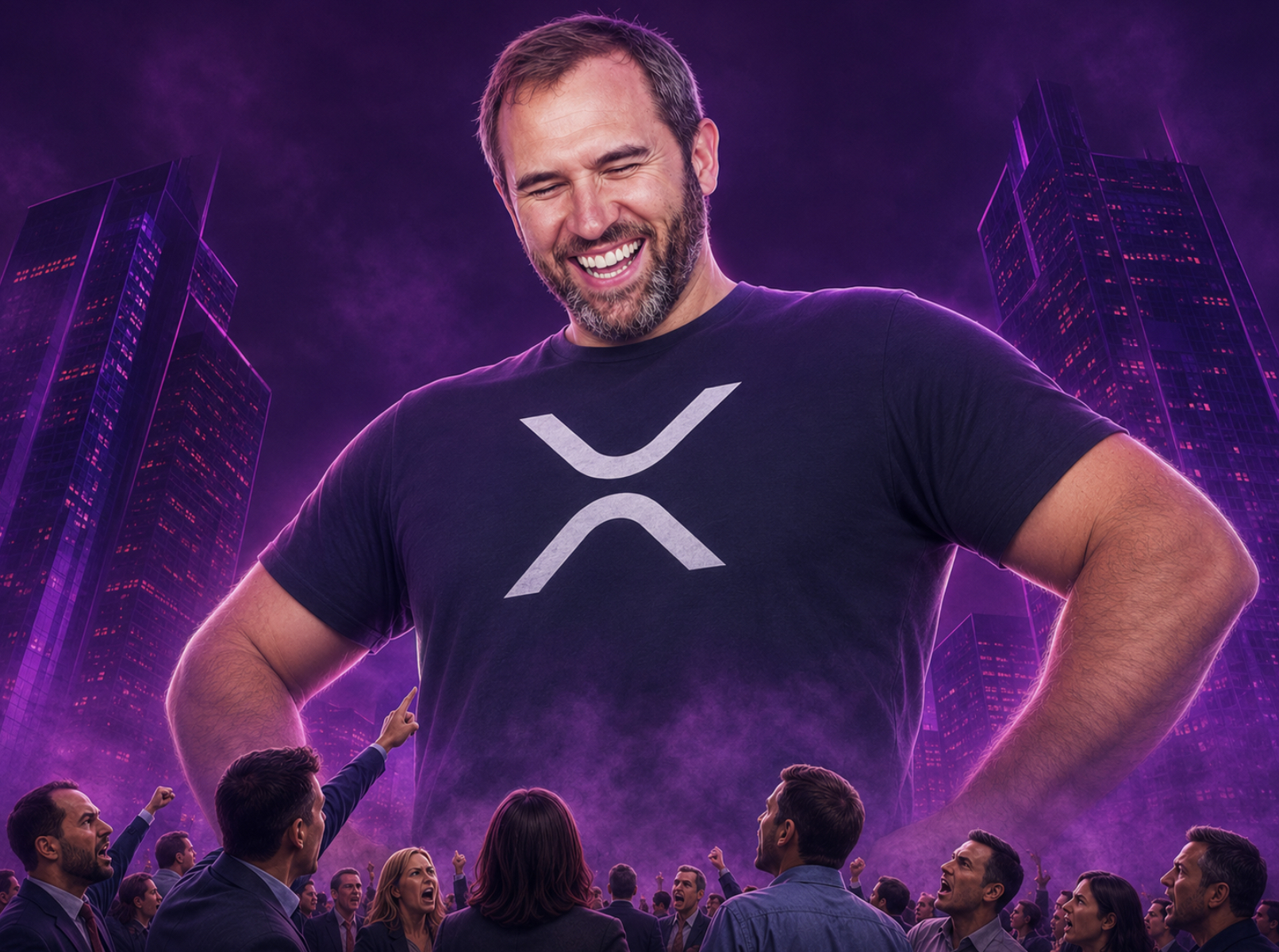
    The XRP community has reacted with immediate hostility to the announcement of Ripple Swell 2026, with retail holders flooding the event’s reply threads just hours after the news broke. The prevailing sentiment was not excitement over the 1,500 expected attendees or the integration of the XRPL Apex agenda, but rather anger that Ripple’s premier institutional event appears to be prioritizing its stablecoin, RLUSD, while the price of XRP stagnates.

    “FUUUUUCK YOU. replaced XRP with your fucking stable coin your entire funding fan base will have a target on your heads,” one user exclaimed, encapsulating the widespread frustration.

    This anger is specifically directed at Ripple’s USD-pegged stablecoin, which community members believe is consuming valuable conference attention that should be dedicated to XRP. The language used by community members ranged from sharp criticism to outright fury, with some even calling out Ripple’s leadership by name, including CEO Brad Garlinghouse.

    The underlying accusation is clear: Ripple is building a regulated institutional business around RLUSD while XRP’s price remains stagnant, leaving long-term holders disappointed.

    Swell 2026: A Combined Event with a Controversial Agenda

    Swell 2026 is scheduled to take place from October 27-29 at The Shed in Hudson Yards, New York City. This year marks the first time Ripple will merge its developer-focused XRPL Apex summit into the main Swell conference. The combined event aims to attract over 1,500 attendees, feature more than 75 speakers, and host over 50 sessions across three programmatic stages covering finance, blockchain infrastructure, and digital assets.

    Ripple’s stated agenda themes include payments, tokenization, decentralized finance, AI applications, interoperability, and stablecoins. Notably, RLUSD’s role in enterprise treasury management and cross-border settlement is a prominent feature of the institutional track.

    Ripple CEO Brad Garlinghouse cited the XRP Ledger’s milestone of surpassing 4 billion completed transactions as evidence of the network’s maturity for the institutional audience Ripple is targeting. He framed the upcoming event with deliberate confidence, stating, “I’ve been in crypto long enough to know when a moment is real.”

    While this statement positions Swell 2026 as a significant event for institutional crypto adoption, reflecting Ripple’s ambitions, it offers no specific insights into what this adoption might mean for XRP’s price or holder value.

    Holder Grievances: Stablecoin Over XRP Utility

    The sentiment among XRP holders is far from a fringe reaction. Retail investors have voiced a clear and recurring grievance: Ripple is allocating significant conference prominence to RLUSD and institutional partnerships while XRP’s price continues to underperform relative to the company’s corporate achievements.

    “People are saying Brad is a grifter, using XRP holders as a ponsy scheme to buy other companies. I pray he pays the ultimate price. Lawsuits from XRP holders will bankrupt Ripple and have a negative impact on the Crypto market as a whole. Time will tell..,” one comment read, reflecting the deep-seated anger.

    The tone in many replies was openly hostile toward Garlinghouse and the Ripple leadership team, with holders describing themselves as investors who feel systematically sidelined.

    The issue of token burns has also re-emerged as a focal point. A segment of the XRP community is advocating for supply reduction as a means to directly influence price, a demand that Ripple has consistently declined to address. This refusal, coupled with a conference agenda that appears to prioritize stablecoins and tokenization over XRP utility, is being interpreted by holders as a clear indication of Ripple’s true priorities.

    Such intense community sentiment represents a legitimate market signal. When the XRP community, historically one of the most vocal and coordinated retail bases in the cryptocurrency space, publicly turns against a Ripple event, it can significantly impact social volume metrics, potentially suppressing short-term buying pressure and amplifying sell-side momentum.

  • XRP’s RSI at Critical 50 Level: What’s Next for Ripple?

    XRP’s RSI at Critical 50 Level: What’s Next for Ripple?

    A prominent cryptocurrency analyst has identified a critical technical indicator for XRP, suggesting its two-month Relative Strength Index (RSI) has reached a pivotal 50 mark. This level, according to the analyst, serves as a dividing line between a potential continuation of a broader market downturn and the commencement of a new expansionary phase for the digital asset.

    XRP is currently trading around $1.12, reflecting a nearly 5% decline over the past 24 hours and an approximately 18% drop in the last month.

    EGRAG CRYPTO, in a June 19 post on X, outlined a recurring pattern observed in XRP’s longer-term charts: a significant surge, followed by a cooling period, a reset, and ultimately, an expansion. The analyst noted that XRP’s two-month RSI is now positioned precisely at the 50 threshold, which he characterizes as a “battlefield level” rather than a definitive signal for either direction.

    His reasoning suggests that maintaining a position above 50 indicates an attempt by momentum to stabilize. Conversely, a decisive drop below this level could pave the way for a deeper correction, potentially targeting the 43.66 RSI zone.

    EGRAG CRYPTO believes that a recovery and sustained hold above the 52.85 to 55.45 range would signal a repair in macro momentum. From that point, he identifies the 80 RSI as the level where a more aggressive upward trajectory could come into play.

    “The 2-month RSI does not speak often. But when it does, it speaks MACRO,” the analyst stated.

    Complementing this RSI analysis, EGRAG CRYPTO also pointed to XRP’s two-month chart, which he believes is forming an ascending triangle with an A-B-C-D-E structure. He assesses that the initial four waves are complete, and the token may now be navigating the final “E” wave before attempting a breakout.

    However, the analyst cautioned that his price targets remain contingent on several factors. XRP must first establish rising support, reclaim its 7-week moving average, and overcome resistance between $2.00 and $2.10. Only then would broader Fibonacci-based targets, ranging from $9.50 to an “extreme cycle extension” near $100, become relevant.

    This outlook aligns with a previous analysis by EGRAG CRYPTO, where he mapped out three historical pump scenarios for XRP based on a larger triangle pattern. In that assessment, the conservative case projected a price range of $6.50 to $9.27, a “balanced” cycle case around $13, and an extreme case near $60, all modeled on XRP’s initial major cycle movement.

    The broader market context for XRP has been challenging. The asset has fallen below the $1.20 support level following Federal Reserve Chair Kevin Warsh’s first FOMC meeting and press conference. Some analysts have warned that a rejection at the $1.20 to $1.21 resistance could push the sixth-largest cryptocurrency towards the $1.00 mark.

    On-chain activity has also shown a slowdown, with active addresses decreasing by nearly 50% in the past two weeks, according to analyst Ali Martinez. Furthermore, over the last five days, large holders have divested more than 30 million XRP, although they still collectively control nearly 70% of the asset’s total supply.

    Despite these headwinds, a positive development has been the performance of spot XRP Exchange-Traded Funds (ETFs). These products have continued to attract inflows even as Bitcoin and Ethereum funds experienced outflows. Data from SoSoValue indicates that in the week leading up to June 18, net inflows for XRP ETFs reached $10.66 million, contrasting with the $226 million bled by BTC ETFs and the $10.05 million lost by ETH-tracking funds during the same period.

  • Zuckerberg’s Meta AI Forecasts Massive XRP Surge by 2026

    Zuckerberg’s Meta AI Forecasts Massive XRP Surge by 2026

    Meta AI Forecasts Significant XRP Price Surge by 2026, Citing Key Catalysts

    Meta AI’s latest price prediction for XRP presents a surprisingly resilient downside scenario, even as its bullish outlook targets substantial gains by the end of 2026. The artificial intelligence model suggests that XRP possesses inherent structural support, bolstered by a dedicated holder base and legal precedent, which shields it from the severe downturns often seen in other assets during bear markets.

    This observation, embedded within a bearish forecast, underscores the enduring impact of the Ripple-SEC lawsuit resolution on XRP’s valuation models, more than a year after the case concluded.

    Bullish Outlook Targets $3.50 to $5.00

    The optimistic scenario projected by Meta AI anticipates XRP climbing from its current $1.12 level to between $3.50 and $5.00 by the close of 2026. This ambitious trajectory is underpinned by three primary catalysts.

    The foundational element is regulatory clarity stemming from the Ripple-SEC case, which is expected to pave the way for increased institutional adoption in the United States and relistings on major exchanges. However, the AI model emphasizes two additional factors that lend greater substance to this bullish case.

    Utility Dominance and CBDC Partnerships

    The first of these is the projected dominance of XRP’s utility, driven by increasing volumes on RippleNet’s On-Demand Liquidity (ODL) service and strategic partnerships with Central Bank Digital Currencies (CBDCs). This is expected to accelerate real-world cross-border settlement capabilities, positioning XRP specifically as a bridge asset for tokenized foreign exchange. This claim is considered more focused and defensible than broader cryptocurrency adoption narratives.

    Spot XRP ETF and Post-Halving Liquidity

    The third catalyst involves the potential approval of a spot XRP Exchange-Traded Fund (ETF), coupled with the liquidity influx expected after the Bitcoin halving event. Meta AI frames this combination as a potential mirror of the 2021 altcoin rally, a period characterized by aggressive capital rotation into assets perceived to have significant growth potential.

    When these three catalysts converge, Meta AI envisions a path not only for XRP to reclaim its previous all-time high but to surpass it, potentially reaching new peaks.

    Bearish Case Suggests Stagnation, Not Collapse

    Despite the bullish projections, the bearish scenario outlined by Meta AI is notably constrained. Should macroeconomic liquidity tighten, CBDCs bypass public ledgers entirely instead of partnering with them, or Ripple’s adoption falter, XRP could face stagnation. In such a scenario, the AI predicts XRP might trade within a volatile range of $0.70 to $1.00.

    Crucially, this is characterized as a stagnation scenario rather than a collapse. The structural support identified by Meta AI is seen as actively preventing a more significant decline, maintaining a floor for the asset.

    Technical Analysis Shows Range-Bound Trading

    Currently trading at $1.12727, XRP’s daily chart indicates its position at the lower boundary of a range that has held firm for nearly five months without a substantial breakdown. The sharp decline from a peak of $3.65 last July was followed not by a continuation of the crash, but by a prolonged, choppy consolidation between approximately $1.20 and $1.55, a range that has contained the price since February.

    The June low, near $1.05, represented the first significant test of this lower range boundary. While the subsequent bounce has been modest, it has held above this level, rather than breaking through.

    This technical structure is directly relevant to Meta AI’s analysis. The $0.70 to $1.00 bearish zone lies considerably below the current trading range, implying that for this bearish scenario to materialize, XRP would need to breach a support level it has not seriously tested in approximately six months.

    The more immediate technical question revolves around whether the $1.20 level will continue to act as resistance, as it has on every approach since February, or if the current bounce will successfully clear this hurdle, opening the door to the $1.55 region that has capped the range from above.

    The Relative Strength Index (RSI) currently stands at 38.56, with its signal line at 37.17, a narrow gap of just under 1.5 points. These readings are among the tightest and most neutral observed within this prediction series, indicating flat momentum that neither confirms a bottom nor signals further weakness. This aligns with a chart that has exhibited sideways movement for months.

    Catalysts Yet to Impact Price Action

    The analysis concludes that none of the anticipated catalysts—regulatory clarity, ETF approval, or ODL volume growth—have yet exerted sufficient influence on XRP’s price to break its current range in either direction. Consequently, both the $3.50 to $5.00 bullish forecast and the $0.70 to $1.00 bearish outlook remain contingent on future developments rather than existing momentum.

    As market leaders like Bitcoin, Ethereum, and XRP experience stalled price action under resistance, the catalysts required for the next upward movement, such as macroeconomic relief and sustained institutional inflows, have yet to materialize. This waiting period highlights an reliance on external factors beyond immediate control.

    Exploring Early-Stage Infrastructure Plays

    In contrast to established assets, early-stage infrastructure projects operate in a different investment landscape where upside potential is not yet priced in. A relatively small capital injection can significantly impact their valuation, presenting an asymmetry that attracts certain investors.

    LiquidChain is developing a solution designed to address the fragmentation of liquidity across major blockchains like Bitcoin, Ethereum, and Solana. Currently, moving assets between these networks is costly, time-consuming, and detrimental to user experience. LiquidChain aims to unify these disparate liquidity pools into a single execution layer, allowing developers to deploy applications once and users to interact across ecosystems seamlessly.

    The LiquidChain presale is currently priced at $0.01454, with over $700,000 raised, representing an early-stage investment opportunity.

    Acknowledging Risks and Potential

    The inherent risks associated with early-stage projects, including post-launch adoption, liquidity depth, and execution capabilities, are acknowledged. However, the question remains whether the potential rewards justify these uncertainties.

    While established assets offer a more predictable path to a visible ceiling, LiquidChain presents an opportunity to participate in the foundational stages of a nascent ecosystem.

  • Bits Recap: Pi Network, Dogecoin, and June 19 Highlights

    Bits Recap: Pi Network, Dogecoin, and June 19 Highlights

    Pi Network Pushes Ecosystem Growth Amidst Protocol Upgrades

    The often-discussed cryptocurrency project Pi Network is demonstrating significant activity, with its development team rolling out substantial updates and enhancements to its ecosystem.

    Dogecoin and Cardano Face Market Pressures

    Meanwhile, the original meme coin, Dogecoin (DOGE), has experienced a considerable downturn recently, and several indicators suggest this sell-off could persist in the immediate future. Cardano’s native token, ADA, is also struggling, with some analysts predicting further price declines.

    Pi Network’s Protocol and Ecosystem Expansion

    At the beginning of June, the Pi Network Core Team announced the successful implementation of protocol v24. This upgrade primarily focused on bolstering the underlying infrastructure that supports node operations and mainnet activity. The next major objective, v25, was initially slated for completion by June 18. However, the team recently indicated that additional time might be required, suggesting a potential delay.

    Beyond infrastructure, Pi Network is actively encouraging its users, referred to as “Pioneers,” to contribute to ecosystem expansion. This involves inviting developers to integrate their AI-driven applications into the project’s distribution network via Pi App Studio. This initiative is set to continue until Pi2Day, a community-recognized celebration observed annually on June 28.

    The Core Team also provided an update on the testing phase of the Pi Launchpad, which is currently utilizing a new test token named SLICE. The objective of this development is to familiarize users with novel ecosystem token mechanics and to educate the community on engaging with decentralized finance (DeFi) mechanisms.

    “The updated participation flow is simpler and clearer,” a statement from the team explained. “Participation is now centered around the commitment amount, which has a direct effect on token acquisition. A Pioneer chooses how much Test-Pi they want to commit, and the Launchpad automatically calculates the related ‘fair-access hold,’ and then shows the commitment amount, hold amount, and total together before confirmation.”

    More recently, Pi Network announced that its Ecosystem Directory Staking feature has received a “new look and improved user experience.” The team elaborated that by staking PI coins, Pioneers can collectively support applications and services. Simultaneously, developers and creators can leverage this feature to promote their products and access Pi’s community of over 60 million engaged users to attract new customers.

    Dogecoin’s Downturn and Whale Activity

    The largest meme coin by market capitalization has been impacted by the prolonged bear market, with its price falling 52% over the past year to $0.08. Furthermore, recent activity among large holders, or “whales,” suggests that bullish sentiment may face continued challenges in the short term.

    According to reports, approximately 420 million DOGE have been moved by these market participants in the last seven days, and their total holdings have decreased to nearly 35 billion coins.

    While this does not definitively signal an imminent collapse, it indicates that these investors may be positioning themselves for further declines. Their actions are closely monitored by retail traders, who could potentially follow suit and amplify any sell-off.

    Cardano Faces Significant Price Drops

    Cardano’s native token has experienced an even steeper decline than DOGE. Its valuation has fallen to around $0.16, with its market capitalization dropping below $6 billion. The asset is at risk of falling out of the top 20 cryptocurrencies by market cap.

    Worrying commentary from Cardano’s co-founder, Charles Hoskinson, has reportedly fueled further unease within the community, and some prominent analysts believe conditions could deteriorate further.

    For instance, analyst Ali Martinez noted that ADA has been forming a bearish flag pattern since the beginning of June and is now breaking out of this structure. Martinez suggested that “the odds have significantly increased for a bigger price correction towards $0.13.”

  • XRP Dips 4% on 30M Whale Sell-Off

    XRP Dips 4% on 30M Whale Sell-Off

    XRP Price Tumbles 4% as Whale Distribution Undermines Rally

    XRP has experienced a 4% decline over the last 24 hours, following on-chain data that revealed a coordinated wave of distribution by large holders, effectively erasing a multi-day rally in less than 72 hours. The cryptocurrency briefly reached $1.29 before encountering significant selling pressure, with the behavior of large-wallet investors now dictating the price action.

    According to available data, wallets holding at least 1 million XRP offloaded over 30 million tokens within a five-day period. Santiment data indicates that the combined holdings of these large addresses decreased from 3.82 billion to 3.77 billion XRP.

    This influx of supply directly hit spot exchanges, absorbing the buying pressure that had emerged from a base of $1.14 on June 14. The decline was further exacerbated by a cascade of leveraged long liquidations in derivatives markets. Adding to the negative sentiment, signals from new Federal Reserve Chair Kevin Warsh indicated hawkish monetary policy, dampening expectations for interest rate cuts and impacting risk assets globally.

    The broader macroeconomic headwinds are unlikely to dissipate quickly. The question remains whether XRP’s spot ETF inflows, which totaled $5.30 million on June 16 and $2.55 million on June 18, will be sufficient to counteract ongoing whale selling.

    Current Market Position and Outlook

    XRP is currently consolidating near the $1.12 mark, having relinquished all support levels established during the June rally. The movement from $1.14 to $1.29 and back down represents a complete round trip with no net gains.

    Resistance is now concentrated between $1.20 and $1.25, a range where profit-taking ultimately overwhelmed buying interest. Below the current price, the next significant support zone is identified near $1.05, which analysts have flagged as a critical battleground.

    A daily close below $1.10 would make a test of this level highly probable. Momentum indicators remain bearish, with the price trading below short-term moving averages and trading volume on down days surpassing that of recovery sessions.

    Should whale selling subside and ETF inflows accelerate, XRP could potentially reclaim the $1.20 level within the week and set the stage for a retest of its recent highs. The ETF inflow data offers a tangible counterpoint to the bearish sentiment.

    Trader Rotation and Emerging Opportunities

    When a mid-cap cryptocurrency like XRP gives back an entire rally within three days without repairing structural damage, active traders often begin to seek out asymmetric opportunities elsewhere. This rotation is a tangible phenomenon, and it tends to favor early-stage projects where the entry price has not already experienced a significant haircut before the week concludes.

    Maxi Doge ($MAXI) is currently attracting attention within the meme token segment. Built on the Ethereum blockchain, the project positions itself around a high-conviction trading culture, a 1000x leverage mentality, holder-exclusive trading competitions with leaderboard rewards, and a Maxi Fund treasury dedicated to liquidity management and partnerships.

    The presale has raised $4.8 million, with the current token price at $0.0002824. Participants can benefit from dynamic staking APY. The community competition structure distinguishes it from purely speculative meme coins that lack retention mechanisms.

    Traders considering an investment in Maxi Doge are advised to conduct thorough research.