Blog

  • UK Sanctions Crypto Firms Linked to Russia’s War Effort

    UK Sanctions Crypto Firms Linked to Russia’s War Effort

    The UK has imposed sanctions on 18 cryptocurrency platforms, banks, and financial networks accused of enabling the Kremlin-backed “A7” payment network to circumvent international economic restrictions.

    Sanctions Target $90 Billion in Transactions

    The sanctioned entities are alleged to have processed over $90 billion in 2025 to support Russia’s invasion of Ukraine.

    A report by TRM Labs identified several targeted exchanges, including Huobi, Exmo Exchange, Bitpapa, and Rapira Group. Huobi alone reportedly facilitated over $4.9 billion in on-chain transactions to UK-sanctioned entities and the A7 network since 2021. Furthermore, $1.13 billion of these transactions occurred in the 14 months following the March 2025 shutdown of the Russian crypto exchange Garantex, with $838 million specifically directed to the A7 network last year.

    Crypto Activity Shifted After Garantex Closure

    TRM’s findings indicate that Russian-linked crypto activity did not diminish after the closure of Garantex. Instead, it migrated to successor exchanges and payment platforms such as Rapira, Aifory Pro, Grinex.io, and ABCex. Exmo Exchange is reported to have directly transacted over $19.5 million with sanctioned entities like Garantex and Chatex, while BitPapa also transferred millions to these actors.

    The report highlights that Rapira moved over $543 million, including $375.6 million tied to Grinex.io. Aifory Pro transferred over $189 million, with $175.2 million attributed to ABCex. ABCex itself recorded $355 million in transactions across the restricted firms, sending $175.2 million to Aifory Pro, $133.4 million to Garantex, and $38.1 million to Rapira.

    UK Adds Entities to Consolidated List

    The UK government has added all 18 sanctioned entities to the UK Consolidated List. Businesses operating in the country are now required to freeze any assets connected to these entities and block transactions involving the listed companies.

    “If the Kremlin thinks it can evade our sanctions by hiding behind crypto networks and shadow financial systems, it is gravely mistaken,” stated Foreign Secretary Yvette Cooper. She added that the restrictions aim to cut off the financial flows supporting Putin’s war in Ukraine.

    Sanctions Extend to Individuals

    The new measures also target individuals linked to the A7 network. The government’s report indicates that the group is backed by a Kyrgyz bank suspected of processing payments within the system, along with a major global crypto exchange believed to have transferred over $1.5 billion back into Kremlin-linked financial channels.

    Illicit Crypto Activity Increased

    A separate analysis by TRM Labs revealed a sharp increase in illicit crypto activity last year, with most of it related to Russian-linked trades. The A7 network’s A7A5 token contributed $72 billion worth of trades, while the group’s own wallets accounted for another $39 billion. Most of this money reportedly flowed through Garantex and Grinex.

  • XRP Outperforms JPMorgan and Coinbase in VanEck Ranking

    XRP Outperforms JPMorgan and Coinbase in VanEck Ranking

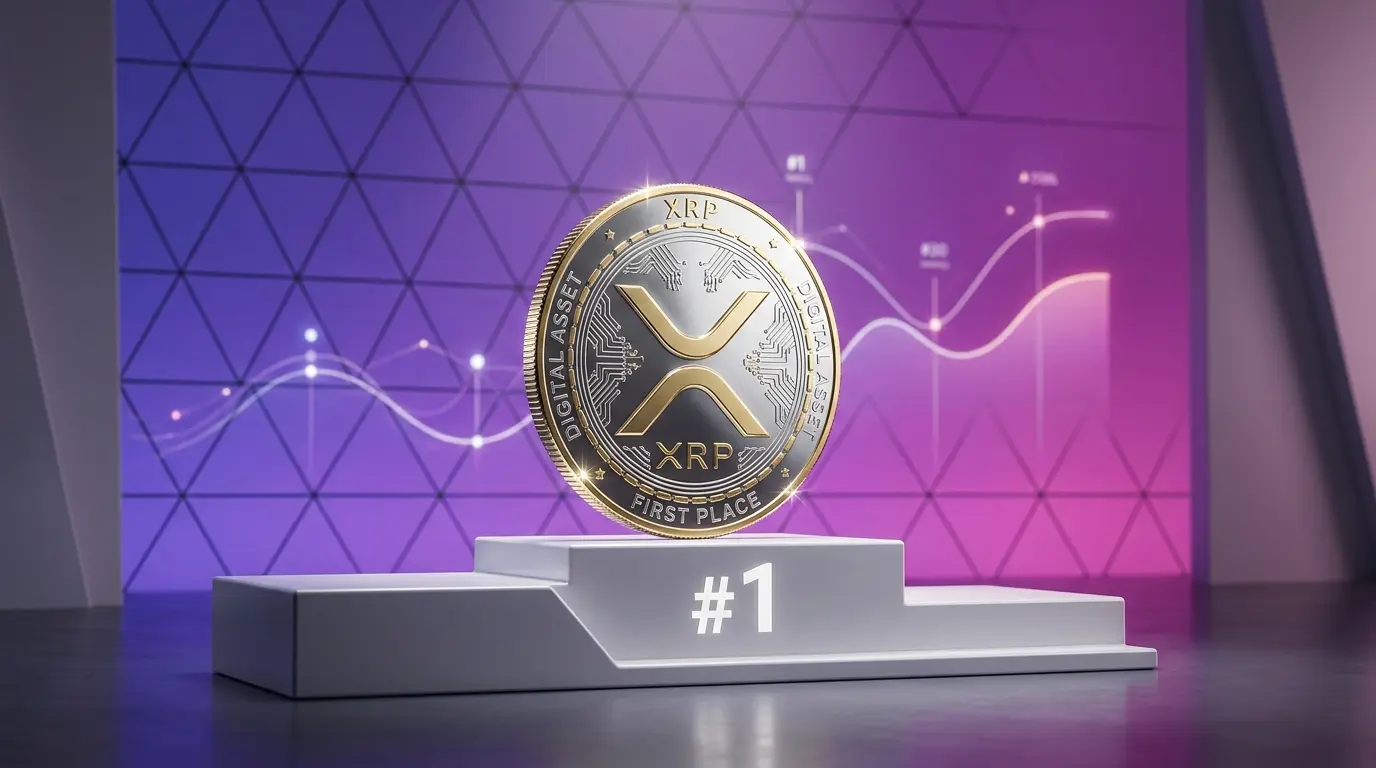
    VanEck has ranked the XRP Ledger (XRPL) as the leading corporate blockchain, placing it ahead of JPMorgan’s Kinexys, Coinbase’s Base, and Canton Network.

    XRPL’s Strengths

    The VanEck assessment highlights XRPL’s implied market capitalization of approximately $88 billion, alongside $47 million in total value locked (TVL) in decentralized finance (DeFi), indicating early but tangible on-chain liquidity.

    Competitive Landscape

    The ranking is notable given the competition it surpasses. Kinexys (formerly JPMorgan Onyx) is a well-established bank-led blockchain initiative, processing tokenized deposits and interbank settlements at an institutional scale.

    XRP Price Outlook

    XRP’s price prediction remains under pressure following the recent cryptocurrency market downturn, currently stabilizing around $1.33 after briefly falling below $1.30. The chart structure suggests a bearish trend, with lower highs continuing to dominate short-term price action.

    Key support is established around $1.30, with $1.20 as the next potential downside target if selling pressure increases. On the upside, XRP needs to reclaim $1.50 before bulls can realistically target the $2 level again.

    The possibility of XRP revisiting $3 hinges on several factors. In a bullish scenario, renewed ETF momentum, institutional inflows, and a broader crypto market recovery could push XRP towards $2 initially, with $3 becoming achievable if Bitcoin experiences strong momentum.

    Currently, XRP still has a path to $3, but a significant catalyst is needed before that becomes a realistic prospect.

    Market Dynamics

    While XRP’s institutional validation is compelling, its $88 billion implied market cap limits the potential for substantial gains for new entrants. This dynamic is driving some active traders toward infrastructure projects still in the price-discovery phase.

    The core question is not whether XRP is legitimate, as it clearly is. Instead, the focus is on identifying where the next significant gains will come from.

    Bitcoin Hyper

    Bitcoin Hyper has raised $32 million in a presale, with the current price of $0.0136 per $HYPER token. The project’s core proposition is unique: it is the first Bitcoin Layer 2 integrating the Solana Virtual Machine (SVM), providing sub-second finality and low-cost smart contract execution, while leveraging Bitcoin’s security.

    It aims to address Bitcoin’s limitations: slow transaction throughput, high fees, and the lack of native programmability. A Decentralized Canonical Bridge facilitates BTC transfers across the Layer 2, and staking offers high annual percentage yields (APY) for early participants.

  • DxSale Exploit Hits Liquidity Providers for $7.3 Million

    DxSale Exploit Hits Liquidity Providers for $7.3 Million

    More than 1,400 liquidity pools associated with outdated DxSale contracts on BNB Chain were exploited in a $7.3 million attack, according to blockchain security firms on May 29.

    Growing Threat

    The attack contributes to a rising number of DeFi breaches this month, prompting security experts to caution that older smart contracts and inadequate access controls are leaving protocols vulnerable.

    Attack Details

    According to the on-chain security account PeckShieldAlert, a user identified as “Tahax” first discovered the exploit. Their report indicates that attackers targeted at least 1,400 old DxSale liquidity pool contracts on BNB Chain, extracting approximately $7.3 million worth of cryptocurrency. The stolen funds were then routed through AnySwap in an attempt to conceal the transaction trail.

    PeckShield further noted that an address identified as “0xC457…FA69” transferred 2,958 BNB from the hack, valued at $1.87 million, into two primary wallets. These wallets subsequently moved the funds through several deposit addresses on Binance.

    DxSale is a launchpad platform that allows crypto projects to create tokens and liquidity pools without developing their own infrastructure. The platform was popular about five years ago, with many projects launching tokens on BNB Chain locking their liquidity pools with the protocol.

    According to Tahax, the locker still held liquidity pools from projects that had been untouched for years, with founders and holders believing they were secure. However, nearly nine months ago, the DxSale deployer transferred ownership of the locker to a new wallet without any public announcement or migration notice. The on-chain investigator claims that the locker contract was unverified and likely contained a backdoor, which the attacker exploited.

    Two days prior, 0xC457…FA69, a new wallet funded from Bybit and possibly routed through AnySwap, reportedly took ownership of the locker and, within hours, began draining the liquidity pools.

    DxSale has yet to release a statement regarding the exploit.

    Broader Context

    The DxSale hack is part of a larger trend. The crypto sector lost at least $650 million in April due to similar incidents. May has also seen its share of attacks, including one last week where an individual stole over $11 million from the Verus bridge by exploiting a flaw in its payment verification process. Security researchers reported that the attacker submitted a small transaction that passed verification while still unlocking large withdrawals from the bridge’s reserves.

    Earlier in the month, liquidity provider TrustedVolumes was also hit for approximately $5.9 million after a hacker exploited weaknesses in its custom settlement system. Analysts pointed out that the exploit succeeded because the protocol checked authorization against one address while pulling funds from another.

    THORChain was also affected, with on-chain sleuth ZachXBT stating it may have lost over $10 million, causing its RUNE token to plummet 15% within minutes.

    This ongoing series of exploits has prompted a reaction, with OpenZeppelin co-founder Manuel Aráoz declaring “all of DeFi unsafe,” arguing that AI-assisted attackers are discovering vulnerabilities faster than security teams can fix them.

  • Gemini AI Predicts Significant XRP Price Surge by 2026

    Gemini AI Predicts Significant XRP Price Surge by 2026

    Gemini AI Predicts Potential XRP Breakout

    Google’s Gemini AI is forecasting a potential breakout for XRP within the next 90 days, with a target price between $2.25 and $2.50, up from its current price of $1.32. The AI’s bullish outlook is based on technical factors, specifically the potential for a short squeeze.

    Short Squeeze as a Catalyst

    Gemini points to a $2.26 billion short liquidation cluster just above current price levels as a key driver. This represents significant leveraged positions that could be forced to buy back XRP if the price rises above a certain threshold, triggering a cascade effect and accelerating momentum. The AI suggests that this market structure could be self-reinforcing once activated.

    Positive Indicators for XRP

    Beyond the short squeeze potential, Gemini highlights the growing volume of tokenized Real-World Assets (RWA) on the XRP Ledger, which has increased by 78% year-to-date, outperforming Ethereum in this specific area. This is significant because RWA has become a prominent narrative within the institutional investment landscape, and XRP appears to be gaining ground in the infrastructure that supports it. Furthermore, sustained inflows into spot ETFs are building institutional demand, which Gemini believes will provide fuel for the potential short squeeze.

    Bearish Scenarios and Market Risks

    The AI acknowledges potential downside risks, primarily related to macroeconomic factors. High oil prices and persistent inflation, which could lead to prolonged elevated interest rates, could negatively impact risk assets, including XRP. Additionally, geopolitical instability could trigger a “risk-off” environment, which has historically hurt the altcoin market. In such a scenario, Gemini suggests a possible drop to $1.20 before any recovery.

    Technical Analysis and Price History

    XRP is currently trading at $1.319, and the weekly chart reveals significant price volatility. The price surged from $0.50 in late 2024 to $3.70 in January 2025, driven by the resolution of the SEC lawsuit and the subsequent institutional access narrative. However, the price has since been in a descending channel, declining from $3.70 to a recent low of $1.20. The $1.20 level is crucial, as it represents the pre-election breakout zone from November 2024. A weekly close below this level could indicate that the market is pricing out the post-SEC settlement premium.

    Currently, XRP is consolidating within a range between $1.20 and $1.60, which has been forming over the past three months. Gemini’s short squeeze thesis is essentially a bet on the range breaking upward.

    Market Dynamics and Emerging Opportunities

    The article suggests that the market is at a point where capital may begin to shift from established assets like Bitcoin and Ethereum to new opportunities. The next wave of growth often focuses on projects addressing industry-wide problems.

    LiquidChain: A Potential Solution

    The article highlights LiquidChain, a project aiming to solve the issue of cross-chain liquidity. LiquidChain is building a layer that connects the Bitcoin, Ethereum, and Solana ecosystems, allowing for seamless interaction across all three. The presale is currently priced at $0.01454, with just over $700,000 raised.

    Risk Assessment

    The article acknowledges the inherent risks associated with early-stage projects. While adoption, liquidity, and execution are still uncertain, the potential for high returns is significant. The projects that generate substantial returns are often those that solve a real problem before the broader market recognizes it. LiquidChain is positioned within this window of opportunity.

  • XRP Whale-Retail Spread Hits Two-Year Low

    XRP Whale-Retail Spread Hits Two-Year Low

    XRP Whale vs. Retail Spread Hits a 2-Year Low

    XRP is exhibiting an intriguing on-chain signal as its price struggles to convincingly recover above $1.3. A closely watched on-chain metric, which tracks the behavioral gap between XRP’s largest holders and its retail base, has plummeted to its lowest level in over two years.

    Data Analysis

    The data, sourced from the blockchain analytics platform CryptoQuant, indicates a structural shift in how XRP is flowing out of Binance. The Binance Whale vs. Retail Spread for XRP has fallen to 88.3%, its lowest point in more than two years. The spread between whale and retail outflows on Binance has reached its lowest level since May 2024, marking the second time this level has been tested within the same month.

    The Binance Whale vs. Retail Spread monitors the difference between large XRP outflows and smaller retail-sized outflows on Binance. According to CryptoQuant’s model, whale activity is defined as XRP outflow bands exceeding 10,000 XRP, while retail activity refers to smaller outflow bands below 10,000 XRP. A high spread suggests whales are dominating exchange withdrawals, whereas a falling spread indicates the difference between large and small traders is narrowing.

    The current reading is near the bottom of the chart’s two-year range, representing a notable change in XRP’s market structure. The reading of 88.3% indicates that whales still represent the larger force in Binance XRP outflows. However, the chart reveals a clear decline from the 92% to 94% range observed during late 2025 and early 2026.

    Potential Implications

    A falling whale-retail spread can be interpreted in two ways. The first interpretation suggests that whale dominance is diminishing, implying that large holders may no longer be aggressively removing XRP from Binance. This could be less bullish, especially given that the XRP price has continued to decline since its peak of $3.65 in July 2025.

    The second interpretation suggests that retail participation is increasing simultaneously with a decrease in whale activity. As noted by the XRP commentator account BankXRP on X, this low reading has historically preceded significant price movements. This trend is evident in the chart, where similar downtrends in the whale-retail spread on Binance coincided with the start of rallies in January and July 2025.

    Exchange reserve data shows that the XRP supply on major trading platforms has been shrinking throughout the first half of 2026, and the 30-day moving average of whale XRP transfers to Binance has fallen to levels not seen since 2021. A reduced supply on exchanges could lessen immediate sell-side pressure, potentially contributing to stronger bullish momentum when demand increases.

  • XRP Gains 2% Amid ETF Inflows

    XRP Gains 2% Amid ETF Inflows

    Ripple’s XRP has risen approximately 2% in the last 24 hours, approaching $1.34.

    Institutional Demand Drives Recovery

    This increase coincides with sustained institutional interest in spot XRP exchange-traded funds (ETFs), contrasting with the overall market downturn.

    According to data from SoSoValue, spot XRP ETFs recorded $11.88 million in daily net inflows. This brings the cumulative total to $1.42 billion, or $1.12 billion in net assets. This figure represents 1.37% of XRP’s total market capitalization.

    This follows a positive trend from the previous day, when these products saw approximately $1.77 million in inflows despite the broader cryptocurrency market’s decline.

    While the inflows may not be substantial, they suggest a temporary trend of institutional accumulation of XRP amid market volatility.

    Technical Outlook Remains Cautious

    The continued inflows provide a positive narrative for bulls, but ETF demand alone has not been sufficient to fully reverse the broader downtrend in XRP’s price.

    From a technical standpoint, XRP’s 2% daily increase is encouraging, but it does not signal a confirmed trend reversal. The token recently reached its lowest level since March, with the $1.20 region serving as a key support level.

    The first significant upside level to watch is around $1.4. As previously reported, XRP’s 100-day moving average is near that zone, making it a key resistance level for buyers to overcome. A successful breakout above this level could lead to a move towards $1.5-$1.6 and improve short-term sentiment.

    On the downside, a decisive break below $1.20 would be a bearish signal, potentially leading to a deeper correction. This is especially true if Bitcoin and the broader crypto market resume their decline.

    For now, XRP’s price outlook remains cautious.

  • Bitcoin Stabilizes Near $73,000, Stellar Surges 25%.

    Bitcoin Stabilizes Near $73,000, Stellar Surges 25%.

    The cryptocurrency market has stabilized somewhat in the last 24 hours following a significant correction that drove Bitcoin and most major altcoins downward earlier in the week.

    Stellar’s Surge

    Stellar (XLM) stands out among the top altcoins, continuing its substantial daily gains while the broader market remains under pressure.

    Bitcoin’s Recovery

    Bitcoin’s recent weekly correction saw the asset fall below $73,000 amid renewed market pressure. The primary cryptocurrency has since recovered, currently trading at $73,400.

    Intraday volatility has been present, with prices fluctuating between $72,200 and $74,200 before settling at current levels as the weekend begins.

    Bitcoin’s market capitalization remains above $1.47 billion, and its dominance over altcoins is largely unchanged, suggesting that altcoins have not capitalized on Bitcoin’s weakness. This weakness may have been influenced by declining ETF flows, which have seen record outflows in recent days.

    The $73,000 level is now a key area to watch. A decisive break below this level could trigger a further decline, potentially to $70,000, while a move above $74,000 might alleviate some short-term pressure.

    Altcoin Performance

    The altcoin market presents a mixed picture, with most large-cap assets experiencing modest movements rather than sharp recoveries in the last 24 hours.

    Ethereum (ETH) is trading near $2,000, while SOL, XRP, and several other major cryptocurrencies show limited changes. BNB has performed best among the top altcoins, rising by over 5% on the day.

    XRP is also slightly in the green, while ETH and SOL remain relatively flat compared to their levels from 24 hours ago.

    Stellar (XLM), however, is in a different category. The altcoin has surged by approximately 25% in the last day and is trading near $0.20, making it one of the strongest performers among mid-cap cryptocurrencies.

    This surge follows the announcement by DTCC that its tokenization service will connect with the Stellar public blockchain. This move is expected to support tokenized DTC-custodied assets, including stocks, ETFs, treasuries, and corporate bonds, with availability targeted for the first half of 2027.

    Other notable performers for the day include LAB, up 37.5%; Algorand’s ALGO, up 9.5%; and XDC Network (XDC), up 9%.

  • Crypto Trade Yielded 638% APY Last Month

    Crypto Trade Yielded 638% APY Last Month

    Hyperliquid Vaults Deliver Impressive Returns

    Hyperliquid, known for its on-chain perpetuals exchange, also offers vaults where users can deposit funds and follow specific trading strategies. One of these vaults recently achieved a remarkable 638% APY last month, attracting significant attention.

    Understanding Hyperliquid Vaults

    Hyperliquid vaults are a notable feature of the decentralized derivatives exchange, enabling traders to participate in shared strategies. These vaults function like pooled trading accounts. A vault leader executes a specific strategy, and other users can deposit funds to gain exposure to the results. Profits are shared among depositors, as are losses.

    What distinguishes these vaults is their direct integration with HyperCore. This allows vault strategies to leverage the exchange’s infrastructure, including leverage, liquidations, perpetuals, and high-throughput execution. While offering potentially high returns for passive investors, vaults also carry significant risk. Returns can fluctuate dramatically, particularly when leverage is used or concentrated directional bets are made.

    Essentially, vaults can be viewed as on-chain copy trading with pooled capital. The strategy is fully transparent, performance is trackable, and users can assess whether the risk profile aligns with their portfolios.

    The “Long HYPE & BTC, Short Garbage” Vault

    One particular vault on Hyperliquid has gained attention after generating a 638% APY over the past month. Named “Long HYPE & BTC, Short Garbage,” the vault currently manages approximately $3.03 million in total value locked.

    The strategy involves a 70% long position in HYPE and a 30% long position in BTC. It also maintains short positions in a basket of at least 10 high-FDV and high-emission coins, with the short side representing about 60% of notional exposure.

    The vault’s performance chart indicates a substantial increase in profit and loss (PnL) over the past 30 days, approaching $1.2 million.

    It’s important to note that this performance should not be interpreted as a low-risk yield. The vault’s success reflects an aggressive, leveraged long-short crypto trade heavily reliant on HYPE’s price performance.

  • Uniswap Price Dips Amid Binance Token Absorption

    Uniswap Price Dips Amid Binance Token Absorption

    Uniswap Faces Downward Pressure Amidst Significant Exchange Inflows

    Uniswap is struggling to regain higher price levels as selling pressure continues to push the price down from levels that briefly offered hope of a sustained recovery. While the weakness is evident, and the direction appears clear, an analysis by CryptoQuant tracking Binance exchange flows has identified a dramatic shift in UNI’s flow dynamics. This shift warrants attention regardless of one’s perspective on the market’s direction.

    Extreme Inflow Acceleration on Binance

    The seven-day average Binance netflow for UNI has turned sharply positive, reaching +145,829 UNI. This represents a 6,019% deviation above the three-month baseline. This is not a moderate increase in exchange deposits, but one of the most extreme inflow accelerations recorded in UNI’s recent on-chain history. This has been concentrated in a period where the price is already declining.

    The scale becomes more pronounced at the individual session level. On May 25, Binance received a single-day inflow spike of 1.8 million UNI. On May 27, this figure exceeded 3.1 million UNI in a single session. In just two days, nearly five million UNI arrived on the world’s largest exchange while the price fell from above $4.20 to around $3.10.

    This inflow surge is not driven by retail activity. Total inflow volume rose 183% above the three-month average, while the average transaction size per inflow jumped 285%. This indicates that larger holders are making deliberate, large-scale decisions to move UNI onto Binance.

    Implications of the Inflow Surge

    The CryptoQuant analysis highlights the supply dynamic. When exchange inflows accelerate while prices decline simultaneously, it suggests that holders are positioning tokens for potential sale rather than moving assets into self-custody for long-term holding. The intent behind these deposits differs from the accumulation behavior seen during constructive market phases. The scale of the current inflow acceleration leaves little doubt about the intentions of the largest UNI holders.

    While Binance has absorbed the bulk of the incoming supply, its USD-denominated reserve has decreased by 4.95% despite the token inflows. The falling price is partially offsetting the volume of tokens arriving, meaning the exchange holds more UNI but less dollar value. This dynamic suggests that supply is arriving faster than the price can stabilize to reflect it.

    Ecosystem Activity Remains Intact

    Network data provides additional context, preventing a purely bearish interpretation. Active addresses are running 3% above the three-month baseline, indicating that Uniswap’s ecosystem activity remains intact despite the price weakness and the exchange inflow surge. The protocol is still being used. The selling pressure is not a reflection of fundamental deterioration.

    The next few sessions will determine the outcome. Traders monitoring this setup should watch whether the deposited UNI converts into aggressive selling or reverses into outflows as buyers absorb the supply before drawing conclusions about UNI’s next directional move.

    Technical Analysis: Price Tests Critical Support

    UNI remains under significant selling pressure, currently trading near $3.02 after losing the short-term support that held throughout most of April and May. The daily chart shows a clear bearish structure, characterized by lower highs and lower lows since the November peak above $10.00. Despite several recovery attempts during the first quarter of 2024, bulls have been unable to reclaim any major resistance level, allowing sellers to maintain control of the broader trend.

    The recent rejection from the $4.00-$4.20 region proved particularly significant. That rally briefly pushed UNI above its short-term moving averages and generated optimism for a larger recovery, but buyers failed to sustain momentum. Since then, the price has declined sharply and broken below the 50-day and 100-day moving averages, which now act as dynamic resistance around the $3.30-$3.50 region.

    Volume has increased during the latest decline, suggesting that the move is supported by active selling. The current area around $3.00 represents a critical support zone, as it marks the lowest levels reached since the February capitulation event. If bulls fail to defend this region, UNI could enter price discovery towards lower support levels. To regain momentum, buyers would first need to reclaim the $3.50 area and establish a higher low structure above it.

  • Coinbase to Offer Crypto Derivatives to US Institutions After CFTC Approval

    Coinbase to Offer Crypto Derivatives to US Institutions After CFTC Approval

    The US Commodity Futures Trading Commission (CFTC) has cleared the way for Coinbase and other CFTC-registered exchanges to offer regulated access to global crypto derivatives markets.

    Coinbase Opens Access to Global Crypto Derivatives

    On Friday, Coinbase announced that its subsidiary, Coinbase Financial Markets (CFM), has become the first US-regulated Futures Commission Merchant (FCM) to provide its domestic clients with access to global crypto derivatives markets. Coinbase explained that crypto derivatives account for approximately 80% of global crypto trading volume, with options, perpetual futures, and other instruments driving the majority of that activity across international venues. However, US customers have not had regulated access to this multi-trillion-dollar market until now. As a result, some institutional clients were required to establish offshore entities to access these markets, incurring additional counterparty exposure and infrastructure costs.

    “Today that changes. Guidance issued by the CFTC positions Coinbase Financial Markets as the first CFTC-regulated FCM to connect US clients to global crypto options and perpetual futures liquidity. US clients will at long last have a fully regulated, compliant solution to access all of crypto’s largest markets,” the company stated.

    According to the announcement, US clients can now access global crypto perpetuals and options on futures without resorting to offshore workarounds through Coinbase Financial Markets, including access to Deribit, which holds over $31 billion in Bitcoin (BTC) options open interest. Coinbase Financial Markets has begun onboarding institutional clients, offering live access to Deribit options. Perpetual futures and additional collateral types are planned, with broader client access, including retail, also in the pipeline.

    CFTC Guidance Paves Regulated Path

    The announcement follows a Friday statement from the CFTC confirming the categorization of certain crypto asset perpetuals as “foreign futures,” as well as a non-action letter regarding FCM transfers of customer crypto assets to foreign brokers as margin. The Market Participants Division (MPD) confirmed in its letter that the described perpetual contracts “may be categorized as foreign futures as defined in Commission Regulation 30.1.” Additionally, the division will not recommend the Commission take enforcement action against CFM for “posting customer-owned digital commodities and payment stablecoins with CFM’s foreign broker affiliate to margin its foreign futures and foreign options positions on CFM’s affiliate foreign board of trade under circumstances where the foreign broker has obtained a right of re-use over the customer-owned assets.”

    Coinbase and its CEO, Brian Armstrong, expressed gratitude to CFTC Chairman Michael Selig and the regulatory agency for “recognizing that US customers deserve regulated access to these critical markets.”

    Simultaneously, the CFTC revealed it had issued an Order approving Kalshi to list the BTCPERP Contract, a perpetual contract referencing the spot price of Bitcoin, as a futures contract, making it the company’s first product beyond event contracts. Selig affirmed that the action to onshore crypto asset perpetuals “reflects the CFTC’s commitment to fostering responsible innovation while ensuring that these novel products are traded on regulated exchanges that uphold customer protections and market integrity.”