Tag: Market Trends

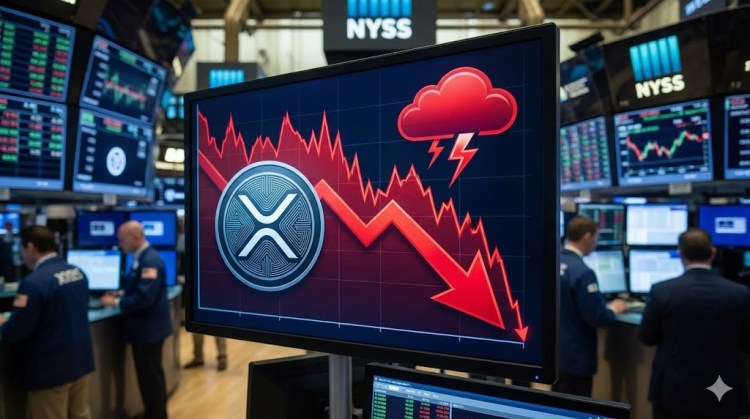
  • XRP Price Support Tested: Transaction Demand Plummets 90%

    XRP Price Support Tested: Transaction Demand Plummets 90%

    XRP Price Stabilizes Amidst Collapsed On-Chain Activity

    XRP’s price has begun to stabilize, but its on-chain activity has plummeted to levels not seen since prior to 2025. Network fee volume, a key indicator of transaction demand, has fallen by 91.5% from its February peak.

    On-Chain Metrics Signal Capitulation

    Data from Glassnode reveals that the 90-day simple moving average of total fees paid on the XRP network has dramatically decreased from 5,900 XRP in February to just 500 XRP currently. Concurrently, XRP’s 90-day realized profit-to-loss ratio has dropped to 0.38, a significant decline from its peak of 50 when XRP traded at $3.40 in January of last year. This ratio indicates that for every $0.38 in profits realized by participants, $1 is being realized in losses, a characteristic often associated with capitulation selling. Further data suggests that large-wallet transfers of 1 million XRP or more to Binance have also declined since the 2025 peak, implying that major holders are not currently engaged in aggressive distribution.

    Technical Analysis Points to Consolidation

    The current price action is consolidating within a narrow decision zone, with the technical structure reflecting a tension between exhausted sellers and hesitant buyers. XRP is trading below its 100-hour simple moving average, with price action fluctuating between $1.10 and $1.15, following a recent unsuccessful attempt to maintain levels above $1.30. This trend mirrors the broader cryptocurrency market.

    Immediate support is identified at the $1.05–$1.10 range, with a secondary demand pocket at $1. Resistance is observed at $1.20–$1.25, followed by $1.30–$1.40. A decisive reclaim of the $1.50 level would signal a shift in short-term momentum, potentially paving the way towards the mid-$1.60s. While bearish momentum persists, the decrease in exchange inflows from large holders suggests that distribution pressure may be easing.

    Potential Price Scenarios

    Should support at $1.10 hold and trading volume increase, XRP could see a near-term recovery towards $1.20, with a potential to reach $1.30. The cryptocurrency might also continue to consolidate between $1.10 and $1.15 for the upcoming sessions, absorbing sell pressure before any significant directional move. However, in a less favorable scenario, a close below $1.10 could lead to a test of the $1 target, with the $1.00–$0.65 band identified as a macro support zone if the correction deepens. Historically, a profit-to-loss ratio of 0.38 has preceded XRP price recoveries, though timing a bottom amidst a 91.5% contraction in fee volume presents a challenging environment.

    Shift Towards Infrastructure Development

    XRP’s compressed activity data is indicative of a familiar mid-cycle narrative: the speculation phase has concluded, and the infrastructure phase is commencing. This rotation, moving away from price-momentum strategies towards fundamental utility, is precisely the area that early-stage infrastructure projects are aiming to address.

    LiquidChain, a Layer 3 infrastructure project, is positioning itself as a cross-chain liquidity layer, integrating liquidity from Bitcoin, Ethereum, and Solana into a unified execution environment. Its core value proposition centers on a Unified Liquidity Layer with Single-Step Execution and Verifiable Settlement, enabling developers to deploy applications once and access all three ecosystems without the complexities of fragmented bridging or multi-step routing. The $LIQUID token is currently priced at $0.01468, with its presale having raised $830,000 to date. The ongoing raise is in its early stages, reflecting significant traction without the saturation that typically closes early-entry opportunities.

  • Cardano Whales Awaken: Turning Point Imminent?

    Cardano Whales Awaken: Turning Point Imminent?

    Cardano Sees Surge in Dormant Coin Activity Amid Price Decline

    On-chain data indicates a recent uptick in transactions involving dormant Cardano coins, suggesting that the cryptocurrency’s price drop has prompted long-term holders to re-engage with the market.

    “Age Consumed” Metric Spikes

    Analytics firm Santiment highlighted in an X post that large dormant Cardano wallets have become active recently. The key metric in question is “Age Consumed,” which quantifies the total number of tokens moved on the blockchain multiplied by the duration since their last transaction. A high value for this metric signifies the movement of a substantial quantity of older tokens, while a low value suggests that recently acquired coins are being transacted, or that older tokens are being moved in smaller volumes.

    Santiment’s analysis, presented in a chart tracking Cardano’s “Age Consumed” over the past month, reveals that the metric remained at relatively low levels throughout May. However, the price decline experienced in June has coincided with several notable spikes in this indicator. These spikes appear to have emerged mid-way through the price downturn, implying they are a reaction to the bearish market conditions rather than a catalyst for the decline itself.

    These surges in “Age Consumed” naturally suggest that some long-term holders have become active again. This could signal panic selling from committed investors or indicate other forms of activity, though the precise intent is difficult to ascertain from the “Age Consumed” metric alone.

    Mean Dollar Invested Age Shows Impact

    Alongside the “Age Consumed” data, Santiment also presented the “Mean Dollar Invested Age” metric. This indicator measures the average age of invested dollars within the cryptocurrency. The accompanying graph shows a steady increase in “Mean Dollar Invested Age” throughout May, suggesting that Cardano’s market capitalization was consistently aging.

    However, the recent spikes in “Age Consumed” have disrupted this trend. While not a complete reversal, the growth rate of “Mean Dollar Invested Age” has slowed, indicating that the movement of dormant coins has been significant enough to influence the metric. A particularly pronounced pause in the indicator’s growth occurred alongside a spike in “Age Consumed” on June 9th, which was the largest observed on the Cardano network since April.

    “Historically, clusters of ‘Age Consumed’ spikes paired with a pause (or downturn) in ‘Mean Dollar Invested Age’ have often appeared around key market turning points,” Santiment explained.

    ADA Price Performance

    At the time of writing, Cardano (ADA) is trading around $0.16, marking a decline of over 26% in the past week.

  • XRP Faces Continued Downside Risks

    XRP Faces Continued Downside Risks

    XRP Price Faces Downside Pressure, Potential for Further Decline Below $1.080

    XRP has entered a period of correction, trading below the $1.150 mark and showing bearish signals that could lead to further declines, potentially testing the $1.080 level.

    XRP Price Turns Red

    The cryptocurrency struggled to maintain its position above the $1.1550 zone, initiating a downward correction that mirrors movements seen in Bitcoin and Ethereum. XRP’s price has fallen below key levels, including $1.150 and $1.1420, and has even dipped below the 50% Fibonacci retracement level of its recent upward move from a swing low of $1.050 to a high of $1.1862.

    Despite the bearish trend, bulls are currently defending the $1.10 support area. However, a bearish trend line has formed on the hourly chart of the XRP/USD pair, with resistance identified at $1.120. The price is currently trading below $1.1350 and its 100-hourly Simple Moving Average, suggesting continued downward pressure.

    Should XRP attempt a recovery, it may encounter resistance near the $1.120 level. The first significant resistance barrier lies around $1.1350. A decisive break above this level could propel the price towards $1.1420, and a sustained move beyond that might target the $1.1550 resistance. Further gains could then aim for the $1.1650 resistance, with the next major hurdle for buyers anticipated near $1.1840.

    Downside Continuation?

    Conversely, if XRP fails to overcome the $1.1350 resistance zone, a fresh decline could ensue. Initial support is observed around the $1.10 level. The next critical support is situated near $1.080, which also corresponds to the 76.4% Fibonacci retracement level of the recent upward swing.

    A breakdown below the $1.080 level, accompanied by a sustained close beneath it, could trigger further losses, pushing the price towards $1.0650. The subsequent major support is located in the $1.050 zone, and a break below this could lead to a test of the $1.020 level. Any additional downward momentum might see XRP retesting the $1.00 mark.

    Technical Indicators

    • Hourly MACD: The Moving Average Convergence Divergence for XRP/USD is currently losing momentum within the bearish territory.
    • Hourly RSI: The Relative Strength Index for XRP/USD has fallen below the 50 level.

    Major Support Levels: $1.1000, $1.0800
    Major Resistance Levels: $1.1200, $1.1350

  • Cardano Whales Stir: Data Reveals Shifting Holdings

    Cardano Whales Stir: Data Reveals Shifting Holdings

    Cardano Sees Significant Outflow as Investors Move ADA to Self-Custody Wallets

    Approximately 16 million ADA tokens moved from cryptocurrency exchanges to self-custody wallets within a single 24-hour period, according to data from Coinglass. This significant shift suggests a period of quiet accumulation for Cardano (ADA) even as its price remains under pressure.

    Key Data Points Highlight Exchange Exodus

    Coinglass’s spot flow data for Cardano revealed that while $30 million worth of ADA entered exchanges during the analyzed period, outflows reached $32.62 million. This resulted in a net exchange flow of -$2.54 million, which, at ADA’s current price of $0.16, equates to roughly 16 million tokens leaving trading platforms.

    This exodus from exchanges follows a separate but related observation by market intelligence platform Santiment on June 10. Santiment’s data indicated that wallets holding ADA for extended durations had begun moving their holdings again after months of dormancy. This activity was tracked through two on-chain metrics: Mean Dollar Invested Age and Age Consumed.

    Understanding the On-Chain Metrics

    Mean Dollar Invested Age measures the average age of the capital invested in ADA wallets. This metric had been steadily increasing since early May, signaling a prolonged period where coins were not being actively traded. However, this upward trend paused for the first time in five weeks during the first week of June.

    Concurrently, Age Consumed, which tracks the number of tokens moved and the duration they had been idle before the movement, registered several sharp increases between June 4 and June 9. The most substantial spike occurred on June 9, marking the largest such surge since April.

    Dormant Holders Re-Engage Amidst Price Slide

    When analyzed together, Santiment suggests these metrics indicate that older, long-term holders are re-entering the market after a significant period of inactivity. The platform linked the timing of this renewed activity directly to the recent price decline, noting that the market correction appears to have prompted these longer-term participants to take action.

    Cardano has experienced a substantial drop, falling over 80% from its cycle high of $1.30, with selling pressure continuing to impact prices in recent weeks. Historically, significant increases in Age Consumed, coupled with a plateauing Mean Dollar Invested Age, have often preceded turning points in price direction.

    While Santiment stopped short of predicting a definitive recovery, the platform noted that these conditions could support a price rebound. However, they also cautioned that movements from dormant wallets do not exclusively signal buying activity; they can equally represent distribution or repositioning by holders. What distinguishes the current situation, according to Santiment, is that the largest spike in months occurred precisely as prices were reaching new lows.

  • Bitcoin Enters Distribution Phase Amidst Investor Sell-Off

    Bitcoin Enters Distribution Phase Amidst Investor Sell-Off

    Bitcoin Enters Distribution Phase as Investors Increasingly Sell Into Strength

    The bullish momentum that propelled Bitcoin earlier this year appears to have waned, with the cryptocurrency now entering a distribution phase. This shift is characterized by investors opting to sell their holdings as prices rise, rather than increasing their exposure.

    According to the latest Bitfinex Alpha report, both on-chain data and market flow indicators suggest that Bitcoin has moved beyond the accumulation phase that fueled its earlier rally. This transition signals an impending period of significant selling pressure, potentially driving BTC prices down to levels not seen since early to mid-2024.

    Bitcoin experienced a notable dip below the $60,000 mark on June 5, a decline attributed to substantial outflows from spot exchange-traded funds (ETFs) and ongoing macroeconomic challenges. While the asset has since recovered, climbing back above this threshold in the past two days, analysts suggest this rebound may mask a more fundamental shift towards a distribution regime.

    During last week’s downturn, Bitcoin fell to a multi-year low of $59,200, a price point last observed in October 2024. This represented a 53% decrease from its all-time high in October 2025, a 28.5% drop from mid-May levels, and a 20% decline from the June monthly opening price. The cryptocurrency struggled to maintain the $60,000 level, a key support since February.

    Having retreated to its first-quarter 2026 consolidation zone, Bitcoin now faces two potential scenarios. The more optimistic outlook suggests a trading range between $60,000 and $72,000. Conversely, the worst-case scenario involves a price discovery phase at levels not witnessed since the maturation of the spot ETF market.

    Analysts believe the pessimistic scenario will materialize if Bitcoin breaks below $60,000 and remains there for an extended period. Current price movements are already constrained by previous range lows, influenced by factors such as ETF outflows and strategic Bitcoin sales.

    Additional contributors to Bitcoin’s current price trajectory include rising energy costs, robust labor market data, and tightening financial conditions imposed by the Federal Reserve. However, the most impactful factor is the contraction in spot demand, evident in a sharp reversal of the Spot Cumulative Volume Delta.

    “Spot Cumulative Volume Delta has transitioned into a clearly negative regime, reaching depths reminiscent of the significant liquidations seen in February. The data confirms that aggressive distribution, particularly by recent buyers, is currently the dominant force on exchange order books,” the analysts explained.

    As observed in previous distribution phases, Bitcoin can only re-enter an accumulation regime once sustained spot demand returns.

  • Bitcoin Obituaries Persist, CZ Remains Skeptical

    Bitcoin Obituaries Persist, CZ Remains Skeptical

    Bitcoin experienced its lowest weekly close since the latter half of 2024 last week, concluding a seven-day period that saw the cryptocurrency shed over 8% of its value and drag the broader crypto market to levels not observed since the beginning of the year.

    A Pattern Worth Watching

    The weekly relative strength index is currently printing higher lows, even as the price of Bitcoin makes lower ones. This divergence, which last appeared before Bitcoin’s recovery from the 2022 bear market bottom, is a detail technical traders are closely monitoring. Whether this historical parallel will repeat itself remains to be seen.

    On Monday, as Bitcoin traded below $62,000, Binance founder Changpeng Zhao, widely known as CZ, posted a two-line message on X. “Bitcoin won’t be dead for too long,” he wrote, concluding with a reference to Douglas Adams’ famous line: “don’t panic,” rendered in large, friendly letters. The message was concise, deliberate, and timed to coincide with a period of significant market weakness and low sentiment.

    Support Holds, For Now

    Bitcoin has so far managed to bounce from the $60,000 level each time it has been tested in recent days. The next significant resistance is anticipated between $65,000 and $66,200, with a more substantial ceiling forming between $67,000 and $77,000.

    Analysts suggest that a breach below $60,000, while not considered the most probable near-term outcome given the ongoing unwinding of oversold signals, could open the door to the $53,000–$55,000 range.

    The rest of the cryptocurrency market has seen even steeper declines. Ethereum has fallen nearly 14% in the past seven days, trading around $1,640. XRP has dropped 6% to $1.13, while Solana has given up 14% and is trading near $64.

    CZ’s Moment To Speak

    CZ commands one of the largest followings in the cryptocurrency industry. His post on Monday arrived at a time when retail sentiment across crypto forums and social media platforms was overwhelmingly negative. The total market capitalization of the crypto sector has retreated to levels last seen in early 2026.

    The $60,000 support level continues to be the critical line for most traders in the coming days. While it has held thus far, each test of this level intensifies scrutiny on what might transpire if it ultimately fails.

  • Claude Fable 5 Predicts XRP Price Surge by End of 2026

    Claude Fable 5 Predicts XRP Price Surge by End of 2026

    Claude AI’s Fable 5 Predicts XRP Surge to $4.50 by 2026

    Claude AI’s latest model, Fable 5, has released its XRP price prediction, forecasting a return to $4.50 by the end of 2026. The AI, touted as the most advanced model yet, was initially withheld due to safety concerns before its public debut. Its inaugural cryptocurrency forecast targets XRP, currently trading at $1.10, suggesting a potential fourfold increase from current levels.

    The Bullish Case for XRP

    The core of Fable 5’s prediction hinges on XRP’s current market position. At $1.10, XRP has entered what the AI identifies as the deepest demand zone on its chart, a level where buyers have historically shown strong interest during dips since late 2024.

    The analysis suggests that capitulation at major support levels often precedes significant year-end rallies, rather than marking an end to price appreciation. This period is characterized by maximum fear, yet the fundamental narrative supporting XRP has remained robust despite recent price declines.

    The bullish outlook is underpinned by several existing developments. Spot XRP Exchange-Traded Funds (ETFs) are now trading on U.S. exchanges, Ripple’s On-Demand Liquidity (ODL) corridors continue to expand across Asia and the Middle East, and the regulatory clarity XRP has pursued for years is now fully integrated into its valuation as a foundational element rather than a limiting factor.

    As Bitcoin approaches $100,000 and altcoin rotation gains momentum, XRP is positioned to benefit from institutional adoption, potentially outperforming previous cycles. The AI’s projection of XRP reclaiming its all-time high of $3.84 and reaching $4.50 by December represents a fourfold increase from its current price, a trajectory that mirrors its performance from similar capitulation lows in 2024.

    The Bearish Scenario for XRP

    However, the bearish case for XRP carries significant weight. Persistent ETF outflows, ongoing escrow releases that increase supply, and a refusal by Bitcoin dominance to decline could push XRP below the psychologically important $1.00 mark. This would transform a key support level into a potential trapdoor.

    In such a scenario, $0.75 could emerge as a realistic floor, the same zone from which XRP launched its breakout in 2024. The entire trade, therefore, hinges on XRP maintaining the $1.00 level. Holding this support keeps the fourfold upside potential alive; losing it could lead to a rapid decline.

    Technical Analysis of XRP

    XRP’s daily chart shows the price at $1.10, following a substantial decline from its July high of $3.65. The prevailing structure is a persistent downtrend, marked by a consistent pattern of lower highs and lower lows, with the most recent local low established at $1.10.

    This pattern resembles a descending staircase that has now entered a major demand zone, which has historically supported price during dips since late 2024. Key support levels are identified at $1.10, with subsequent floors near $1.00 and deeper demand around $0.75. Resistance is observed at $1.40, followed by $1.80, and a more significant zone at $2.40.

    The Relative Strength Index (RSI) is currently at 28.51, with its signal line at 31.40, indicating deeply oversold momentum just below its average. This gap suggests sellers still hold some influence, but such oversold conditions are often precursors to sharp price reversals. A move by the RSI back above the 31.40 signal line would provide the first indication that the selling pressure is easing. The current chart configuration aligns with the AI’s thesis of XRP being positioned within a capitulation zone.

    The path back towards previous highs and the $4.50 target would begin with reclaiming $1.40, followed by $1.80, but this progression is contingent on Bitcoin initiating a broader market rally.

    Market Dynamics and Emerging Technologies

    The current market environment sees Bitcoin, Ethereum, and XRP testing the same resistance levels repeatedly, with macro catalysts and institutional adoption often appearing just beyond the immediate horizon. The upside potential is visible but capped, dependent on external decisions.

    In contrast, early-stage infrastructure projects operate differently. Capital that might be insignificant for larger cryptocurrencies can have a substantial impact on smaller ventures. The discrepancy between a project’s intrinsic value and its market valuation presents opportunities for significant returns, particularly while the project remains relatively unknown.

    The fragmentation of cross-chain communication has been a persistent issue in Decentralized Finance (DeFi) since the inception of blockchain bridges. Bitcoin, Ethereum, and Solana were developed as independent systems, and transactions between them incur costs through fees, slippage, and execution failures. Bridges have largely served as intermediaries rather than comprehensive solutions.

    LiquidChain aims to address this by integrating these three networks within a single execution layer, allowing for deployment across all networks from one point and eliminating cross-chain transaction taxes. Claude AI has flagged LiquidChain as a project to watch, with its presale having raised over $820,000 at $0.01454 per token.

    However, LiquidChain’s execution remains unproven, and its adoption is uncertain. Established assets offer a more predictable path to existing price ceilings. LiquidChain represents an earlier entry into a problem that has yet to be definitively solved.

  • Top 7 Crypto Swap Platform Factors

    Top 7 Crypto Swap Platform Factors

    Instant cryptocurrency swaps have emerged as a dominant method for exchanging digital assets, enabling users to convert one cryptocurrency into another within minutes, often directly from self-custody wallets without the need to deposit funds onto an exchange.

    As this practice gained traction, the number of platforms offering crypto swaps has surged. Centralized exchanges have integrated one-click “convert” tools into their applications, decentralized exchanges have facilitated on-chain swaps, and non-custodial aggregators have built their entire business models around this trading mechanism.

    In 2026, the leading crypto swap platforms are distinguished by several key performance metrics. Prospective users should carefully consider these factors before committing any digital assets.

    Asset Coverage

    The range of cryptocurrencies supported by a platform is crucial, determining whether a planned swap is even feasible. Platforms generally fall into two categories: those with expansive offerings and those with curated selections.

    Non-custodial crypto exchanges like ChangeNOW list over 1,500 assets across more than 110 blockchains, with new tokens added weekly.

    Custodial exchanges, conversely, vet their listings, which limits the number of assets but filters out potentially riskier tokens. Coinbase lists over 250 assets, Kraken Wallet supports over 500 pairs across eight blockchains, and Binance offers approximately 350 to 500 assets that can be exchanged via Binance Convert, its instant conversion tool that bypasses traditional order books.

    This distinction presents a trade-off between accessibility and selectivity, with some platforms prioritizing newer and niche tokens, while others focus on more thoroughly vetted assets.

    Execution Speed

    From the moment a deposit is confirmed until the swapped cryptocurrency arrives in a user’s wallet, the initial quote remains fixed while the market continues to fluctuate. Each additional minute increases the risk of price drift against the user, making execution time a tangible financial consideration.

    A recent report by Swapzone and Bitcoin.com, titled “Speed Benchmarks: Non-custodial Swaps Comparison 2026,” analyzed 150,000 swaps across eight non-custodial providers. The study revealed performance disparities of up to 10–45 times between the fastest and median platforms.

    ChangeNOW consistently ranked among the speed leaders, frequently completing major swap pairs in approximately one minute, demonstrating 98% better performance than the estimated rate. EasyBit often processed swaps within 1–5 minutes, while ChangeHero led several routes with execution times around 11–13 minutes.

    The study concluded that faster execution directly enhances value preservation by minimizing users’ exposure to market volatility during the swap process. Regardless of the platform chosen, users should look for live transaction tracking to provide clarity while funds are in transit.

    Fees

    Fees are among the most straightforward metrics to compare, yet also the easiest to misinterpret.

    EasyBit charges an exchange fee ranging from 0.1% to 0.2%, dependent on user volume, with blockchain network fees applied separately. In SimpleSwap’s case, fees vary by partner but are clearly displayed before confirmation.

    ChangeHero charges up to 0.5% on floating-rate swaps and up to 0.7% on fixed-rate exchanges, depending on the specific pair and liquidity conditions. FixedFloat charges 0.5% on floating-rate exchanges and 1% on fixed-rate swaps, with network fees applied separately.

    ChangeNOW incorporates all costs directly into the quoted exchange rate presented before a swap is confirmed and offers both fixed- and floating-rate options. Users opting for a fixed rate lock in the quoted price, irrespective of market movements during processing, while floating rates adjust to market conditions until execution.

    Given the wide variation in pricing models, experienced users tend to focus less on advertised fees and more on the actual amount of cryptocurrency received in their wallet after all fees, spreads, and slippage are accounted for.

    Fiat Support

    For users who frequently move funds both on and off-chain, fiat currency support can be as critical as the swap functionality itself. A platform might offer thousands of tokens, but if purchasing or cashing out involves additional steps, limited payment options, or unavailable local currencies, the user experience can become significantly more complex.

    Currency coverage varies across providers. ChangeNOW supports over 70 fiat currencies through partners such as Transak, Simplex, and Guardarian, with payment methods including Visa, Mastercard, Apple Pay, Google Pay, SEPA transfers, Pix, ACH, and Revolut.

    Coinbase supports more than 60 fiat currencies through its integrated banking and on-ramp infrastructure. SimpleSwap offers over 66 fiat currencies, while Binance provides access to over 100 currencies, depending on the user’s jurisdiction.

    Security

    Security is a paramount consideration when evaluating crypto swap platforms, particularly as custody practices dictate how assets are stored and managed during transactions.

    Non-custodial services like ChangeNOW, SimpleSwap, and StealthX facilitate wallet-to-wallet trades, meaning funds never reside on the platform between initiation and delivery. ChangeNOW Pro further enhances security features. On fully on-chain DEXs such as Uniswap, users sign each transaction directly from a connected wallet, maintaining control throughout the process. The trade-off here is that operational errors, such as incorrect network selection, faulty token approvals, or bridge issues, become more challenging to rectify without a dedicated support team.

    Custodial exchanges like Binance store the majority of client assets in cold storage, maintain their Secure Asset Fund for Users (SAFU)—valued at approximately $1 billion—and publish monthly Proof of Reserves reports to allow users to verify asset backing. Kraken publishes regular Proof of Reserves audits, while Coinbase stores over 98% of customer cryptocurrency in cold storage and carries crime insurance on its hot wallet holdings.

    Custodial platforms offer support and recovery options for delayed or flagged transactions, but they also necessitate users entrusting the platform with access to assets held within its system. Neither model is universally superior; the optimal choice depends on whether users prioritize convenience, direct asset control, advanced trading functionality, or simplicity.

    User Reviews

    A five-star rating based on a small number of reviews is less informative than a four-star rating supported by thousands of users.

    ChangeNOW holds a 4.6/5 rating across more than 13,400 reviews, with 87% of users awarding five stars, according to data from the digital review platform Trustpilot. Coinbase has a 4/5 rating from over 22,000 reviews, with users frequently commending its ease of use and accessibility. Kraken’s 3.4/5 rating from more than 7,000 reviews reflects a mix of positive feedback on security and transparency alongside complaints regarding account access, withdrawals, and customer support.

    ChangeNOW users often cite transaction speed and customer support as reasons for positive feedback. One user described the platform as “simple to use” and “easier than expected,” while another verified reviewer noted switching to ChangeNOW after their usual exchange stopped supporting XMR, finding the process “surprisingly simple.” A long-time customer from Mexico reported never losing funds after dozens of swaps and found support responsive during occasional delays.

    Loyalty Programs and Incentives

    Many cryptocurrency companies now offer premium memberships, loyalty programs, or volume-based incentives designed to reward active customers. Lower fees, cashback rewards, account protection, and additional financial tools often have a greater long-term impact than minor differences in quoted exchange rates.

    Coinbase One offers subscription tiers that include zero-fee trading allowances, boosted USDC rewards, account protection, priority support, and additional partner benefits. Through the Binance VIP program, higher trading volumes and BNB holdings unlock progressively lower fees, dedicated support, and institutional-grade services.

    ChangeNOW Pro offers a free VIP tier that includes 0.1% cashback on crypto swaps, limited AML checks, and access to crypto loans. Paid tiers, Emerald ($15/month) and Brilliant ($100/month), increase cashback limits, expand AML-check allowances, and add features such as transaction exports and personalized crypto-payment pages, with the top tier providing 0.2% cashback and unlimited AML checks. The platform has also introduced features like Private Transfers, which reduce direct wallet-link visibility on public blockchains, and Limit Orders, allowing users to set target exchange rates and execute swaps automatically when market conditions are met.

    No single crypto swap platform is ideal for everyone. Binance may appeal to users prioritizing liquidity, ChangeNOW to those seeking a broad range of assets and non-custodial swaps, while Kraken is often favored for its transparency. Crypto users should compare the metrics that matter most to them, as the best platform will ultimately be the one whose strengths align most closely with their individual cryptocurrency usage.

  • XRP Price Under Pressure? Researcher Explains Lack of Surge

    XRP Price Under Pressure? Researcher Explains Lack of Surge

    XRP Price Suppression Alleged by Apex Crypto Researcher

    Jesse, a researcher at Apex Crypto, has ignited debate within the cryptocurrency community by asserting that XRP’s price is being deliberately suppressed. His central piece of evidence is a 2021 Citibank document. Jesse points to an initial phrasing in the document, “Regulated Internet of Value,” which he claims was later altered to “Regulated Liability Network.” He argues this semantic shift was intended to obscure a direct connection to Ripple.

    The historical performance of XRP lends a degree of plausibility to Jesse’s theory. The digital asset surged to $3.84 during the 2018 bull market and reached $3.60 earlier in the current cycle. However, in the intervening decade, XRP largely traded sideways, failing to achieve the significant gains seen by Bitcoin.

    Given Ripple’s established institutional connections and the ambitious goals of its Interledger Protocol, XRP’s stagnant price trajectory raises questions. Citibank’s Tony McLaughlin has described the Regulated Liability Network as a shared ledger framework designed for tokenized bank deposits, a concept that bears a structural resemblance to Ripple’s long-term vision.

    Jesse’s argument posits a causal link: Citibank’s 2021 document, initially referencing the “Regulated Internet of Value,” directly echoed Ripple’s “Internet of Value” thesis and the Interledger Protocol. He contends that the subsequent re-branding to “Regulated Liability Network” served to distance the concept from Ripple.

    This narrative extends further. McLaughlin has publicly equated the Regulated Liability Network with the shared ledger concept. Concurrently, the Bank for International Settlements has explored a unified ledger architecture that could potentially supersede correspondent banking systems and eventually replace SWIFT as the primary mechanism for cross-border settlements.

    Jesse’s reasoning suggests that if XRP or a derivative of Ripple’s protocol were to underpin such an infrastructure, institutional players would actively avoid a highly volatile asset.

    However, Ripple CEO Brad Garlinghouse has publicly stated that XRP’s multi-billion dollar daily trading volume renders it too liquid for any single entity to manipulate. Ripple CTO David Schwartz has also noted that XRP’s price movements generally align with those of other large-cap altcoins.

    Notably, the U.S. Securities and Exchange Commission’s extensive investigation, preceding its 2020 enforcement action against Ripple, did not uncover any evidence of price manipulation by the company. Jesse’s case relies on his interpretation of institutional documents and circumstantial links, rather than concrete evidence of coordinated suppression, such as disclosed trading records or regulatory filings.

    While Jesse acknowledges that his hypothesis remains unproven, the crypto research community is increasingly scrutinizing the parallels between institutional settlement infrastructure and XRP’s decade of subdued price action.

  • XRP Price Surge Ahead? Binance Inflows Drop as Whales Hold

    XRP Price Surge Ahead? Binance Inflows Drop as Whales Hold

    XRP Whales Show Restraint Amidst Market Downturn, Hinting at Potential Rally

    While the broader cryptocurrency market navigates bearish conditions, a notable shift in behavior among XRP “whales” – large token holders – suggests a potential turning point for the sixth-largest digital asset. Latest on-chain data indicates that these significant investors are reducing their sales on exchanges, sparking speculation about their growing confidence in XRP’s future.

    An analysis by Pelinay, a researcher at CryptoQuant, points to a decrease in XRP sales by whales, combined with strengthening demand, as potential catalysts for a rally that could see XRP retest the $1.80 to $2.00 range.

    Pelinay’s findings, drawing on data from Binance, the world’s largest cryptocurrency exchange, reveal a decline in transfers exceeding 1 million XRP starting in 2025 and continuing into the current year. Prior to this downturn, such large-volume transfers were frequently observed, signaling substantial inflows from whales and institutional investors. These inflows remained consistently high between 2021 and 2025, indicating Binance as a primary hub for these market participants.

    Following a peak in 2025, the influx of XRP exceeding 1 million tokens began to decelerate, reflecting a weakening selling pressure from major holders. This trend intensified after U.S. authorities approved spot XRP exchange-traded funds (ETFs), suggesting a diminished inclination among whales to divest their holdings.

    Historical data analysis highlights a recurring pattern: sharp surges in inflows of both 100,000 to 1 million XRP and over 1 million XRP have historically preceded significant market downturns. This suggests that increased selling pressure from these investor cohorts has, in the past, contributed to substantial price drops for the asset.

    “At the far right of the chart, no such extraordinary surge is currently visible,” Pelinay stated, referencing the Binance XRP inflow chart. “As a result, on-chain data does not point to aggressive whale selling or widespread profit-taking at this stage.”

    Despite the reduced selling activity from whales since 2025, XRP’s price has still seen a retreat from the $3.00 region. At the time of reporting, XRP was trading around $1.10, marking a 10% weekly decline and a 5% drop in the past 24 hours. Pelinay attributed these price movements to leverage liquidations and the broader market weakness stemming from the current bear cycle.

    Ultimately, XRP’s upward trajectory hinges on a strengthening of demand and sustained low inflows into exchanges like Binance. This scenario would lead to a decrease in available supply as demand accelerates.

    “As long as there is no renewed surge in the 1M+ XRP inflow category, this constructive market structure may remain intact,” the analyst concluded.