Tag: Market Trends

  • BitGo Acquires NYDIG’s Institutional Trading Business; NYDIG Shifts Focus to Energy and Data Centers

    BitGo Acquires NYDIG’s Institutional Trading Business; NYDIG Shifts Focus to Energy and Data Centers

    BitGo has acquired the institutional trading business of NYDIG, a transaction that includes approximately 30 employees and around 250 institutional client relationships. This acquisition marks a strategic expansion for BitGo within the institutional digital asset services sector, while enabling NYDIG to concentrate on its power generation, Bitcoin mining, and high-performance computing data center operations.

    The deal, which was signed and completed on Thursday and reported on Friday, integrates NYDIG’s derivatives, structured products, financing, and capital markets operations into BitGo’s portfolio. The financial terms of the acquisition comprise $7 million in cash and approximately $35.5 million in BitGo stock at closing. An additional $15 million in cash is contingent upon the achievement of two specified revenue milestones.

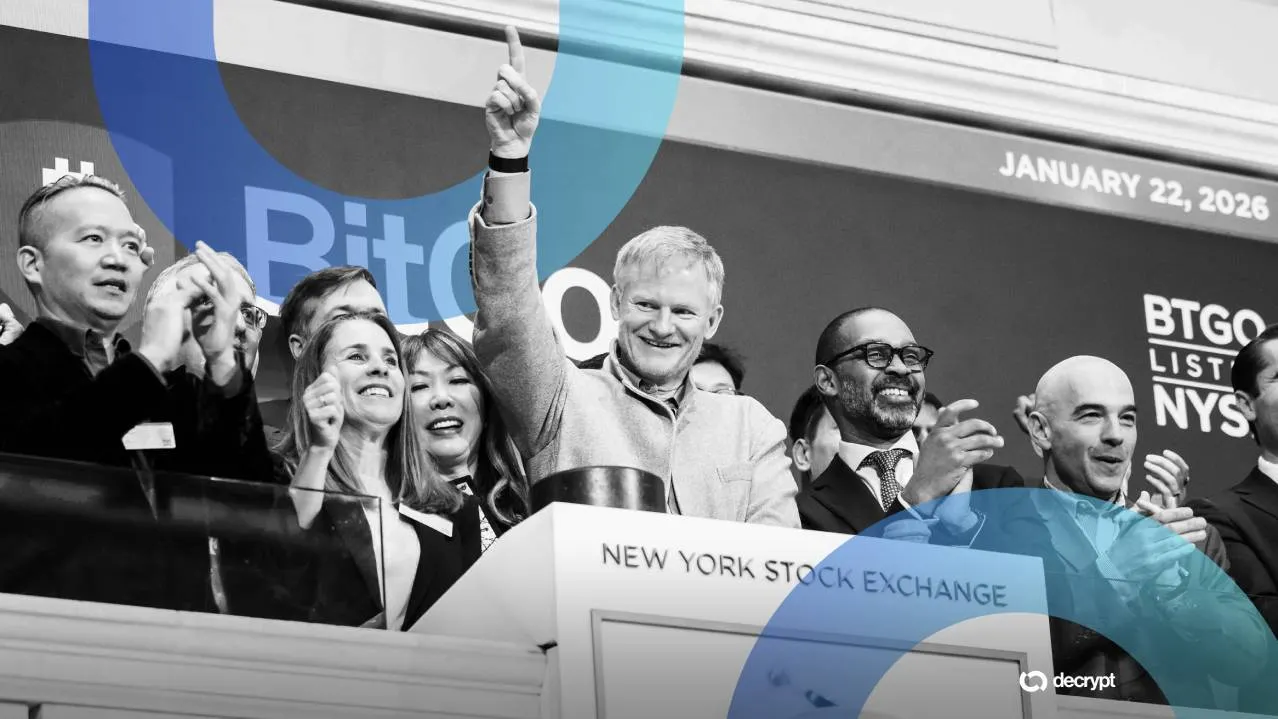
    BitGo CEO and Co-founder Mike Belshe commented that institutions are increasingly seeking trusted partners capable of supporting the full lifecycle of digital assets. BitGo, having gone public on the NYSE at the start of the year, is positioned to enhance its institutional offerings through this acquisition. The company also provides infrastructure for USD1, the stablecoin associated with World Liberty Financial, and has recently secured a license in South Korea.

    NYDIG, an affiliate of Stone Ridge Holdings Group, is refining its strategic focus on energy infrastructure ventures. The company possesses a development pipeline of 3 gigawatts and anticipates over 1 gigawatt of its deliverable pipeline to be available in 2027 and 2028. NYDIG CEO Tejas Shah has indicated that the data center business presents a significant opportunity for future growth.

    In separate commentary provided on Friday, Belshe addressed broader industry topics. He observed that despite recent volatility in Bitcoin markets, the underlying thesis for the cryptocurrency continues to strengthen. Belshe also discussed the upcoming CLARITY Act, which is scheduled for a Senate cloture vote on September 15. He expressed support for the bill, suggesting it could establish a legislative framework to help prevent future events similar to the FTX collapse, estimating a 12 to 18-month rulemaking period following its passage. Belshe also noted his recent visit to the White House with President Trump last week and shared a perspective that America may be lagging in certain aspects of the digital asset space.

    The acquisition encompasses the transfer of approximately 30 employees and around 250 institutional client relationships. BitGo’s market value was reported as being below $1 billion as of Thursday. Staff retention awards are also planned, with targets of $5 million each in stock and cash, although specific details remain uncertain.

    NYDIG’s strategic shift allows for a concentrated focus on power generation, Bitcoin mining, and high-performance computing data centers, aligning with a stated view that the data center business offers substantial future opportunities. The company’s development pipeline includes 3 gigawatts, with over 1 gigawatt expected to be deliverable in 2027 and 2028.

    Belshe’s remarks regarding the CLARITY Act suggest its potential to establish clearer regulatory frameworks for digital assets, possibly mitigating systemic risks. His presence at the White House and comments on America’s position in the digital asset landscape underscore ongoing engagement with policymakers and a perceived need for advancement within the sector.

    Why This Matters

    The materials describe a narrow update: BitGo acquired NYDIG’s institutional trading business, including derivatives, structured products, financing, and capital markets operations, along with approximately 30 employees and around 250 institutional client relationships. The exact value of the earn-out shares for NYDIG IHC LLC on the second milestone.

    Broader Context

    Source materials place the factual news in this context: The article is a factual news report about a business acquisition in the cryptocurrency sector.

  • XRP ETFs Reach Record Inflows Amidst Underlying Asset Volatility

    XRP ETFs Reach Record Inflows Amidst Underlying Asset Volatility

    Spot XRP Exchange-Traded Funds (ETFs) have recorded significant weekly inflows, surpassing $110 million for the first time since early December 2025. This surge has pushed the cumulative total net inflows to a new all-time high, signaling a notable increase in investor interest in XRP-based investment products.

    During the past week, ending December 5, 2025, daily net inflows demonstrated consistent strength. Investors allocated $13.82 million on Monday and $23.87 million on Tuesday. Wednesday marked the peak daily inflow at $28.14 million, the highest single-day performance for these funds since January 5, when they attracted over $46 million. Thursday and Friday saw inflows of $18.47 million and $26.20 million, respectively. Cumulatively, this resulted in $110.49 million for the week, marking the strongest five-day performance since the week ending December 5.

    The cumulative total net inflow for XRP ETFs reached a new all-time high of $1.66 billion by Friday. This milestone follows a market shift in the preceding week, which saw investors return to the XRP ETF market after a period characterized by minimal or no net flows on several trading days.

    Among the leading ETFs, Bitwise’s XRP ETF continues to hold the largest share of cumulative net inflows, with its total approaching $600 million. Canary Capital’s XRPC follows with $483 million in cumulative net inflows, and Franklin’s XRPZ ranks third with $462.86 million.

    This robust performance in ETF inflows presents a contrast to the recent price action of the underlying asset, XRP. Between August 19 and 22, XRP experienced a substantial surge, climbing from the $1.00 support level to a multi-month high of $1.70, a gain of approximately 70% in under 72 hours. However, the asset’s upward momentum proved difficult to sustain.

    At the commencement of the business week following this surge, XRP declined to $1.50. By the week’s end, its price had fallen to and below the $1.40 mark. Despite the recent positive inflows into XRP ETFs, XRP showed a 1.3% increase on a 24-hour scale, indicating efforts to regain previous levels.

    Analysts believe the future price movement of XRP remains uncertain and will hinge on its ability to defend the support zone between $1.35 and $1.38, levels that were tested on Friday. This testing occurred after a hawkish speech by Kevin Warsh. Should XRP attempt a rebound, a significant obstacle is anticipated at the $1.60 level, a price point that has historically impeded its upward progress over the past six months.

    The current market scenario presents a complex dynamic: while substantial capital is flowing into XRP ETFs, the underlying asset’s price faces challenges in consolidating previous gains and overcoming key resistance levels. This divergence underscores the ongoing uncertainty surrounding XRP’s short-term price trajectory.

    Why This Matters

    The materials describe a narrow update: Spot XRP ETFs saw weekly inflows exceeding $110 million for the first time since early December 2025, pushing cumulative total net inflows to a new all-time high. Whether XRP can defend the $1.35-$1.38 support zone.

    Broader Context

    Source materials place the factual news in this context: The winds of change continue to impact how investors view the spot XRP ETFs, with the inflows in the past week exceeding $110 million for the first time since early December, 2025.

  • Bitcoin Whale Accumulation Amidst Analyst Caution and Price Uncertainty

    Bitcoin Whale Accumulation Amidst Analyst Caution and Price Uncertainty

    In the past week, Bitcoin whales have accumulated approximately $3 billion worth of BTC, a significant influx of capital from major market participants. This accumulation occurred as the cryptocurrency experienced a notable price rally, surging from under $65,000 to over $81,000 within a seven-day period. During this time, whales added more than 39,150 BTC to their holdings, according to reported data. Concurrently, ETF buyers poured over $920 million into Bitcoin-related funds.

    Despite this substantial accumulation, some analysts are expressing caution regarding Bitcoin’s recent price action. The cryptocurrency’s inability to sustain its push above the $81,000 resistance level, marked by two rejections, has fueled concerns. This technical resistance, coupled with macroeconomic factors, has coincided with divided opinions on whether the recent price movement signals a sustained upward trend or a temporary relief rally.

    Data suggests that the recent rally was primarily driven by these large investors, while retail investors have largely remained on the sidelines or have been selling. The Federal Reserve’s hawkish stance, particularly following remarks from Fed Chair Kevin Warsh on Friday, has added to the uncertainty surrounding the market’s future direction. Analysts are not universally convinced that the bear market phase is over, highlighting the need for Bitcoin to demonstrate sustained strength at elevated levels.

    Some market observers suggest that if the recent surge suggests to be a bear-market relief rally, Bitcoin could experience pullbacks in the coming weeks. Specific price targets from analysts vary, with some anticipating a decline to around $74,000, potentially followed by a further drop to the $67,000 region. Others have offered broader predictions, suggesting a fall to $62,000 before a potential eventual rise to $90,000. However, these predictions are subject to significant uncertainty.

    The current market situation presents a divergence between the actions of large-scale investors and the cautious outlook of some analysts. While whale accumulation indicates continued interest from a key cohort of investors, the price action around the $81,000 mark and broader economic signals suggest that the path forward for Bitcoin remains uncertain. Investors are observing whether Bitcoin can consolidate its gains or if it may face further downward pressure.

    Why This Matters

    The materials describe a narrow update: Major market participants, referred to as ‘whales’, have purchased a significant amount of Bitcoin, while some market analysts express caution about the cryptocurrency’s recent price action, citing technical resistance and macroeconomic factors. Whether the recent surge is a bear-market relief rally or the end of the bear phase.

    Broader Context

    Source materials place the factual news in this context: Bitcoin’s major rally from under $65,000 to over $81,000 within a week or so changed the broader market sentiment from fear to greed, with analysts initially rushing to call the end of the bear phase.

  • Bitcoin ETFs Attract Over $900M as Ethereum Funds Continue Strong Run

    Bitcoin ETFs Attract Over $900M as Ethereum Funds Continue Strong Run

    Bitcoin ETFs See Strong Inflows Despite Hawkish Fed Speech

    Spot Bitcoin exchange-traded funds experienced another robust week, attracting over $900 million in net inflows. However, sentiment shifted on Friday following a hawkish speech by former Federal Reserve Governor Kevin Warsh at the Jackson Hole Economic Symposium.

    Ethereum ETFs Continue Uninterrupted Gains

    Meanwhile, exchange-traded funds tracking the largest altcoin have maintained a consistent upward trend, with their actual inflows closely mirroring those of their Bitcoin counterparts.

    CryptoPotato previously reported a significant shift in investor behavior toward spot Bitcoin ETFs, with nearly $2 billion flowing in, marking the highest inflow since the October 2025 market downturn. This surge followed a pivot in U.S. Treasury Department monetary policy, which contributed to a substantial uptick across the entire cryptocurrency market.

    This trend continued into the new business week, with Bitcoin’s price challenging the $80,000 resistance level on multiple occasions. Investors injected $337.56 million on Monday, followed by $314.37 million on Tuesday, $232.12 million on Wednesday, and $242.24 million on Thursday. This sustained activity resulted in nine consecutive days of net inflows for Bitcoin ETFs.

    Friday Outflows Snap Inflow Streak

    The streak of positive inflows was broken on Friday, potentially influenced by the hawkish stance articulated by former Federal Reserve Chairman Kevin Warsh. The funds experienced net outflows totaling $201.81 million.

    Despite Friday’s reversal, the week concluded with a net inflow of $924.48 million. In the past two weeks alone, these funds have attracted nearly $3 billion. Cumulative net inflows have climbed from under $52.8 billion on August 14 to $54.63 billion by August 28.

    Ethereum ETFs Maintain Momentum

    In contrast to the spot Bitcoin ETFs, which ended Friday with net outflows, their Ethereum counterparts attracted just over $102 million on the same day, extending their impressive streak of positive inflows. These funds have not recorded a single day of net outflows since August 11. Overall, the week closed with more than $824 million in net inflows for Ethereum ETFs.

    Thursday proved to be the most significant day for Ethereum ETFs, with $234.51 million entering the funds. Wednesday saw an inflow of $192.35 million, followed by $179.80 million on Thursday, and $115.57 million on Friday. Cumulative net inflows have risen from $11.44 billion on August 11 to nearly $13 billion by August 28.

    The price of the underlying asset, Ether, surged from $1,900 to over $2,500 within the same period, before facing resistance and currently trading just below that mark.

  • Bitcoin’s Surge: Short Squeezes and ETF Mania

    Bitcoin’s Surge: Short Squeezes and ETF Mania

    Bitcoin Rebounds Sharply Fueled by Short Squeeze and Robust ETF Demand

    Bitcoin (BTC) has surged approximately 26% from its mid-August low, a rebound significantly accelerated by a powerful short-liquidation event. Data from Glassnode indicates that the price action on August 19th triggered the largest single-day liquidation event since 2019.

    The majority of these liquidations occurred on major centralized exchanges, primarily impacting short positions. Analysts believe the actual total volume of liquidations may be even higher, as the available data excludes certain platforms like Hyperliquid. This significant squeeze has effectively cleared much of the liquidation liquidity that was positioned above the Bitcoin market. Consequently, Glassnode now observes short-liquidation levels situated above the current market price, with a comparatively smaller pool of long-liquidation levels remaining below.

    However, the recent price recovery has not been solely driven by forced closures. Spot demand has also played a crucial role. U.S. spot Bitcoin ETFs experienced a substantial net inflow of $2.23 billion over a seven-day period, marked by consistent inflows and no days of outflows. This represents their strongest weekly intake of 2026, and the period included the largest ETF creation session observed since mid-January.

    Concurrently, Bitcoin has continued to move away from exchanges as various wallet groups have adjusted their holdings. Notably, entities holding between 1,000 and 10,000 BTC have reduced their balances by a significant 50,500 BTC since June 30th. In contrast, larger entities, those holding over 100,000 BTC, have been net accumulators, adding 59,100 BTC to their reserves. This latter group includes exchanges, custodians, and wallets associated with ETF activity.

    During the week of the short squeeze, the custody group alone added 31,500 BTC. While Glassnode noted this amount was comparable in scale to weekly ETF creations, the data does not confirm that these specific coins were directly transferred into ETFs.

    Furthermore, every wallet-size cohort has shifted towards net accumulation, as indicated by Glassnode’s 30-day trend score. The firm described this as the most persistent all-cohort buying activity observed since late 2024.

    Leverage has not returned to the market at the same pace as Bitcoin’s price recovery. Futures open interest has declined by 11% in BTC terms. Perpetual funding rates have remained near neutral and have recently turned negative, suggesting limited upward pressure from new leveraged long positions.

    Beyond accumulation trends and leverage dynamics, on-chain data indicates that recent buyers are currently positioned below the prevailing price, while long-term holders represent the primary supply zone overhead. Bitcoin is now trading within this critical range, presenting a key market test for demand.

    Several indicators point to a similar supply area above the current price, including cost-basis levels, ask liquidity, options positioning, and remaining liquidation clusters. A sustained move above this zone will be crucial in determining whether buyers can effectively absorb the available supply.

  • XRP’s August Surge Nears End, September Poised for Greater Gains

    XRP’s August Surge Nears End, September Poised for Greater Gains

    XRP’s Volatile August Nears End, September Outlook Brightens

    As the eighth month of the year draws to a close, August has proven to be one of the most eventful periods, particularly concerning significant price surges. Ripple’s XRP was no exception, experiencing a dramatic mid-month rally that saw its value climb from $1.00 to $1.70 within days before encountering resistance. While this surge may have caught some by surprise, historical data offers insights into what September might hold for the cryptocurrency.

    A Sluggish Start to August

    Earlier in the month, reports indicated that August was not shaping up to be an optimistic period for XRP. Following a generally bullish July, the token entered August having closed the previous four months in negative territory, with some losses in 2022 and 2023 being in the double digits. Consequently, expectations for the 2026 edition were not high, and its initial performance was sluggish. XRP continued to shed value, dipping below the psychologically significant $1.00 mark on several occasions for the first time in nearly two years.

    Bulls Reassert Control

    However, XRP’s bulls staged a remarkable comeback. Bolstered by a broader market resurgence, renewed exchange-traded fund (ETF) inflows, and accumulating whale activity, XRP rebounded sharply from its key support level. The cryptocurrency skyrocketed by approximately 70% in less than 72 hours between August 19 and August 22, reaching a multi-month peak of $1.70. Although this ascent was halted, XRP remains up by roughly 33% for August, according to data from CryptoRank. Barring any unforeseen major market disruptions in the coming days, XRP is poised to enter September from a considerably stronger position than it began August.

    Historical September Performance

    In contrast to August’s initial downturn, XRP has historically performed well in September. The past four Septembers have all seen positive returns for the asset. While the increase in September 2023 was a modest 0.42%, and last year saw a 2.5% jump, previous years have been significantly more bullish. September 2018, 2016, and 2013 recorded gains of 73%, 47%, and 94.4%, respectively. The year 2022 also delivered an impressive surge of over 46%.

    Analyst Insights and Key Legislation

    Popular analyst EGRAG CRYPTO has noted that Septembers in even-numbered years have historically been more bullish for XRP. Furthermore, the analyst observed that when August closes in the green, September has followed suit approximately 66.7% of the time. Conversely, nearly 86% of subsequent Septembers have been in the red following a bearish August.

    With the August recess in the U.S. Senate nearing its end, attention is expected to shift back to the CLARITY Act in September. Following its failure to advance key cryptocurrency legislation, the Senate is anticipated to revisit the bill around September 15. XRP’s price action has been significantly influenced by developments surrounding this legislation, and a positive outcome could potentially trigger another upward price movement, while a negative turn could have the opposite effect.

  • Zcash Social Buzz Disappears Ahead of ETF Launch

    Zcash Social Buzz Disappears Ahead of ETF Launch

    Zcash has emerged as one of the year’s top-performing digital assets, successfully attracting substantial institutional investment. This week, asset manager Grayscale Investments unveiled the first exchange-traded fund designed to track the spot price of ZEC.

    However, interest in the privacy-focused cryptocurrency appears to have peaked shortly before its price reached a recent high.

    Data compiled by Santiment indicates that social media discussion surrounding Zcash began to wane by the time its spot ETF was launched. Grayscale converted its existing Zcash trust, established in 2017, into a spot ETF that commenced trading on NYSE Arca on August 25.

    In the lead-up to the ETF’s debut, ZEC experienced a significant price surge. From approximately $509 on August 18, the cryptocurrency climbed to around $878 by August 23, marking a gain of roughly 72%. Social media mentions of ZEC reached a high of 232 on August 22, a figure approximately six times the typical baseline for August. This surge in attention, however, proved to be short-lived.

    By the day the ETF launched, mentions had already returned to their baseline levels. Santiment’s analysis suggests that social activity reached its apex one day prior to ZEC’s price peak, indicating that much of the public’s interest had already materialized before the market’s high point.

    Since hitting its recent peak of approximately $878, the token has seen a pullback to around $789, representing a decline of about 10% from its recent high.

    Grayscale’s Bullish Outlook

    Grayscale Research posits that Zcash could become a significant contender to Bitcoin’s network effects as the demand for financial privacy intensifies. In a report authored by Head of Research Zach Pandl, the firm acknowledged Bitcoin’s continued dominance among digital currencies. While alternatives like Litecoin have emerged, none have posed a serious challenge to BTC’s established position.

    Grayscale, however, suggests that Zcash possesses unique attributes that could set it apart. The report highlights its combination of Bitcoin-like characteristics with advanced privacy features, which may gain increasing importance in an era of expanding AI-powered surveillance. The research also points to the ongoing development within the Zcash ecosystem, which is actively working to mitigate cybersecurity risks, including potential threats to traditional cryptography posed by quantum computing.

    An additional advantage cited is Zcash’s cross-chain interoperability, facilitated by “intents” technology integrated into modern blockchain wallets. This feature allows Zcash to function as a private asset hub without necessitating widespread merchant adoption. Despite having appreciated around 19-fold over the past year, ZEC’s market capitalization remains less than 1% of Bitcoin’s. Grayscale concludes that Zcash’s financial privacy and other differentiating features may currently be undervalued, potentially leaving ample room for future growth.

  • XRP Rally Falters: Key Level to Watch

    XRP Rally Falters: Key Level to Watch

    Ripple’s XRP token experienced one of the most significant recoveries in recent days, soaring from just under $1.00 to a multi-month high of $1.70. However, this impressive rally has stalled, with momentum waning. The digital asset is currently struggling to maintain its position at $1.40, marking a 20% decline from its peak last Saturday. The market sentiment further soured on Friday following a hawkish address by Federal Reserve Chair Kevin Warsh at Jackson Hole.

    Underlying Activity and Whale Accumulation

    Prominent analyst Ali Martinez has been closely monitoring shifts in XRP’s underlying network activity during this recent price surge. As previously reported, active addresses on the XRP Ledger saw a dramatic increase, skyrocketing by over 650% at one point, jumping from 47,180 to more than 356,000. Concurrently, large holders, often referred to as “whales,” engaged in substantial accumulation, acquiring over 300 million tokens within a mere 96-hour period.

    Key Support and Resistance Levels

    The critical question now is whether this underlying demand can prevent the current pullback from escalating into a more severe downturn. The token’s technical structure has weakened since its rejection at the $1.70 mark, and it is now facing pressure at $1.40. According to Martinez, this signifies that XRP failed to hold above the 50-week exponential moving average, which stood at $1.54.

    This development has shifted focus to the $1.35-$1.38 region as the next crucial support zone, which is currently being tested. Martinez noted that approximately 3.2 billion XRP were traded within this area, according to URPD data, highlighting its significance.

    Fellow market commentator CRYPTOWZRD observed a bearish and volatile trend in XRP’s recent price action, with the token closing lower for the day. They emphasized that holding above $1.40 is vital, a level that XRP has struggled to maintain.

    Martinez also identified key resistance barriers that XRP would need to overcome should it resume its rally from the previous week. The initial hurdle is at $1.60, where 1.99 billion tokens were traded. Following that is the $1.68 level, with a similar volume of traded coins. The most significant obstacle, however, lies at $1.86, where a substantial 3.47 billion XRP changed hands. A decisive breakout above this level could pave the way for a push towards the psychologically important $2.00 mark and potentially up to $2.19.

    XRP AT KEY SUPPORT

    After rallying 71.8% from $0.988 to $1.698, XRP has entered a 20% correction and is now testing a major support zone.

    According to the URPD, roughly 3.2 billion XRP were traded between $1.35 and $1.38, making this one of the most important demand levels.

    As… pic.twitter.com/i5r1tPsMJe

    — Ali Charts (@alicharts) August 29, 2026

  • BitGo Acquires NYDIG’s Institutional Trading Business to Bolster Integrated Digital Asset Services

    BitGo Acquires NYDIG’s Institutional Trading Business to Bolster Integrated Digital Asset Services

    BitGo has acquired the institutional trading business of NYDIG, a strategic move designed to enhance its comprehensive suite of services for professional clients. This integration brings derivatives, financing, and capital-markets solutions under the BitGo umbrella, complementing its existing custody, settlement, and wallet infrastructure.

    The transaction, reported on Wednesday, aligns with BitGo’s strategy to provide a unified platform for institutional digital asset needs. “Institutions increasingly want custody, trading, financing and settlement under one roof,” the company stated, indicating this acquisition is a key step toward meeting that demand.

    NYDIG’s former institutional trading division offers services such as derivatives, structured products, financing, and capital-markets solutions to asset managers, hedge funds, corporations, and family offices. BitGo said the addition strengthens its trading platform and enhances its regulated custody, settlement, and wallet infrastructure.

    Structured as a two-step merger, the total consideration for the acquisition was approximately $42.5 million. This includes $7 million in cash and roughly $35.5 million in BitGo stock, with additional earnout provisions included in the deal.

    For NYDIG, the divestiture enables a strategic refocus on its core operations in power generation, Bitcoin mining, and high-performance computing data centers. NYDIG CEO Tejas Shah highlighted the company’s significant development pipeline of 3 gigawatts, emphasizing its focus on the HPC opportunity.

    The acquisition reflects a broader trend of consolidation within the digital asset infrastructure sector. BitGo, which recently completed an initial public offering on the NYSE valuing it around $2 billion, has been expanding its services beyond custody. The company has also launched its USDS token, aiming to compete with established stablecoin providers like Circle and Tether.

    In parallel, BitGo recently reduced its staff by approximately 15%, a move consistent with industry-wide workforce adjustments. CEO and co-founder Mike Belshe underscored the strategic importance of integrating trading capabilities to address institutional demand for end-to-end digital asset solutions.

    While the core acquisition details are reported, certain aspects, such as the precise value of a second earnout provision tied to additional shares and the value of retention awards for transferred staff, remain subject to earnout provisions and are considered uncertainties.

    Why This Matters

    The materials describe a narrow update: BitGo acquired NYDIG’s institutional trading business, which offers derivatives, financing, and capital-markets solutions. The exact value of the second earnout provision tied to additional shares.

    Broader Context

    Source materials place the factual news in this context: BitGo is a digital-asset infrastructure firm.

  • Solana’s Top 3 Developments

    Solana’s Top 3 Developments

    Solana’s native token has emerged as a recent standout performer in the cryptocurrency market, climbing to a seven-month high above $105 before experiencing a slight pullback.

    This significant rally, which saw the token surge from below $75, coincided with several key developments within the broader Solana ecosystem. Foremost among these was a crucial decision regarding the network’s future SOL issuance.

    Validators ultimately approved SGP-0002, a proposal that doubles Solana’s annual disinflation rate from 15% to 30%. The vote was exceptionally close, with the measure passing with approximately 67% of the vote, just clearing the two-thirds supermajority required for approval.

    Mert Mumtaz, CEO of Helius and a vocal proponent of the proposal, described the nail-biting conclusion, stating that his team made hundreds of calls in the final hours to secure the measure’s passage by a “literal hair.”

    It is important to clarify that this proposal does not eliminate inflation entirely. Instead, it accelerates the annual decline of SOL’s existing inflation rate from 15% to 30%, while maintaining the network’s terminal inflation rate at 1.5%. Under the previous schedule, Solana was projected to reach this floor in the first half of 2032. The revised schedule halves this timeline, bringing the projected completion to the first half of 2029.

    The trade-off for this accelerated disinflation is a projected faster decline in normal staking yields, as fewer new tokens will be distributed. This aspect was a primary point of contention for those who opposed the proposal.

    ETF Milestone

    In parallel, the Bitwise Solana Staking ETF (BSOL) achieved a significant milestone, becoming the first exchange-traded fund tracking the altcoin to surpass $1 billion in assets under management on Friday. Launched in October of last year, the ETF reached this target in approximately 10 months.

    This achievement is particularly noteworthy given Solana’s overall price performance. As Bitwise President Teddy Fusaro highlighted, BSOL shares are currently trading about 40% below their listing price, and SOL itself remains 60% shy of its all-time high.

    At the time of crossing the $1 billion threshold, BSOL held over 9.3 million SOL. The ETF aims to stake 100% of its holdings, with the current net staking reward rate standing at approximately 5.8%.

    Whale Accumulation Continues

    Data from Lookonchain earlier today indicated that two major Solana “whales” have continued to withdraw substantial holdings from exchanges following significant accumulation phases. One wallet, identified by the ending 3WzfuP, withdrew nearly $3.9 million in SOL from Kraken. Concurrently, another wallet, ending in 5p6zPz, transferred close to $30 million worth of the asset from Binance.

    SOL’s price has seen considerable upward momentum recently, reaching a six-month peak above $105 on Friday before a broader market correction led to a slight dip. Despite this, the token remains comfortably above $100, having experienced a 42% surge over the past month. Some analysts are optimistic about further gains, with price predictions ranging from $150 to $300.