Tag: Neutral

  • XRPL Poised for Banks, Price Surge Not Assured

    XRPL Poised for Banks, Price Surge Not Assured

    XRP Ledger Poised for Banking and Cross-Border Payments, But Adoption Hurdles Remain

    Former Ripple advisor Anthony Welfare has asserted that the XRP Ledger (XRPL) possesses the technological capacity to support large-scale banking operations and cross-border payment systems. However, he cautioned that technological prowess alone does not guarantee widespread institutional adoption or a corresponding surge in XRP’s market value.

    Speaking on the AllinCrypto Podcast, Welfare highlighted the XRPL’s inherent strengths, including its ability to facilitate fast, low-cost transactions and its robust support for tokenized assets. He expressed confidence that the network’s infrastructure is capable of scaling to meet the demands of banks, payment systems, and governmental entities.

    “The technology is there; I don’t believe it couldn’t scale to whatever is needed for any banking system, payment system, or government,” Welfare stated, emphasizing the ledger’s capacity to process transactions in mere seconds.

    He also observed a tangible shift in the corporate landscape, with companies moving beyond mere blockchain experimentation towards pilot programs and the implementation of real-world applications, though much of this progress remains undisclosed. Welfare noted that the XRPL enables users to trade assets and transfer funds between wallets in under three seconds.

    The introduction of Ripple’s dollar-backed stablecoin, RLUSD, was cited by Welfare as a prime example of the network’s potential to underpin digital payment solutions. He envisions a future where digital representations of currencies, stocks, and other assets can be seamlessly transferred across blockchain networks.

    Despite these technological advantages, Welfare pointed out that institutions require more than just speed to embrace the XRPL. Critical factors such as sufficient liquidity, reliable asset backing, secure custody services, and robust compliance frameworks are also essential.

    Furthermore, the challenge of interoperability between different blockchain networks presents another significant hurdle. Welfare suggested that institutions might opt for a diverse range of systems, including Ethereum, Arbitrum, or private blockchains, rather than committing to a single ledger.

    “The technology is there. There’s no reason why it shouldn’t work, apart from humans,” Welfare remarked, underscoring that the obstacles are not solely technical but also involve human decision-making and strategic choices. This implies that institutions must grapple with selecting which networks to utilize and how to effectively integrate them.

    When questioned about the potential for growth in the XRPL ecosystem to trigger an XRP price rally, Welfare maintained a pragmatic stance. He acknowledged that while banks and companies can leverage the XRP Ledger for payments and asset movement, increased network usage does not automatically translate into a proportional increase in XRP’s value.

    The ultimate benefit to XRP, he explained, is contingent on its specific role in payment processes. Other crucial elements, including available capital, asset backing, secure storage, and the mechanics of payment flow, also play a significant part. Consequently, higher transaction volumes on the XRPL do not inherently guarantee increased demand or higher prices for the XRP token.

    As of this report, XRP is trading near $1.31, reflecting a broader correction within the cryptocurrency market.

  • US Spot Bitcoin ETFs See Net Outflows Amid Unsettled Investor Demand

    US Spot Bitcoin ETFs See Net Outflows Amid Unsettled Investor Demand

    US spot Bitcoin Exchange Traded Funds (ETFs) experienced net outflows totaling approximately $82.4 million on October 16. BlackRock’s iShares Bitcoin Trust (IBIT) accounted for a significant portion of these withdrawals, with $71.8 million leaving the fund, while Fidelity’s Wise Origin Bitcoin Fund (FBTC) saw outflows of approximately $10.6 million.

    Farside Investors’ figures show that IBIT, BlackRock’s spot Bitcoin ETF, lost $71.8 million on October 16. Fidelity’s FBTC recorded around $10.6 million in net outflows. The remaining Bitcoin ETFs experienced minimal changes, remaining broadly flat on the day.

    The concentration of withdrawals in IBIT is noteworthy because it has become one of the clearest measures of Bitcoin demand through traditional brokerage accounts. This outflow on October 16 suggests that demand remains unsettled rather than following a clear trend.

    These recent outflows follow a volatile week for the spot Bitcoin ETF market. On October 14, US spot Bitcoin ETFs experienced net outflows of approximately $261 million. The following day, October 15, saw a modest return to net inflows for the category.

    Investors have experienced considerably larger individual outflow days in the past. Earlier in October, withdrawals approached $485 million in a single session, demonstrating how rapidly demand through these products can shift. It is important to note that an ETF outflow is not a complete measure of institutional Bitcoin ownership, nor does it necessarily indicate that every underlying holder has abandoned a long-term position.

    Despite the net outflows on October 16, net inflows into the US spot Bitcoin ETF market since the products launched remain substantial. The next trading sessions will be important for assessing investor sentiment. A quick recovery could suggest another temporary adjustment, while continued redemptions from IBIT and FBTC would place greater emphasis on whether traditional investors are reducing their exposure amid broader market uncertainty.

    Why This Matters

    The net outflows from US spot Bitcoin ETFs on October 16, particularly from BlackRock’s IBIT, highlight the unsettled nature of current investor demand. While these outflows are notable, they occurred within a broader context of substantial inflows since the ETFs’ inception and past instances of larger withdrawal days. The concentration in IBIT underscores its role as a key indicator of demand through traditional brokerage accounts, making future trading sessions crucial for understanding whether traditional investors are reducing their exposure amid broader market uncertainty.

  • Judge Upholds $5 Million Gemini-CFTC Settlement Despite Joint Bid to Overturn

    Judge Upholds $5 Million Gemini-CFTC Settlement Despite Joint Bid to Overturn

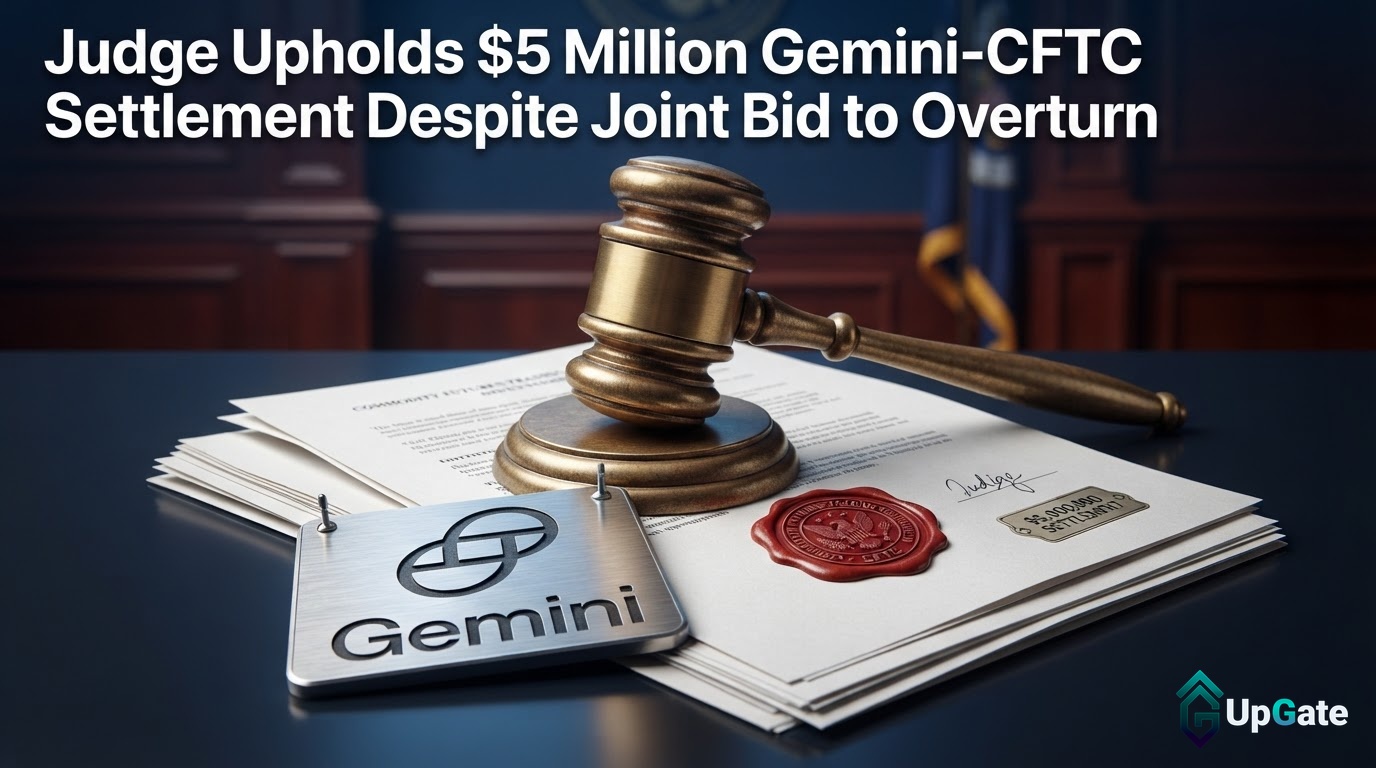
    A federal judge has rejected a joint motion by cryptocurrency exchange Gemini and the Commodity Futures Trading Commission (CFTC) to overturn a $5 million settlement, upholding a consent judgment entered in January 2025. The decision maintains a financial penalty and a permanent injunction against Gemini.

    US District Judge Alvin Hellerstein ruled that the arguments presented by both Gemini and the CFTC did not meet the legal standards required to reopen the settlement. This agreement originated from allegations that Gemini misled the CFTC during the agency’s 2017 review of a proposed Bitcoin futures product. As part of the settlement, Gemini agreed to pay a $5 million penalty and accept a permanent injunction.

    Despite the CFTC’s subsequent evolution in its enforcement policy regarding digital assets, the court found no grounds to vacate the existing judgment. The joint motion by Gemini and the CFTC had sought relief from the court’s earlier decision, citing these evolved priorities. However, the judge determined that a change in enforcement policy does not automatically invalidate a final court order.

    This ruling underscores the principle that courts retain control over their judgments, irrespective of subsequent shifts in regulatory agency perspectives. For other cryptocurrency businesses that may have been hoping that a more accommodating federal regulatory environment could undo historical enforcement outcomes, the decision serves as a significant precedent. It indicates that companies cannot assume previously approved settlements will be nullified simply because political or regulatory circumstances have changed.

    The judge’s reasoning centered on the legal standards for reopening a settlement, finding the parties’ arguments insufficient to meet these established legal thresholds. The settlement remains in effect as originally agreed upon, with no new penalties imposed by the court in this instance.

    The decision reinforces the finality of judicial rulings and the importance of corporate compliance with established legal agreements. While Washington’s approach to cryptocurrency regulation may be evolving, this ruling emphasizes that past enforcement actions, once settled through court orders, are not automatically subject to revision based on new policy directions.

    Why This Matters

    The materials describe a narrow update: US District Judge Alvin Hellerstein rejected a joint motion by Gemini and the CFTC to vacate a consent judgment from January 2025. The decision is significant for other cryptocurrency businesses hoping that a more accommodating federal regulatory environment might undo historical enforcement outcomes.

    Broader Context

    Source materials place the factual news in this context: The decision leaves the existing judgment in place despite the regulator’s changed approach to cryptocurrency enforcement.

  • US Spot Bitcoin and Ethereum ETFs See Net Outflows; Market Sentiment Remains Cautious

    US Spot Bitcoin and Ethereum ETFs See Net Outflows; Market Sentiment Remains Cautious

    US spot Bitcoin and Ethereum Exchange Traded Funds (ETFs) experienced net outflows on October 16, with combined outflows totaling approximately $152 million. Bitcoin ETFs saw net outflows of $82.39 million, while their Ethereum counterparts recorded outflows of $69.68 million.

    These figures suggest a cautious market sentiment. For Bitcoin ETFs, the $82.39 million outflow represents less than a tenth of one percent of their total assets, which are estimated to be between $105 billion and $106 billion. Collectively, these ETFs hold over 1.27 million Bitcoin. In contrast, Ethereum ETFs hold approximately $15 billion in total assets, meaning the $69.68 million outflow represents a more significant proportion of their asset base.

    Despite the net outflows on October 16, the week ending the same day saw substantial trading volume for Bitcoin ETFs, exceeding $7.5 billion. Net selling for Bitcoin ETFs over that same week was approximately $145 million. This indicates that while some investors were reducing positions, overall engagement in the market remained significant, suggesting caution rather than a definitive market shift.

    Looking at broader trends, Bitcoin ETFs have experienced net outflows of roughly $535 million through the middle of October. This follows a period of strong inflows, with Bitcoin ETFs accumulating about $2.6 billion in net inflows during September. Since their launch in January 2024, US spot Bitcoin ETFs have seen cumulative net inflows totaling approximately $57 billion. The outflows observed in October thus far amount to less than 1% of these cumulative inflows.

    Variations in reported figures for ETF flows are common due to different data sources and settlement schedules. For instance, alternative tallies for Bitcoin’s daily outflow on October 16 were as low as $10.6 million. Fidelity’s FBTC was noted as leading redemptions among Bitcoin ETFs on that day.

    Bitcoin was trading near $82,000, and Ethereum was trading between $2,400 and $2,500 at the time of reporting. The simultaneous outflows from both Bitcoin and Ethereum funds may indicate a broader cautious sentiment in the market, rather than a specific view on one asset. However, uncertainty remains regarding the precise reasons for this cautious market posture. The data indicates a period of adjustment for investors, with significant trading volume persisting despite the net selling observed.

    Why This Matters

    The materials describe a narrow update: On October 16, US spot Bitcoin ETFs saw net outflows of $82.39 million, and their Ethereum counterparts experienced outflows of $69.68 million. Exact daily outflow figures for Bitcoin ETFs can vary due to differing data sources.

    Broader Context

    US spot Bitcoin ETFs launched in January 2024.

  • Sam Bankman-Fried’s Supreme Court Appeal Centers on Forfeiture and Loss Arguments

    Sam Bankman-Fried’s Supreme Court Appeal Centers on Forfeiture and Loss Arguments

    Sam Bankman-Fried’s legal team has petitioned the U.S. Supreme Court to review his case, raising arguments that his $11 billion forfeiture order may be unconstitutional and that the lower court improperly excluded evidence regarding the extent of losses to those affected. This appeal represents a potential final legal avenue for Bankman-Fried following his conviction on seven fraud charges and a subsequent loss in his second-level appeal.

    Challenging the Forfeiture Order
    The defense’s core argument to the Supreme Court centers on the contention that the $11 billion forfeiture order potentially violates the Eighth Amendment’s prohibition against excessive fines. According to SBF’s legal team, this order is lifelong, meaning any assets Bankman-Fried might acquire after his release could theoretically be seized by the government. While lifelong forfeiture is not uncommon in major white-collar crimes, the scale of $11 billion is described as rare.

    Questioning Loss Evidence
    Secondly, the defense argues that the trial court’s refusal to admit evidence detailing limited losses was prejudicial. This challenges the prosecution’s theory that fraud occurred the moment FTX customer funds were transferred to Alameda Research, regardless of intent to repay. The prosecution, however, cites the U.S. Supreme Court case Kousisis v. United States, which established that fraud convictions do not necessarily require proof of actual financial loss to the affected parties. This precedent is considered to carry more weight than the 2007 First Circuit case, United States v. Carpenter, which the defense references to suggest a jury might have ruled based on “moral outrage” rather than evidence.

    Uncertainty Regarding Acceptance
    Legal experts and analysts express skepticism about the likelihood of the Supreme Court accepting Bankman-Fried’s appeal. Mark Bini, a partner at Reed Smith and former federal prosecutor, stated that the chance of the Supreme Court accepting the appeal is “very low.” The evidence chain in Bankman-Fried’s case is described as complete, with consistent testimony from multiple witnesses, including former Alameda Research CEO Caroline Ellison. The legal community generally views the defense’s attempt to leverage older case law against the more recent Kousisis precedent as an uphill battle.

    Potential Precedent-Setting Impact
    Despite the low probability, the forfeiture argument holds potential significance. If the Supreme Court were to review the $11 billion forfeiture solely on Eighth Amendment grounds, it could establish a new standard for property forfeiture in white-collar crime cases. However, if the Court were to accept the argument of excessive forfeiture, it is more likely to reduce the amount rather than order a new trial.

    Background and Timeline
    Bankman-Fried was convicted in 2023 and sentenced to 25 years in prison. He lost his second-level appeal in June. The U.S. government’s response to the Supreme Court petition was extended to November 16. The Supreme Court is expected to decide whether to hear the case in late 2026 or early 2027, with a potential ruling by June 2027. The estimated release date for Bankman-Fried is 2043.

    While the outcome of this appeal may have symbolic significance for the cryptocurrency industry, its practical impact is considered limited. FTX’s liquidation and compensation processes for creditors are nearing completion, and the industry has largely moved forward. However, any intervention by the Supreme Court would signify a re-examination of conviction standards and property disposition for crypto fraud within the U.S. legal system, potentially setting a precedent for future cases.

    Broader Context

    Source materials place the factual news in this context: SBF was convicted in 2023 on 7 fraud charges and sentenced to 25 years in prison.

  • Solana Foundation Postpones Shanghai Event Amid Registration Surge; Law Enforcement Reports Unconfirmed

    Solana Foundation Postpones Shanghai Event Amid Registration Surge; Law Enforcement Reports Unconfirmed

    The Solana Foundation has announced the postponement of its Accelerate event in Shanghai, citing an overwhelming surge in registrations that exceeded the venue’s capacity. This official reason is juxtaposed with unconfirmed social media reports.

    Concurrent social media accounts suggest a different scenario unfolded at the venue, indicating the presence of law enforcement and attendees being kept outside for hours. The exact reason for the postponement and the extent of any law enforcement involvement remain uncertain, as the Solana Foundation has not officially commented on these reports.

    The core reported fact is that the Accelerate event was canceled due to a surge in registrations, with the number of attendees overwhelming the designated venue.

    Why This Matters

    The materials describe a narrow update: The Solana Foundation announced the postponement of its Accelerate event in Shanghai, citing an overwhelming number of registrations that exceeded the venue’s capacity. The exact reason for the event’s postponement.

    Broader Context

    Source materials place the factual news in this context: The Solana Foundation stated that the Accelerate event was canceled due to a surge in registrations, with people overwhelming the designated venue. Nonetheless, social media reports indicate the presence of law enforcement at the venue, with attendees remaining left outside for hours.   Solana Accelerate Event Postponed in China, Reports Indicate Law Enforcement Presence at […].

  • CFTC Excludes Casino Sportsbooks from Swap Definition

    CFTC Excludes Casino Sportsbooks from Swap Definition

    Casino Gambling Products Declared Non-Derivatives by CFTC

    The Commodity Futures Trading Commission (CFTC) has formally ruled that a parlay bet at a local casino sportsbook does not constitute a derivative. On October 9, 2026, the agency issued an Interim Final Rule that explicitly excludes casino-style gambling products from the definition of a “swap” under the Commodity Exchange Act.

    Separate Proposal Targets Event Contracts

    On the same day, the CFTC also unveiled a proposal that moves in the opposite direction, suggesting that certain event contracts, including those linked to sports and political outcomes, should be treated as swaps.

    Interim Rule Effective Upon Publication

    The new rule, designated Release No. 9309-26, is an Interim Final Rule. This classification means it takes effect before the conclusion of the public comment period, rather than after. The rule becomes legally binding upon its publication in the Federal Register, initiating a 30-day period for public feedback.

    Two-Part Test for Exclusion

    At the heart of the rule is a two-part screening process. For a product to be excluded from the definition of a swap, it must successfully pass both a Provider Test and a Product Test.

    The Provider Test assesses the entity offering the product. To qualify, the offering must originate from an operator licensed by a state or tribal government.

    The Product Test examines the nature and venue of the offering. Crucially, the product must not be traded on an exchange, a distinction that separates a casino wager from a contract listed on a regulated market.

    Qualifying Products Identified

    The rule specifically names the types of products eligible for this exclusion. These include sports wagers placed with licensed sportsbooks, casino table games, and other licensed games of chance such as bingo and lotteries.

    CFTC Chairman Michael S. Selig characterized the action as a clarification of existing regulatory boundaries rather than a policy shift. “Casino-style gambling products are not derivatives,” Selig stated.

    Jurisdictional Clarity for Derivatives Oversight

    Under the Commodity Exchange Act, the term “swap” serves as a jurisdictional trigger, bringing certain financial instruments under the purview of federal derivatives oversight administered by the CFTC.

    Casino sportsbooks and table games have historically operated under state and tribal licensing frameworks, not federal derivatives regulations. This interim rule codifies that existing arrangement. The CFTC’s stance is that if a gambling product is licensed by a state or tribe and is not exchange-traded, the agency will not assert jurisdiction over it.

    Event Contract Proposal Remains Open for Comment

    The accompanying proposal to classify specified event contracts related to sports, politics, and other areas as swaps remains open for public comment. Unlike the interim rule, this proposal is not yet in effect.

    Continuity for Licensed Operators

    For state-licensed sportsbooks and casino operators, the immediate impact of the interim rule is a continuation of their current regulatory environment. The ruling ensures that licensed operators maintain their established frameworks.

    Exchange-Traded Event Contracts Under Scrutiny

    The situation for exchange-traded event contracts is different. The Product Test explicitly places them within the CFTC’s regulatory scope, and the companion proposal aims to further classify several categories of these contracts as swaps.

    Industry Input Sought on Test Details

    Given that the interim rule takes effect upon publication in the Federal Register with comments to be collected afterward, the 30-day comment period offers industry participants an opportunity to provide input on the specifics of both the Provider and Product Tests.

    The event contract proposal represents a more significant open question, with its final form poised to determine the extent to which the market for sports and political contracts will fall under federal swap regulations.

  • Altcoins Mixed; TIA, ZK, EIGEN Lead Weekly Gains

    Altcoins Mixed; TIA, ZK, EIGEN Lead Weekly Gains

    Most altcoins experienced a downward trend over the past week, with only 34% of tracked tokens posting gains as of October 16, 2026, according to Delphi Digital’s sector dashboard.

    Outperformers in a Down Market

    Despite the broader market’s decline, a select few cryptocurrencies defied the trend. Celestia (TIA), ZKsync (ZK), EigenLayer (EIGEN), Kamino (KMNO), and Pyth Network (PYTH) emerged as top performers. TIA led the pack with a significant 45.0% weekly increase, followed by ZK with a 23.7% gain. EIGEN, KMNO, and PYTH each saw gains ranging between 13.6% and 14.4%.

    Market breadth, which measures the participation of assets in a price movement, stood at 34%. This indicates that while a handful of tokens achieved double-digit gains, approximately two-thirds of the assets on the dashboard declined. This divergence occurred as major cryptocurrency assets cooled, suggesting a rotation of capital towards specific narratives rather than the market as a whole.

    Celestia (TIA) Surges on Network Developments

    Celestia’s impressive run was part of a multi-week rally that reached a yearly high of approximately $0.633 on October 11. This surge was fueled by significant network news. On October 2, Celestia reported a data throughput benchmark of 3.07 Tb/s. Furthermore, the platform saw increased adoption by new projects in early October, leveraging its capabilities for scalability.

    Celestia’s modular network design focuses on data availability, separating it from execution and settlement tasks. This architecture aims to enhance scalability and efficiency for other blockchains that depend on it. During its recent gains, TIA experienced elevated trading volumes and open interest, a metric that tracks outstanding derivatives contracts. A rise in open interest suggests increased leveraged trading activity on the token’s future direction.

    ZKsync (ZK) Gains Momentum from Endorsement and Technical Advancements

    The upward movement in ZKsync (ZK) was initially spurred by an announcement from the ZKsync team on October 13. The token’s momentum further accelerated when Ethereum co-founder Vitalik Buterin publicly praised the project on October 15. Buterin highlighted Airbender Prime, ZKsync’s prover, for its strong performance in validating Ethereum blocks in real-time. Provers generate cryptographic proofs that transactions have been processed correctly, enabling verification without re-executing all the work.

    EigenLayer (EIGEN), Kamino (KMNO), and Pyth Network (PYTH) Show Steady Gains

    EigenLayer (EIGEN), Kamino (KMNO), and Pyth Network (PYTH) did not have a single prominent catalyst driving their performance, according to research findings. Their returns were closely clustered, with each token appreciating between 13.6% and 14.4%.

    Potential Market Rotation and Volatility Concerns

    The observed market dynamics suggest a potential shift in sentiment towards smaller-cap tokens as major assets consolidate. This could signal a new phase of market rotation. The low market breadth figure of 34% serves as a counterpoint to the headline gains, indicating that a few prominent winners can create an illusion of broader market strength when most assets are declining. Researchers also caution that increased volatility could occur if the overall crypto market sentiment shifts rapidly.

    Elevated open interest in TIA suggests a significant number of traders are employing leverage, which could amplify price reversals if positions are forced to close. Both TIA and ZK’s rallies were underpinned by specific, verifiable technical developments: Celestia’s throughput benchmark and new adoption, and ZKsync’s efficient prover and high-profile endorsement.

  • Binance Leverage Flush Boosts Ethereum Market Structure

    Binance Leverage Flush Boosts Ethereum Market Structure

    Forced Liquidation Cleanses Binance Ethereum Market, But Bullish Momentum Hinges on Key Indicators

    Ethereum traders on the Binance exchange experienced a significant market reset recently, with approximately $345 million in long positions liquidated during a sell-off between October 8th and 9th. This analysis, published by CryptoQuant on October 16th, suggests the event helped to clear out leverage and improve the underlying market structure. However, a truly bullish outlook remains contingent on two crucial factors that are not yet present: a return of USDT to exchanges and a sustained rise in the Coinbase Premium.

    Ether (ETH) saw a roughly 10% decline from its September peaks, falling from around $2,775 to approximately $2,500. This price drop proved sufficient to trigger a substantial wave of liquidations for leveraged long positions on Binance.

    According to CryptoQuant data, long liquidations on Binance surged by 47%. Concurrently, funding rates on the exchange plummeted to near zero. Funding rates are periodic payments designed to keep perpetual futures prices aligned with spot prices. High funding rates typically indicate crowded optimism, as long traders pay a premium to maintain their positions. A rate near zero suggests a significant thinning of this optimistic crowd.

    Binance’s ETH futures open interest also saw a decline, dropping 4.7% over 30 days to approximately $6.1 billion, which represents about half of the total market. Despite this overall decrease in dollar-denominated open interest, Binance’s share of ETH futures open interest actually climbed to around 49% in the wake of the liquidations, marking its highest level since 2023.

    ETH-Denominated Open Interest Rebounds, Signaling Trader Re-engagement

    A more telling metric, however, is open interest measured in ETH rather than U.S. dollars. This figure has since rebounded to approximately 2.46 million ETH. The distinction is significant: dollar-denominated open interest automatically decreases when prices fall, irrespective of actual position closures. Measuring in ETH strips out this price effect. The rebound in ETH-denominated open interest suggests that traders are reopening positions after the market flush, rather than abandoning the market altogether.

    Further supporting a potentially healthier market, Binance’s ETH reserves fell by 2.4%, indicating reduced supply pressure. Meanwhile, Ethereum’s staking rate remains robust at 36.1%, placing it in the 98.6th percentile.

    USDT Outflow and Coinbase Premium Remain Key Watchpoints

    However, the market’s path forward is tempered by a notable outflow of USDT from Binance. USDT reserves on the exchange decreased by 2.3%, translating to a net outflow of approximately $175 million. This outflow is the primary reason CryptoQuant characterizes current conditions as neutral rather than bullish. While the leverage reset has lowered liquidation risk, a cleaner market devoid of new capital inflows is akin to a finely tuned car with an empty fuel tank.

    The second critical signal to monitor is the Coinbase Premium, which tracks the price difference between ETH on Coinbase and other exchanges. A rising premium is generally interpreted as stronger demand from buyers on the U.S.-based platform and is flagged by the research as a potential indicator of renewed institutional interest.

    Outlook: Reduced Liquidation Risk, But Sustained Growth Needs Inflows

    The immediate takeaway is that the risk of another liquidation cascade appears lower than it did in September. With funding rates near zero, the market is no longer heavily reliant on leveraged long positions.

    The $175 million USDT outflow from Binance runs counter to the typical requirements for a sustained recovery. The concentration of open interest on Binance also presents a dual-edged sword: a 49% share means that positioning on this single venue significantly shapes the overall ETH futures landscape.

    For those tracking the next market movements, the checklist from the CryptoQuant analysis is concise. Investors should watch for a renewed climb in USDT reserves across exchanges, a sustained increase in the Coinbase Premium, and whether funding rates remain subdued as ETH-denominated open interest continues to rebuild.

  • Vaneck Seeks to Withdraw SEC Application for Lido Staked Ether ETF

    Vaneck Seeks to Withdraw SEC Application for Lido Staked Ether ETF

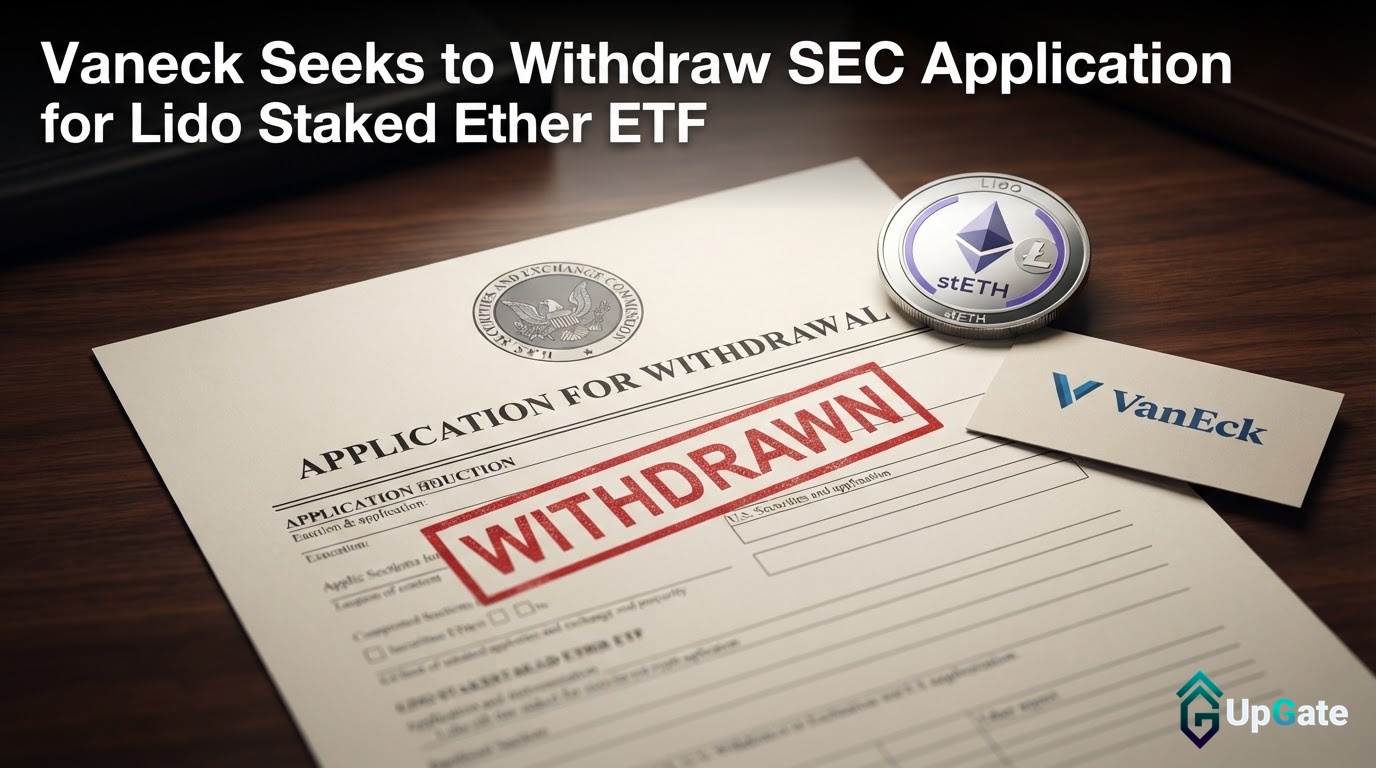
    Vaneck has formally requested to withdraw its application for a Lido Staked Ether Exchange-Traded Fund (ETF) from the U.S. Securities and Exchange Commission (SEC). The request was submitted on October 14th through a Form RW, with Matthew Babinsky, vice president of Vaneck Digital Assets, filing the document.

    This action represents a procedural step in the ETF application process, which was initially filed approximately one year ago. The withdrawal is contingent upon the SEC’s consent, introducing an element of uncertainty regarding the final outcome.

    A Lido Staked Ether ETF would have offered investors exposure to staked Ether via the Lido protocol, a process where cryptocurrency is locked to support blockchain operations in exchange for rewards. The development and approval of such financial products are subject to regulatory review by the SEC.

    Vaneck asked the SEC to withdraw its application, highlighting the inherent complexities and uncertainties in bringing cryptocurrency-related financial products to market. The specific reasons for this withdrawal, beyond the procedural filing, are not detailed in the available information. This event underscores the procedural nature of financial product approvals and regulatory engagement, rather than signaling a definitive trend in the crypto ETF market.

    Why This Matters

    The materials describe a narrow update: Vaneck has requested to withdraw its application for a Lido Staked Ether ETF from the U. The SEC’s consent to the withdrawal.

    Broader Context

    Source materials place the factual news in this context: Vaneck has asked the U.S. Securities and Exchange Commission (SEC) to let it withdraw its Lido Staked Ethereum Exchange-Traded Fund (ETF), a year after filing for it.